Saint Giuseppe Moscati: Physician, Scientist and Servant of the Poor
A Neapolitan doctor, researcher and university teacher who stayed a layman all his life, treated the poor without charge, and was canonized in 1987 as a model of holiness in ordinary professional work.
At a Glance
- Born
- July 25, 1880, Benevento, Italy
- Died
- April 12, 1927, Naples, aged 46
- Declared Venerable
- May 10, 1973
- Beatified
- November 16, 1975 (Paul VI)
- Canonized
- October 25, 1987 (John Paul II)
- Feast day
- November 16 (the anniversary of his beatification); April 12 is the anniversary of his death
- Patron of
- Physicians, medical students, health care workers and the sick (by devotion)
- Best known for
- Caring for the poor of Naples while working as a hospital doctor, researcher and teacher
- A Magistrate's Son in Naples
- Studying Medicine at Naples
- A Vocation Without Vows
- Hospital, Vesuvius and War
- Researcher and Teacher
- Doctor of the Poor
- Conflict and Limits
- Death in Naples, 1927
- The Road to Canonization
- Healings, Traditions and Devotion
- Why He Matters to Eastern Christians
- Frequently Asked Questions
A Magistrate's Son in Naples
Giuseppe Mario Carolo Alfonso Moscati was born on July 25, 1880, in Benevento, in the Kingdom of Italy, and was baptized on July 31. His father, Francesco Moscati, was a magistrate, and his mother, Rosa De Luca, came from the family of the Marquises of Roseto. He was the seventh of nine children. The family moved to Ancona in 1881 and settled in Naples in 1884 after Francesco received a judicial appointment.
The Vatican biography records that he made his First Communion on December 8, 1888, the feast of the Immaculate Conception. He attended the Vittorio Emanuele school in Naples and finished secondary school with distinction in 1897. His family was prosperous and educated, which gave him opportunities that most of his future patients never had.
One event in his adolescence is often linked to his choice of career. In 1893 his older brother Alberto, an artillery officer, was injured in a fall from a horse and suffered lasting neurological problems. Giuseppe helped care for him and saw how limited medicine was at the time. The Vatican biography treats this as a possible influence on his decision to study medicine. That is plausible, but it is not a documented statement by Moscati himself. His father died on December 21, 1897, while Giuseppe was beginning university.
Studying Medicine at Naples
Moscati enrolled at the University of Naples, where the intellectual climate was shaped by positivism and scientific materialism. Contemporary accounts say he kept to prayer and the sacraments throughout, and his faith did not keep him out of experimental research. He graduated with highest honors on August 4, 1903, according to the Vatican biography and a study published by the Pontifical Council for Health Pastoral Care. His thesis dealt with the formation of urea in the liver. The New Catholic Encyclopedia gives August 14 for the graduation, so the exact date is uncertain, although the first date has stronger support.
A Vocation Without Vows
There is no evidence of a dramatic conversion in Moscati's life. He grew up in a believing family, and his faith matured within it. Unlike many saints, he never became a priest and never entered religious life. His vocation was medicine itself, practiced as a service to God and neighbor.
He never married. He gave his energy to research, teaching, prayer and his patients. The evidence does not support claims that he took formal vows or founded a religious community. Central to his outlook was the conviction that treatment and spiritual care belong together, since a patient is a whole person whose suffering has physical, emotional, social and spiritual sides. This is the reason the Church later presented him as a model for lay people who seek holiness in their jobs.
Hospital, Vesuvius and War
Moscati began his professional service in 1904 at the Hospital of the Incurables in Naples, where he helped organize care for patients with rabies, a disease that was feared at the time. In April 1906, when Mount Vesuvius erupted, he went to the hospital at Torre del Greco, where patients had to be evacuated before the building collapsed. According to the Vatican biography and the medical historian Massimo Aliverti, he worked with the nursing staff to move them to safety. The basic account is well supported, but many dramatic details in later retellings cannot be independently confirmed.
During the cholera epidemic of 1911 he took part in public health work and care for affected communities in the working-class districts of Naples. In the First World War he directed wards for wounded and sick soldiers in military hospitals. Sources disagree about what military rank went with this duty, so no rank should be stated without further checking.
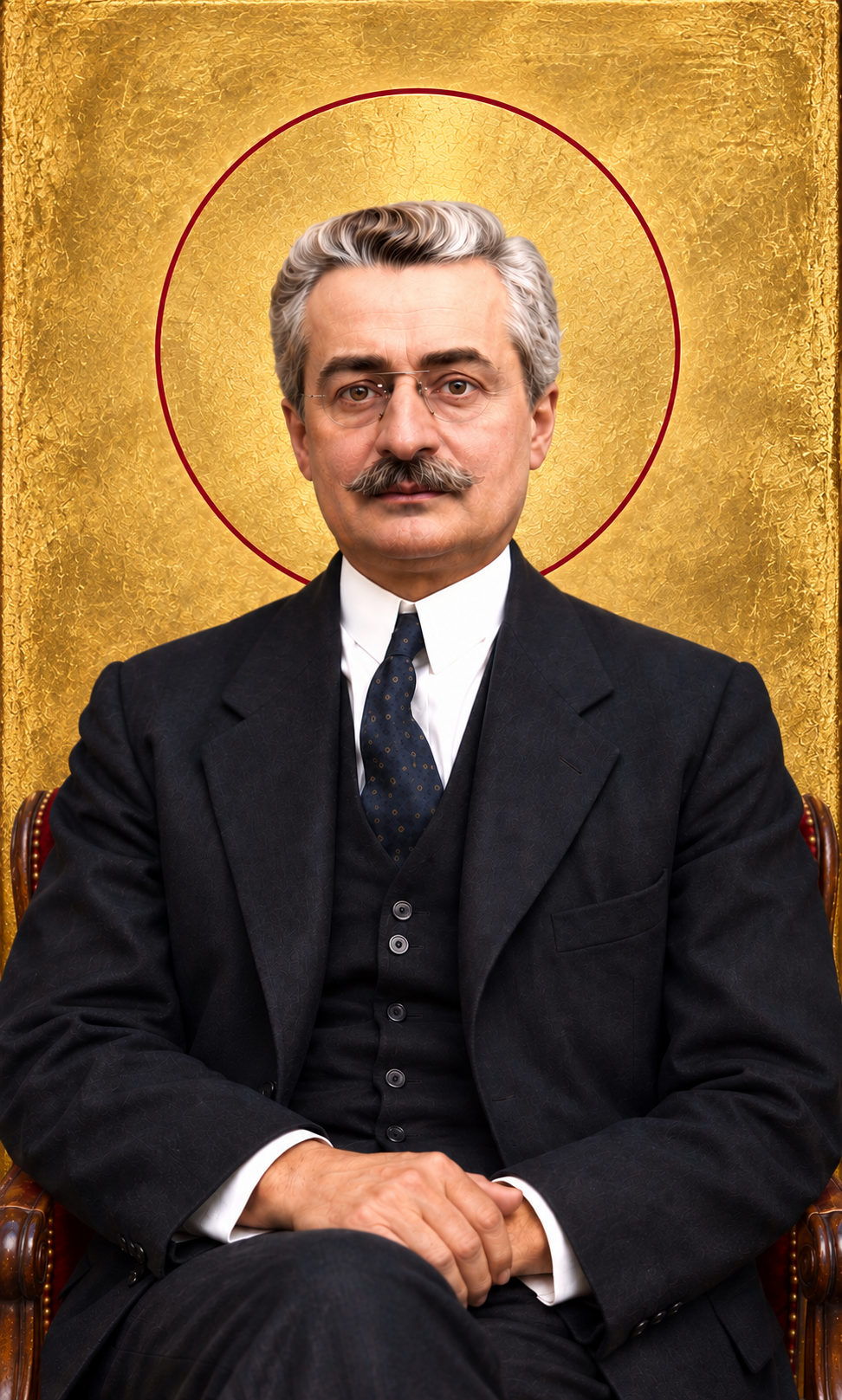
Researcher and Teacher
Moscati was a working scientist. His interests included physiological chemistry, metabolic disease, laboratory methods and the chemistry of blood and urine. He qualified to teach physiological chemistry in 1911, taught clinical chemistry at Naples in 1920 and obtained further qualifications in general clinical medicine in 1922.
His publications include work on peptones in urine and on the effect of quinine on tissue autolysis (both 1910), experimental tuberculous peritonitis (1915) and methods of estimating blood volume (1922), the last with his student Giuseppe Napoletano. He also reviewed international research for the journal La Riforma Medica and later took on editorial duties there.
The Jesuit Moscati Archive shows an interest in diabetes and insulin research. Even so, the claim that he discovered insulin or invented modern diabetes treatment is not supported by the sources. His real achievement was sustained, careful clinical and laboratory work, not a single famous discovery.
Doctor of the Poor
Moscati kept a practice in his home on Via Cisterna dell'Olio in Naples. His patients included wealthy people, professionals, workers and people who could not pay. He regularly waived fees for the poor and sometimes gave them money, medicine or food. Testimony collected by the Church also describes his concern for patients' emotional and religious welfare. None of this made him careless as a doctor. His clinical reports and publications show a physician who took diagnosis and observation seriously.
He kept up a documented friendship with Bartolo Longo, the founder of the Sanctuary of Our Lady of Pompeii. Letters in the Pompeii archives record their cooperation in the care of orphans and children of prisoners, in which his sister Nina also took part. This does not make Moscati the founder of the Pompeii institutions. He supported charities that already existed with his medical service and his money.
He left scientific papers, professional letters, personal correspondence and short spiritual notes, but no systematic theological work and no autobiography. Useful sources include Giuseppe Gambino's collection of testimonies and letters, Giuseppe Moscati: Vita e testimonianze, and the scholarly work of Alfredo Marranzini, SJ.
Conflict and Limits
Devotional biographies sometimes make Moscati sound as though he never clashed with anyone. The archive tells a more complex story. Sebastiano Esposito, the Jesuit archivist of the Moscati Archive, describes surviving letters about hospital administration, unfair practices and irregularities in university appointments. Some of them criticize abuses openly. His charity did not stop him from objecting to what he saw as injustice. At the same time, claims that he was systematically persecuted for being Catholic need more specific evidence than the general statements in devotional books.
His medicine also had limits, as all medicine did before antibiotics. In 1921 the singer Enrico Caruso, seriously ill, returned to Italy and was examined by Moscati. According to Aliverti's study, Moscati recognized signs of a subphrenic abscess, but the infection was too far advanced to treat. Not every patient lived, and his reputation should not hide that fact.
Death in Naples, 1927
Moscati died suddenly in Naples on April 12, 1927, after carrying on his usual work. According to the medical-history account, he had seen a patient shortly before. He was 46. Sources disagree on the immediate cause. The Pontifical Council's medical-history article names a heart attack, while the New Catholic Encyclopedia describes a stroke, and without a contemporary death record the diagnosis should be left qualified.
His remains were moved to the Church of the Gesù Nuovo in Naples in 1930, and this Jesuit church became the center of his devotion. His tomb is still there, and rooms connected with him preserve personal items and medical materials.
The Road to Canonization
The diocesan inquiry into his reputation for holiness opened on July 16, 1931. On May 10, 1973, the Church recognized his heroic virtue and declared him Venerable. Pope Paul VI beatified him on November 16, 1975, during the Holy Year. His remains were canonically recognized again in 1977 and placed in a bronze reliquary connected with the chapel dedicated to him.
Pope John Paul II canonized him on October 25, 1987, in Saint Peter's Square, during the Synod of Bishops on the vocation and mission of the laity. The setting mattered, because Moscati's holiness had grown in ordinary professional life and not through ecclesiastical office. The canonization followed the examination of a further reported healing.
Healings, Traditions and Devotion
The Church examined several healings. For his beatification it accepted the recovery of Costantino Nazzaro, a prison service officer from Avellino with Addison's disease, and of Raffaele Perrotta, who recovered from meningococcal meningitis in the night of February 7 to 8, 1941. The main case for his canonization was Giuseppe Montefusco, a young blacksmith from Somma Vesuviana with acute myeloblastic leukemia, who recovered in 1979 after his family asked for the intercession of the then Blessed Giuseppe Moscati. Montefusco attended the canonization in Rome, and a contemporary United Press International report confirms his presence. Acceptance of such cases means they met the Church's standard for a cause. It is not independent proof in the medical literature.
TRADITION: In the devotional account, Montefusco's mother, Rosaria Rumieri, dreamed of a doctor in a white coat and later recognized him in a photograph of Moscati at the Gesù Nuovo. This dream is part of the testimony around the healing, but it cannot be independently demonstrated. Other devotional stories describe Moscati appearing at the bedside of the sick and promising a cure. These belong to popular devotion and should not be treated as verified miracles without the investigation records.
Devotion continues at the Gesù Nuovo, where visitors leave votive offerings and prayers, especially the sick and people in the medical professions.
Saint Giuseppe Moscati, physician of body and soul, you served the poor with skill and patience. Pray for the sick and for those who care for them. Give doctors and nurses wisdom, honesty and compassion, and give every patient hope and peace. Help us to do our daily work with care and to give glory to God in it. Amen.
This is a short devotional prayer written for this page, and it is not an official text of the Church. A published devotional prayer to him ends with a petition for diligence, honesty and charity, but its author and date are not established.
Why He Matters to Eastern Christians
Moscati was a Roman Catholic layman, canonized long after the separation of Rome and the Eastern Orthodox Churches, so his canonization does not mean Orthodox recognition. No Orthodox glorification, authorized troparion or pan-Orthodox feast for him could be verified, and any claim of established Eastern liturgical veneration remains uncertain.
Even so, his life invites a comparison with a theme that Eastern Christians know well. The Holy Unmercenary Physicians, such as Saints Cosmas and Damian, are honored because they healed the sick without payment. Moscati's habit of treating poor patients free of charge is a historical parallel, though it does not make him one of the Orthodox Unmercenary Saints. His view of the patient as a unity of body and soul also has broad similarities with Christian thought in East and West. For Eastern Catholics he is a recognized example of holiness lived through professional service and science.
Frequently Asked Questions
Holiness at the Bedside
Moscati did not leave his work to become holy. He became holy in it, one patient at a time. His story belongs to doctors, nurses and anyone who cares for the sick. His prayer card is a small companion for a hospital visit.
View Prayer Card