Saint Gregory Nazianzen: The Reluctant Bishop Who Saved the Trinity and Earned a Title Shared With the Apostle John
Saint Gregory Nazianzen: The Reluctant Bishop Who Saved the Trinity and Earned a Title Shared With the Apostle John
Ordained against his will. Consecrated to a bishopric he refused to visit. Sent to a capital city where the Orthodox faith had nearly vanished, and left it two years later having rescued it. He resigned the highest see in the Christian East rather than let ambition divide the Church, and walked home to die in obscurity.
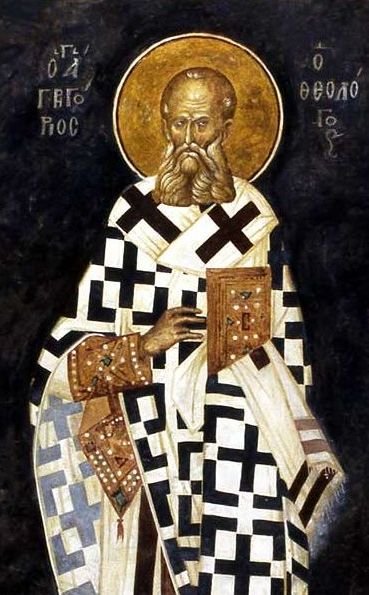
Saint Gregory Nazianzen at a Glance
- Also Known As
- Gregory of Nazianzus; Gregory the Theologian
- Born
- 329, Arianzus, near Nazianzus, Cappadocia (modern-day Turkey)
- Died
- January 25, 390, at Arianzus
- Venerated In
- The Eastern Orthodox Church, the Eastern and Roman Catholic Churches, Oriental Orthodoxy, Anglicanism, and Lutheranism
- Canonized
- Pre-congregation; venerated as a saint from shortly after his death
- Feast Days
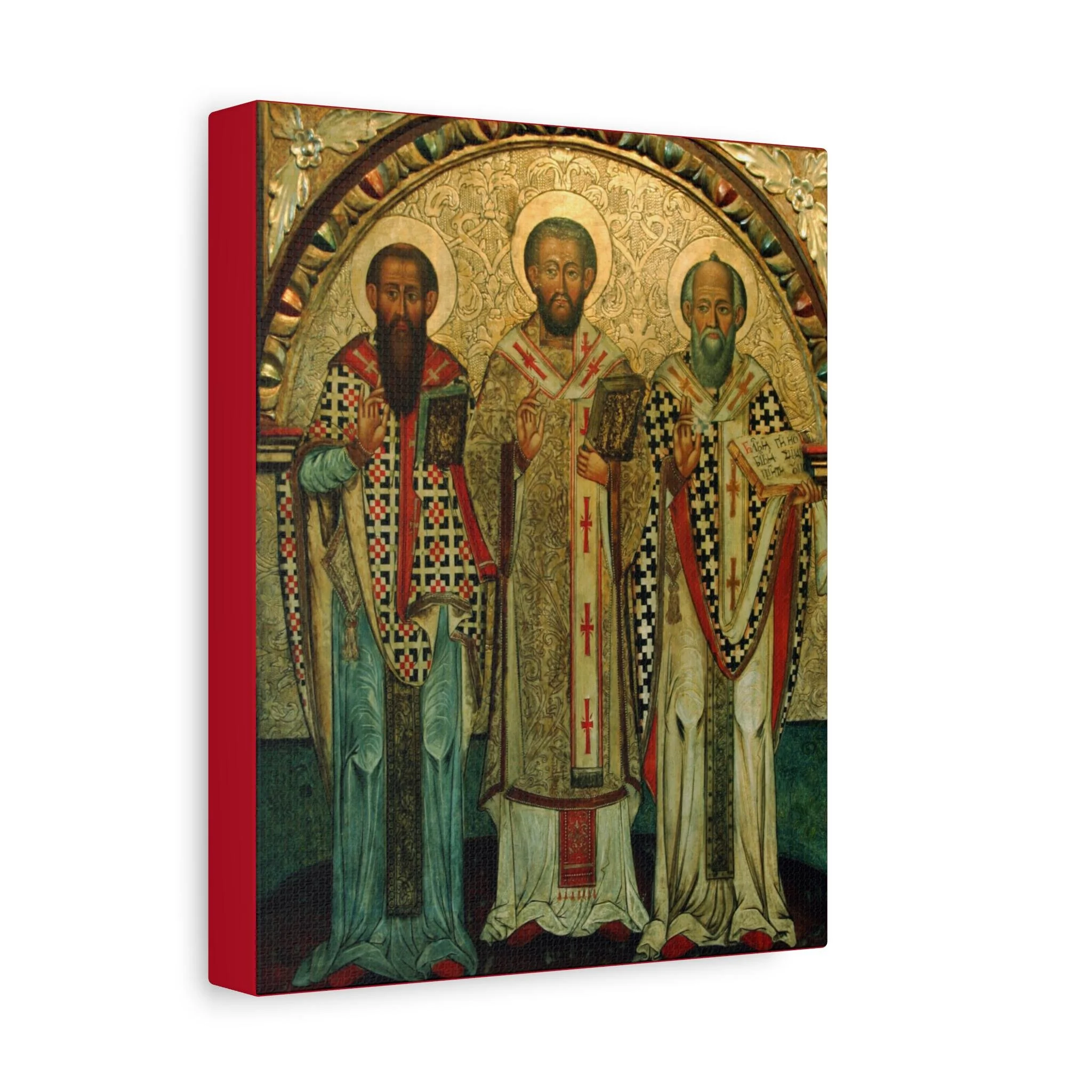
- January 25 (primary, Eastern); January 30 (Three Holy Hierarchs, with Basil and Chrysostom); January 2 (Roman Catholic General Calendar, with Basil)
- Title
- The Theologian; Doctor of the Church; one of the Cappadocian Fathers; one of the Three Holy Hierarchs
- Known For
- The Five Theological Orations on the Trinity; presiding over part of the Second Ecumenical Council, 381
- Best Friend
- Saint Basil the Great, Archbishop of Caesarea
- Relics
- Patriarchal Cathedral of Saint George, the Phanar, Istanbul, with a further portion in Rome
- I. Born Into a Family of Six Saints
- II. Athens: A Friendship That Shaped the Fourth Century
- III. The Storm at Sea and a Vow to God
- IV. Ordained Against His Will
- V. Bishop of a Diocese He Refused to Visit
- VI. Constantinople: Rescuing Orthodoxy From Near Collapse
- VII. The Easter Riot of 379
- VIII. The Five Theological Orations
- IX. The Second Ecumenical Council and a Voluntary Resignation
- X. Retirement, Writing, and Death at Arianzus, 390
- XI. Nine Centuries of Relics: Nazianzus to Constantinople to Rome and Back
- XII. Miracles and Providential Deliverance
- XIII. A Family and Circle of Saints
- XIV. His Homilies, Letters, and Poems
- XV. Churches and Shrines, With Links
- XVI. Legacy: The Theologian
- Prayer for the Intercession of Saint Gregory Nazianzen
- Frequently Asked Questions
Born Into a Family of Six Saints
Gregory was born around the year 329 at Arianzus, a family estate near the Cappadocian town of Nazianzus, into a household that would produce an unusually concentrated cluster of saints. His father, also named Gregory, had been converted to Christianity from a monotheistic pagan sect known as the Hypsistarii through the influence of his wife, and was soon afterward ordained and consecrated Bishop of Nazianzus, a post he held for the rest of his long life. His mother, Saint Nonna, had prayed fervently for a son and vowed to dedicate the child to God; when Gregory was born, she considered her prayer answered, and as soon as he learned to read she placed the Holy Scriptures directly into his hands.
Gregory's father, mother, brother Caesarius, and sister Gorgonia would all eventually be venerated as saints in their own right, alongside Gregory himself, making his immediate family one of the most thoroughly sanctified households in the entire history of the early Church. His early education came first at home under his uncle Saint Amphilochius, an experienced teacher of rhetoric, before Gregory went on to study successively in the schools of Nazianzus, Caesarea in Cappadocia, and Alexandria.
Part II
Athens: A Friendship That Shaped the Fourth Century
Gregory completed his education in Athens, spending six years there studying rhetoric, poetry, geometry, and astronomy under the celebrated pagan rhetoricians Himerius and Prohaeresius. It was in Athens that Gregory formed the defining friendship of his life, with a fellow Cappadocian student named Basil, the future Basil the Great, Archbishop of Caesarea. Their friendship became so close that contemporaries described the two young men as one soul inhabiting two bodies, a bond that would shape the theology of the entire Eastern Church for the rest of the century, even as it was later tested nearly to breaking by Basil's own political decisions.
Studying philosophy alongside them in Athens at the very same time was another young man named Julian, who would later become Roman Emperor and attempt to reverse Constantine's Christianization of the empire, earning the title Julian the Apostate. Gregory would eventually write two of the fiercest theological invectives of his career against his former Athenian classmate, describing them as two pillars on which Julian's impiety would remain indelibly recorded for all posterity.
Part III
The Storm at Sea and a Vow to God
On the voyage from Alexandria to Greece, before his years in Athens, Gregory's ship was caught in a violent storm that raged for many days. He was, at the time, only a catechumen, not yet baptized, and he was gripped by a specific terror: that he might perish in the sea before ever receiving the cleansing waters of baptism. For twenty days he lay in the ship's stern, pleading with God for deliverance and vowing to dedicate his entire life to God's service if he survived. The storm passed, the ship reached land safely, and Gregory would spend the rest of his life treating that vow, made in genuine terror at sea, as a binding and lifelong commitment.
Part IV
Ordained Against His Will
After completing his studies, Gregory remained in Athens for a time as a teacher of rhetoric, deeply versed in pagan philosophy and literature as well as Christian doctrine. In 358 he quietly left the city and returned to his parents at Nazianzus, and at thirty-three years of age he was finally baptized, by his own father, now the local bishop. Gregory's plan at this point in his life was for a quiet retreat into ascetic contemplation, sharing a monastic community his friend Basil had founded in Pontus. His father had other plans. Against Gregory's explicit will, the elder Gregory ordained his son to the priesthood, a decision Gregory found so difficult to accept that he initially fled Nazianzus altogether to rejoin Basil in Pontus, remaining there for several years before duty called him home again after the death of his brother Caesarius, to help his aging father administer a diocese torn by the Arian controversy.
Part V
Bishop of a Diocese He Refused to Visit
The episode that came closest to permanently damaging Gregory's friendship with Basil unfolded around the year 372. The Emperor Valens, wary of Basil's growing influence as Archbishop of Caesarea, split the province of Cappadocia in two, and a rival bishop named Anthimus moved to claim ecclesiastical authority over the new territory. To defend his jurisdiction, Basil founded a new see at the small, unremarkable town of Sasima and had Gregory consecrated as its first bishop, entirely against Gregory's wishes and largely as a political maneuver in Basil's own dispute.
Gregory considered himself thoroughly unsuited to Sasima and the place thoroughly unsuited to him, and he never actually took up permanent residence there, remaining instead at Nazianzus to assist his dying father, whom he served as coadjutor bishop until the elder Gregory's death in 374. The Sasima affair left a real strain between the two lifelong friends, a rare crack in a bond otherwise remembered as one of the most celebrated friendships in the history of the Church.
Part VI
Constantinople: Rescuing Orthodoxy From Near Collapse
Following his father's death, Gregory guided the flock at Nazianzus for a time, until a council of bishops, following the death of the Arian emperor Valens in 378, invited him to come to Constantinople to help rescue a capital city whose churches were, by that point, almost entirely in the hands of Arians, Macedonians, and Apollinarian heretics. With Basil's blessing, Gregory accepted, and in 379 he began preaching and celebrating the liturgy in a small, borrowed house-church he renamed the Anastasia, "the Resurrection," in hope of the Orthodox faith's own resurrection in the city.
The image his contemporaries preserved of him from these years is strikingly ascetic for a man now residing in the imperial capital: he ate the food of the wilderness, wore only what was strictly necessary, made his pastoral visits without pretense, and, though constantly in proximity to the imperial court, sought nothing whatsoever from it. Sermon by sermon, the number of heretics in the city visibly shrank and the number of the Orthodox grew, a slow reconquest of Constantinople's Christian population achieved almost entirely through the force of Gregory's preaching.
Part VII
The Easter Riot of 379
On the night of Pascha, April 21, 379, while Gregory was in the midst of baptizing catechumens at the Anastasia, an armed mob of heretics burst violently into the church. Stones were hurled at the Orthodox congregation; one bishop present was killed, and Gregory himself was wounded in the assault. He did not respond with anything resembling retaliation. His steadiness and gentleness under attack became, in the eyes of contemporaries, its own form of preaching, and the episode is remembered as having converted many further souls to the Orthodox cause rather than driving them away.
Part VIII
The Five Theological Orations
It was during these same Constantinople years that Gregory delivered the body of preaching for which he remains best known across the entire history of Christian theology: the Five Theological Orations, a sustained, closely reasoned defense of the divinity of the Son and the Holy Spirit against the Eunomian and Macedonian heresies of his day. Gregory opens the series by defining who is actually qualified to theologize at all, arguing that only those purified in soul and body, experienced in contemplation, and genuinely selfless have any business reasoning about the nature of God.
Across the Orations, Gregory dismantles the logical traps set by Eunomian theologians, who claimed to grasp the divine essence through pure syllogism, and insists instead that God's essence remains fundamentally beyond human logical mastery, knowable only insofar as the human mind itself is purified and made godlike. He devotes particular attention to defending the divinity of the Holy Spirit, tracing its activity throughout the life of Christ, from the Forerunner's witness at his birth to the Spirit's descent at his baptism, arguing that Scripture itself reveals the Spirit's full divine dignity to those willing to read beyond a merely literal surface.
Part IX
The Second Ecumenical Council and a Voluntary Resignation
On November 24, 380, Emperor Theodosius I arrived in Constantinople and, enforcing his own decree against the heretical factions, formally restored the city's main cathedral to Orthodox hands, with Gregory making a solemn entrance as its rightful pastor. An assassination attempt against him was planned around this time; the assassin sent to carry it out instead appeared before Gregory in tears, confessing everything. At the Second Ecumenical Council convened in Constantinople in 381, Gregory was elected Archbishop of Constantinople and, following the death of Patriarch Meletius of Antioch partway through the proceedings, found himself presiding over the council itself.
His tenure at the summit of the Christian East proved brief and contentious. Bishops from Egypt and Macedonia, who had earlier supported a rival claimant to the see, a philosopher named Maximus the Cynic who had attempted to have himself secretly consecrated in Gregory's place, arrived late to the council and refused to recognize Gregory's election, since it had taken place in their absence. Rather than allow the dispute to fracture the Church further, Gregory chose to resign voluntarily, comparing himself to the prophet Jonah, whose presence alone was enough to bring a storm down upon the ship: "Seize me and throw me overboard," he told the assembled bishops, adding that he had never been happy to ascend the throne of Constantinople and would gladly descend from it for the sake of peace. He delivered a farewell oration to the council and departed the capital in peace.
Part X
Retirement, Writing, and Death at Arianzus, 390
Returning to his native Cappadocia, Gregory found the church at Nazianzus itself under renewed threat, this time from Apollinarian heretics. He installed a pious bishop named Eulalius to guide the see, and then withdrew permanently into the quiet solitude of Arianzus, the family estate where he had been born roughly sixty years earlier. He did not withdraw from theological combat altogether. From his retirement, Gregory continued defending Orthodox doctrine through a steady stream of letters and poems, remaining, to the very end, a zealous guardian of the truth even from the margins of ecclesiastical life. He died at Arianzus on January 25, 390, and the Church, both East and West, has honored him ever since with the title Theologian, a designation otherwise reserved in the whole of Christian history for the Apostle and Evangelist John and, centuries later, for Saint Symeon the New Theologian.
Part XI
Nine Centuries of Relics: Nazianzus to Constantinople to Rome and Back
Few saints in the entire Christian calendar have a relic history as dramatic, or as recently and publicly resolved, as Gregory's. He was buried at Nazianzus following his death in 390. In the year 950, his relics were solemnly translated to Constantinople and enshrined in the Church of the Holy Apostles, the great imperial mausoleum-church at the heart of the Byzantine capital. There they remained until 1204, when knights of the Fourth Crusade, ostensibly bound for Jerusalem, instead sacked Constantinople itself, looting the city's churches of treasures and relics alike. Gregory's relics, along with those of Saint John Chrysostom, were carried west to Rome, where they were enshrined in Saint Peter's Basilica and, in part, in the church of San Gregorio Nazianzeno near the Campo Marzio, remaining in Western hands for the following eight hundred years.
The resolution came in the early twenty-first century, in one of the more striking gestures of Catholic-Orthodox reconciliation of the modern era. On November 27, 2004, Pope John Paul II, at the request of Ecumenical Patriarch Bartholomew I, formally returned a major portion of the relics of both Gregory and Chrysostom to the Orthodox Church, in a joint ecumenical ceremony held in Rome and Istanbul. The relics now rest in a marble larnax on the north side of the Patriarchal Cathedral of Saint George at the Phanar in Istanbul, the seat of the Ecumenical Patriarchate, ending what Patriarch Bartholomew himself called their involuntary, centuries-long separation from the church they had once shepherded. A further portion of Gregory's relics remains venerated in Rome to this day.
Part XII
Miracles and Providential Deliverance
Honesty is owed here, as with every saint profiled on this site: Gregory is not primarily venerated, as many desert ascetics and holy fools are, for a catalogue of dramatic wonderworking. His own recorded life contains two episodes closest to what could be called miraculous providence rather than a long list of independent signs: his deliverance from the twenty-day storm at sea as a young catechumen, taken by tradition as a direct answer to his desperate vow, and the sudden repentance of the assassin sent to kill him in Constantinople, who arrived before Gregory in tears rather than carrying out his commission. Beyond these, Gregory's own sister Gorgonia is separately venerated for two remarkable healings obtained through prayer during her own lifetime, recorded in the funeral oration Gregory preached for her, though these are properly her own miracles rather than his.
What the Church has instead consistently emphasized as Gregory's own extraordinary gift is intellectual and spiritual rather than thaumaturgic: an unmatched clarity in articulating the mystery of the Trinity at the precise moment history required it, a gift the Church itself has treated, across seventeen centuries, as no less a wonder than any physical sign.
Part XIII
A Family and Circle of Saints
Few saints in Church history are connected to as dense a network of fellow saints as Gregory Nazianzen:
Saint Gregory the Elder and Saint Nonna
His father and mother, both separately venerated as saints, the father commemorated January 1 and the mother August 5.
Saint Gorgonia and Saint Caesarius
His sister and brother, both canonized. Gorgonia, a married mother of three, is venerated for her piety and for two miraculous healings obtained through prayer; Caesarius, a physician who served in the imperial court and refused to renounce his faith even under pressure from Julian the Apostate, gave away his entire estate to the poor before his death.
Saint Basil the Great
Gregory's closest friend from their student days in Athens onward, later Archbishop of Caesarea and one of the two other Cappadocian Fathers. Their friendship survived even the political strain of the Sasima affair and remains one of the most celebrated friendships in the history of Christian theology.
Saint Gregory of Nyssa
Basil's younger brother and the third of the Cappadocian Fathers, whose own theological writings developed alongside and in close dialogue with Gregory Nazianzen's.
Saint Amphilochius of Iconium
Gregory's own uncle, who first taught him rhetoric in his boyhood, and who was himself later canonized as a bishop and theologian.
Saint John Chrysostom
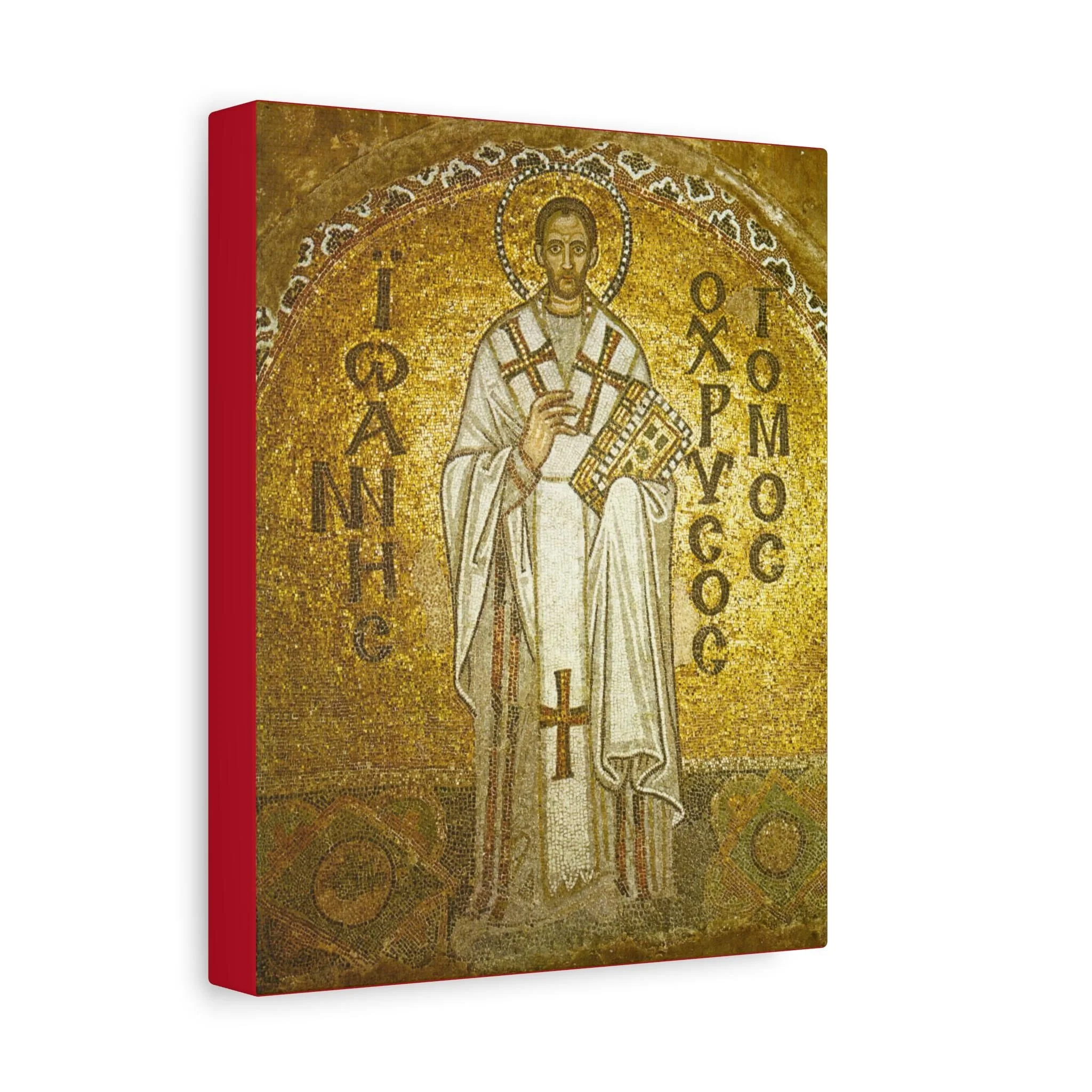
Though the two never met, their shared office as Archbishop of Constantinople, their shared title as Doctors of the Church, and the extraordinary parallel journey of their relics, translated together, looted together in 1204, and returned together in 2004, have bound their names together in Orthodox and Catholic memory ever since.
Part XIV
His Homilies, Letters, and Poems
Unlike a great many saints whose personal words have vanished entirely from the historical record, Gregory Nazianzen left behind an extraordinarily rich and well-preserved body of writing. Forty-five of his orations survive in full, including the celebrated Five Theological Orations discussed above, panegyrics on other saints, festal sermons for the great feasts of the Church calendar, his two fierce invectives against Julian the Apostate, and his farewell address to the Council of Constantinople in 381. Alongside the orations survive hundreds of personal letters, prized since antiquity for their clarity and concision, and a substantial body of poetry, in which Gregory consciously sought to answer the poetic output of contemporary heretical movements with verse of his own, centered always on Christ.
Gregory himself described his gift for language as something he had deliberately consecrated rather than kept for his own glory, calling it the one treasure that remained to him after he had given up everything else at the Spirit's command, and describing himself elsewhere as an instrument through which the Lord alone was sweetly glorified. His theological writing was so influential that Saint John of Damascus, compiling his own great systematic exposition of the Orthodox faith centuries later, explicitly followed Gregory's lead in structuring the opening sections on the doctrine of God.
Part XV
Churches and Shrines, With Links
Two sites today hold the principal relics of Saint Gregory Nazianzen and stand as the natural pilgrimage destinations connected to his memory:
Patriarchal Cathedral of Saint George, the Phanar, Istanbul
The seat of the Ecumenical Patriarchate of Constantinople, where the major portion of Gregory's relics, together with those of Saint John Chrysostom, have rested since their return from Rome in 2004, enshrined in a marble larnax along the cathedral's north wall.
Church of San Gregorio Nazianzeno, Rome, Italy
Located near the Campo Marzio, this Roman church, historically connected to a community of Basilian nuns, holds a further portion of Gregory's relics beneath the Altar of Our Lady of Succour, a remnant of the centuries during which the bulk of his remains were kept in the West following the events of 1204.
Part XVI
Legacy: The Theologian
Reduced to its essentials, Gregory Nazianzen's legacy rests on a single, historically decisive achievement: at the precise moment when the fourth-century Church was in genuine danger of losing coherent language for describing who God is, Gregory supplied that language, with a philosophical rigor and rhetorical beauty that neither friend nor rival theologian ever fully matched. He did this while never particularly wanting the ecclesiastical power that came with the task, resigning the highest see in the Christian East rather than let his own position become a source of division, and choosing, in the end, quiet retirement and continued writing over any further claim to public authority.
The title Theologian, granted to exactly one other figure in the whole of Christian history before him, the Apostle and Evangelist John, and to only one figure after him, Symeon the New Theologian roughly six centuries later, remains the clearest possible marker of how the Church itself has judged the scale of what Gregory accomplished in a life that, by his own repeated account, he would rather have spent entirely in obscurity.
Holy Trinity, Father, Son, and Holy Spirit, to You be glory, honor, and blessing, for having given to Your holy Church Saint Gregory Nazianzen, the Theologian, as a defender of the true faith and a model of humility in the exercise of authority.
We ask You humbly: just as You gave him the words to defend the mystery of Your own Trinitarian life, be pleased to grant us, through his intercession, clarity in speaking the truth, humility in positions of leadership, and the grace we now ask with confidence.
Through Christ our Lord. Amen.
An original English-language devotional prayer composed for use with the Saint Gregory Nazianzen prayer card, drawing on the traditional themes of his veneration across the Catholic and Orthodox Churches.
More From Our Store, In Honor of the Cappadocian Fathers

FAQ
Frequently Asked Questions About Saint Gregory Nazianzen
He Never Wanted the Throne. He Just Wanted the Words to Be Right.
Saint Gregory Nazianzen spent most of his life trying to get out of the jobs the Church kept placing on him: a priesthood he did not seek, a bishopric he refused to visit, an archbishopric he resigned within two years of accepting it. What he could not put down, and never once tried to, was the work of finding the right words for the mystery at the center of the Christian faith, the Father, the Son, and the Holy Spirit, three and one, comprehensible to no human logic and yet somehow sayable, if only by a man willing to spend a lifetime in the attempt. He gave the fourth century that language, walked away from every honor it earned him, and went home to Arianzus to keep writing until the end.
Ask his intercession. Say his prayer. Remember a reluctant bishop whose sermons outlasted an empire, and whose relics, scattered by conquest for eight hundred years, finally found their way home.
Get the Saint Gregory Nazianzen Prayer Card →