Saint Gregory Palamas: Archbishop of Thessalonica, Hesychast Theologian and Teacher of the Uncreated Light
A monk of Mount Athos who defended the prayer of the heart and the hope of sharing in God
At a Glance
- Born
- Traditionally 1296, Constantinople
- Died
- November 14, 1359, Thessalonica (some modern studies differ)
- Office
- Monk, priest and Archbishop of Thessalonica
- Feast
- November 14 and the Second Sunday of Great Lent
- Glorified
- 1368, Constantinople
- Relics
- Metropolitan Cathedral of Saint Gregory Palamas, Thessaloniki
Who Was Saint Gregory Palamas?
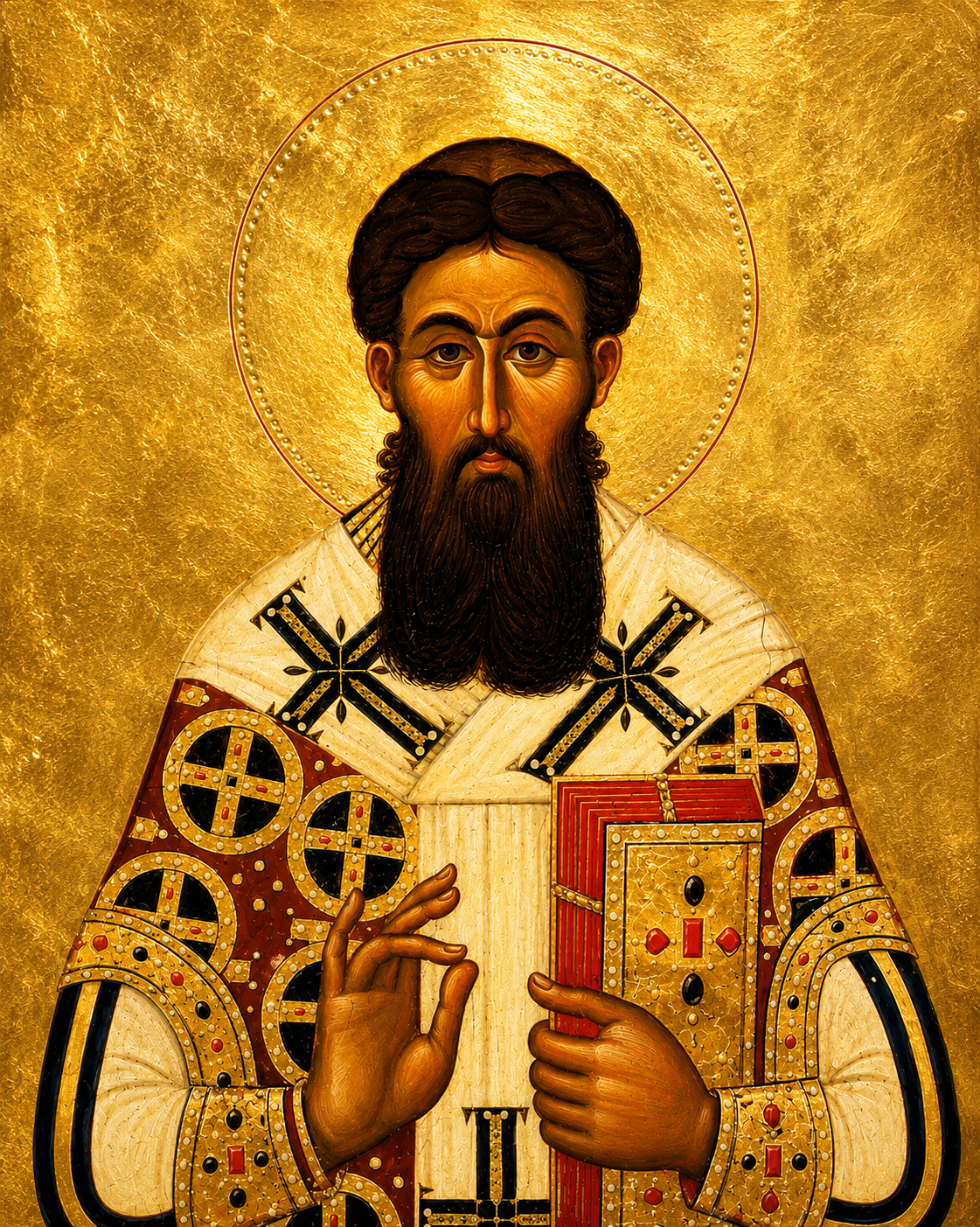
Saint Gregory Palamas is one of the great teachers of the Byzantine Church. He was born into a family of the imperial court, became a monk on Mount Athos, and ended his life as Archbishop of Thessalonica. He is best known for defending hesychasm, the Eastern tradition of stillness and the prayer of the heart, against sharp criticism in the fourteenth century.
His central teaching is that God cannot be known in His essence, yet God truly gives Himself to people through His uncreated energies. By sharing in these energies, the faithful can come to theosis, which means union with God by grace.
Much about his life is documented, thanks to his own writings and the early Life by Patriarch Philotheos Kokkinos. Some points of chronology are still debated, and miracle stories are marked TRADITION in this article.
Early Life and Family
Gregory is traditionally said to have been born in 1296 in Constantinople. UNCERTAIN: no surviving record fixes the year, and some scholars give about 1295 or 1296. His father, Constantine Palamas, held a high post at the court of Emperor Andronikos II Palaiologos. After Constantine died, the emperor took an interest in the boy's education.
Gregory studied rhetoric, logic and philosophy in Constantinople, and these studies prepared him for a career in imperial service. According to the early Life and later tradition, his mother and sisters entered convents at Thessalonica, and his brothers joined him in monastic life.
His choice of the monastery over the court is important. It was a refusal of a respected career, and the choice shaped the rest of his life.
From the Court to Mount Athos
Gregory was raised in the Byzantine Christian world, and there was no conversion from another faith. His turning point was the decision to become a monk. About 1316, at about twenty years of age, he went to Mount Athos. UNCERTAIN: some accounts place his arrival about 1318.
He first studied under the elder Nikodemos of Vatopedi, and then gave himself to deeper prayer and solitude in the Athonite tradition of hesychasm. This word comes from a Greek term for stillness. It stresses repentance, watchfulness, attention of the heart and unceasing prayer, especially the Jesus Prayer. Gregory did not invent this practice. It was already old in the Church.
About 1326, because of danger from raiders, he moved to Thessalonica, where he was ordained a priest. He then lived a mixed life of pastoral work and solitude near Beroea. By 1331 he had returned to Athos and lived near the Great Lavra. Attacks on hesychast prayer soon drew him out of silence into public debate.
Essence and Energies
Gregory's chief teaching is that God in His essence is beyond all knowledge, while His uncreated energies are His real activity and presence, through which people share in divine life. This does not divide God into parts. Norman Russell stresses that Gregory saw the distinction as real but did not treat the energies as separate beings.
Gregory linked this teaching to the light shown at the Transfiguration of Christ on Mount Tabor. He taught that this light is the uncreated glory of God, which the saints can see by grace. For Gregory, the hope of the Christian is theosis, a sharing in God that does not make anyone identical with the divine nature.
He was not the founder of a new order or a new church. He was an Athonite monk and later a bishop who defended the received tradition of prayer and the knowledge of God.
His Writings
His best known work is the Triads in Defense of the Holy Hesychasts, a defense of contemplative prayer and divine illumination. The Hagioritic Tome, usually dated about 1340 to 1341, expresses the Athonite understanding of spiritual experience. The One Hundred and Fifty Chapters deals with theology, philosophy and the ascetic life.
He also wrote a letter to a nun named Xenia on the passions and virtues, and polemical works against Barlaam, Gregory Akindynos and Nikephoros Gregoras. In his years as a bishop he preached homilies on the feasts of Christ and of the Mother of God, including sermons on the Dormition and on the Entry of the Theotokos into the Temple.
These sermons show a pastor concerned with repentance, charity, the sacraments and devotion to Mary, and not only with hard questions of theology. Modern editions and English translations of his works are available to readers who wish to study them.
The Hesychast Controversy
The dispute arose in a time of political and intellectual strain in the Byzantine Empire. His first main opponent was Barlaam of Calabria, a learned theologian who criticized the claims of the hesychast monks about seeing divine light and objected to some of their bodily postures and breathing practices. Gregory answered that spiritual experience cannot be reduced to rational proof, yet must remain under the control of doctrine and sound discernment.
A synod at Constantinople in 1341 decided in favor of the hesychasts. Gregory's opponents were not finished, and he himself suffered condemnation and imprisonment in the years of conflict. In 1347 the situation changed, and he was freed and named Archbishop of Thessalonica, although political opposition delayed his entry into the city. The Council of Blachernae in 1351 confirmed his main positions.
The dispute was not simply East against West. Barlaam came from southern Italy, but Gregory's opponents also included Byzantine theologians, and the conflict was bound up with church rivalries and imperial politics.
Captivity Among the Turks
In March 1354, while travelling by sea, Gregory was captured in territory threatened by the growing Ottoman emirate. He was held in Bithynia until about the spring of 1355, when a ransom secured his release.
His letters from captivity survive and are among the most valuable evidence we have for his life, since they come from his own hand and not from later hagiography. They record his talks with Muslims and with Christians, and they show him as a bishop who met people of other faiths with courage and calm.
Norman Russell has published these sources in English translation. The captivity is a good example of how this saint's life can be known from documents and not only from pious tradition.
Death, Relics and Glorification
Gregory is traditionally said to have died at Thessalonica on November 14, 1359. UNCERTAIN: some recent studies use a different chronology for his last years, including a death in 1357, and a careful biography should say which chronology it follows. This article follows the traditional ecclesiastical date.
Patriarch Philotheos Kokkinos wrote his Life and helped establish his veneration. A synod at Constantinople recognized his holiness in 1368, which is the commonly accepted date of his glorification. His relics are honored in the Metropolitan Cathedral of Saint Gregory Palamas in Thessaloniki. The present cathedral was built between 1891 and 1914 after a fire in 1890 destroyed its predecessor. UNCERTAIN: a complete chain of custody for the relics is not documented.
TRADITION: the Life tells that Saint John the Evangelist appeared to him in his early monastic years and assured him of the protection of the Mother of God. It also tells of healings and of a vision of Saint John Chrysostom before his death. These accounts come from a work written to honor Gregory, and they cannot be verified by historical methods.
Devotion in East and West
The Orthodox Church keeps his feast on November 14 and also honors him on the Second Sunday of Great Lent, which celebrates the vindication of his teaching and places the struggle for holiness at the center of the Lenten journey.
Devotion to him is strongest among the Orthodox, but it is not limited to them. The Melkite Greek Catholic Church is reported to have adopted his commemoration on the Second Sunday of Great Lent in 1971. Melkite sources also point to an Arabic Triodion copied in 1839 that already contained his office. His observance varies among Eastern Catholic Churches.
There is no verified feast of Gregory Palamas in the General Roman Calendar, and he has not been declared a Doctor of the Catholic Church. The Catholic reception of his thought is still debated by scholars.
Lord Jesus Christ, Son of God, You showed Your glory on Mount Tabor. Through the prayers of Saint Gregory Palamas, give us a heart that is watchful and still, teach us to call on Your name with faith, and draw us toward the light of Your grace. Amen.
This is a short original prayer written for this article. It is not an official liturgical text. The Orthodox Church in America publishes the official troparion for his feast.
Why He Matters to the Eastern Churches
For Orthodox Christians, Gregory is a leading interpreter of the teaching on theosis and on the experience of divine grace. His feast on the Second Sunday of Great Lent joins the Sunday of Orthodoxy and gives the Church a way to remember that the Incarnation opens the way for human beings to share in God.
For Eastern Catholics, particularly the Melkites, he is a saint of the Byzantine tradition they have received. It would not be correct to say that every question about his theology in Catholic thought is settled. Norman Russell argues that Catholic and Orthodox readers should study Gregory's own writings more carefully, and not only the arguments that later grew up around them.
His life also gives an example for the faithful today: a man of learning and high birth who chose a hidden life of prayer, and who then served the Church as a bishop in a time of war and division.
Frequently Asked Questions
Ask His Prayers
Saint Gregory is asked for help by those who struggle to pray and by those who study theology. You may wish to keep a prayer card of Saint Gregory near you as a reminder to pray with attention and to seek the light of Christ.
View Prayer Card