Saint Innocent of Alaska: Missionary Bishop, Enlightener of the Aleuts and Metropolitan of Moscow
The Siberian priest who learned Aleut, translated the Gospel and led the Russian Church
At a Glance
- Born
- August 26, 1797, Anginskoye, near Irkutsk, Siberia
- Died
- March 31, 1879 (Julian calendar), Moscow
- Birth Name
- John (Ivan) Popov, later Veniaminov
- Monastic Name
- Innocent, taken November 29, 1840
- Office
- Metropolitan of Moscow, 1868 to 1879
- Glorified
- October 6, 1977, Russian Orthodox Church
- Who Was Saint Innocent of Alaska?
- Early Life and Family
- Priest and Missionary Calling
- Missionary at Unalaska and Sitka
- Languages, Journals and Writings
- Bishop, Archbishop and Metropolitan of Moscow
- Hardships and the Colonial Context
- Death and Glorification
- Traditions and Devotion
- Why He Matters to the Eastern Churches
- Frequently Asked Questions
Who Was Saint Innocent of Alaska?
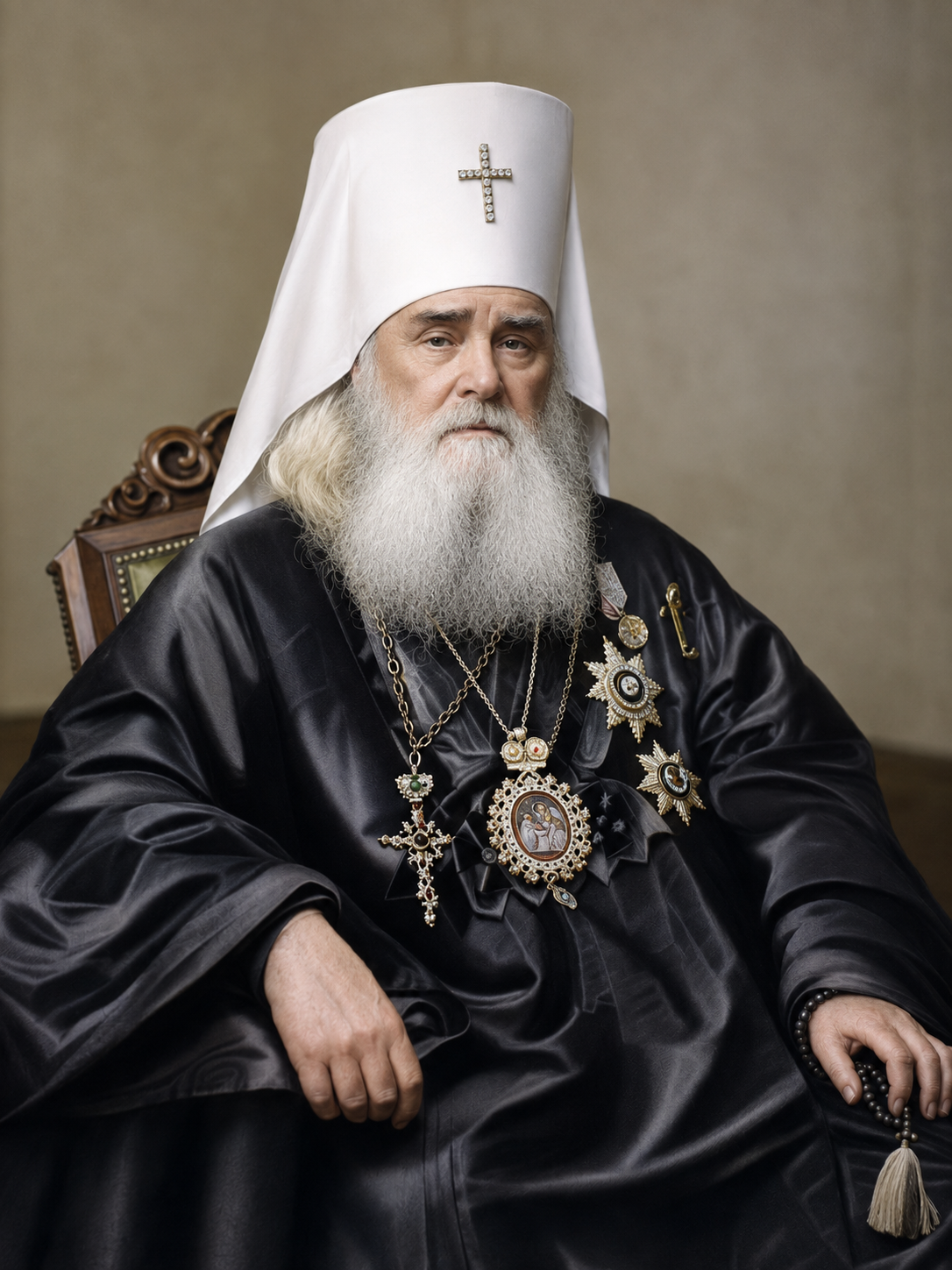
Saint Innocent of Alaska was a Russian Orthodox missionary, linguist, bishop and, at the end of his life, Metropolitan of Moscow. He was born John Popov in Siberia, and he was later given the surname Veniaminov. He is called the Enlightener of the Aleuts and the Apostle to America. These are titles of honor given by the Church, and they do not mean he was one of the original apostles.
He began as a married parish priest in Irkutsk. In 1824 he came with his family to Unalaska in the Aleutian Islands, and for about a decade he served the people of the islands, then moved to Sitka. After his wife died he became a monk and a bishop, and in time he led the whole Russian Church.
His life is well documented through his own journals and books and through church records. Even so, some dates differ between sources. Those points are marked UNCERTAIN in this article. The article also looks honestly at the fact that his mission took place inside the Russian colonial system in Alaska.
Early Life and Family
John Popov was born on August 26, 1797, in the village of Anginskoye in the Irkutsk region of Siberia, into a family of church servants. His father, Evsey Popov, served in the local church and began to teach the boy to read. The father died in 1803, and the family was left with little money.
John studied at the church school and seminary in Irkutsk. UNCERTAIN: sources give 1806 or 1807 as the year he began. In 1814 the seminary rector gave him the surname Veniaminov, in memory of the late Archbishop Benjamin of Irkutsk. Giving new surnames in this way was a custom in Russian church schools of the time.
In 1817 he married Catherine Sharina. This matters for his story, because for much of his missionary career he was a married priest with a family. His wife and children went with him to Alaska, and they shared the isolation and hard conditions of the far north. The sources agree that he had children, but we did not find reliable details on the full list of their names or on which of them travelled at each stage.
Priest and Missionary Calling
There is no record of a conversion from another religion. He grew up in the Orthodox Church. His turning point was the decision to take up mission work among the native peoples of Alaska. He was ordained deacon in 1817 and priest on May 18, 1821, and he served at the Annunciation Church in Irkutsk. UNCERTAIN: sources give both May 13 and May 18 for the deacon's ordination.
In 1823 he was assigned to Unalaska. A history of missiology from Boston University notes that he at first declined the post and later came to feel it was his calling. His family followed him, and they arrived in 1824.
Later, grief changed his path. His wife died, and Metropolitan Philaret of Moscow encouraged him to consider the monastic life. UNCERTAIN: the synodal biography gives November 24, 1838 for her death, while other accounts say 1839, so one date should not be stated without noting the difference. He was tonsured on November 29, 1840 and took the name Innocent, in honor of Saint Innocent of Irkutsk.
Missionary at Unalaska and Sitka
Orthodox mission in Alaska did not start with Innocent. Earlier missionaries, including Saint Herman of Alaska, had come in the 1790s. Innocent carried the work further. He travelled between the islands in small boats through dangerous seas and bad weather, preaching, celebrating the sacraments, teaching the faith, opening schools and building up local church life.
With an Aleut leader named Ivan Pan'kov he worked on translating the Gospel of Matthew and a catechism, and in 1828 they opened a parish school at Unalaska. It is important to give credit to this partnership. Innocent was highly skilled, but the Christian writing in Aleut was not the work of one man alone.
In 1834 he moved to Sitka, where he served among the Tlingit people and other communities on the Pacific coast. In 1836 he visited Fort Ross in California and met Franciscan missionaries, a documented case of contact between Russian Orthodox and Catholic missionaries in North America.
Languages, Journals and Writings
Innocent studied the languages of the peoples he served. He helped to shape a writing system for Aleut using Cyrillic letters, and he translated Scripture, prayers and teaching materials. It would be wrong to say that he invented the Aleut language. It existed long before he came, and he helped write down one dialect.
His best known religious work is the Indication of the Way into the Kingdom of Heaven, dated to about 1833. It presents the Christian life as following Christ through repentance, self-denial, faith and God's grace, and it has been read in Russian and in English translation. UNCERTAIN: sources do not always separate the date it was written from the date it was first printed, and one catalog mentions an 1840 edition.
He also wrote Notes on the Islands of the Unalaska District, a study of geography and the lives of the people, and a grammar of the Fox Aleut language published in 1846. His journals from 1823 to 1836 are first hand evidence of his work. They are valuable, but they also reflect the viewpoint and the limits of their author, and a careful reader should keep that in mind.
Bishop, Archbishop and Metropolitan of Moscow
Innocent was consecrated bishop on December 15, 1840, for a huge diocese that covered Kamchatka, the Kuril Islands and the Aleutian Islands. He became an archbishop in 1850. In 1853 his see was moved to Yakutsk, and Orthodox sources report the use of the Yakut language in services there by 1859.
In 1868 he became Metropolitan of Moscow and Kolomna, the head of the Russian Church after the Patriarchate had been replaced by the Holy Synod. In that office he supported missionary societies and the Russian mission in Japan. The Orthodox Church in America records meetings between Innocent and the future Saint Nicholas of Japan in 1860 and 1861.
His career joined parish ministry, language study, church leadership and the training of missionaries. He pressed for more churches, for trained clergy and for better organization of the missions, and he took the idea of worship in the people's own language across a very large area.
Hardships and the Colonial Context
His missionary work meant long trips over cold and dangerous water and sparsely settled land. According to the scholar Paul Garrett, his health was already so poor that he asked for disability retirement in 1832, yet he went on serving. In his last years his eyesight and strength declined. The death of his wife was a deep personal loss.
His mission also took place in Russian America, a society built around the fur trade. Russian expansion brought displacement and mistreatment of native peoples. The Church mission was not the same thing as the colonial administration, and some missionaries spoke against abuses. Yet missionaries still worked within a colonial setting, and their writing could carry its assumptions about civilization and religion.
Modern scholars ask how conversion affected native culture, and Innocent did speak against shamanism. UNCERTAIN: the sources we reviewed do not show that every conversion was free from pressure, and we found no evidence that he directed violent persecution of native religious practice. His work in learning languages and teaching is well documented, but it does not by itself settle every question about his legacy.
Death and Glorification
Innocent died in Moscow on March 31, 1879 by the Julian calendar, which was April 12 by the Gregorian calendar of that year. Orthodox sources say this was Holy Saturday. He was buried at the Trinity Saint Sergius Lavra.
On October 6, 1977, the Russian Orthodox Church formally glorified him, after a request from the Orthodox Church in America. The act recognized his missionary labors and his pastoral example, and his name was entered in the church calendar. His memory is kept on the day of his repose, March 31, and on the day of his glorification, and readers should follow the calendar used by their own church.
UNCERTAIN: Orthodox accounts report that his relics were found in 1994 at the Lavra, but we did not examine the full documentation of the discovery, so those details should be checked before they are repeated as settled fact.
Traditions and Devotion
Innocent's reputation rests mainly on his work, his endurance and his teaching, and not on a large collection of reported miracles. TRADITION: church hymns praise his preservation through dangerous journeys as a sign of God's providence. This is a religious reading of documented hardships and not a verified miracle.
TRADITION: the church biographies describe his inner struggle and his final conviction that he should leave Irkutsk for the far islands. This is the Church's remembered account of his calling. It is consistent with what we know of his decision, but it does not establish a vision or a voice from heaven.
Orthodox Christians ask for his prayers and keep his memory with icons and services. UNCERTAIN: we found no documented collection of miracles after his death, with named people, dates and contemporary records. For that reason no specific healing is attributed to him here.
Lord Jesus Christ, You sent Your disciples to every nation. Through the prayers of Your servant Saint Innocent, who learned the languages of those he served, bless all who bring Your Gospel to others. Give them patience in hardship, respect for the people they serve, and love that does not tire. Amen.
This is a short original prayer written for this article. It is not an official liturgical text. The Orthodox Church in America publishes the official troparion and kontakion for his feast.
Why He Matters to the Eastern Churches
For Orthodox Christians, Saint Innocent is a model of a missionary bishop who built lasting local communities. He showed that the faith could be taught and prayed in the languages of the people, and he worked with native Christians in translation and schooling. He is especially honored by the Orthodox Church in America and by the Orthodox faithful of Alaska.
For Eastern Catholics, his life is of historical and spiritual interest. His move from married priest to widower, monk and bishop reflects patterns in Eastern Christian life, and his 1836 meeting with Franciscan missionaries shows an early contact between the two traditions in North America.
Even so, the sources we reviewed do not show a Catholic canonization or a universal Catholic feast for him. His glorification took place in the Russian Orthodox Church, and a particular Eastern Catholic church would need to be asked about any local commemoration.
Frequently Asked Questions
Pray for Those Who Carry the Gospel
Saint Innocent reminds us to listen and learn before we teach. You may wish to keep a prayer card of Saint Innocent of Alaska near you as a reminder to pray for missionaries and for the peoples they serve.
View Prayer Card