Saint Kuriakose Elias Chavara: Life, Legacy, and the Reformation of Kerala
Syro-Malabar Catholic Church • Carmelites of Mary Immaculate • Kerala, India • 1805–1871
Saint Kuriakose Elias Chavara
The first canonized Catholic male saint of Indian origin — priest, mystic, reformer, and founder — who revolutionized education in Kerala, defended his ancient church from schism, and left behind two religious congregations, a printing press, a body of literature, and a spirituality that still shapes the oldest Christian community in Asia.
At a Glance
- Born
- February 10, 1805 — Kainakary, Kerala, India
- Died
- January 3, 1871 — Koonammavu, Kerala (age 65)
- Religious Name
- Kuriakose Elias of the Holy Family, CMI
- Order Founded
- Carmelites of Mary Immaculate (CMI) — India's first indigenous men's religious congregation
- Church
- Syro-Malabar Catholic Church (East Syriac rite)
- Feast Day
- January 3 (Syro-Malabar); February 18 (Latin Rite)
- Beatified
- February 8, 1986 by Pope John Paul II — Kottayam, India
- Canonized
- November 23, 2014 by Pope Francis — St. Peter's Square, Rome
- Primary Shrine
- St. Joseph's Monastery Church, Mannanam, Kottayam, Kerala
- Patron
- Education; families; the sick; CMI and CMC congregations; social reform
- Historic Title
- First canonized Catholic male saint of Indian origin
In nineteenth-century Kerala, the ancient Christian community of the Saint Thomas Christians — one of the oldest continuous Christian communities on earth — found itself in crisis on multiple fronts. Its clergy were inadequately formed, its liturgical life was stagnant, its people were largely illiterate, its lower castes were excluded from education entirely, and its ecclesiastical unity was threatened by an unauthorized foreign bishop who arrived claiming jurisdiction he did not possess. Into this moment stepped a young priest from Kainakary who, over the course of forty years, addressed each of these crises with the same quiet, inexhaustible energy — and left behind institutions, reforms, a printing press, a body of literature, and a congregation that today operates over 1,200 educational institutions serving more than 400,000 students worldwide.
His name was Kuriakose Elias Chavara. On November 23, 2014, Pope Francis declared him a saint — the first canonized Catholic male saint of Indian origin, and the second saint of the Syro-Malabar Catholic Church, following Saint Alphonsa of the Immaculate Conception, whom Chavara had himself interceded to heal during her lifetime. His story is the story of how one man, formed in prayer and driven by an understanding that faith without works of justice is incomplete, remade the social, educational, and spiritual landscape of an entire region.
This is the complete account of his life.

The Syro-Malabar Church Chavara Was Born Into
Kuriakose Elias Chavara was not merely a product of his religious tradition — he became one of its defining figures. To understand him, one must understand the community that shaped him.
The World's Oldest Apostolic Christian Community
The Syro-Malabar Catholic Church traces its origins to the mission of the Apostle Thomas, who tradition holds arrived on the Malabar Coast of Kerala in 52 AD. These original converts — the ancestors of Chavara's community — became known as the Nasrani, or St. Thomas Christians, and they maintained an unbroken Christian presence in India for nearly two millennia before the first European missionaries ever arrived. Their liturgy was in the East Syriac rite, a tradition rooted in the ancient church of Edessa, using a form of Aramaic — the language of the Near East at the time of Christ. Their theology was shaped by the great Syriac Fathers, including St. Ephrem the Syrian.
The Chavara family belonged to this community — described historically as "Indian in culture, Christian in faith, and Syriac in liturgy." Both his father's and mother's families traced their lineage to the ancient Nasrani families of Kainakary, part of a community that considered itself descended from the Apostle's own converts. When Chavara was baptized at St. Joseph's Syro-Malabar Catholic Church, Chennamkary, on February 18, 1805, he was entering a sacramental lineage stretching back eighteen centuries.
A Church in Need of Renewal
By the early nineteenth century, however, this ancient community faced serious internal challenges. The Portuguese padroado had disrupted the traditional ecclesiastical structure of the Kerala church in the sixteenth century, introducing Latin practices that sat uneasily alongside the community's East Syriac identity. Indigenous clergy were poorly formed; religious life for men and women barely existed at the indigenous level; and the educational infrastructure of the church was minimal, leaving the majority of Kerala's Christians — including all its lower-caste members — without access to formal learning. The social stratification of Kerala society, with its rigid caste hierarchy, had seeped deeply into Christian life. The stage was set for the reforms Chavara would spend his life pursuing.
Part II
Early Life and Priestly Formation (1805–1829)
Kuriakose Chavara was born the son of Iko (Kuriakose) Chavara and Mariam Thoppil on February 10, 1805, in Kainakary, a village in the Kuttanad region near Alappuzha (Alleppey) in what was then the princely state of Travancore. His family was devoutly Catholic, and from his earliest years he was steeped in the prayer rhythms of a Syrian Christian household — the liturgical calendar, the domestic icon, the Syriac prayers passed down from generation to generation.
From ages five to ten he attended the local kalari (village school), studying language and elementary sciences under a Hindu teacher named Asan — an early sign that Chavara's world was not bounded by communal walls. His intellectual formation was broad from the start: Malayalam, Sanskrit, Latin, Syriac, Tamil — he would become fluent in all of them. Drawn by a desire for the priesthood, he began priestly studies under the parish priest of St. Joseph's Church, and in 1818, at the age of thirteen, he entered the seminary at Pallipuram under the rector Malpan Thomas Palackal — the priest who would become both his mentor and co-founder.
Palackal Thoma Malpan was himself a visionary: he had already conceived of the need for an indigenous religious congregation for the Syro-Malabar Church, recognizing that the community's spiritual renewal required an organized body of formed, committed priests devoted entirely to its service. The young Chavara absorbed not only theology but this larger vision — and would spend the rest of his life making it real.
On November 29, 1829, Kuriakose Chavara was ordained to the priesthood at St. Andrew's Basilica, Arthunkal, Alappuzha. He celebrated his First Holy Qurbana (Mass) at Chennankari Church. His own testimony records that his special intention at that first Eucharist was the realization of the religious institute already contemplated by Palackal, Porukara, and himself. He had been ordained less than an hour, and his entire ministry was already oriented.
Part III
Founding the CMI: India's First Indigenous Congregation (1831–1856)
The congregation that would become the Carmelites of Mary Immaculate began not with a dramatic founding event but with a quiet gathering on a hill. In 1830, Fr. Chavara traveled to Mannanam, a village in Kottayam district, to direct the construction of the first house of the congregation he and his mentors had been preparing. The foundation stone was laid on May 11, 1831, by Palackal, Porukara, and Chavara together. They named the place Beth Rauma — an Aramaic phrase meaning "house on the hilltop" or "lofty dwelling" — a name that captured both the physical location on Mannanam hill and the spiritual aspiration of the foundation.
The early community was small, poor, and vulnerable. Both Palackal (d. 1841) and Porukara (d. 1846) died before formal religious profession could be made, leaving Chavara to carry the nascent congregation through its most precarious years. He did so with characteristic steadiness — establishing a second house at Koonammavu in 1857, followed by Elthuruth (now home to St. Aloysius College, Thrissur) in 1858, Plasnal and Vazhakulam in the same year, Pulincunnu in 1861, Ambazhakad in 1868, and Mutholy in 1870. By the time of his death he had founded seven monasteries.
On December 8, 1855 — the feast of the Immaculate Conception — Chavara and ten companions made their formal religious profession together. He took the name Kuriakose Elias of the Holy Family. He was elected Prior General of the congregation and would lead it until his death. The congregation was formally known as the Carmelites of Mary Immaculate (CMI).
The First Women's Congregation: CMC
Chavara was deeply aware that the renewal he sought in the Syro-Malabar Church required both men and women in religious life. He wrote that the absence of convents for women was a "pathetic situation" and worked for years to remedy it. On February 13, 1866, with the cooperation of Fr. Leopold Beccaro OCD, the first Carmelite convent for women was established at Koonammavu under the name Third Order of the Discalced Carmelites — later to become the Congregation of the Mother of Carmel (CMC). Chavara served as its spiritual guide, though the canonical designation of foundress is formally attributed to Mother Eliswa Vakayil.
The congregation Chavara co-founded now operates more than 1,200 educational institutions worldwide, serving over 400,000 students. It has spread far beyond Kerala to missions across India, Africa, Europe, and the Americas. Every CMI institution carries the spiritual DNA of the prayer-saturated, socially engaged vision Chavara articulated from the hilltop at Mannanam in 1831.

The Pallikoodam Revolution: Reforming Education in Kerala
If Chavara's religious foundations were his most enduring institutional legacy, his educational reforms were arguably his most transformative social legacy — and the one with the longest reach into Kerala's secular history.
The Pallikoodam Mandate
As Vicar General of the Syro-Malabar Catholic community, Chavara used his authority to issue a directive that would reshape the educational landscape of Kerala: every parish church must establish a pallikoodam (school) attached to it. The phrase he championed — palliyum pallikoodavum, "a church and a school" — became the organizing principle of Catholic education in Kerala. On March 25, 1850, he sent a circular to all parish priests mandating the establishment of centers of education where Malayalam, Tamil, Latin, and Syriac could be taught, and urging parishioners to contribute to their support.
This was not a marginal reform. In early nineteenth-century Kerala, formal education was the near-exclusive preserve of upper-caste Hindus. Christians were generally excluded from Sanskrit learning, and lower-caste populations — including the pulaya and parava communities — were legally barred from public roads, markets, and temples, let alone schools. Chavara dismantled this wall. His schools were open to all children regardless of caste. He provided free education, and — crucially — he understood that poverty would prevent poor families from sending children to school unless their physical needs were addressed too. He introduced midday meals for students at his schools in Mannanam and Arpookara, a practice that was later recommended to the King of Travancore by Sir C.P. Ramaswamy Iyer for implementation in all government schools, and which continues in Kerala's state school system today.
Sanskrit Schools for the Lower Castes
In 1846, Chavara established the first Sanskrit school attached to St. Joseph's Monastery at Mannanam — open not only to Christian students but to lower-caste Hindus for whom Sanskrit education had been legally and socially forbidden. This was a direct challenge to the caste hierarchy of Kerala society, decades before the social reform movements of Sree Narayana Guru and Ayyankali would begin addressing the same injustices. Historians of Kerala's reform movement consistently place Chavara as the first reformer to act, noting that Narayana Guru and the others who followed were young or unborn when Chavara began dismantling caste barriers through education.
Whenever Kerala's social reform movement is discussed, it typically begins with Sree Narayana Guru and Ayyankali. Both were teenagers or younger when Chavara was already revolutionizing education. Kerala's remarkable literacy rate — the highest of any Indian state — has deep roots in the educational infrastructure Chavara's Pallikoodam mandate created in the 1840s and 1850s.
His first teacher at the Sanskrit school was a Hindu — Warrier of Thrissur — deliberately signaling that the new institution stood outside caste division from its first day.
The midday meal scheme Chavara introduced at his schools predated government adoption by decades and is directly traceable in the historical record to his initiatives at Mannanam and Arpookara.
The Printing Press: Kerala's First
Chavara understood early that education required materials — books, catechisms, liturgical texts, newspapers. He established the first Catholic printing press in Kerala at Mannanam, initially using a wooden press designed on plantain marrow. Through this press he published prayer books in Malayalam (the first of their kind), catechetical materials, and literary works. He was also instrumental in first printing Syriac text in Kerala — vital for the preservation and renewal of the community's liturgical heritage. His publishing work laid the foundation for the broader Malayalam printing industry and, eventually, for the first Malayalam-language newspaper.
Part V
Defender of the Church: The Roccos Crisis (1861–1862)
Of all the crises Chavara navigated during his ministry, the most dangerous to the institutional life of the Syro-Malabar Church arrived in 1861 in the person of Mar Thomas Roccos — a bishop from Chaldea who arrived in Kerala claiming jurisdiction over the Syrian Christians without proper credentials from the Pope. His arrival threatened to split the Kerala church in a repeat of the schisms that had already fragmented the broader St. Thomas Christian community in the seventeenth century.
Chavara was serving as Vicar General of the Syro-Malabar Catholics under Archbishop Bernardino of the Archdiocese of Verapoly at the time. He responded with a combination of canonical clarity, pastoral persuasion, and direct correspondence with the Holy See in Rome — writing to the Pope himself to clarify the situation and seek guidance. His approach was notably different from the confrontational tactics that had characterized earlier ecclesiastical conflicts: he did not oppose Roccos with hostility but with patient, firm, canonical argument. He refused to recognize illegitimate authority while working to prevent any breach in the community's unity with Rome.
The crisis was resolved. The unity of the Syro-Malabar Church was preserved. Later leaders of the Syro-Malabar Church explicitly credited Chavara's leadership during the Roccos affair with saving the church from a schism that would have been catastrophic for the community's future. His own last testament instructed the members of his congregation to show goodness to Mathen — a man who had stolen monastery land and sued him repeatedly — as a final expression of the love-without-resentment that had characterized his entire approach to opposition.
Part VI
Liturgical Renewal and the East Syriac Heritage
Chavara's reforms were not only social and institutional. At the center of everything he did was a conviction that the spiritual renewal of the Syro-Malabar Church required renewed engagement with its own deepest liturgical heritage — the East Syriac tradition it had received from the Church of the East and preserved through centuries of foreign ecclesiastical pressure.
The East Syrian Breviary
One of Chavara's most significant liturgical contributions was being the first to edit and publish the East Syrian Breviary — the ancient daily prayer of the Syro-Malabar Church — in a form accessible to the Malabar clergy. He prepared the first liturgical calendar for the Malabar Church in 1862, which remained in use for decades. He translated additional texts from Syriac and Tamil into Malayalam, making the richness of the East Syriac liturgical tradition available to a generation of priests who might otherwise have encountered it only partially.
Sunday Homilies and Retreats
In 1831, Chavara introduced the practice of Sunday homilies — explanatory preaching during the Holy Qurbana — into Kerala's Catholic parishes. This seems modest by modern standards, but in a context where the liturgy was often conducted in languages the faithful did not understand, regular preaching in Malayalam was a genuine pastoral revolution. He also introduced annual retreats for both priests and laity, providing structured occasions for spiritual renewal that had not previously existed in the Malabar Church at an organized level.
Forty-Hour Adoration
Chavara introduced the forty-hour adoration of the Blessed Sacrament — the extended period of Eucharistic prayer before the exposed Sacrament — to the Malabar Church, giving it a formal Eucharistic devotional practice that deepened the community's sense of Christ's Real Presence. This was consistent with the East Syriac tradition's profound Eucharistic theology: the Holy Qurbana is not merely a rite but the central act of the Church's life, the memorial that makes present the sacrifice of Christ.
The Privilegium Altaris
On a personal request by Chavara, Pope Pius IX granted the main altar of St. Joseph's Monastery Chapel at Mannanam the Privilegium Altaris — a privilege declaring that the Holy Eucharist offered at that altar procures indulgence for the deceased. The altar has been entered in the Vatican Archives as a result. It remains to this day the spiritual heart of the Mannanam monastery and pilgrim centre.
Chavara's liturgical reforms were not Latinizing innovations but returns to the depth of the Syro-Malabar community's own heritage. He understood that a church that does not pray its own tradition deeply will eventually lose its identity. Every liturgical initiative he undertook — the Breviary edition, the preaching reform, the Eucharistic adoration — pointed his community back toward the ancient East Syriac spiritual riches they already possessed but had not fully claimed.
Mystic and Writer: His Literary Legacy
Chavara was not only a founder and reformer but a genuine literary figure — one of the significant Malayalam writers of the nineteenth century. The Kerala Sahitya Akademi (the state's literary academy) unveiled a portrait of him in 2004 in recognition of his contribution to Malayalam literature, and published a critical edition of his works in 2014. His writings span spiritual poetry, contemplative prose, family guidance, liturgical texts, and chronicles of daily monastery life.
Atmanuthapam (Repentant Soul's Lament)
His major spiritual epic, Atmanuthapam ("Repentant Soul's Lament"), is a sustained meditation on the soul's condition before God — drawing on the tradition of penitential literature found in both the Syriac Fathers and the Christian mystical tradition more broadly. Inspired by St. Ephrem the Syrian — the great Syriac poet-theologian of the fourth century — it reflects on the Incarnation, the suffering of Christ, and the soul's longing for union with God with a depth of feeling that marks Chavara as a genuine contemplative, not merely a practical reformer.
The third canto of Atmanuthapam includes a remarkable meditation on the motherhood of Mary — on conception, pregnancy, birth, nursing, and the embrace of the newborn — presented as spiritual practices and windows into the mystery of the Incarnation. This integration of the human body into mystical reflection is characteristically Syriac, rooted in the tradition of Ephrem, who found in concrete bodily experience the closest human approach to divine mystery.
Dhyana Sallapangal (Meditative Colloquies)
Dhyana Sallapangal ("Meditative Colloquies") is a contemplative work in the tradition of the dialogue form common to Syriac mystical literature — the soul in conversation with God, with Mary, with the realities of faith. This text, along with Atmanuthapam, establishes Chavara as a writer working consciously within the Syriac mystical tradition he received through the Kerala church's liturgical heritage.
Nalla Appante Chavarul (Testament of a Loving Father)
Perhaps his most practically influential writing is Nalla Appante Chavarul — the "Testament of a Loving Father" — a detailed pastoral guide to Christian family life: how to honor parents, raise children, relate to neighbors, discipline oneself, choose good friends, and root domestic life in love of God. Written as counsel to Christian families, it remains in use in Syro-Malabar parishes today, recognized as one of the earliest and most complete expositions of the theology of the domestic church in the Indian Christian tradition.
The Chronicles
Chavara also kept detailed Nalagamangal (Chronicles) — daily records of events not only within the monastery but in the surrounding society and Kerala Church. Written in his own hand in Malayalam, these manuscripts are invaluable historical sources for nineteenth-century Kerala and are preserved in the archives at Mannanam. He was also credited with one of the earliest semi-epic poems in Malayalam, Anastasiayude Rakthasakshyam (The Martyrdom of Anastacia).
The remarkable thing about all of Chavara's writing is its integration of the contemplative and the practical. He never wrote purely abstractly; his mystical texts are oriented toward formation. He never wrote purely practically; his practical guides are grounded in a theology of the human person made for God. In this he was a faithful son of the Syriac tradition — which has always refused to separate the life of prayer from the life of action.
Part VIII
Final Years and a Holy Death (1864–1871)
In 1864, the Vicar Apostolic transferred Chavara to Koonammavu Monastery, where he would spend the last seven years of his life. These were years of continued activity — he founded two more monasteries, established the women's congregation, and continued his writing — but also of increasing physical weakness. A short but painful illness in December 1870 brought him to the end.
At his deathbed, Chavara was asked how he felt. His answer was characteristic: "I have never lost the baptismal grace." After a life of extraordinary activity — seven monasteries founded, a printing press established, hundreds of schools launched, a schism averted, two congregations formed, a body of literature completed — he died with the simplicity of a man who had done it all for God and held nothing back.
Rev. Fr. Romulus CMI, who would later also preach at the funeral of Saint Alphonsa, recorded that the reputation of Chavara's holiness spread immediately upon his death. People came to his grave seeking intercession. Reports of miraculous favors began almost at once.
Part IX
Miracles: During His Life and After His Death
The miraculous reputation of Kuriakose Elias Chavara began during his lifetime and has continued without interruption to the present day. The official canonization cause, which began formally in 1955, documented scores of reported miraculous favors before settling on two cases for official submission to Rome.
Miracles During His Lifetime
- The Healing of Saint Alphonsa (1936 — reported posthumously): The most remarkable testimony to Chavara's intercessory power during his lifetime came from Saint Alphonsa herself. In 1936, while lying seriously ill in her convent bed at Bharananganam, Alphonsa possessed a lock of Chavara's hair — a relic preserved by Fr. Varkey Muttathupadathu, one of his disciples and a relative of Alphonsa's family. Alphonsa testified in her own handwriting that Chavara appeared to her twice during her illness and that she was miraculously healed through prayer with this relic. Her signed testimonial is preserved at Mannanam. The relic of Chavara's hair that healed the future saint is still kept there.
- Reputation for Holiness in Life: Multiple contemporaries — clergy, laity, and members of other religious communities — described Chavara during his lifetime as a "man of God." His spiritual director and the members of his congregation uniformly attested to the quality of his prayer, his charity, and his virtue. Pope John Paul II noted at his beatification that "his success in all that he did was undoubtedly due to the intense charity and prayer which permeated his daily life."
The Beatification Miracle: Joseph Mathew Pennaparambil (1960)
The miracle approved by Rome for Chavara's beatification in 1986 involved Joseph Mathew Pennaparambil, a young man born with congenital deformity of both legs — clubfoot — that left him walking with severe difficulty. On hearing reports of miracles through Chavara's intercession, Joseph and his family began praying to him intensely. One day, as Joseph and his sister were walking back from school, she urged him to pray to Chavara for the healing of his legs, and together they recited one Our Father, one Hail Mary, and one Glory Be. As they walked, Joseph suddenly felt his right leg shivering. He pressed it to the ground — and could walk normally. The prayers continued. On April 30, 1960, while walking to his elder brother's house, Joseph's left leg too became normal. Both legs had been instantaneously and fully corrected. A medical commission confirmed the cure could not be explained naturally. Rome accepted it as the beatification miracle.
The Canonization Miracle: Maria Jose Kottarathil (2007)
The miracle approved for canonization involved Maria Jose Kottarathil, a nine-year-old Catholic girl from Pala, Kottayam. Maria was born with alternating esotropia — congenital squint in both eyes, a condition that five doctors unanimously recommended correcting by surgery. Maria's family chose instead to pray to Chavara. On October 12, 2007, Maria visited the room and tomb of Chavara at Mannanam with her parents. On October 16, 2007 — four days later — the squint in both eyes disappeared completely, instantly, and permanently. The cure was declared by the Congregation for the Causes of Saints to be instantaneous, total, stable, and beyond natural explanation. The miracle decree was approved by Pope Francis on March 18, 2014, leading to the canonization later that year.
- Ongoing Intercessions: The tomb of St. Chavara at Mannanam is visited by thousands of pilgrims every Saturday for the weekly Novena Mass. Reports of miraculous favors continue to be documented. It is particularly noted that people who come to the tomb "typically lay their heads on it and get relieved from their agonizing worries" — a practice that echoes the ancient Christian tradition of first-class relic veneration reaching back to the earliest centuries of the Church.
- Connection to Saint Alphonsa: The intertwined miracles of these two Syro-Malabar saints are remarkable: Chavara healed Alphonsa during her lifetime; Alphonsa's first canonized miracle paralleled Chavara's beatification miracle (both involving healing of congenital foot deformity); and both were beatified on the same day, in the same ceremony, by Pope John Paul II at Kottayam on February 8, 1986.
Part X
The Path to Canonization (1955–2014)
The Government of India had already recognized Chavara's importance decades before his canonization, releasing a commemorative postal stamp on December 20, 1987. Former President R. Venkataraman, speaking at the stamp release, described Chavara as "the epitome of Indian Christianity at its best and the Malabar church at its most resplendent." The Kerala Sahitya Akademi published an edition of his complete literary works in 2014 — the year of his canonization — acknowledging him as a major figure in Malayalam literature alongside his status as a Catholic saint.
Where to Venerate Saint Chavara: Relics and Pilgrimage Sites
The heart of devotion to Saint Chavara remains the mother house of the congregation he co-founded — St. Joseph's Monastery, Mannanam. But his presence has extended through the CMI congregation's global mission to churches and institutions on every continent. Below is a guide for those wishing to venerate this saint more closely.
The Primary Shrine: Mannanam, Kerala
St. Joseph's Monastery Church at Mannanam, Kottayam district, Kerala, is the primary pilgrimage destination for devotees of Saint Chavara. His mortal remains — transferred from St. Philomena's Church, Koonammavu, in 1889 — rest in a bronze reliquary before the main altar of the monastery church. The tomb carries the Privilegium Altaris granted by Pope Pius IX at Chavara's own request: the Eucharist offered at this altar procures indulgence for the deceased.
The annual feast of Saint Chavara is celebrated from December 26 through January 3, culminating on January 3 — his death anniversary. Thousands of pilgrims visit every Saturday throughout the year for the weekly Novena Mass. The shrine also includes a museum and the historic monastery buildings where Chavara and his first companions established Beth Rauma nearly two centuries ago.
| Location | Details | Website |
|---|---|---|
| St. Joseph's Monastery Church, Mannanam, Kottayam, Kerala, India | Primary shrine. His mortal remains in bronze reliquary before the main altar. Weekly Saturday Novena Mass. Annual feast Dec 26–Jan 3. Museum on site. The Privilegium Altaris altar is here. | saintchavara.org |
| St. Chavara Syro-Malabar Catholic Mission, Cincinnati, Ohio, USA | Named for St. Chavara. Parish of the St. Thomas Syro-Malabar Catholic Eparchy of Chicago, serving Syro-Malabar faithful in the Cincinnati region. | stchavaracincinnati.org |
| St. Chavara Syro-Malabar Catholic Church, USA (multiple locations) | Several parishes in the St. Thomas Syro-Malabar Catholic Eparchy of Chicago bear Chavara's name. Contact the Eparchy for the parish nearest you. | stthomasdiocese.org/parishes |
| Mar Thoma Sleeha Cathedral, Bellwood, Illinois (Diocesan Cathedral, USA) | Cathedral of the St. Thomas Syro-Malabar Catholic Eparchy of Chicago — the governing body for all Syro-Malabar faithful in the United States. Contact for relic veneration information. | stthomasdiocese.org |
| St. Alphonsa Syro-Malabar Catholic Cathedral, Mississauga, Ontario, Canada | Cathedral of the Syro-Malabar Eparchy of Mississauga. Contact for information on Chavara relics in Canada. Address: 6630 Turner Valley Road, Mississauga, ON L5N 2P1. | syromalabarcanada.com |
| CMI Parishes and Institutions Worldwide | The CMI congregation, which Chavara co-founded, operates in dozens of countries. Relics may be held at CMI communities. Contact the CMI Province nearest you or the CMI Generalate in Rome. | cmiclt.in |
Note on first-class relics in North America: Authenticated first-class relics of Saint Chavara may be held at CMI communities, Syro-Malabar parishes bearing his name, or the Eparchial chancery. Contact the St. Thomas Syro-Malabar Catholic Eparchy of Chicago (USA) or the Eparchy of Mississauga (Canada) for current information on relic location and veneration opportunities.
Eastern Christian Prayer Cards for Parishes & Families
Handcrafted prayer cards featuring the saints of the Syro-Malabar and Eastern Christian tradition — for icon corners, feast day celebrations, parish gifts, and bulk church orders. Devotional companions to the faith of the St. Thomas Christians.
Browse Prayer Cards →The Scriptures of the Eastern Christian World
Saint Chavara was steeped in the Syriac biblical and liturgical tradition — a world where Ephrem the Syrian's hymns shaped the understanding of Scripture, and where the canonical borders of the Bible carried the weight of apostolic tradition. For those drawn to explore the full breadth of the Eastern Christian biblical world, including books preserved in traditions from Ethiopia to Edessa:
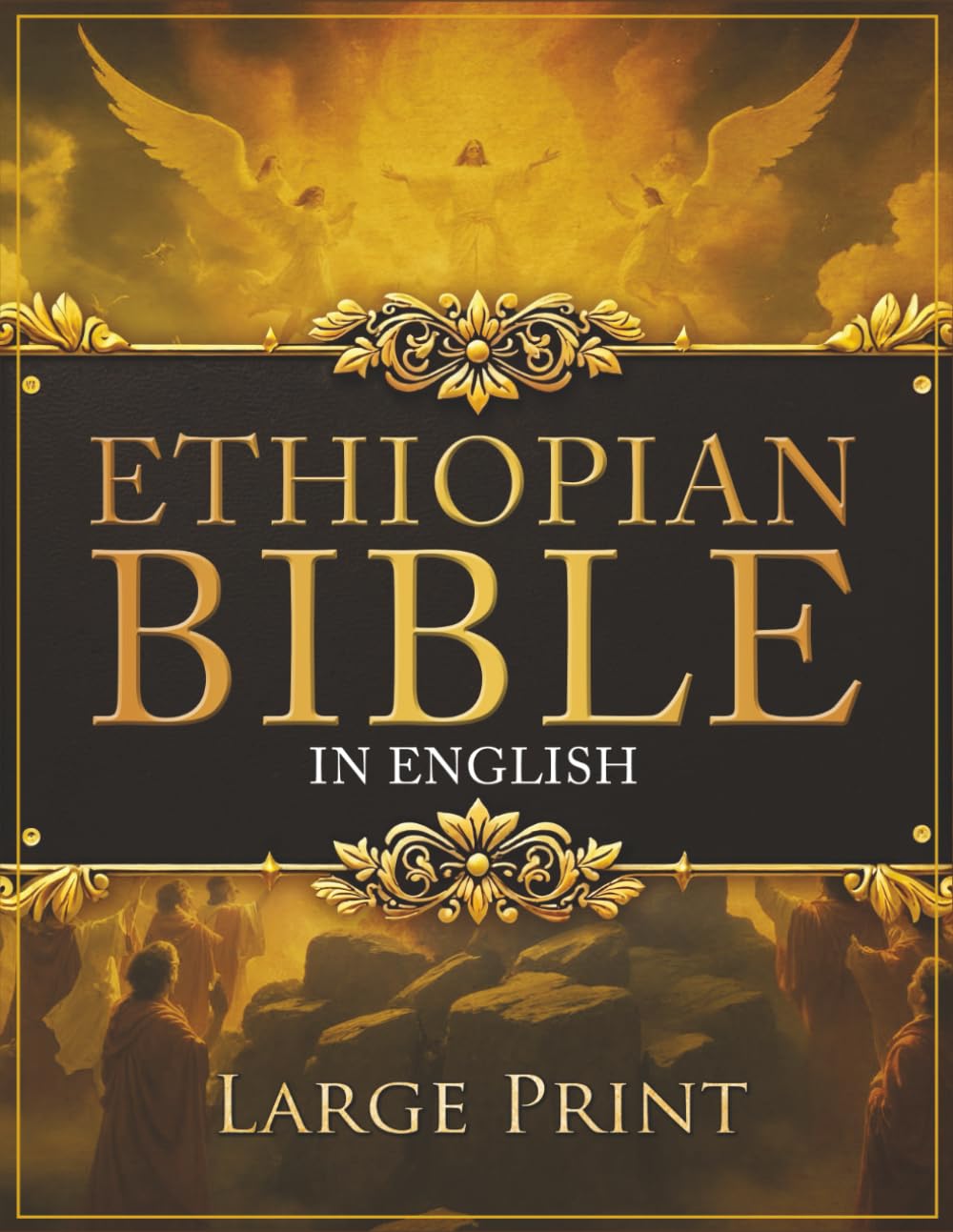
The Complete Ethiopian Bible (81 books) — includes the full Eastern canon with Enoch, Jubilees, and more.
View on Amazon →
Bible with Enoch & Jubilees — ancient Jewish-Christian texts that shaped early Eastern Church spirituality.
View on Amazon →
Book of Enoch (standalone) — the ancient text quoted in the New Testament, central to Second Temple and early Eastern Christian mysticism.
View on Amazon →Saint Chavara's Testament of a Loving Father is one of the earliest and most complete guides to Christian family life in the Indian tradition. For those seeking to deepen their marriage in the same Syriac Christian spirit, explore our free collection of Christian marriage books — offered completely free online, in the spirit of Chavara's own commitment to making truth accessible to all.
Questions About Saint Kuriakose Elias Chavara
Chavara understood that the renewal of the Church begins in Christian homes — in the domestic church formed by couples and families rooted in prayer, sacrifice, and love. His Testament of a Loving Father was an early masterpiece of this vision. Explore our free Christian marriage resources for the contemporary family, drawing on the deep wells of Eastern Christian spirituality.
A Man Who Left Nothing Undone
The life of Kuriakose Elias Chavara reads like the work of three different men — a contemplative mystic, a social reformer, an institutional founder — who happened to share one body. He founded congregations, launched schools, established a printing press, published liturgical texts, wrote poetry, defended his church from schism, and died with the words "I have never lost the baptismal grace" on his lips. He did it all from prayer, and for God, and with a gentleness that left no enemies behind — only people who needed good to be done to them.
Pope Francis captured him in a single sentence: "Both active and contemplative, who generously gave his life for the Syro-Malabar Church, putting into action the maxim: sanctification of oneself and the salvation of others." That was Chavara. That is still, two centuries later, the challenge he sets before every Christian who encounters him: to be as fully alive to God as he was, and as fully alive to the world that needs what God gives.
Get the Saint Chavara Prayer Card →As an Amazon Associate, The Eastern Church earns from qualifying purchases.