Saint Maria of Paris: Nun, Poet, Mother and Rescuer of the Persecuted
The Russian Orthodox nun who turned her houses in Paris into a refuge for the poor and the hunted, and who died at Ravensbruck in 1945.
At a Glance
- Born
- December 8, 1891 (Old Style), December 20 on the modern calendar, in Riga
- Died
- March 31, 1945, at the Ravensbruck concentration camp, Germany
- Feast day
- July 20 on the civil calendar; August 2 where the Julian calendar is kept for fixed feasts
- Glorification
- Ecumenical Patriarchate, January 2004; solemn service in Paris, May 1 and 2, 2004
- Other recognition
- Righteous Among the Nations (Yad Vashem), 1985
- Titles
- Righteous Martyr, New Martyr of France; no Catholic canonization
- A Saint of the Open Door
- Riga, Anapa and the Revolution
- Exile, Loss and Monastic Vows
- The House on Rue de Lourmel
- Her Writings
- Criticism within the Church
- Occupation, Rescue and Arrest
- Ravensbruck and Death
- Recognition and Glorification
- Tradition and Devotion
- Why She Matters to Eastern Catholics and Orthodox Readers
- Frequently Asked Questions
A Saint of the Open Door
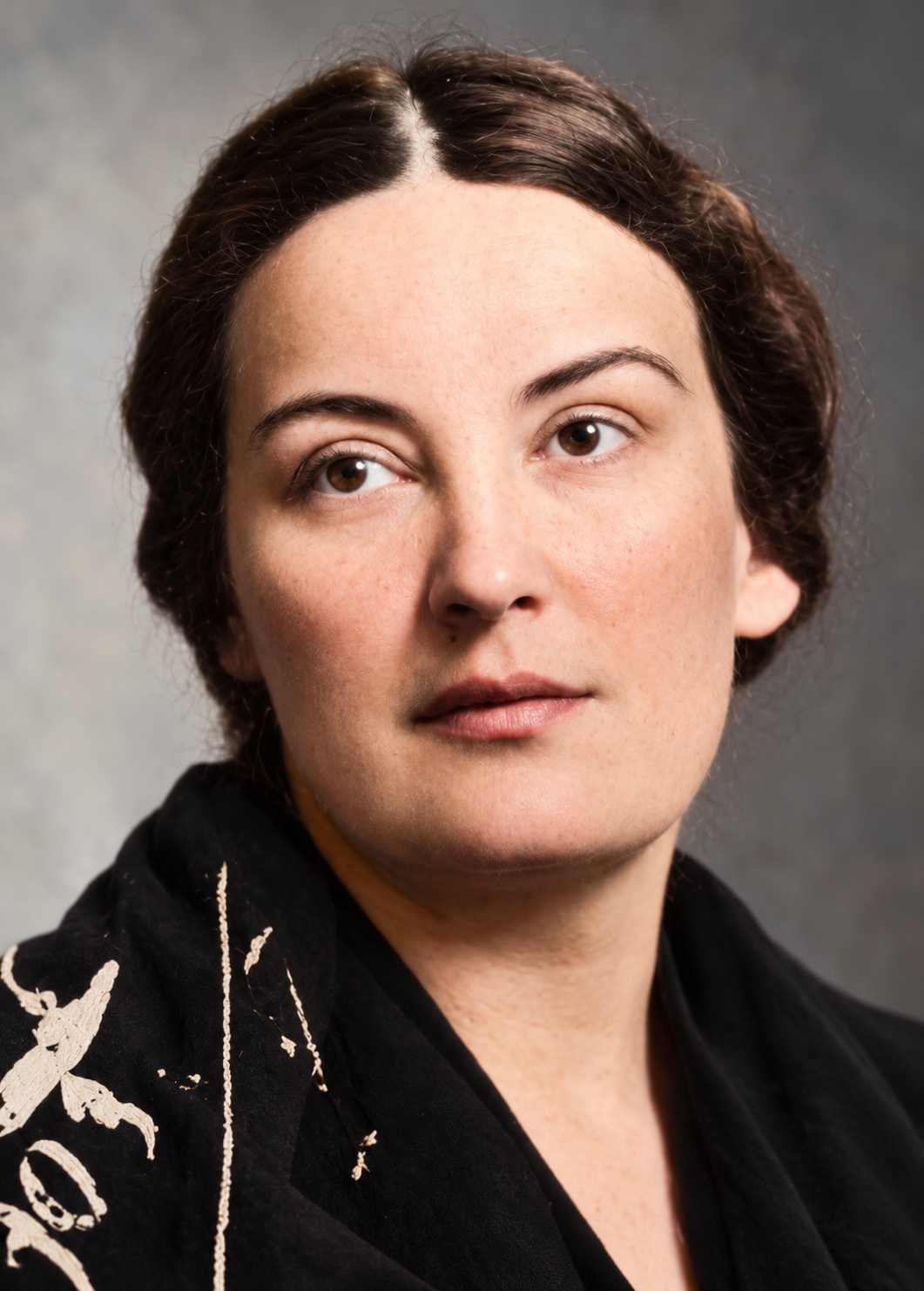
Saint Maria of Paris was born Elizaveta Pilenko, and her life does not look like a standard saint's life. She was a poet, a twice-married mother of three, a political figure in the Russian Revolution, a refugee, a nun who smoked and argued with bishops, and a woman who ran a house for the poor in the poorest part of Paris. She died in a Nazi concentration camp because she helped to hide Jews.
In the Christian East she is remembered as a Righteous Martyr and a New Martyr of France. Her convictions about the life of faith were simple to state and hard to live: the way to God passes through the person in front of you, and every human face bears the image of God.
This article follows the Orthodox Church in America, the Greek Orthodox Archdiocese, Yad Vashem, the Ecumenical Patriarchate's act of glorification and the biographies of Sergei Hackel and Jim Forest. Where accounts rest on recollection they are marked TRADITION, and where sources disagree they are marked UNCERTAIN.
Riga, Anapa and the Revolution
Elizaveta Yurievna Pilenko was born on December 8, 1891, by the Old Style calendar used in Russia, which is December 20 on the modern calendar. She was born in Riga, now the capital of Latvia, into a well-off Orthodox family. Her father, Yuri Pilenko, worked in the judiciary and later in agriculture and public administration. The family settled near Anapa on the Black Sea, where he served for a time as mayor.
As a child she showed an early religious bent. According to Jim Forest, drawing on Hackel, she gave her savings toward an icon for a church and spoke of becoming a nun or a wandering pilgrim. These stories come from recollection, not from independent records.
Her father died when she was about fourteen, and the loss shook her faith. She turned toward atheism and revolutionary ideas. In 1906 her mother took the family to Saint Petersburg, where Elizaveta met the poet Alexander Blok and joined the literary circles of the Russian Silver Age. She married Dmitri Kuzmin-Karavaev in 1910, and the marriage soon failed. Her daughter Gaiana was born in 1913, and she published poetry, including Scythian Shards in 1912 and Ruth in 1916.
In February 1918 she was elected deputy mayor of Anapa and later acted as mayor during the Civil War. Her efforts to protect civilians put her in danger from rival factions, and she was arrested and tried by White forces, but she escaped execution. She married Daniil Skobtsov, and two more children followed, Yuri in 1920 and Anastasia in 1921.
Exile, Loss and Monastic Vows
The family fled Russia after the Bolsheviks took power. After difficult years in Georgia and the Balkans, they reached Paris in 1923, according to the Orthodox Church in America and Forest. There Elizaveta did poorly paid manual and artistic work to support her mother and children.
Her return to faith was gradual. She had been disillusioned by revolutionary circles that talked about suffering but did little about it. She was drawn first to Christ as a man who suffered for others, and over time, through prayer, Scripture and study, she found a personal faith.
In 1926 her youngest daughter, Anastasia, died of meningitis. Maria did not turn away from God. She understood the loss as a call to a wider kind of motherhood, and she began to give herself more and more to refugees, the unemployed, the sick and those who had lost their families or homes. Her work with the Russian Student Christian Movement brought her into contact with many suffering emigres, and her advisers included Father Sergei Bulgakov and Metropolitan Evlogy.
In the spring of 1932 Metropolitan Evlogy received her monastic profession at the Saint Sergius Theological Institute in Paris. She took the name Maria, in honor of Saint Mary of Egypt. She did not enter an enclosed convent. Her vocation was what became known as monasticism in the world, a life of prayer, voluntary poverty and direct service to anyone in need.
The House on Rue de Lourmel
Mother Maria opened her first house of hospitality at 9 Villa de Saxe, where unemployed women and refugees could find food and shelter. The house had a chapel, and she painted icons for it.
In 1934 the work moved to 77 Rue de Lourmel, which became the center of her ministry. By 1937 the community was serving as many as 120 evening meals a day, and its projects reached families, unemployed men, patients with tuberculosis and elderly refugees.
Her idea of charity went beyond handing out supplies. She insisted that every person be treated as an individual carrying the image of God, not as an anonymous case, and she cared about the dignity of the people she fed.
In September 1935 she helped to found Orthodox Action, a charitable and intellectual association whose collaborators included Nicolas Berdyaev, Sergei Bulgakov, George Fedotov, Konstantin Mochulsky and Ilya Fondaminsky. It combined practical help with education and theological discussion.
Her Writings
Mother Maria was also a serious writer. Her works include Harvest of the Spirit (1927), a collection of lives of saints, studies of Vladimir Solovyov and Aleksei Khomyakov (1929), the essay Types of Religious Lives (1937), the essay The Second Gospel Commandment, and a body of poetry, religious plays and commentary on social responsibility.
In Types of Religious Lives she describes five tendencies within Orthodox spirituality: the synodal, the ritualist, the aesthetic, the ascetical and the evangelical. She did not reject worship or traditional asceticism. Her concern was that religious practices can become ends in themselves instead of expressions of love.
In The Second Gospel Commandment she draws on Saint Isaac the Syrian and the ascetical tradition to argue that caring for the bodily needs of another person can itself be a true spiritual discipline. An English collection of her work, Essential Writings, was published by Orbis Books in 2003.
Her writing still matters because it states a modern Orthodox theology of personal communion and costly love, rooted in older sources.
Criticism within the Church
Mother Maria broke many expectations about how a nun should live. Accounts say that she smoked, talked with secular intellectuals and sometimes left a church service when someone needed help. These habits caused friction with more traditional monastics. Mother Evdokia and Mother Blandina, who had joined her community, left in 1938 to form a more conventional monastic house, and their disagreements concerned how to organize common life and how to balance worship with practical work.
Some critics thought she was not monastic enough, and secular revolutionaries thought she was too religious. Her own writing was critical of nationalism, religious complacency and church institutions that failed to answer human suffering.
None of this led to a condemnation by her bishop, and Metropolitan Evlogy had supported her vocation from the start. The disagreement shows that her way of life was unusual, even to people who admired her.
Occupation, Rescue and Arrest
After the German occupation of Paris in 1940, the community kept caring for poor refugees. As persecution of Jews grew harsher, Mother Maria and her helpers extended their aid to Jewish families. Father Dimitri Klepinin, the community's priest, issued baptismal certificates meant to protect Jews from being identified and deported. The work also involved shelter, food, false papers and help with escape, according to Yad Vashem.
During the mass arrest of Jews in Paris in July 1942 she went into the Velodrome d'Hiver, the stadium where thousands were held, to bring food and comfort. Accounts preserved by the Orthodox Church in America and Yad Vashem say that she worked with garbage collectors to smuggle out several children. UNCERTAIN: The exact number of children she personally saved is not established in the sources reviewed.
On February 8, 1943, the German police raided the community and took her son Yuri. A request for a false baptismal certificate had given them evidence. Father Dimitri presented himself soon afterward, and Mother Maria was arrested on February 10, 1943, according to the chronology of Forest and the Orthodox Church in America. She was sent to Ravensbruck, while Yuri and Father Dimitri were sent through other camps. Both died in captivity.
Ravensbruck and Death
At Ravensbruck survivors remembered her as a source of courage. She organized talks on literature and religion, comforted younger women and treated prisoners of every nationality and conviction alike. Jacqueline Pery recalled that her discussions helped fellow prisoners to recover some sense of freedom and dignity.
Her health failed in the early months of 1945, and the SS had by then set up a gas chamber at the camp. Mother Maria died on March 31, 1945, and she is generally understood to have died in it.
TRADITION: A widely repeated story says that she took the place of another woman, a Jewish prisoner, who had been chosen for the gas chamber. The Orthodox Church in America itself acknowledges conflicting accounts, one saying she was selected herself and another that she took the other woman's place. UNCERTAIN: No independently verified testimony establishes the exact circumstances of her last hours, so the story is best told as a tradition and not as established fact. Her martyrdom does not depend on it.
Her remains were not recovered or identified, and no authenticated relics or grave are known. A memorial marker was placed in the cemetery of Sainte-Genevieve-des-Bois near Paris in 2020, but it is a memorial and not a burial place.
Recognition and Glorification
In 1985 Yad Vashem recognized Mother Maria as Righteous Among the Nations for her rescue of Jews, and Father Dimitri Klepinin was recognized as well.
The Holy Synod of the Ecumenical Patriarchate approved her glorification in January 2004. UNCERTAIN: Sources differ on the day in January, with the Orthodox Church in America giving January 16 in one report and January 18 in a later account. The solemn glorification was celebrated at the Alexander Nevsky Cathedral in Paris on May 1 and 2, 2004.
She was glorified together with Father Dimitri Klepinin, her son Yuri Skobtsov, Ilya Fondaminsky and Father Alexis Medvedkov. The Ecumenical Patriarchate set July 20 as their common feast, while allowing the local remembrance of each on the anniversary of death. Some calendars give August 2, which is July 20 on the Julian calendar.
The glorification was based on her life and martyrdom. The published act does not rest on any single miracle. It should also be noted that this was an Orthodox act. No Catholic beatification or canonization of Mother Maria is known, and no universal Catholic feast exists for her.
Tradition and Devotion
Her reputation for holiness rests on her witness, her charity and her death, not on a collection of miracles. No medically investigated healing or other specific miracle attributed to her was found, though this does not rule out private reports of favors.
TRADITION: Biographical accounts say that she once wore lead weights in a hidden belt as a private discipline. The Orthodox Church in America relates that she later came to see service to suffering people as a more important discipline than severe self-denial. The account comes from biographical testimony and not from a separately authenticated record.
What is documented is the memory of her kindness at Ravensbruck and the witness of survivors gathered by Sergei Hackel. Orthodox Christians now commemorate her in the liturgy, paint icons of her in a nun's habit, read her essays and ask for her prayers. Icons sometimes show her with Father Dimitri, Yuri and Ilya Fondaminsky. A Soviet film about her was released in 1982, and biographies and studies have spread her story.
Through her prayers, save our souls, since you are merciful.
This is the closing petition of the troparion in Tone 4 for the Righteous Martyr Maria, as published by the Orthodox Church in America. The full hymn is not reproduced here. It is a liturgical text of the Orthodox Church and not a prayer written by Mother Maria.
Why She Matters to Eastern Catholics and Orthodox Readers
For Orthodox readers Mother Maria shows that Eastern asceticism and active charity belong together. She stands in the tradition of Saint Basil the Great, Saint John Chrysostom and Saint Isaac the Syrian on mercy, and she drew on that tradition directly in The Second Gospel Commandment.
She also gave a clear statement of the link between the Eucharist and care for others. The Greek Orthodox Archdiocese's social ethos document, For the Life of the World, cites her in explaining how the self-offering of the Eucharist reaches into daily relationships. For her, anyone who meets Christ at the altar must also recognize his image in the suffering person.
Catholic readers have also taken notice. In a 2008 article in Commonweal, the Orthodox priest John Garvey named her as an Orthodox saint whose witness drew Catholics, and the appeal for her glorification was signed by Catholic and Protestant figures, according to the account that came with the act.
To be exact, no source shows that the Catholic Church has beatified or canonized her. Her Orthodox recognition and her appeal to Catholics should be kept separate. Even so, a martyr who gave her life for the persecuted is a point of common moral concern for Christians whose Churches are still divided.
Frequently Asked Questions
The Open Door
Maria of Paris believed that the door of a Christian house should always be open. If you would like to keep a prayer card of Saint Maria of Paris, you can find one below, and a short invocation to keep in mind is simply: Saint Maria, pray for us.
View Prayer Card