Saint Pelagia the Actress: The Complete Life of Antioch's Most Famous Courtesan Who Became a Hidden Monk of the Mount of Olives
Saint Pelagia the Actress: The Complete Life of Antioch's Most Famous Courtesan Who Became a Hidden Monk of the Mount of Olives
Every detail preserved in the ancient sources: her fame and wealth as an actress in Antioch, the sermon of Bishop Nonnus that broke her heart, her baptism as "Margarita," her disguise as the monk Pelagius, her death and the discovery of her sex, and the centuries of scholarly debate over who she really was.
At a Glance
- Traditional Dates
- 4th or 5th century, died circa 457 (dates disputed)
- Also Known As
- Pelagia the Penitent, Pelagia the Harlot, "Margarita," the monk Pelagius
- Birthplace
- Antioch, Syria (Roman province)
- Occupation Before Conversion
- Actress and dancer; by the account, also a courtesan
- Converted By
- Bishop Nonnus of Edessa (or Heliopolis, depending on the source)
- Godmother
- The deaconess Romana
- Later Life
- Hermit monk, disguised as a man, on the Mount of Olives, Jerusalem
- Source Text
- The Life of Saint Pelagia the Harlot, attributed to James (Jacob) the Deacon
- Feast Day
- October 8 (Eastern); June 9 in some Western calendars
- Patronage
- Actresses; repentance and conversion from a disordered life
- Part I — Antioch's Most Famous Actress
- Part II — The Synod, the Procession, and Bishop Nonnus
- Part III — The Sermon on Hell and the Letter
- Part IV — Baptism as Margarita and the Devil's Complaint
- Part V — Giving Away Her Wealth and the Flight to Jerusalem
- Part VI — Brother Pelagius, the Beardless Monk
- Part VII — James the Deacon's Visit and the Discovery at Death
- Part VIII — The Textual History: James the Deacon's Life
- Part IX — The Three Saints Named Pelagia and the Confusion Between Them
- Part X — Is Pelagia the Actress a Historical Person? The Scholarly Debate
- Part XI — Saint John Chrysostom, Saint Ambrose, and the Earlier Traditions
- Part XII — Pelagia Among the Cross-Dressing Desert Mothers
- Part XIII — Feast Day, Patronage, Iconography, and Devotion Today
- Frequently Asked Questions
Antioch's Most Famous Actress
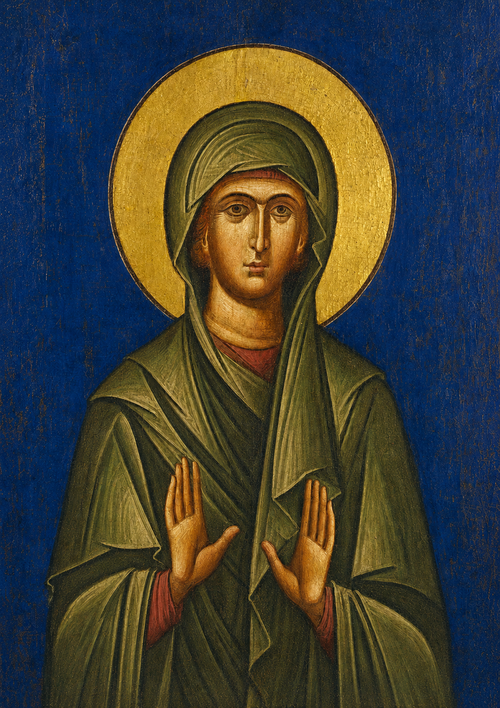
According to the traditional Life, the woman remembered today as Saint Pelagia the Actress was, before her conversion, the single most celebrated actress and dancer in the great city of Antioch, one of the largest and most cosmopolitan metropolises of the late Roman East. The source text, attributed to a deacon named James or Jacob of the church of Heliopolis (modern Baalbek, Lebanon), records that she was popularly known by the nickname "Margarita," meaning Pearl, on account of the extraordinary quantity of pearls she wore and, by implication, the wealth she had accumulated through her career, a career the source states plainly combined public performance with prostitution. She is described as possessed of remarkable physical beauty and grace of movement, qualities that, combined with her theatrical fame, brought her immense riches and a retinue befitting a woman of far higher social rank than an actress would ordinarily hold.
The theater of Antioch in this period, as Saint John Chrysostom repeatedly complained in his own surviving sermons from the city, bore little resemblance to a refined artistic tradition; it was, in the assessment of the clergy of the time, a coarse and often sexually charged form of public spectacle, and actresses in particular carried a social reputation inseparable from that of courtesans. It is against this backdrop that the Life places its central figure: a woman who had, in effect, achieved the pinnacle of a profession the Church of her day regarded as spiritually ruinous, and who used the wealth from that profession to live in an ostentatious luxury that made her one of the most visible figures in the city.
Part II
The Synod, the Procession, and Bishop Nonnus
The Life sets the turning point of Pelagia's story during a gathering of bishops at Antioch, described as a synod attended by a number of Syrian church leaders, among them a bishop named Nonnus. The precise identity and see of this Nonnus is one of the more contested details in the entire narrative, a point addressed further below, but within the story itself he is portrayed as a visiting bishop of unusual holiness and insight. As the assembled bishops sat together, Pelagia happened to pass by in a public procession, riding on a donkey or in an elaborate conveyance, surrounded by an entourage the text calls a "worldly crowd." She was perfumed, immodestly bareheaded by the standards of the day, and dressed in gold cloth, pearls, and precious stones that ran, as the Life specifically describes, from her bare shoulders down to her feet, leaving the outline of her body clearly visible beneath the fabric.
Most of the assembled clergy, the text records, were so ashamed by the spectacle that they turned their faces away entirely rather than look upon her. Bishop Nonnus alone did not look away. He watched her pass with open attention, and afterward astonished his brother bishops by confessing that he had found the sight not shameful but delightful, immediately turning this admission into a rebuke: he asked his fellow clergy whether they had not been shamed, not by Pelagia's beauty, but by their own comparative negligence of their souls, when a woman condemned by her profession took such extraordinary, disciplined care over the mere adornment of her body for the sake of pleasing earthly admirers. According to the account, Nonnus wept for a long while afterward, praying that God would grant Pelagia the grace to prepare herself for eternity with even a fraction of the same diligence she had shown in preparing herself, that day, for the streets of Antioch.
Part III
The Sermon on Hell and the Letter
Word of the bishop's remarkable reaction apparently reached Pelagia herself, and, according to the Life, she was moved by curiosity or conviction to attend the church the following Sunday to hear Nonnus preach in person. His sermon that day dwelt at length on the dread judgment of God and the terrifying reality of eternal punishment for the unrepentant, delivered, by every account, with the same eloquence and force that had made him renowned as a preacher. The effect on Pelagia was immediate and overwhelming: she felt, in the words later used to describe the moment, a sudden light breaking into her weary soul, together with a wave of remorse for the whole shape of her wasted life.
Rather than approach the bishop directly, Pelagia first wrote him a letter, begging for an audience and expressing her desire for conversion and baptism. Nonnus, exercising appropriate caution given both her fame and the obvious risk to his own reputation in receiving such a woman privately, insisted on meeting her only in the presence of other witnesses. When the meeting took place, Pelagia's evident sincerity, and, in some versions of the account, her dramatic threat that she would hold Nonnus personally responsible before God's judgment seat for every future sin she might commit if he turned her away, persuaded him fully. He heard her confession and agreed to baptize her.
Part IV
Baptism as Margarita and the Devil's Complaint
When the day of her baptism arrived, the archbishop under whom Nonnus served, whose name the Life pointedly declines to give in every one of the roughly eight places it might naturally appear, sent the deaconess of the church, a woman named Romana, to clothe Pelagia in the white baptismal garment. Nonnus himself performed the baptism, and, in a detail scholars have found significant, he baptized her not under her stage name Margarita but under her original birth name, Pelagia, with Romana serving as her godmother. She then lived for a period under Romana's instruction, being tutored in the basic disciplines of Christian life after so many years spent entirely outside them.
The Life records that the devil appeared to Pelagia in these early days after her baptism, attempting to reclaim her for her former life, but that she drove him away decisively by making the sign of the cross, a scene the text uses to dramatize the completeness and speed of her interior transformation. Whatever temptation remained, the account insists, could no longer gain any purchase on her.
Part V
Giving Away Her Wealth and the Flight to Jerusalem
Having been baptized and instructed, Pelagia proceeded to gather together the whole of her accumulated wealth, the jewels, coin, and property acquired across her career as an actress and courtesan, and turned all of it over to Bishop Nonnus for distribution among the poor of the city. According to the Life, Nonnus received these riches with evident satisfaction, declaring publicly, in words that have been repeated in devotional retellings ever since, that wealth gained through sin should now be dispersed so that it might become, instead, a treasure gained through righteousness.
Pelagia then resolved on a far more radical step than simple charitable almsgiving. Clothed in a rough hair shirt, she left Antioch entirely, disguised, according to the account, in men's clothing, and traveled to Jerusalem. Nonnus alone among her acquaintance in Antioch was told, or came to know, her intended destination; to everyone else, Pelagia, the famous actress, simply vanished.
Part VI
Brother Pelagius, the Beardless Monk
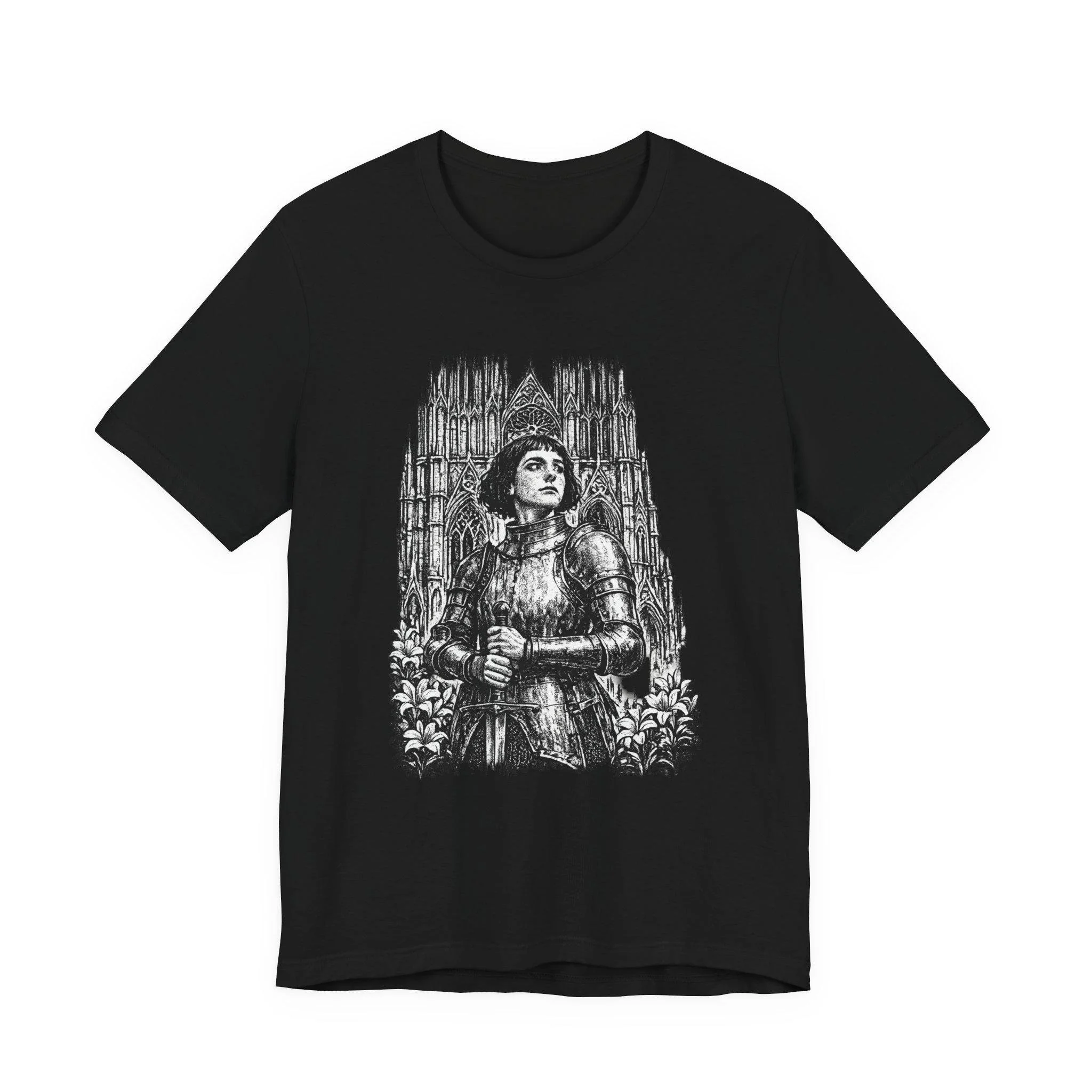
Arriving in Jerusalem, Pelagia took up residence in a small cave or cell on the Mount of Olives, adopting the male name Pelagius and living thereafter as what the tradition consistently calls "the beardless monk," a nickname that itself testifies to how visibly, and yet successfully, her disguise concealed her sex from a community that evidently noticed the anomaly of a beardless brother without ever suspecting the true reason for it. Sources place the length of this hidden existence at somewhere between three and four years, during which she practiced a level of ascetic self-denial so severe that, by the time of her death, her body had become emaciated to the point of being unrecognizable even to those who might once have known her.
Throughout this period, Pelagius, as she was universally known, developed a local reputation for holiness among the monastic communities of the region, a reputation built entirely on her visible discipline and prayer while her actual identity, and the entire extraordinary history that had brought her to that cave, remained known to no one in Jerusalem at all.
Part VII
James the Deacon's Visit and the Discovery at Death
More than three years after Pelagia's departure from Antioch, Bishop Nonnus, who alone knew where his former penitent had gone, dispatched James the Deacon, the very author of the Life that preserves her story, to Jerusalem to seek out "Brother Pelagius" and convey his greetings. James found the cell on the Mount of Olives and knocked. Pelagia, now the gaunt and weathered monk Pelagius, recognized James instantly, since she had known him from her time in Antioch, but James, seeing only an ascetic stranger reduced by years of fasting, did not recognize her at all. She accepted the bishop's greetings politely, gave no hint of who she truly was, and asked James simply to visit again before he departed the region.
James returned to the cell a few days later, intending to take her up on the promised second visit, and found instead that the monk Pelagius had died. It was only in the course of the customary preparation of the body for burial, as the monks and clergy present began the ritual anointing, that the truth was discovered: Brother Pelagius, the beardless monk of the Mount of Olives, was a woman. According to the Life, the holy fathers present, recognizing the scandal that public knowledge of this fact might cause, attempted at first to keep the discovery quiet, but news of it spread regardless, and Pelagia's tomb quickly became a site of pilgrimage, drawing visitors from as far away as Jericho and the Jordan Valley to venerate the actress-turned-hermit whose true sanctity had been hidden, quite literally, until her last breath.
Part VIII
The Textual History: James the Deacon's Life
The entire narrative recounted above descends from a single core source: a Greek hagiographical text titled The Life of Saint Pelagia the Harlot, attributed to James, or Jacob, the Deacon of the church of Heliopolis. The text survives in Greek and was later translated into Latin by a certain Eustochius, under which form it entered the Vitae Patrum, the great compiled collection of desert father and mother biographies first printed at Antwerp in 1628. It was also incorporated into the Greek Menaion, the liturgical anthology of saints' lives read in the Byzantine Church calendar, and appears in the Great Collection of the Lives of the Saints compiled by Saint Demetrius of Rostov, the major Slavic-language hagiographical compendium still used in Orthodox devotional reading today.
Scholars studying the text closely have noted a deliberate and consistent evasiveness in its historical details. The narrative omits specific dates throughout, and, remarkably, on roughly eight separate occasions where the identity of the reigning archbishop of Antioch under whom Bishop Nonnus served would naturally be expected, the text simply declines to name him. This pattern, unusual for hagiography of the period, has been central to the long scholarly effort to date, or even to verify, the events the Life describes.
The Life identifies Pelagia's confessor as a Bishop Nonnus, but the historical record outside this single hagiographical tradition offers no confirmed bishop of Heliopolis by that name. Scholars have observed that his story appears to have become conflated with that of a genuinely attested Nonnus who served as Bishop of Edessa in Mesopotamia and attended the Council of Chalcedon in 451, and separately with the fifth-century Greek poet Nonnus of Panopolis, a connection most scholars regard as almost certainly mistaken. A further Nonnus, Bishop of Zerabenna in Arabia under the jurisdiction of Antioch, also attended Chalcedon and is sometimes proposed as a possible partial source for the name. The mention of "a meeting of Syrian bishops" in the text is of little help in pinning down an exact date, since more than thirty distinct synods were convened at Antioch across late antiquity.
Part IX
The Three Saints Named Pelagia and the Confusion Between Them
Any attempt to give a complete account of Pelagia the Actress requires untangling her from at least two, and by some scholarly reckonings three, distinct saints who share her name, a confusion the Church's own liturgical tradition has never fully resolved and which the Roman Martyrology itself only partially sorted out by later assigning separate feast days to the different figures involved.
The first and most historically secure of the three is Pelagia the Virgin Martyr of Antioch, a fifteen-year-old Christian girl who, during the persecution of Christians under Emperor Diocletian around the year 303 (some sources give a date as late as 311), was surrounded in her home by Roman soldiers intent on seizing and assaulting her. According to the account preserved by Saint John Chrysostom, who preached at least two surviving sermons about her, and mentioned as well by Saint Ambrose of Milan, Pelagia asked the soldiers for a brief delay to change her clothes, then went to the roof of her house and threw herself off rather than submit, dying instantly or shortly afterward. She is venerated as a virgin martyr in both the Eastern Orthodox and Roman Catholic Churches, with her feast originally kept on October 8 alongside the other Pelagias, though it later moved to June 9 in the Roman Rite following the broader post-Schism recalibration of the various Pelagia commemorations, and to October 5 in Naples specifically.
The second is Pelagia the Actress, the Penitent, or the Harlot, the subject of this article and of James the Deacon's Life, whose story is set in the same city of Antioch but whose historical relationship to the virgin martyr is precisely the subject of ongoing scholarly dispute, discussed at greater length in the following section.
The third is Pelagia of Tarsus, sometimes further conflated in certain regional traditions, including elements preserved in the Coptic Synaxarium, with the story of Saint Margaret of Antioch, whose own name in fact derives from an earlier form of "Margarita," the very nickname attached to Pelagia the Actress in James the Deacon's Life. Pelagia of Tarsus, according to her own legend, was a young noblewoman roasted to death for refusing marriage to the Emperor Diocletian, a narrative that scholars believe was shaped by, and shares thematic material with, both of the other two Pelagia traditions.
The overlapping names, overlapping city of origin, overlapping feast day, and overlapping thematic material, virginity or repentance defended or achieved at the cost of enormous personal sacrifice, together make the three Pelagias among the most thoroughly entangled cases of saintly conflation to survive from the late antique Christian world.
Part X
Is Pelagia the Actress a Historical Person? The Scholarly Debate
Modern scholars of late antique hagiography, including Sister Benedicta Ward in her influential study Harlots of the Desert, and Lynda Coon in Sacred Fictions: Holy Women and Hagiography in Late Antiquity, have devoted sustained attention to the question of whether Pelagia the Actress reflects an actual individual life or whether she represents a literary composite assembled from other, older material. Two principal theories have emerged from this scholarship.
The first theory holds that the figure of the penitent monk Pelagius descends, at a remove of perhaps a thousand years of oral and literary development, from the historical Pelagia of Antioch described briefly by Saint Ambrose, meaning the virgin martyr, whose story was gradually elaborated, dramatized, and eventually transformed into an entirely different narrative of sin and repentance rather than martyrdom. Under this reading, the actress-penitent of James the Deacon's Life is essentially a legendary elaboration built outward from the historical kernel of the martyr's memory.
The second theory treats the Life as a distinct literary composition in its own right, one that drew on several separate strands of late antique material and stitched them together into a new hagiographical narrative: elements of the biblical accounts of a repentant sinful woman anointing Christ's feet, apocryphal traditions surrounding Mary Magdalene, biblical narratives involving Solomon and the Queen of Sheba, and even, according to some literary analyses, motifs drawn from Greek mythological material associated with Aphrodite. Notably, Saint John Chrysostom's own surviving sermons include a reference, independent of James the Deacon's later Life, to an anonymous but apparently well-known actress and prostitute from a city in Phoenicia who had seduced a brother of the empress Eusebia, wife of the Emperor Constantius II, and who had since converted; some scholars view this Chrysostom passage as a possible seed for the entire later legend, entirely separate in origin from the story of the virgin martyr.
What can be said with reasonable confidence is this: the Life of Pelagia the Actress, whatever its ultimate historical kernel, deliberately withholds the kind of verifiable chronological detail, precise dates and named contemporary officials, that would allow modern historians to confirm it as a straightforward historical record, and its author appears to have drawn on multiple earlier threads of story and Scripture rather than composing a plain historical account. This does not settle, and likely cannot settle, the underlying question of whether a real individual life stands behind the legend; it does mean that readers today should understand Pelagia the Actress's story primarily as a work of theological narrative art, deeply valued and consistently transmitted across sixteen centuries of Christian devotional literature, rather than as a documentary record in the modern historical sense.

Part XI
Saint John Chrysostom, Saint Ambrose, and the Earlier Traditions
Saint John Chrysostom, who served as a priest and celebrated preacher in Antioch itself before later becoming Archbishop of Constantinople, left behind at least two sermons specifically devoted to the virgin martyr Pelagia, praising her flight from assault as an act of heroic chastity worthy of comparison to formal martyrdom, even though she died by her own hand rather than at the hands of a persecutor, a point Chrysostom addresses directly in his preaching by arguing that her intent was escape from dishonor rather than suicide in the ordinary sense. Saint Ambrose of Milan likewise references Pelagia of Antioch in his own writings, treating her as an established exemplar of consecrated virginity defended at the cost of life itself.
Separately, and it is worth stressing this is a distinct textual thread from anything concerning the virgin martyr, Chrysostom's corpus also preserves a brief mention of an anonymous but evidently famous actress and prostitute, said to hail from a city in Phoenicia (Heliopolis has been suggested as a candidate), who had at one point seduced a brother of the Empress Eusebia, wife of Constantius II, before undergoing a conversion Chrysostom describes as happening "in our own day." Many scholars regard this brief Chrysostom passage as a plausible seed, whether directly or through intermediate oral tradition, for the fuller, dramatically embellished story that James the Deacon's Life would eventually tell about Pelagia the Actress a generation or more later.

Part XII
Pelagia Among the Cross-Dressing Desert Mothers
Pelagia's disguise as the monk Pelagius is far from an isolated case in the literature of the desert. Late antique and early Byzantine hagiography preserves a whole recognized category of women, sometimes referred to by modern scholars using the Byzantine descriptive phrase "the woman monk," who adopted male dress and identity in order to enter monastic communities or live as solitaries, since formal ascetic life in remote or male-only settings was not otherwise open to them. Saint Marina, whose name is itself the Latin equivalent of Pelagia, disguised herself as a monk to escape an unwanted marriage and lived undiscovered in a monastery for years. Other examples in this same genre include Saint Susanna of Eleutheropolis and elements shared with the far better attested legend of Saint Mary of Egypt, another repentant woman of a disordered public life who withdrew into solitary asceticism, though Mary's story, unlike Pelagia's, does not involve a change of dress or a hidden male identity.
Traditional Orthodox and Catholic interpretation has consistently read this recurring motif of disguise as an act of radical humility and self-erasure: by discarding not only her wealth and former profession but her very identity as a renowned beauty, Pelagia sought a form of anonymity so complete that not even her holiness, once achieved, could return to her any of the public recognition her earlier life had traded on. Her sanctity, on this reading, is inseparable from the fact that it went almost entirely unwitnessed during her own lifetime, discovered only by accident after her death.
It is worth noting, in the interest of giving readers the fullest possible picture available, that modern academic scholarship in fields such as gender and religious studies has also engaged with Pelagia's story from perspectives concerned with the history of gender presentation and identity, examining how a legend of this kind functioned within its own late antique cultural context and how it has since been read by later interpreters. This body of academic literature approaches the text as a subject of historical and literary analysis rather than as devotional teaching, and its interpretive frameworks are not those of the traditional Church, which has always understood Pelagia's adoption of male dress specifically as an ascetic strategy of humility and monastic access rather than as an expression of a different personal identity. Readers interested in that separate academic conversation can find it addressed at length in works such as Susanna Elm's Virgins of God and in journal literature on Byzantine hagiography, distinct from the devotional tradition presented in this article.

Part XIII
Feast Day, Patronage, Iconography, and Devotion Today
Pelagia the Actress is commemorated on October 8 in the Eastern Orthodox Church, the date she has traditionally shared with the virgin martyr Pelagia and with Pelagia of Tarsus, a shared commemoration reflecting the deep historical entanglement of the three figures discussed above. Western liturgical practice, after the divergence of calendars following the Great Schism, came in places to observe her feast separately, with June 9 recorded in some Catholic sources as her date, distinct from the virgin martyr's own eventual relocation to the same day in the Roman Rite, a further layer of calendrical overlap that has continued to generate confusion in reference works down to the present.
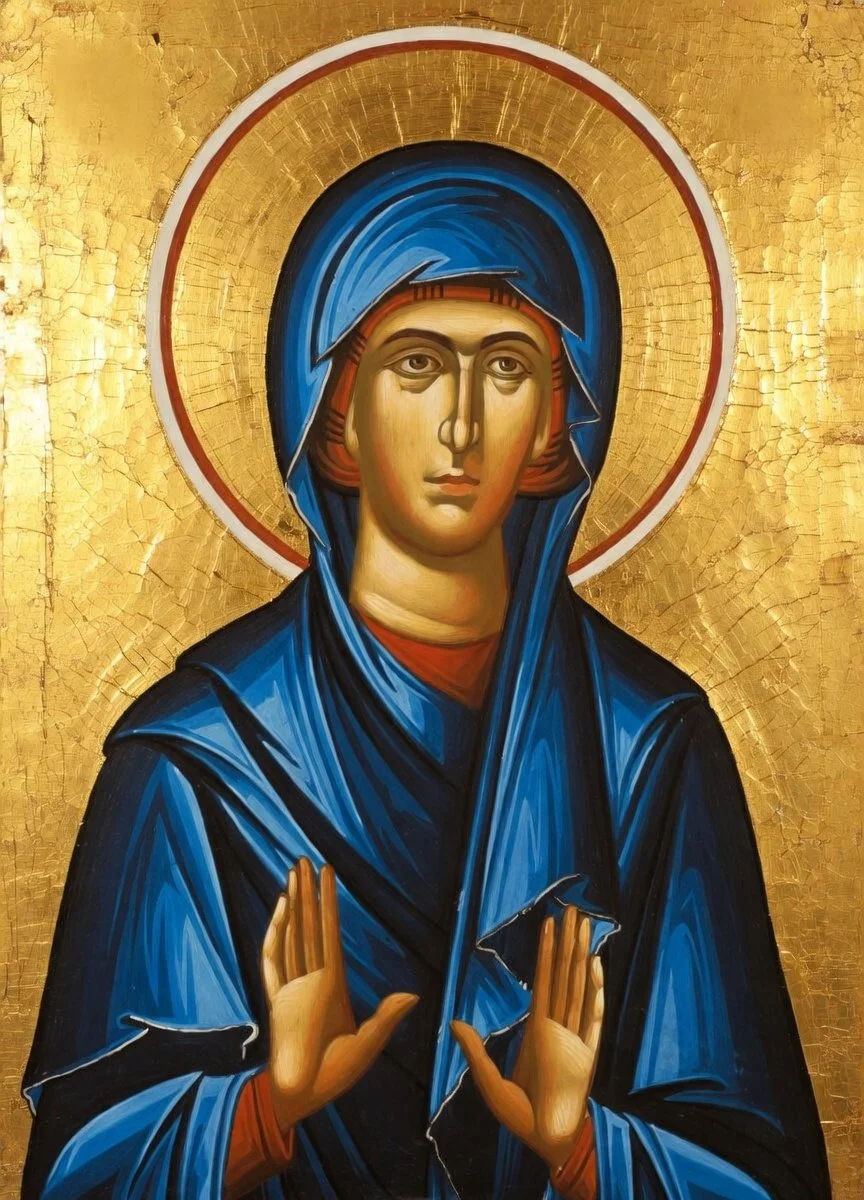
Devotionally, Pelagia is honored above all as a patron of radical, total conversion, a saint to whom the faithful turn when seeking deliverance from habits of vanity, sensuality, or a publicly disordered life, and as living proof that no degree of past notoriety places a soul beyond the reach of grace. Her popular patronage over actresses and the theatrical profession specifically is understood by scholars to derive largely from the centuries-long blending of her story with that of the virgin martyr, whose own dramatic final act, a leap from a rooftop rather than submit to assault, lent itself easily to theatrical language even though it had nothing to do with the stage. In traditional iconography, Pelagia is most often depicted in one of two contrasting registers: as the richly adorned actress in gold cloth and pearls riding through the streets of Antioch, a scene frequently paired with the image of Bishop Nonnus and his fellow clergy looking on, or as the emaciated, hooded hermit monk Pelagius of the Mount of Olives, the two images together forming a visual meditation on the completeness of her transformation.
O God, who looked with mercy upon Pelagia of Antioch and did not despise the years she had spent in vanity and sin, grant to us the same grace that overtook her the moment she heard a single sermon spoken in truth.
Saint Pelagia, who gave away every pearl and every coin that your former life had purchased, and who hid yourself so completely in holiness that even your own bishop's messenger did not know your face, pray for every soul still trapped in a public reputation it longs to escape.
Obtain for us the courage to seek, not admiration for our repentance, but the same hidden, unwitnessed holiness you carried alone to your cave on the Mount of Olives, known to God alone until the hour of your death.
Traditionally prayed on October 8, the shared feast of Saint Pelagia the Actress and Saint Pelagia the Virgin Martyr.
FAQ
Frequently Asked Questions About Saint Pelagia the Actress
Known to God Alone, Until the Very End
Pelagia spent the first half of her life as one of the most visible women in the Roman East, adorned in pearls and gold, recognized by every passerby in Antioch. She spent the second half of her life as one of the most hidden, a beardless monk in a cave whose true face and history no one, not even the man sent to greet her, could see. Between those two lives stood a single sermon, honestly received, and a wealth of pearls handed over so that they might, for once, purchase something that would last.
Carry her prayer card. Ask her intercession, not for a public, celebrated conversion, but for the grace to let repentance do its quiet work unseen, trusting, as she did, that what God sees is enough.
Get the Saint Pelagia the Actress Prayer Card →