Catholic Saints • Paris • Art and the Eucharist • 1862 to 1863
Auguste Rodin and Saint Peter Julian Eymard: The Monk Who Sent a Sculptor Back to His Studio
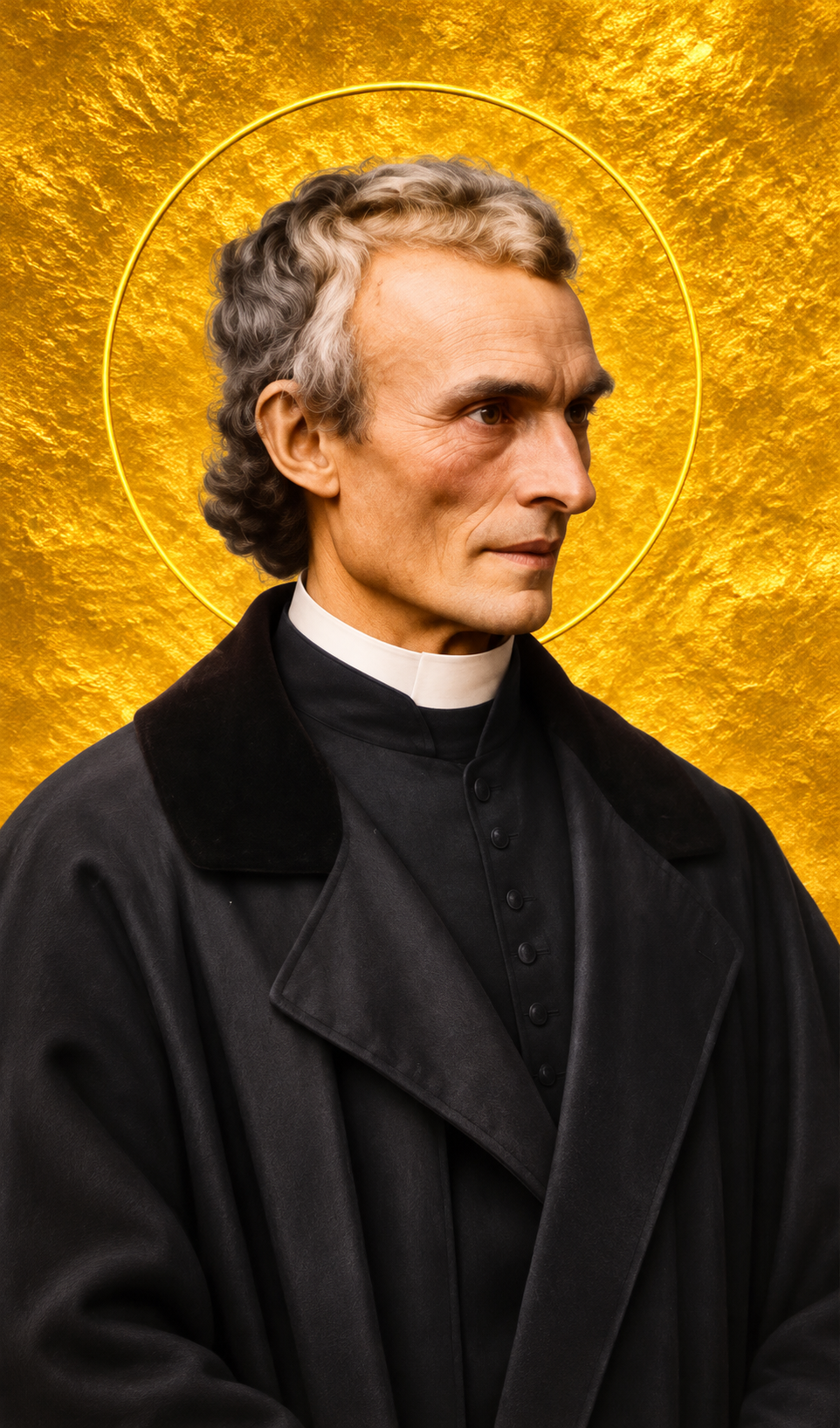
A grieving young sculptor knocked on the door of a Eucharistic order. The founder looked at him, saw an artist, and offered him a garden shed.
Rodin and Eymard at a Glance
- Who
- Auguste Rodin (1840 to 1917), French sculptor, and Saint Peter Julian Eymard (1811 to 1868), founder of the Blessed Sacrament Fathers
- Where
- Paris, at the Blessed Sacrament community Eymard founded
- When
- 1862 to 1863
- What happened
- Rodin entered the community as a lay brother after his sister Maria died; Eymard encouraged him to keep sculpting and gave him a studio
- The work
- A bust of Eymard, modeled in 1863, often described as Rodin's first clearly datable work
- The twist
- Eymard disliked the hair, Rodin refused to change it, and the community put the bust away for years
- Later
- Eymard was beatified in 1925 and canonized in 1962
A Sister Dies and a Young Man Stops Sculpting
Auguste Rodin was in his early twenties and already trying to make a life in art when his older sister Maria died in 1862. She died of peritonitis, in a convent. Biographers report that Rodin blamed himself, because he had introduced her to the man who let her down.
Whatever the exact weight of that guilt, the effect is recorded plainly: the young sculptor turned away from his work. For a man with no money, no patron and no formal place in the art establishment, walking away from the studio was a serious step. He went looking for a different kind of life.
Part II
Eymard and the Blessed Sacrament Fathers
Peter Julian Eymard was born in the French Alps in 1811. He began as a diocesan priest, joined the Marists, and in 1856 left them to give himself to the congregation he had just founded in Paris, the Blessed Sacrament Fathers. Its purpose was devotion to Christ in the Eucharist, centered on adoration. A women's branch, the Servants of the Blessed Sacrament, followed by 1858.
It was to this community that Rodin came in 1862. He was received as a lay brother, which meant manual work and prayer rather than priestly formation.
Part III
The Founder Sees an Artist
Eymard was the head of the community, and he noticed what Rodin could do. Accounts agree on the conclusion he reached: this young man had a gift, and the religious life was not where it was meant to be spent. Rather than hold on to a willing worker, he pointed him back toward sculpture.
The practical part of that advice is the detail people remember. Eymard offered the community's garden shed as a place to work, so that Rodin could keep sculpting while he found his footing. A priest with a fledgling congregation to build gave up a pair of hands and offered an artist a roof.
Part IV
The 1863 Bust
In 1863, before he left the community, Rodin made a bust of Eymard in thanks for his counsel. It is usually described as his first clearly datable work, which makes it a milestone in a career that would run for more than fifty years.
The portrait is not flattering in the way a founder might want. Eymard, aware of anticlerical feeling in Paris, worried that the swept hair and the widow's peak on the sculpture looked like the horns of the devil, and he asked Rodin to change it. Rodin refused. The community then put Eymard's copy of the bust away.
Time reversed the verdict. Today the congregation regards the portrait warmly and displays casts of it in its houses around the world. One cast, made in 1925, the year Eymard was beatified, carries the story into the Church's own memory of him.
Part V
Rodin Leaves, Rodin Succeeds
Rodin left the community in 1863 and went back to the studio. The path ahead was long: years of hard work and little recognition, then The Age of Bronze in 1877, then the commission for The Gates of Hell in 1880, and a reputation as one of the great sculptors of modern times by the time he died in 1917.
Eymard did not live to see it. He died on August 1, 1868. He was beatified in 1925 and canonized in 1962, and the Church remembers him as the Apostle of the Eucharist.
What the record supports is modest and good: a saint in the making noticed the real vocation of the person in front of him and, at some cost to his own community, helped him toward it.
Part VI
What We Can and Cannot Say
Rodin did not stay, so it is not accurate to say he nearly became a priest. He joined as a lay brother and left within about a year. It is also not accurate to say that Eymard alone made Rodin a great artist. What the sources support is narrower: Eymard recognized the talent, encouraged him to continue, and gave him a place to work during a fragile time.
The bust itself is the best witness. It exists, it is dated, and the quarrel over its hair is part of how the story has been handed down.
Part VII
Timeline
- 1811Peter Julian Eymard is born in the French Alps.
- 1840Auguste Rodin is born in Paris.
- 1856Eymard founds the Blessed Sacrament Fathers in Paris.
- 1862Rodin's sister Maria dies; Rodin enters the community as a lay brother.
- 1863Rodin models the bust of Eymard and leaves the community.
- 1868Eymard dies on August 1.
- 1925Eymard is beatified; a cast of the bust is made.
- 1962Eymard is canonized.
An Eye for the Real Calling
Eymard gave his life to adoration of Christ in the Eucharist, and he spent a moment of it making room for another man's gift. Browse the prayer cards if you would like a saint's face to pray with at home.
View the Prayer Card →Frequently Asked Questions
