Catholic Saints • Tudor England • Chelsea and the Tower • 1520s to 1535
Saint Thomas More and Henry VIII: The King Who Watched the Stars With the Man He Later Executed
Roper records a king who sent for his councillor on clear nights to look at the planets. The same king later signed the order that took his head.
More and Henry at a Glance
- Who
- Saint Thomas More (1478 to 1535), lawyer, author and Lord Chancellor, and King Henry VIII of England
- Main source
- William Roper, More's son-in-law, whose Life of More dates from about 1556
- The friendship
- Evening conversations on astronomy, geometry and divinity; a surprise dinner at More's Chelsea house
- The break
- More refused the oath required by the Act of Succession and was arrested on April 17, 1534
- The end
- More was beheaded on Tower Hill on July 6, 1535
- Afterward
- His head was displayed on London Bridge, then kept by his daughter Margaret
- Church honors
- Canonized in 1935; patron saint of statesmen and politicians since 2000
A King Who Liked Clever Company
Henry VIII came to the throne in 1509 as a young, learned and restless king, and he gathered intellectual men around him. Thomas More, a London lawyer with an international reputation as a writer, was one of them. He entered royal service in the late 1510s.
William Roper, who married More's daughter Margaret and lived in the household, recorded what it looked like up close. The king, he says, summoned More to his private room to talk about astronomy, geometry and divinity, and about worldly matters too.
Part II
Evenings on the Roof
Roper adds the detail that gives this story its charm. In the evening Henry would sometimes send for More and have him climb up onto the leads, the flat lead-covered roof of the palace, so that the two could study the movements and workings of the stars and planets together.
It is an easy picture to hold onto: a king and a councillor on a roof at night, looking up. It is also worth noting where the picture comes from. It rests on Roper, a family member writing decades later. It is a credible and early witness, but it is not an independent record of those evenings.
Part III
The Walk in the Garden at Chelsea
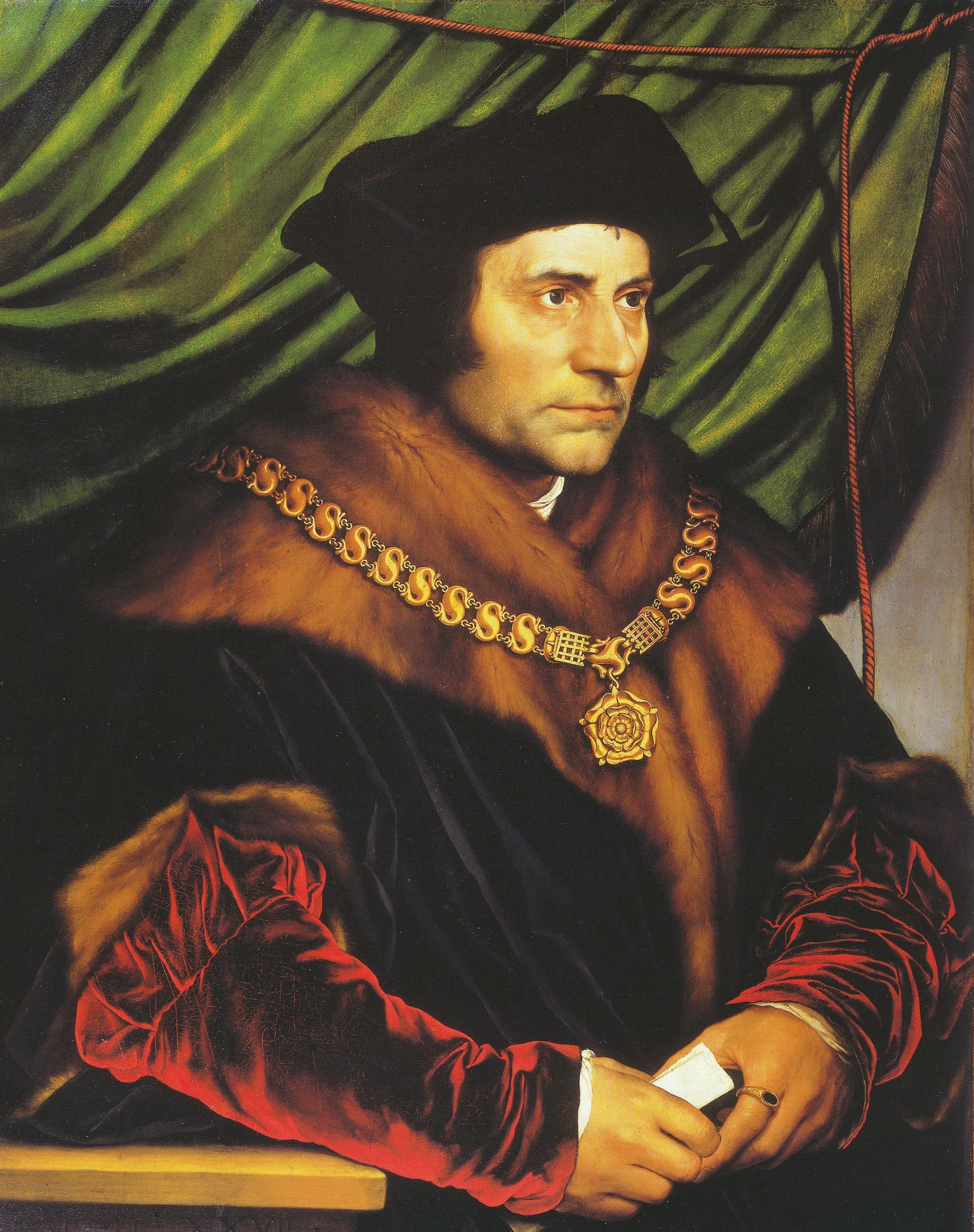
More kept a house at Chelsea, on the Thames. Roper tells of a day when the king arrived unannounced, stayed for dinner, and afterward walked with More for about an hour in the garden with his arm around More's neck.
Roper, delighted, told his father-in-law how fortunate he was. More answered with gratitude, and with a warning. He believed the king favored him as much as any subject in the realm, he said, but he had no reason to be proud of it, because if his head could win the king a castle in France it would not hesitate to go.
The remark is usually read as a cold-eyed judgment about a man who could be a warm friend and a dangerous master at the same time.
Part IV
The Break
More became Lord Chancellor in 1529 and resigned in 1532 as the king pressed ahead with the annulment of his marriage to Catherine of Aragon and the break with Rome. He kept silent about the matter rather than argue against the king.
Silence was not enough. In 1534 More refused to swear the oath required under the Act of Succession because its preamble rejected the authority of the pope. He was arrested on April 17, 1534, and held in the Tower of London, in a cold, damp cell in the Bell Tower, for about a year.
He was tried in the summer of 1535 and found guilty. The sentence of hanging, drawing and quartering was commuted to beheading.
Part V
Tower Hill, July 6, 1535
More was beheaded at Tower Hill early in the morning on July 6, 1535. His body was buried in the Tower chapel, St Peter ad Vincula. His head was displayed on London Bridge and then given to his daughter Margaret, who kept it as a relic. It was later buried with her in the Roper family vault at St Dunstan's Church in Canterbury.
A saying attributed to him from the scaffold, that he died the king's good servant but God's first, is traditional. It has been repeated for centuries, but the wording comes through later accounts, so it is safest to treat it as tradition and not as a verbatim record.
Part VI
What the Friendship Teaches
The record gives us a king who valued More's mind and a man who understood what that favor was worth. More did not buy safety by giving up his conscience, and the king did not spare him for the years of friendship. The same garden path leads to both outcomes.
The Church canonized Thomas More in 1935. In 2000 Pope John Paul II named him patron of statesmen and politicians. The stars on the roof and the scaffold on Tower Hill belong to the same life.
Part VII
Timeline
- 1478Thomas More is born in London.
- 1509Henry VIII becomes king.
- 1529More becomes Lord Chancellor.
- 1532More resigns the chancellorship.
- April 17, 1534More is arrested after refusing the oath.
- Summer 1535More is tried and convicted.
- July 6, 1535More is beheaded on Tower Hill.
- 1935More is canonized.
- 2000More is named patron of statesmen and politicians.
The King's Good Servant
More served his king as far as conscience allowed and no further. If you would like a saint beside you in prayer at home, our prayer cards are a good place to begin.
View the Prayer Card →Frequently Asked Questions
