Catholic Saints • Calcutta • The BBC • Conversion
Malcolm Muggeridge and Mother Teresa: The Skeptic Who Introduced Her to the World
He was one of the most celebrated skeptics in Britain. She was a nun in Calcutta whom almost nobody in the West had heard of. A television interview, a film, and a book changed what both of them were known for.
Muggeridge and Mother Teresa at a Glance
- The Saint
- Saint Teresa of Calcutta (1910 to 1997), founder of the Missionaries of Charity, canonized September 4, 2016
- The Journalist
- Malcolm Muggeridge (1903 to 1990), British broadcaster, writer, and former editor of Punch
- The Place
- Calcutta (Kolkata), India, and the BBC
- The Work
- The film and the 1971 book Something Beautiful for God
- The Outcome
- Muggeridge and his wife Kitty were received into the Catholic Church in 1982
- Date of First Interview
- Sources differ, so none is given here
- Her Feast Day
- September 5
The Nun in Calcutta
She was born Agnes Gonxha Bojaxhiu in Skopje on August 26, 1910. At eighteen she left home to join the Sisters of Loreto, and she was sent to India, where she taught at a convent school in Calcutta.
In 1946 she said she received a second call, a call within a call, to serve Christ among the poorest of the poor. In 1950 the Church approved her new community, the Missionaries of Charity. Its sisters wore a white sari edged in blue and went into the streets to find people dying alone.
For nearly two decades the work grew quietly. The Home for the Dying, a place where those picked up from the gutters could die with someone beside them, opened in 1952 in a building next to the Kali temple. Beyond Calcutta, though, very few people knew who she was. That was about to change.

Part II
The Skeptic
Malcolm Muggeridge was born on March 24, 1903, in England. He worked as a teacher, a foreign correspondent, and an editor, and he spent time in Moscow in the early 1930s as a correspondent. He later became known to the British public as a writer, a television presenter, and a sharp satirist. He edited Punch from 1953 to 1957.
He was not a man who gave sentimental subjects an easy ride. Through much of his career he was seen as a skeptic about politics, institutions, and religion alike, and his interviews were often worth watching because of how willing he was to puncture a reputation. He was the sort of presenter who might be expected to find a small nun and her sisters a mildly interesting curiosity.
That is what makes the next part of the story worth telling. He did not set out to promote anyone. He went as a working journalist, and what he found changed the direction of his writing.
Part III
The Interview
Muggeridge interviewed Mother Teresa for the BBC at a time when she was little known outside India. The interview was gentle and direct, and viewers in Britain heard from the founder of the Missionaries of Charity in her own words, plainly spoken.
Accounts disagree about exactly when this first interview took place. Different books and articles place it in 1967 or in 1968, and this article does not choose between them. What the sources agree on is the order of events: first the interview, then the decision to make a film in Calcutta.
What he did leave on record is the film and the book that followed, and both show a journalist who stopped performing and started looking.
Part IV
The Film and the Light
Muggeridge went to Calcutta with a BBC crew to film Mother Teresa and her sisters at work. The film, Something Beautiful for God, was broadcast in Britain in 1969 and showed the Missionaries of Charity caring for the dying. It reached a large audience, and many viewers wrote in. Donations followed, and for the first time a wide Western public was looking at her work.
One part of the story is retold again and again. The Home for the Dying was dim inside, and the crew had little equipment for such low light. They filmed there anyway, using a new, highly sensitive film stock. When the footage was developed, the scenes inside were bright and clear. Muggeridge said he saw in it a kind of divine light, an effect he linked to the sisters and to Mother Teresa herself.
The cameraman, Ken Macmillan, offered a more ordinary explanation: the new film was simply very good in poor light. Both versions are on record, and it is worth keeping both. Muggeridge read it as a sign. Macmillan read it as a feature of Kodak film. The reader can weigh them without needing the story to settle the matter.
Part V
The Book
In 1971 Muggeridge published a book also called Something Beautiful for God. It brought together his account of the Calcutta visit, Mother Teresa's own words, and photographs of the sisters at work. It became many readers' first real introduction to her.
Reading it, you notice what the book does not do. It does not argue that she was holy. It describes what she did and what she said, and lets the reader see. For a man known for tearing down reputations, that restraint was part of the point.
Her fame grew from there. She received the Nobel Peace Prize in 1979 and spent the following years opening houses in many countries. She died on September 5, 1997, and Pope Francis canonized her on September 4, 2016.
Part VI
What Happened to His Faith
Muggeridge's own religious path was long and not a straight line. He spent decades writing about faith from the outside, and in his later books he spoke more and more openly as a believer. He credited Mother Teresa with having had a deep effect on him. In 1982 he and his wife Kitty were received into the Catholic Church. He died on November 14, 1990.
It would be too neat to say that one interview converted him. He did not describe it that way, and neither should a careful reader. The honest summary is that she was one of the people who shaped his thinking, and that the film and book she appeared in changed how the world saw her and how readers saw him.
Part VII
What the Sources Do and Do Not Say
This account relies on Muggeridge's own published statements and on widely reported histories of the film and book. A few details are disputed or unclear, and they are marked here rather than smoothed over.
The year of the first interview is reported as 1967 by some and 1968 by others, so none is given. The explanation for the light in the Home for the Dying is reported both ways, and both are left in place. Where a retelling includes dialogue that no source supports, this article leaves it out.
Part VIII
Timeline
- March 24, 1903Malcolm Muggeridge is born.
- August 26, 1910Agnes Gonxha Bojaxhiu, the future Mother Teresa, is born in Skopje.
- 1946She describes a call within her call to serve the poorest.
- 1950The Missionaries of Charity are approved.
- 1952The Home for the Dying opens in Calcutta.
- 1953 to 1957Muggeridge edits Punch.
- Late 1960sMuggeridge interviews Mother Teresa for the BBC; sources differ on the year.
- 1969The film Something Beautiful for God is broadcast.
- 1971Muggeridge publishes the book of the same name.
- 1979Mother Teresa receives the Nobel Peace Prize.
- 1982Muggeridge and his wife Kitty are received into the Catholic Church.
- November 14, 1990Muggeridge dies.
- September 5, 1997Mother Teresa dies in Calcutta.
- September 4, 2016She is canonized.
Beautiful for God
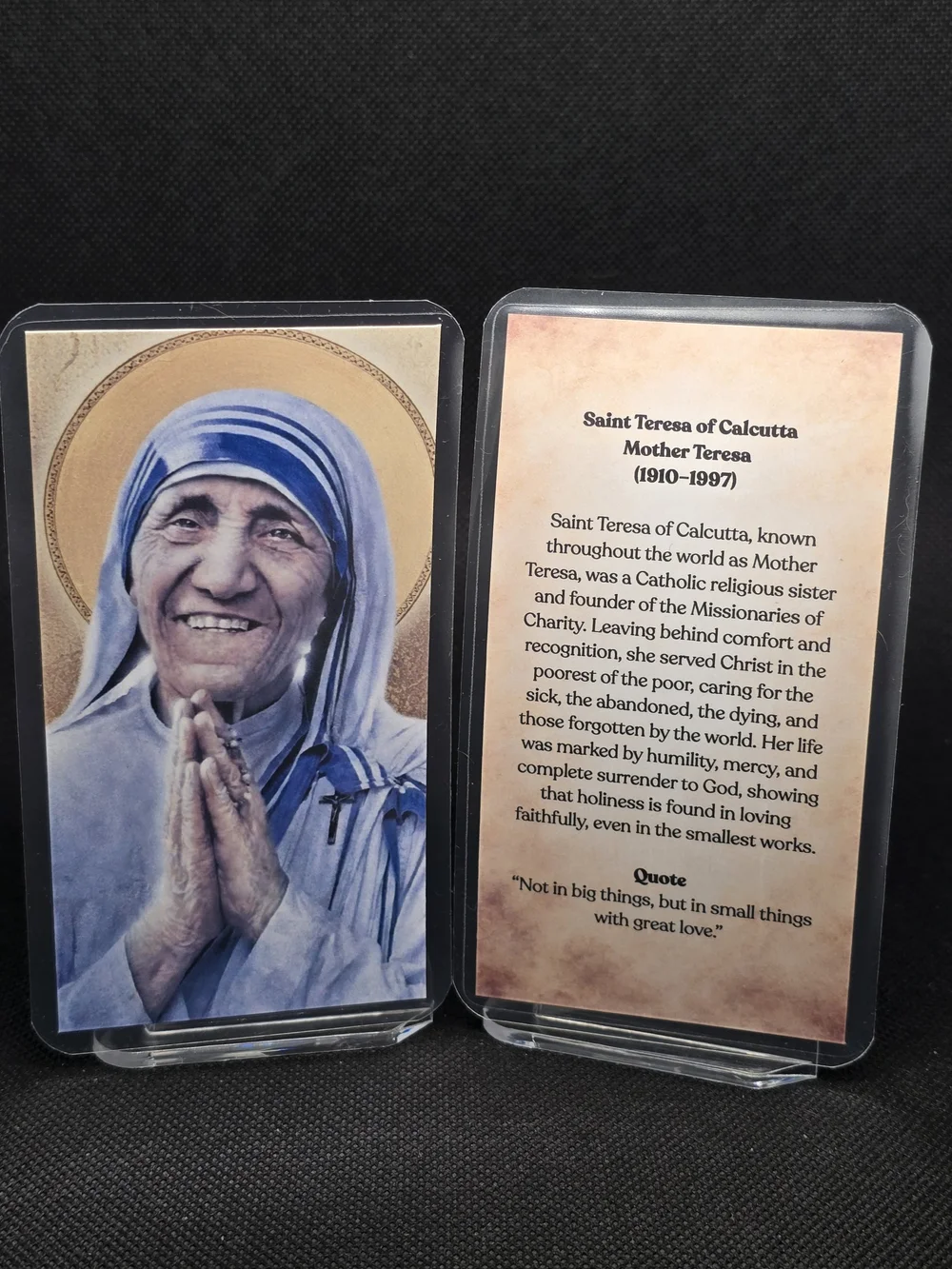
A skeptic went to Calcutta to film a nun and came home with a book that introduced her to a continent. If you carry Mother Teresa with you, the prayer card is a small reminder of that meeting and of the work she asked everyone to take part in.
Get the Mother Teresa Prayer Card →Frequently Asked Questions
