Saints for Chronic Pain: Five Intercessors Who Bore Long Suffering With Faith
Eastern Catholic & Orthodox • Chronic Pain & Long Suffering • Invisible Illness • Prayer Cards
Saints for Chronic Pain: Five Intercessors Who Bore Long Suffering With Faith
Chronic pain is not a crisis that resolves. It is a condition that must be lived in, day after day, often without the validation of visible illness. These saints bore exactly that — and they are the ones to ask.
“God sees me.”— Blessed Estephan Nehmé • Maronite Catholic Monk • Lebanon • The phrase he repeated through years of hidden suffering
What You Will Find on This Page
- Saint Rafqa of Lebanon
- Maronite patron of chronic pain — who prayed for the suffering of Christ and bore 29 years of progressive physical incapacity with extraordinary peace
- Saint Lidwina of Schiedam
- The specifically designated patron of chronic pain, disability, and invisible illness — 38 years of progressive physical deterioration, offered entirely to God
- Saint Juliana Falconieri
- Roman Catholic patron of chronic digestive illness and long suffering — who bore severe physical diminishment for decades and died unable to receive the Eucharist normally
- Saint Job the Much-Suffering
- The Old Testament patriarch venerated in the Orthodox tradition — the figure of absolute endurance when everything is stripped away and only faith remains
- Blessed Estephan Nehmé
- The Maronite carpenter of hidden suffering — whose entire spirituality was the phrase “God sees me,” the anchor for those whose pain is invisible to everyone else
- The Bundle
- All five saints as handmade prayer cards — icon on the front, saint biography and healing prayer on the back
Chronic Pain and the Eastern Christian Theology of Long Suffering
Chronic pain is different from acute pain in a way that matters spiritually as well as physically. Acute pain has a shape — a beginning, a middle, an expected end. Chronic pain does not. It is the condition you wake up in and go to sleep in. It is the thing you have explained to physicians who cannot find its source, to family members who eventually stop asking, to friends who stop understanding why you still cannot do the things you used to do. It is, for many people, entirely invisible — there is nothing to point to, no diagnosis that explains it, no treatment that reliably ends it.
The Christian tradition does not offer a theological argument for why chronic pain exists. What it offers instead is company — a communion of saints who bore it, who did not escape it, and who found that God was present inside it rather than absent from it. The saints on this page were not healed. Several of them grew progressively worse. What distinguished them was not the resolution of their suffering but what they did with it — the interior life they built inside conditions that would have broken most people, and the intercessory power they now carry for those still in the same conditions.
They are the right people to ask. Not because they will necessarily take the pain away, but because they have been there and know what you are carrying — and because the tradition holds that their prayer has particular weight precisely because of what it cost them.
The Eastern tradition does not glorify suffering for its own sake. What it does hold is that suffering borne in union with Christ is not wasted — that something real happens in the person who manages to keep faith inside conditions that seem to argue against it. The saints on this page are not models to imitate in the sense of seeking pain. They are models of what is possible inside it. And they are intercessors who ask God for relief on your behalf from a position of firsthand authority.
Saint One
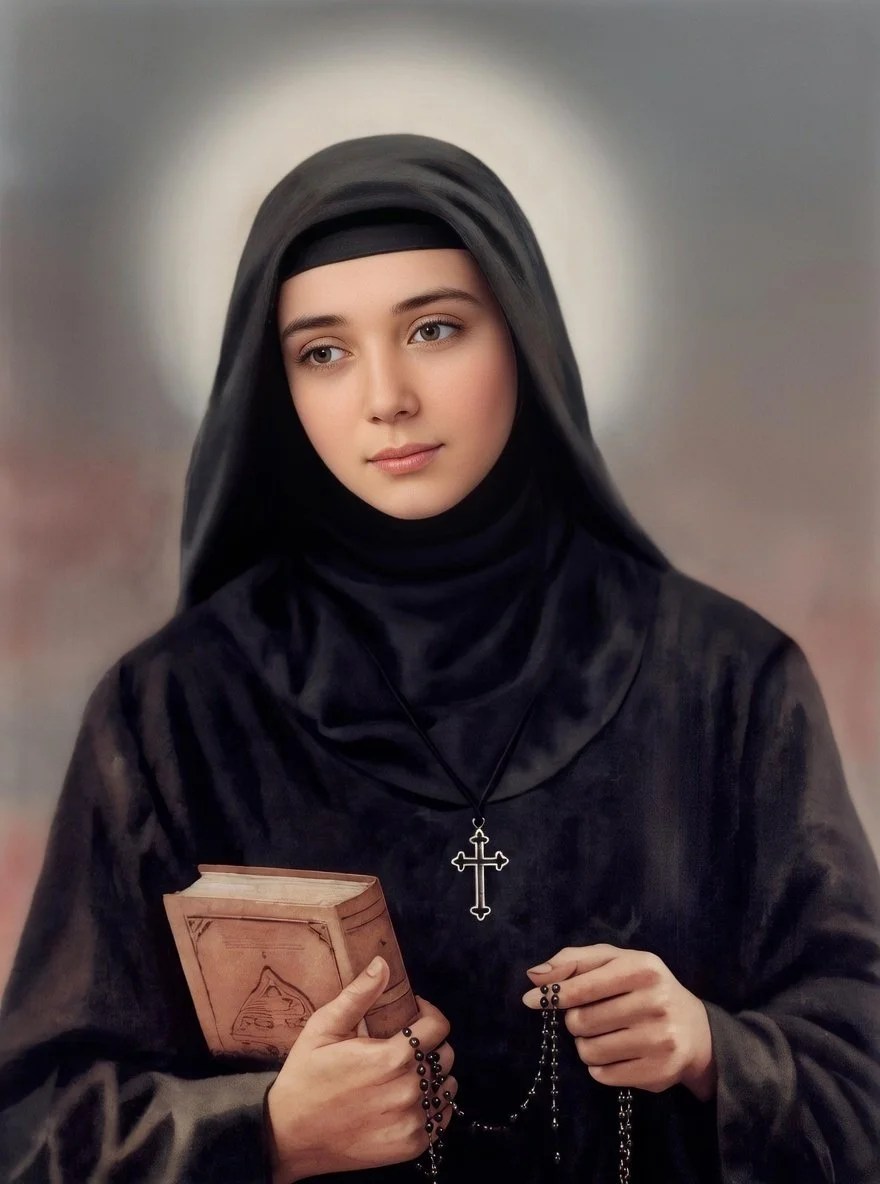
Saint Rafqa of Lebanon
Rafqa Khuri Choboq ar-Rayes was born in 1832 in Himlaya, Lebanon, and entered religious life as a Maronite nun. In 1885, at the age of 53, she prayed explicitly to share in the sufferings of Christ. The answer came immediately and stayed for 29 years. She lost her sight, then the use of her limbs, then most of her remaining physical capacity — living her final decades in near-total incapacity, unable to see, progressively unable to move, entirely dependent on others for her most basic needs.
She never asked for relief. When her superiors prayed for her healing, she asked them not to. She had requested this suffering, she said, and she was grateful to have it. She remained joyful throughout — not in a performed way, but in the way of someone who had genuinely found something on the other side of pain that made the pain secondary. She died in 1914 and was canonized by Pope John Paul II in 2001.
For those with chronic pain, Rafqa offers something specific: she is not a saint who was healed. She is a saint who bore her condition to the end, voluntarily, and found it transformative. She intercedes for the person who has stopped expecting the pain to go away and is now asking for something different — the grace to carry it without being destroyed by it, and the peace that the tradition says is possible inside even severe chronic pain.
Saint Rafqa’s complete life, her miraculous healings, her shrine in Lebanon, and the traditional prayers said to her are in our complete biography of Saint Rafqa of Lebanon →
Saint Two
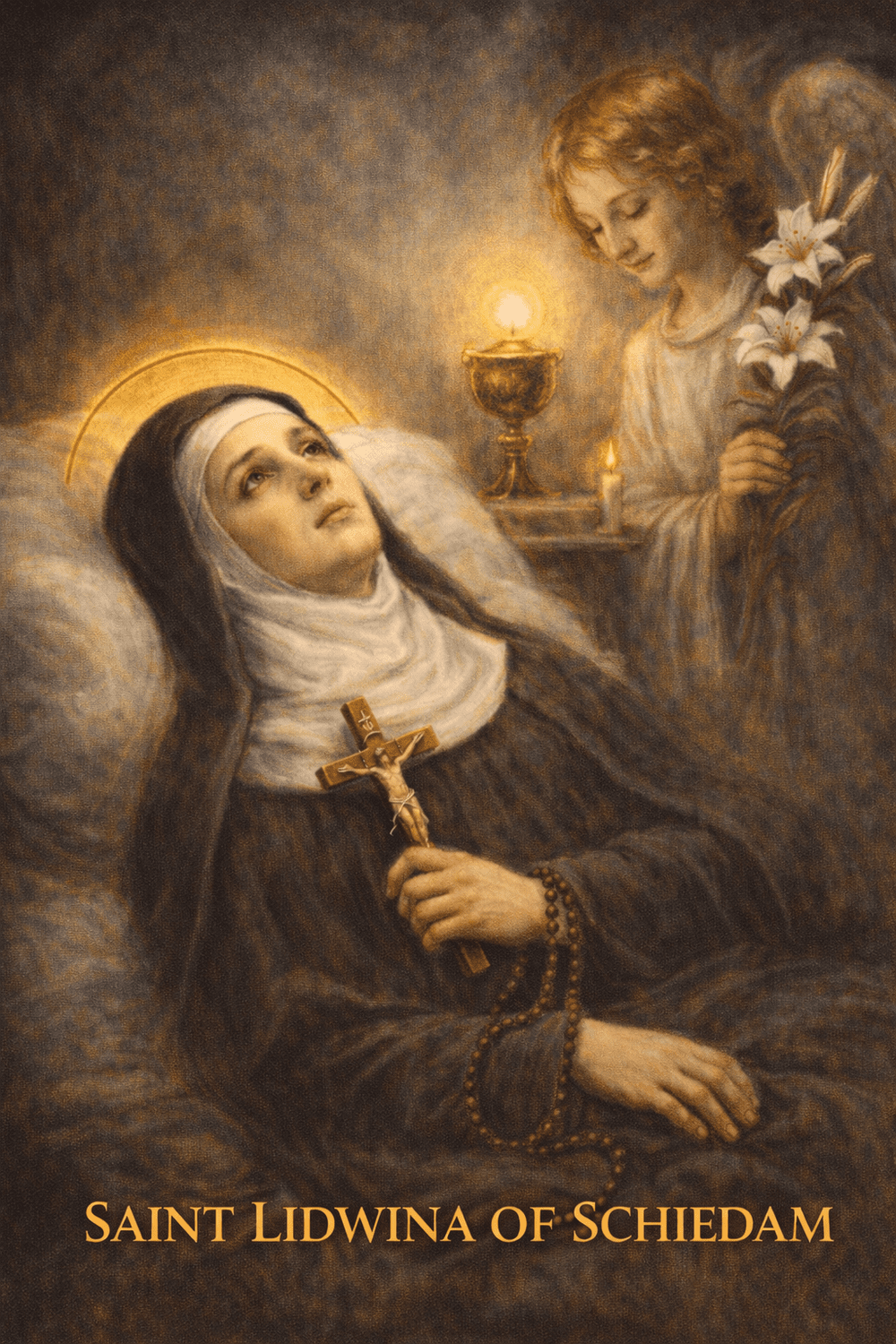
Saint Lidwina of Schiedam
Lidwina was born in 1380 in Schiedam, Holland, the ninth child of a laborer. At fifteen, she fell while ice skating, broke a rib, and never recovered. What began as a skating accident became, over the following 38 years, one of the most severe accounts of progressive physical deterioration in the history of Christian hagiography: gangrene, partial paralysis, blindness, the inability to keep food down, open wounds that would not close, and eventually the loss of nearly all normal physical function. She lived in this condition from her early teens until her death at 53 in 1433.
What makes her the designated patron of chronic pain and invisible illness is not simply the severity of her suffering but the way the tradition interpreted it. She was examined by physicians, by civil authorities, and by church officials — all of whom confirmed both the reality of her condition and the absence of any natural explanation for her survival in it, let alone her spiritual state. She was venerated during her lifetime and beatified in 1890 by Pope Leo XIII.
What marks Lidwina’s story as particularly relevant to those with invisible chronic illness is a specific detail: her neighbors did not believe her. The severity of what she was experiencing was not visible from the outside in the way that dramatic acute illness is. People doubted her. Officials investigated her. She was suspected of exaggerating.
This is the experience of millions with fibromyalgia, ME/CFS, complex regional pain syndrome, and other conditions where the pain is genuine, severe, and entirely invisible to observers. Lidwina is the patron of those whose suffering is real but disbelieved. She knows exactly what it is to be in genuine pain while the world around you questions whether it is as bad as you say.
Saint Three
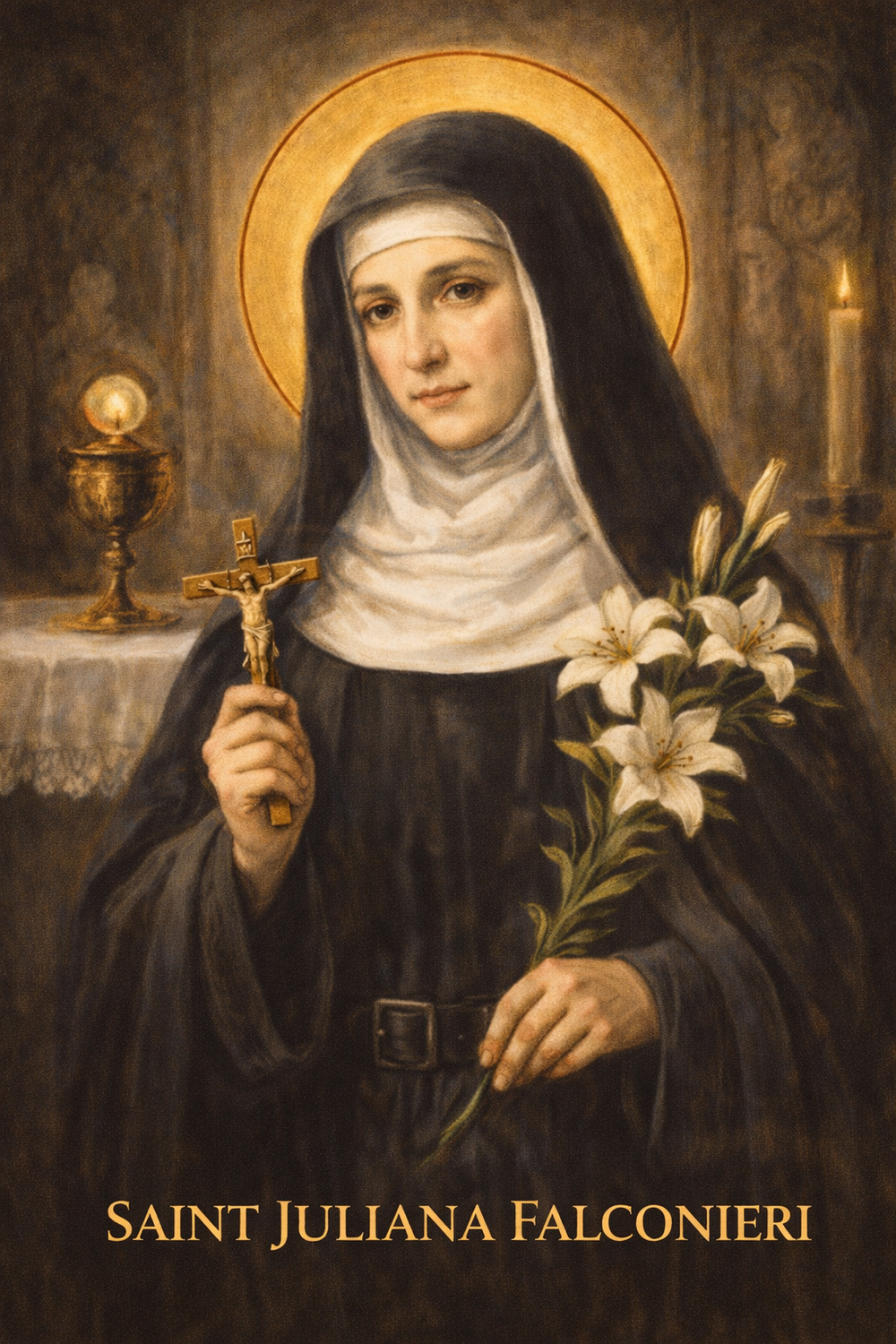
Saint Juliana Falconieri
Juliana Falconieri was born in Florence in 1270 into a wealthy family, and from her earliest years showed an extreme sensitivity to suffering — she reportedly could not bear to hear the Passion of Christ described without fainting. She became a Servite tertiary under the direction of her uncle, the founder of the Servite Order, and eventually founded the Servite Mantellate — a community of women dedicated to service and contemplative prayer.
She bore a severe illness of the digestive system for most of her adult life — a condition that prevented her from eating normally and made her progressively unable to receive the Eucharist in the ordinary way. Near the end of her life she could not receive the Host at all without vomiting. According to the account of her death in 1341, she asked that the consecrated Host be placed on her chest as she died — and that it miraculously disappeared into her body. She was canonized by Pope Clement XII in 1737.
For those with chronic digestive illness — Crohn’s disease, ulcerative colitis, severe IBS, gastroparesis, or any condition that affects the ability to eat and participate in ordinary life — Juliana offers the intercession of someone who bore exactly that diminishment. She was prevented by her illness from doing the one thing she most wanted to do. She found her way through it. She is the patron for the person whose chronic illness has taken something from them that they cannot get back.
Saint Four
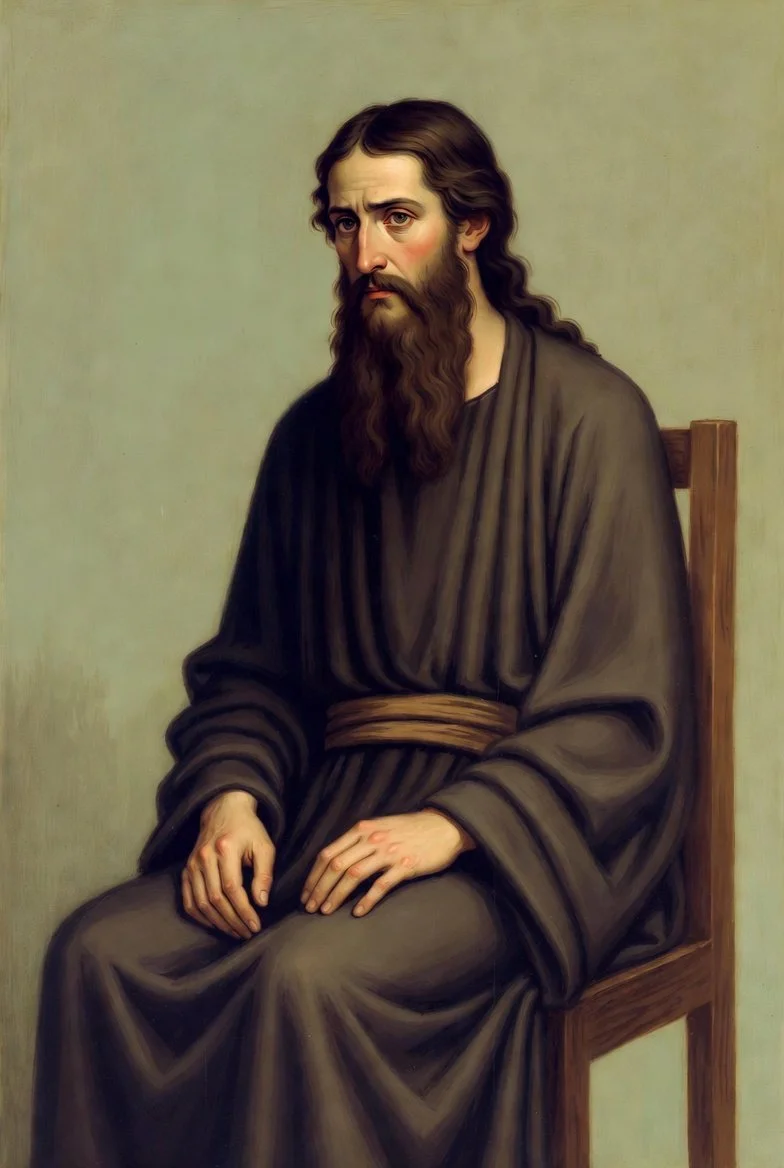
Saint Job the Much-Suffering
Job is the Old Testament patriarch whose story is unique in the biblical canon: a righteous man who loses his children, his wealth, his health, and his comfort in rapid succession — not because of sin but precisely because of his righteousness, as a test that he does not understand and was not consulted about. He sits in physical agony on a heap of ashes. His friends offer theological explanations that are inadequate to his situation. His wife tells him to curse God and die. He does neither. He argues with God honestly, demands an answer, refuses to pretend he understands what is happening — and ultimately receives the divine response from the whirlwind that does not explain his suffering but makes it bearable.
The Eastern Orthodox tradition venerates him as Saint Job the Much-Suffering, with a feast day and full liturgical commemoration. His icon shows him on the ash heap, often with his friends seated nearby — the image of suffering that makes no theological sense, borne by a man who will not stop believing even when belief costs him everything.
Every person with chronic pain eventually asks why. Not as a theological question but as a personal one: why is this happening to me, why won’t it stop, why doesn’t prayer seem to change it, why do others seem to be spared what I am carrying? Job asked the same questions. He asked them loudly, persistently, and without the diplomatic softening that his friends recommended.
The tradition’s answer is not that Job was wrong to ask. God’s response in the whirlwind vindicates Job and rebukes his friends who offered tidy theological explanations. The honest cry of a suffering person — the unanswered “why” addressed directly to God — is itself a form of prayer. Job is the patron of that prayer. He holds it, and he brings it before God with the authority of someone who asked the same thing and was heard.
Saint Five
Blessed Estephan Nehmé
Youssef Nehmé was born in 1820 in Hardine, Lebanon, and entered the Lebanese Maronite Order, taking the religious name Estephan. He spent most of his religious life doing ordinary manual work — carpentry, farming, construction — in the service of his community. He was not a theologian, a preacher, or a builder of institutions. His entire interior life was organized around a single phrase that he repeated throughout his days of ordinary labor: Allah shayef — “God sees me.”
He bore illness and physical suffering throughout his life, often without anyone knowing. He did not perform his suffering or seek sympathy for it. He absorbed it quietly, offered it to God, and returned to his work. He died in 1858 and was beatified by Pope John Paul II in 1998. The cause for his canonization continues.
For those with chronic pain, Estephan Nehmé offers something the other saints on this page do not: a model of suffering that is entirely hidden, entirely ordinary, and entirely sustained by the single conviction that God sees what no one else does. He is the patron not for the dramatic long suffering of a Rafqa or a Lidwina — heroic, visible, eventually recognized — but for the person whose pain goes unacknowledged for years, who has stopped trying to explain it, who has simply decided to carry it and trust that God knows what they are carrying even when no one else does.
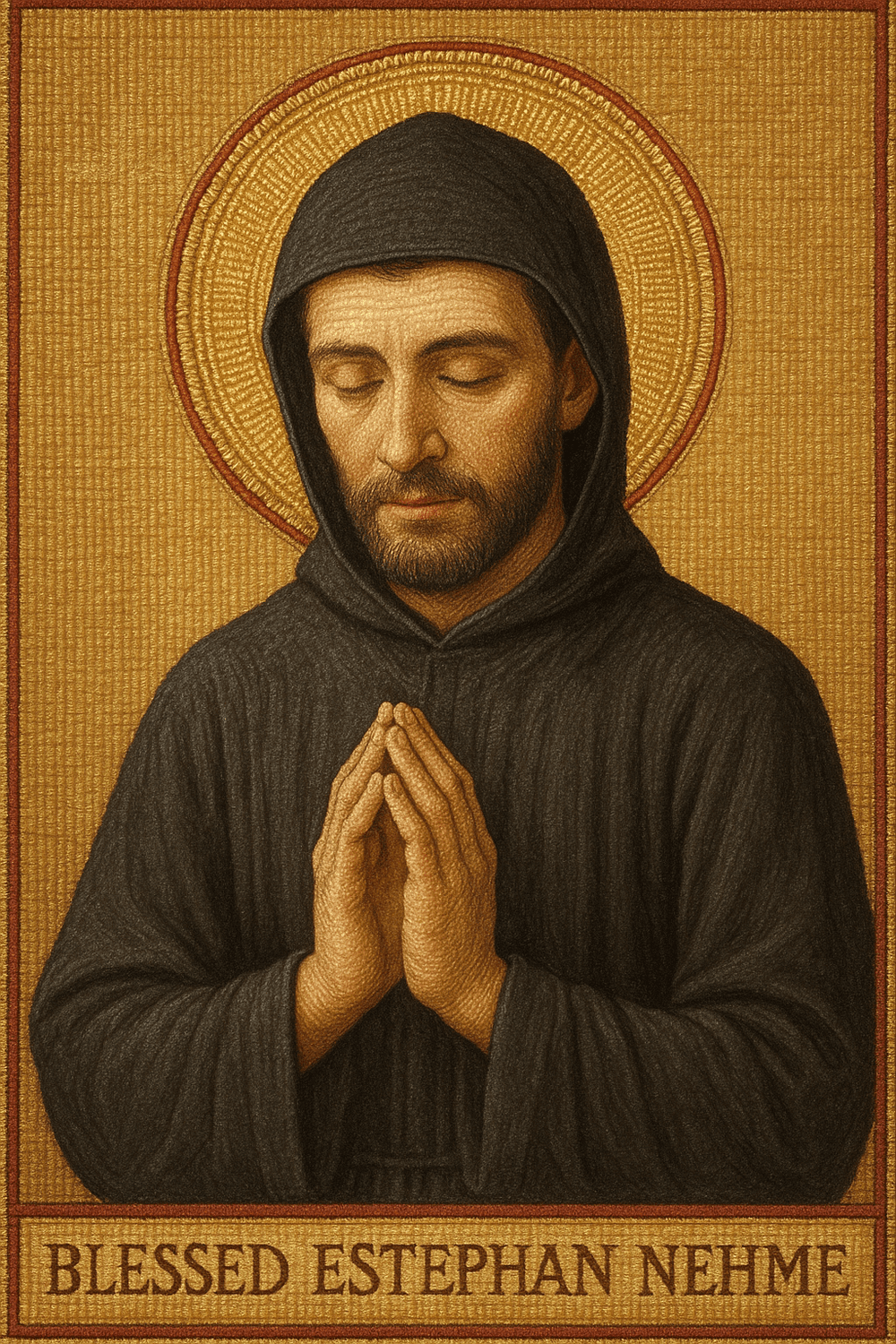
Blessed Estephan Nehmé’s complete life, his spirituality of hidden suffering, and the cause for his canonization are covered in our complete biography of Blessed Estephan Nehmé →
The Bundle
The Chronic Pain Saints Bundle — All Five Cards
All five saints as handmade prayer cards, shipped together. For the person in chronic pain, for their caregiver, for anyone who wants to give something that carries real weight. Each card carries an icon on the front and a saint biography and prayer on the back. Made by hand in Austin, Texas.
Get the Chronic Pain Saints Bundle
All five prayer cards, handmade and shipped together. For the person in chronic pain, for the caregiver, for anyone who wants to give something that holds real meaning.
Add to Cart →Frequently Asked Questions
Saints for Chronic Pain — Common Questions
God Sees What You Are Carrying.
That is Estephan Nehmé’s entire theology — three words in Arabic that sustained him through years of hidden physical suffering. It is also the deepest thing the tradition can say to the person in chronic pain: you are not invisible to God, even when you are invisible to everyone around you. These five saints carried what you are carrying, and they are asking on your behalf right now.
Get the Bundle →