Saints for Cancer and Serious Illness: Five Intercessors for the Hardest Diagnosis
Eastern Catholic & Orthodox • Cancer & Serious Illness • Healing Intercession • Prayer Cards
Saints for Cancer and Serious Illness: Five Intercessors for the Hardest Diagnosis
When the diagnosis changes everything, these are the saints the faithful have turned to — not for guaranteed cures, but for proven intercession, documented miracles, and the particular grace of those who have already been through it.
“Do not be afraid. I am with you always, even to the end of the age.”— Matthew 28:20 • The promise that underlies every act of Christian intercessory prayer
What You Will Find on This Page
- Saint Nektarios of Aegina
- The Orthodox patron of cancer — unjustly exiled bishop whose tomb on Aegina has been a site of documented cancer healings for over a century
- Saint Peregrine Laziosi
- The canonical Catholic patron of cancer — who experienced a verified miraculous healing of bone cancer the night before his scheduled amputation
- Saint Ezekiel Moreno
- The Spanish Augustinian bishop who bore cancer himself with extraordinary faith and is specifically invoked for those in cancer treatment
- Saint Luke the Surgeon
- The canonized physician-bishop of Crimea — for those navigating surgery, treatment decisions, and the medical complexity of serious illness
- Saint Panteleimon
- The unmercenary physician-healer of the Orthodox world — patron of doctors, nurses, and those in medical emergencies for seventeen centuries
- The Bundle
- All five saints as handmade prayer cards — icon on the front, saint biography and healing prayer on the back
Cancer, Serious Illness, and the Christian Tradition of Healing Intercession
A cancer diagnosis does something immediate and specific to a person: it makes the future uncertain in a way it was not before. The plans, the assumptions, the taken-for-granted continuity of ordinary life — all of it becomes suddenly conditional. What remains, underneath the medical appointments and the fear, is the question that serious illness always surfaces: what is actually holding everything together, and is it enough?
The Christian tradition's answer to that question is not primarily doctrinal. It is personal — a company of people, the saints, who faced exactly this kind of uncertainty and found that something held. Saint Peregrine was told his leg would be amputated the next morning. Saint Nektarios died in poverty, dismissed by the institution he had served. Saint Ezekiel Moreno bore cancer in his own body and wrote about it with unflinching honesty. These are not distant theological figures. They are people who stood where you are standing and found that God was present in it.
The five saints on this page have been invoked for cancer and serious illness by Catholics and Orthodox Christians for decades and centuries. Several are associated with documented miraculous healings of cancer. All are associated with the grace of bearing serious illness with faith — which is itself a miracle, and sometimes the more necessary one.
These prayer cards are not a substitute for medical treatment. Every saint on this page — including Saint Luke, who was a working surgeon — held medicine and prayer together as complementary rather than competing. Praying to these saints is not an act of abandoning treatment. It is an act of bringing your treatment, your physicians, and your body before God and asking that the saints who have been there add their voice to yours.
Saint One
Saint Nektarios of Aegina
Anastasios Kefalas was born in 1846 in Silyvria, Thrace, rose to become Metropolitan of Pentapolis, and was then stripped of his position by forged accusations from jealous clergymen. He bore this injustice without complaint, taught theology in Athens, founded a convent on the island of Aegina, and died in 1920 in a hospital bed with almost nothing to his name. The healing that occurred in the adjacent hospital room — a patient with long-standing paralysis recovered when Nektarios’s garment was placed on him immediately after death — was only the beginning.
His tomb on Aegina became one of the most-visited healing shrines in the world. The healings documented there across more than a century include a remarkable concentration of cancer cases — remissions, recoveries, and cases that physicians had pronounced terminal. He was canonized by the Ecumenical Patriarchate in 1961, and the stream of healing accounts from his shrine has not diminished since. Among all the saints invoked for cancer in the Orthodox world, Nektarios stands first — not because of theological designation but because of the sheer weight of documented testimony from those who prayed at his tomb.
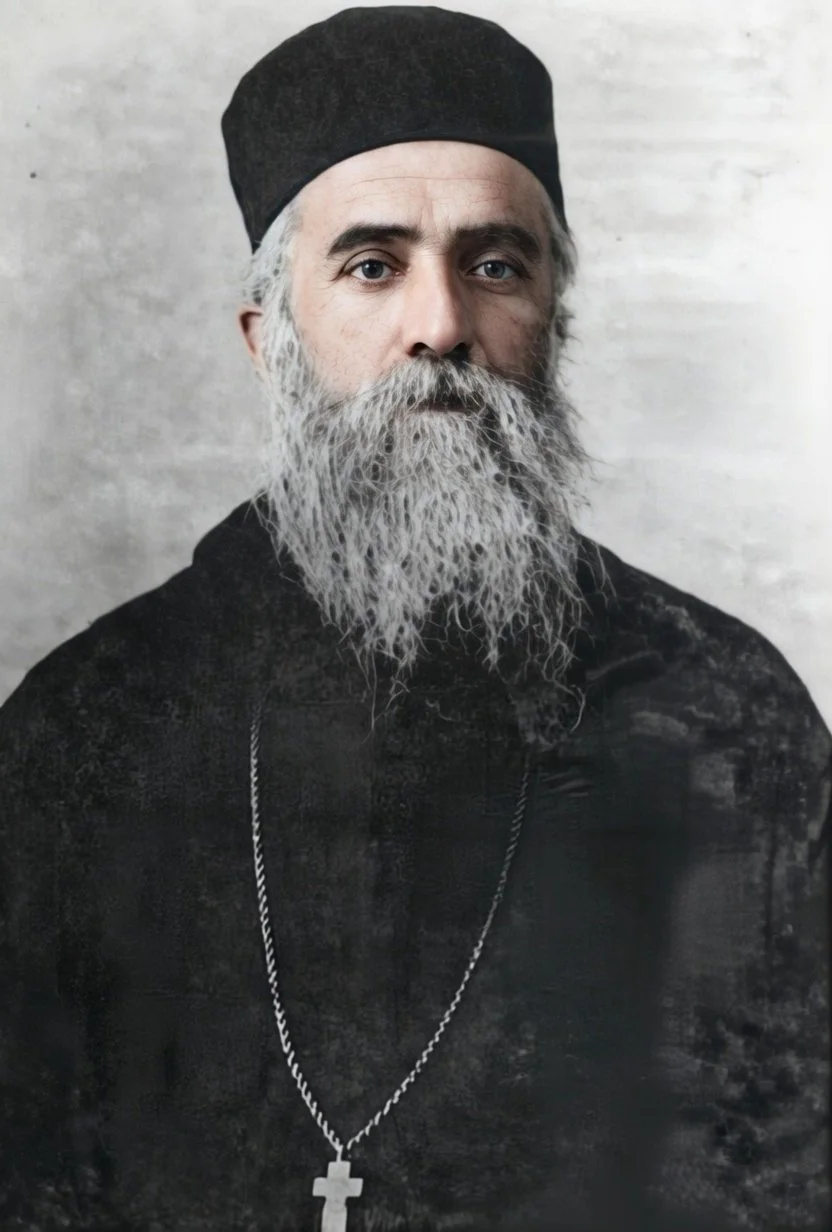
Saint Nektarios’s complete life, his unjust exile, the documented miracles at his tomb, and his traditional healing prayers are in our complete biography of Saint Nektarios of Aegina →
Saint Two
Saint Peregrine Laziosi
Peregrine Laziosi was born in 1260 in Forlì, Italy, into a wealthy anti-papal family. As a young man he was involved in political violence against the Church — he personally struck the face of Saint Philip Benizi, the prior general of the Servites, during a confrontation. What happened next changed his life: Philip turned the other cheek, exactly as the Gospel commanded. Peregrine was so struck by this that he converted, joined the Servite Order, and spent the rest of his life in severe penance, prayer, and service to the poor and sick.
In his later years he developed a virulent cancer of the foot — bone cancer so advanced that amputation was scheduled for the following morning. The night before the surgery, he spent hours in prayer before a painted crucifix in the chapter house. He fell asleep and dreamed that Christ descended from the cross and touched his foot. When he woke and examined his leg, the cancer was gone. His physicians confirmed it. He lived another twenty years, dying in 1345, and was canonized in 1726.
The specific nature of his miracle — cancer that disappeared the night before surgery, verified by physicians who had scheduled the amputation — has made him the patron not only of cancer but of the particular moment when medicine has reached its limit. He is the saint for the night before — for those awaiting results, awaiting surgery, awaiting a verdict from an oncologist.
He is invoked across Catholic and Orthodox traditions, and his image is frequently kept in cancer treatment centers, oncology waiting rooms, and by patients undergoing chemotherapy and radiation. He has been the subject of multiple documented healing accounts across seven centuries.
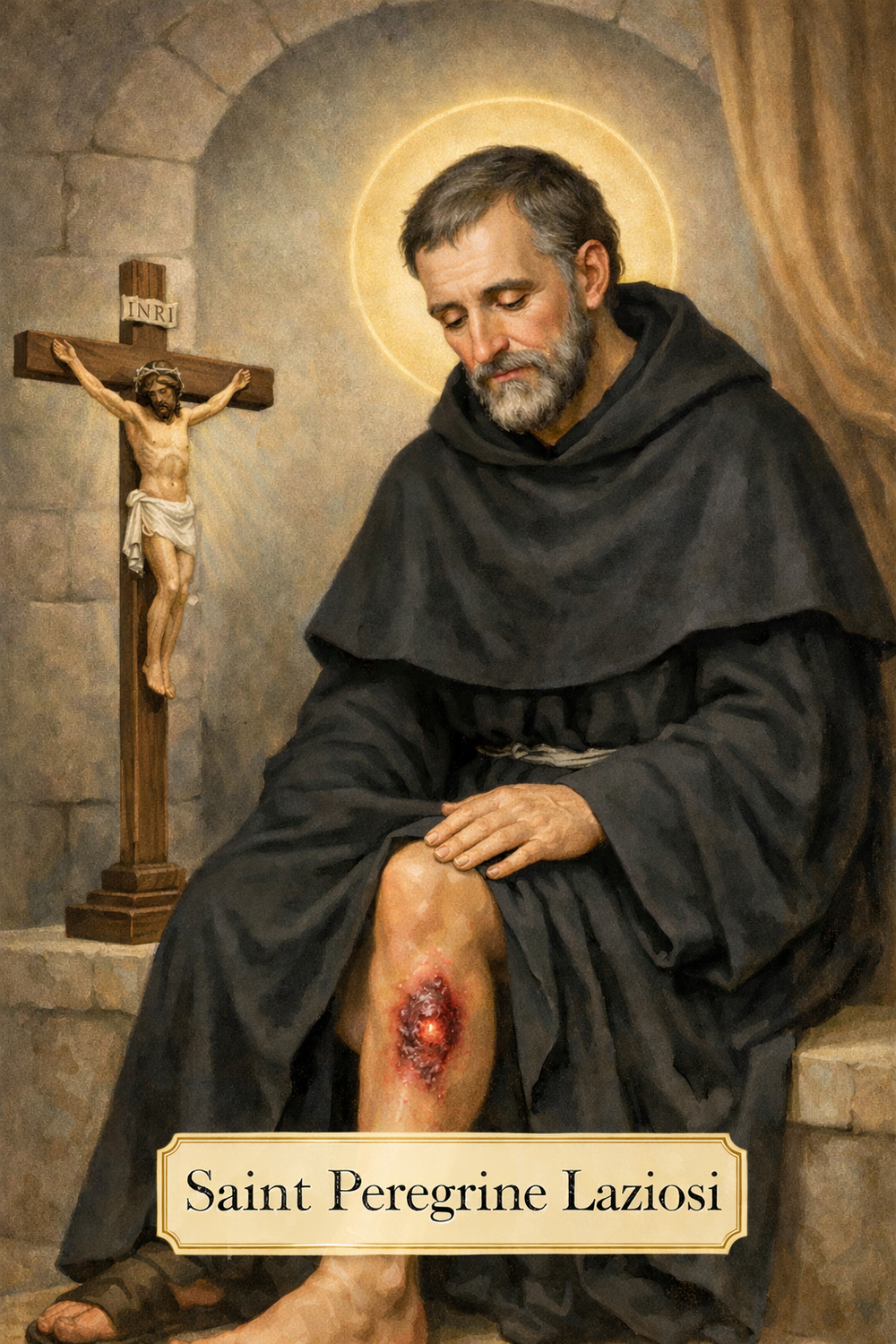
Saint Peregrine’s complete life, his conversion, his miraculous healing, and the seven centuries of cancer intercession associated with him are covered in our complete biography of Saint Peregrine Laziosi →
Saint Three
Saint Ezekiel Moreno
Ezekiel Moreno y Díaz was born in 1848 in Alfaro, Spain, became an Augustinian Recollect friar, and served as a missionary in the Philippines before being appointed Bishop of Pasto in Colombia in 1896. He was known throughout his episcopate for his extraordinary pastoral charity — visiting the sick, the poor, and the imprisoned personally, building churches and schools in remote areas, and maintaining a personal austerity that made his generosity to others all the more remarkable.
In 1905 he was diagnosed with cancer. He returned to Spain for treatment, and spent the remaining year of his life bearing his illness with the same faith he had preached to others. What his contemporaries noted was not stoicism but genuine peace — a man who had spent his ministry telling people that God was present in suffering, now living that claim himself under the most demanding conditions. He died in 1906 and was beatified by Pope John Paul II in 1975, canonized in 1992.
Saint Ezekiel is uniquely positioned among the cancer saints because he bore the disease himself — not as a miracle story, but as a pastoral reality that he navigated with faith over many months. For cancer patients who are not experiencing miraculous recovery but are trying to find God in the ordinary duration of treatment, his intercession carries a particular weight. He knows what chemotherapy and medical uncertainty feel like from the inside. He did not receive a miraculous cure. He died of his cancer. And he is a canonized saint, which means the tradition has judged that how he bore it was itself heroic.

Saint Four
Saint Luke of Crimea, the Surgeon
Valentin Felixovich Voino-Yasenetsky was born in 1877 and became one of the most accomplished surgeons in Russia — pioneering new anesthesia techniques, writing a landmark textbook on purulent surgery, and teaching medicine at the University of Tashkent. He was also a priest, and then a bishop, of the Russian Orthodox Church. The Soviet regime arrested him three times for his faith and sent him into Siberian exile. In exile he continued operating on patients in primitive conditions. He died in 1961 and was canonized by the Russian Orthodox Church in 1996.
For cancer patients, Saint Luke the Surgeon is the intercessor who holds medicine and faith together — who does not ask you to choose between your oncologist and your prayer life, because he never chose between them himself. He is specifically invoked for those undergoing surgery as part of cancer treatment, for those navigating complex oncological decisions, and for physicians and nurses working in cancer care.
Most cancer saints are invoked at specific moments: Peregrine for the night before surgery, Nektarios for the desperate petition. Saint Luke the Surgeon is for the whole journey — from diagnosis through treatment through whatever comes after. He was a physician who understood every stage of serious illness from the clinical side, and a man of prayer who understood it from the interior side. He prayed over his surgical patients. He operated in his bishop’s vestments when circumstances demanded it. He refused the idea that the sacred and the medical were in different categories.
For the cancer patient who spends months in treatment — chemotherapy cycles, imaging appointments, blood draws, oncology consultations — he is the companion who belongs in the waiting room, not just at the altar.
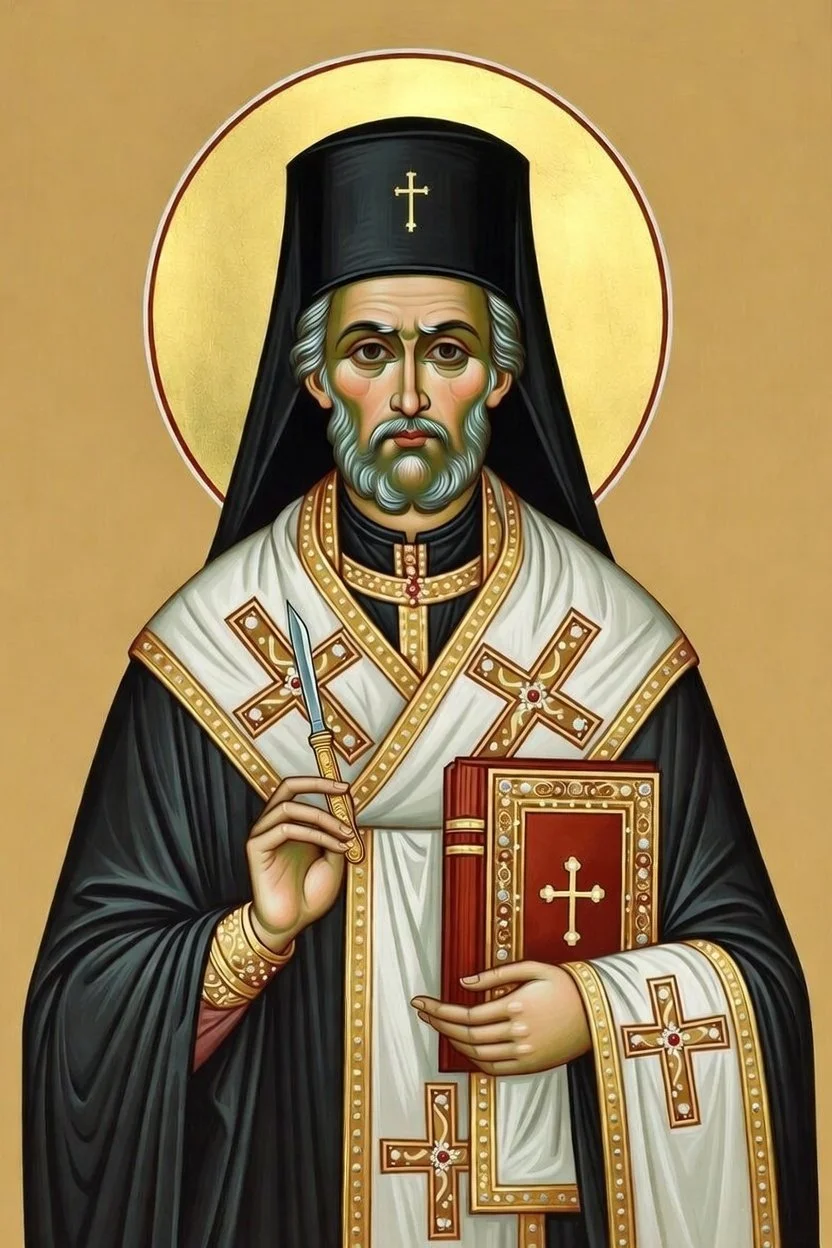
Saint Luke’s extraordinary double vocation as surgeon and bishop, his Soviet-era exiles, and the healings documented after his canonization are in our complete biography of Saint Luke of Crimea →
Saint Five
Saint Panteleimon the Great Martyr
Panteleimon was a physician in third-century Nicomedia who converted to Christianity, abandoned his lucrative practice, and began healing without charge — calling upon Christ as the source of all healing. He healed a blind man, a paralyzed child, and many others before his martyrdom under the Emperor Diocletian circa 305 AD. His head has been preserved at the Russian Monastery of Saint Panteleimon on Mount Athos for centuries, where it continues to receive pilgrims seeking healing.
For seventeen centuries he has been the patron saint of physicians, nurses, and the seriously ill across the Orthodox world. His icons hang in hospitals and clinics from Greece to Russia to Serbia. He is invoked at the beginning of surgical procedures, at the bedside of the gravely ill, and in the moments of medical emergency when everything happens quickly and there is no time for long prayer — only for a name called out in faith.
He carries a particular relevance for cancer patients because his patronage spans the entire medical encounter — not just the moment of miraculous healing, but the ordinary work of medicine that surrounds it. He was a physician before he was a martyr. He understood that healing is hard work that takes time and skill, and that God works through the competence of physicians as well as through miracles. He is the patron for those who want both — who are pursuing treatment and praying for healing and do not see any contradiction between the two.
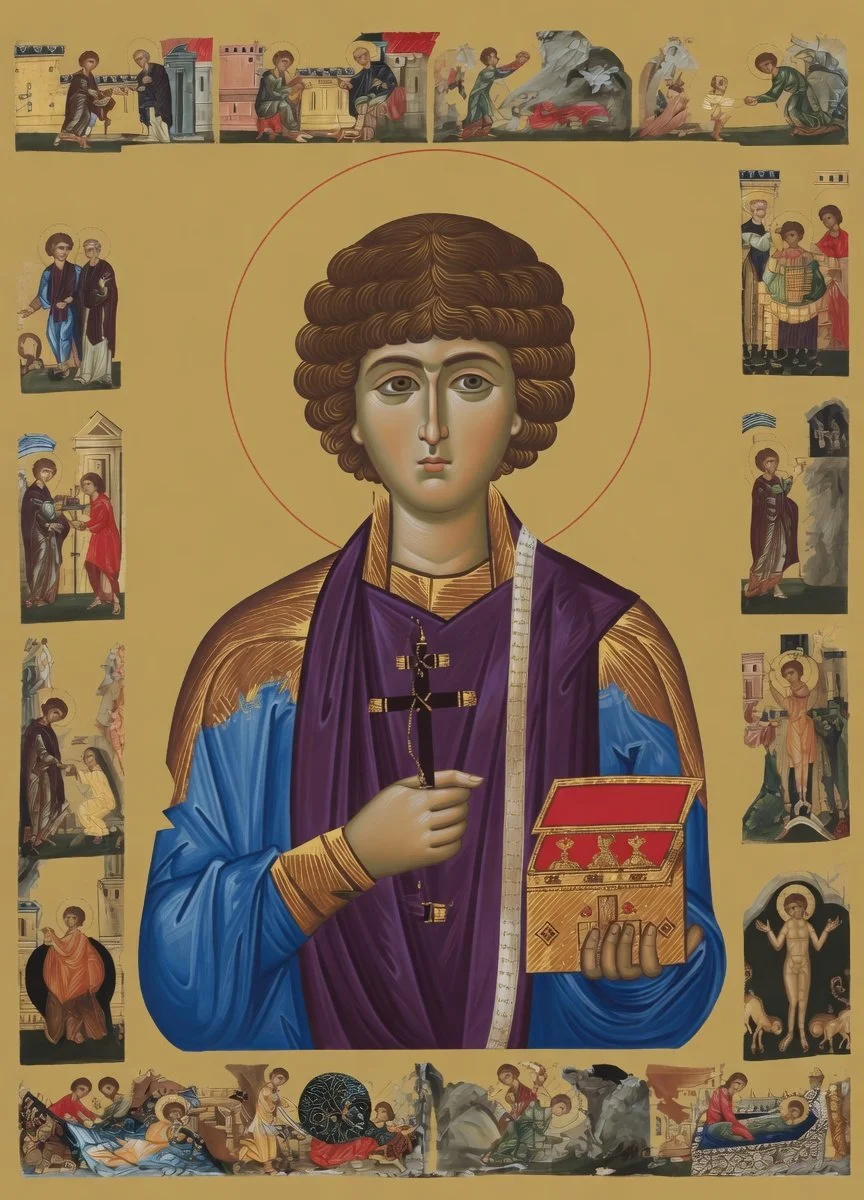
Saint Panteleimon’s complete life as a physician and martyr, his relics on Mount Athos, and the seventeen centuries of healing devotion associated with him are in our complete biography of Saint Panteleimon →
The Bundle
The Cancer & Serious Illness Saints Bundle — All Five Cards
All five saints as handmade prayer cards, shipped together. For the patient, for the caregiver, for the family member who does not know what to give. Each card carries an icon on the front and a saint biography and healing prayer on the back. Made by hand in Austin, Texas.
Get the Cancer & Serious Illness Saints Bundle
All five prayer cards, handmade and shipped together. For the patient, for the caregiver, for the family member who wants to give something that holds real meaning.
Add to Cart →Frequently Asked Questions
Saints for Cancer & Serious Illness — Common Questions
They Have Already Walked This Road.
Peregrine spent the night before his amputation in prayer. Nektarios died nearly penniless and was vindicated by God. Ezekiel bore cancer in his own body and called it bearable. Luke operated on patients who had nothing else to hope for. Panteleimon healed without charging for it, because he believed the healing belonged to God. These are not abstract figures. They are people who faced exactly what you are facing — and who are now in a position to bring it before God with the full authority of what they have been through.
Get the Bundle →