Eastern Christian Healing Saints: Five Intercessors for Physical Healing
Eastern Catholic & Orthodox • Healing Saints • Physical Healing • Prayer Cards
Eastern Christian Healing Saints: Five Intercessors for Physical Healing
The Eastern Christian tradition holds an entire category of saints specifically dedicated to physical healing — including two whose stories are largely unknown outside their own traditions, and whose miracles are no less remarkable for that.
“Is anyone among you sick? Let them call the elders of the church to pray over them and anoint them with oil in the name of the Lord. And the prayer offered in faith will make the sick person well.”— James 5:14–15 • The New Testament foundation for Christian healing prayer
What You Will Find on This Page
- Saints Cosmas & Damian
- The twin unmercenary physician-healers of the ancient church — seventeen centuries of healing devotion, venerated by Catholic and Orthodox traditions worldwide
- Saint Hermione
- Daughter of Philip the Evangelist, physician of Ephesus, early female healer-martyr — one of the earliest physician-saints in Christian history, largely unknown outside Eastern circles
- Saint John of Kronstadt
- The 19th century Russian priest whose documented healing ministry touched tens of thousands — a pastor who turned pastoral visits into occasions for miraculous healing
- Saint John Maximovitch
- The 20th century Orthodox bishop of Shanghai and San Francisco — sleepless in prayer, known for healings during his lifetime and documented miracles at his tomb after death
- Saint Gregorios of Parumala
- The first canonized saint from India in the Oriental Orthodox tradition — a bishop whose healings continue at his tomb in Kerala, known to millions in South India and almost no one elsewhere
- The Bundle
- All five saints as handmade prayer cards — icon on the front, saint biography and healing prayer on the back
The Eastern Christian Tradition of Healing Intercession
The Eastern Christian tradition has always understood healing as a specifically sacred activity. The category of saints called the Holy Unmercenary Healers — the Anargyroi, literally “those who take no silver” — testifies to a conviction that healing is ultimately God’s work, and that those who exercise it should do so as an act of service rather than commerce. Cosmas and Damian, Panteleimon, Hermione, and others in this category were physicians who refused payment, who called upon Christ in their work, and who understood their medical practice as a form of ministry.
Beyond this formal category, the tradition is full of saints associated with miraculous physical healing — priests, bishops, monks, and ordinary Christians whose prayer produced healings that their contemporaries could not explain medically and documented with great seriousness. John of Kronstadt healed through prayer and the Eucharist in nineteenth-century Russia. John Maximovitch healed through what appeared to be simple physical proximity — people left his presence well who had arrived ill. Gregorios of Parumala healed in Kerala at the turn of the twentieth century, and his tomb continues to draw hundreds of thousands of pilgrims seeking healing today.
This bundle gathers five of these intercessors — two from the ancient tradition, three from the last two centuries — with particular attention to saints whose stories are largely unknown outside their own communities. The Eastern church is vast. Its healing saints are more numerous and more recently active than most Western Christians realize.
Saints One & Two
Saints Cosmas and Damian
Cosmas and Damian were twin brothers — physicians — who practiced medicine in the third century without accepting payment of any kind. Accounts place them variously in Arabia, Syria, or Asia Minor; the tradition holds three distinct pairs of Cosmas and Damian, suggesting the phenomenon of unmercenary twin physician-healers may have been more widespread than a single story. The most venerated pair, celebrated on July 1 in the Eastern Orthodox calendar, were Arabian brothers martyred under the Emperor Diocletian.
Their healing accounts were extraordinary during their lifetimes and multiplied after their deaths. A woman named Palladia was cured of a hemorrhage after years of seeking help from physicians — an account that carries deliberate New Testament echoes. A man whose leg had been amputated reportedly had it restored through their intercession in one of the most famous healing miracles in early Christian history. Emperor Justinian I attributed his recovery from a serious illness to their intercession and rebuilt their basilica in Constantinople in gratitude.
The title anargyroi — unmercenary ones — was not simply a description of their pricing. It was a theological statement. By refusing payment, Cosmas and Damian proclaimed that the healing they offered was not theirs to sell. It belonged to God, flowed from God, and was given freely as God gives freely. Their medical practice was an act of evangelism as much as medicine: every healing they performed without charge was a demonstration that the power at work in them was not human skill but divine grace.
This is why they remain the primary patrons of physicians and surgeons across both Catholic and Orthodox traditions. Their icon — two figures in physicians’ robes holding medical instruments — hangs in hospitals, medical clinics, and operating rooms from Greece to Lebanon to Russia. They are the saints who hold medicine and faith together as inseparable.

Saint Three
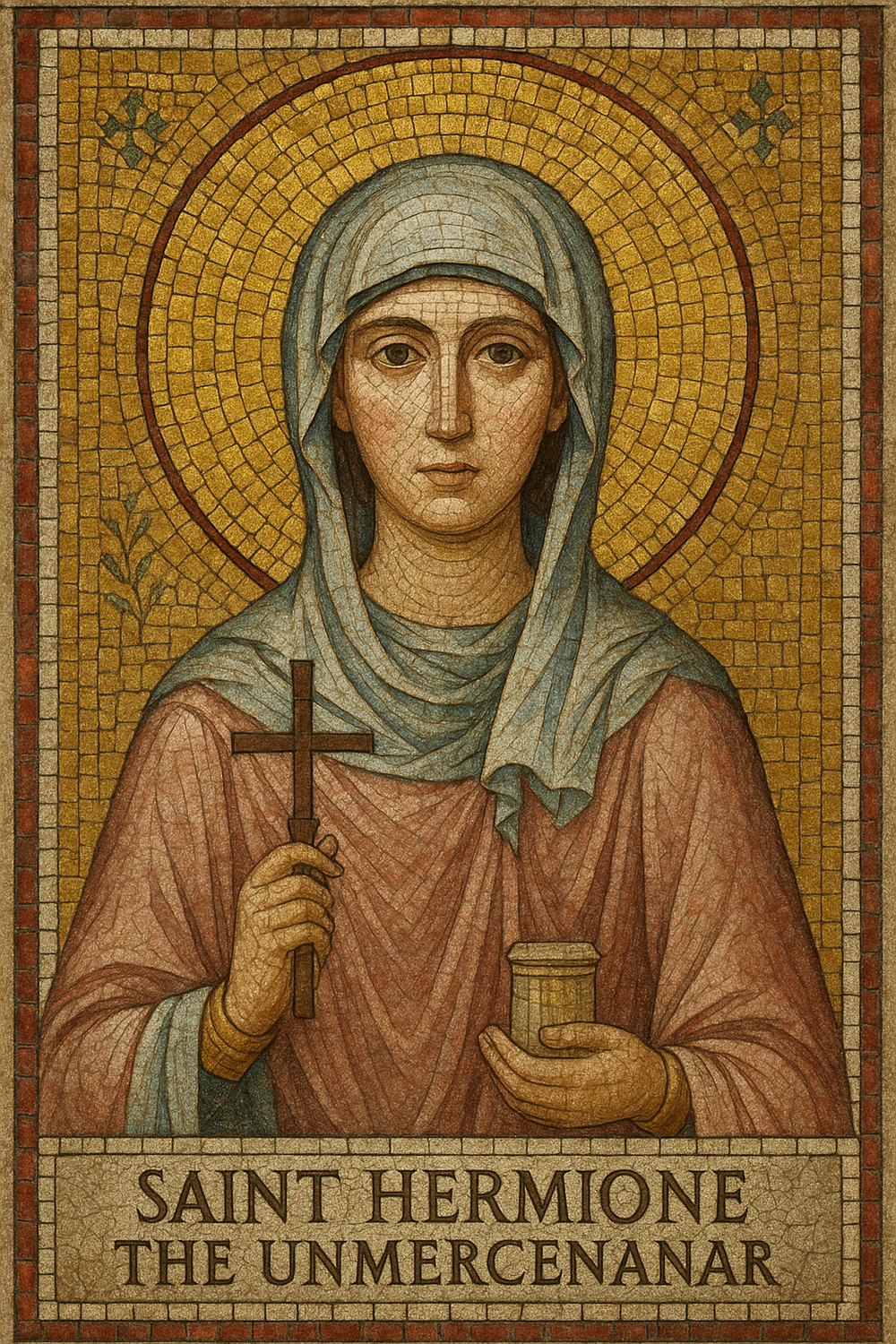
Saint Hermione of Ephesus
Hermione was the daughter of Philip the Evangelist — the Philip of Acts 8, who baptized the Ethiopian eunuch and whose four daughters prophesied (Acts 21:8–9). She became a physician in Ephesus in the second century, healing the sick without payment in the unmercenary tradition, and converting many through her ministry. She is one of the earliest female physician-saints in the Christian tradition — a healer, a prophet’s daughter, and eventually a martyr.
Under the Emperor Hadrian she was brought before the authorities and commanded to sacrifice to the pagan gods. She refused. She was tortured and eventually beheaded, dying circa 117 AD. Her feast day is September 4 in the Eastern Orthodox calendar. She is venerated widely in Greece and the Eastern Orthodox world but is almost entirely unknown in Western Christianity — one of many Eastern saints whose stories have simply never crossed the theological and cultural divide.
What makes Hermione particularly compelling is her lineage. Her father Philip traveled with the apostles and was present at some of the foundational moments of the early church. She was raised in a household shaped by direct contact with the apostolic generation. Her ministry as a physician-healer in Ephesus was not an isolated act of personal holiness but the continuation of a family tradition of service to the early Christian community. She is a direct connection between the New Testament world and the tradition of Christian healing that followed it.
Saint Four
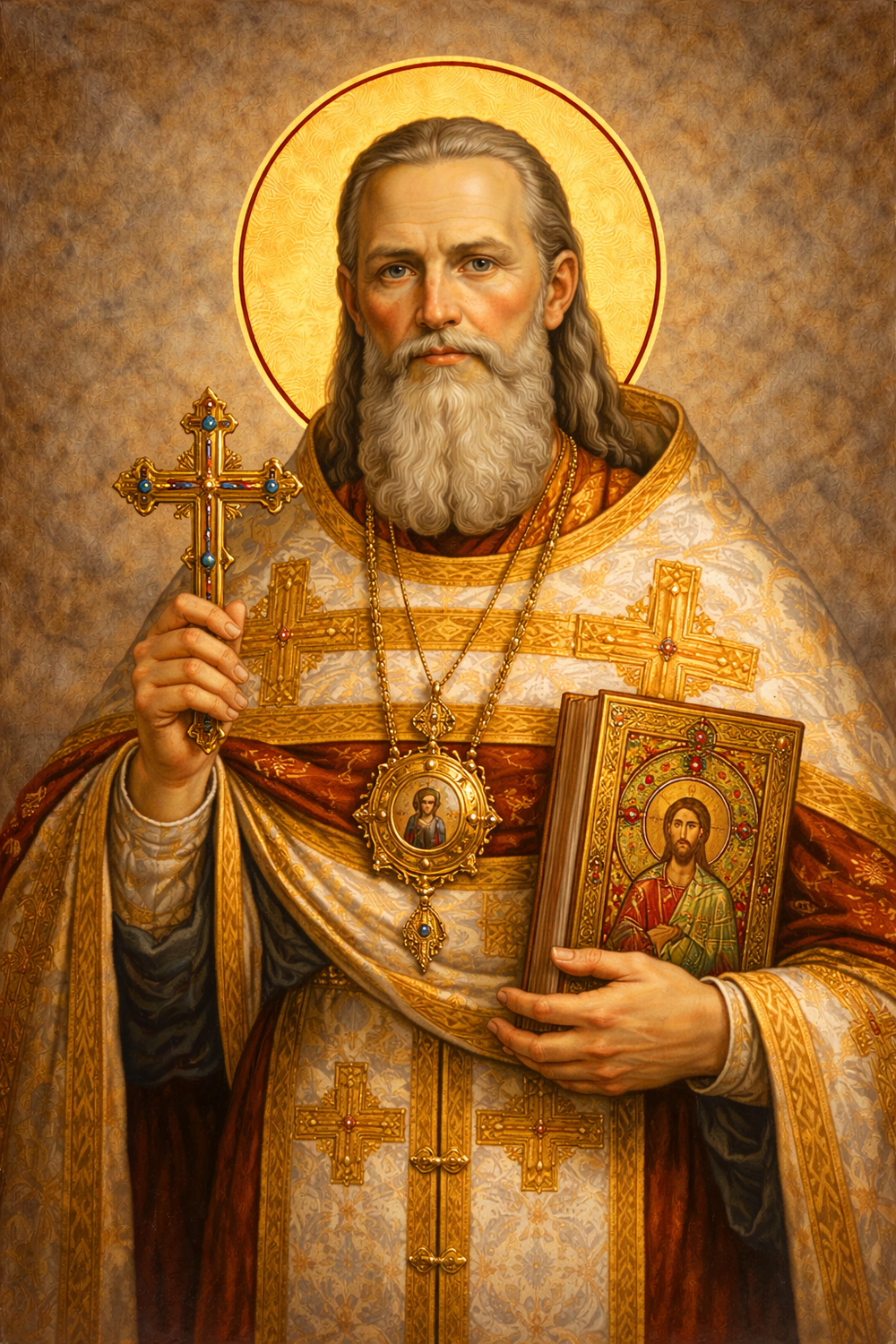
Saint John of Kronstadt
John Ilyich Sergiev was born in 1829 in Sura, Russia, and was ordained a priest in 1855 at the cathedral in Kronstadt — a naval fortress town near St. Petersburg that was also home to some of Russia’s most desperate poverty. He became the most famous pastor in nineteenth-century Russia not by writing theology or ascending the church hierarchy but by doing something extraordinarily simple: he visited the sick, prayed over them, and they got better. Word spread. By the 1880s, people were traveling from across Russia — and eventually from Europe and beyond — to ask Father John to pray over them.
His healing ministry was documented by thousands of contemporaries, including physicians who could not explain the recoveries they witnessed following his prayer. He kept meticulous diaries that record his interior struggles alongside his pastoral work — a combination of radical holiness and radical transparency that makes him one of the most vivid figures in modern Orthodox history. He was canonized by the Russian Orthodox Church Outside Russia in 1964 and by the Moscow Patriarchate in 1990.
What distinguishes John of Kronstadt among healing saints is the mechanism of his healing ministry: he healed primarily through the Eucharist and through prayer — not through any extraordinary charism separate from the ordinary life of the church. He insisted that the sacraments were themselves healing, that the Eucharist was medicine for the body as well as the soul, and that the prayer of faith — specific, confident, expectant — was what released the grace already present in every liturgical act. His healings were not departures from normal church life. They were normal church life, fully realized.
Saint Five
Saint John Maximovitch of Shanghai and San Francisco
Mikhail Borisovich Maximovitch was born in 1896 in Ukraine, became a bishop of the Russian Orthodox Church Outside Russia, and served — in succession — in Shanghai, Western Europe, and finally San Francisco, where he died in 1966. His life was defined by exile: he ministered to Russian refugees displaced by the Revolution, led his Shanghai flock to safety during the Communist takeover of China, and spent years navigating the internal politics of the Orthodox diaspora while caring for orphans, the sick, and the displaced.
He was known for sleeping almost not at all — spending his nights in prayer — and for a pastoral presence that people described as physically tangible. He visited the sick constantly, prayed over them, and healings followed. During his lifetime these were attributed to his personal holiness. After his death in 1966 — his body was found incorrupt when the diocese processed his case for canonization — the healings multiplied. He was canonized by the Russian Orthodox Church Outside Russia in 1994.
John Maximovitch is a saint of displacement, exile, and the suffering of the uprooted — but also of extraordinary healing. He is venerated primarily within the Russian Orthodox diaspora, which means that outside of those communities, he is almost entirely unknown despite his remarkable life and the documented miracles at his tomb in San Francisco.
His relics are enshrined at the Cathedral of the Mother of God “Joy of All Who Sorrow” in San Francisco, California — making him one of the very few canonized Orthodox saints with a primary shrine in the United States. For Americans seeking an Orthodox healing saint, he is the closest one geographically. His tomb continues to receive pilgrims seeking healing, and the accounts from that shrine span more than fifty years.

Saint Six
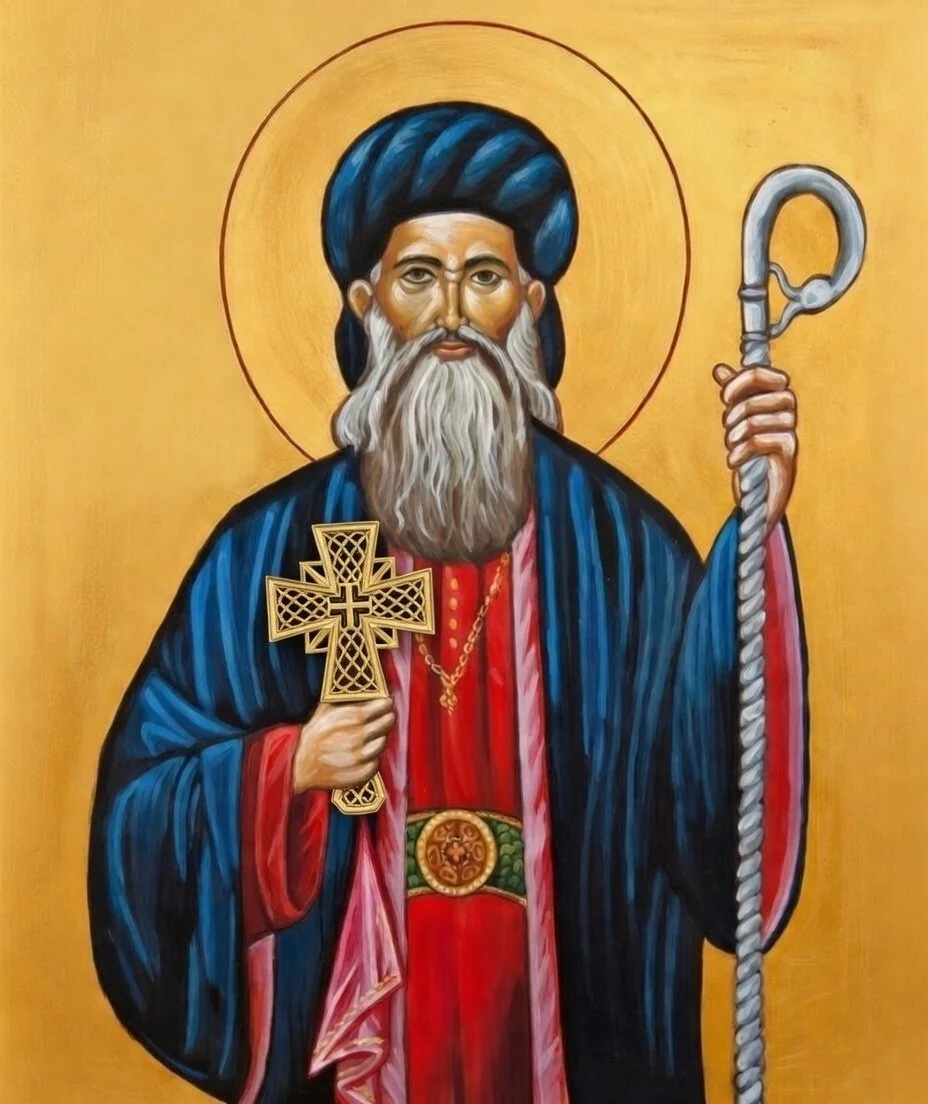
Saint Gregorios of Parumala
Geevarghese Gregorios was born in 1848 in Mulanthuruthy, Kerala, India, into a Syrian Christian family — part of the ancient Thomas Christian tradition that traces its origins to the apostle Thomas’s mission to India in the first century. He was consecrated bishop of the Parumala diocese in 1876, an office he held until his death in 1902, and he became one of the most beloved pastoral figures in the history of the Malankara Orthodox Syrian Church. He was canonized in 1947 — the first person from India to be canonized as a saint in the Oriental Orthodox tradition.
His healing ministry during his lifetime was extensive — healings of the physically and mentally ill attributed to his prayer and his blessing. After his death, his tomb at Parumala became one of the most significant healing shrines in South Asia. Hundreds of thousands of pilgrims visit annually, from Kerala and across India, seeking healing from physical illness. The miracles documented there span more than a century and have been examined in detail by the church during his canonization process.
Saint Gregorios represents something the other bundles on this site do not: the vast tradition of Eastern Christianity that exists entirely outside the European and Middle Eastern frame. The Thomas Christians of India have an unbroken tradition stretching to the first century, independent of Rome and Constantinople, with their own saints, their own liturgy, and their own healing tradition. Gregorios of Parumala is that tradition’s most celebrated healer — and he is virtually invisible to the Western Christian world that dominates most discussions of saints and healing.
The Bundle
The General Healing Saints Bundle — All Five Cards
Five handmade prayer cards — ancient and modern, well-known and entirely obscure, from Arabia and Russia and India and Ephesus. Each one a healing saint. Each one with documented miracles. Each one largely invisible to the broader Christian world. Made by hand in Austin, Texas.
Get the General Healing Saints Bundle
Five healing saints from five traditions and five centuries — all with documented miracles, most largely unknown. All five as handmade prayer cards, shipped together.
Add to Cart →Frequently Asked Questions
Eastern Christian Healing Saints — Common Questions
The Church Is Larger Than You Think.
From Ephesus to Kerala, from nineteenth-century Russia to twentieth-century San Francisco — the Eastern Christian world has been producing healing saints continuously for two thousand years. Most of them never made it into the Western consciousness. Most of their shrines are unknown outside their own communities. But their prayers are not less real for that, and their miracles are not less documented. They are praying. And they can be asked.
Get the Bundle →