Catholic Saints • San Giovanni Rotondo • Opera • Confession
Padre Pio and Beniamino Gigli: The Tenor Who Sang Mamma in the Friary Garden
One of the most famous voices of the twentieth century walked up to a Capuchin friar in a small Italian town and was told his soul was dirty. He knelt down and confessed. After that he kept coming back, and he sang.
Padre Pio and Gigli at a Glance
- The Saint
- Padre Pio of Pietrelcina (1887 to 1968), Capuchin friar, canonized June 16, 2002
- The Singer
- Beniamino Gigli (1890 to 1957), Italian tenor from Recanati
- The Place
- San Giovanni Rotondo, in the Gargano region of southern Italy
- The Relationship
- Confessor and penitent, then close friends; Gigli is listed among Padre Pio's spiritual sons
- The Song
- Mamma, composed by Cesare Andrea Bixio in 1940
- Date of First Meeting
- Not given in the sanctuary's own account
- Padre Pio's Feast Day
- September 23
The Friar of San Giovanni Rotondo
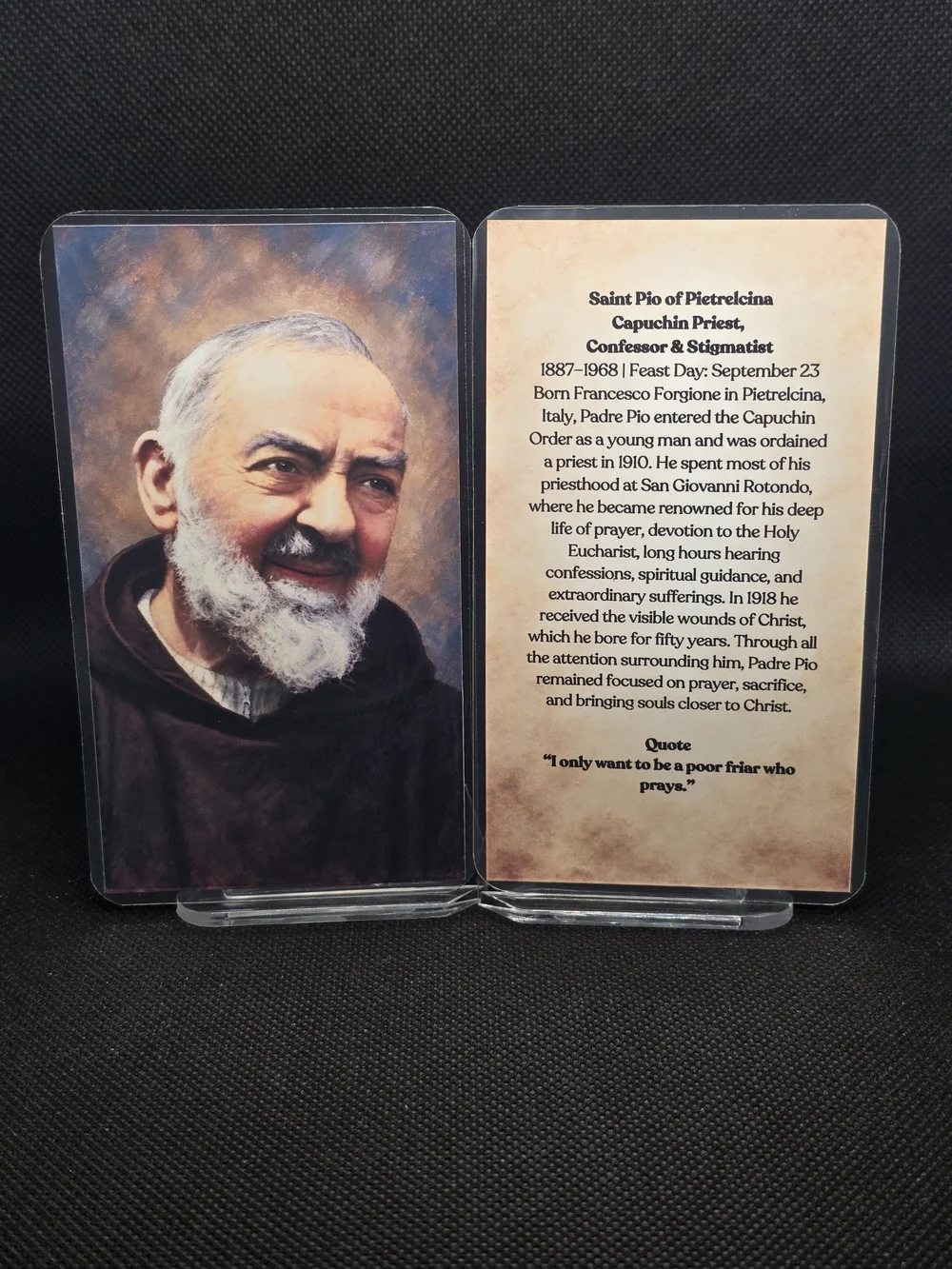
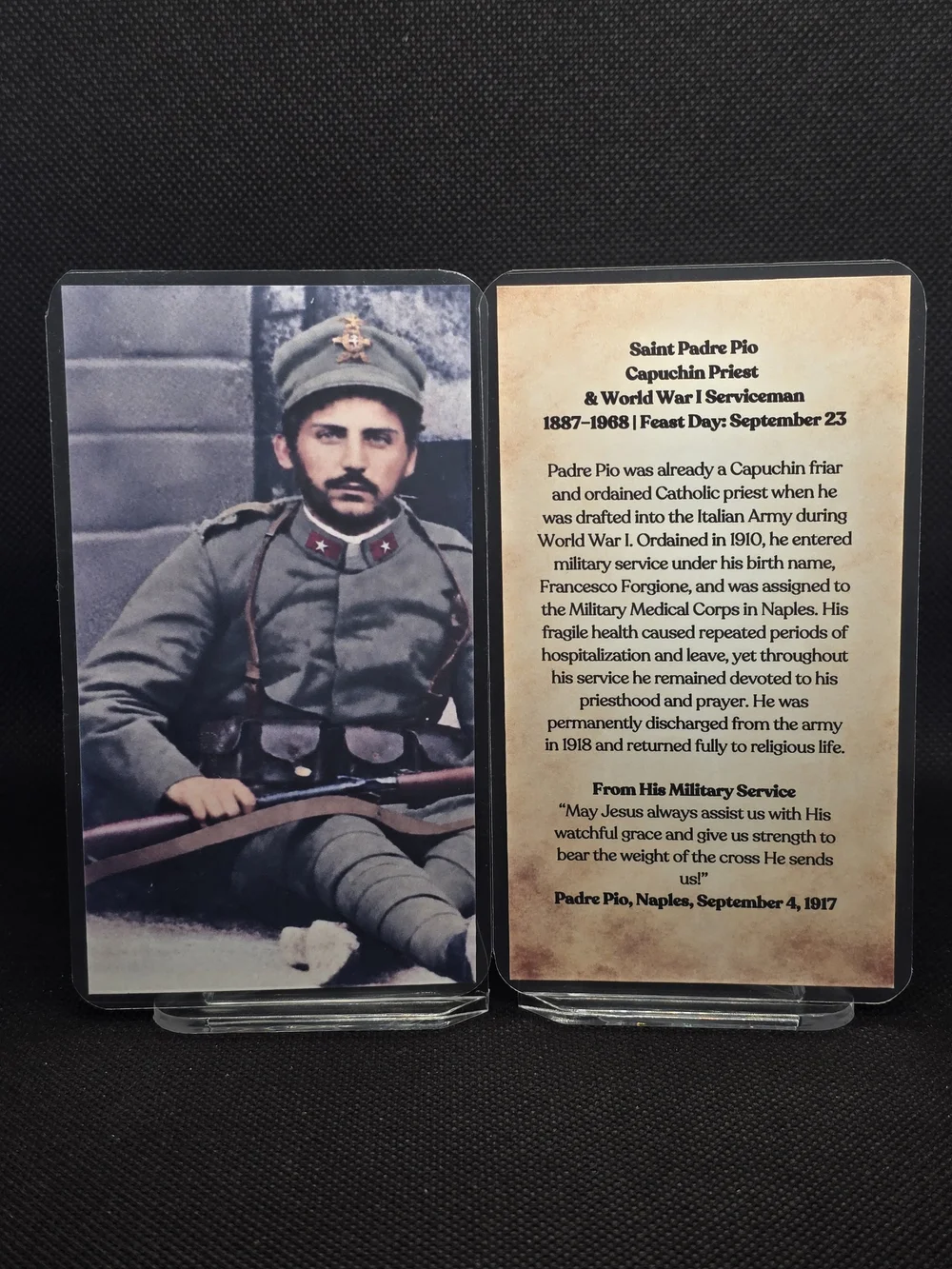
Padre Pio was born Francesco Forgione on May 25, 1887, in Pietrelcina, a village in southern Italy. He joined the Capuchin Franciscans as a young man and was ordained a priest in 1910. In 1916 he was sent to the friary at San Giovanni Rotondo, a quiet town on the Gargano peninsula, and he stayed there for the rest of his life.
In September 1918 the wounds of Christ appeared on his hands, feet, and side, and for the next fifty years he carried the stigmata. News of it spread. Pilgrims began arriving in a town that had barely seen visitors, and over the decades they came in the thousands: farmers, soldiers, bishops, doctors, and famous people from outside Italy.
What drew most of them was not the wounds. It was the confessional. Padre Pio spent hours every day hearing confessions, and the people who knelt there often described being read to the bone. He also founded a hospital, the Home for the Relief of Suffering, which opened in 1956 and still serves patients today. He died on September 23, 1968, and Pope John Paul II canonized him on June 16, 2002.

Part II
The Tenor
Beniamino Gigli was born in Recanati, in central Italy, on March 20, 1890. He won an international singing competition in Parma in 1914 and made his operatic debut the same year. He first sang at the Metropolitan Opera in New York on November 26, 1920, and after Enrico Caruso died in 1921 he was widely seen as the heir to Caruso's place among the great tenors. The label stuck, even though Gigli preferred to be known as himself.
He was no stranger to success. He recorded prolifically, appeared in more than twenty films between 1935 and 1953, and filled concert halls on several continents. He retired in 1955 after a farewell tour, and he died in Rome on November 30, 1957.
That is the man who, at some point, decided he wanted to meet a friar in a remote southern town. The sanctuary's account says simply that Gigli wanted to meet Padre Pio and went to San Giovanni Rotondo to do it.

Part III
The White Shirt
The official website of the Padre Pio sanctuary gives the story of the first meeting in a few lines. As Gigli approached, Padre Pio spoke to him first. The Italian is blunt: Giovanotto, cambiati la camicia. Young man, change your shirt.
He went on. Gigli's surname means lilies in Italian, and the friar told him he was no lily. His shirt was white, but his soul was dirty.
The sanctuary says that Gigli broke down. He wept, knelt, and confessed, and he repented of his sins. It adds a sentence that is easy to skim past: from that day he began a new life.
It is worth pausing on how the scene is told. A world-famous performer is used to being welcomed and flattered. Here he walks up expecting a meeting and instead meets a man who sees past his clothes in the first sentence. The detail the account keeps is the pun on his name.
Part IV
Singing in the Garden
The story did not end with the confession. According to the sanctuary, Gigli became one of Padre Pio's closest friends and was accepted among his spiritual sons, the large circle of people who looked to the friar as a spiritual father.
On his visits, he sang for the friar in the convent garden. The sanctuary names a hymn, Oh, grande, Sommo Dio, and the Ave Maria, and says he sang other songs besides. For a man who had performed in the great opera houses of the world, it was a very small audience: a Capuchin on a garden path, and perhaps a few brothers nearby.
The picture is worth holding onto. A tenor whose voice had filled the Metropolitan Opera stood in a friary garden and sang the Ave Maria for a friar. Whatever else we say about the visits, they were not publicity.
Part V
Why That Song
The song that mattered most was Mamma. Cesare Andrea Bixio composed it in 1940, and Bixio Cherubini wrote the Italian words, which begin Mamma, son tanto felice. Gigli was one of the great singers of it. The official Padre Pio website says that whenever Gigli visited San Giovanni Rotondo, he had to sing it for the friar, and that Padre Pio would be moved to tears.
The reason was his own mother. Maria Giuseppa De Nunzio, whom everyone called Mamma Peppa, was born in Pietrelcina on March 28, 1859. Late in 1928 she came to San Giovanni Rotondo to be near her son. She caught a severe double pneumonia there and died on January 3, 1929. Padre Pio visited her every day during her last illness. The sanctuary describes the bond between them as extraordinary and strong, and says that thinking of her could bring him to tears.
That is the heart of the story. People who come to a saint are often afraid he will be cold. Here is a friar with stigmata and a long list of penitents, and he is undone by an Italian song about a mother.
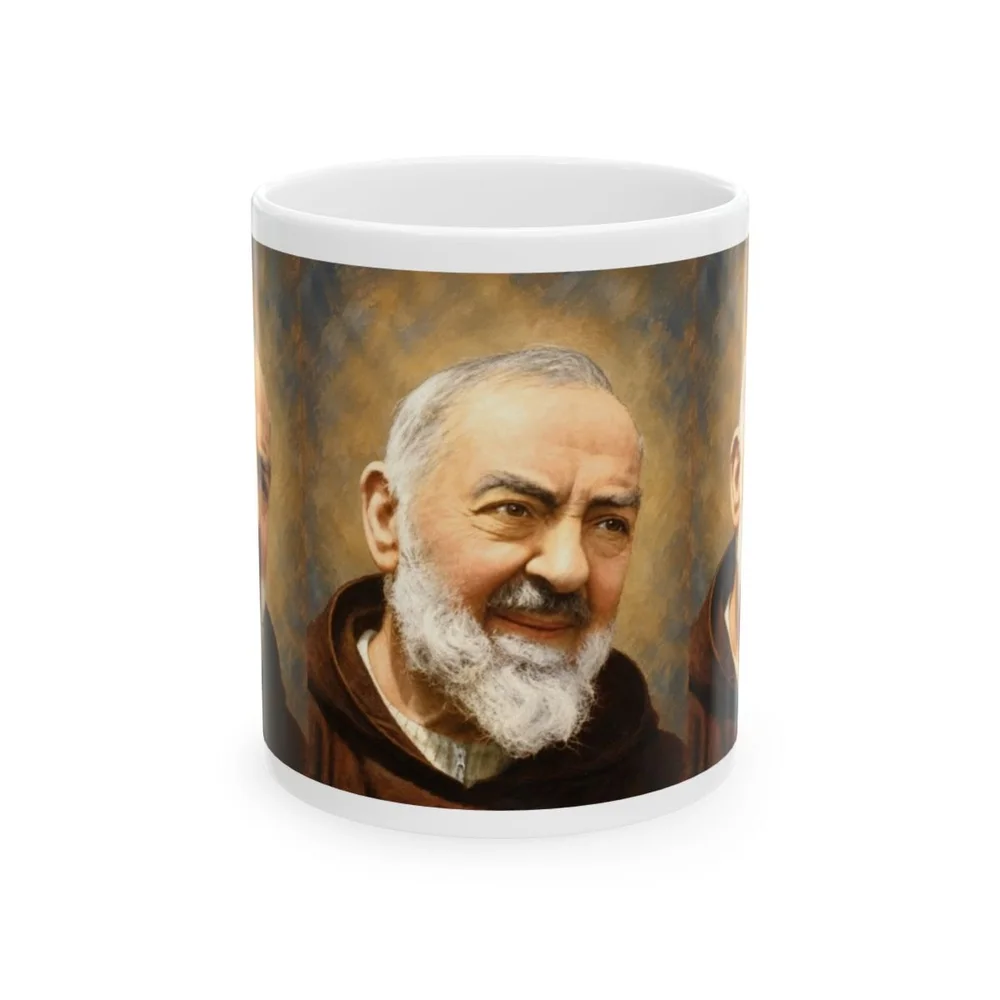
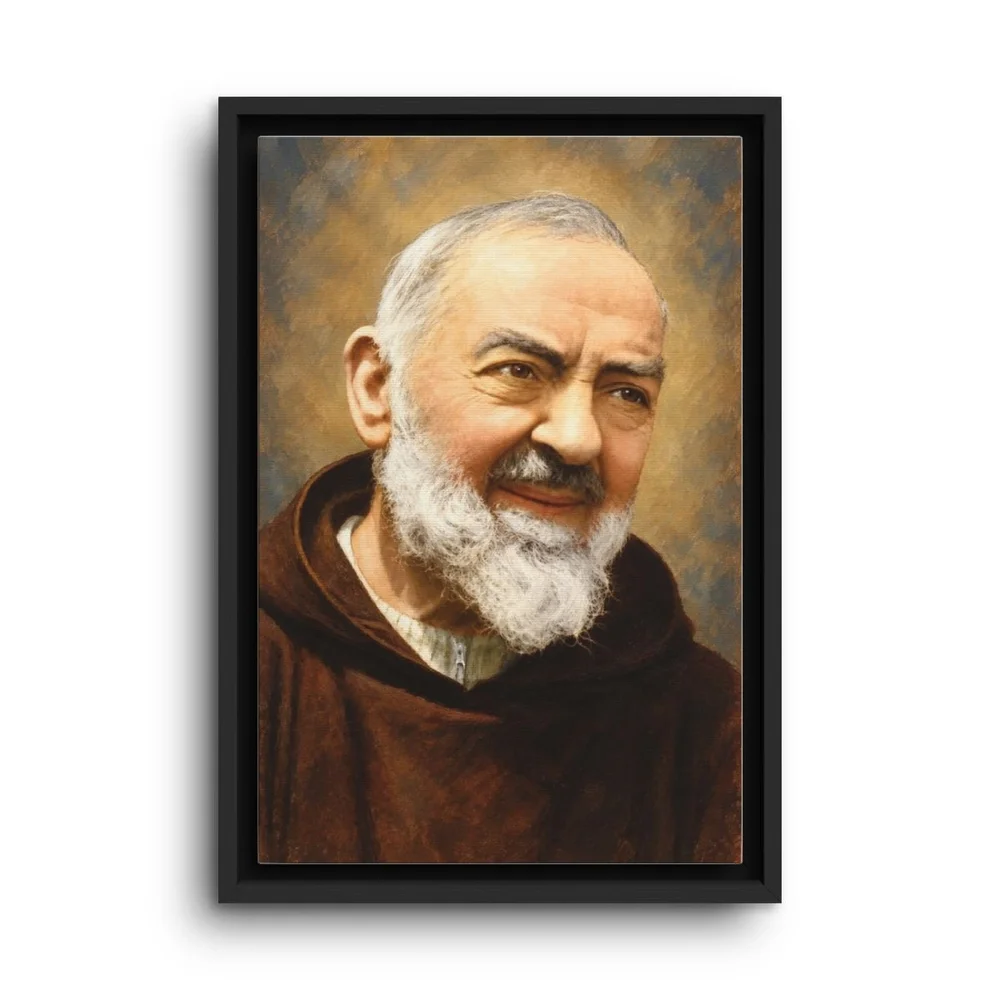
A mug for the morning and a framed icon print for the wall, both made from the Padre Pio prayer card art.
Part VI
What the Sources Do and Do Not Say
It is a good story, so it is worth being careful with it. What is firmly documented is the relationship itself. The official sanctuary website lists Gigli as one of Padre Pio's spiritual sons, and it records the white shirt exchange, the confession, and the singing in the garden. The same sites say Mamma was the song he had to sing.
What the sanctuary's page does not give is a date. It does not say what year Gigli first went, how many times he returned, or what words were said afterward. The Italian retelling I read cites that same sanctuary page, so it adds no independent evidence. Other versions online add extra dialogue and details about Gigli's private life. This article leaves those out, because none of the sources I could check support them.
Gigli's biography also includes criticism for his ties to Mussolini's regime during the war years. He is not presented here as a saint. The story is the other way around: it is about what the confessional did for someone who was not one.
Part VII
Timeline
- March 28, 1859Maria Giuseppa De Nunzio, Padre Pio's mother, is born in Pietrelcina.
- May 25, 1887Francesco Forgione, the future Padre Pio, is born in Pietrelcina.
- March 20, 1890Beniamino Gigli is born in Recanati.
- 1910Padre Pio is ordained a priest.
- 1916Padre Pio is assigned to the friary of San Giovanni Rotondo.
- September 1918The stigmata appear.
- November 26, 1920Gigli makes his debut at the Metropolitan Opera.
- January 3, 1929Padre Pio's mother dies at San Giovanni Rotondo.
- 1940Cesare Andrea Bixio composes Mamma.
- Date not recordedGigli goes to San Giovanni Rotondo, hears the words about his shirt, and confesses.
- 1956The Home for the Relief of Suffering opens.
- November 30, 1957Gigli dies in Rome.
- September 23, 1968Padre Pio dies.
- June 16, 2002Pope John Paul II canonizes Padre Pio.
A Voice Offered Back
Beniamino Gigli had one of the great voices of his century, and the sanctuary says that after one meeting he gave some of it away in a garden. If you carry Padre Pio with you, the prayer card is a small way to keep that scene in mind: a confessor who told the truth, and a penitent who sang afterward.
Get the Padre Pio Prayer Card →Frequently Asked Questions
