The Jesus Prayer and Prayer Rope: The Complete Guide
Prayer & Practice • Complete Guide • Orthodox & Eastern Catholic Tradition
The Jesus Prayer and Prayer Rope: The Complete Guide
Seven words, repeated until they become as natural as breath: "Lord Jesus Christ, Son of God, have mercy on me, a sinner." This is the complete guide to praying it, the prayer rope used to count it, and the centuries of monastic wisdom behind both.
What You'll Need at a Glance
- The prayer
- Lord Jesus Christ, Son of God, have mercy on me, a sinner
- The tool
- A knotted prayer rope (komboskini / chotki)
- Common counts
- 33, 50, or 100 knots
- Hand used
- Left hand holds the rope; right hand free for the cross
- Tradition
- Rooted in hesychasm and unceasing prayer
- Starting point
- One short lap, once or twice daily
What Is the Jesus Prayer?
The Jesus Prayer is the single most repeated sentence in Orthodox and Eastern Catholic spiritual life: "Lord Jesus Christ, Son of God, have mercy on me, a sinner." It is short enough to say in one breath and deep enough that monastics have spent entire lifetimes praying nothing else. Its purpose is not to recite a formula quickly, but to gradually draw the mind down into the heart, so that awareness of Christ's presence becomes as constant and unforced as breathing.
Unlike a prayer said once and set aside, the Jesus Prayer is meant to be prayed continually, woven into ordinary moments throughout the day, on a walk, in traffic, while washing dishes, waiting for sleep. This is what the tradition means by "unceasing prayer," and it is why the prayer rope exists at all: to give the hands something to do while the heart and mind stay fixed on these seven words.
The Words of the Prayer
The full form most commonly used is: "Lord Jesus Christ, Son of God, have mercy on me, a sinner." Many pray a shortened version, simply "Lord Jesus Christ, have mercy on me," especially when first beginning or when the longer form feels difficult to sustain through fatigue or distraction. Both forms are fully traditional; there is no requirement to use the longer version exclusively.
Each phrase carries weight. "Lord Jesus Christ" confesses His lordship and identity. "Son of God" confesses His divinity, the very confession the Church fought to preserve in the early councils. "Have mercy on me, a sinner" is the cry of the publican in the Temple, the posture of total honesty before God rather than self-justification. The prayer is, in miniature, the entire Gospel.
Its Roots in Scripture
The Jesus Prayer did not appear from nowhere; it is woven directly from two Gospel scenes. The blind beggar Bartimaeus, sitting by the road outside Jericho, cried out "Jesus, Son of David, have mercy on me" until Christ stopped and healed him. The tax collector in Christ's parable stood at a distance in the Temple, refusing even to lift his eyes, and prayed only "God, be merciful to me, a sinner," and Christ said this man, not the self-righteous Pharisee beside him, went home justified.
The Jesus Prayer fuses both moments into a single repeated cry: the boldness to call out by name for mercy, and the humility to ask for nothing else. Saint Paul's instruction to "pray without ceasing" in his first letter to the Thessalonians became, over centuries of monastic practice, the theological justification for praying this single sentence continually rather than treating prayer as an occasional, scheduled event.
Hesychasm and the Prayer of the Heart
Hesychasm, from the Greek word for stillness, is the contemplative tradition most associated with the monks of Mount Athos and the desert fathers before them. Its central conviction is that the human mind, left to wander, scatters itself across a thousand distractions, but the mind can be gradually drawn down and united with the heart through patient, repeated prayer. The Jesus Prayer is the primary tool of this descent.
This is not a technique for achieving a particular feeling or altered state. The Philokalia, the great collection of writings on hesychast prayer compiled over centuries, repeatedly warns against seeking visions, sensations, or spiritual highs through the prayer. The goal is simpler and harder: a quiet, sustained attentiveness to Christ that slowly reshapes how a person sees everything else, including their own sin, with honesty rather than despair.
What Is a Prayer Rope?
A prayer rope is a knotted cord used to count repetitions of the Jesus Prayer, serving a function similar to a rosary in the Western Church. In Greek it is called a komboskini; in Slavic traditions it is called a chotki. Traditional ropes are made of black wool, tied in a complex woven knot that is itself a small act of devotion, since each knot historically required the maker to make the sign of the cross multiple times during the tying.
The knots are not decorative. Their tightly woven, cross-shaped structure is meant to evoke the binding of evil and the protection of the cross, and the rope is traditionally tied rather than simply knotted with a single loop, which is part of why a well-made prayer rope can take real skill and time to produce.
History of the Prayer Rope
The prayer rope's origins trace back to the early desert monks of Egypt and Palestine, who needed a way to count repeated prayers without literacy or access to written texts, since many of the earliest monastics could not read. Tradition holds that simple knotted cords, and even pebbles counted into a pouch, were used for this purpose long before the elaborate woven knot familiar today developed.
One popular account credits St. Pachomius, a founder of communal monasticism in Egypt, with developing an early form of the knotted prayer cord after the devil kept untying simple loops the monks tried to use, forcing the development of the more complex woven knot still used today. Whether or not every detail of that account is historically precise, it captures something true about the tradition: the prayer rope was born of practical necessity in the desert, not designed as decoration, and every later refinement served the same original purpose of sustaining unceasing prayer.
How to Pray With a Prayer Rope
The mechanics are simple even though the practice itself takes a lifetime to deepen. Here is exactly how to begin.
- Hold the rope in your left hand. This keeps your right hand free to make the sign of the cross whenever you wish during prayer, which is traditional but not required at every repetition.
- Settle your body before you begin. Sit or stand in a quiet spot, slow your breathing, and let a few seconds of stillness pass before starting the first repetition.
- Pray the words at each knot. Say "Lord Jesus Christ, Son of God, have mercy on me, a sinner" once per knot, moving your fingers to the next knot as you finish each repetition.
- Let your mind return gently when it wanders. It will wander. This is not failure; simply bring your attention back to the words without frustration or self-criticism each time you notice it has drifted.
- Complete one lap, or whatever count feels sustainable. A single lap of a 33-knot rope is a reasonable place to begin daily practice; you can always add a second lap as the practice becomes more natural.
- Close with a moment of silence. Resist the urge to immediately move into the next task. Even ten seconds of quiet after finishing helps the prayer settle rather than evaporate the moment you stop.
If you have access to a parish priest or spiritual father, it is traditional to ask for guidance on how many repetitions to pray daily, since a personal prayer rule tailored by someone who knows you is considered more valuable than any general number found online.
Choosing Your First Prayer Rope
For a first rope, a 33 or 50-knot wool chotki is the most practical starting point: small enough to carry in a pocket, long enough to establish a real daily rhythm without becoming a chore. Wool is the traditional material and has a slightly textured feel under the fingers that many find helps concentration, though ropes are also made in other materials for those with wool sensitivities.

The Jesus Prayer for Anxiety and Fear
Many who come to the Jesus Prayer for the first time arrive not through a theology class but through a difficult night, a panic attack, a diagnosis, a fear that will not quiet down. The prayer's brevity is part of its strength here: when a racing mind cannot hold a long passage of Scripture or a complex theological thought, seven short words repeated slowly can be held even through real distress.
This is not a substitute for professional mental health care when anxiety becomes severe or persistent, and the Church has never claimed it to be one. But as a spiritual practice alongside whatever other support is needed, the Jesus Prayer gives the mind a fixed point to return to again and again, gently, without demanding that fear disappear before prayer can begin. Many find that praying it on the rope, rather than simply in the mind, helps because the physical motion of the fingers gives the body something steady to do while the heart turns toward Christ.
Bringing It Into Daily Life
The Jesus Prayer is meant to outgrow the prayer corner and move into the rest of the day. Many people keep a rope in a pocket or bag and pray a lap while waiting in line, walking, or in the quiet minutes before sleep. Others wear the words themselves, a small daily confession of faith that doubles as a conversation starter with anyone who asks about it.
Praying It Together as a Couple
Some of the steadiest marriages we've worked with build a shared, simple rhythm: a short prayer said together before bed, hands on the same rope. If you and your spouse are looking to build that kind of daily rhythm together, our Christian marriage coaching walks husbands and wives through it side by side.
Learn About Marriage CoachingRecommended Reading on Hesychasm
For those who want to go beyond the basics, the classical sources on hesychasm and the Jesus Prayer remain remarkably accessible even centuries after they were written.

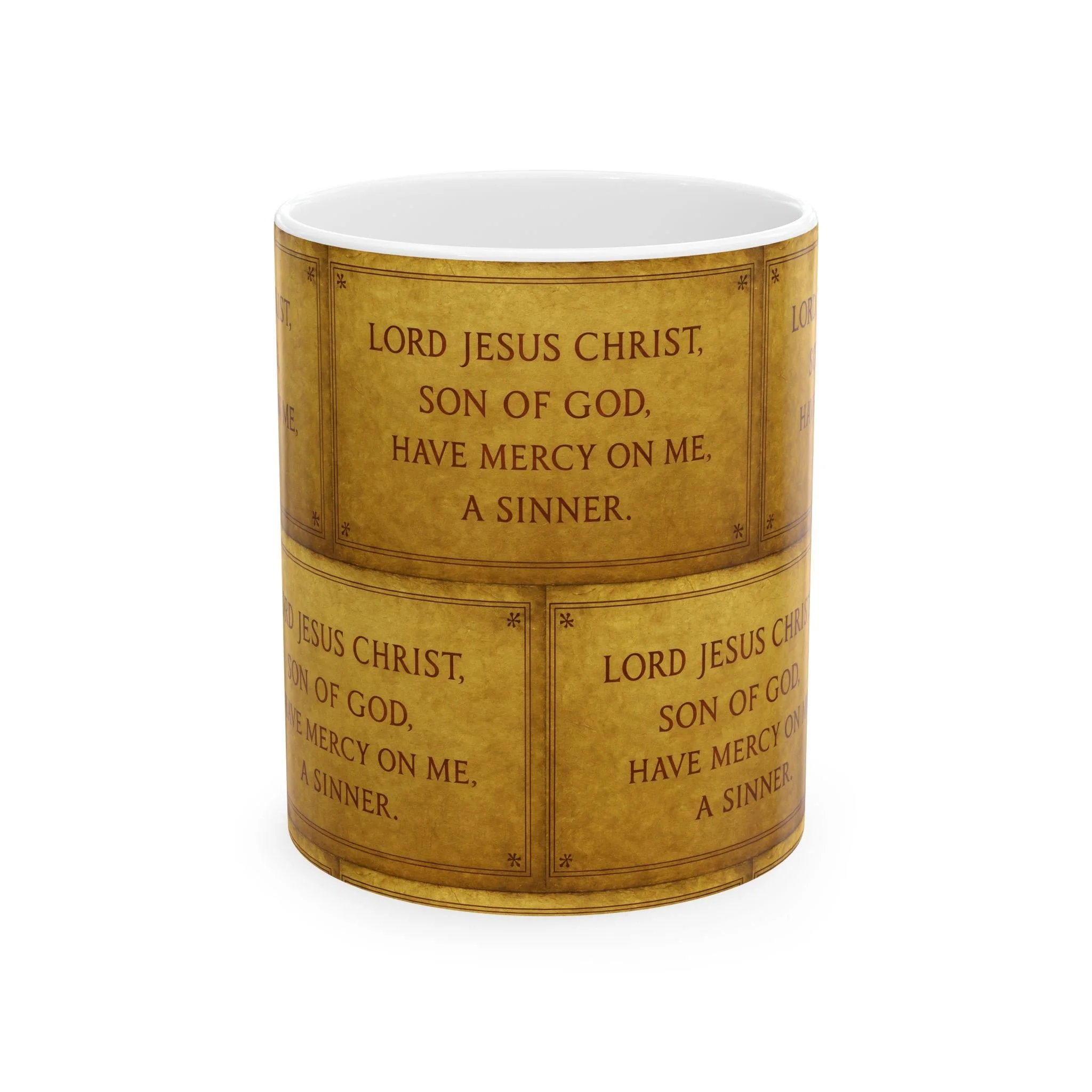
Shop the Jesus Prayer Collection
Frequently Asked Questions
Seven Words, A Lifetime of Practice
You do not need to understand all of hesychasm to begin. Pick up the rope, pray the words once at each knot, and let your mind return to them gently when it wanders. Everything else in this guide is simply what that small, daily practice opens up over years of faithful repetition.
Shop the Jesus Prayer Collection →