Chapter Seven: Embracing the Cross — Suffering and Mercy in Marriage
Chapter Seven: Embracing the Cross — Suffering and Mercy in Marriage
Every marriage, even the happiest, will encounter its share of suffering. When you and your spouse promised to be true “in good times and in bad, in sickness and in health,” you acknowledged that life will bring trials as well as triumphs. These trials — whether they come from external circumstances or arise within the relationship — are the crosses that you are called to carry together. It has been said that a joy shared is doubled and a sorrow shared is halved. In marriage, you do not have to carry burdens alone; you have each other, and you have Jesus, who is the third partner in your covenant. By embracing the crosses of marriage with faith, love, and even gratitude, a couple can find that suffering, rather than breaking their bond, actually purifies and strengthens it.
United Under the Cross: Picture Christ on the road to Calvary, weakened under the weight of the cross, when the soldiers forced Simon of Cyrene to help Him carry it (cf. Luke 23:26). In marriage, spouses become like Simon for each other. When one is weary or overwhelmed by a trial, the other steps in to shoulder the weight for a while. Sometimes this is literal: one spouse falling ill and the other providing physical care, managing the household singlehandedly during that time. Other times it’s emotional or spiritual: one spouse sinking into depression, doubt, or grief, and the other becoming a steady source of encouragement, praying fiercely when the other cannot pray, and offering a listening ear without judgment. In these moments, the spouses live out Christ-like love in a profound way — a love willing to suffer for the beloved.
It’s important to acknowledge that suffering hurts. Embracing the cross in marriage does not mean plastering on a fake smile and pretending everything is fine. Jesus Himself, in the Garden of Gethsemane, felt deep anguish and prayed, “Father, if it be possible, let this cup pass from me; nevertheless, not my will, but yours, be done” (Luke 22:42). He sweat blood in His agony. We too are allowed to feel sorrow, to cry, to long for a cup of suffering to pass. Embracing the cross means that after pouring out those honest feelings to God, we find the grace to say, “Yet, I trust You, Lord. Let Your will be done.” In marriage, couples can help each other reach this place of surrender. When one is overwhelmed and angry at a situation, the other can gently remind, “We’ll get through this — God is with us.” When one’s faith is shaken, the other can be the voice of hope. Often, by God’s design, spouses have alternating moments of strength: one is strong precisely when the other is weak.


The Fires that Refine: Strangely, many couples who endure significant hardships together later report that those trials brought them closer than ever. Suffering has a way of stripping off the superficial and bonding people at the level of the soul. Think of couples who have lost a child and walked through that valley of grief arm in arm — unspeakably hard, yet their shared tears and prayers forge an intimacy beyond words. Or consider a husband and wife who go through years of financial struggle — working long hours, living frugally, facing uncertainty — and later realize those lean years taught them gratitude, teamwork, and how rich their love was even without money. One could say that suffering, approached with faith, refines a marriage as fire purifies gold. It burns away illusions and selfishness, leaving behind a love that is more resilient and pure.
In the Catholic understanding, suffering and love are deeply connected. Jesus showed us that “No one has greater love than this, to lay down one’s life for one’s friends” (John 15:13). In marriage, spouses have daily opportunities to lay down their lives in little ways (as we discussed in Chapter Two), but sometimes bigger sacrifices are asked. Each time you choose your spouse’s good over your own comfort — whether by staying up at 3 AM to soothe a crying baby so your wife can rest, or forgiving a painful hurt, or caring for your spouse through a long illness — you participate in Christ’s love on the Cross. These sacrifices often hurt; they involve real losses, inconveniences, or wounds. Yet, paradoxically, such sacrifice can bring a deeper joy and fulfillment than living for oneself ever could. Many husbands and wives, after surviving a harrowing ordeal, say, “We came out stronger. We discovered how much we truly love each other.”
One profound way Catholics have learned to give meaning to suffering is by offering it up. This phrase might sound quaint, but it contains deep wisdom. It means intentionally uniting your pain or hardship with Jesus’ sacrifice and offering it to God as a prayer — for your own growth, for your spouse’s needs, for your children’s future, or even for others who suffer. A wife on bedrest during a complicated pregnancy might pray, “Lord, I offer the discomfort and worry for the healthy birth of our child and for all mothers who are suffering right now.” A husband facing unemployment might offer his stress for the provision of his family and for others seeking jobs. When you as a couple “offer up” your sufferings, you transform them into acts of love. Your home, in those dark moments, becomes a little altar where sacrificial love is united with Christ’s sacrifice. This doesn’t remove the pain, but it infuses it with purpose and power. It also unites you as a couple more closely to each other and to God. You become, in a sense, co-redeemers with Christ — not that you have power of yourselves, but Christ invites you to channel His grace into the world through your sufferings borne with love. As one saint beautifully put it, “Suffering in itself is nothing; but suffering borne with love is everything.” In marriage, you have the opportunity to bear everything with love — for God and for each other.
Conflicts and Forgiveness: Not all crosses come from outside; some arise within the marriage itself, in the form of conflicts, disappointments, or hurts between spouses. Every married couple, no matter how well matched, will face disagreements. Two different people will inevitably have different opinions, habits, or ways of handling stress. Sometimes harsh words will be spoken, feelings hurt, expectations unmet. These interpersonal struggles are a real form of suffering too. Yet, even here, if approached well, they can become avenues of grace.
The key is to handle conflicts in a godly way. First, maintain the perspective that it’s “us against the problem” rather than “me against you.” When a disagreement arises, try to see yourselves on the same team, tackling a common challenge. This removes the victor-vs-defeated mindset. For example, if money is tight and you’re arguing about spending, instead of each accusing the other (“You always waste money on this” vs. “Well, you never budget for that”), step back and say, “Okay, clearly we’re both stressed. The real issue is that our finances are strained. How can we together find a solution?” This framing turns the energy toward problem-solving rather than personal attack.
Secondly, commit to respectful communication even when upset. It’s natural to feel angry at times, but we can choose how to express anger. The Book of Proverbs observes, “A gentle answer turns away wrath, but a harsh word stirs up anger” (Proverbs 15:1). Raising voices, using insults or dredging up old grievances will only escalate the conflict and wound your unity. Instead, try to stay calm and stick to the topic at hand. If you find anger getting the better of you, it’s wise to call a short “time out.” You might say, “I’m too upset right now to talk about this constructively. Can we pause and cool down, and come back to it in an hour?” Then make sure to revisit the issue, as promised. During the break, pray for calm and try to see the situation from your spouse’s perspective as well as your own.

Listening is a powerful, disarming tool in conflict resolution. Often, arguments spiral because neither side truly hears the other. As difficult as it is in the heat of an argument, make an effort to let your spouse speak without interruption, and reflect back what you hear: “So, you feel hurt because you think I didn’t support you in front of your parents, is that right?” Such active listening can reveal the true heart of the matter — which might be different than what you assumed. Many conflicts in marriage arise not from malice, but from miscommunication or unmet expectations that were never clearly expressed. By patiently hearing each other out, you may discover that a minor clarification or a simple apology addresses the real issue.
Conflict in marriage is not a sign that the marriage is failing; rather, it is an opportunity. Handled with humility, patience, and love, conflicts can actually strengthen your bond. When you work through a tough disagreement and come out the other side still united (perhaps with compromises made and forgiveness extended), you gain confidence in the resilience of your love. You learn that your love can weather storms. You also learn virtues like patience, self-restraint, and empathy in the process. This is part of the “iron sharpening iron” of marriage (cf. Proverbs 27:17). God can use even your clashes to smooth rough edges and teach you both how to love more like Christ — who is “gentle and humble of heart” (Matthew 11:29).
Central to emerging from conflicts stronger is the practice of forgiveness. There is no intimate relationship without the need for forgiveness, and marriage is certainly no exception. Sometimes you will need to forgive small daily irritations; other times, unfortunately, you may need to forgive larger offenses or repeated hurts. Recall St. Peter’s question to Jesus, asking how many times one should forgive — “As many as seven times?” Jesus answered, “I do not say to you seven times, but seventy times seven” (Matthew 18:21-22), indicating that our willingness to forgive must be essentially limitless, as God’s mercy toward us is. In marriage, forgiving “seventy times seven” translates into a habit of mercy. Instead of holding grudges or tallying up mistakes, you actively choose to let go of anger and move toward reconciliation.
Forgiveness is not a feeling; it is a decision of the will, often one that must be renewed if the feelings of hurt resurface. If a serious wound has been inflicted (say, a betrayal of trust or a period of neglect), forgiveness might be a process that unfolds over time with lots of prayer and possibly the help of a counselor or spiritual advisor. It might look like repeatedly bringing your pain to God in prayer and saying, “Lord, I choose to forgive him/her; please heal my heart,” and gradually noticing the sting lessen. It also involves concrete steps of rebuilding trust if needed (as discussed in Chapter Four). Forgiveness does not mean condoning wrong behavior or refusing to address issues; it means releasing your right to revenge or to brood in resentment, and instead working toward restoration. In many cases, especially with significant hurts, professional marriage counseling or pastoral guidance can provide a safe space to heal and rebuild together. There is no shame in seeking such help; it can be a providential means of grace.
When people witness a married couple who have gone through very hard times yet still clearly love each other, it is a testimony that speaks to the world. In a culture where many relationships dissolve at the first serious conflict or disappointment, a couple who endures hardships and emerges with love intact shines with a supernatural light. It points beyond itself to Christ. As Christians, our model is the love of Christ who never abandons His Bride. By forgiving each other and holding on to each other “no matter what,” you show that lasting love is possible — not by human strength alone, but by the grace of God.
Resurrection Moments: It is important to remember that no cross, however heavy, is the end of the story. For those who unite their sufferings with Christ, there is always a resurrection on the horizon. Sometimes we see it even in this life: the sickness is cured or managed, the financial troubles are resolved after hard work, the rebellious child returns home, the period of marital strain gives way to a renewed honeymoon phase. At other times, certain crosses remain throughout life — chronic illness, childlessness, a permanent loss. Yet even these can be occasions for a different kind of resurrection: a spiritual fruit that blossoms precisely because of that cross. Perhaps a deeper compassion for others, a new mission or ministry helping people in similar situations, or a holiness and closeness to God that would not have been achieved otherwise.
God can bring good out of every evil and every pain. In fact, He often does some of His most beautiful work in us during the darkest times. Couples who pray together and cling to God in suffering often discover a depth of spiritual intimacy that they never had in easier times. They become more attuned to God’s voice and to each other’s souls. They also become witnesses of hope to others. Friends and family observing your journey may be strengthened in their own faith, seeing how you lean on God and on each other.
Practically speaking, when facing a major trial as a couple, make deliberate efforts to stay connected to one another. Stress can sometimes drive spouses into isolation — each stewing silently or coping separately. Instead, intentionally unite: set aside time to talk honestly about what you’re each feeling; hold each other (physical touch can be very reassuring in suffering); pray together, even if it’s just sitting quietly holding hands and saying a simple, “Jesus, help us.” If one spouse is not very spiritually inclined, the other can quietly intercede for both, like the friends who lowered the paralytic through the roof to Jesus (Mark 2:4).
Also, be patient with each other’s coping styles. One of you might need to vent emotions verbally, while the other withdraws into quiet; one might want to seek outside support, while the other prefers privacy. Acknowledge these differences and try to accommodate each other gently. Say, “I understand you need some space; just know I’m here when you’re ready to talk,” or “I need to share what I’m feeling; can we set aside a moment to do that?” Supporting each other doesn’t mean you experience the trial in the exact same way; it means you make room for each other’s way and ensure neither of you walks alone.
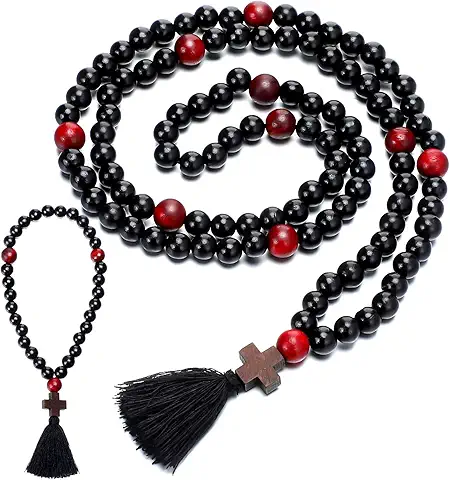
Finally, cling to the sacraments and to hope. In tough times, continue to go to Mass, even if you feel numb or angry at God. The Eucharist will sustain you in ways you do not realize. If one of you is seriously ill at home, arrange for Communion to be brought to you. And do not underestimate the power of the Anointing of the Sick when illness or mental anguish is present; it can bring spiritual (and sometimes physical) healing and great peace. Make use of Confession to unburden your soul of any despair or bitterness that may accumulate. These channels of grace give you strength beyond your natural capacity.
Remember that the sacrament of Matrimony itself contains grace for these very moments. When you were married, God equipped you with a special share in His love precisely so you could weather life’s storms together. In every trial, that grace can be tapped anew by turning to Him. A simple, heartfelt prayer like, “Lord, you joined us together; give us your strength now to face this cross,” can suffice.
To embrace the cross in marriage is ultimately an act of trust in God’s promises. We trust that He is with us in the suffering, just as He was with Jesus in His Passion. We trust that if we remain faithful, carrying our cross, there will be Easter joy in the end. Every Good Friday in marriage — those days of sorrow, anger, or pain — can lead, with God’s grace, to a renewed “Alleluia” of love.
As you face life’s trials hand in hand, remember that you are never just two; Jesus is the Third who walks with you. Like the disciples on the road to Emmaus (Luke 24:13-35), you may not always sense His presence in the heat of grief, but later you will recognize that He was there, setting your hearts on fire with hope. With Christ, no cross is meaningless, no night is endless, and no marriage is left without grace. By embracing the crosses that come, you allow your union to be conformed more closely to Christ and His Church — a love that knows how to suffer and therefore knows how to love deeply.
Having explored both the joyful and painful dimensions of married love, we approach our final chapter, where we will reflect on the ultimate purpose of all this: how marriage itself becomes a way to worship God and a foretaste of the eternal union with Him for which we are all destined.