Greek Orthodox vs Roman Catholic: The Complete History, Theology, and Practical Guide
Greek Orthodox vs Roman Catholic: The Complete History, Theology, and Practical Guide
Two churches that once prayed at the same altars, under the same seven councils, now separated for nearly a thousand years by a dispute over three words in the Creed, the authority of a single bishop, and the shape of the bread on the altar. This is the complete account: what Byzantium believed and why it broke from Rome, what the Ecumenical Patriarch actually is, how the Ottoman Muslim conquest shaped Greek Orthodoxy for four centuries, and how the Divine Liturgy compares to the Roman Mass today.
Greek Orthodox vs Roman Catholic — At a Glance
- The Split
- Great Schism, July 16, 1054 • Mutual excommunications, Constantinople and Rome
- Greek Orthodox Leadership
- Ecumenical Patriarch of Constantinople • "First among equals," no universal jurisdiction
- Roman Catholic Leadership
- Pope of Rome • Universal jurisdiction and claimed infallibility (defined 1870)
- Core Creedal Dispute
- Filioque — "and the Son" added to the Nicene Creed by Rome
- Councils Both Accept
- The first seven Ecumenical Councils, 325–787 AD
- Key Rome-Only Dogmas
- Papal Infallibility (1870) • Immaculate Conception (1854) • Purgatory (defined form)
- Liturgy
- Greek Orthodox: Divine Liturgy of St. John Chrysostom • Roman Catholic: The Roman Rite Mass
- Eucharistic Bread
- Greek Orthodox: leavened • Roman Catholic: unleavened
- Clergy
- Both permit married priests (Greek Orthodox parish clergy; Roman Catholic Eastern-rite and some converts) • both require celibate bishops
- Ottoman Rule
- 1453–1821/1922 • Millet system preserved Patriarchate under Ottoman Muslim authority
- Global Population
- Greek Orthodox (Ecumenical Patriarchate + Church of Greece + Cyprus + diaspora): ~15–20 million • Roman Catholic: ~1.4 billion
- Modern Relations
- Warm ecumenical dialogue since 1965 mutual lifting of anathemas • Full communion not restored
Two Churches, One Ancient Root
The phrase "Greek Orthodox" is often used loosely, sometimes as a stand-in for all of Eastern Orthodoxy, and sometimes to describe only the specific Greek-speaking, Greek-governed churches: the Ecumenical Patriarchate of Constantinople, the Church of Greece, the Church of Cyprus, and the large Greek Orthodox diaspora in North America, Australia, and Western Europe. This article focuses specifically on Greek Orthodoxy in this narrower, more precise sense, and compares it directly to the Roman Catholic Church, the largest single Christian body in the world, governed from Rome under the authority of the Pope.
Both churches share an identical origin. Both trace their bishops back to the apostles through unbroken succession. Both accepted, in full agreement, the first seven Ecumenical Councils, from Nicaea in 325 through the Second Council of Nicaea in 787, which addressed the veneration of icons. For nearly a thousand years, the Christian world had no permanent division between "Orthodox" and "Roman Catholic" at all; there was simply the Church, spread from Spain to Mesopotamia, with two of its five ancient patriarchal sees, Rome in the West and Constantinople in the East, sharing a position of special honor above the other three (Alexandria, Antioch, and Jerusalem).
The formal, permanent division between Greek-speaking Byzantine Christianity and Latin-speaking Roman Christianity emerged gradually over centuries of accumulating theological disagreement, political rivalry, and cultural estrangement, crystallizing in the mutual excommunications of 1054 and hardening into an unbridgeable wound after the Roman Crusaders sacked Constantinople in 1204. What remains today are two churches, each holding itself to be the authentic continuation of the one Church of the apostles, each honoring many of the same saints and councils, and each disagreeing on the nature of church authority, the wording of the Creed, and a handful of doctrines developed by Rome in the centuries after the split.
Part II
Constantinople: The New Rome
In 330 AD, the Emperor Constantine dedicated a new imperial capital on the site of the ancient Greek city of Byzantium, naming it Constantinople and deliberately styling it "New Rome." Over the following centuries, as the Western Roman Empire collapsed under barbarian invasions in the fifth century, the Eastern Roman Empire, which modern historians call the Byzantine Empire but which its own subjects simply called Romania, "the Roman Empire," continued for another thousand years, Greek-speaking, Greek Orthodox in worship, and centered entirely on Constantinople.
The early Church organized itself around five great patriarchal sees, a structure historians call the Pentarchy: Rome, Constantinople, Alexandria, Antioch, and Jerusalem. Rome held a position of special honor as the historic see of Saints Peter and Paul, and this honor was widely, though not identically, understood in East and West. Roman theology increasingly understood this honor as conferring real, universal jurisdictional authority over the whole Church, an authority the Bishop of Rome could exercise directly over any diocese anywhere. Byzantine theology understood Rome's honor as a primacy of respect among equals, first in a college of patriarchs who governed the Church together through councils, not a supreme monarchical authority over the other patriarchs.
This difference in ecclesiology, how church authority itself is structured, sat quietly beneath centuries of shared worship, shared councils, and generally cordial relations, occasionally disrupted by political disputes but never yet treated as a permanent, church-dividing issue. Political and cultural estrangement grew steadily across the centuries that followed: the Latin West and Greek East increasingly spoke different languages, faced different barbarian and, later, Islamic pressures, and developed along different theological, liturgical, and legal trajectories, setting the stage for the formal rupture that would eventually come in the eleventh century.
Part III
The Great Schism of 1054: What Actually Happened
The event conventionally dated to July 16, 1054, was, at the time, far less dramatic in the eyes of most ordinary Christians than its later historical significance suggests. Pope Leo IX sent a delegation to Constantinople, led by Cardinal Humbert of Silva Candida, to resolve a set of accumulated disputes with Patriarch Michael Cerularius, disputes that included the filioque, the Latin practice of using unleavened bread for the Eucharist, differing views on clerical celibacy, and, underlying all of it, the deeper question of whether the Pope of Rome held direct jurisdictional authority over the Patriarch of Constantinople.
Negotiations broke down badly. Pope Leo IX died before the final rupture, technically leaving Cardinal Humbert without a living principal to represent, a legal detail some later historians argue makes the "excommunication" of questionable canonical validity even on Rome's own terms. Regardless, on July 16, 1054, Humbert and his fellow legates entered the Hagia Sophia during the celebration of the Divine Liturgy and placed a bull of excommunication against Patriarch Cerularius directly on the altar, then departed the city. Cerularius, in response, convened a synod days later that formally excommunicated Humbert and his companions in turn.
It is important to state plainly what many popular accounts get wrong: this event, by itself, was not understood by contemporaries as a permanent division splitting Christendom into two separate churches. Mutual excommunications between individual churchmen, rather than entire churches, had happened before in Christian history and had sometimes been resolved. What actually hardened 1054 into the permanent, total rupture we recognize today was not the event itself but everything that followed it over the succeeding two centuries, above all the catastrophic sack of Constantinople by Roman Crusaders in 1204.
Part IV
1204 and the Widening of the Wound
In April 1204, an army of Roman Crusaders originally organized to liberate Jerusalem instead diverted to Constantinople, breached its walls, and subjected the greatest Christian city in the world to three days of systematic looting, church desecration, and slaughter, an act of violence against fellow Christians so shocking that it did more to fix Greek Orthodox distrust of the Latin West into permanent, popular, lived memory than any theological argument over the filioque ever could. A Latin Empire and a Latin Patriarch of Constantinople were installed, ruling in place of the Byzantine emperors and Greek Orthodox patriarchs, for the next 57 years, until the Byzantines recaptured their own capital in 1261.
Where 1054 had been a dispute among bishops and theologians, largely invisible to ordinary Greek Christians, 1204 was witnessed and suffered directly by the population of Constantinople itself: churches stripped of their relics and treasures, the Hagia Sophia itself desecrated, and Byzantine Greek Orthodox Christians ruled for over half a century by a foreign Latin hierarchy that many regarded as having proven, through violence, exactly the kind of illegitimate Western domination the Byzantines had long feared Roman claims of universal papal authority were ultimately meant to produce. This article's companion piece on the Fourth Crusade and Council of Florence covers this history and its aftermath in the fall of Constantinople in far greater depth; here it is enough to note that 1204, not 1054, is what transformed a theological schism among bishops into a permanent, popularly felt division between two peoples.
Part V
Ottoman Muslim Rule and the Millet System
The fall of Constantinople to Ottoman Muslim forces in 1453 ended more than a thousand years of Byzantine Greek Orthodox imperial rule, but it did not end the Greek Orthodox Church itself. Sultan Mehmed II, recognizing the practical value of using existing religious structures to govern his newly conquered Christian population, formally recognized the Ecumenical Patriarch as both the spiritual and civil head of the entire Orthodox Christian population of the Ottoman Empire, organized into what became known as the Rum Millet, "the Roman nation," a designation that itself preserved, under Ottoman Muslim administration, the Byzantine Greek Orthodox population's own historic self-understanding as heirs of Rome.
Under this millet system, the Ecumenical Patriarch held real, extensive civil authority over Greek Orthodox Christians: administering church courts for marriage and inheritance disputes, overseeing education, and serving as the recognized intermediary between the Christian population and the Ottoman Muslim state, in exchange for guaranteed loyalty and the payment of the jizya tax required of non-Muslim subjects. This arrangement preserved the institutional continuity, the liturgical life, and the theological identity of the Greek Orthodox Church through nearly four centuries of Ottoman Muslim rule, while also exposing the Patriarchate directly to Ottoman political retaliation whenever Greek Christian populations resisted or rebelled.
The most dramatic example came in 1821, at the outbreak of the Greek War of Independence: the Ottoman Muslim authorities held Patriarch Gregory V responsible for failing to prevent the uprising and executed him by hanging at the gate of the Patriarchate itself on Easter Sunday, a martyrdom Greek Orthodox Christians commemorate to this day as a defining moment of both national and religious identity. Greek independence in 1832 eventually produced an autocephalous Church of Greece, formally separate in governance from the Ecumenical Patriarchate (though in full communion and shared faith with it), a separation itself rooted in the complicated legacy of centuries under Ottoman Muslim administration.
Part VI
The Modern Greek Orthodox Church
Today, "Greek Orthodox" encompasses several distinct but closely related ecclesiastical structures. The Ecumenical Patriarchate of Constantinople, currently led by Patriarch Bartholomew I since 1991 and headquartered in modern Istanbul (the city that was once Constantinople), holds a position of historic primacy of honor among all Eastern Orthodox churches worldwide, a status recognized even by Orthodox churches that are not themselves ethnically Greek. The Church of Greece, an autocephalous body governing the church within the modern Greek state, has been self-governing since the nineteenth century while remaining in full communion with Constantinople. The Church of Cyprus is likewise autocephalous and Greek-speaking. Beyond these, a substantial Greek Orthodox diaspora, organized in North America chiefly through the Greek Orthodox Archdiocese of America (under the jurisdiction of the Ecumenical Patriarchate), maintains Greek Orthodox parish life across the United States, Canada, Australia, and Western Europe.
The Ecumenical Patriarch's authority is best understood by contrast with the Pope's. Where the Pope of Rome, under Roman Catholic doctrine, holds universal jurisdiction, meaning he can, in principle, intervene directly in the governance of any diocese anywhere in the world, and can, under specific conditions defined at the First Vatican Council in 1870, teach infallibly on matters of faith and morals, the Ecumenical Patriarch holds no comparable universal jurisdiction over other autocephalous Orthodox churches and no claim to personal infallibility whatsoever. His primacy is one of honor and coordination, "first among equals," a role perhaps closest in function to a permanent, honored chairman among a council of equally authoritative bishops, rather than a supreme monarch of the Church.
Part VII
Theology Part I: The Filioque
The original text of the Nicene-Constantinopolitan Creed, as formally adopted by the Ecumenical Councils of 325 and 381, states that the Holy Spirit "proceeds from the Father." Beginning locally in Visigothic Spain as early as the sixth century, and gradually spreading through the Frankish kingdoms of Western Europe over the following centuries, Western churches began adding the Latin word filioque, "and the Son," so that the Creed read that the Holy Spirit "proceeds from the Father and the Son." Rome itself initially resisted this addition, and Pope Leo III, in the early ninth century, actually had the original, unaltered Greek text of the Creed inscribed on silver plaques displayed in Saint Peter's Basilica specifically to demonstrate Rome's own continued fidelity to the conciliar text. Rome eventually adopted the filioque into its own liturgical use by the early eleventh century, shortly before the Great Schism.
The Greek Orthodox objection to the filioque operates on two distinct levels. The first is procedural and, for Byzantine theology, extremely serious in itself: no local church, however honored, has the unilateral authority to alter the wording of a Creed formally promulgated by an Ecumenical Council; only another Ecumenical Council representing the whole Church could do so, and no such council ever approved the filioque addition. The second objection is theological: Orthodox theologians, following Saint Photios the Great in the ninth century and later systematized further by Saint Gregory Palamas and other Byzantine theologians, argue that the filioque distorts the proper, biblically and patristically grounded understanding of the relationships within the Holy Trinity, risking a subordination of the Holy Spirit's distinct personal origin from the Father alone, the single "font of divinity" in Orthodox Trinitarian theology.
Roman Catholic theologians have historically defended the filioque as a legitimate theological clarification, rooted in the Western Augustinian tradition's understanding of the Trinity, intended to safeguard the full divinity and consubstantiality of the Son. Some modern Roman Catholic and Orthodox theologians, in ecumenical dialogue over the past half-century, have explored formulations, such as the Holy Spirit proceeding from the Father "through the Son," that both traditions might find acceptable, though no formal, binding resolution has been reached, and the unaltered form of the Creed, without the filioque, remains the standard, unchanging text recited at every Greek Orthodox Divine Liturgy to this day.
Part VIII
Theology Part II: Papal Primacy and Infallibility
Perhaps the single deepest and most consequential disagreement between Greek Orthodoxy and Roman Catholicism is not any individual doctrine but the underlying question of how church authority itself is structured. Roman Catholic ecclesiology, formally defined at the First Vatican Council in 1870, teaches that the Pope of Rome possesses full, supreme, universal, and immediate jurisdiction over the entire Church, meaning his authority over any diocese, anywhere in the world, is direct and not merely honorary or advisory, and further teaches that the Pope, when speaking ex cathedra on matters of faith and morals under specific defined conditions, teaches infallibly, incapable of error in that specific act of teaching.
Greek Orthodox ecclesiology rejects both claims. Authority, in Orthodox understanding, rests fundamentally with the whole body of bishops acting in council, expressing the consensus of the whole Church (a concept sometimes called sobornost or conciliarity), not with any single bishop, however historically honored his see. The Ecumenical Patriarch's primacy is understood as a primacy of honor and coordinating service among equals, not a supreme jurisdictional authority capable of overriding the decisions of other patriarchs or autocephalous churches. Orthodox theology holds that infallibility, properly speaking, belongs to the whole Church expressing the mind of Christ through a genuine Ecumenical Council received by the entire body of the faithful over time, not to any single individual bishop regardless of his office.
This disagreement is not merely an abstract point of church law; it shapes nearly everything else discussed in this article. It explains why Greek Orthodoxy has no single figure who could unilaterally resolve the filioque question, define a new Marian dogma, or declare a new doctrine binding on the whole Church the way Rome's First Vatican Council or Pope Pius IX's 1854 definition of the Immaculate Conception did. Any such development, in Orthodox ecclesiology, requires the consensus of the whole Church expressed through a genuine council, a far slower, more diffuse, and in modern history far rarer process than the Roman Catholic mechanism of papal definition.
Part IX
Theology Part III: Immaculate Conception, Purgatory, and Original Sin
The Immaculate Conception
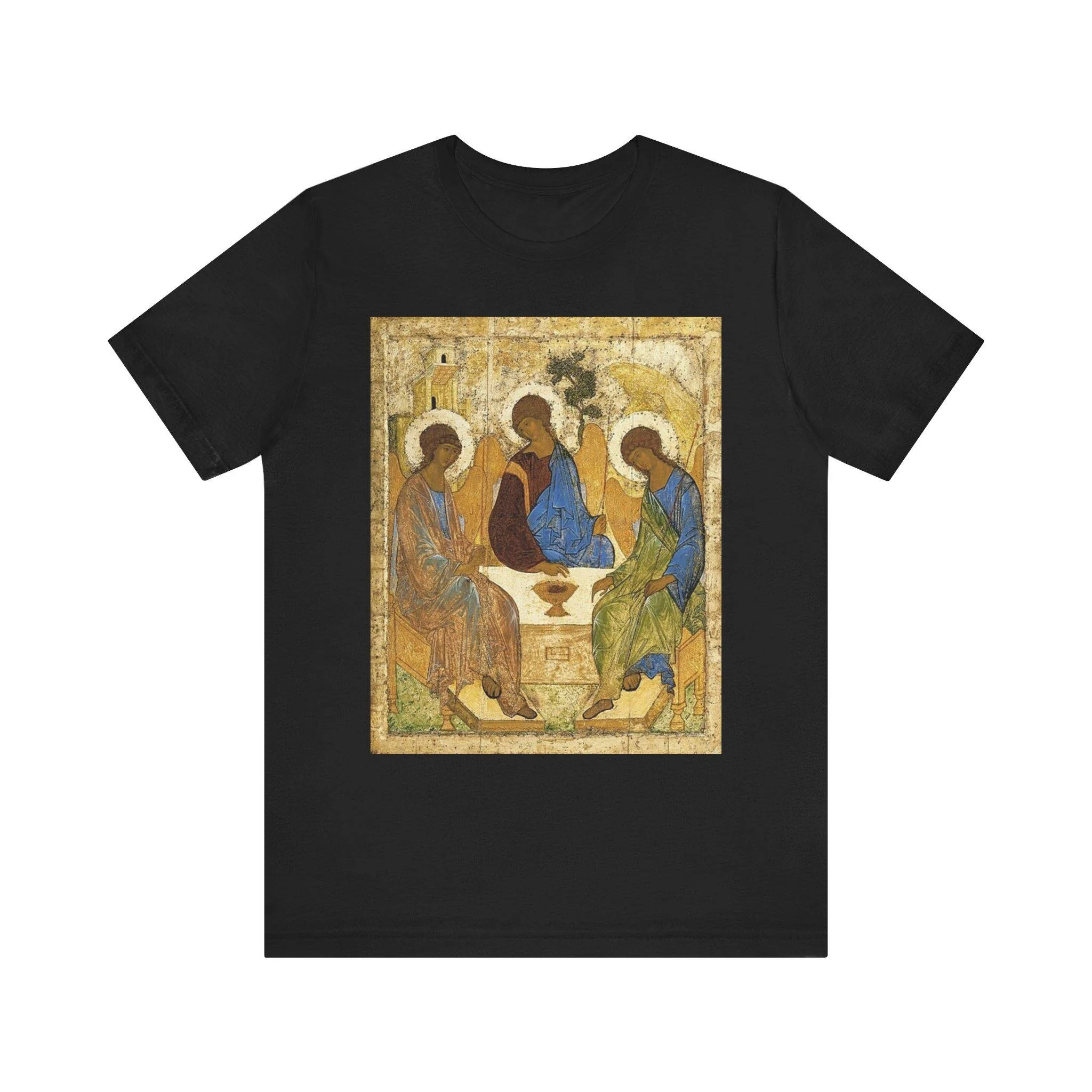
Pope Pius IX formally defined the doctrine of the Immaculate Conception in 1854, teaching that the Virgin Mary was, from the very first moment of her conception, preserved free from the stain of original sin by a singular grace of God, in anticipation of the merits of Christ. Greek Orthodox theology rejects this specific dogmatic formulation, not because Orthodoxy denies Mary's exceptional holiness and purity, which it affirms with the fullest devotion, but because Orthodox theology understands original sin itself differently than the Western Augustinian tradition does, generally emphasizing inherited mortality and corruption rather than inherited personal guilt, making the entire Western theological problem the Immaculate Conception was formulated to solve appear, from an Orthodox vantage point, to rest on premises Orthodoxy does not fully share. Greek Orthodoxy instead celebrates the Conception of the Theotokos by Saint Anne as a feast, affirming Mary's holiness without adopting the specific Western dogmatic language.
Purgatory
Roman Catholic doctrine teaches a defined process of purification after death, called Purgatory, undergone by souls who die in God's grace but still need cleansing before entering the full presence of God in heaven. Greek Orthodox theology does not accept this specific, juridically defined Western doctrine of Purgatory, though Orthodox theology does affirm that the dead can be helped by the prayers of the living, and holds a less precisely defined understanding of an intermediate state and continued spiritual growth or purification after death, sometimes discussed through the imagery of "toll houses" in certain Orthodox devotional traditions, an image that remains theologically contested even among Orthodox theologians themselves and is not universally treated as formal, binding dogma.
Original Sin
Western Roman Catholic theology, following Saint Augustine, generally understands humanity as inheriting not only mortality and corruption from Adam's fall but a form of inherited personal guilt requiring specific removal, a framework underlying both the Immaculate Conception and infant baptism's necessity in Western theology. Greek Orthodox theology, following the Greek patristic tradition, generally emphasizes that humanity inherits mortality, corruption, and a tendency toward sin from Adam, but does not teach that individuals inherit personal guilt for Adam's specific sin; each person is understood to be guilty for their own actual sins, not for an inherited legal culpability. This difference in the doctrine of original sin sits quietly beneath several of the other doctrinal disagreements between the two traditions.
Part X
The Divine Liturgy vs the Roman Mass
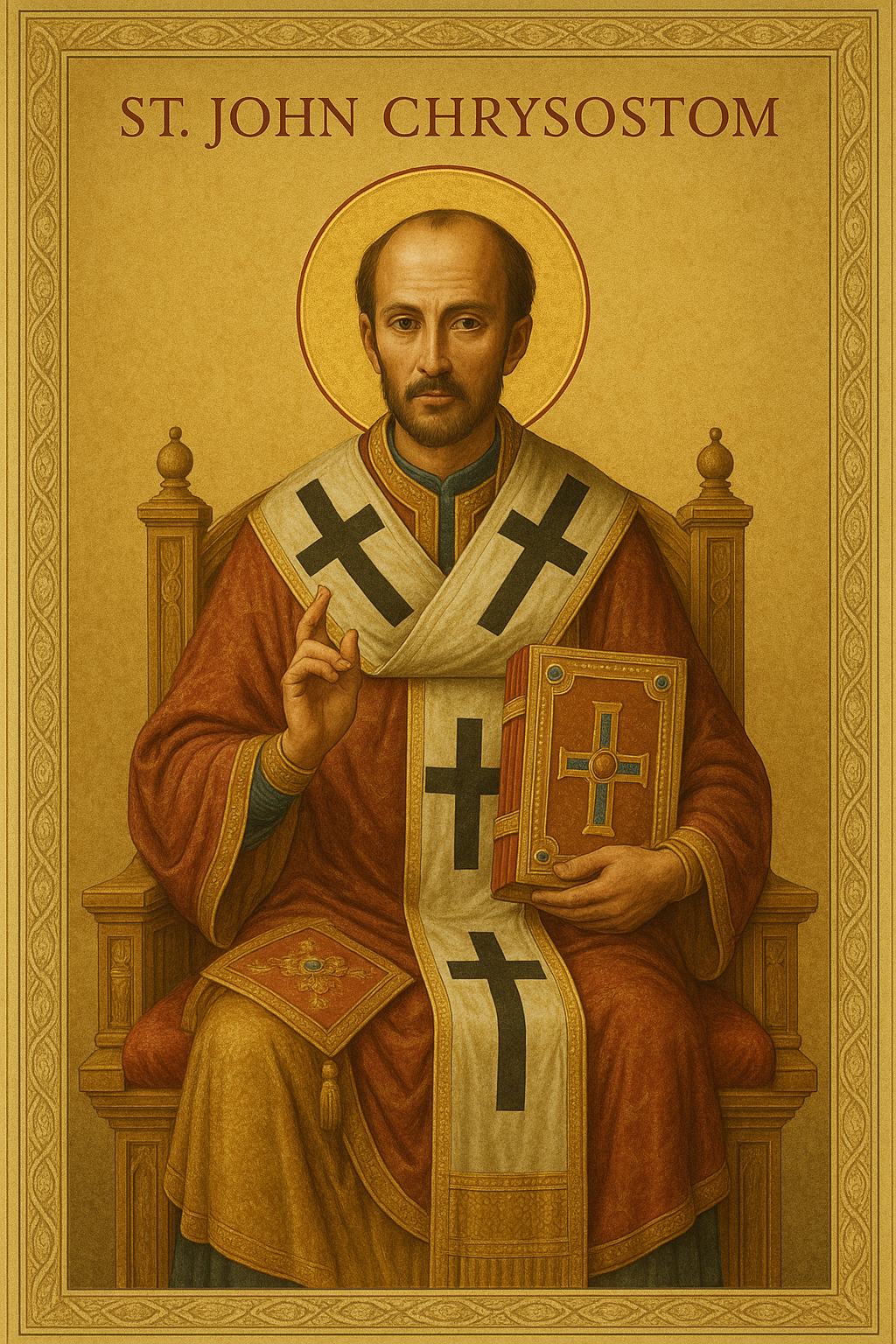
The ordinary Sunday worship of the Greek Orthodox Church is the Divine Liturgy of Saint John Chrysostom, named for the fourth and fifth-century Archbishop of Constantinople whose version of the ancient Antiochene liturgical tradition became the standard Byzantine Rite liturgy used throughout the Greek Orthodox and broader Eastern Orthodox world. On specific occasions, primarily the Sundays of Great Lent and a handful of major feasts, Greek Orthodox parishes instead celebrate the longer Divine Liturgy of Saint Basil the Great. Both liturgies follow the same essential structure: a Liturgy of the Word centered on Scripture readings, and a Liturgy of the Faithful culminating in the Anaphora (the Eucharistic Prayer), the Epiclesis (the invocation of the Holy Spirit upon the gifts), and Holy Communion, distributed to the faithful under both species together, typically by a spoon called a "cochlear." The Divine Liturgy is chanted rather than simply spoken, features extensive congregational or choir-led hymnody, and is celebrated behind an iconostasis, a wall of icons separating the altar area from the nave, with the priest and deacon passing through its doors at specific liturgical moments.
The Roman Catholic Mass, in its most common modern form (the Ordinary Form promulgated after the Second Vatican Council, alongside a smaller but historically significant continued use of the older Tridentine Mass), likewise follows a Liturgy of the Word and a Liturgy of the Eucharist, culminating in the Eucharistic Prayer, the Words of Institution, and Holy Communion, typically received under the form of bread alone by the laity in ordinary practice, standing, and placed directly in the hand or on the tongue rather than administered by spoon. The Mass is typically shorter than the Divine Liturgy, ordinarily running 45 minutes to an hour, is celebrated facing an open altar without an iconostasis, and, since the Second Vatican Council, is celebrated overwhelmingly in the vernacular language of the local congregation rather than Latin, a significant liturgical shift Greek Orthodoxy, which has always permitted vernacular celebration in principle and does so extensively in diaspora parishes, did not need to undergo in the same way.
A visitor moving between a Greek Orthodox Divine Liturgy and a Roman Catholic Mass will notice immediately: greater use of incense and extended chanting in the Divine Liturgy; the physical separation created by the iconostasis; a Communion practice using leavened bread mixed directly into the consecrated wine and administered by spoon, rather than the unleavened host used in the Roman Rite; and, in most Greek Orthodox parishes, a considerably longer overall service time, often ninety minutes to two hours on an ordinary Sunday.
Part XI
Leavened vs Unleavened Bread and Eucharistic Practice
Among the specific liturgical disputes cited at the time of the 1054 schism, few carried more symbolic weight than the disagreement over leavened versus unleavened Eucharistic bread. The Greek Orthodox Church uses leavened bread, called prosphora, specially baked, stamped with a seal bearing the inscription "IC XC NIKA" ("Jesus Christ Conquers"), and prepared through an elaborate preparatory rite (the Proskomedia) before the Divine Liturgy itself begins. Orthodox theologians historically argued that leavened bread, being "living" bread that has risen, more fittingly symbolizes the risen and glorified Body of Christ, and pointed to the Greek word used for bread at the Last Supper in the New Testament accounts, artos, which ordinarily refers to leavened bread rather than the unleavened azymos bread used at the Jewish Passover.
The Roman Catholic Church uses unleavened bread, following the tradition that the Last Supper was itself a Passover meal, at which unleavened bread would have been required under Jewish law, and Western theologians have historically defended this practice as continuity with the actual historical circumstances of Christ's institution of the Eucharist. Neither church regards the other's practice as invalidating the sacrament in a technical sacramental sense so severely as to deny any reality to the other's Eucharist outright, though the dispute was cited prominently, alongside the filioque and papal authority, in the polemical exchanges surrounding 1054, and it remains, to this day, one of the most visible, immediately observable liturgical differences a visitor moving between the two traditions will notice.
Part XII
Icons, Statues, and Sacred Art
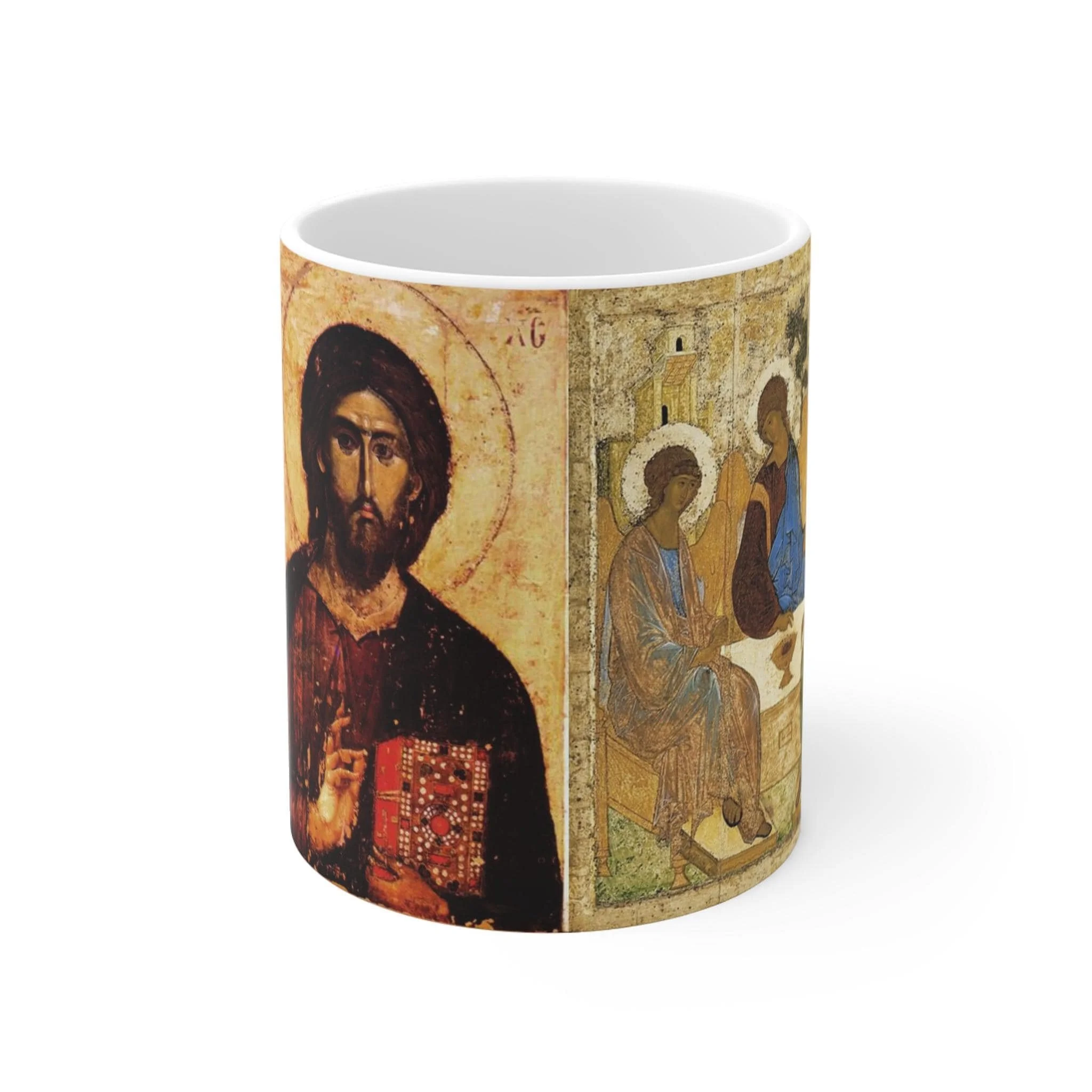
Greek Orthodox worship is saturated with icons: flat, stylized, two-dimensional images of Christ, the Theotokos, and the saints, painted according to strict theological and stylistic conventions developed over centuries and formally defended as legitimate and necessary at the Second Council of Nicaea in 787, a council both traditions accept. Orthodox theology holds that the Incarnation itself, God truly taking on visible, material human flesh, justifies and even requires the depiction of Christ and the saints in sacred art, and Orthodox veneration of icons (kissing them, bowing before them, burning candles and incense before them) is understood as honor passing through the image to the person depicted, never worship of the physical object itself.
Roman Catholic sacred art historically developed a far wider range of forms: not only icons in the Eastern style (retained especially in Eastern Catholic churches in communion with Rome) but also three-dimensional statues, elaborate Renaissance and Baroque painting in naturalistic, non-iconographic styles, and stained glass, reflecting the broader artistic evolution of Western European culture across the medieval and modern periods. Roman Catholic theology defends the veneration of both icons and statues on essentially the same theological grounds Orthodoxy uses for icons, honor passing to the prototype, not the material object, but the specific artistic conventions, most visibly the use of freestanding statuary largely absent from Greek Orthodox churches, differ sharply and are often the very first visual cue that tells a visitor which tradition's church they have entered.
Part XIII
Clergy, Celibacy, and Church Governance
Greek Orthodox parish clergy are ordinarily married men, required to marry before ordination to the priesthood if they intend to marry at all; remarriage after ordination, or marriage after ordination for a previously unmarried priest, is not permitted. Bishops, by contrast, are drawn exclusively from the ranks of celibate monastic clergy. Roman Catholic clergy in the Latin (Western) Church are ordinarily required to be celibate at the priesthood level as well as the episcopate, a discipline (not an unchangeable dogma) that Rome has maintained with only limited, specific exceptions, such as married former Protestant clergy received into the Roman Catholic priesthood under special provision, and the married clergy of the Eastern Catholic churches in full communion with Rome, which largely preserve the same married-priesthood discipline as their Orthodox counterparts.
Governance follows the broader pattern already discussed: the Roman Catholic Church operates under a single supreme pontiff exercising direct universal jurisdiction, supported by the Roman Curia and, since the Second Vatican Council, various consultative synodal structures that nonetheless remain advisory to papal authority. The Greek Orthodox Church, and Eastern Orthodoxy more broadly, operates through a network of autocephalous, self-governing churches, each led by its own synod of bishops, with the Ecumenical Patriarch holding a coordinating primacy of honor but no direct jurisdictional power over the internal governance of, for instance, the Church of Greece or the Church of Cyprus.
Part XIV
Monasticism: Mount Athos and Western Religious Orders
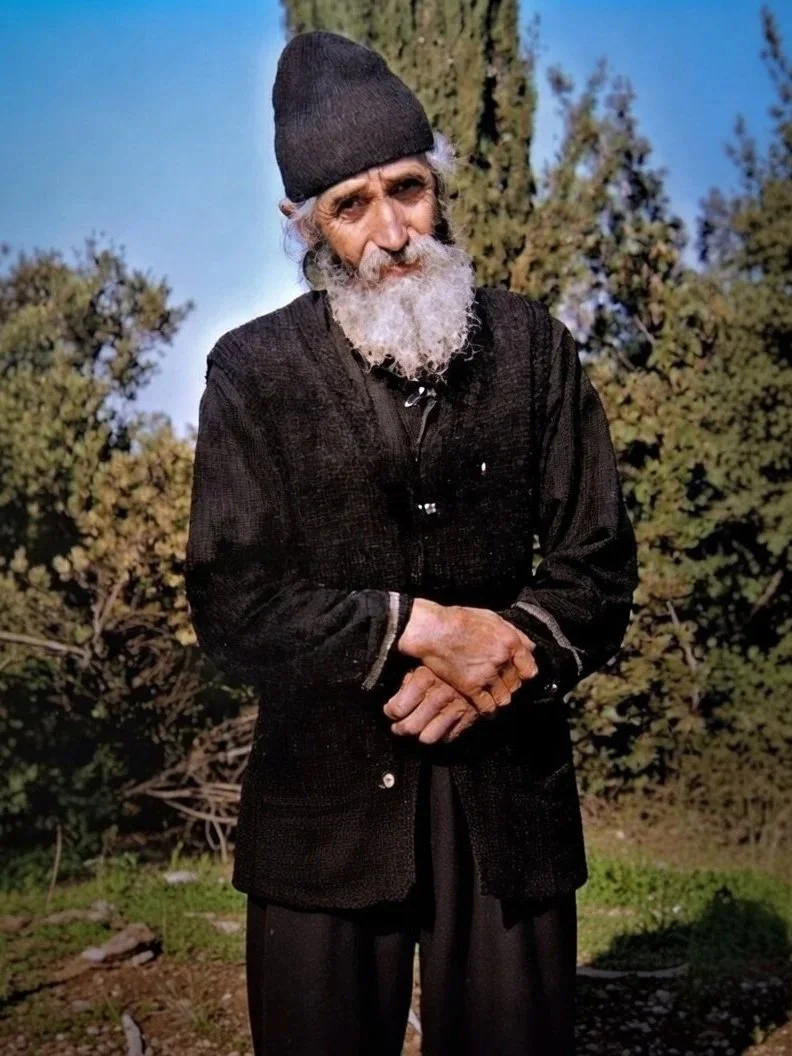
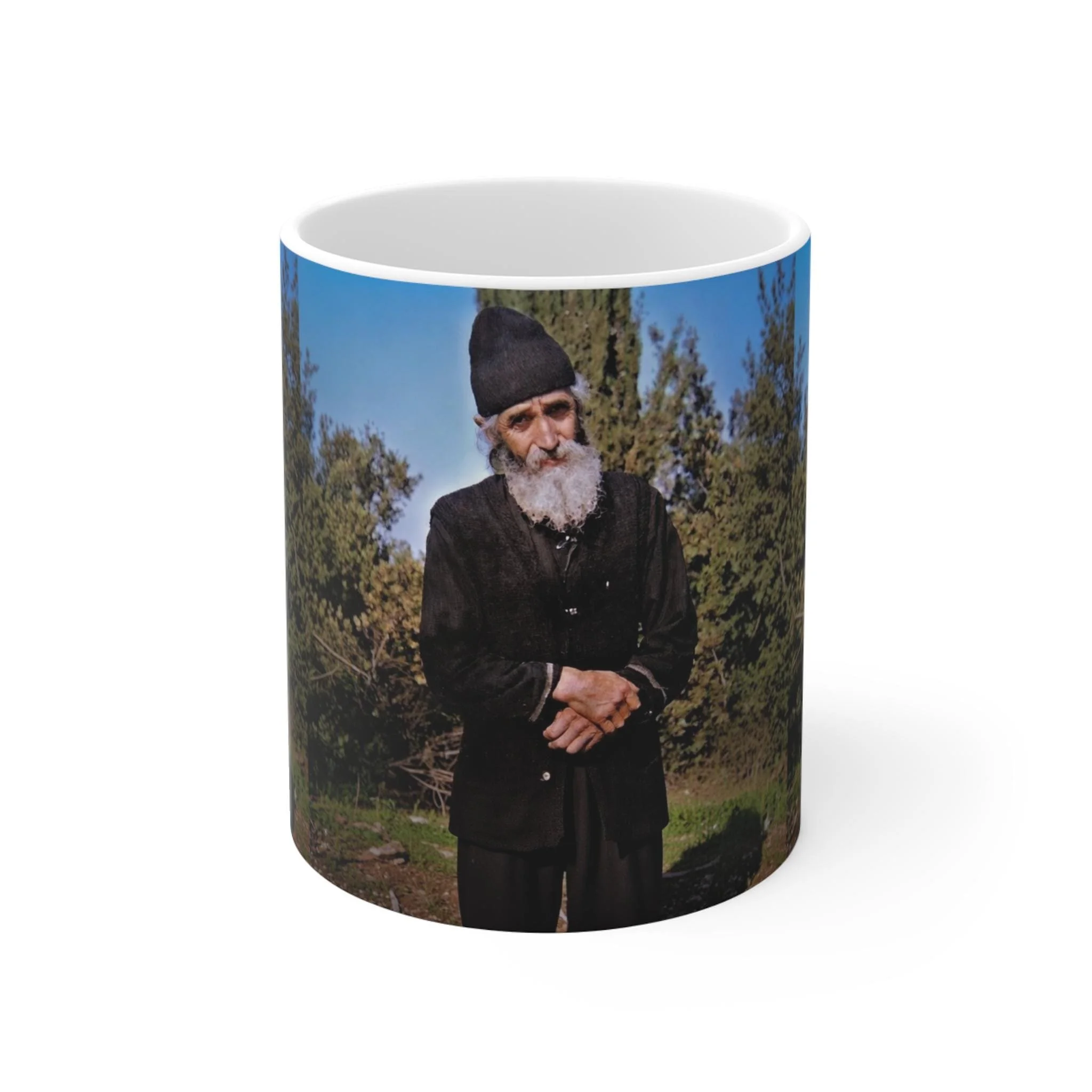
Greek Orthodox monasticism is centered, above all, on Mount Athos, a self-governing monastic peninsula in northern Greece under the spiritual jurisdiction of the Ecumenical Patriarchate, home to twenty ruling monasteries and a wider network of hermitages and sketes that have preserved an unbroken tradition of Byzantine monastic life since the tenth century. Athonite monasticism is deeply associated with hesychasm, the contemplative practice of inner stillness and unceasing prayer, most famously defended theologically by Saint Gregory Palamas in the fourteenth century and carried into the modern era by beloved elders such as Saint Paisios the Athonite, canonized in 2015 and the subject of enormous ongoing popular devotion and search interest today. Orthodox monastic life generally follows a single, ancient monastic rule tradition rather than the multiplicity of distinct religious orders found in the West.
Roman Catholic monasticism, by contrast, developed an extraordinary diversity of distinct religious orders across the medieval and modern periods, each with its own founder, rule, and specific charism: the Benedictines, following the sixth-century Rule of Saint Benedict and emphasizing stability and liturgical prayer; the Franciscans, founded by Saint Francis of Assisi in the thirteenth century and emphasizing radical poverty; the Dominicans, founded by Saint Dominic and emphasizing preaching and theological study; the Jesuits, founded in the sixteenth century by Saint Ignatius of Loyola and emphasizing education and missionary work; and dozens of others, reflecting a Western capacity for institutional innovation in religious life that has no close parallel within the more unified monastic tradition of Greek Orthodoxy.
Part XV
Saints Shared and Saints Divided
Both traditions share, without qualification, every saint of the undivided Church up through the eleventh century: the apostles, the martyrs of the Roman persecutions, the great councils' theologians such as Saint Athanasius, Saint Basil the Great, and Saint John Chrysostom, and medieval figures up to the schism itself. Both venerate the Theotokos with equal devotion, honor her Dormition, and hold her as the pattern of the redeemed human person cooperating fully with divine grace.
After 1054, each tradition developed a substantially separate calendar of saints, canonized through very different processes: Roman Catholic canonization became, over the medieval and modern periods, an increasingly formal, centralized, juridical process administered directly by Rome, requiring documented miracles and passing through defined stages (Servant of God, Venerable, Blessed, Saint). Greek Orthodox glorification of saints remained a more organic, less centrally administered process, typically arising from grassroots popular veneration, confirmed by a local synod of bishops, without the same formalized miracle-verification bureaucracy Rome developed.
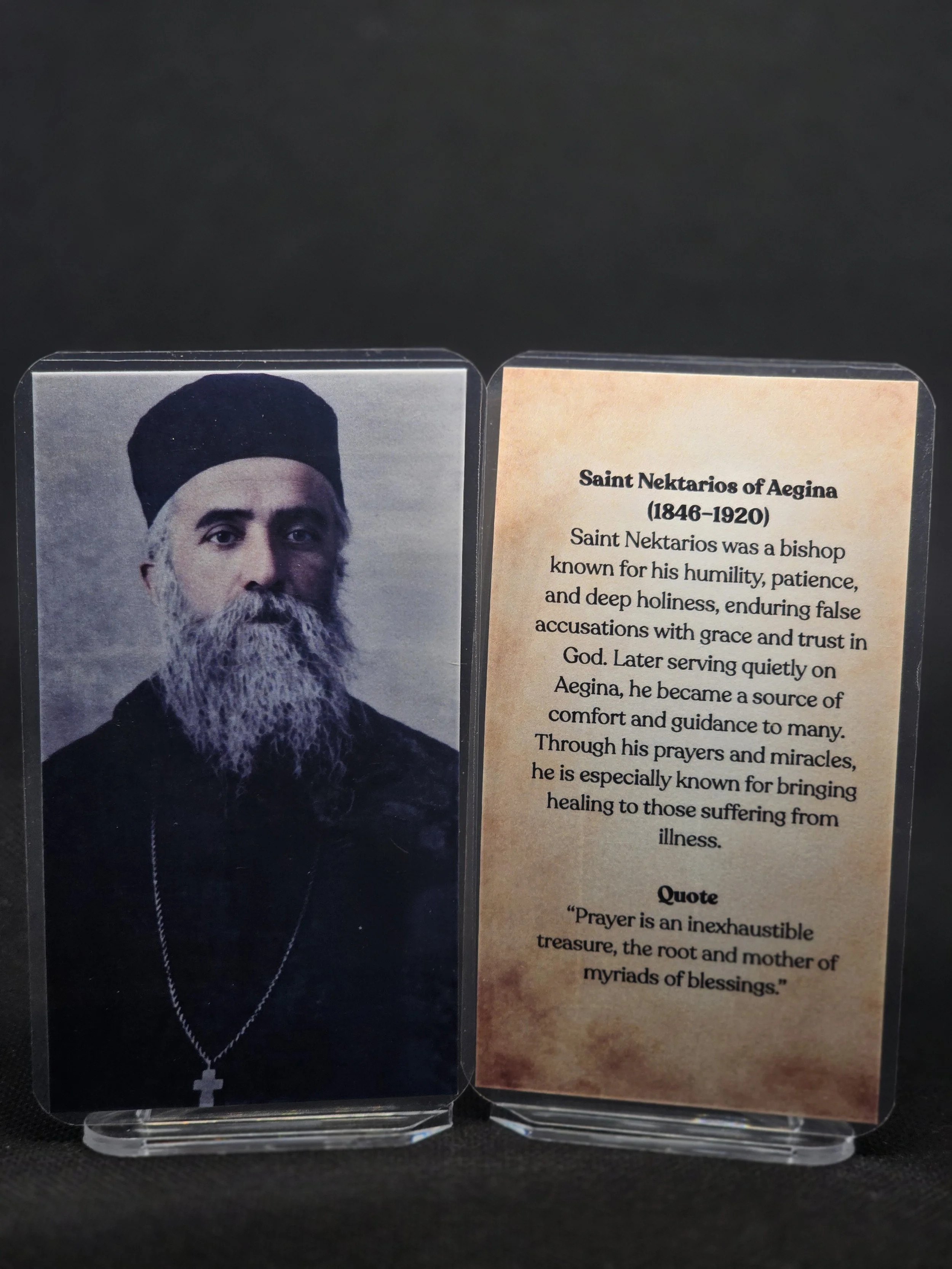
Modern Greek Orthodox saints beloved worldwide include Saint Nektarios of Aegina, a twentieth-century bishop and wonderworker especially invoked for those suffering from cancer and serious illness, and Saint Paisios the Athonite, the modern hesychast elder whose popularity and search interest continue to grow. Modern Roman Catholic saints beloved worldwide include figures such as Saint Padre Pio, the twentieth-century Italian Capuchin friar and stigmatist, and Saint John Paul II, canonized in 2014, whose own papacy included the historic 1979 joint declaration with Ecumenical Patriarch Dimitrios quoted earlier in this article.
Part XVI
Fasting and the Liturgical Calendar
Greek Orthodox fasting discipline remains, by most measures, considerably stricter and more extensive than typical modern Roman Catholic practice, treating abstention from meat, dairy, and often oil and wine as a normal, expected part of ordinary lay spiritual life across roughly half the days of the calendar year, including Great Lent before Pascha, the Nativity Fast before Christmas, the Apostles' Fast, and the Dormition Fast in August, alongside weekly Wednesday and Friday fasting throughout most of the year. Roman Catholic fasting discipline, historically comparably rigorous in the medieval period, was significantly relaxed over the twentieth century, particularly following the Second Vatican Council, with modern Roman Catholic obligatory fasting largely reduced to Ash Wednesday, Good Friday, and abstinence from meat on the Fridays of Lent, alongside voluntary, encouraged additional Lenten disciplines left to individual conscience.
Perhaps the most practically visible calendar difference between the two traditions is the date of Easter (Pascha) itself. The Roman Catholic Church calculates Easter using the Gregorian calendar's paschal formula. Greek Orthodoxy, along with the overwhelming majority of Eastern Orthodox churches, continues to calculate the date of Pascha using the older Julian calendar's astronomical reckoning, combined with the ancient rule that Orthodox Easter must always fall after the Jewish Passover. The result is that Greek Orthodox Easter and Roman Catholic Easter fall on the same date only occasionally, and in most years diverge by one to five weeks, a visible, yearly reminder of the calendar divergence between the two traditions that has nothing directly to do with the Christological or ecclesiological disputes discussed elsewhere in this article, but which nonetheless shapes the lived rhythm of the year for Greek Orthodox and Roman Catholic families alike, especially in mixed marriages.
Part XVII
Modern Ecumenical Relations
Modern relations between the Greek Orthodox Church and Rome have warmed substantially since the mid-twentieth century, even as full sacramental communion has not been restored. In a historic joint gesture, Pope Paul VI and Ecumenical Patriarch Athenagoras I formally lifted the mutual anathemas of 1054 in December 1965, a symbolic act removing the specific eleventh-century excommunications from formal force while explicitly acknowledging that this act, by itself, did not resolve the underlying theological and ecclesiological disputes or restore full communion between the two churches. Pope Paul VI and Patriarch Athenagoras had already met in Jerusalem in January 1964, the first meeting between a Pope and an Ecumenical Patriarch since the Council of Florence in the fifteenth century.
Subsequent decades produced further meetings and joint declarations, including the 1979 joint declaration between Pope John Paul II and Ecumenical Patriarch Dimitrios quoted earlier in this article, establishing a formal Joint International Commission for Theological Dialogue between the Roman Catholic and Orthodox Churches that continues its work today, addressing precisely the questions of papal primacy, conciliarity, and church authority discussed throughout this article. In 2025 and into 2026, Pope Leo XIV and Ecumenical Patriarch Bartholomew I marked the 1,700th anniversary of the First Council of Nicaea with joint commemorations, explicitly invoking the shared, undivided conciliar heritage both churches trace back to that founding council, a gesture of continued commitment to eventual reunion even as the specific obstacles discussed in this article, above all the nature and scope of papal authority, remain formally unresolved.
Part XVIII
Which Is Right for You? A Practical Guide
Both Greek Orthodoxy and Roman Catholicism represent full, authentic, sacramental, apostolic Christianity in unbroken historical continuity with the ancient Church, sharing the first seven Ecumenical Councils, the same essential sacraments, and, in most respects, the same moral and doctrinal foundation. The choice between them is not a choice between "true" and "false" Christianity, but a genuine decision about theology, governance, and worship that deserves serious, honest study rather than casual cultural preference.
You are convinced by the Orthodox understanding of church authority resting in councils of bishops rather than a single supreme pontiff; you are drawn to the unaltered Nicene Creed, the Divine Liturgy of Saint John Chrysostom, and the rich hesychastic and monastic tradition centered on Mount Athos; you want a faith that has not developed newer dogmas such as the Immaculate Conception or Papal Infallibility beyond the first seven Ecumenical Councils; and you are prepared, especially outside major cities, to seek out a Greek Orthodox parish that may be less numerous locally than a Roman Catholic alternative.
You are convinced by the Roman Catholic understanding of the papacy as a divinely instituted, universal teaching authority capable of resolving doctrinal disputes definitively; you want access to the widest possible institutional reach of any single Christian body, present in nearly every country in the world; you are drawn to the diversity of Western religious orders and their distinct charisms; and you find the developed body of modern Roman Catholic social and moral teaching, issued through popes and councils since the nineteenth century, spiritually and intellectually compelling.
As with any serious discernment between two ancient traditions, there is no substitute for direct experience and honest conversation. Attend the Divine Liturgy at a Greek Orthodox parish and the Mass at a Roman Catholic parish more than once each. Read primary sources from both traditions, not only secondary summaries. Speak candidly with a priest from each tradition about your specific questions. The theological and historical differences covered in this article are real and substantial, but the lived encounter with a specific parish community will ultimately matter more to your daily walk with Christ than any single article, however thorough.
Part XIX
Complete Reference Comparison Table
| Category | Greek Orthodox | Roman Catholic |
|---|---|---|
| Formal Split | Great Schism, 1054 • Hardened by 1204 Fourth Crusade | Great Schism, 1054 • Hardened by 1204 Fourth Crusade |
| Highest Authority | Ecumenical councils • Ecumenical Patriarch as "first among equals" | The Pope • universal jurisdiction, infallibility (1870) |
| Governance Model | Conciliar • autocephalous churches | Monarchical • centralized under Rome |
| Nicene Creed | Original text — no filioque | Includes filioque ("and the Son") |
| Immaculate Conception | Not accepted as defined by Rome | Defined dogma, 1854 |
| Purgatory | Not accepted in Western juridical form | Defined doctrine |
| Original Sin | Inherited mortality/corruption, not personal guilt | Inherited guilt (Augustinian) |
| Liturgy | Divine Liturgy of St. John Chrysostom / St. Basil | Roman Rite Mass (Ordinary & Extraordinary Form) |
| Eucharistic Bread | Leavened (prosphora) | Unleavened (host) |
| Sacred Art | Icons (2D) predominant | Icons, statues, varied styles |
| Parish Clergy | Married permitted (before ordination) | Celibate (Latin Rite); married in Eastern Catholic churches |
| Bishops | Celibate monastics only | Celibate |
| Monastic Model | Unified tradition • Mount Athos | Many distinct orders (Benedictines, Franciscans, Jesuits, etc.) |
| Easter Date | Julian calendar reckoning | Gregorian calendar reckoning |
| Global Reach (Greek specifically) | ~15–20 million | ~1.4 billion |
| Modern Relations | Anathemas lifted 1965 • ongoing dialogue | Anathemas lifted 1965 • ongoing dialogue |
FAQ
Frequently Asked Questions
One Creed, Two Vocabularies of Authority, Nearly a Thousand Years Apart
The Great Schism did not create two different faiths. It created two different, historically hardened understandings of where authority lives in the Body of Christ, conciliar for Constantinople, papal for Rome, expressed through two liturgies, two calendars, and, in places, two different loaves of bread on the altar, but confessing the same crucified and risen Christ that both churches knelt before, together, for a thousand years before 1054 ever divided them.
Whether you find yourself drawn to the chanted Divine Liturgy beneath a Byzantine dome or the quiet reverence of the Roman Rite Mass, you are stepping into a current of apostolic worship that has survived empires, conquests, and centuries of division without ever losing the confession at its center: Jesus Christ, Son of God, have mercy on us.
Shop All Orthodox Apparel →