Oriental Orthodox vs Eastern Orthodox: The Complete History, Theology, Liturgy, and Practical Guide
Oriental Orthodox vs Eastern Orthodox: The Complete History, Theology, Liturgy, and Practical Guide
Two ancient Christian families, both tracing themselves to the apostles, both holding the Divine Liturgy as the center of life, both venerating the saints and the Theotokos — separated since the year 451 by a theological argument most Christians in the West have never heard explained clearly. This is the complete account: what actually happened at Chalcedon, what each tradition believes today, what the Divine Liturgy looks and feels like in each, and how to decide which one is right for you.
Oriental Orthodox vs Eastern Orthodox — At a Glance
- The Split
- Council of Chalcedon, 451 AD • Christological dispute over the natures of Christ
- Oriental Orthodox Churches
- Coptic, Syriac, Armenian, Ethiopian, Eritrean, Malankara (6 autocephalous churches)
- Eastern Orthodox Churches
- Constantinople, Alexandria (Greek), Antioch (Greek), Jerusalem, Russia, Greece, Serbia, Romania, and more
- Core Theological Difference
- Miaphysite (one united nature) vs Dyophysite (two natures in one person)
- Councils Accepted
- Oriental Orthodox: first 3 • Eastern Orthodox: first 7
- Global Population
- Oriental Orthodox: ~60 million • Eastern Orthodox: ~230–260 million
- Communion Status
- In communion within each family • Not in full communion with each other
- Icons & Saints
- Both venerate icons and saints • Shared saints before 451, separate calendars after
- Liturgical Languages
- Oriental Orthodox: Coptic, Ge’ez, Classical Armenian, Syriac • Eastern Orthodox: Greek, Church Slavonic, Arabic, English
- Modern Dialogue
- Joint commissions (1964–1993) found a common Christological faith in different vocabulary
- Reunion Status
- Not achieved • Some limited pastoral intercommunion exists in specific jurisdictions
- Best For
- Depends on access, language, and cultural fit — both are fully apostolic, sacramental Christianity
The Two Families Defined
Most people who encounter the phrase "Oriental Orthodox" for the first time assume it is simply another name for what they already know as "Eastern Orthodox" — the Greek, Russian, and Slavic churches with the golden domes, the icons, and the incense. It is not. Oriental Orthodoxy and Eastern Orthodoxy are two distinct communions of churches. Each is fully in communion internally — a Coptic Christian and an Armenian Christian share the same altar and the same bishops recognize each other, just as a Greek Christian and a Russian Christian do — but the two families are not in full communion with each other. A Coptic Christian cannot, under normal circumstances, receive Holy Communion at a Greek Orthodox parish, and vice versa, though pastoral exceptions exist in some jurisdictions for specific circumstances such as marriage.
The split between these two families happened in the year 451, at a gathering of bishops called the Council of Chalcedon. It was not a dispute over icons, or the papacy, or the filioque clause that would divide East and West six centuries later in 1054. It was a dispute over the single most important question Christian theology has ever tried to answer with precision: how does the eternal, divine Son of God relate to the human nature he took on in the womb of the Virgin Mary? Both families answer that Christ is fully God and fully man. They disagree, technically and historically, on the right vocabulary for expressing how those two realities exist in the one person of Jesus Christ.
Oriental Orthodox Christianity comprises six autocephalous, self-governing churches that recognize each other's bishops and sacraments: the Coptic Orthodox Church of Alexandria (Egypt), the Syriac Orthodox Church of Antioch, the Armenian Apostolic Church, the Ethiopian Orthodox Tewahedo Church, the Eritrean Orthodox Tewahedo Church, and the Malankara Orthodox Syrian Church of India. These churches accept the first three Ecumenical Councils (Nicaea in 325, Constantinople in 381, and Ephesus in 431) but rejected the fourth, Chalcedon, in 451.
Eastern Orthodox Christianity comprises the ancient patriarchates of Constantinople, Alexandria (the Greek line, distinct from the Coptic line), Antioch (the Greek line, distinct from the Syriac line), and Jerusalem, together with the large national churches of Russia, Greece, Serbia, Romania, Bulgaria, Georgia, Cyprus, Poland, Albania, and others, plus more recently established autocephalous or autonomous churches such as the Orthodox Church in America and the Orthodox Church of Ukraine. These churches accept all seven of the first Ecumenical Councils, including Chalcedon and the later Seventh Council of Nicaea in 787, which addressed the veneration of icons.
Both families call themselves, without qualification, "Orthodox." Both trace unbroken apostolic succession back to the first century. Both hold the Divine Liturgy as the center of Christian life, venerate the Theotokos and the saints, use icons, practice rigorous fasting, and understand the Eucharist as the true Body and Blood of Christ. The differences that remain, once you look past the shared vocabulary of "Orthodoxy," are real, historically consequential, and worth understanding in full — which is the purpose of everything that follows.
Part II
Complete Taxonomy: Every Church in Each Communion
Before going further into history and theology, it is worth laying out, in full, exactly which churches belong to which family. This is the single most useful reference for anyone trying to orient themselves, because church names alone (Orthodox Church of X, Y Orthodox Church) give no indication of which family a given community belongs to.
The Six Oriental Orthodox Churches
The Coptic Orthodox Church of Alexandria is the largest single Oriental Orthodox church and traces its founding to Saint Mark the Evangelist, traditionally believed to have brought the Gospel to Egypt in the first century and to have become the first bishop of Alexandria. Its head bears the title Pope of Alexandria and Patriarch of All Africa, currently Pope Tawadros II, and the church has endured centuries of hardship under Byzantine, Arab, and modern Egyptian rule while preserving the ancient Coptic language in its liturgy.
The Syriac Orthodox Church of Antioch traces its origin to the earliest Christian community in Antioch, the city where, according to the Book of Acts, believers were first called Christians. Its liturgical tradition is one of the oldest continuously used in Christianity, built around the ancient Syriac language, a dialect closely related to the Aramaic that Christ himself spoke. The Malankara Orthodox Syrian Church of India, tracing its foundation to the apostolic mission of Saint Thomas, shares deep historical and liturgical ties to the Syriac tradition, though it developed its own autocephalous structure in India.
The Armenian Apostolic Church holds the distinction of representing the first nation in world history to adopt Christianity as its official state religion, in the year 301, under King Tiridates III and Saint Gregory the Illuminator. The Armenian Church has two ecclesiastical centers of comparable historic standing, the Catholicosate of All Armenians at Etchmiadzin and the Catholicosate of Cilicia, along with patriarchates in Jerusalem and Constantinople, and a vast global diaspora shaped profoundly by the Armenian Genocide of 1915.
The Ethiopian Orthodox Tewahedo Church is the largest of all six Oriental Orthodox churches by membership, with somewhere between 38 and 51 million adherents in Ethiopia and roughly 60 million worldwide. Its Christian roots reach back to the fourth-century conversion of the Kingdom of Aksum, and it maintained administrative dependence on the Coptic Church of Alexandria until receiving its own patriarch in 1959. The name "Tewahedo" is a Ge'ez word meaning "made one" or "united as one," directly expressing the church's Christological conviction about the union of Christ's natures. The Eritrean Orthodox Tewahedo Church shares this same Christological heritage and worship tradition, having separated administratively from the Ethiopian church in 1993 following Eritrean independence.
The Eastern Orthodox Patriarchates and National Churches
Eastern Orthodoxy is organized around four ancient patriarchates that predate the Chalcedonian split and continued after it under Greek-speaking leadership: Constantinople (the Ecumenical Patriarchate, historically regarded as "first among equals"), Alexandria (the Greek line, distinct in leadership and communion from the Coptic Church that shares the same city), Antioch (likewise a Greek-tradition line distinct from the Syriac Orthodox Church of Antioch), and Jerusalem. Alongside these sit the large autocephalous national churches: the Russian Orthodox Church, the Church of Greece, the Serbian Orthodox Church, the Romanian Orthodox Church, the Bulgarian Orthodox Church, the Georgian Orthodox Church, the Church of Cyprus, the Polish Orthodox Church, the Orthodox Church of Albania, and the Orthodox Church of the Czech Lands and Slovakia. More recently established or more contested in their canonical recognition are the Orthodox Church in America (granted autocephaly by Moscow in 1970, a grant not universally recognized) and the Orthodox Church of Ukraine (granted autocephaly by Constantinople in 2019, a grant not recognized by Moscow).
A separate and frequently confused body is the Assyrian Church of the East, sometimes mistakenly grouped with the Oriental Orthodox. It is not part of either communion. The Church of the East split from the imperial church even earlier, in the disputes surrounding Nestorius before Ephesus in 431, and it holds a distinct dyophysite Christology closer to, but historically separate from, the position later ratified at Chalcedon. Wikipedia's summary of Oriental Orthodoxy is explicit on this point, noting the Church of the East follows a different Christology from Oriental Orthodoxy and separated from the state church of the Roman Empire years before the councils of Ephesus and Chalcedon even convened.
Part III
The Undivided Church Before 451
For more than four hundred years, there was no "Oriental" or "Eastern" Orthodoxy. There was simply the Church, spread across the Roman world and beyond it, holding a shared faith worked out through three great ecumenical councils that both families accept without qualification to this day.
The First Council of Nicaea, convened in 325 by the Emperor Constantine, condemned the teaching of Arius, a priest of Alexandria who taught that the Son of God was a created being, not eternally co-equal with the Father. Nicaea produced the first form of what became the Nicene Creed, declaring the Son to be "of one essence" (homoousios) with the Father. Saint Athanasius of Alexandria, then a young deacon accompanying his bishop, became the great lifelong defender of the Nicene position against decades of Arian political pressure that followed.
The First Council of Constantinople, in 381, expanded the Creed to its now-familiar fuller form, affirming the full divinity of the Holy Spirit against those who denied it, and this Nicene-Constantinopolitan Creed remains, to this day, the confession recited at every Divine Liturgy in both Oriental and Eastern Orthodox churches worldwide, essentially word for word, apart from the later Western addition of the filioque clause that neither family accepts.
The Council of Ephesus, in 431, is the council whose aftermath makes it the true hinge point for everything that follows. Ephesus condemned Nestorius, Patriarch of Constantinople, who was accused of teaching that Christ was, in effect, two separate persons loosely joined together, a divine Word dwelling alongside a distinct human person named Jesus, rather than one single divine Person who took on human nature. Nestorius's own formula was more nuanced than his opponents allowed, and the Assyrian Church of the East to this day maintains he was misrepresented, but the council condemned him and vindicated the great champion of the opposing view: Saint Cyril of Alexandria.
Cyril's formula, expressed most memorably in the phrase "one incarnate nature of God the Word" (mia physis tou theou Logou sesarkomene), a phrase Cyril believed came from Athanasius, became the theological banner both of Chalcedonian orthodoxy and, twenty years later, of the Oriental Orthodox rejection of Chalcedon. Both sides of the coming fifth-century split claimed to be defending Cyril's teaching. Understanding this shared inheritance is essential: the Oriental Orthodox churches are not "less orthodox" in some vague sense, nor are they a breakaway sect that abandoned earlier councils. They are the party that stopped exactly at Ephesus and declined to go one council further, believing that Chalcedon's next step actually endangered what Cyril and Ephesus had just secured.
Part IV
The Council of Chalcedon: What Actually Happened in 451
The Council of Chalcedon convened in October 451 near Constantinople, called by the Emperor Marcian, and attended by somewhere between 370 and 520 bishops, overwhelmingly from the Greek-speaking Eastern half of the empire. Its immediate occasion was the need to resolve lingering confusion and controversy left over from a chaotic 449 council at Ephesus, later dubbed by its opponents the "Robber Council" (Latrocinium), at which Dioscorus, then Patriarch of Alexandria and Cyril's successor, had aggressively pushed through a condemnation of dyophysite language and, in the process, physically intimidated and deposed bishops who disagreed, including Pope Leo I's own representatives.
Pope Leo I of Rome had already sent a theological letter, known as the Tome of Leo, laying out in Latin theological language a formula for how two natures could coexist in the one Person of Christ: "the property of each nature being preserved, and concurring in one Person." When the bishops of Chalcedon finally issued their formal doctrinal statement, the Chalcedonian Definition, they explicitly incorporated Leo's language, declaring Christ to be "acknowledged in two natures, without confusion, without change, without division, without separation; the distinction of natures being in no way annulled by the union, but rather the property of each nature being preserved, and concurring in one Person and one Hypostasis."
For the bishops who accepted this formula, it represented a careful middle path: rejecting both the Nestorian error of splitting Christ into two separate persons, and the opposite error (associated, rightly or wrongly, with the monk Eutyches, whom the 449 council had exonerated) of so fully merging Christ's humanity into his divinity that it effectively disappeared. Chalcedon meant to protect the full, unimpaired humanity of Christ — a stake that mattered enormously for salvation, since only a fully human nature genuinely united to God could redeem humanity.
Dioscorus of Alexandria, however, refused to accept the council's formula, viewing "in two natures" as functionally identical to Nestorius's condemned teaching, no matter how many qualifying phrases surrounded it. He was deposed by the council on grounds that mixed genuine theological objection with disciplinary charges stemming from his conduct at the 449 council. His deposition, and the wholesale rejection of the council's formula by the Egyptian, and soon Syrian and Armenian, churches under his theological influence, is the moment historians point to as the effective beginning of the Oriental Orthodox as a distinct communion.
Why Alexandria and the Syrian Churches Rejected the Formula
The Alexandrian objection was not a misunderstanding of Greek grammar, as it is sometimes dismissively described. It reflected a genuine and defensible theological instinct rooted in Cyril's own preferred vocabulary. Cyril had insisted on speaking of "one nature," believing that any language of "two natures" inevitably implied two separate subjects, sliding back toward the very Nestorian error Ephesus had just condemned. When the Chalcedonian bishops spoke of Christ existing "in two natures," Alexandrian theologians heard an echo of exactly the division of Christ into two subjects that Cyril, and Ephesus, had fought to exclude.
The Armenian Church, geographically removed from the immediate councils and consumed at the time by a brutal war for religious survival against Sassanid Persia, did not even send representatives to Chalcedon and formally rejected it only later, at the Council of Dvin in 506, when Armenian bishops, reviewing the theological dispute from a distance, sided decisively with the Alexandrian position. The Syriac-speaking churches of Antioch and Mesopotamia divided internally, with a substantial anti-Chalcedonian party eventually organized into a separate hierarchy under Jacob Baradaeus in the sixth century (giving rise to the older, now largely retired, label "Jacobite" for the Syriac Orthodox Church).
Part V
The Aftermath: Persecution, Politics, and Permanent Division
The decades after Chalcedon were not a clean theological parting of ways. They were messy, violent, and deeply entangled with imperial politics. Byzantine emperors, needing the loyalty of Egypt (the empire's breadbasket) and the volatile eastern frontier provinces, repeatedly tried to force compromise formulas on both sides. The Emperor Zeno's Henotikon of 482 attempted to paper over the dispute by simply avoiding the controversial "two natures" language altogether, a maneuver that satisfied almost no one and triggered a schism with Rome (the Acacian Schism, 484-519) without actually reconciling the Alexandrian and Syrian anti-Chalcedonians to Constantinople.
Successive emperors alternated between persecution and toleration of the anti-Chalcedonian (Oriental Orthodox) parties within their own territories. Chalcedonian patriarchs were sometimes imposed on Alexandria by imperial force, backed by troops, over a population that overwhelmingly rejected them; this produced, for centuries, the striking spectacle of two rival patriarchs of Alexandria, a "Melkite" (imperial, Chalcedonian, the ancestor of today's Greek Orthodox Patriarchate of Alexandria) and a "Coptic" (anti-Chalcedonian, the ancestor of today's Coptic Orthodox Church), each claiming the same apostolic seat of Saint Mark.
By the sixth and seventh centuries, what had begun as a theological dispute among bishops had become, in the everyday experience of ordinary Egyptian, Syrian, and Armenian Christians, an inherited communal identity, reinforced by liturgical language, local clergy, and, increasingly, resentment of Constantinople's political domination. The split, in other words, calcified along exactly the same lines that would later define the modern Oriental Orthodox churches, well before the Arab conquests of the seventh century made the division essentially permanent by removing Egypt, Syria, and eventually Armenia from direct Byzantine political control altogether.
Part VI
Conquest, Islam, and the Long Survival of the Oriental Churches
The Arab-Islamic conquests of the seventh century transformed the political situation of the Oriental Orthodox churches permanently. Egypt fell to Arab armies in 639-642, Syria somewhat earlier, and both regions passed from Byzantine (Chalcedonian) rule into a new political order under Muslim caliphates. For the Coptic and Syriac Orthodox populations, this had a complicated and often misunderstood effect: it removed them from the immediate coercive pressure of a Chalcedonian imperial government that had, at various points, actively persecuted them for their Christology, while simultaneously subjecting them to a new set of restrictions and a tax burden (the jizya) under dhimmi status that, over centuries, produced significant demographic decline through both economic pressure toward conversion and periodic outright persecution.
Within Roman Syria and during the Muslim conquest of the Levant, Syriac Orthodox bishops such as John III of the Sedre engaged in recorded theological debates with Muslim officials, defending the Christian faith of their entire community, Chalcedonian and non-Chalcedonian alike, before Islamic authorities. The Coptic Church endured recurring waves of persecution across the following fourteen centuries, up to and including documented abductions and forced conversions continuing into the twenty-first century, and yet the Coptic Orthodox Church remains, to this day, the largest Christian community in the Middle East.
The Armenian Church's modern history was shaped by an even more devastating trauma: the Armenian Genocide of 1915-1923, in which the Ottoman government's systematic massacre and deportation of Armenians killed an estimated 1 to 1.5 million people and produced the large modern Armenian diaspora now spread across North America, France, Russia, Argentina, and the Middle East, with the Armenian Apostolic Church serving throughout as the central institution of Armenian national and religious identity in exile.
The Ethiopian Orthodox Tewahedo Church followed an almost entirely separate historical track, developing within the Kingdom of Aksum and its Ethiopian successor states largely free of direct Islamic political rule for most of its history, remaining administratively dependent on the Coptic Patriarchate of Alexandria for the appointment of its senior bishop (the Abuna) until finally receiving full autocephaly and its own patriarch in 1959, a full 1,629 years after Christianity first arrived in the Ethiopian highlands under the fourth-century missionary bishop Frumentius.
Part VII
Theology Part I: Christology, The Real Difference
Everything else discussed in this article, liturgy, fasting, saints, governance, flows downstream from one theological disagreement, so it deserves to be explained in full and in plain language, without either flattening it into triviality or exaggerating it into something the two traditions themselves do not claim it to be.
The Eastern Orthodox (Dyophysite) Position
Eastern Orthodox Christology, following Chalcedon, teaches that the eternal, divine Son of God, in the Incarnation, took on a complete and genuine human nature, and that in the one Person of Jesus Christ, two natures, fully divine and fully human, exist together "without confusion, without change, without division, without separation." Each nature retains its own properties, its own will (a point later clarified further at the Third Council of Constantinople in 680-681, which affirmed Christ has two wills, divine and human, working in perfect harmony), and its own set of characteristic actions, even as both belong to the single, undivided Person of the Word. For Eastern Orthodox theology, this precision matters because it protects the full, unimpaired reality of Christ's humanity, which is essential for Christ's human nature to serve as the genuine, representative offering for humanity's salvation, and it protects the full, unimpaired reality of his divinity, essential for that offering to actually accomplish something no mere human offering could.
The Oriental Orthodox (Miaphysite) Position
Oriental Orthodox Christology, following St. Cyril of Alexandria's preferred formula "one incarnate nature of God the Word" (mia physis tou theou Logou sesarkomene), teaches that in the Incarnation, the divine and human natures of Christ are united into one single, composite nature, at once and inseparably both fully divine and fully human, without either nature being diminished, changed, or absorbed by the other. This is technically called miaphysitism (from the Greek mia, "one," and physis, "nature"), a term deliberately distinguished by Oriental Orthodox theologians from monophysitism, which they reject as heretical. Wikipedia's summary of the Ethiopian Orthodox Tewahedo Church's teaching is direct on this point, describing "one perfectly unified nature of Christ... a complete union of the divine and human natures into one nature" as distinguished from the "two natures" position, and Ethiopian theology explicitly frames this union as necessary "to accomplish the divine salvation of mankind."
What Each Side Fears Losing
Understanding the emotional and theological stakes, not just the technical vocabulary, is essential to taking both sides seriously. The Chalcedonian (Eastern Orthodox) side fears that "one nature" language, however carefully qualified, tends historically toward collapsing Christ's humanity into his divinity, producing a Christ who is not really, fully human in the way needed to redeem humanity, and who cannot really suffer, hunger, weep, or die in a genuinely human way. This is the fear embodied, rightly or wrongly associated with Oriental Orthodox theology, in the older label "Monophysite."
The non-Chalcedonian (Oriental Orthodox) side fears the opposite: that "two natures" language, however carefully qualified with phrases like "without division, without separation," tends historically toward splitting Christ into two separate subjects, a divine Word somehow riding alongside, or merely indwelling, a distinct human person, which was precisely the error Ephesus condemned in Nestorius. From the Oriental Orthodox point of view, Chalcedon's formula, whatever it intended, opened a door back toward the very Nestorianism the whole controversy had supposedly settled twenty years earlier at Ephesus in 431.
Both fears are theologically serious. Both sides, in their historical polemics, sometimes caricatured the other's position in its least careful form. And modern, sober scholarship on both sides increasingly agrees that the two formulas, examined closely and charitably, may in fact be expressing the same underlying conviction, that Christ is one Person, fully God and fully man, using two different technical vocabularies inherited from two different theological schools (the Alexandrian tradition, which starts from the unity of Christ and works outward to the two natures, and the Antiochene tradition, which starts from the reality of the two natures and works toward their union in one Person).
| Category | Eastern Orthodox (Chalcedonian) | Oriental Orthodox (Non-Chalcedonian) |
|---|---|---|
| Technical term | Dyophysite — two natures | Miaphysite — one united nature |
| Key formula | "Acknowledged in two natures... concurring in one Person" | "One incarnate nature of God the Word" |
| Primary theologian | Pope Leo I, Chalcedonian fathers | St. Cyril of Alexandria (as they read him) |
| Core fear | "One nature" collapses Christ's humanity | "Two natures" reopens Nestorian division |
| Wills of Christ | Two wills, in harmony (Constantinople III, 680–681) | One united theandric will and operation |
| Self-description | Orthodox, Chalcedonian | Orthodox, non-Chalcedonian (never "Monophysite") |
Part VIII
Why "Monophysite" Is the Wrong Word
No survey of this subject is complete, or honest, without directly addressing a word that still appears constantly in older textbooks, casual conversation, and even some encyclopedia entries: "Monophysite." Oriental Orthodox Christians consider this label not merely imprecise but actively offensive, because it attaches their theology to a position they have always rejected as heretical.
Monophysitism, properly speaking, is the teaching associated with the fifth-century monk Eutyches, who taught, in its strongest form, that Christ's human nature was so completely absorbed into his divine nature after the Incarnation that it effectively ceased to exist as a distinct, genuine humanity, "like a drop of wine in the ocean," in the imagery some ancient critics used to characterize the danger of this view. This is a real heresy, and every one of the six Oriental Orthodox churches formally and explicitly condemns it, just as Chalcedonian Christians do.
Oriental Orthodox theology, again following Cyril, is properly called miaphysite, holding that Christ has one nature that is fully, simultaneously, and without diminishment both divine and human, a unity, not an absorption. The distinction matters enormously, and modern ecumenical scholarship has caught up with it. A landmark joint statement issued at Chambesy, Switzerland in 1990, following decades of careful bilateral theological dialogue between officially appointed Eastern Orthodox and Oriental Orthodox theologians, formally recognized "a common Christology" between the two families, explicitly noting that the theological content each side actually holds, once stripped of centuries of polemical mislabeling, is substantially the same, even though expressed through different historical vocabulary and different councils. That same 1990 dialogue also produced formal agreement that Oriental Orthodox veneration of icons stands in basic theological agreement with the position later articulated at the Eastern Orthodox Seventh Ecumenical Council, even though the Oriental churches do not recognize that specific council as ecumenical, since their communion's conciliar history stopped at Ephesus in 431.
For any writer, teacher, or ordinary Christian discussing this topic, the practical takeaway is simple and non-negotiable: never call Oriental Orthodox Christians "Monophysites." It is inaccurate, it is considered insulting by the people it describes, and modern official Eastern Orthodox theological dialogue itself has retired the term as a fair characterization of Oriental Orthodox belief.
Part IX
Theology Part II: Mary, Icons, Saints, and the Eucharist
Mariology: The Theotokos
Both families hold, with equal conviction and without qualification, that Mary is the Theotokos, the God-bearer, a title formally vindicated at the very Council of Ephesus both traditions accept. Both venerate her as ever-virgin, honor her Dormition (falling asleep) and bodily glorification, and give her a central place in the liturgical calendar, private devotion, iconography, and the intercessory life of the Church. There is no meaningful practical difference here for an ordinary worshipper moving between the two traditions; the Marian devotion of a Coptic parish and a Greek parish will feel, in substance, remarkably similar, even where hymnody and specific feast dates differ.
Icons and Sacred Art
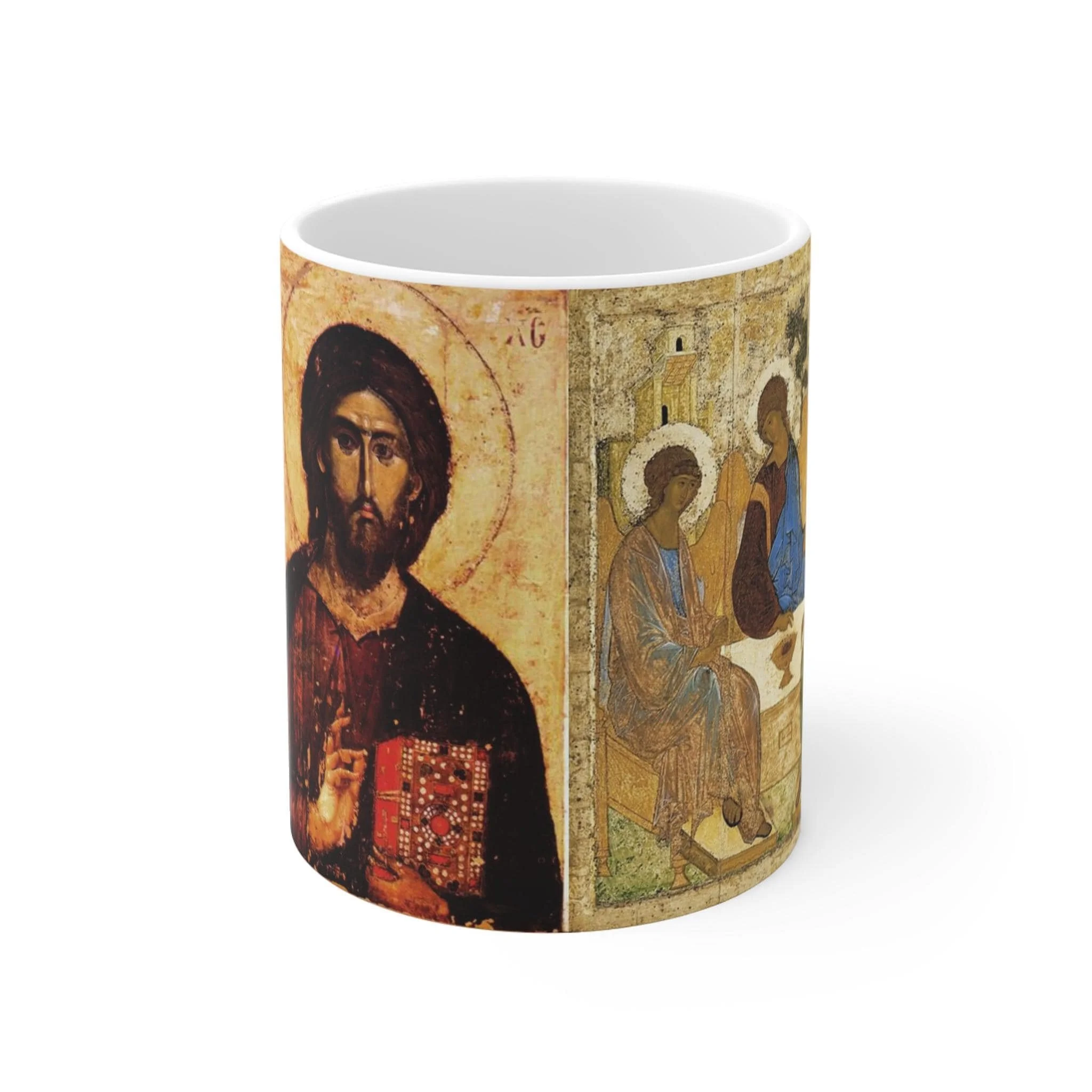
Both traditions use icons liturgically, theologically, and devotionally, as windows into the presence of Christ and the saints rather than as objects of worship. As the 1990 Chambesy joint statement confirmed, the two traditions' theology and practice of icon veneration are in basic agreement despite the Oriental Orthodox churches' distinct conciliar history. Stylistically, however, there are real, visible differences a visitor will notice immediately. Coptic and Ethiopian iconography favors bold black outlines, large, direct, symmetrical eyes, flatter and more vividly saturated color fields, and often incorporates local artistic traditions, Ethiopian icons in particular drawing on centuries of distinctly Ethiopian pictorial conventions found nowhere else in Christianity. Greek and Russian iconography developed the more familiar elongated, softly modeled Byzantine style most Western readers instinctively picture when they hear the word "icon."
Saints and Intercession
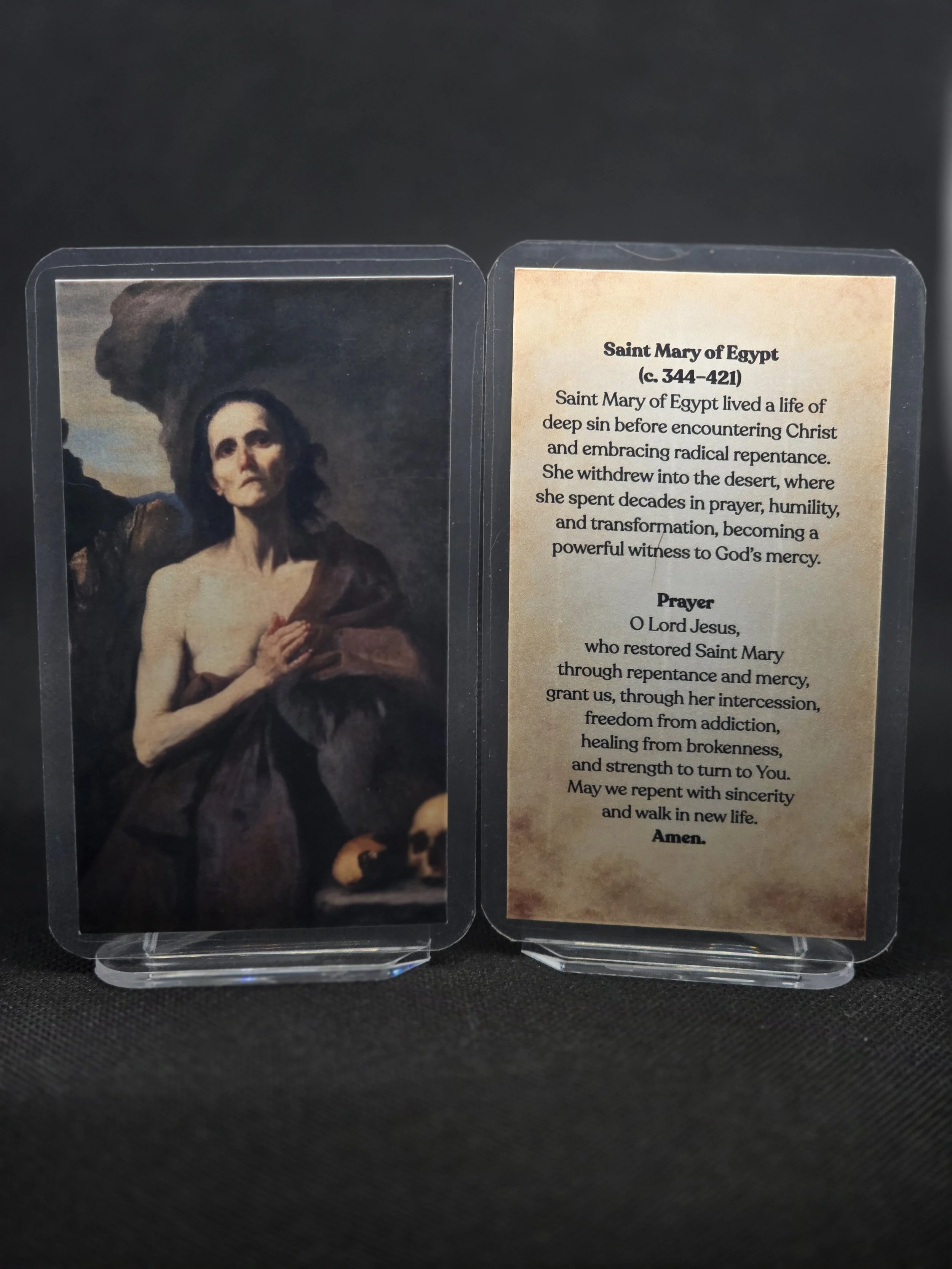
Both traditions ask for the intercession of the saints as a normal, unremarkable part of Christian prayer, and both maintain that the saints in glory continue to love and pray for the Church on earth. Both share the entire body of saints from before 451: the apostles, the martyrs of the Roman persecutions, and the great pre-Chalcedonian fathers such as Athanasius, Cyril of Alexandria, and Basil the Great. After 451, each tradition developed its own distinct, largely separate calendar. Some later saints, particularly desert ascetics from Egypt whose holiness was recognized universally and whose lives predate or transcend direct involvement in the Christological controversy, such as Saint Mary of Egypt, are honored in both calendars regardless of the split.
The Eucharist
Both traditions hold, without hesitation or metaphor, that the bread and wine of the Divine Liturgy become the true Body and Blood of Christ through the descent and action of the Holy Spirit (the epiclesis), and both regard participation in the Eucharist as the central act of Christian life, requiring preparation through fasting, confession, and prayer. The precise theological vocabulary used to describe how this happens differs somewhat between traditions, echoing the broader Christological emphasis of each, but in ordinary parish life, in the reverence given to the consecrated gifts, in the practice of receiving both species together on a spoon (a practice both traditions largely share, in contrast to some Western Christian customs), the lived experience is close to identical.
Part X
Scripture and the Biblical Canon
Both families read the Old Testament primarily through the lens of the ancient Greek Septuagint translation (or, for Syriac and Armenian churches, translations closely dependent on it and on the Peshitta), rather than the later Hebrew Masoretic Text that became standard in Judaism and, through the Reformation, in most Western Protestant Bibles. This gives both traditions a broader Old Testament than Protestant Bibles, including books such as Tobit, Judith, Wisdom, Sirach, Baruch, and 1-2 Maccabees.
Within this shared broad approach, however, the Oriental Orthodox churches, and the Ethiopian and Eritrean Tewahedo churches most dramatically, maintain a substantially wider canon still. The Ethiopian Orthodox biblical canon is the largest in Christendom, encompassing 81 books by the most common count, divided by scholars into a narrower canon largely overlapping with what other traditions recognize, and a broader canon including additional texts such as the Book of Enoch, Jubilees, and Meqabyan, texts most other Christian traditions, East and West, regard as extra-canonical or apocryphal. This distinctive Ethiopian canon has become, in recent years, a major independent topic of interest online in its own right, and deserves its own dedicated treatment rather than being folded entirely into a Chalcedon-versus-non-Chalcedon framework, since the expanded canon reflects specific Ethiopian ecclesiastical history rather than the Christological dispute itself.
The Coptic, Syriac, and Armenian churches maintain New Testament and core Old Testament canons much closer to the Eastern Orthodox and Roman Catholic standard, with more modest local variations, such as the Armenian Church's historical inclusion of the apocryphal Third Epistle to the Corinthians in some manuscript traditions, though not in universal current liturgical use.
Part XI
The Divine Liturgy: Structure and Comparison
Anyone deciding between these two traditions, in practice, is deciding what they will do, see, hear, and experience on a Sunday morning far more than they are deciding on a position paper about fifth-century Christology. It is worth describing the Divine Liturgy of each tradition honestly and concretely.
Structural Similarities
Every Divine Liturgy in both traditions, however different in surface details, follows the same ancient skeleton inherited from the pre-Chalcedonian Church: a preparatory rite in which the bread and wine are set apart (called the Proskomedia in the Byzantine tradition), a Liturgy of the Word centered on Scripture readings and often a sermon, and a Liturgy of the Faithful culminating in the Anaphora (the great Eucharistic Prayer), the Epiclesis (the invocation of the Holy Spirit upon the gifts), and Holy Communion. The Nicene-Constantinopolitan Creed is recited in both. Incense, candles, and the veneration of icons appear in both. Communion is typically distributed under both species together, often by spoon, in both traditions.
Eastern Orthodox: The Byzantine Rite
The overwhelming majority of Eastern Orthodox parishes celebrate the Divine Liturgy of Saint John Chrysostom (the ordinary Sunday liturgy) or, on specific occasions such as the Sundays of Great Lent, the longer Divine Liturgy of Saint Basil the Great. The Byzantine Divine Liturgy typically runs 60 to 90 minutes on an ordinary Sunday, longer during major feasts, and is characterized by an iconostasis (icon screen) separating the altar area from the nave, extensive antiphonal chanting often carried by a dedicated choir or chanter, and, in many parishes, the priest and deacon moving in and out through the sanctuary doors at specific liturgical moments.
Oriental Orthodox: Multiple Distinct Rites
Unlike Eastern Orthodoxy's relatively unified Byzantine rite, the Oriental Orthodox communion actually comprises several genuinely distinct liturgical rites, reflecting its more decentralized historical development. The Coptic Church uses the Liturgy of Saint Basil (a different textual tradition from the Byzantine Saint Basil liturgy, though related), alongside the Liturgies of Saint Gregory and Saint Cyril, celebrated in Coptic and Arabic. The Armenian Church uses its own distinct Armenian Rite, historically influenced by both Syriac and Byzantine traditions but developed into a wholly separate liturgical family, celebrated in Classical Armenian (Grabar). The Syriac Orthodox Church uses the West Syriac Rite, one of the oldest continuously celebrated liturgical traditions in Christianity, built around the Liturgy of Saint James, celebrated in Syriac. The Ethiopian and Eritrean churches use the distinctive Ge'ez Rite, incorporating dramatic elements largely unfamiliar to Western or even Byzantine worshippers, including ritual dance, drums, and sistra (an ancient percussion instrument), reflecting deep roots in the Kingdom of Aksum's ancient culture, and celebrated using one of fourteen different anaphoras (Eucharistic Prayers) available in the Ethiopian tradition, a striking liturgical richness with no real parallel in the Byzantine tradition's much narrower set of standard anaphoras.
Honest length comparisons vary enormously by rite and occasion. Coptic and Syriac liturgies can run anywhere from 90 minutes to well over two hours on major feasts, and Ethiopian liturgical celebrations, particularly for major feasts, can extend for several hours, often beginning before dawn, reflecting the Ethiopian tradition's historically monastic, ascetically rigorous liturgical culture.

Part XII
Liturgical Language and Ethnic Identity
One of the most practically significant differences between the two families, and one rarely discussed openly, is the degree to which liturgical language and worship are bound up with a specific ethnic and national identity. Oriental Orthodox churches are, almost without exception, deeply, historically identified with a single people: Coptic Orthodoxy with Egyptian Christians, Armenian Orthodoxy with the Armenian nation and its diaspora, Ethiopian and Eritrean Orthodoxy with their respective national churches, Syriac Orthodoxy with an ancient but numerically small and geographically scattered community rooted in the Levant and Mesopotamia. Liturgical languages, Coptic, Ge'ez, Classical Armenian, Syriac, are ancient sacred tongues no longer spoken in ordinary daily life, and parish life in these traditions, especially in North America and Western Europe, frequently doubles as a center of ethnic community preservation, alongside its religious function.
Eastern Orthodoxy, while historically just as bound to specific ethnic identities (Greek, Russian, Serbian, Romanian, and so on, each with its own jurisdiction), has, over the past century, developed considerably more infrastructure for English-language worship and for converts without ethnic ties to any single Orthodox nation, particularly through jurisdictions such as the Orthodox Church in America, the Antiochian Archdiocese (which has actively pursued English-speaking convert communities for decades), and increasingly even within Greek Orthodox parishes in the United States. This is not a theological difference at all, but it is, in practical terms, one of the single biggest factors shaping whether an English-speaking convert with no ethnic tie to any of these traditions finds it easy or difficult to find a welcoming, accessible parish.
Part XIII
Fasting, Calendar, and the Rhythm of the Year
Both traditions take fasting with a seriousness almost entirely unfamiliar to most Western Christians, treating abstention from meat, dairy, and often oil and wine as a normal, expected part of ordinary lay spiritual life, not merely a monastic practice. Both observe a lengthy Great Lent before Pascha (Easter) and additional fasting periods through the year tied to major feasts.
The Coptic and Ethiopian traditions, in particular, are often described, even by other Orthodox Christians, as maintaining an unusually rigorous fasting calendar. The Ethiopian Orthodox Tewahedo Church observes an extensive annual fasting cycle that, combined across all its fasting periods, can add up to over 200 days a year for the strictly observant, including weekly Wednesday and Friday fasts nearly year-round, alongside the great fasts before Christmas (Advent), before Easter (the 55-day "Hudade" Lent, notably longer than the standard 40-day Lent observed elsewhere), the Fast of the Apostles, and the Fast of the Assumption. The Ethiopian and Coptic traditions additionally maintain dietary and purity practices that echo Old Testament patterns, including a distinction between clean and unclean meats and, historically in Ethiopia, the practice of male circumcision as a religious as well as cultural custom, features not found in the same form in Eastern Orthodox practice.
Eastern Orthodox fasting practice, while also rigorous by ordinary Western Christian standards, with roughly comparable total annual fasting days, generally does not extend to the same Old Testament dietary distinctions or non-fasting cultural-religious markers, being shaped instead by a somewhat different historical monastic tradition, principally the Studite and Athonite typika (rule books) that developed within the Byzantine world.
Both traditions also, notably, calculate the date of Pascha (Easter) using the older Julian calendar reckoning (with the notable exception of a few Eastern Orthodox churches, such as Finland's, and some jurisdictional variation on fixed feasts), which means Oriental Orthodox and Eastern Orthodox Christians overwhelmingly celebrate Easter on the same date as each other, a date that differs from the Western (Roman Catholic and Protestant) Easter date in most years, sometimes by a single week and sometimes by up to five weeks, depending on the interplay of the two calendars' differing calculations of the paschal full moon.
Part XIV
Prayer Practices and the Jesus Prayer
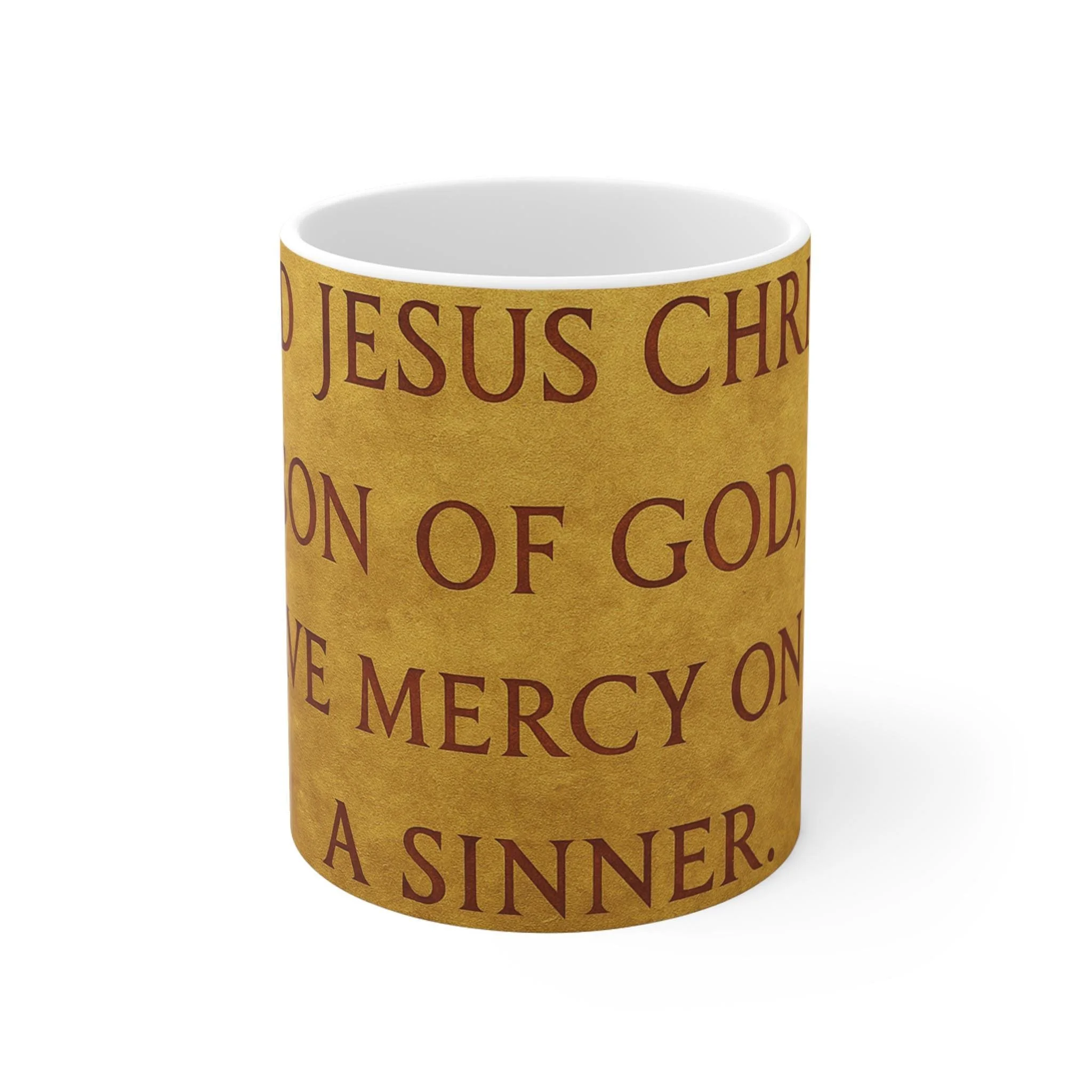
The single most universally shared devotional practice across both traditions is the Jesus Prayer: "Lord Jesus Christ, Son of God, have mercy on me, a sinner," repeated silently or aloud, often counted using a knotted prayer rope. The prayer rope itself, called a komboskini in Greek, a chotki in Russian, or by other regional names, is attributed by tradition to Saint Pachomius of Egypt in the fourth century, an important reminder that this specific devotional tool, now most associated in popular imagination with Mount Athos and Russian monasticism, actually has its documented origin in the same Egyptian desert monastic tradition that produced the Coptic Church.
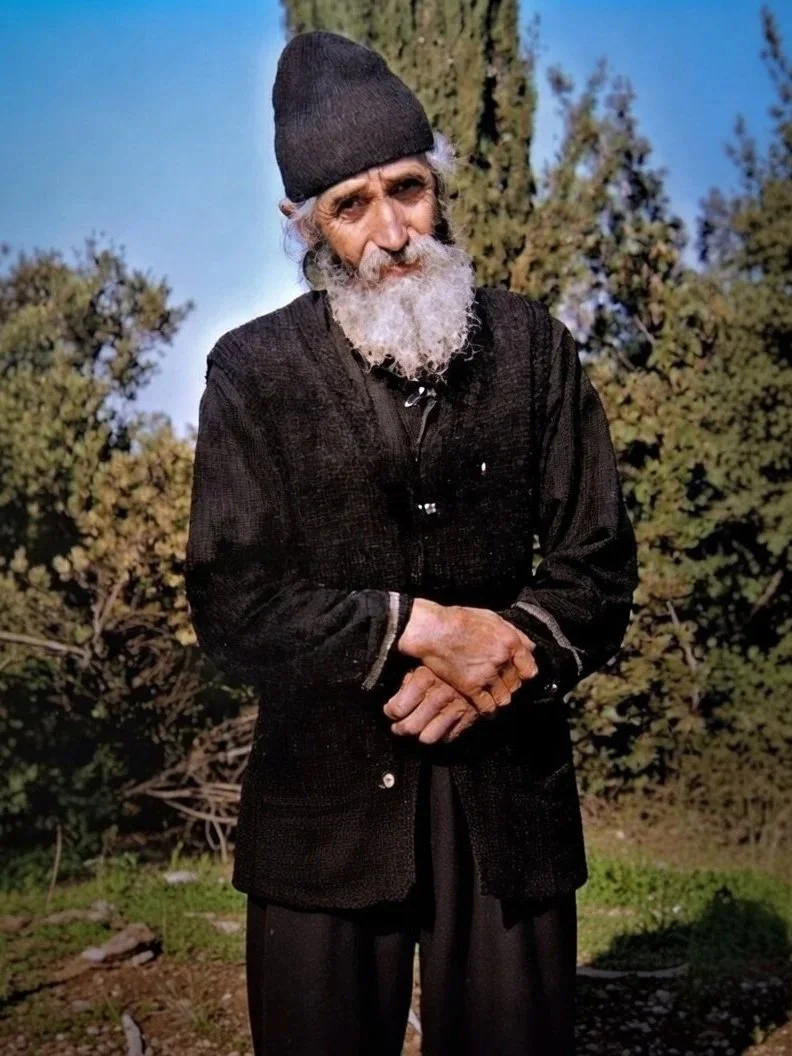
Hesychasm, the contemplative tradition of inner stillness and unceasing prayer most famously systematized and defended by Saint Gregory Palamas in fourteenth-century Byzantium and carried forward into modern times by figures such as Saint Paisios the Athonite, is most strongly and explicitly associated today with the Eastern Orthodox monastic culture of Mount Athos. However, the deeper roots of this contemplative tradition, unceasing prayer, watchfulness, the guarding of the heart, trace back to the fourth and fifth-century Desert Fathers of Egypt, Saints Anthony the Great, Macarius, and others, whose spiritual descendants remain, to this day, within the Coptic Orthodox monastic tradition as much as within the Eastern Orthodox one. The two traditions are, in this respect, drawing from the very same well, even where later centuries developed the contemplative theology along somewhat different lines within each communion.
Part XV
Church Structure and Governance
Oriental Orthodox governance is organized around a small number of senior patriarchal or catholicos figures, each with clear, singular authority over their own autocephalous church: the Pope of Alexandria (Coptic), the Patriarch of Antioch (Syriac), the Catholicos of All Armenians at Etchmiadzin (with the semi-autonomous Catholicosate of Cilicia), the Patriarch of the Ethiopian Orthodox Tewahedo Church, the Patriarch of the Eritrean Orthodox Tewahedo Church, and the Catholicos of the Malankara Orthodox Syrian Church. There is no single figure analogous to an "Oriental Orthodox Ecumenical Patriarch"; each of the six churches stands as a fully independent, self-governing body, joined to the others by shared faith and mutual recognition rather than by any shared central authority.
Eastern Orthodox governance follows a broadly similar principle of autocephaly (self-governance), but with one added, historically significant, and periodically controversial wrinkle: the Ecumenical Patriarch of Constantinople is traditionally accorded a position of honorary primacy, "first among equals," a status that carries real, if limited and contested, practical authority, including a historically claimed role in granting autocephaly to new national churches, a claim Moscow in particular has increasingly disputed in recent decades, most visibly over the 2019 grant of autocephaly to the Orthodox Church of Ukraine.
Both traditions require bishops to be celibate monastics, drawn from the ranks of the monastic clergy rather than the married parish priesthood. Both traditions permit, and in ordinary parish life expect, married clergy at the priest and deacon level, provided the marriage takes place before ordination, a practice both hold in continuity with the ancient, pre-schism, universal Christian discipline on this question.
Part XVI
Spiritual Figures and Saints of Each Tradition
Shared Before 451
Saint Athanasius of Alexandria, the great defender of Nicene orthodoxy against Arianism, is claimed with equal devotion by both traditions, as is Saint Cyril of Alexandria, whose Christological formula both traditions claim, in their own way, to be faithfully carrying forward. Saint Basil the Great, Saint Gregory of Nazianzus, and the broader company of the pre-Chalcedonian Church Fathers belong to both.
Distinctly Oriental Orthodox Figures
Saint Ephrem the Syrian, the fourth-century deacon, hymn-writer, and theologian sometimes called the "Harp of the Holy Spirit," stands as one of the greatest spiritual voices of the Syriac tradition, his poetic theology shaping Syriac Orthodox liturgical and devotional life to this day. Saint Takla Haymanot, a thirteenth-century Ethiopian monastic founder revered as one of the great fathers of Ethiopian monasticism, occupies a place in Ethiopian devotion roughly comparable to what Saint Anthony the Great occupies in the broader Egyptian and Byzantine monastic tradition. Saint Mesrop Mashtots, the fifth-century Armenian monk who invented the Armenian alphabet specifically to translate Scripture and the liturgy into the Armenian vernacular, is venerated as a saint precisely because, for the Armenian Church, national language, national identity, and Christian faith are inseparably woven together. Recent Coptic history has its own modern saintly figures of enormous popular devotion, most prominently Pope Shenouda III, who led the Coptic Church through decades of hardship as its Patriarch from 1971 until his death in 2012.
Distinctly Eastern Orthodox Figures
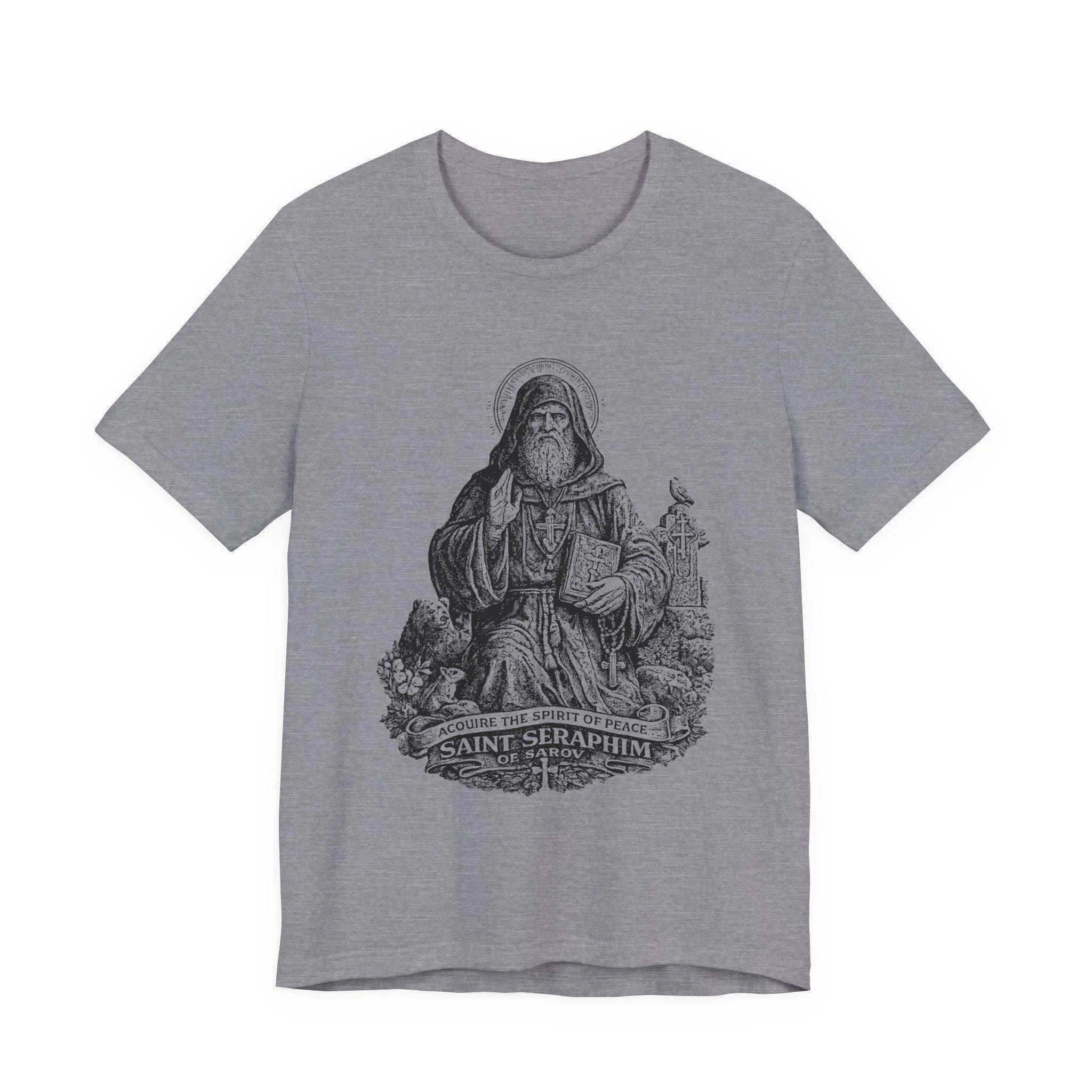
Saint John Chrysostom, whose Divine Liturgy remains the standard Sunday liturgy of the entire Byzantine world, Saint Gregory Palamas, the great fourteenth-century defender of hesychasm, Saint Sergius of Radonezh, the father of Russian monasticism, Saint Seraphim of Sarov, the beloved nineteenth-century Russian wonderworker known for his teaching that "the true goal of the Christian life is the acquisition of the Holy Spirit," and, in the modern era, Saint Paisios the Athonite, canonized in 2015 and currently experiencing a significant surge in public interest and searches, all belong distinctly to the Eastern Orthodox calendar and spiritual imagination.
A Publishing Gap, Not a Holiness Gap
It is worth stating plainly, because it is often misunderstood: Oriental Orthodox saints are not less numerous, less impressive, or less spiritually significant than their Eastern Orthodox counterparts. They are simply far less represented in English-language Christian publishing, a straightforward consequence of the smaller size, more limited resources, and more geographically concentrated, less English-speaking demographic base of most Oriental Orthodox communities relative to the much larger, more globally dispersed, and more heavily English-language-invested Eastern Orthodox publishing world (particularly through Greek-American, Russian-American, and Antiochian convert-heavy institutions). Anyone exploring Oriental Orthodoxy seriously should actively seek out dedicated Coptic, Armenian, Syriac, and Ethiopian sources, since the general English-language "Orthodox books" market skews heavily, almost by default, toward the Eastern Orthodox tradition.
Part XVII
Modern Demographics and Global Distribution
Global Oriental Orthodox membership is generally estimated at somewhere around 60 million adherents, with the Ethiopian Orthodox Tewahedo Church alone accounting for roughly 38 to 51 million of that total within Ethiopia and up to 60 million counting its worldwide diaspora, making it comfortably the largest single Oriental Orthodox church. The Coptic Orthodox Church numbers somewhere between 10 and 18 million adherents, overwhelmingly concentrated in Egypt with significant diaspora communities in the United States, Canada, Australia, and Europe. The Armenian Apostolic Church numbers roughly 9 million worldwide, a population profoundly shaped by the 1915 Genocide's demographic scattering. The Syriac and Malankara Orthodox communities are considerably smaller in absolute numbers but historically and theologically significant well beyond their size.
Global Eastern Orthodox membership is generally estimated between 220 and 300 million adherents, making it, by most counts, the second-largest single body of Christians in the world after the Roman Catholic Church. Orthodox Christianity, taken as a whole, comprised roughly 20 percent of all Christians and 7 percent of the world's population in 1910, a share that has fallen to roughly 12 percent of Christians and 4 percent of the world's population today, a demographic story driven overwhelmingly by aging populations and low fertility rates in the traditional Orthodox heartland of Eastern Europe, where 77 percent of the world's Eastern Orthodox Christians still live.
In the United States specifically, a 2020 National Census of American Orthodox Christian Churches found a striking demographic divergence between the two families: the Eastern Orthodox community in America experienced a 17 percent decline in total adherents and a 14 percent decline in regular attendees between 2010 and 2020, even as the Oriental Orthodox community in America grew by 67 percent in total adherents and 54 percent in regular attendees over that same decade, a trend driven substantially by continued immigration from Ethiopia, Eritrea, Egypt, and Armenia, and one that runs directly counter to the simultaneous, well-documented rise of English-speaking convert interest specifically within Eastern Orthodox parishes over the same period.
Part XVIII
Which Is Right for You? A Practical Decision Guide
Both traditions represent full, authentic, sacramental, apostolic Christianity in unbroken historical continuity with the ancient Church. Neither considers the other heretical in the way either would regard, for example, Arianism or Gnosticism; the modern joint theological dialogues discussed throughout this article make clear that the actual gap in belief, once the polemical mislabeling is stripped away, is far narrower than centuries of separation might suggest. This is not, in other words, a decision about which one is "more Christian" or "more true." It is a decision about fit.
You are drawn to worship conducted in the ancient sacred languages (Coptic, Ge'ez, Classical Armenian, Syriac); you have an existing ethnic, family, or cultural connection to Egypt, Armenia, Ethiopia, Eritrea, Syria, or the Malankara Syrian Christian community of India; you are drawn to the specific ascetic rigor of the Coptic and Ethiopian fasting traditions; you want to belong to a smaller, tightly bound, often family-and-community-centered parish culture; and you are prepared to seek out a parish that may be less numerous and geographically convenient than an Eastern Orthodox alternative in your area, and to actively seek out the smaller body of English-language teaching material available on these traditions.
You want the widest possible availability of English-language liturgy, catechesis, and parish life in North America and Western Europe; you want more jurisdictional variety to choose from (Greek, Russian, Antiochian, Serbian, Romanian, OCA, and others), allowing you to find a specific liturgical and cultural style that fits you; you are drawn to the Byzantine liturgical and iconographic tradition specifically, including its hesychast and Athonite monastic culture; you have no strong pre-existing ethnic tie to any single Oriental Orthodox nation; or you simply live in an area, which describes most of North America, where an Eastern Orthodox parish is considerably easier to find than an Oriental Orthodox one.
The single most useful piece of practical advice for anyone seriously discerning between the two, or considering conversion from another tradition altogether, is this: visit parishes of both families in person if you possibly can, attend the full Divine Liturgy more than once, stay for coffee hour and talk to actual parishioners, and speak directly and honestly with a priest of each tradition about your questions. No article, however thorough, substitutes for that lived encounter, because the difference that will ultimately matter most to you day to day is not a fifth-century Greek theological formula, but whether you find, in a specific parish, a community and a rhythm of worship that draws you closer to Christ.
Part XIX
Where Eastern Catholics Fit Into This Picture
Readers familiar with this site's broader coverage will rightly ask where Eastern Catholics fit into a discussion of Oriental versus Eastern Orthodox. The honest answer is that Eastern Catholics are neither. They are a third category: Christian communities that worship according to an Eastern liturgical tradition, Byzantine, Coptic, Syriac, Armenian, Ethiopian, or others, while remaining in full communion with the Bishop of Rome and accepting the doctrinal authority of the Pope, including the later councils Rome accepted that neither Oriental nor Eastern Orthodox churches recognize as ecumenical, such as the medieval and modern Roman councils.
In practice, most Eastern Catholic churches historically emerged from the Eastern Orthodox or Oriental Orthodox world through specific historical unions with Rome. The Coptic Catholic Church, the Armenian Catholic Church, the Syriac Catholic Church, and the Ethiopian Catholic Church are the Eastern Catholic counterparts to the Oriental Orthodox churches this article covers, worshipping in largely the same liturgical rites, Coptic, Armenian, Syriac, Ge'ez, while accepting the Pope's authority. The much larger body of Byzantine Catholic churches (Ukrainian Greek Catholic, Melkite, Ruthenian, and others) serves the same bridging function relative to Eastern Orthodoxy. Eastern Catholics sit, in a real and often personally lived way, in the middle of Rome and Orthodoxy, worshipping with an Eastern soul while holding a Western ecclesiastical allegiance, and readers exploring this topic further will find dedicated coverage of each of these Eastern Catholic churches elsewhere on this site.
Part XX
The Path Toward Reunion: Modern Ecumenical Dialogue
Serious, official theological dialogue between Eastern Orthodox and Oriental Orthodox theologians began in earnest in the mid-twentieth century and produced a series of significant joint statements, most notably from unofficial consultations at Aarhus (1964) and Bristol (1967), and then official joint commission agreements at Chambesy, Switzerland, across 1985, 1989, and 1990. These joint statements, as already discussed, formally recognized a common Christological faith between the two families expressed in different historical vocabulary, and formally recognized common ground on the theology of icon veneration. Some individual church-to-church agreements have gone further still: certain Eastern Orthodox and Oriental Orthodox jurisdictions maintain limited pastoral arrangements permitting intercommunion in specific circumstances, such as mixed marriages between members of each tradition, though this varies significantly by jurisdiction and is far from universal.
Full, complete sacramental and administrative reunion of the entire two communions, however, remains unrealized, and no fixed timeline or firm expectation exists for if or when it might happen. The obstacles are not chiefly theological anymore, most serious theologians on both sides now agree the Christological gap has narrowed enormously, but institutional, historical, and practical: sixteen centuries of separate development, separate saints, separate liturgical traditions, and separate ecclesiastical structures do not dissolve simply because theologians agree the original fifth-century dispute was substantially a matter of vocabulary. What can honestly be said is that the relationship between the two families today is warm, respectful, and engaged in serious ongoing theological conversation, a sharp contrast to the centuries of mutual suspicion, and occasional outright hostility, that characterized their history for most of the period between 451 and the twentieth century.
Part XXI
Complete Reference Comparison Table
| Category | Oriental Orthodox | Eastern Orthodox |
|---|---|---|
| Founded / Split | Rejected Council of Chalcedon, 451 AD | Accepted Council of Chalcedon, 451 AD |
| Member Churches | 6 autocephalous churches (Coptic, Syriac, Armenian, Ethiopian, Eritrean, Malankara) | Constantinople, Alexandria, Antioch, Jerusalem, Russia, Greece, Serbia, Romania, and more |
| Councils Accepted | First 3 Ecumenical Councils | First 7 Ecumenical Councils |
| Christology | Miaphysite — one united nature | Dyophysite — two natures, one Person |
| Sometimes Mislabeled | "Monophysite" (incorrect and rejected) | — |
| Global Population | ~60 million | ~220–300 million |
| Liturgical Rites | Alexandrian, West Syriac, Armenian, Ge'ez (multiple distinct rites) | Byzantine Rite (Chrysostom & Basil liturgies) |
| Liturgical Languages | Coptic, Ge'ez, Classical Armenian, Syriac | Greek, Church Slavonic, Arabic, English |
| Biblical Canon | Wider, especially Ethiopian (81 books) | Standard Orthodox Septuagint canon |
| Fasting Days/Year | Often 200+ (Ethiopian/Coptic) | ~180–200 |
| Governance | Patriarchs/Catholicoi, no central primate | Ecumenical Patriarch as "first among equals" |
| Icons & Saints | Venerated; shared pre-451 saints | Venerated; shared pre-451 saints |
| Easter Date | Julian calendar calculation | Julian calendar calculation (mostly) |
| US Growth 2010–2020 | +67% adherents | −17% adherents |
| Reunion Status | Not achieved; warm ongoing dialogue since 1964 | Not achieved; warm ongoing dialogue since 1964 |
Part XXII
Building a Library: Essential Books on Both Traditions
Understanding this subject in real depth requires reading beyond any single article, including this one. The following resources cover both families fairly and in genuine scholarly depth.


FAQ
Frequently Asked Questions
One Christ, Confessed in Two Vocabularies, for Sixteen Centuries
The Council of Chalcedon did not create two different Christs. It created two different, historically hardened ways of speaking about the same Christ, fully God and fully man, whom both the Coptic monk praying in the Egyptian desert and the Athonite monk praying on the Holy Mountain confess with the very same Jesus Prayer, the same fasting discipline, the same veneration of the Theotokos, and the same conviction that the bread and wine on the altar have truly become his Body and Blood.
Whichever tradition you find yourself drawn to, Coptic, Armenian, Ethiopian, Syriac, Malankara, or the Byzantine world of Greek and Russian Orthodoxy, you are stepping into a current of unbroken apostolic worship that has survived empires, conquests, genocide, and centuries of division without ever losing the confession at its center: Jesus Christ, Son of God, have mercy on us.
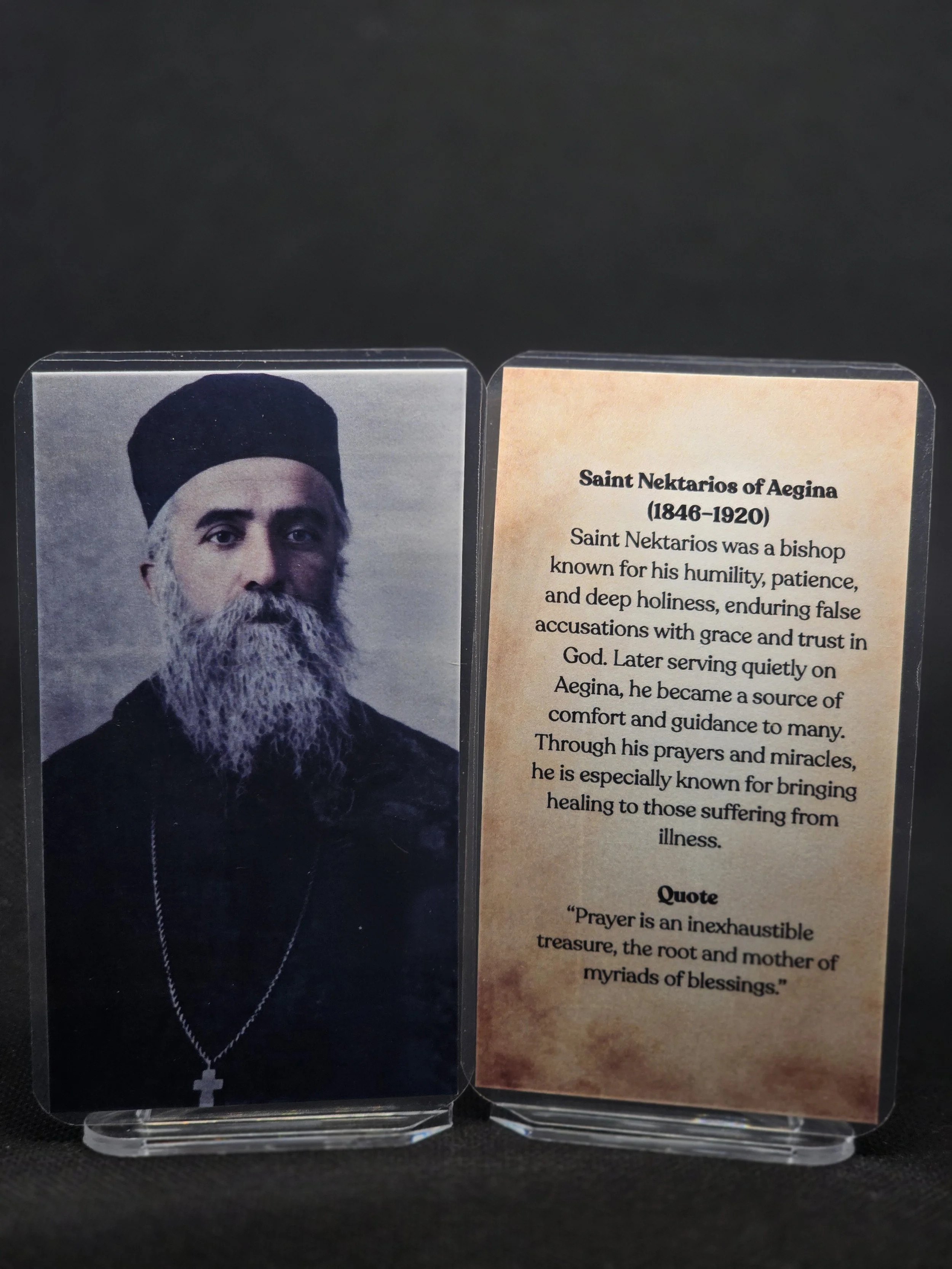
Explore All Prayer Cards →