The Syriac Catholic Church: History, Theology, Saints, and Modern Practice
Eastern Catholic Churches • West Syriac Rite • Antioch • In Communion with Rome
The Syriac Catholic Church: The Complete History, Theology, Saints, and Modern Story
Two failed unions, an eighty-year underground church, a genocide, a beheaded bishop beatified a century later, and a community that still gathers today from Mosul to Detroit. This is the full history of the Syriac Catholic Church, not the surface-level summary.
The Syriac Catholic Church — At a Glance
- Type
- Eastern Catholic Church • sui iuris, in full communion with Rome
- Liturgical Rite
- West Syriac Rite (Antiochene liturgical family)
- Liturgical Language
- Syriac, a dialect of Aramaic, alongside Arabic and vernacular languages
- Mother Church
- Syriac Orthodox Church of Antioch
- First Catholic Hierarchy
- 1662, under Patriarch Ignatius Andrew Akijan (collapsed by 1702)
- Permanent Union with Rome
- 1781–1783, under Patriarch Ignatius Michael III Jarweh
- Current Patriarch
- Ignatius Joseph III Yonan, since 2009
- Patriarchal See
- Beirut, Lebanon (previously Aleppo, then Mardin)
- Seminary & Archive
- Sharfeh Monastery, Lebanon
- Estimated Members
- 160,000–200,000+ worldwide (estimates vary by source)
- Modern Martyr
- Blessed Flavien-Michel Malke, beheaded 1915, beatified 2015
- Major Ancient Saints
- Ephrem the Syrian, Isaac the Syrian, Jacob of Serugh, Aphrahat, Simeon the Stylite
What Is the Syriac Catholic Church?
Eastern Catholic Churches • West Syriac Rite
The Syriac Catholic Church is one of the twenty-three Eastern Catholic Churches: communities that are fully Catholic and fully in communion with the Pope in Rome, while preserving their own distinct liturgy, spirituality, canon law, and hierarchy rather than using the Roman Rite most Western Catholics know. Its liturgy is the West Syriac Rite, also called the Antiochene Rite, celebrated historically in Syriac, a dialect of Aramaic that was the everyday spoken language of much of the ancient Near East and remains this church's liturgical language today.
That single fact answers the most basic version of the question: the Syriac Catholic Church is Catholic, not Orthodox, not Protestant, fully in union with Rome. But that one-line answer is also exactly why most articles on this topic fail to satisfy anyone searching for it. The real story isn't a clean fact. It's a two-hundred-year process that failed once, took eighty years to try again, and was then nearly destroyed by genocide before rebuilding itself in exile. That is the story this article actually tells, starting from the ancient Antiochian church both the Catholic and Orthodox Syriac traditions still claim as their common root.
The Church of Antioch and the Council of Chalcedon
1st Century • Acts 11:26 • The Council of Chalcedon, 451
Every church discussed in this article, Catholic and Orthodox alike, traces itself back to the same starting point: the ancient city of Antioch, where, according to the Acts of the Apostles, the followers of Jesus were first called Christians (Acts 11:26). Antioch became one of Christianity's most important early centers, with a Patriarch ranking alongside Rome, Alexandria, and later Constantinople and Jerusalem among the great sees of the early Church.
The fracture that eventually produced both the Syriac Orthodox and, centuries later, the Syriac Catholic Church came at the Council of Chalcedon in 451, which issued a precise definition of how Christ's divine and human natures relate. Most of the church in Antioch's broader sphere, particularly its Syriac-speaking population, rejected the Chalcedonian formula, while the Greek-speaking hierarchy in the city itself generally accepted it. The non-Chalcedonian Syriac church survived a period of severe persecution and near-collapse in the sixth century, reorganized under the missionary bishop Jacob Baradaeus, and developed into what is known today as the Syriac Orthodox Church, sometimes called Jacobite in his honor. For roughly the next thousand years, this Syriac Orthodox Church was the only major institutional expression of West Syriac Christianity. The idea of a separate Syriac Catholic Church did not yet exist.
The first serious attempt to reverse that separation came at the Council of Florence in 1444, where a decree of union between the Syriac Orthodox Church and Rome was actually signed. It did not last. Opponents within the Syriac hierarchy moved quickly to annul its effects, and Syriac Christianity continued for another two centuries without a Catholic branch.
The First Union — Andrew Akijan, 1662–1702
Aleppo • Jesuit and Capuchin Missions • Patriarch Ignatius Andrew Akijan
The story that actually produces the Syriac Catholic Church as a real institution begins in Aleppo in the 1620s, when Jesuit and Capuchin missionaries began working among the city's Syriac Orthodox community. Over the following decades, a genuine pro-Catholic faction formed within the local church, strong enough that when Aleppo needed a bishop, the community consecrated a man named Andrew Akijan, who had been ordained by the Maronite Patriarch and held clear Catholic sympathies, as bishop of Aleppo in 1656. Pope Alexander VII recognized him in 1659.
The decisive moment came in 1662. When the Syriac Patriarch of Antioch died that year, the pro-Catholic party in Aleppo was strong enough to get its own candidate elected to succeed him. Akijan was elected Patriarch on 19 April 1662, confirmed by the Ottoman Sultan Mehmed IV that August, and enthroned soon after, taking the traditional patriarchal name Ignatius. A rival Orthodox faction immediately elected its own claimant, Abdul Masih, and for a period Akijan even had to fight to physically hold the cathedral in Aleppo, which he regained control of in 1664. Rome formally confirmed him in 1663. This was the first real split in the hierarchy between what would become the Syriac Catholic Church and the Syriac Orthodox Church.
It did not last. Akijan died in 1677, and the Catholic line continued for a short time under his successor, Gregory Peter VI Shahbaddin, while a rival Orthodox patriarch, Abdulmasih I, held the competing claim. When Shahbaddin died in 1702, the Catholic patriarchal line died with him. The Ottoman government, which had largely backed the Syriac Orthodox party throughout this period, used the vacancy to crack down hard. The first Syriac Catholic hierarchy had lasted forty years, and it was over.
Eighty Years Underground, 1702–1781
Ottoman Persecution • A Church Without Bishops
This is the part of the story almost no surface-level article mentions, and it is arguably the most important eighty years in the entire history of the Syriac Catholic Church. After 1702, there was no Catholic Patriarch of Antioch for the Syriac community, and for long stretches of the eighteenth century, there were no functioning Syriac Catholic bishops at all. With the Ottoman government actively supporting Syriac Orthodox pressure against the Catholic faction, the community was effectively forced underground, sustained by individual priests, lay communities, and Western missionary contact rather than any visible institutional hierarchy. An entire generation of Syriac Catholics lived and died without ever seeing their own bishop.
What this period demonstrates, more than any single date or treaty, is that the Syriac Catholic Church's survival was never institutionally guaranteed. It persisted as a real, identifiable community of belief and practice for eight decades with no patriarch, no formal recognition, and active persecution from both Ottoman authorities and the rival Orthodox hierarchy. When the opportunity for a durable union finally arrived again in the 1780s, it succeeded precisely because this underground community had never actually disappeared.
Michael Jarweh and the Permanent Union, 1781–1783
Patriarch Ignatius Michael III Jarweh • Sharfeh Monastery
The man who finally made the union permanent was Michael Jarweh, the Syriac Orthodox Metropolitan of Aleppo, who personally embraced the Catholic faith in 1774, years before he held any Catholic office. When the sitting Syriac Orthodox Patriarch, Ignatius George IV, died in 1781, a Holy Synod of bishops, several of whom shared Jarweh's Catholic sympathies, elected him to the patriarchal throne on the condition that those bishops themselves would also become Catholic. Jarweh and several fellow bishops formally professed the Catholic faith in 1782, and Rome confirmed his enthronement the following year, 1783, as Patriarch Ignatius Michael III.
The early years were not easy. Securing Ottoman civil recognition for a Catholic Patriarch proved difficult, and Jarweh was forced to take refuge in Lebanon to continue leading his community safely. There, in 1786, he purchased land at a place called Sharfeh and founded a monastery dedicated to Our Lady of Deliverance, which became the new church's patriarchal seat and, soon after, home to a seminary that trained generations of Syriac Catholic clergy. Unlike the 1662 union, this one held. Every Syriac Catholic Patriarch since Jarweh, including the current one, stands in an unbroken line running back to 1783, a continuity of more than two centuries that the first, failed union under Akijan never achieved.
Aleppo, Mardin, and the Nineteenth Century
Ottoman Recognition • The Synod of Sharfeh, 1888
The nineteenth century brought slow, hard-won legal stability. In 1829, the Ottoman government formally recognized the Syriac Catholic Church, and in 1831 the Patriarch's residence was established in Aleppo. That arrangement did not last either: persecution and rioting in Aleppo around 1850 forced the Patriarchate to relocate again, this time to Mardin, in what is now southeastern Turkey, where it remained for the rest of the century. In 1888, a local synod held at Sharfeh formally bound Syriac Catholic priests to clerical celibacy, a discipline that has since been relaxed in some places, with a number of married priests serving today.
Through this period, the church also produced serious scholarship. Among the figures whose names recur in any history of this era are the liturgist Jirjis V Shalhat, and, most significantly, Ignatius Ephrem Rahmani, whose patriarchate would carry the church directly into the catastrophe of the First World War.
The Sayfo — Genocide and Bishop Malke's Martyrdom
1915 • The Assyrian Genocide • Blessed Flavien-Michel Malke
The Sayfo, the Syriac word for “sword,” is the name given by Syriac Christians to the genocide carried out against Syriac, Assyrian, and Armenian Christian communities across the Ottoman Empire during the First World War. The wider genocide killed an estimated 1.5 million Christians across these communities. For the Syriac Catholic Church specifically, the toll was devastating: an estimated half of the church's roughly 75,000 members at the time were killed.
One story from this period has since been formally recognized by the Catholic Church itself. Bishop Flavien-Michel Malke, born in 1858 and raised in the Syriac Orthodox Church before converting to Catholicism and being ordained a priest at Aleppo in 1883, became bishop of the Syriac Catholic Diocese of Gazireh (the modern city of Cizre, Turkey) in 1913. When the genocide reached his region in the summer of 1915, friends and Muslim and Kurdish leaders alike urged him to flee. According to the Syriac Patriarchate's own account, he refused, saying, “Even my blood I will shed for my sheep.” He was arrested on 28 August 1915 alongside the Chaldean bishop of the same city, Philippe-Jacques Abraham. The following day, given a final choice between renouncing Christianity for Islam or death, both bishops refused. Bishop Abraham was shot immediately; Bishop Malke was beaten unconscious and then beheaded. He was the last Syriac bishop ever to hold the Diocese of Gazireh, which was suppressed after his death; the Syriac Catholic Church has had no presence in that part of Turkey since.
A century later, on 8 August 2015, Pope Francis formally recognized Malke's death as martyrdom suffered in hatred of the Catholic faith. He was beatified on 29 August 2015, the exact hundredth anniversary of his death, in a liturgy at the Convent of Our Lady of Deliverance in Lebanon, celebrated by the current Patriarch, Ignatius Joseph III Yonan. The timing was not symbolic alone: Iraqi and Syrian Christians freshly displaced by ISIS attended the beatification, a deliberate act of solidarity across exactly one hundred years of recurring persecution.
The Move to Beirut and the Twentieth Century
Patriarch Ephrem Rahmani • Cardinal Gabriel Tappuni • Vatican II
In the aftermath of the Sayfo, with the community in Mardin shattered and many survivors fleeing south, Patriarch Ignatius Ephrem Rahmani made the decision to relocate the Patriarchate permanently to Beirut in the early 1920s. Rahmani himself was one of the great Syriac scholars of his era; it was his scholarly advocacy that led Pope Benedict XV to formally declare Saint Ephrem the Syrian a Doctor of the Catholic Church, an honor that connects the saint discussed in Part XI of this article directly to this twentieth-century patriarch's own legacy.
Rahmani's successor, Cardinal Gabriel Tappuni, built an imposing new patriarchal residence in Beirut's Ashrafieh district in 1930, cementing the city as the church's permanent home. Later in the century, Patriarch Ignatius Antony II Hayek led the church through the Second Vatican Council in the 1960s, while Patriarch Ignatius Moses I Daoud went on to serve Rome directly as Prefect of the Congregation for Eastern Churches. The current Patriarch, Ignatius Joseph III Yonan, elected in 2009, was himself formed at the seminary Jarweh founded at Sharfeh before continuing his theological studies in Rome, a personal link spanning the entire history this article has traced from 1786 to the present.
An Unexpected Legacy — the Reunion in India
Mar Ivanios • 1930 • The Syro-Malankara Catholic Church
One of the more surprising threads in this history runs all the way to South India. In 1930, a movement led by Mar Ivanios, a bishop of the Malankara Syrian Orthodox Church in Kerala, brought a portion of that Indian church into communion with Rome. The Syriac Catholic Patriarchs of the time, particularly Rahmani and his successor Tappuni, provided theological and pastoral support to this reunion movement, lending the institutional weight of an already-established Eastern Catholic patriarchate to a brand-new one half a world away. The result was the Syro-Malankara Catholic Church, which shares the same broad liturgical family as the Syriac Catholic Church but governs itself differently, as an archiepiscopal major church rather than a patriarchate. It stands today as a direct, if indirect, fruit of the same nineteenth and twentieth-century Syriac Catholic leadership discussed throughout this article.
Qaraqosh and Mar Behnam Monastery
The Nineveh Plain • ISIS Occupation, 2014–2016 • Restoration
If Bishop Malke's story in Part VI represents the Syriac Catholic Church's defining twentieth-century martyrdom, the town of Baghdede, more commonly known by its Arabic name Qaraqosh, and the nearby Mar Behnam Monastery represent its defining twenty-first-century trial. Qaraqosh, on the Nineveh Plain southeast of Mosul, became Catholic in the late eighteenth century and grew into what local Christians have called the world's capital for Syriac Catholics, a single town whose Syriac Catholic population outnumbered that of almost anywhere else on earth.
A few miles away stood Mar Behnam Monastery, traditionally said to have been founded in the fourth century on the tomb of two young royal converts to Christianity, the siblings Behnam and Sarah, martyred by their own father before he himself converted following their deaths. Whatever the precise historical layers beneath that legend, the site had been a place of Christian and even shared Christian-Muslim pilgrimage for many centuries, with the present church structure dating largely to the twelfth and thirteenth centuries and containing rare inscriptions in Syriac, Armenian, and even Uyghur, left by Mongol-era Christian pilgrims.
In August 2014, ISIS militants overran the entire Qaraqosh area in a single night, forcing virtually the whole town to flee. At Mar Behnam, the monks were expelled with nothing but the clothes they were wearing. On 19 March 2015, ISIS fighters detonated explosives inside the monastery, completely leveling the historic tomb of Mar Behnam and Mart Sarah and destroying centuries-old relief carvings and one of the few Uyghur-language inscriptions known anywhere in the Middle East. Iraqi forces and allied Christian militia units liberated the monastery in November 2016; reconstruction of the tomb and monastery buildings was completed by 2018, and Qaraqosh itself has seen a significant return of Syriac Catholic families in the years since, even as the broader Christian population of the Nineveh Plain remains far smaller than it was before 2014.
Syriac Catholic vs. Every Other Church Called “Syriac”
The Comparison Most Search Results Never Give You
With the history in place, this is the practical section most readers actually need. The word “Syriac,” and the related word “Syrian,” get attached to several genuinely different churches, and most explanations online assume you already know which one you mean.
| Church | Rite | Roots | In Communion with Rome? |
|---|---|---|---|
| Syriac Catholic Church | West Syriac | Syriac Orthodox Church of Antioch | Yes, permanently since 1781–1783 |
| Syriac Orthodox Church | West Syriac | Post-Chalcedon Antioch (451) | No |
| Maronite Catholic Church | West Syriac | Antioch, never separated from Rome | Yes, continuously |
| Chaldean Catholic Church | East Syriac | Church of the East (Persia/Mesopotamia) | Yes, since the 16th–19th centuries |
| Assyrian Church of the East | East Syriac | Church of the East (Persia/Mesopotamia) | No |
| Syro-Malankara Catholic Church | West Syriac (Malankara recension) | Malankara Syrian Orthodox Church, India | Yes, since 1930 |
Syriac Catholic vs. Syriac Orthodox. These two share the same liturgical family and the same Antiochian roots, which is exactly why they get confused, and as Parts II through VII showed, their relationship is actually a story of two failed splits followed by one that finally held. They are sister churches with shared saints and shared heritage, not the same institution, and each maintains its own Patriarch of Antioch to this day.
Syriac Catholic vs. Chaldean Catholic. This is the comparison people most often get wrong, because both churches are Eastern Catholic, both use a form of Syriac liturgically, and both have communities in Iraq. But they come from entirely different liturgical families. The Syriac Catholic Church uses the West Syriac Rite and descends from Antioch. The Chaldean Catholic Church uses the East Syriac Rite and descends from the historic Church of the East, centered further east in Persia and Mesopotamia, with a completely separate liturgical and theological history. If you want the full picture of that side of the family, see Who Are the Chaldean Catholic Saints?
Syriac Catholic vs. Maronite Catholic. The Maronite Catholic Church also descends from the broader West Syriac, Antiochian Christian world, and to an untrained eye its liturgy can look and sound similar. But the Maronite Church has its own separate Patriarchate, its own distinct historical identity centered on Mount Lebanon, and, importantly, no equivalent of the long, broken history traced above: Maronite tradition holds that the church maintained continuous communion with Rome for far longer, without the 1662 collapse or the eighty underground years described in Part III.
Syriac Catholic vs. Assyrian Church of the East. The Assyrian Church of the East is the East Syriac counterpart to the Syriac Orthodox Church: an ancient, independent church not in communion with Rome, historically centered in Persia and Mesopotamia, and the direct ancestor of the Chaldean Catholic Church in the same way the Syriac Orthodox Church is the direct ancestor of the Syriac Catholic Church.
Syriac Catholic vs. Syro-Malankara Catholic. As Part VIII explained, this Indian church is a genuine, if later and geographically distant, fruit of the same reunion impulse, supported directly by Syriac Catholic Patriarchs in the 1930s, though it governs itself separately as an archiepiscopal major church rather than under a Patriarch.
The Saints of the Syriac Catholic Tradition
Shared Ancient Heritage, Plus a Modern Martyr
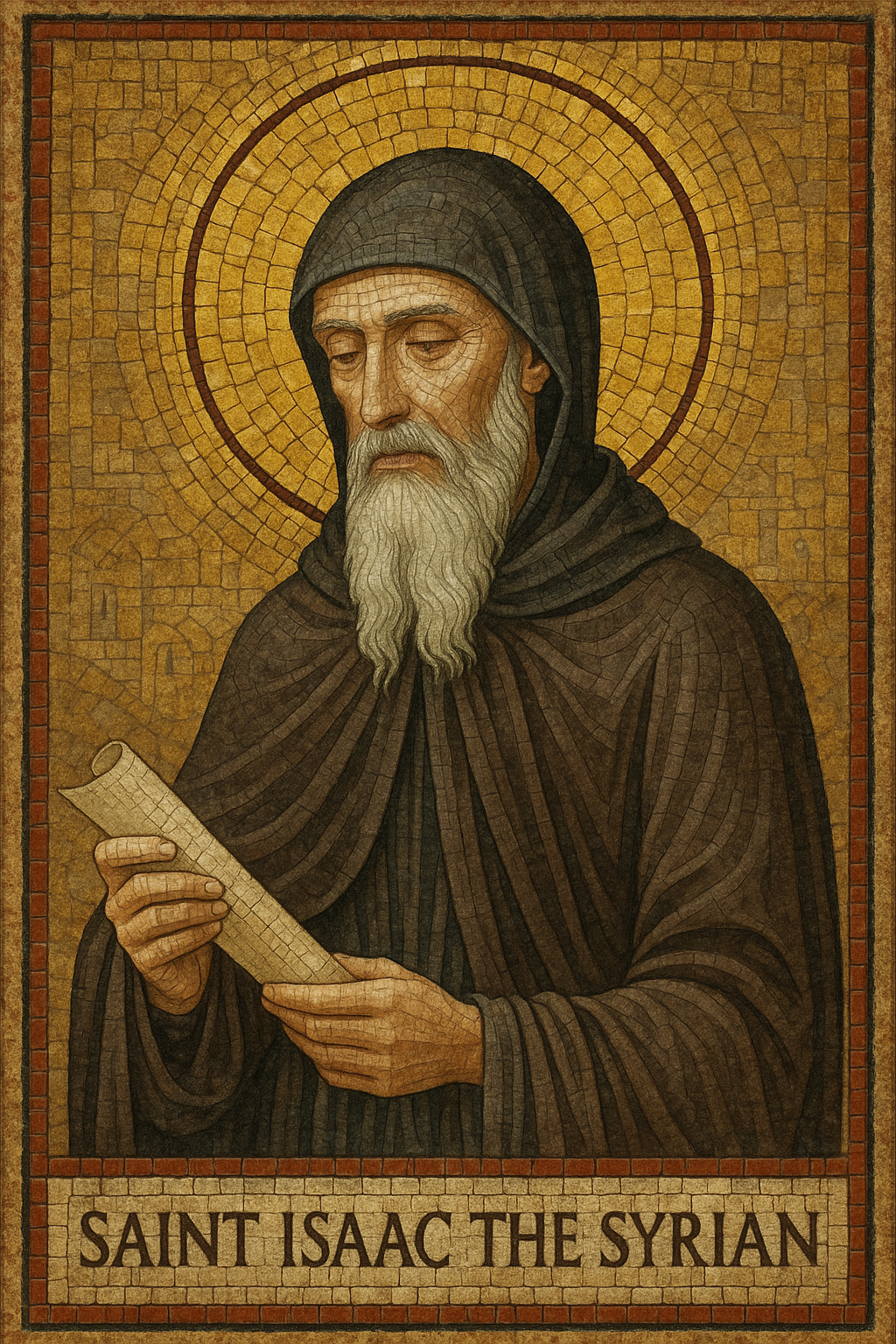
Because the permanent Syriac Catholic hierarchy only dates to 1783, nearly every major ancient saint of the Syriac tradition lived centuries before that union and belongs, in a real sense, to both the Catholic and Orthodox Syriac churches alike. Saint Ephrem, featured above in Part IV's connection to Patriarch Rahmani, anchors that ancient company. These are the other central figures.
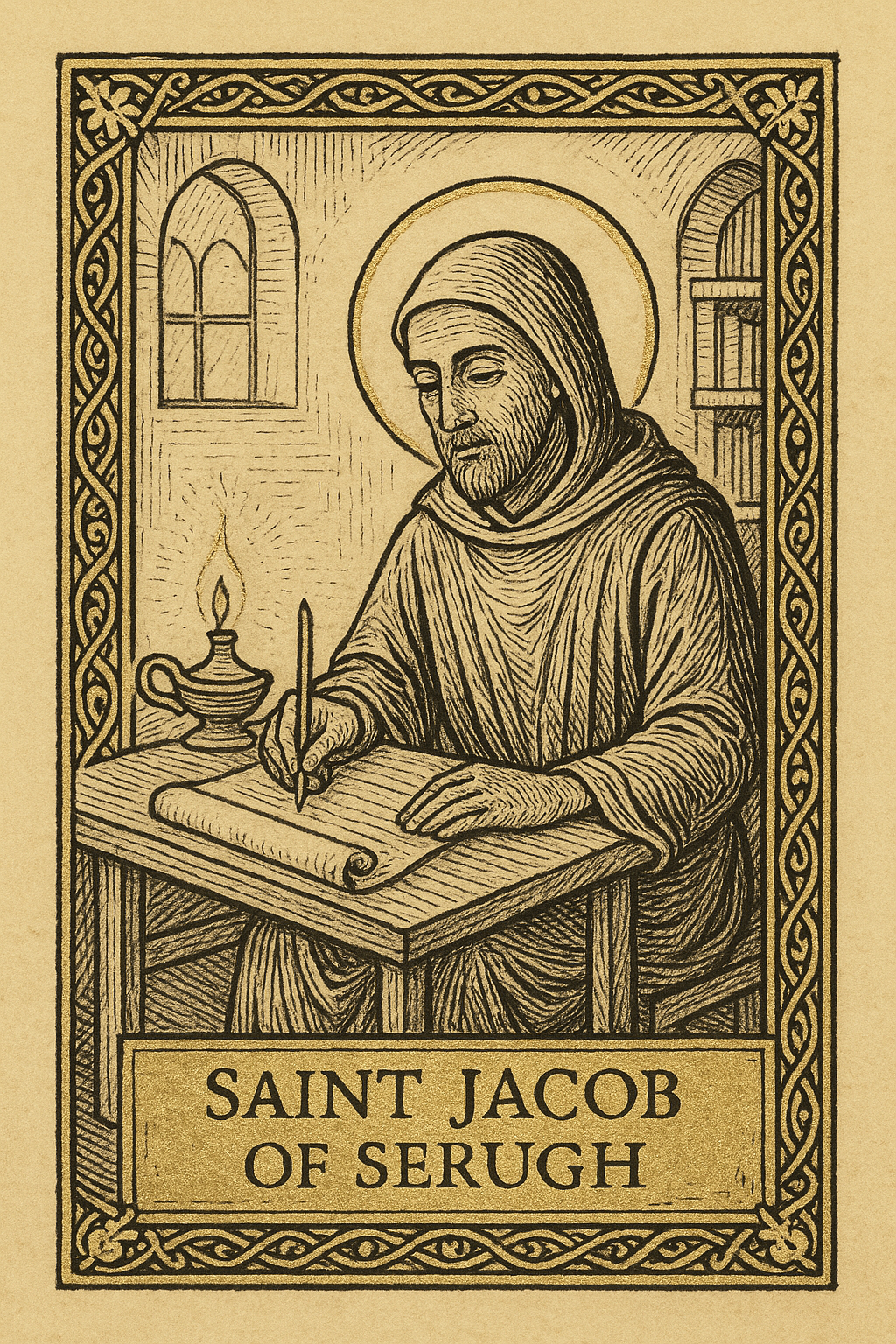

Alongside these ancient figures stands one the church produced itself: Blessed Flavien-Michel Malke, the bishop of Gazireh beheaded in 1915 and beatified in 2015, whose full story is told in Part VI above. He is the clearest answer to anyone wondering whether the Syriac Catholic Church has saints of its own, distinct from the shared ancient heritage: it does, and his is a martyrdom recognized by Rome itself within living memory.
For the full directory of Syriac Catholic saints beyond these central figures, see Who Are the Syriac Catholic Saints? For Ephrem's own writing in English translation, see Ephrem the Syrian: Hymns on Paradise; for Isaac's complete ascetical writings, see The Ascetical Homilies of Saint Isaac the Syrian.
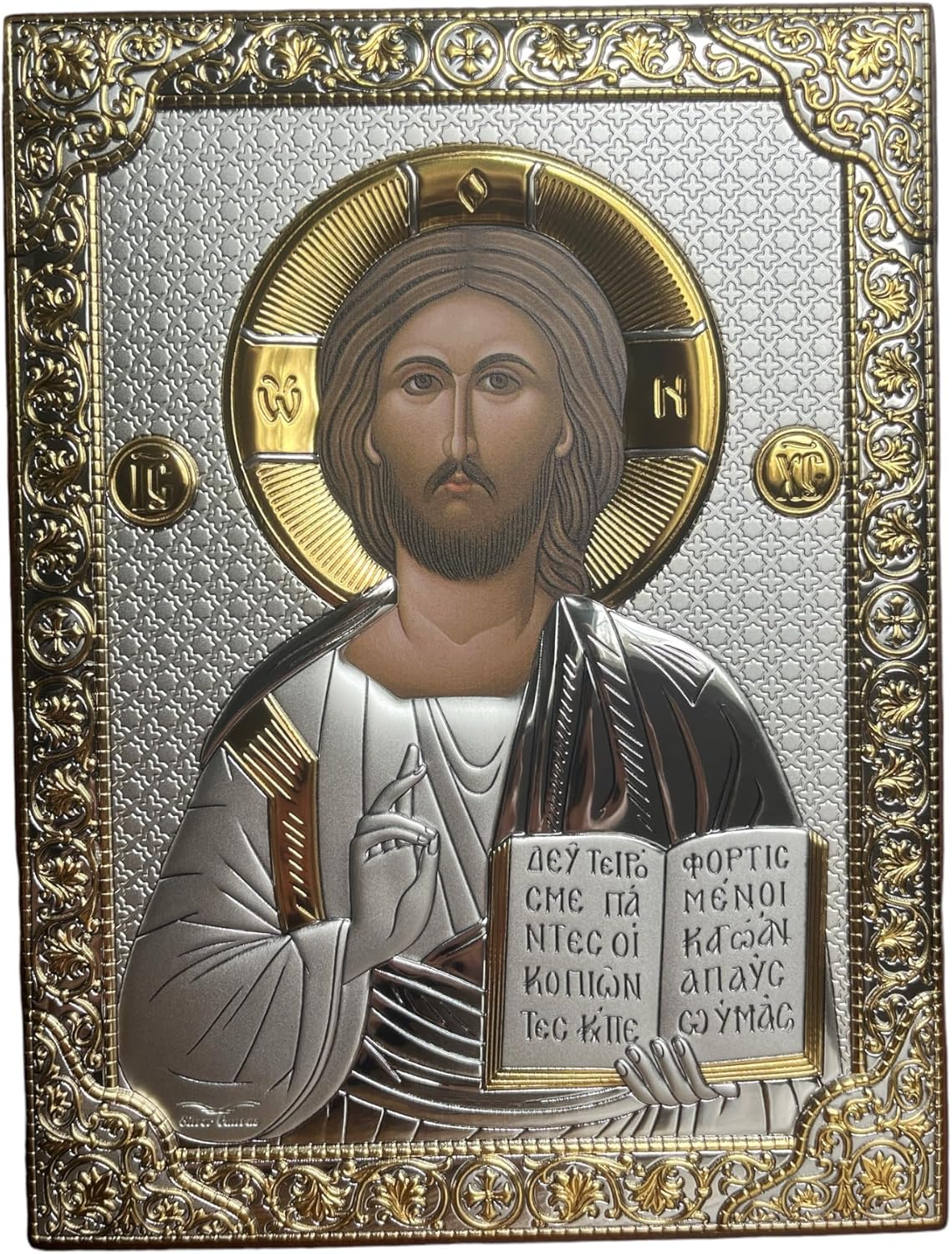
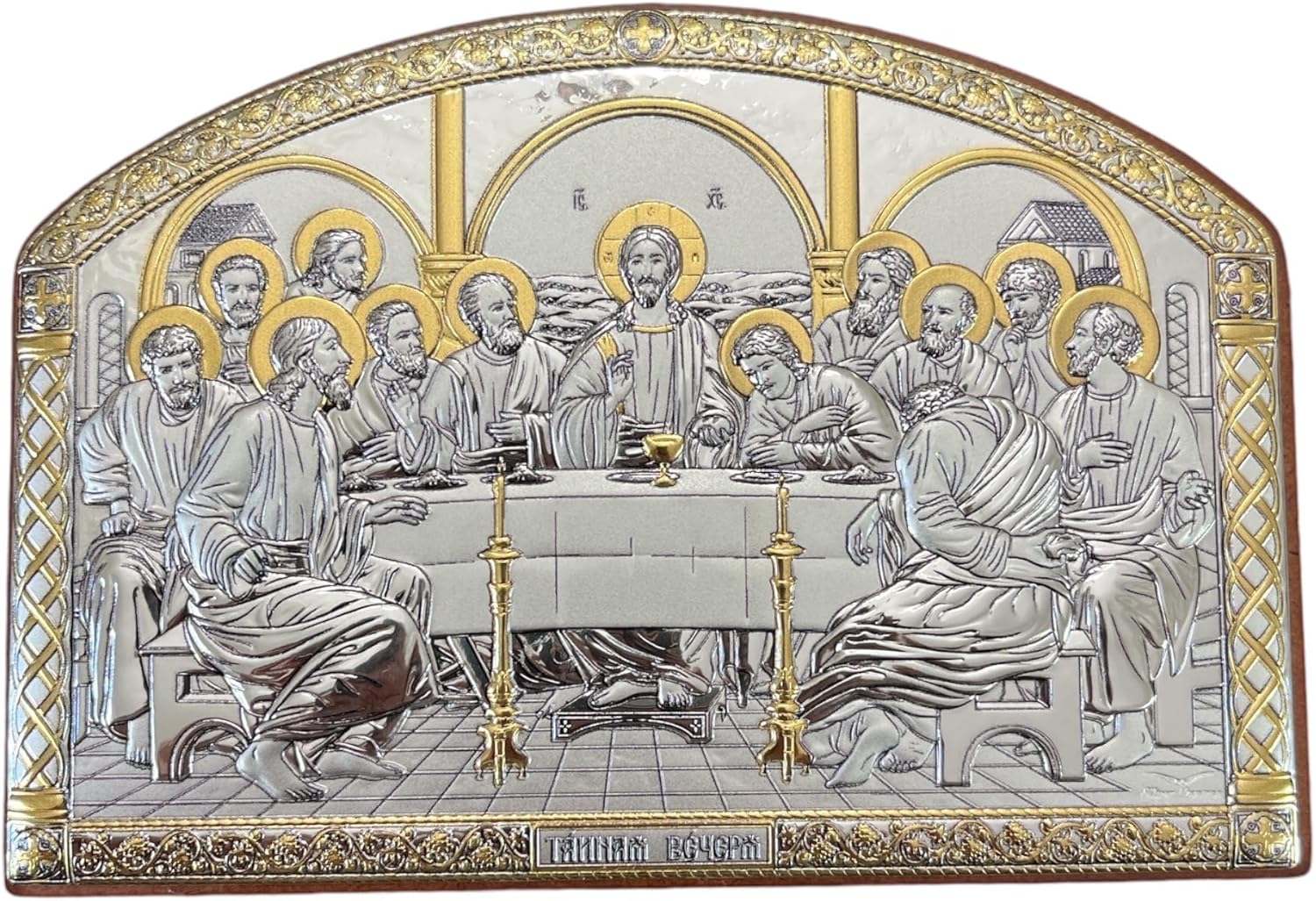
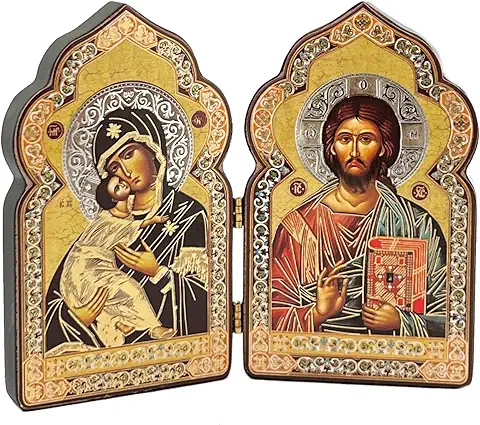
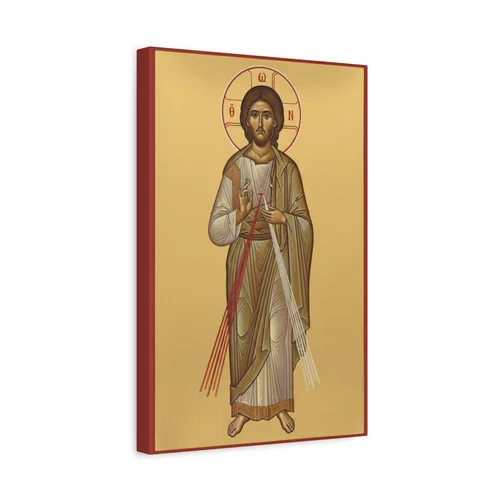
Eastern Christian Icons & Devotional Art for Your Prayer Corner
This article focuses specifically on the Syriac Catholic tradition, but readers furnishing a home prayer corner often look for icons that fit any Eastern Christian household. Here are some classic Byzantine-style pieces worth considering alongside the Syriac saints above.




And from our own store, a few favorites for everyday devotion:

The Syriac Catholic Church Today
Patriarch Ignatius Joseph III Yonan • Beirut • A Global Diaspora
The Syriac Catholic Church today is structured around the Patriarchal Eparchy of Beirut, established in 1819 and still the Patriarch's own cathedra, alongside archdioceses in Syria and Iraq, an eparchy covering Egypt and Sudan, patriarchal vicariates for the Holy Land and Turkey, and the Eparchy of Our Lady of Deliverance, which serves the diaspora community across the United States and Canada. Estimates of the church's total membership vary by source, generally falling somewhere between 160,000 and 200,000 worldwide, with the largest populations historically in Syria and Iraq and a smaller, long-established community in Lebanon.
The twenty-first century has repeated, in miniature, the pattern of displacement that drove the church from Aleppo to Mardin to Beirut a century earlier. The Iraq War, the rise of ISIS across Iraq and Syria, and the Syrian civil war have driven enormous numbers of Syriac Catholics out of towns their families had lived in for generations, including historic communities around Mosul and the Nineveh Plain discussed in Part IX, swelling diaspora parishes in the United States, Australia, Sweden, and elsewhere in Europe. For many in these diaspora communities, the saints, the liturgy in Syriac, and the story of Bishop Malke are not abstract history. They are the living thread connecting a displaced people to the towns their grandparents were forced to leave, and the same pattern of endurance traced from the eighty underground years of Part III through the Sayfo of Part VI continues into the present.
For readers who want deeper background on the broader Eastern Christian world this church belongs to, A History of Eastern Christianity is a solid one-volume overview that places the Syriac Catholic story alongside the Coptic, Armenian, and other ancient traditions covered throughout this site. And if you want to explore the Maronite side of the broader West Syriac family discussed in Part X, a history of the Maronites is a natural next read.
Navigating Faith Traditions Together
If you or your spouse come from an Eastern Catholic background like the Syriac, Maronite, or Chaldean traditions, and your marriage is navigating questions of liturgy, heritage, or practice, Ashley and Jeremy offer Christian marriage coaching built for couples working through real differences in tradition.
Learn About Marriage Coaching →A Prayer in the Syriac Tradition
Composed for Reflection, in the Spirit of Saint Ephrem and Bishop Malke
O Lord Jesus Christ, Word made flesh, who spoke first in the Aramaic tongue and was known to the apostles as Mar, our Lord, look with mercy on the Syriac Christian people, scattered by genocide, war, and exile across the last two centuries.
By the prayers of Ephrem who sang Your praises in hymn, of Isaac who sought You in stillness, of Jacob who preached You in poetry, of Aphrahat who held fast under pressure, and of Bishop Malke who would not deny You even to save his life, strengthen every Syriac Catholic family, wherever in the world they now call home.
Grant peace to Syria, Lebanon, and Iraq, and grant the grace of unity to all the children of Antioch, divided across centuries by councils and unions they did not choose, but united still in the one Lord they confess.
Amen.
This prayer was composed for this article as a devotional reflection. It is not an official liturgical text of the Syriac Catholic Church.
Common Questions About the Syriac Catholic Church
Quick Answers
One Patriarchate, Many Churches, One Faith
The story of the Syriac Catholic Church is not a clean institutional fact but a two-hundred-and-sixty-year chronicle of one ancient Christian community trying, failing, trying again, and finally succeeding at reunion with Rome, only to be nearly destroyed by genocide a century later and rebuilt in exile. Understanding where this church fits among its Orthodox, Chaldean, Maronite, and even Indian Malankara relatives is not historical trivia. It is the key to honoring a living, displaced, and remarkably resilient Christian people who are still, today, carrying forward the same faith Bishop Malke refused to renounce in 1915.
Browse Syriac Catholic Prayer Cards →