Melkite Divine Liturgy vs. Roman Catholic Mass: Complete Guide
The Melkite Divine Liturgy
vs. the Roman Catholic Mass
The complete visitor's guide — what is different, why it is different, and what those differences reveal about the Arabic-speaking Byzantine Catholics who trace their faith to the very first church Saint Peter ever led.
The Melkite Greek Catholic Church is an Eastern Catholic church in full communion with Rome — the same faith, the same Pope, the same seven sacraments. Yet step inside a Melkite Divine Liturgy for the first time and you will encounter an iconostasis covered in gold, incense rising through the Royal Doors, an entirely sung prayer in Arabic and Greek, two solemn processions through the nave, and Communion administered with a golden spoon. This guide explains every major difference and the theology behind it.
✦ Free Resource for Couples ✦
Access Free Eastern Christian Marriage ResourcesIn This Guide
History, Antioch & the Name "Melkite": The Church Where Christianity Got Its Name
In the eleventh chapter of the Acts of the Apostles, a single line records one of the most significant moments in the history of religion: it was in Antioch that the disciples were first called Christians. The city of Antioch on the Orontes — modern Antakya in southern Turkey — was the place where Saint Peter first served as bishop before traveling to Rome, where Paul launched all three of his missionary journeys, where the Greek word Christianos was coined. By any historical reckoning, the Church of Antioch is one of the most ancient and most significant Christian communities in existence. The Melkite Greek Catholic Church is its direct heir.
To understand the Melkite Church, you must understand a word: malkāyā. The word is Syriac, meaning "royalists" or "king's men." At the Council of Chalcedon in 451 AD — the great council that defined Christ as one person in two natures, divine and human, united without confusion — the Byzantine Emperor endorsed the council's definition. Those who agreed were called, by those who disagreed, the king's men: malkāyā in Syriac, which became Melkite in Greek. The term was originally an insult, implying that the Chalcedonians followed the emperor's theology rather than the truth. But the Chalcedonians accepted the name, and through two thousand years of upheaval, it became a badge of identity.
Through the Council of Chalcedon, the Islamic conquest of the 7th century, the Crusader occupation, five centuries under the Ottoman Empire, the 1724 split that created the Catholic Melkite Church as a distinct institution, two world wars, the Lebanese Civil War, and the Syrian Civil War — the descendants of the Christians of Antioch have maintained their faith, their Byzantine liturgy, their Arab cultural identity, and their extraordinarily complex theological position: an Orthodox church in union with Rome. The Ecumenical Patriarch Athenagoras I of Constantinople once said of Melkite Patriarch Maximos IV at the Second Vatican Council: "You have represented the East at the Council, and there you have caused our voice to be heard." An Orthodox patriarch praising a Catholic patriarch for representing the Orthodox East at a Catholic council is a statement no other church could have generated. That paradox is the Melkite Church.
The 1724 Split That Created the Catholic Melkite Church
The Melkite Catholic Church as a distinct institution emerged from a contested patriarchal election in 1724. When the Patriarch of Antioch died that year, two factions elected rival successors in the same week: the pro-Catholic Seraphim Tanas, who took the name Cyril VI, and the pro-Constantinople Sylvester of Cyprus, endorsed by the Greek Orthodox Ecumenical Patriarch. Rome recognized Cyril VI; Constantinople recognized Sylvester. The result was a permanent split of the Antiochene church into two lines — the Melkite Greek Catholic Church (in communion with Rome) and the Greek Orthodox Patriarchate of Antioch (in communion with Constantinople). Both lines claim the full apostolic succession from Peter's first bishopric.
This means that every Melkite liturgy is celebrated with an awareness of this paradox embedded in its very existence: the same tradition, the same succession, the same prayers — divided by a contested election three centuries ago. When Melkites speak of their relationship with Eastern Orthodoxy, they are not speaking of a general ecumenical sentiment. They are speaking of a family that separated in living memory, theologically and spiritually, even if the formal division has now lasted three hundred years.
The Melkite Resistance to Latinization
Unlike some Eastern Catholic churches that allowed significant Latin influence to alter their worship, the Melkite Church has been historically fierce in resisting what it calls Latinization — the replacement of Eastern liturgical and theological forms with Roman ones. This resistance crystallized in the towering figure of Patriarch Maximos IV Sayegh, who led the Melkite Church at the Second Vatican Council (1962–1965). Maximos IV refused to speak Latin at the Council, insisting on French — because speaking Latin would imply that the Roman rite was the universal norm from which Eastern churches deviated. He argued, repeatedly, brilliantly, and on the record, that the Eastern Catholic churches were not fragments of the Latin church but independent expressions of the one apostolic faith. He demanded that the Council recognize the full equality of Eastern Catholic theology and liturgy. He succeeded.
His legacy shapes every Melkite parish today: a church that is genuinely, deliberately, and proudly Byzantine — not a modified Roman Mass with Eastern decoration, but a fully intact Byzantine liturgy celebrated in Arabic, the living language of Christ's own cultural world.


Structure of the Divine Liturgy: The Heavenly Liturgy Enacted on Earth
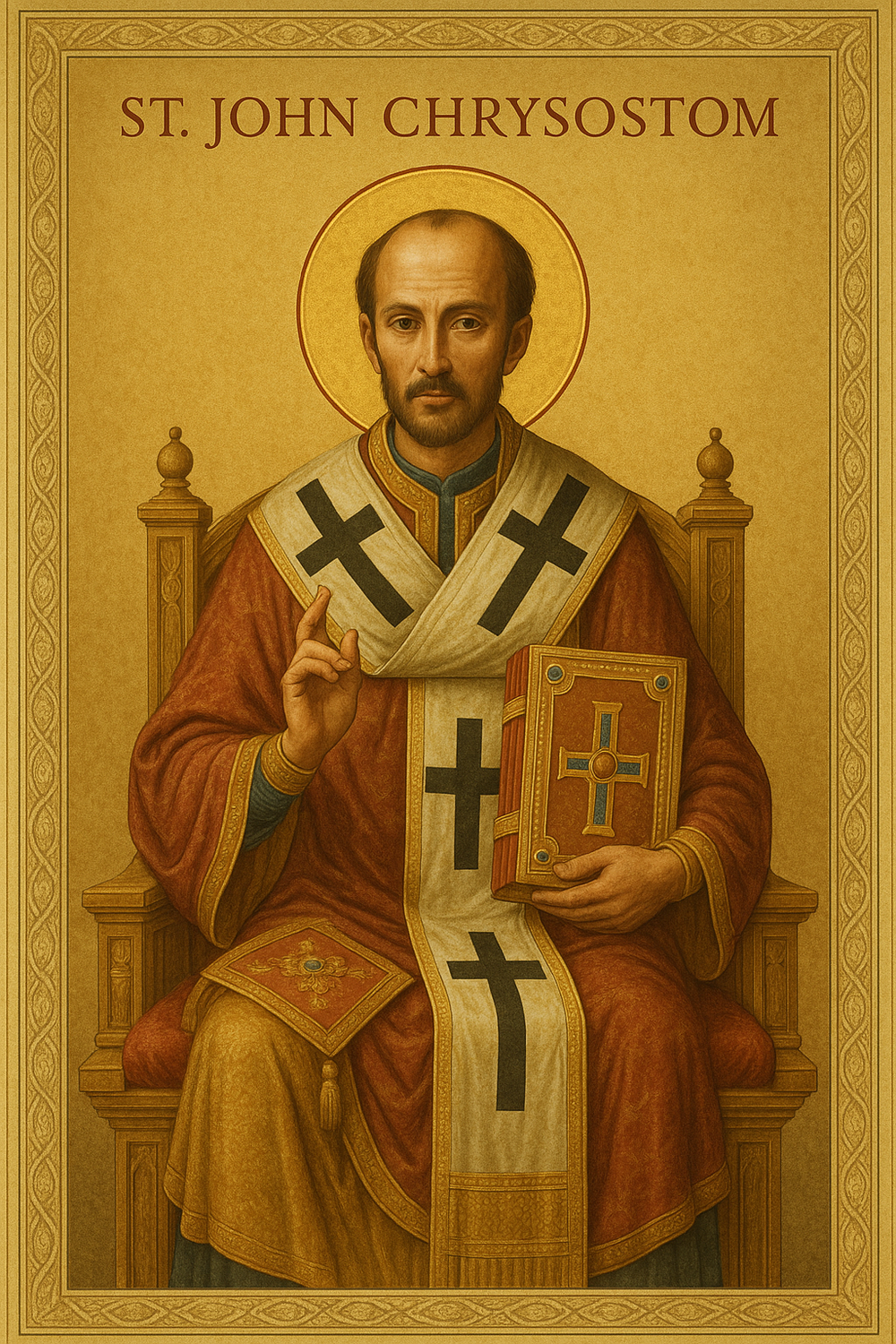
The Melkite Divine Liturgy — celebrated primarily in the form composed by Saint John Chrysostom, with the richer and longer form of Saint Basil the Great used approximately ten times a year — has the same two-part skeleton as the Roman Mass: the Liturgy of the Word followed by the Liturgy of the Faithful. But the flesh and skin, as one Melkite bishop has put it, appears entirely differently. To a Roman Catholic, the surface similarities mask a profound difference in spiritual world: where the Roman Mass moves through structured instruction toward sacramental communion, the Melkite Divine Liturgy moves through heavenly ascent — drawing the congregation upward into the eternal worship that the Book of Revelation describes, where angels and saints surround the throne and cry "Holy, Holy, Holy" without ceasing.
The Liturgy Begins Before It Begins: The Proskomedia
Before the formal opening of the Melkite Divine Liturgy, the priest performs the Proskomedia — a preparatory rite at a small table (the Prothesis) in the sanctuary, behind the iconostasis, invisible to the congregation. During this rite, the priest cuts the Eucharistic bread (leavened, in Byzantine tradition — resurrection bread) using a liturgical lance, arranging the pieces on the diskos (paten) in a specific symbolic order: the Lamb in the center, pieces for the Theotokos, the nine ranks of angels and saints, the living faithful, and the departed. The entire Eucharistic assembly — heaven, the Virgin, the saints, the living, and the dead — is gathered symbolically on the diskos before the liturgy opens. When the priest finally covers the gifts with a veil and censes them, he is enacting the mystery of the Incarnation: the Son of God hidden in humility, about to be revealed.
No equivalent rite exists in the Roman Mass. The Proskomedia reflects a distinctly Eastern conviction that the Eucharist is not primarily a community meal but a cosmic event in which the entire Church — visible and invisible, living and departed — gathers around the one altar of heaven and earth.
The Litanies: Praying in Waves
The formal opening of the Melkite Divine Liturgy is marked immediately by the Great Ektenia — a litany in which the deacon or priest calls the congregation to pray for specific intentions, and the choir and people respond to each petition with "Kyrie eleison" (Lord, have mercy) or "Grant this, O Lord." Multiple litanies (ektenias) appear throughout the liturgy — at the opening, after the Scripture readings, after the Great Entrance, and elsewhere — creating a rhythmic, wave-like pattern of corporate petition that structures the entire service.
Roman Catholics will recognize the General Intercessions (Prayer of the Faithful) as the nearest equivalent. But the Melkite litanies are more numerous, more specific in their intercessions, and set to chant that makes them feel less like a list and more like a sustained breathing prayer. The congregation does not merely listen — it participates in each petition through a sung response. The entire congregation becomes a praying body, not an audience receiving instruction.
The "Only Begotten Son" Hymn
One of the most distinctive elements of the Byzantine liturgy that has no equivalent in the Roman Mass is the singing of the Monogenes — "Only Begotten Son and Word of God." This sixth-century hymn, attributed to Emperor Justinian I, is sung at every Melkite Divine Liturgy between the Second and Third Antiphons of the opening. Its text is a dense Christological statement: Christ is the Only Begotten Son, immortal by divine nature, who became incarnate of the Virgin Mary, was crucified and conquered death by death, is one of the Holy Trinity, co-glorified with Father and Spirit. The entire hymn is a concise Chalcedonian creed set to music, proclaimed by the whole assembly before any Scripture is read.
Theology in the Byzantine rite does not arrive primarily through homily. It arrives through chant. The Melkite faithful absorb Christological doctrine through the act of singing it week after week, year after year, from childhood to old age. By the time a Melkite believer reaches adulthood, they have sung the definition of Chalcedon hundreds of times.
The Iconostasis: The Boundary Between Heaven and Earth
Nothing prepares a Roman Catholic visitor for the iconostasis. In every Melkite church — from the Annunciation Cathedral in Boston to the smallest parish in suburban Detroit — the sanctuary is separated from the nave by a screen covered in icons. The iconostasis is not merely a decorative element, a cultural tradition, or an architectural feature. It is a theological statement about the nature of the Eucharist, the Church, and the relationship between heaven and earth. To understand the Melkite Divine Liturgy, you must understand the iconostasis.
The iconostasis stands at the boundary of the nave (where the faithful worship) and the sanctuary (where the priest offers the Eucharist). It is typically divided into tiers or rows of icons, with three doors: the central Royal Doors, flanked by the North Deacon Door and the South Deacon Door. The Royal Doors bear icons of the Annunciation and the four Evangelists. To the right of the Royal Doors is always an icon of Christ Pantocrator; to the left, always an icon of the Theotokos. These positions are not variable. They are fixed by theological logic: Christ is always at the right hand of the Father; Mary always intercedes from the left. The sanctuary is the Holy of Holies — the innermost chamber of the Temple of the New Covenant, where the priest offers the sacrifice on behalf of all.
What the Doors Mean
The Royal Doors are opened and closed at specific moments during the Divine Liturgy, each opening carrying theological weight. They open for the Little Entrance (Gospel procession), the Great Entrance (Eucharistic procession), the distribution of Communion, and the dismissal. When the Royal Doors are closed, the priest prays in the Holy of Holies before God on behalf of the people — invisible, as the High Priest was invisible in the Temple on the Day of Atonement. When they open, divine grace descends outward toward the congregation — the Incarnation, the Word made visible, Christ coming out to His people.
In the Roman Mass, the sanctuary and the nave are separated by nothing more than a communion rail (now often removed) or a step. The priest prays facing the congregation. The entire action of the Mass is visible. This is a legitimate theological choice emphasizing the communal and transparent character of Christian worship. The Melkite tradition makes a different emphasis: the Eucharist is a mystery — something genuinely beyond human comprehension — and the architecture embodies that theology. You are standing at the boundary of heaven and earth. You cannot see everything that is happening in the Holy of Holies. Neither could the Israelites in the Temple. That is the point.
The entire wall of icons between the nave and sanctuary is the iconostasis. Do not approach or touch it — it is sacred space. The deacon will come through the side doors; only the priest uses the Royal Doors.
The entire liturgy is sung. There are no spoken prayers. Everything is chanted, from the priest's petitions to the congregation's responses. A chant sheet is usually available.
You will stand for almost the entire liturgy, including the Eucharistic prayer. Seating is provided for the elderly and infirm, but standing is the norm and the theology.
Communion is administered with a golden spoon from the chalice. Approach with hands folded, open your mouth, tilt your head back slightly. Do not extend your hands.

The Two Entrances: Gospel and Eucharist in Procession
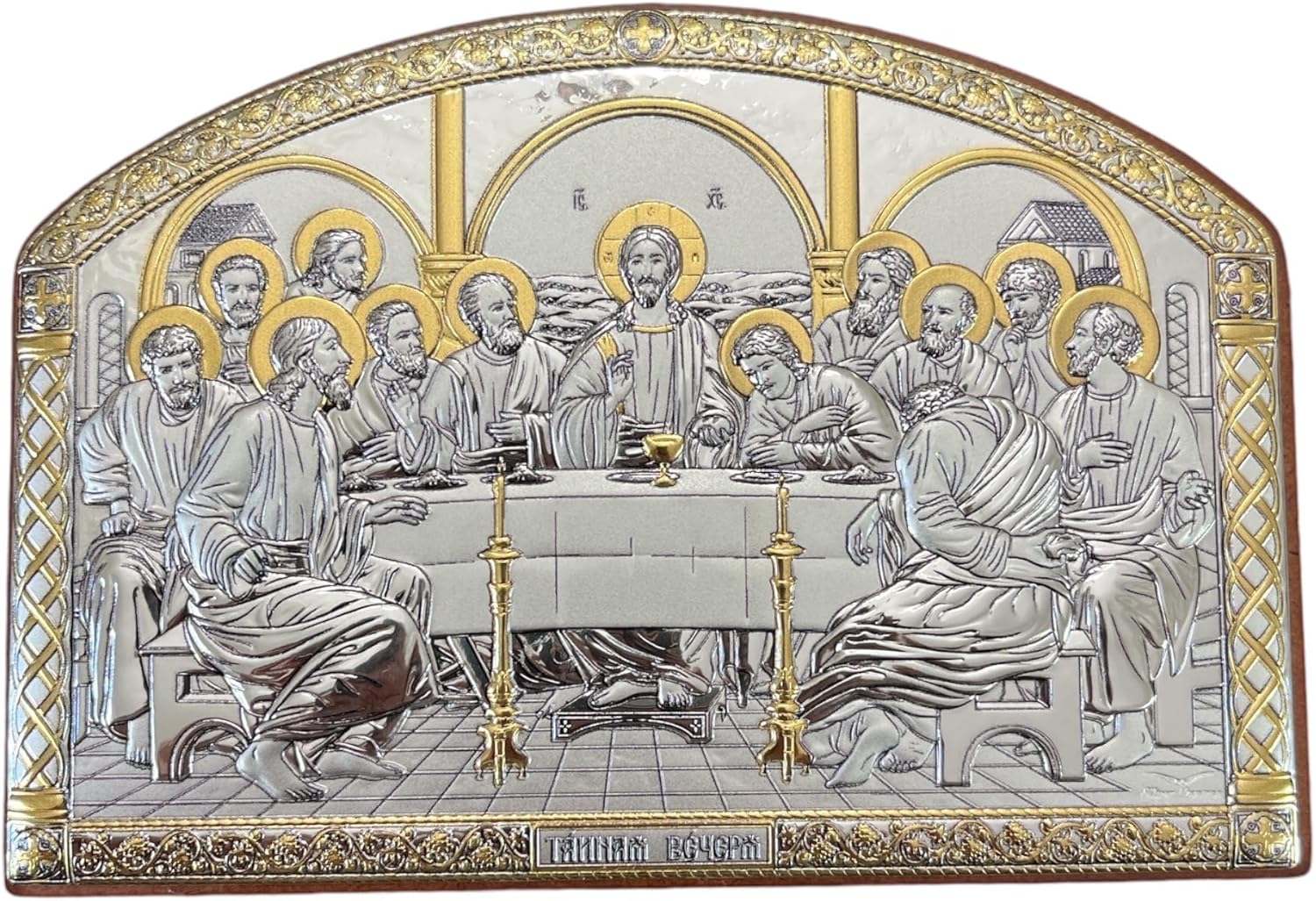
One of the most visually dramatic and theologically rich differences between the Melkite Divine Liturgy and the Roman Catholic Mass is the two solemn processions through the church that structure the entire service. The Roman Mass has no equivalent. These processions — the Little Entrance and the Great Entrance — are not merely ceremonial pageantry. They are enacted theology, teaching through movement the doctrine they proclaim in words.
The Little Entrance: The Word Enters the World
After the opening litanies and antiphons, the Royal Doors open. The priest or deacon emerges carrying the Gospel Book — the four Gospels bound in a jeweled cover, held aloft — and processes through the nave, followed by altar servers with candles. The congregation stands. The choir sings the Eisodikon — the Entrance Hymn. The procession returns to the sanctuary through the Royal Doors. This is the Little Entrance, and its meaning is precise: the Word of God entering the world, the Gospel being carried into the midst of the people as Christ once entered human history. Before a single verse of Scripture is read, its arrival has already been proclaimed through movement.
In the Roman Mass, the Gospel book may be carried in the entrance procession, or simply placed on the altar. The reader approaches the ambo, reads, and returns. This is not inferior — it emphasizes clarity and directness. But it does not dramatize the Gospel's entry in the same way. The Little Entrance teaches that the Word of God is not simply information to be communicated. It is a Person arriving.
The Great Entrance: Christ the King Borne to His Altar
The Great Entrance is among the most solemn and beautiful moments in all of Christian liturgy. The Royal Doors open again. The priest and deacon emerge from the sanctuary bearing the prepared bread and wine — not yet consecrated, but covered with embroidered veils (aer and smaller veils) and surrounded by incense. They process slowly through the entire nave, the choir singing the Cherubic Hymn: "We who mystically represent the Cherubim, and who sing the thrice-holy hymn to the life-giving Trinity, let us lay aside all worldly care, to receive the King of all, borne invisibly upon the spear-points of the angelic hosts."
The congregation bows deeply. Some fall to their knees. The priest commemorates the Patriarch, the bishop, the faithful living and departed by name. The covered gifts are carried as if in a royal procession — because that is precisely what is happening. Christ the King is entering His holy Temple, carried by His priests toward His altar, accompanied by angels. The faithful are not spectators. They are the angelic hosts, singing the Cherubic Hymn alongside the unseen heavenly powers who accompany the procession.
No Roman Catholic parallel exists. The preparation of the gifts in the Roman Mass — the offertory procession, the mixing of water and wine, the priest's quiet prayers over the bread and chalice — takes place at the altar without a procession through the nave. The theology is equally valid: the Church brings its gifts to the altar and God transforms them. But the Great Entrance articulates something additional: before the consecration, before the transformation, the whole Church is already in the presence of the King. The gifts are already royal because they will become His body and blood. Movement teaches what words describe.
When the choir and congregation sing the Cherubic Hymn at the Great Entrance, they are not simply participating in a ritual. They are making a theological declaration: we are the Cherubim. The same angelic beings who surround the throne in Isaiah 6 and Revelation 4, crying "Holy, Holy, Holy" without ceasing — that is the identity the Church claims for itself in this moment. The entire nave becomes the heavenly court. The priest bears the King toward His altar. The congregation is told, in music, that they are the angelic hosts. Lay aside every worldly anxiety — that instruction is not comfort. It is a command appropriate to the gravity of what is happening.
The Anaphora & Epiclesis: The Holy Spirit Transforms the Gifts
After the Great Entrance, the Royal Doors are closed. The priest prays the Anaphora — the central Eucharistic prayer — in the Holy of Holies, partly behind the veil of the closed iconostasis. In the primary form of the Melkite Divine Liturgy, this is the Anaphora of Saint John Chrysostom, composed in the 4th century by the Golden-Mouthed Archbishop of Constantinople, himself a product of the Antiochene theological school. On the ten occasions each year when the Liturgy of Saint Basil the Great is celebrated, a longer and theologically richer Anaphora — one of the most profound Eucharistic prayers in the entire Christian tradition — unfolds in its place.
The Epiclesis: The Hinge of the Anaphora
The most significant theological difference between the Byzantine Anaphora and the Roman Eucharistic prayers is the treatment of the Epiclesis — the explicit invocation of the Holy Spirit to descend and transform the Eucharistic gifts. In the Melkite Divine Liturgy, the Epiclesis is not a brief phrase but a sustained, central act of the Anaphora. The priest bows deeply, extends his hands over the bread and wine, and implores the Holy Spirit to come down and make the bread the Body of Christ and the chalice the Blood of Christ. The choir responds with a solemn "Amen." The entire congregation is still.
In the Roman rite, the theological weight of the consecration falls on the Words of Institution — "This is My Body," "This is My Blood" — at which point the priest genuflects in adoration. The Epiclesis is present in all four Roman Eucharistic prayers, but in the form of prayers before the Institution Narrative rather than after it, asking the Spirit to sanctify the gifts. The result is a theological difference in emphasis: in the Roman tradition, the transformation is understood to occur at the precise moment of the dominical words. In the Byzantine tradition, the transformation is understood to occur through the entire Anaphora — particularly the Epiclesis — as a unified act of divine descent in response to the Church's prayer.
Neither position denies the Real Presence. Both affirm it absolutely. But the Byzantine Epiclesis teaches that the Eucharist is not a mechanism triggered by correct words — it is a living, dynamic response of the Holy Spirit to the prayer of His Church. The priest does not produce the transformation. He implores it. God gives. The Church receives.
The Liturgy of Saint Basil
The Anaphora of Saint Basil the Great, used on the five Sundays of Great Lent, on the eves of Christmas and Theophany, on Holy Thursday and Holy Saturday, and on the feast of Saint Basil himself (January 1), is one of the great masterpieces of Christian prayer. Where Chrysostom's Anaphora is relatively concise, Basil's unfolds across an extended meditation on the entire economy of salvation: God's creation and governance of the world; humanity's fall and God's faithfulness through the patriarchs and prophets; the Incarnation, ministry, passion, death, resurrection, ascension, and second coming of Christ; the descent of the Holy Spirit at Pentecost; the constitution of the Church. The faithful who are present for the Liturgy of Saint Basil receive not merely a Eucharistic prayer but a full theological catechesis embedded in the act of worship itself.
Holy Communion by Spoon: The Body and Blood as One Gift
Holy Communion in the Melkite Divine Liturgy is always received under both species simultaneously — Body and Blood together — using a golden liturgical spoon (the labis). The priest takes the consecrated Lamb (leavened bread, broken into pieces and placed in the chalice filled with the Precious Blood) and administers both together on a golden spoon directly into the communicant's mouth. The faithful receive simultaneously the Body and Blood of Christ in a single act. This is not a variation on Roman practice. It is the ancient form of the apostolic church — the fullness of the Eucharist given as a single, undivided gift.
In the Roman Catholic Mass, the Body and Blood are typically received separately: the Host first, the chalice second — when the chalice is offered, which varies by parish. Many Roman Catholics receive only the Host. In the Melkite tradition, the separation of Body and Blood is theologically impossible at the point of communion. You cannot receive only the Body without the Blood, because they are given as one. This practice embodies the theology that the Eucharist is the whole Christ — not divided, not partially offered, not received in degrees.
Leavened Bread: Resurrection Made Visible
Unlike the Roman Mass, which uses unleavened bread (as the Maronite Church now also does, following the 1736 Synod), the Melkite Divine Liturgy uses leavened bread — and this is not a minor ritual variation but a profound theological statement. Leaven in the Byzantine tradition symbolizes resurrection: the transformation of dead dough into living bread, which rises and expands and comes to life. The Eucharistic bread itself, before consecration, is already an image of resurrection. When Christ's Body and Blood are received as leavened bread — alive, transformed — the communicant receives not merely historical remembrance but participation in the living, risen Christ.
The unleavened bread of the Roman Mass is not inferior: it carries its own symbolism, connecting the Eucharist to the Passover. But the Melkite use of leavened bread bears specific witness to Resurrection — a theological emphasis at the very core of Byzantine spirituality.
No Communion in the Hand
Because Communion is administered by spoon directly into the mouth, there is no possibility of Communion in the hand in the Melkite tradition. The communicant approaches, folds their hands, and opens their mouth. The priest or deacon holds the chalice and administers the spoon directly. This is not perceived as restriction but as an act of reverence: the sacred gifts are too precious to be touched by ordinary hands. The priest's hands have been anointed for this service. The spoon itself has been consecrated. The faithful receive in humility, not grasping but being fed.
Posture, Gesture & the Sign of the Cross
The body language of the Melkite Divine Liturgy is, like the Maronite and all Eastern liturgies, a form of theology. Every posture, every bow, every direction of the Sign of the Cross carries meaning that has been shaped by centuries of theological reflection. For a Roman Catholic visitor, many of these embodied differences are the first and most disorienting aspect of the experience.
Standing as Resurrection
Melkites stand for the vast majority of the Divine Liturgy, including the entire Anaphora and the moment of consecration. This is not informality. It is the ancient theology of resurrection. The Council of Nicaea (325 AD) explicitly prohibited kneeling on Sundays, because Sunday is the day of Resurrection and to kneel on the day of Resurrection would be a bodily contradiction of what the day proclaims. The faithful stand before God as resurrected people — not as those still under the weight of death but as those who have received the pledge of eternal life.
Kneeling in the Eastern tradition is reserved for penitential seasons — Great Lent, the kneeling vespers on the evening of Pentecost (when long prostrations are performed), and private moments of personal repentance. During the Eucharistic celebration of Sunday, kneeling communicates the wrong theology. To kneel when Christ has risen is to live, liturgically, as though the Resurrection had not happened.
Profound Bows and Prostrations
Rather than kneeling as the primary posture of reverence, Melkites bow — some bows shallow, some deep, some full prostrations (metanias). During the Great Entrance, the faithful bow deeply as the covered gifts pass by. At certain key moments in the litanies — "Bow your heads before the Lord" — the entire congregation inclines its head as the priest prays a blessing over them. Prostrations (touching the floor with one hand or both hands during a full bow) appear in penitential contexts. The body moves constantly throughout the Divine Liturgy, never passive, always engaged — because the body, like the soul, was created to worship.
The Sign of the Cross: Three Fingers and Right to Left
The Melkite Sign of the Cross is made with three fingers held together — thumb, index, and middle finger — while the remaining two are folded down to the palm. This hand formation is not arbitrary. The three extended fingers represent the Holy Trinity: Father, Son, and Holy Spirit. The two folded fingers represent the two natures of Christ: divine and human, united without confusion in one person. The gesture is a miniature creed, proclaiming Trinitarian faith and Chalcedonian Christology simultaneously, before a word is spoken.
The cross is traced from right shoulder to left shoulder — the opposite of Roman Catholic practice. This left-to-right direction in the Roman church developed in the medieval period. The right-to-left direction in the Eastern tradition follows an earlier practice preserved across the Eastern churches. No theological superiority is claimed; both directions are ancient. The difference simply reflects the distinct historical development of Eastern and Western Christian practice.
Language: Arabic, Greek, and the Living Voice of Antioch
The Melkite Divine Liturgy is celebrated predominantly in Arabic in most American parishes — a fact that surprises many Roman Catholics, who associate Eastern Christianity primarily with Greek or Slavonic. But Arabic is not an accommodation to a later immigrant culture. It is the living language of the Antiochene Christian tradition. The Christians of Syria, Lebanon, and Palestine have spoken Arabic for fourteen centuries. They wrote theology in Arabic, composed hymns in Arabic, and argued for the truth of the faith in Arabic within the Islamic world throughout the medieval period. When the Melkite priest chants the Anaphora in Arabic, he is not translating from a more authentic Greek original into a vernacular tongue. He is praying in the language that his community has used for as long as anyone alive can remember.
Greek elements remain — particularly in the Kyrie eleison (Lord, have mercy), which is sung in Greek even in Arabic-language liturgies as a deliberate preservation of the Byzantine musical and theological heritage. Greek appears in the Trisagion and in certain doxological formulas. In some parishes, particularly those with more recent immigration from the Middle East, more Greek is used alongside Arabic. The liturgical books are printed in both languages.
In American Melkite parishes where English is the dominant tongue, the Divine Liturgy may be celebrated entirely or partially in English. Increasingly, American Melkite communities serve not only Arab-American immigrants and their descendants but Roman Catholics, former Protestants, and seekers of all backgrounds drawn to the beauty and depth of the Byzantine tradition. The language is not the barrier; the theology is the invitation.
An Entirely Sung Liturgy
One of the most immediately striking aspects of the Melkite Divine Liturgy for Roman Catholic visitors is that nothing is spoken. Everything is sung. The priest chants his prayers. The deacon chants the petitions. The choir and congregation respond in chant. The Gospel is chanted. The Words of Institution are chanted. The Lord's Prayer is chanted by the entire congregation. There are no spoken parts in the traditional celebration of the Melkite Divine Liturgy.
This is not musical performance. It is theological conviction. The Byzantine tradition holds that the Eucharist is a participation in the heavenly liturgy, and the heavenly liturgy is song — the four living creatures and the twenty-four elders in Revelation cry out in continuous praise. To sing the Divine Liturgy is not to beautify the prayer; it is to align the earthly church with its heavenly form. When the congregation sings the Cherubic Hymn, they are not being entertained. They are claiming their identity as the people who stand before the throne and sing without ceasing.
Sacramental Differences: Initiation, Marriage, Confession & Clergy
Full Initiation at Birth
Like all Byzantine Eastern Catholic churches, the Melkite Church administers all three sacraments of initiation — Baptism, Chrismation (Confirmation), and Eucharist — together, typically shortly after birth. A Melkite infant who is baptized on the same occasion receives full Chrismation with Holy Myron and is communicated from the chalice (a drop of the Precious Blood administered by spoon). This is not a pastoral exception or a cultural accommodation. It is the most ancient form of Christian initiation, predating all the Western developments that delayed Confirmation and First Communion until adolescence.
The theological logic is unified: at Baptism, a person dies and rises with Christ. At Chrismation, they receive the seal of the Holy Spirit. At the Eucharist, they are joined to the Body of Christ. To separate these three moments across fifteen years of childhood development is, in the Eastern view, to suggest that initiation is a gradual process rather than a complete event. The Melkite Church holds that a baptized infant is a full member of the Body of Christ from the moment of Baptism — and that full membership requires full sacramental access immediately.
The Crowning: Marriage as Martyrdom
The Melkite wedding ceremony is one of the most visually striking in all of Christianity. At the center of the rite is the Crowning — the priest places flower crowns on the heads of the bride and groom as the choir sings "O Holy Martyrs, who fought the good fight and have received your crowns." The word "martyrs" is not metaphorical in the Byzantine wedding. Marriage is explicitly understood as a vocation of martyrdom: the willingness to die to self, day after day, for the life of another.
The crowns recall two things simultaneously: the crowns of martyrdom (witness to Christ through suffering) and the crowns of royal authority (the dignity of the domestic church, the kingdom of which husband and wife are co-sovereigns). After the Crowning, the couple processes three times around the altar table — a circular journey symbolizing the eternity of the union, the centrality of Christ at the altar's heart, and the couple's entry into the endless dance of Trinitarian love. The Melkite marriage rite makes no pretense that marriage is primarily a romantic institution. It is a sacred vocation requiring heroic virtue, celebrated accordingly.
Confession: God Forgives Through the Priest
The Melkite form of sacramental absolution reflects the Byzantine theological conviction that the priest is not primarily a judge pronouncing a verdict but a witness to God's mercy already flowing toward the penitent. The priest stands beside the penitent (not behind a screen in most Byzantine practice), and after the confession, lays his stole (epitrachelion) over the penitent's head and prays a prayer of absolution that emphasizes God's action: "May God, who forgave David through Nathan the prophet... forgive you everything through me, a sinner." The traditional Byzantine formula does not say "I absolve you." It witnesses to God's absolution already given in response to genuine repentance.
This distinction has real pastoral consequences. In the Melkite tradition, the penitent does not stand before an ecclesiastical court. They stand before a spiritual physician. The priest's role is to pray, to witness, and to heal — not to adjudicate. The Eastern approach to sin emphasizes wound rather than crime, healing rather than punishment, restoration of relationship rather than resolution of legal status. As Saint John Climacus writes: God does not want the death of the sinner. He wants the sinner to live — and confession is the moment of return to life.
Married Priests
Like all Eastern Catholic churches, the Melkite Church permits married men to be ordained to the priesthood. This is not a recent innovation or a disciplinary relaxation but the preservation of the apostolic pattern — the same pattern that allowed Saint Peter to have a mother-in-law and Saint Paul to write that a bishop should be "the husband of one wife." The Melkite priest who celebrates the Divine Liturgy on Sunday morning may have returned home on Saturday evening to help his children with homework. This simultaneous calling to priestly ministry and family life is not seen as a tension but as a unified witness to the sacramental character of all Christian vocation. Both marriage and priesthood are sacraments ordered toward self-giving love. In the Melkite Church, one person can embody both.
The Liturgical Year & Fasting: Time as Sacred Formation
The Melkite liturgical year follows the Byzantine calendar, which is structured around the two great poles of the Incarnation (Christmas/Theophany) and the Resurrection (Pascha). In the Byzantine tradition, Pascha — Easter — is not one feast among equals. It is the Feast of Feasts, the King of Feasts, the center around which the entire liturgical year revolves. Where Roman Catholics celebrate Easter as the most important feast of the year, the Byzantine tradition goes further: every Sunday is a little Pascha, every Liturgy a celebration of the Resurrection, every Eucharist a proclamation that death has been conquered. Pascha is not an annual event. It is the permanent state of the Church.
The Liturgical New Year: September 1
The Melkite liturgical year begins on September 1, the Byzantine ecclesiastical New Year — an ancient date rooted in the Roman tax calendar but adopted by the Church as the beginning of the liturgical cycle. This is different from both the Maronite new year (first Sunday of November) and the Roman new year (first Sunday of Advent). The cycle then proceeds through the Nativity Fast (Advent equivalent), Christmas on December 25 or January 7 depending on the calendar used, Theophany (January 6/19), the Great Fast (Lent), Pascha, Pentecost, and the long Apostles' Fast, Dormition Fast, and ordinary time that leads back to September.
The Great Fast: Clean Monday
Where Roman Catholics begin Lent on Ash Wednesday, Melkites (and all Byzantine Christians) begin the Great Fast on Clean Monday — the Monday before Ash Wednesday, two days earlier. This is not merely a calendar difference. Clean Monday is a full day of strict fasting (no meat, no dairy, no oil, no wine, often no food at all until evening), and the name "Clean" reflects its spiritual purpose: the day on which the soul is swept clean in preparation for the forty days of intensive purification that follow. There are no ashes in the Byzantine tradition — instead, the fast begins immediately, without ceremony, because the point is not ritual but genuine transformation.
Byzantine fasting is demanding by any standard. Wednesdays and Fridays are observed as fast days throughout the year, not only during Lent. The Great Fast involves abstinence from meat and dairy (not merely meat on Fridays) for the entire forty days. The Apostles' Fast (from after Pentecost to the feast of Saints Peter and Paul on June 29), the Dormition Fast (August 1–14), and the Nativity Fast (from November 15 to December 24) add additional extended periods of fasting to the calendar. In total, a devout Melkite observing all Byzantine fasting customs fasts on more than half the days of the year. Fasting in the Byzantine tradition is not punishment. It is the regular medicine of the soul.
Every Wednesday and Friday — Abstinence from meat and dairy throughout the year (commemorating the betrayal and crucifixion of Christ).
The Great Fast (Clean Monday through Holy Saturday) — 40 days of abstinence from meat, dairy, and often oil and wine. The most demanding penitential season of the Byzantine year.
The Apostles' Fast (Monday after All Saints Sunday through June 29) — Length varies by year depending on when Pascha falls.
The Dormition Fast (August 1–14) — Two weeks of fasting before the Dormition of the Theotokos on August 15.
The Nativity Fast (November 15 – December 24) — The Advent equivalent; 40 days preparing for the feast of the Incarnation.
The Melkite Saints: Witnesses From the Church of Antioch
The Melkite tradition has produced saints of extraordinary diversity: desert monks who became theologians, orphaned girls who bore the wounds of the stigmata, brilliant patriarchs who argued for Eastern dignity at Roman councils, and humble parish priests whose lives of prayer bore fruit in miracles. These figures are not historical curiosities. They are living intercessors whom the Melkite faithful invoke as naturally as they ask a friend for prayer. Their icons are venerated, their relics kissed, their feast days observed with solemnity. The Melkite Church understands itself as a community that includes, at all times, both the living and the glorified dead.
Saint Mariam Baouardy (1846–1878): The Little Arab
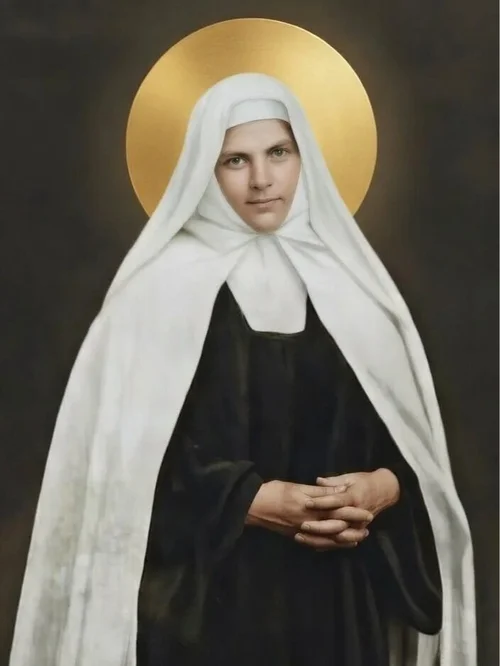
No Melkite saint captures the intersection of Eastern Christian spirituality and the modern Catholic Church more powerfully than Saint Mariam Baouardy — known as the Little Arab, the Lily of Palestine, and in Arabic as Al Qiddisa: "The Holy One." Born on January 5, 1846 — the eve of the Feast of Epiphany — in Ibillin, Galilee, to Melkite Greek Catholic parents who had walked barefoot from Galilee to Bethlehem to pray for a surviving child, Mariam was orphaned before age three when both parents died within days of each other.
Her life reads as a catalogue of the extraordinary: at thirteen, she refused both an arranged marriage and an invitation to convert to Islam, and was attacked with a scimitar that cut her throat deeply enough to sever tracheal cartilage. She did not die. She was nursed back to health over a month by a figure in blue she could never identify, who told her she belonged to God. She eventually entered the Discalced Carmelite order, was professed in Mangalore, India, bore the full stigmata of Christ's wounds, was documented levitating during ecstasy, underwent a forty-day demonic possession that ended in solemn exorcism, and died at thirty-two in Bethlehem while overseeing the construction of a Carmelite monastery over what tradition holds is the birthplace of King David. She was canonized by Pope Francis on May 17, 2015 — the second Melkite Greek Catholic ever raised to sainthood.
Her biography is now available in full on The Eastern Church's saint biography page, where her complete story — including the full medical documentation of the throat wound, the levitation witnesses, and the history of miracles through her intercession — is told in detail. She is patron of those suffering from trauma and violence, spiritual oppression, anxiety, and persecuted Christians — and her intercession has been sought by the people of her homeland for over a century.
Saint John of Damascus (c. 675–749): The Last of the Greek Fathers
Saint John of Damascus is the towering theological figure of the Melkite tradition and one of the most important theologians in the history of Christianity. Born in Damascus to a family that served the Umayyad Caliphate, he was educated alongside the future Caliph and served in the imperial administration before withdrawing to the monastery of Saint Sabas near Jerusalem. There he became a monk and produced the works that earned him the title of the last of the Greek Fathers and the first Scholastic theologian.
His most important contribution was the defense of sacred images — icons — during the Iconoclast controversy. When the Byzantine emperors Leo III and Constantine V ordered the destruction of icons, John of Damascus wrote three sustained treatises defending the veneration of sacred images on the grounds that the Incarnation itself justifies depicting Christ: if the eternal Son of God took visible, human, material form, then representing that form in paint and wood is not idolatry but a proclamation of the Incarnation. His arguments won. The Seventh Ecumenical Council (Nicaea II, 787 AD) affirmed the veneration of icons on exactly the grounds John had laid out. Every icon in every Melkite church — including the iconostasis itself — exists because John of Damascus wrote from a monastery in the Judean desert and refused to be silent.
His Fount of Knowledge — particularly its third part, On the Orthodox Faith — is a systematic summary of the entire Greek patristic tradition, covering theology, Christology, anthropology, and the sacraments with an encyclopedic precision that influenced Thomas Aquinas's Summa Theologiae a century later. The bridge between East and West runs partly through John of Damascus's cell in the desert.
Patriarch Maximos IV Sayegh (1878–1967): The Voice of the East
Patriarch Maximos IV Sayegh is not yet officially canonized, but his influence on the universal Catholic Church is so profound that his memory is honored as that of a great confessor of Eastern Catholic identity. Elected Melkite Patriarch in 1947, he presided over the Melkite Church through the Second Vatican Council (1962–1965), where he became the most eloquent and persistent voice for Eastern Catholic rights, Eastern theological perspectives, and the full equality of Eastern and Western expressions of the apostolic faith.
His tactics were deliberate and symbolic. He refused to speak Latin at Vatican II, the only language official Council speeches were permitted in at the time — addressing the Council in French instead, because Latin, as the language of the Roman rite, would imply that the Roman tradition was the universal norm. He argued for the full restoration of the permanent diaconate. He argued for the Church's address of nuclear weapons and global poverty. He argued that the Catholic Church must take seriously its relationships with the Orthodox churches — not merely as ecumenical courtesy, but as a theological necessity for the Church's own self-understanding. The documents Lumen Gentium and Orientalium Ecclesiarum, which affirm the equal dignity of Eastern Catholic churches within the universal Church, bear his fingerprints.

Quick Reference: Melkite Divine Liturgy vs. Roman Catholic Mass
The following table summarizes every major difference covered in this guide. Both traditions share the same apostolic faith, the same sacraments, and the same communion with the Roman Pontiff. They express that faith in different liturgical grammars of equal dignity.
| Element | Melkite Divine Liturgy | Roman Catholic Mass |
|---|---|---|
| Official Name | The Divine Liturgy (Qaddas in Arabic) | The Holy Mass |
| Rite Family | Byzantine / Constantinopolitan | Latin / Roman |
| Primary Form | Liturgy of Saint John Chrysostom (most days); Saint Basil (~10x/year) | Ordinary Form (4 Eucharistic Prayers); Extraordinary Form (TLM) |
| Language | Arabic primarily; Greek elements; English in American parishes | Vernacular (formerly Latin) |
| Pre-Liturgy Rite | Proskomedia — priest prepares gifts behind iconostasis before service begins | No equivalent; preparation of gifts occurs during the offertory |
| Opening Structure | Multiple litanies (ektenias) with congregational chanted responses throughout | Penitential Act (Confiteor / Kyrie); fewer litanies |
| Unique Hymn | Monogenes ("Only Begotten Son") — 6th-century Christological creed set to music | No equivalent |
| The Sanctuary Screen | Iconostasis — icon-covered screen with Royal Doors; separates nave from sanctuary | Communion rail (now often removed) or open sanctuary |
| First Procession | Little Entrance — Gospel Book processed through the nave to the altar | Gospel book may be carried in entrance procession; no nave procession |
| Second Procession | Great Entrance — priest bears unconsecrated bread and wine through the nave with full ceremonial; Cherubic Hymn sung | No equivalent; offertory procession brings gifts to altar without nave procession |
| Eucharistic Prayers | Primarily Chrysostom Anaphora; Basil Anaphora ~10x/year; James occasionally | 4 principal Eucharistic Prayers (I–IV) |
| Epiclesis | Dominant and explicit; priest bows and stretches hands over gifts; sung/chanted by entire assembly | Present but briefer; invoked before Institution Narrative |
| Eucharistic Bread | Leavened (resurrection symbolism) | Unleavened (Passover symbolism) |
| Method of Communion | Body and Blood simultaneously by golden liturgical spoon from the chalice, on the tongue | Host and Chalice separately; tongue or hand; chalice not always offered |
| Communion in Hand | Never | Permitted in most regions |
| Extraordinary Ministers | Not used | Common in large parishes |
| All Spoken or All Sung | All sung/chanted — no spoken prayers | Mix of spoken and sung elements |
| Posture at Consecration | Standing throughout (resurrection posture) | Kneeling at consecration |
| Genuflection | Not practiced; deep bows (metanias) instead | Genuflect at consecration and before tabernacle |
| Sign of the Cross Hand | 3 fingers (Trinity) + 2 folded (two natures of Christ) | Open hand |
| Sign of the Cross Direction | Right to left | Left to right |
| Incense | Frequent throughout; people are censed as living temples | Major feasts; primarily altar and Gospel |
| Sacraments of Initiation | Baptism, Chrismation, and Eucharist together at birth | Baptism in infancy; Confirmation and First Communion delayed |
| Absolution Formula | "May God forgive you through me" (medicinal; priest as witness) | "I absolve you" (juridical authority) |
| Confession Setting | Standing side-by-side before an icon; priest lays stole over head | Confessional booth or reconciliation room |
| Marriage Ceremony | Crowning: flower crowns placed on bride and groom; procession around altar | Exchange of vows; no crowning |
| Married Priests | Permitted (married before ordination) | Ordinarily celibate (exceptions exist) |
| Liturgical Year Start | September 1 (Byzantine ecclesiastical New Year) | First Sunday of Advent (late November) |
| Lent Begins | Clean Monday (2 days before Ash Wednesday) | Ash Wednesday |
| Fasting Scope | Wednesday & Friday throughout year; 4 extended fasting seasons (Great Fast, Apostles', Dormition, Nativity) | Ash Wednesday, Good Friday; Fridays of Lent |
| Sacred Art | Icons only; iconostasis dominates sacred space | Predominantly statues and realistic sacred art |
| Spiritual Tone | Heavenly ascent; cosmic Eucharist; mystery and transformation; eschatological joy | Proclamation and instruction; sacrifice; doctrinal formation |
Practical Tips for Roman Catholic Visitors
Melkite parishes are generally warm, welcoming, and accustomed to visitors of all backgrounds. The following guide removes the most common sources of confusion for first-time attendees from a Roman Catholic background.
Pick up a Liturgy booklet at the door. Most Melkite parishes provide bilingual (Arabic/English or Greek/English) chant booklets. Following along — even imperfectly — helps you navigate the litanies, antiphons, and congregational responses.
Arrive early. The Proskomedia (the silent preparatory rite behind the iconostasis) often begins before the formal opening. Arriving early allows you to settle into the space, venerate the icons near the door if you wish, and be present for the opening litanies.
Your Sunday obligation is fulfilled at a Melkite Divine Liturgy. You are in a fully Catholic church celebrating valid sacraments in full communion with the Pope.
Stand when everyone else stands — which is most of the time. Standing during the Anaphora is not informality; it is the ancient theology of Resurrection. Do not kneel at the consecration.
Bow your head when the deacon censes the congregation, at the names of Christ and the Theotokos, and whenever prompted by the liturgical action around you. Do not genuflect.
During the Great Entrance, bow deeply as the covered gifts pass by. The congregation bows toward the priest bearing the gifts because Christ the King is invisibly present in this procession. Some bow to the floor; a deep inclination is appropriate.
Everything is sung. Try to join in what you can — the Kyrie eleison, the congregational "Amen" and "Lord have mercy." Silence is also entirely appropriate.
Fold your hands and approach the priest. Tilt your head back slightly and open your mouth. The priest will administer Body and Blood simultaneously by golden spoon directly on your tongue.
Do not extend your hands. Communion in the hand is not practiced in the Melkite tradition under any circumstances. The spoon will come to you.
You are receiving both species at once. The Body of Christ has been broken into the chalice and you receive the intincted fragment on the spoon. You are receiving the whole Christ in a single act.
After receiving, return to your place, bow in prayer, and remain standing until the dismissal prayers are complete.
Frequently Asked Questions
Can a Roman Catholic become Melkite?
Yes. A Roman Catholic can formally transfer to the Melkite Church through a process called a change of rite, which requires a written petition to the Melkite bishop and typically some period of catechetical formation in the Byzantine tradition. This is not a conversion — you remain Catholic in every meaningful sense — but a change of which Catholic church you belong to. The process usually requires the approval of the local Melkite bishop. Roman Catholics who marry Melkite spouses, attend Melkite parishes regularly over many years, or feel drawn to the Eastern tradition often undertake this transfer. The best starting point is a direct conversation with a Melkite pastor or deacon.
Is the Melkite Church Greek, Arab, or something else?
Both, and neither in isolation. The Melkite Church is Greek in its liturgical and theological tradition — the Byzantine rite developed in the Greek-speaking Christian world of Constantinople and the Eastern Roman Empire. It is Arab in its cultural and linguistic identity — the Melkite faithful have spoken Arabic for fourteen centuries, and the church is rooted in the Arab-Christian communities of Syria, Lebanon, and Palestine. In the United States, the Melkite Church includes both communities of recent Middle Eastern immigrants and a growing number of Americans of non-Arab background who have been drawn to the tradition. The word "Greek" in the church's name refers to the Greek liturgical tradition, not to Greek ethnicity.
Why do Melkites stand during the Eucharistic prayer?
Standing during the Anaphora (Eucharistic prayer) is the ancient posture of resurrection. From the earliest centuries, Eastern Christians associated standing in Sunday worship with participation in the risen life of Christ. The Council of Nicaea in 325 AD actually prohibited kneeling on Sundays because Sunday is the Day of Resurrection. Kneeling in Byzantine practice is a posture of repentance and mourning, reserved for penitential seasons and occasions of personal sorrow — not for the celebration of the Eucharist, which is always a celebration of Christ's victory over death. If you are Roman Catholic and feel the instinct to kneel, simply stand alongside the congregation. No one will be offended, but standing is the appropriate theological expression.
How does the Melkite Church relate to Eastern Orthodoxy?
The Melkite Church and the Greek Orthodox Patriarchate of Antioch are the two branches of the single Antiochene church that split in 1724 when two rival patriarchs were elected simultaneously — one recognized by Rome, one by Constantinople. Both branches claim the same apostolic succession, celebrate the same Byzantine liturgy (with minor differences), and share the same saints, theological tradition, and Syriac-Arabic cultural heritage. The Melkite Church is Catholic: in full communion with the Pope of Rome. The Greek Orthodox Patriarchate of Antioch is Orthodox: in communion with the Ecumenical Patriarch of Constantinople. Both share so much of the same liturgical, theological, and spiritual life that a Melkite Divine Liturgy and a Greek Orthodox Liturgy in Antiochian form are nearly indistinguishable to an outside observer.
What is the iconostasis and can I go through it?
The iconostasis is the icon-covered screen that separates the nave (where the faithful worship) from the sanctuary (where the priest offers the Eucharist). It is a sacred boundary in Byzantine theology — the threshold between the nave, which represents the world, and the Holy of Holies, which represents the heavenly court. The faithful do not enter through the Royal Doors except under specific circumstances (typically carrying the Eucharist to the sick, or in some traditions, for the bridal procession during a wedding). Lay visitors should remain in the nave and not attempt to enter through any of the iconostasis doors. When icons on the iconostasis are being venerated before or after the liturgy, you may approach the iconostasis closely, but the doors themselves are for ordained ministers only in ordinary circumstances.
Are Melkite children already confirmed?
Yes. Melkite children who have been baptized are also chrismated (confirmed) and have received First Communion at the time of their baptism — usually shortly after birth. This means that a Melkite child attending a Roman Catholic school or religious education program is already fully initiated and should never be enrolled in a Confirmation preparation program, as they are already confirmed. This is one of the most important practical differences for Roman Catholic schools, parishes, and educators who serve families of Melkite background. If you are a teacher or coordinator and have a Melkite child in your program, please verify their sacramental status with their parents before proceeding with any sacramental preparation.
The Same Faith — A Different Grammar
When Roman Catholics encounter the Melkite Divine Liturgy for the first time, they discover something disorienting and then something profound: the same apostolic faith, the same seven sacraments, the same communion with Rome — expressed in a liturgical language that is older than the Latin Mass, rooted in the world where Christ actually lived, and shaped by fourteen centuries of Arabic-speaking Christian witness in the lands where Christianity began.
Whether you are a Roman Catholic curious about Eastern Christianity, a Melkite rediscovering your own tradition, or someone in the Eparchy of Newton or a Melkite parish near you who is attending for the first time — step inside. Stand through the Anaphora. Bow at the Great Entrance. Listen to the Cherubic Hymn. Open your mouth and receive Christ from a golden spoon. Let the incense rise. Look up at the Pantocrator looking down.
Then ask yourself whether you encountered something foreign — or something ancient, finally heard in its own voice.
Browse Melkite Prayer Cards Explore All Eastern Traditions💍 Free Eastern Christian Marriage Resources
The Melkite Crowning ceremony — bride and groom crowned as martyrs of love, processing three times around the altar — is one of the most theologically rich expressions of Christian marriage in existence. Our free Eastern Christian marriage library explores the theology of the Crowning, the Church Fathers on spousal love, and what it means to be a domestic church in the Eastern tradition.
Access Free ResourcesAs an Amazon Associate, The Eastern Church earns from qualifying purchases.