Orthodox Saints • Romanian Orthodox Church • Relics • November 2026
Saint Matrona of Hurezi and Saint Maria Brâncoveanu: The Romanian Holy Women Whose Relics Came to Cedar Park
Two of the sixteen holy women glorified by the Romanian Orthodox Church in 2025 and 2026 are traveling through American parishes in relics. One was a nun who led Hurezi Monastery for two years. The other was a princess who watched her husband and four sons be put to death for their faith.
The Two Saints at a Glance
- Saint Matrona of Hurezi
- Born Maria Ciupelea, 1852, Transylvania. Nun and briefly abbess of Hurezi Monastery. Feast: May 5.
- Saint Maria Brâncoveanu
- Princess of Wallachia, 1661 to 1729. Wife of Saint Constantin Brâncoveanu. Feast: August 16.
- Canonized
- By the Holy Synod of the Romanian Orthodox Church on July 1, 2025, with 14 other women.
- General proclamation
- February 6, 2026, Patriarchal Cathedral, Bucharest.
- US relic tour
- November 6 to 22, 2026, from Hurezi Monastery.
- Cedar Park, Texas
- Relics venerated at St. Mary's Romanian Orthodox Church during its consecration, November 15, 2026.
- Final stop
- Sts. Joachim and Anna Romanian Orthodox Church, Seattle, November 21 to 22.
- Open question
- Sources differ on the year Matrona died: 1935 or 1939.
The Relics and the American Tour
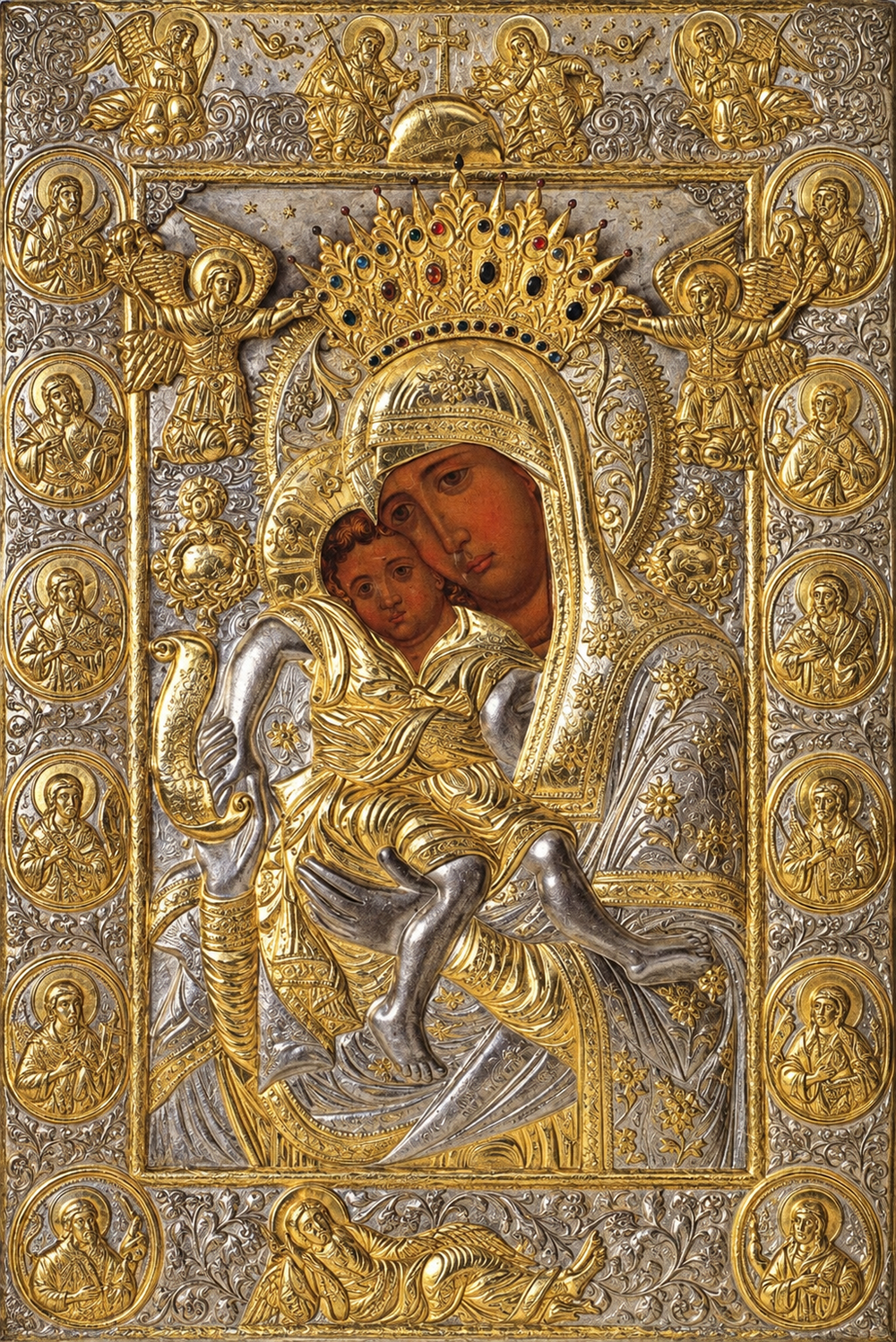
Relics of two Romanian saints are crossing the United States this month. The Romanian Patriarchate's news agency reports that a fragment of the relics of Saint Matrona of Hurezi, and a reliquary icon holding a fragment of the relics of Saint Maria Brâncoveanu, left Hurezi Monastery for a pilgrimage among Romanian communities in America (Basilica News Agency, via Orthodox House).
The delegation accompanying them is Fr. Mercurie Daniel Apostol, diocesan vicar of the Archdiocese of Râmnic; Stavrophore Ambrozia Șerban, abbess of Hurezi Monastery; and Nun Macrina Aream. The tour runs from November 6 to November 22, 2026. Parishes in Massachusetts, New York, Virginia, Pennsylvania and Texas were visited first. On November 16 the relics were in Las Vegas, Nevada. From November 17 to 20 they are with Romanian communities in California. The last stop is the Romanian Orthodox Church of Sts. Joachim and Anna in Seattle, Washington, on November 21 and 22, during that parish's consecration celebrations.
The pilgrimage belongs to the Romanian Church's Solemn Year of the Pastoral Care of the Christian Family and its commemorative year of holy women.
In Orthodox practice, the faithful venerate the relics of saints as a sign that God sanctifies the body as well as the soul. A pilgrimage like this brings that veneration to people who cannot travel to Romania. The Orthodox distinction is between veneration, which is given to saints, and worship, which belongs to God alone.
Part II
The Sixteen Holy Women
Matrona and Maria belong to a group. The Holy Synod of the Romanian Orthodox Church approved the canonization of sixteen holy women on July 1, 2025, according to Basilica.ro and OrthoChristian. The general proclamation took place on Friday, February 6, 2026, at the Patriarchal Cathedral in Bucharest, where Patriarch Daniel and members of the Holy Synod served the Divine Liturgy (OrthoChristian report). Patriarch Daniel described the women as having sanctified their lives through humility and love of neighbor, and called them the spiritual mothers of the Romanian people.
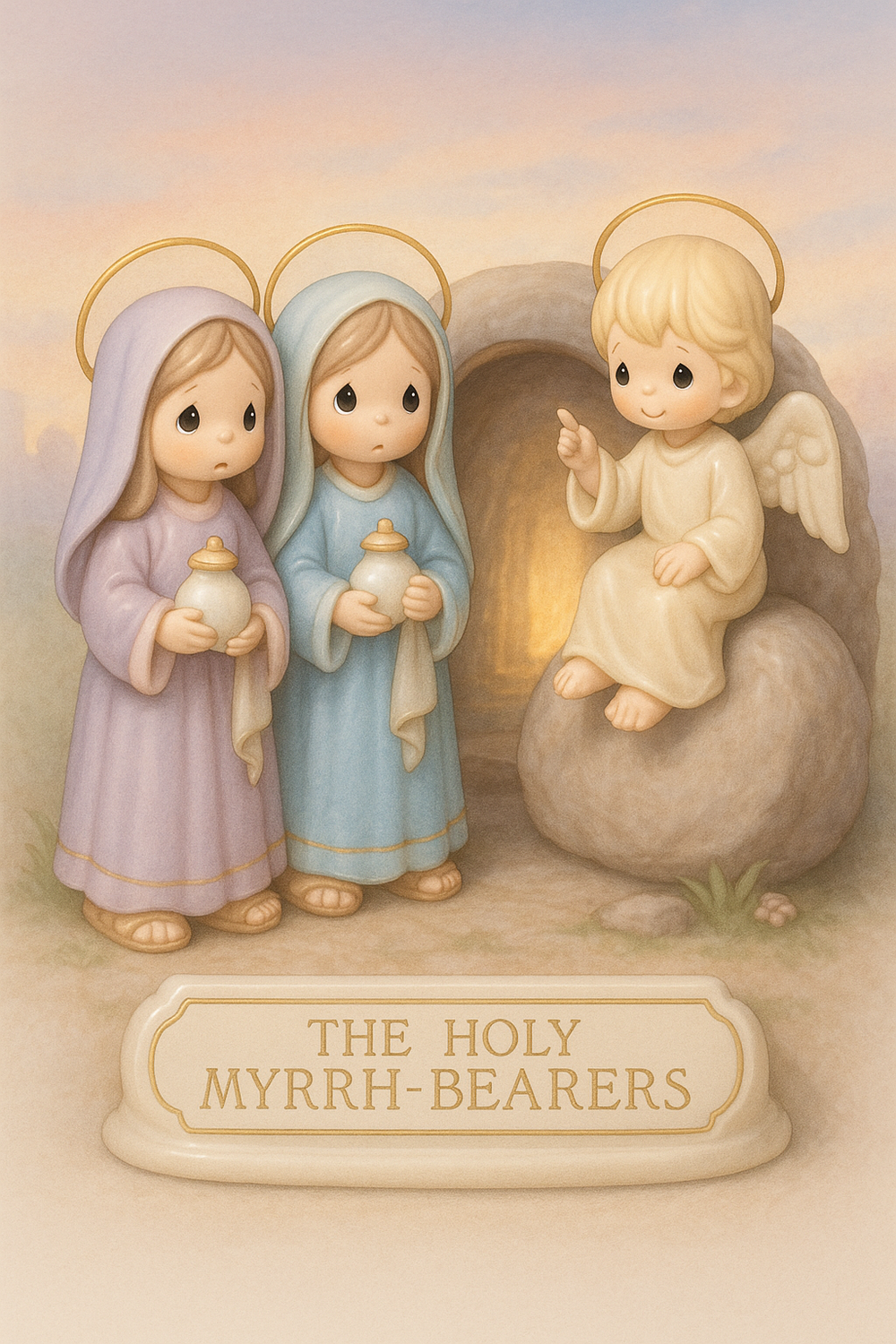
The group includes martyrs, nuns, wives of rulers, mothers of saints and confessors. The Church will now keep a Synaxis of the Holy Romanian Women on the third Sunday after Pascha, which is the Sunday of the Myrrh-bearing Women. The sixteen, with feast days as published, are:
Schemanun Maura of Mount Ceahlău (May 4); Schemanun Nazaria of Văratec (August 17); Schemanun Olimpiada of Văratec (August 17); Schemanun Elisabeta (Safta) Brâncoveanu (August 17); Blandina Gobjilă, Confessor of Iași (May 24); Lady Maria Brâncoveanu (August 16); Schemanun Filofteia Antonescu (April 12); Nun-Martyr Evloghia Țârlea (December 19); Schemanun Elisabeta Lazăr (feast day not stated in our sources); Nun Platonida (Lady Despina Milița) (September 26); Măndalina (Magdalena) Milenco (October 15); Olimpia Tănase (July 4); Anastasia Şaguna (December 1); Nun Filotimia Manolache (July 6); Nun Antonina Diaconu (December 23); and Nun Matrona Ciupelea, Saint Matrona of Hurezi (May 5).
Part III
Saint Matrona of Hurezi: Her Life
The fullest account of her life is a 2026 biography published through the Romanian Patriarchate's book channel, and a synaxarion entry in the Church's Synodal Synaxarion. Both are in Romanian. Between them, the story goes like this (biography, synaxarion).
Family and childhood. She was born Maria Ciupelea on August 2, 1852, in Săliștea Sibiului, in Transylvania, and baptized on August 10. Her parents, Nicolae and Stana, were devout Orthodox Christians with six children. Her father was a shepherd with a large flock. Moved by the monks of Mount Athos, he sold his sheep and became a monk at Vatopedi Monastery, taking the name Nicodim. The synaxarion adds that he was later ordained a hieromonk and lived as a hermit at the skete of Saint Demetrius. She went with her mother to Sărăcinești Monastery in Vâlcea County for confession and prayer, and stayed. According to the biography, she entered there as a beginner nun at age five, in 1857.
Hurezi. Under the guidance of Elder Orest Baldovin, abbot of Sadova Monastery, she was moved to Hurezi Monastery on August 6, 1873, according to the biography. She became a reader in the choir in 1875 and a chanter in 1877. Her spiritual lineage was the Paisian hesychast tradition, the stream of prayer revived by Saint Paisius Velichkovsky, passed down through Orest Baldovin and Porfirie Bucurescu, abbot of Frăsinei Skete. The synaxarion says she was guided at Hurezi by Fr. Orest, a disciple of Saint Calinic of Cernica.
The abbacy. On April 18, 1923, at age seventy-one, the sisterhood elected her abbess with 21 of 29 votes, and Bishop Vartolomeu Stănescu of Râmnicu Noul Severin confirmed the election on May 1. In December 1924 she proposed, and a synaxis decided, that common life with a shared table would begin on January 1, 1925. Serious tension among the sisters followed, and she resigned on January 15, 1925. The biography treats this period as a school of patience. She was later elected to the monastery's spiritual council.
Illness and healing. In 1926 she fell gravely ill. The synaxarion says that on the fortieth day, while praying with tears to the Mother of God, she saw the Theotokos, who asked what she wanted. Matrona asked to be taken because she could no longer bear the pain. After the vision she was healed.
Her death. Through a revelation from the Mother of God, she learned the time of her death and told her disciples she would depart in three days. She dressed in her monastic habit and lay down. While a disciple read the Akathist of the Annunciation, she fell asleep peacefully in the Lord. One biography records that her last words were a greeting to the Mother of God, Rejoice, Bride, ever-Virgin; the synaxarion records no final words, so we mention it with that caution. She was buried in Hurezi's cemetery.
The relics. According to the biography, her relics were found on April 5, 2022, during repair work under the wall of the infirmary church at Hurezi, and gave off a good fragrance. The Synod canonized her on July 1, 2025. The general proclamation followed on February 6, 2026, and the local proclamation and first feast day were observed at Hurezi on May 5, 2026 (Basilica.ro report).
Nothing in her life is spectacular. She was a chanter, then an abbess for a short time, then a nun who resigned during a hard dispute and was healed after prayer. The Church's own biographers call her a humble mother who tried to hide her virtues. That is the point of her glorification: ordinary, hidden faithfulness.
Part IV
Hurezi Monastery
Hurezi, also spelled Horezu, is in Vâlcea County in southern Romania. Radio Romania International says Constantin Brâncoveanu commissioned it in 1689, in his second year as ruler, and that it was the first monastery in the style named for him. It was designed as a place of worship and a necropolis for the ruler and his family. The church has a carved golden linden iconostasis nearly ten meters tall, and portraits of its builders appear on its walls, which the article notes broke the medieval tradition of anonymous workers. It is a UNESCO World Heritage Site and is now a convent, which is why a nun is its saint.
This is also the monastery whose abbess traveled to the United States with the relics. Both saints on this tour are tied to Hurezi: Matrona lived there for most of her life, and Maria Brâncoveanu was the wife of the man who founded it.
Part V
Saint Maria Brâncoveanu: Her Life
Lady Maria Brâncoveanu, often called Marica, was born in 1661 into a boyar family, according to Romfilatelia's official summary. Her father was a chamberlain and her grandfather a ruler. She married Constantin Brâncoveanu in 1674, when she was about thirteen or fourteen, and the couple had eleven children. Over the years she managed the family's wealth and estates and, in 1706, appealed directly to the Sultan to protect the family's assets in Istanbul. She supported churches, monasteries, schools, printing and the arts. AXIA Women adds that she commissioned books printed in several languages, among them Romanian, Greek, Slavic and Arabic, and founded libraries.
In 1714 her husband was deposed and the family was taken to Constantinople. Constantin and his four sons, Constantine, Stephen, Radu and Matthew, were put to death for refusing to give up Orthodoxy, and she was a witness. She was imprisoned and robbed, then exiled near the eastern shore of the Black Sea. Romfilatelia says she returned to Wallachia after three years in exile, while AXIA says she was back in Bucharest in 1716, so we say only that she came back within a few years.
What she did next is the reason the Church honors her. In 1720 she secretly moved her husband's relics to the Church of St. George the New in Bucharest, where they were placed under an uninscribed stone slab, and she cared for her grandson, also named Constantin. She spent her final years in prayer, often at Surpatele Monastery, and died in 1729. Her relics are preserved at St. George the New. The Synod approved her canonization on July 1, 2025, and her feast is August 16, the same day as her husband and sons. Romfilatelia reported that her local proclamation was set for August 16, 2026, at St. George the New.
Patriarch Daniel's reflection on her life, published by Basilica.ro, describes how she turned suffering into a witness of faith. We could not open that page directly, so we do not quote it.
The Church did not glorify Maria for her rank. It glorified a mother who raised eleven children in the faith, survived the murder of her husband and sons, and spent years recovering and burying them. The canonization is about what she did with grief.
Part VI
Saint Constantin Brâncoveanu and His Sons
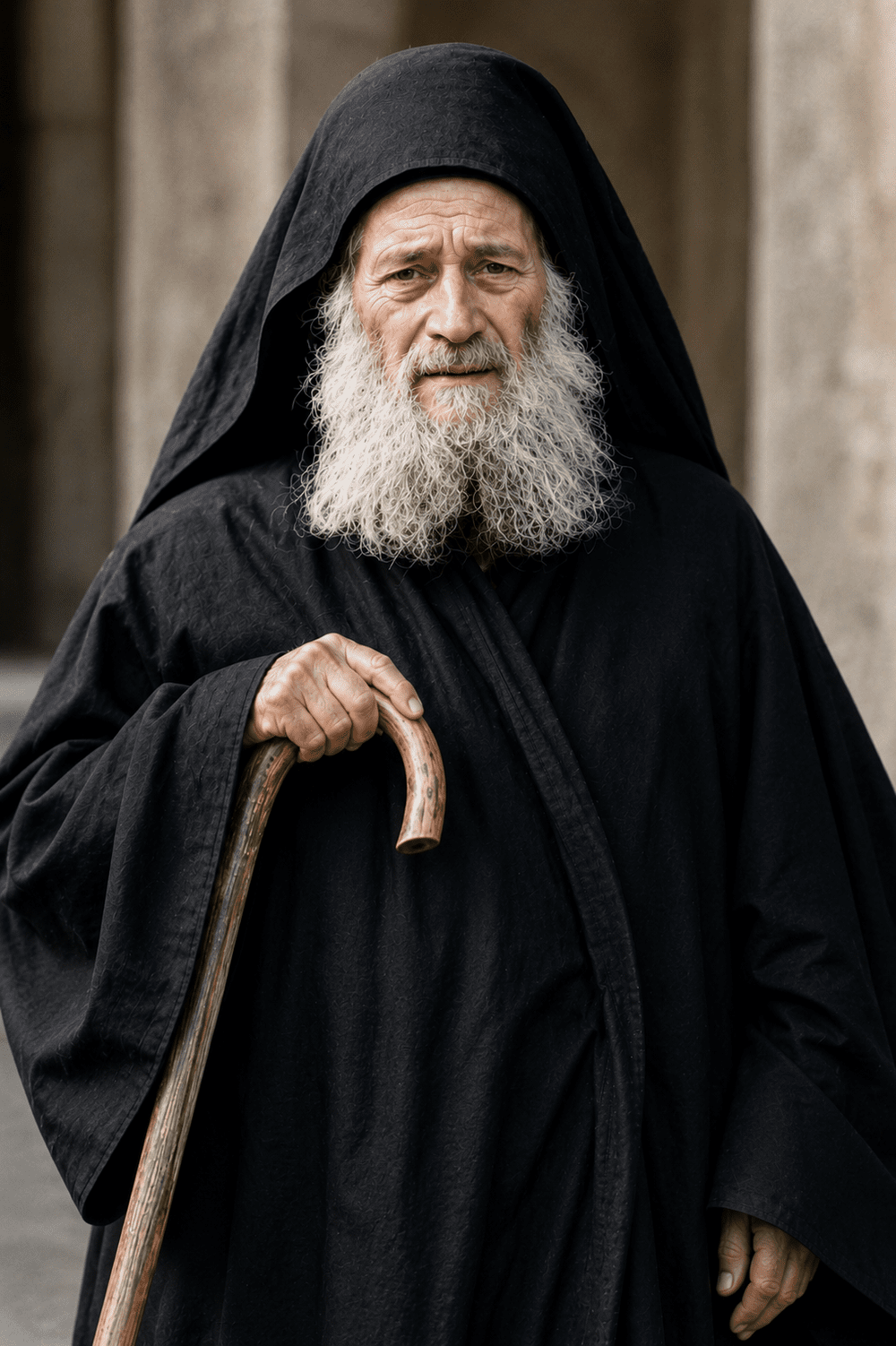
The husband and sons are saints too, and their story explains Maria's. Constantin Brâncoveanu succeeded his uncle, Șerban Cantacuzino, who died on October 19, 1688, and ruled Wallachia for about twenty-five years. After his arrest, the Orthodox Church in America's account says, he was taken to Constantinople with his sons and tortured for four months. On the feast of the Dormition, August 15, 1714, he watched his four sons, Constantine, Stephen, Radu and Matthew, beheaded before he himself was put to death. His counselor Ianache Văcărescu died with them (OCA life of the saints).
The Holy Synod of the Romanian Orthodox Church canonized Constantin and his companions on June 20, 1992, with August 16 as their commemoration. The canonization decree was read on August 15, 1992, at St. George the New Church in Bucharest, where the prince's tomb is, according to the Church's commemorative decree for the 300th anniversary. The relics were exhumed on May 13, 2014, and placed in a gold and silver reliquary.
Print on demand mugs and shirts to go with the cards above. Prayer cards are handmade; mugs and shirts are print on demand.


Part VII
What This Means for Cedar Park
The relics were in Texas for a reason: St. Mary's Romanian Orthodox Church in Cedar Park, near Austin, was consecrated on Sunday, November 15, 2026, by Metropolitan Nicolae of the Americas and Bishop Ioan Casian of Canada. According to OrthoChristian, the parish was founded in 2002, broke ground on the new church on the Nativity of the Theotokos in 2024, and now has about forty families. A fragment of Saint Matrona's relics and the reliquary icon of Saint Maria Brâncoveanu were venerated during the patronal feast celebrations, and both saints' relics were scheduled to be present at the Seattle consecration on November 21.
We wrote a separate report on the consecration itself: Romanian Orthodox Church Consecrated in Cedar Park, Texas. This article tells you who the two women are.
Part VIII
Where the Sources Differ
The Church's own biographies disagree on a few dates, and we would rather say so than guess.
The year Matrona died. The synaxarion and the Synod's published list give 1935. The 2026 biography says she received word on May 2, died on May 5, 1939, aged 87, and was buried on May 7. 1852 plus 87 years gives 1939, which fits the biography, but the Synod's list says 1935. We could not settle it.
When Matrona entered Hurezi. The biography says August 6, 1873. Another account says she was tonsured and sent to Hurezi in 1868. The synaxarion says she was tonsured at Sărăcinești. We use the biography and note the others.
How long she was abbess. The biography has her elected in April 1923 and resigning in January 1925. Another summary says four years, from 1922. We use the 1923 election date.
Maria's return from exile. About three years after 1714, or 1716. We say within a few years.
Elisabeta Lazăr's feast day. The published lists we saw do not give one.
Our access. Basilica.ro, the Romanian Patriarchate's English news site, did not open for us, so the tour details come from its text republished by Orthodox House.
Part IX
For Eastern Catholic Readers
The Romanian Orthodox Church is a different church from the Romanian Greek Catholic Church, which is in communion with Rome. Both share the Byzantine tradition of the Divine Liturgy, icons and the Jesus Prayer. Our own articles on the Romanian Greek Catholic Church and its saints tell that other half of the story. Saints Matrona and Maria belong to the Orthodox calendar. They are honored here because the Church that glorified them is the one the relics belong to, and because their lives show the same prayer and family faith that Eastern Christians share.
Two Women, Two Kinds of Faith
One was a nun who sang in the choir and led her monastery for two years. The other was a princess who buried her husband and sons. The Romanian Church has now named both saints, and their relics have crossed an ocean to stand in American churches.
Get the Axion Estin Prayer Card →Sources
- Basilica News Agency (Romanian Patriarchate) via Orthodox House: Relics of two new Romanian saints are taken on a pilgrimage to Romanian communities in the United States (November 18, 2026), the tour itinerary and delegation.
- OrthoChristian: Romanian church in Austin suburb consecrated the Cedar Park consecration and the relics.
- Basilica.ro: Holy Synod approves canonization of 16 saintly women (July 2025).
- OrthoChristian: Romanian Church proclaims canonization of 16 holy women (February 2026), the list and feast days.
- OrthoChristian: 16 holy women canonized by Romanian Orthodox Church (July 2025).
- Romanian Patriarchate publishing: Rugatoare si rabdatoare, Sfanta Cuvioasa Matrona de la Hurezi (2026, in Romanian), the life of Saint Matrona.
- Ziarul Lumina: Synodal synaxarion entry for Saint Matrona of Hurezi (in Romanian).
- Basilica.ro: Local proclamation of Saint Matrona of Hurezi's canonisation held at Hurezi Monastery the first feast day, May 5, 2026.
- Romfilatelia: Canonization of Lady Maria Brâncoveanu, wife of Saint Constantin Brâncoveanu on her life and canonization.
- AXIA Women: Holy Women of Romania on Maria Brâncoveanu and the canonization context.
- Orthodox Church in America: Saint Constantine Brâncoveanu and those with him (August 16).
- Romanian Orthodox Church: Commemorative Synodal Decree for the 300 years since the martyrdom of the Brâncoveanu saints (2014).
- Radio Romania International: The Hurezi Monastery on the foundation and architecture of the monastery.
