Saint Michael the Archangel: The Prince of the Heavenly Host Christians Have Called on for Protection for Nearly Two Thousand Years
Complete Guide • Scripture & Tradition • The Leo XIII Vision • Feast Days East & West
Saint Michael the Archangel: The Prince of the Heavenly Host Christians Have Called on for Protection for Nearly Two Thousand Years
A pope saw a vision of hell that shook him to his core, and wrote a prayer that has been recited against evil ever since. Behind it stands a far older figure: the archangel Scripture names as the one who defends God's people when nothing else stands between them and the darkness.
Saint Michael the Archangel — At a Glance
- Name Meaning
- Hebrew Mi-ka-El — “Who is like God?”
- Rank
- Archangel • Prince of the Heavenly Host • Leader of the Bodiless Powers
- Key Scripture
- Daniel 10–12 • Jude 1:9 • Revelation 12:7–9
- Catholic Feast
- September 29 — Michaelmas, with Gabriel & Raphael
- Orthodox Feast
- November 8 — Synaxis of the Archangel Michael & the Bodiless Powers
- Famous Prayer
- Composed by Pope Leo XIII, added to the Leonine Prayers in 1886
- Invoked For
- Protection • Spiritual warfare • Soldiers, police & first responders
- Tradition
- Venerated in both the Catholic and Eastern Orthodox Churches
Who Is Saint Michael the Archangel?
Saint Michael the Archangel holds a category of veneration unlike any human saint. He is not a person who lived, died, and was later recognized for holiness; he is one of God's created spiritual beings, named directly in Scripture as the chief of the angels who serve as God's messengers and defenders. Both the Catholic and Eastern Orthodox Churches give him the highest honor extended to any angel, and both traditions call on him by the same title: Prince of the Heavenly Host.
His name, Michael, comes from the Hebrew Mi-ka-El and means “Who is like God?” Tradition reads this as more than a name. It is understood as the challenge Michael himself raised against the pride of the angel who fell from heaven for wanting to be God's equal — a question with only one honest answer, and the answer at the center of everything Michael is invoked to defend.
Part II
Michael in Scripture
Michael is one of only a small number of angels named directly in the Bible, and every appearance shows him in the same role: the one who stands and fights when God's people are under threat. In the Book of Daniel, he is called “the great prince who has charge of your people” (Daniel 12:1), sent to contend on Israel's behalf against opposing spiritual powers (Daniel 10:13, 10:21). He is the only angel in the Old Testament given the title “archangel” by name.
The Epistle of Jude records a strange and striking episode: a dispute between Michael and the devil over the body of Moses, in which Michael, even given full authority, does not presume to condemn Satan directly but says, “The Lord rebuke you” (Jude 1:9). It is a small detail with a large lesson, one the Church has never stopped drawing on: even the archangel who leads heaven's armies defers to God's authority rather than his own power.
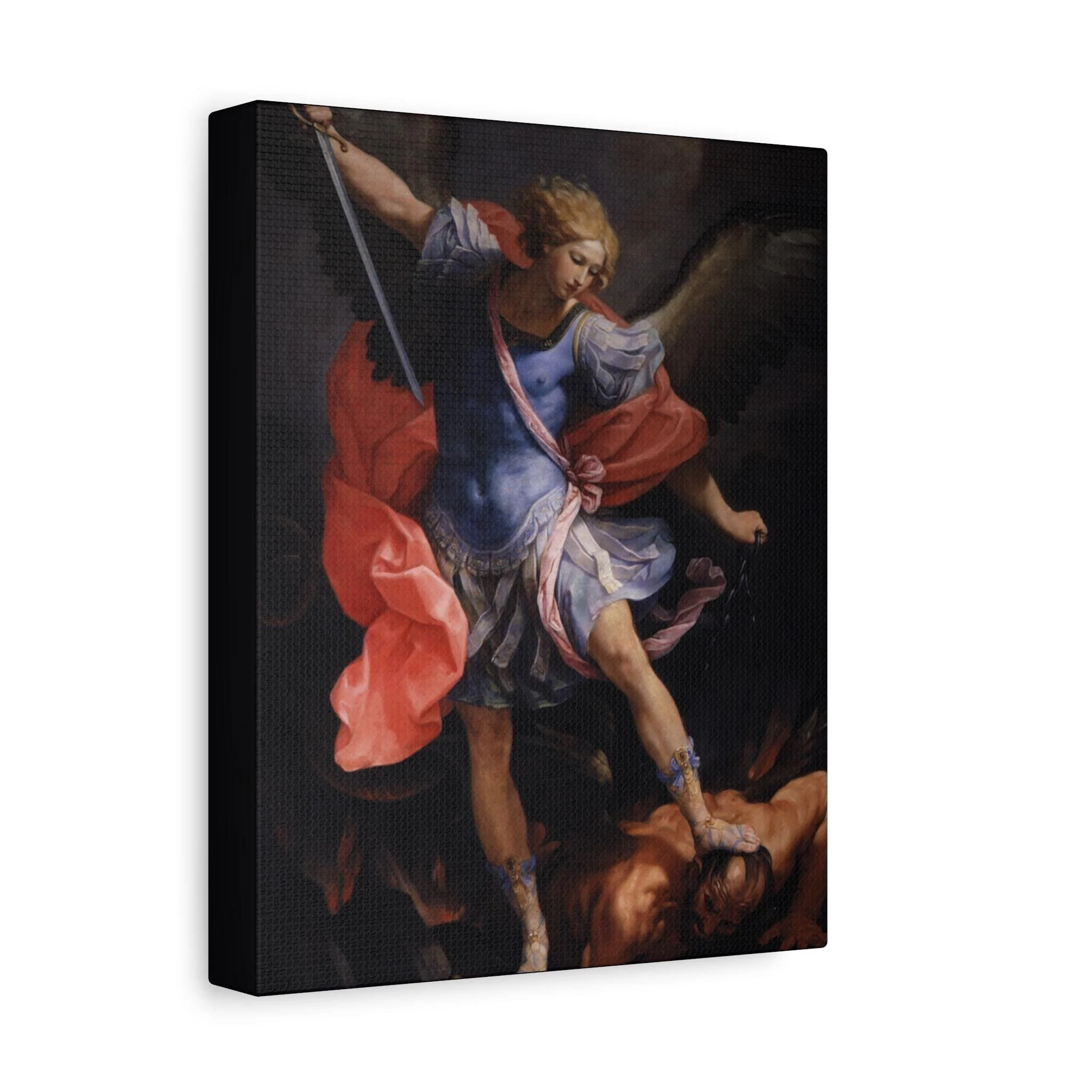
The most decisive appearance comes in the Book of Revelation, where Michael leads the angels in open war against Satan: “And there was war in heaven, Michael and his angels fighting against the dragon; and the dragon and his angels fought back, but he was defeated” (Revelation 12:7–9). This single passage is the scriptural foundation for nearly every image of Michael ever painted or carved: sword or spear raised, foot planted on the defeated serpent, the moment of victory captured permanently.
Part III
Michael in Sacred Tradition
Beyond the direct scriptural text, Eastern Christian tradition holds that Michael's protection of God's people reaches back even further than Daniel's vision. According to this tradition, it was Michael who went before the Israelites during the Exodus as the pillar of cloud by day and the pillar of fire by night, and Michael who appeared to Joshua outside the walls of Jericho as “commander of the army of the Lord” (Joshua 5:13–15), confirming that the coming battle belonged to God.
In the Eastern Orthodox Church, Michael is honored as chief among the nine ranks of angels — the Seraphim, Cherubim, Thrones, Dominions, Powers, Authorities, Principalities, Archangels, and Angels — and is venerated together with the other archangels named in tradition: Gabriel, Raphael, Uriel, Selaphiel, Jehudiel, Barachiel, and Jeremiel. This shared feast, still kept every November, reflects an older instinct in the Church: Michael is never venerated in isolation from the whole company of heaven he leads.
Part IV
The Vision That Gave Us His Prayer
The prayer most closely associated with Saint Michael today did not come from the ancient Church. It came from a nineteenth-century pope. According to a tradition reported by multiple contemporaries, Pope Leo XIII experienced a profound and disturbing vision, most often dated to the mid-1880s, in which he witnessed demonic forces massing to attack the Church. Accounts describe the Pope visibly shaken afterward, and deeply moved to act.
In 1886, Leo XIII had a prayer to Saint Michael added to the Leonine Prayers, a set of prayers recited after every low Mass throughout the Catholic world. For nearly eighty years, Catholics around the globe ended nearly every Mass they attended by asking Michael's protection against evil. The obligation to recite these prayers was removed following the liturgical reforms after the Second Vatican Council in the 1960s, but the prayer itself never disappeared. It remains one of the most widely prayed Catholic devotions against spiritual attack, and many exorcists today still recommend it as a first line of defense in ordinary spiritual struggle, not only in extraordinary cases.
Part V
The Prayer to Saint Michael the Archangel
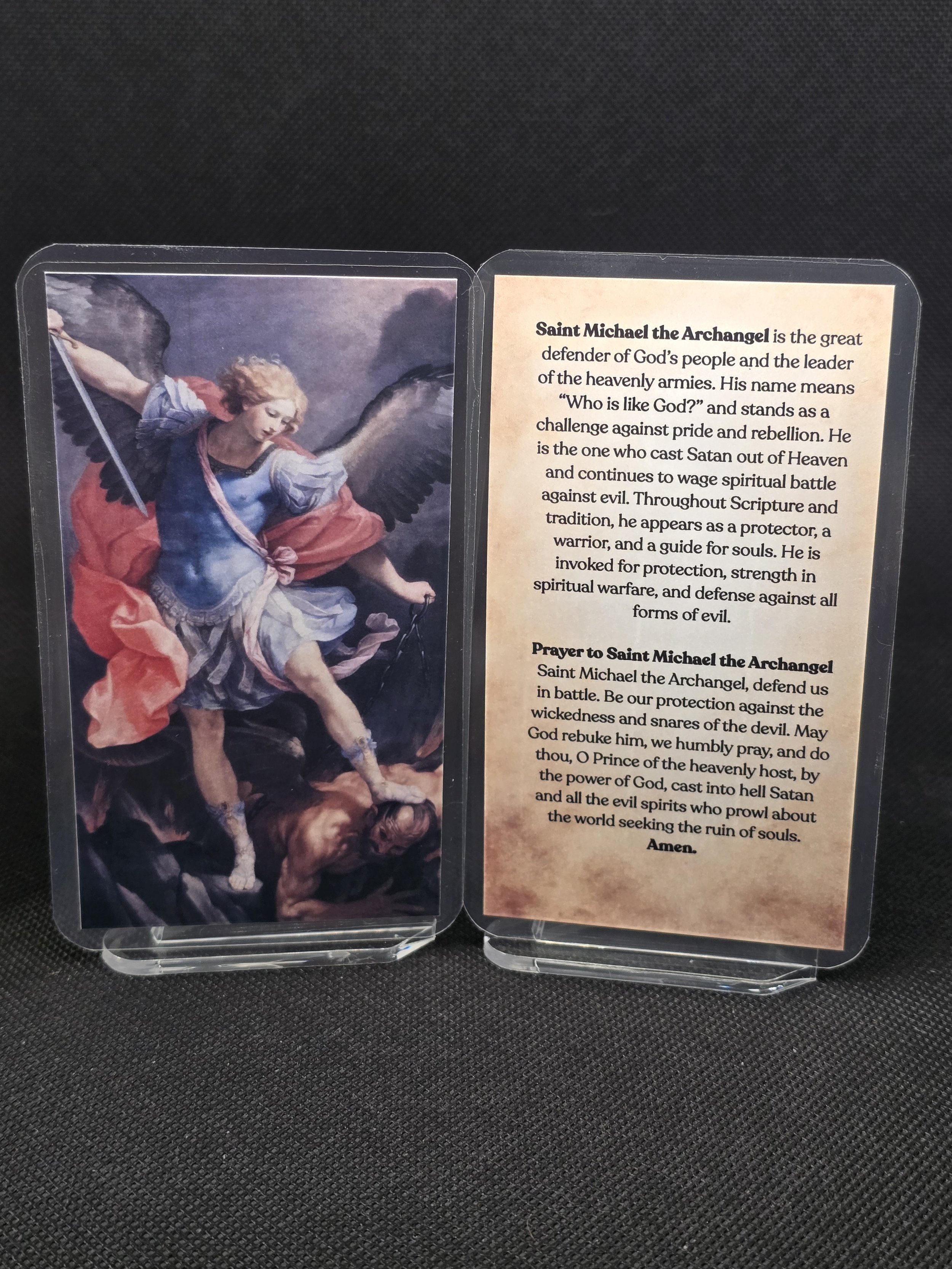
Saint Michael the Archangel, defend us in battle. Be our protection against the wickedness and snares of the devil. May God rebuke him, we humbly pray, and do thou, O Prince of the Heavenly Host, by the power of God, cast into hell Satan and all the evil spirits who prowl about the world seeking the ruin of souls. Amen.
The prayer is short by design. It was meant to be memorized and repeated, not read once and set aside. Many Catholics and Orthodox Christians today pray it daily, often first thing in the morning or as part of a nightly examination of conscience, keeping an image or prayer card of Michael nearby as a physical point of focus for the words.
Part VI
Feast Days: East and West
In the Catholic Church, September 29 is kept as the combined feast of Saints Michael, Gabriel, and Raphael, traditionally called Michaelmas, a day historically marked across Western Europe with its own harvest customs and folklore. In the Eastern Orthodox Church, the Synaxis of the Archangel Michael and the Other Bodiless Powers is kept on November 8, a feast established in the early fourth century that honors Michael together with the full company of angels, reflecting the ninth month reckoning of the old liturgical calendar and the ancient symbolism of the number eight as the day beyond ordinary time.
Part VII
What Saint Michael Is the Patron Of
Nearly every patronage attached to Michael traces back to the same source: his role in Scripture as the one who fights on behalf of God's people when the danger is greatest. He is invoked as patron of soldiers and of police officers, paramedics, and other first responders, whose work regularly puts them between danger and the people they protect. He is also traditionally invoked at the hour of death, asked to lead the souls of the faithful safely home, and is called on broadly by anyone who feels they are facing spiritual opposition they cannot fight alone — temptation that will not relent, oppression that feels targeted, or simply the ordinary weight of living in a world the New Testament describes as still contested ground.
Part VIII
How to Pray to Him for Protection
There is no complicated formula. Most Catholics and Orthodox Christians who keep a daily devotion to Saint Michael do three simple things: they pray the traditional prayer above, or a shorter version of it, at a consistent time, most often morning or night; they keep a visible reminder of him nearby, whether an icon, a prayer card, or a medal; and they bring their specific situation to him directly and by name rather than praying only in general terms. Many parents also teach the prayer to children as one of their first memorized devotions, precisely because of its brevity and directness.
Part IX
Shop Saint Michael the Archangel
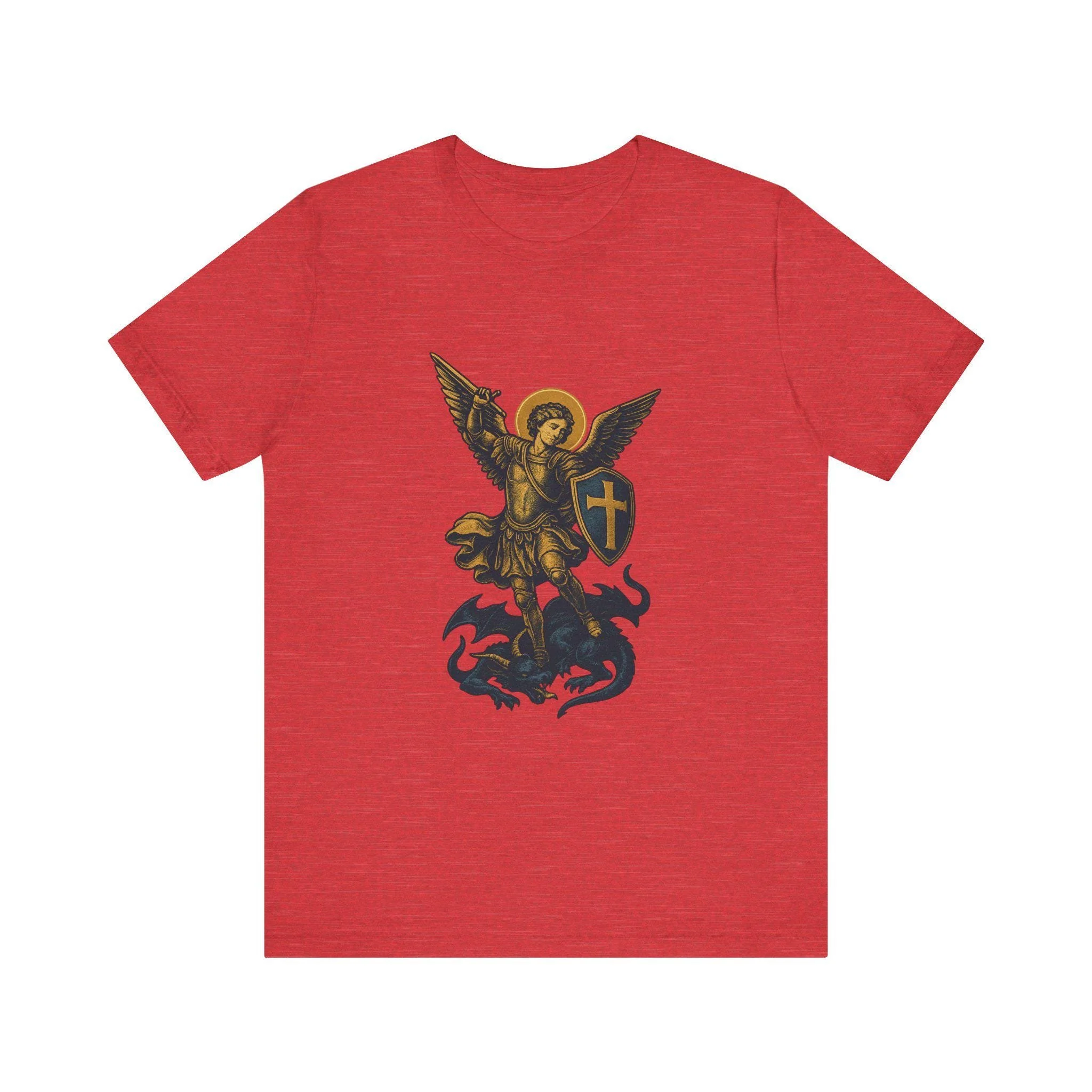
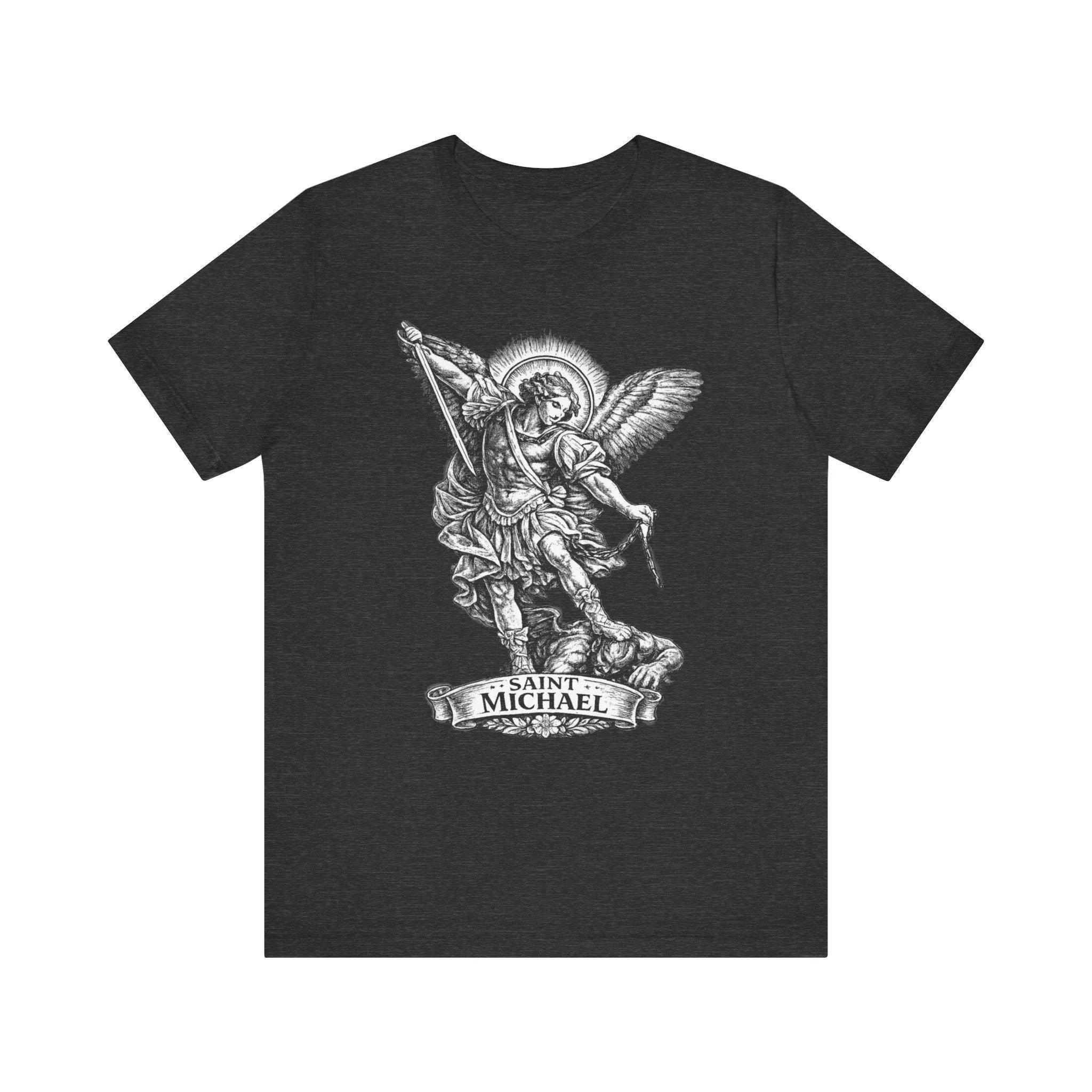
Beyond the prayer card, Saint Michael's image is available across several formats for the home, the wall, and everyday wear — each one a way of keeping the Prince of the Heavenly Host visibly present in daily life.
Part X
Other Saints Invoked Against Spiritual Attack
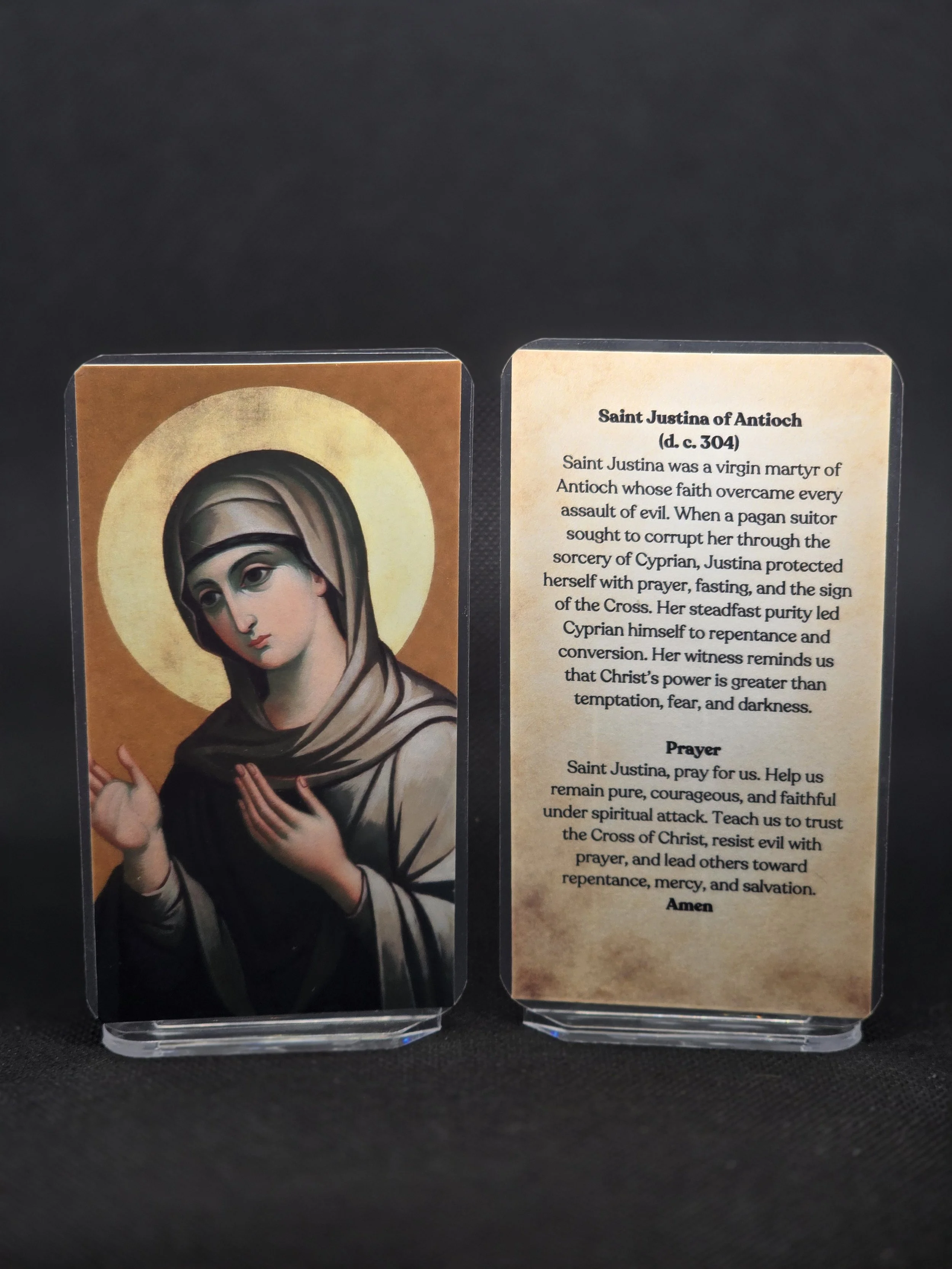
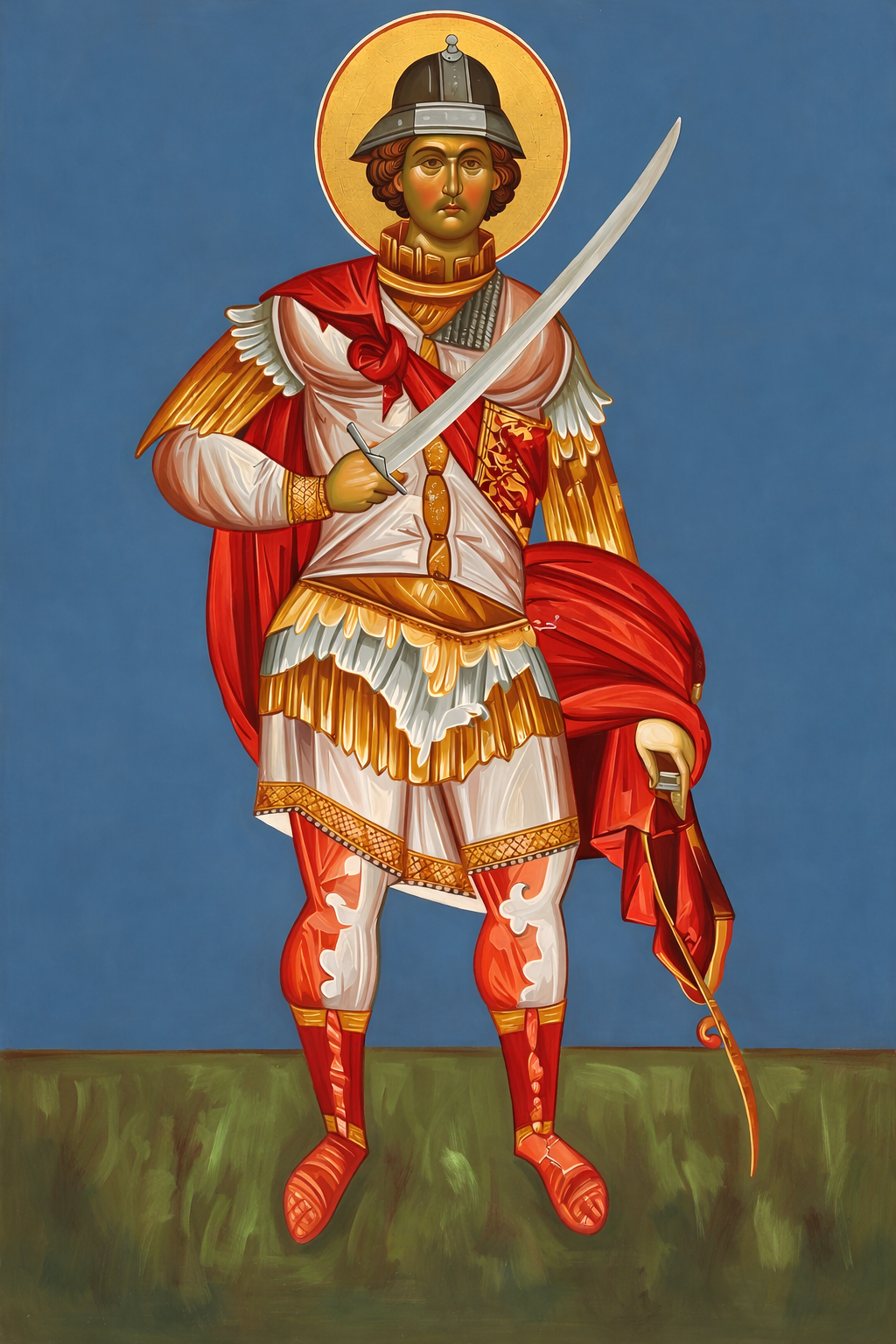
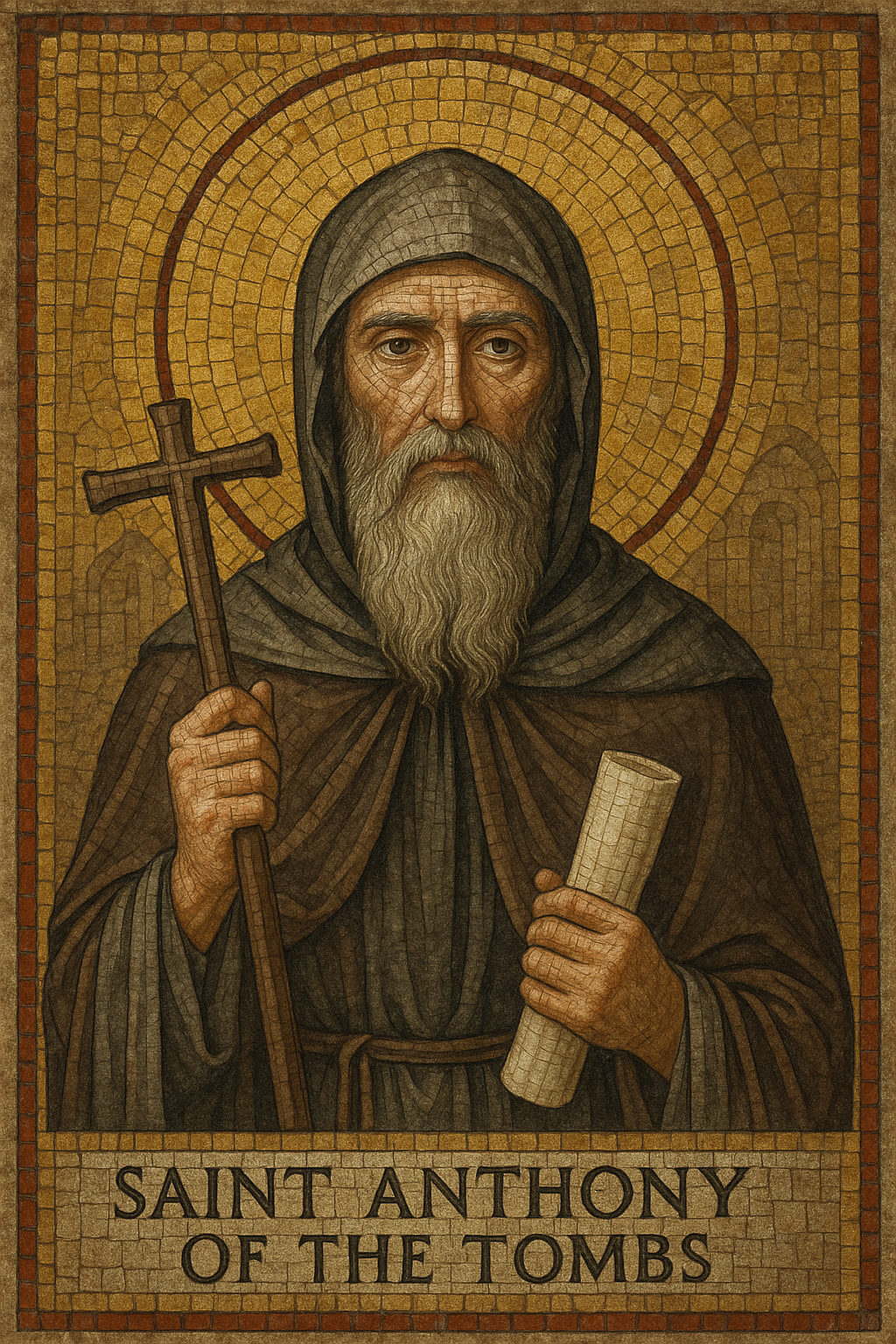
Michael is rarely invoked alone in a household's devotional life. Many Catholics and Orthodox Christians building a practice of protection against spiritual attack pair his prayer card with one or more of the following intercessors, each carrying a specific tradition of standing firm against darkness.
FAQ
Frequently Asked Questions
He Has Never Stopped Being Asked to Stand Between His People and the Dark
From the pillar of fire before the Israelites, to the walls of Jericho, to a nineteenth-century pope shaken by what he had seen, to a prayer still recited today by soldiers, police, and anyone carrying a fight they cannot win alone — Michael's role has never changed. He was given one job: defend. Millions of Christians across two millennia have simply kept asking him to do it.
Keep him close. Pray the words a pope once wrote after seeing what they were needed for.
Get the Saint Michael Prayer Card →