Saint Irene Chrysovalantou: The Byzantine Abbess Christians Have Prayed to for Over a Thousand Years When Nothing Else Was Working
Complete Biography • Miracles • Feast Day July 28 • Patron for Infertility & Impossible Prayers
Saint Irene Chrysovalantou: The Byzantine Abbess Christians Have Prayed to for Over a Thousand Years When Nothing Else Was Working
Passed over for a crown she never wanted, she became the abbess women in impossible situations still turn to today — for the child that will not come, the marriage that will not happen, and the waiting that has no end in sight.
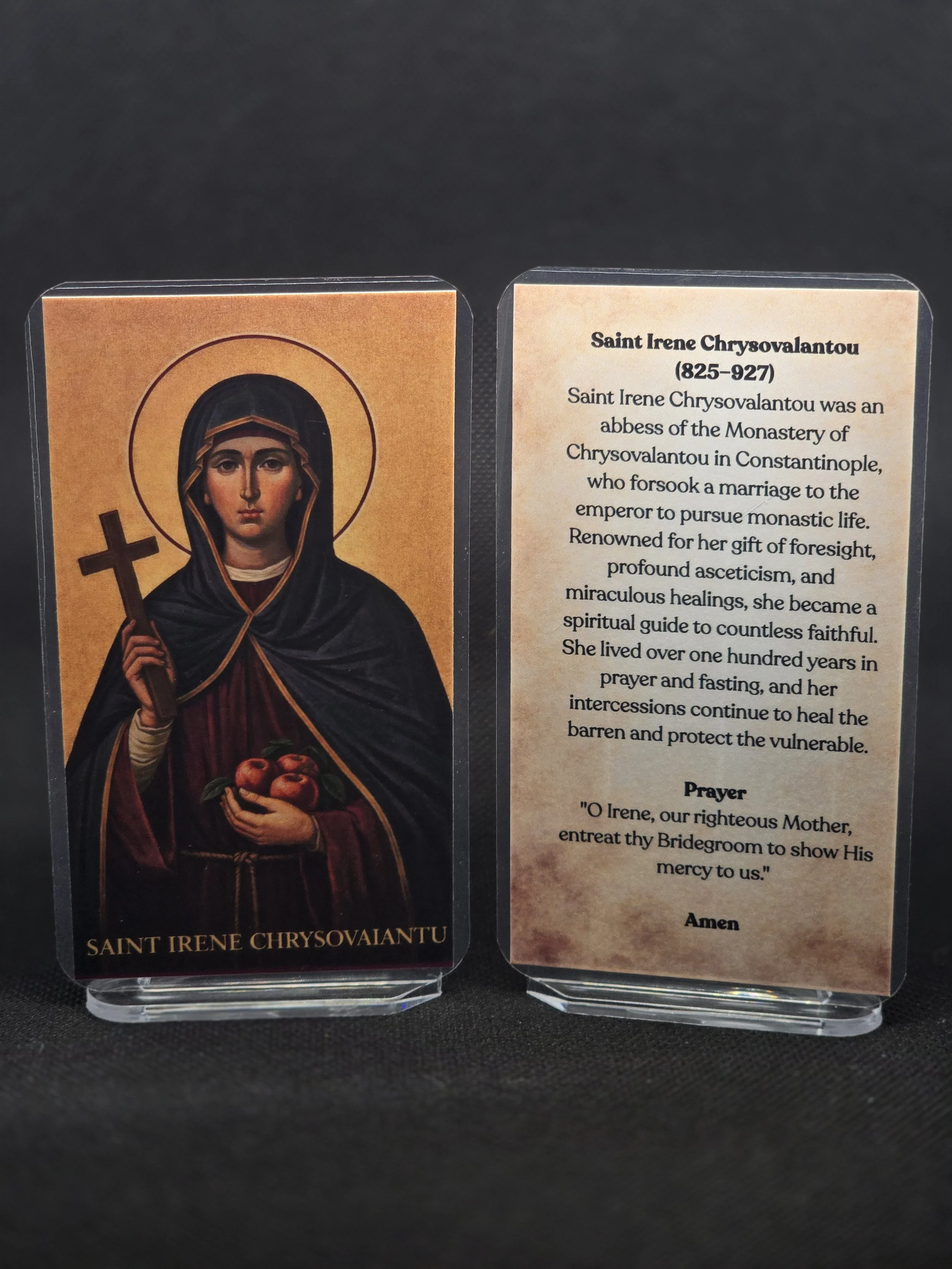
Saint Irene Chrysovalantou — At a Glance
- Lived
- Ninth century • Died at more than 101 years old
- Born
- Cappadocia, Byzantine Empire • Noble family
- Feast Day
- July 28
- Known As
- Abbess of the Monastery of Chrysovalantou, Constantinople
- Invoked For
- Infertility • Delayed marriage • Impossible or hopeless situations
- Signature Miracle
- The Three Apples from Paradise, sent through Saint John the Theologian
- Tradition
- Eastern Orthodox • Predates the Great Schism of 1054
- Devotional Custom
- Blessing of apples on her feast day, especially by couples praying for a child
Who Was Saint Irene Chrysovalantou?
Saint Irene Chrysovalantou was born in the ninth century to a wealthy, noble family in Cappadocia, the same rugged region of central Asia Minor that produced Saint Basil the Great and so many of the early Church’s ascetic fathers and mothers. Her traditional Life gives us no fixed birth year, which is typical for saints of this period, but it gives us something more durable: a clear account of a young woman whose life was redirected, against her own plans, toward a path she had not chosen and came to embrace completely.
By the standards of ninth-century Byzantium, Irene had every advantage a noblewoman could ask for. She was cultured, devout, and, according to every account of her life, remarkably beautiful. None of that shielded her from what came next: a summons to the imperial capital that would decide the direction of the rest of her life, whether she wanted it to or not.
Part II
The Bride-Show She Did Not Win
According to Irene’s traditional Life, she was brought to Constantinople as a young woman to be presented as a candidate bride for the Byzantine Emperor Michael III, during the years his mother, the Empress Theodora, governed as regent on his behalf. Byzantine bride-shows of this kind were a real feature of ninth-century imperial life: noblewomen from across the empire were gathered in the capital, and the emperor, or his family, chose among them. It was, in effect, the highest possible marriage a young woman of the era could be offered.
Irene was not chosen. Another woman became empress. For most noblewomen of the ninth century, being passed over at court would have meant a quieter marriage arranged elsewhere, a smaller life than the one that had briefly seemed within reach. Irene took a different path entirely. Rather than accept a lesser match, she went directly to the Monastery of Chrysovalantou in Constantinople and became a nun.
This is the root of her patronage for delayed marriage and for anyone who has been passed over, waited past the point they expected an answer, or watched a door close that they had every reason to think would open. Irene’s story does not end with disappointment. It ends with a life that outgrew the one she had been offered in the first place — which is precisely why so many who feel stuck at the closed door still bring their waiting to her.
Part III
Life as Abbess of Chrysovalantou
Irene rose quickly within the community at Chrysovalantou and became its abbess. Her traditional Life describes a woman of extraordinary discipline: extended fasting, entire nights spent in prayer standing in the monastery courtyard rather than sleeping, and a devotion so total that the sisters under her care came to expect the unexpected from her.
Her Life records that she was given the gift of foresight and the ability to cast out demons, and that on the great feasts of the Church she would keep vigil alone in the courtyard through the night. One of these nights produced the account for which she is most remembered among the ascetic mothers of Byzantium: a nun, unable to sleep, went out into the courtyard and found her abbess suspended several feet above the ground in prayer, with two cypress trees bent low as if bowing before her. When Irene finished praying, she blessed the trees, and they returned upright.
Accounts like this belong to sacred tradition rather than documented history in the modern sense, and Irene herself, according to her Life, discouraged the nuns around her from repeating what they witnessed. But the consistency of the tradition, carried across more than a thousand years of Orthodox monastic memory, is itself part of why her intercession is still sought today. A life that spent itself so completely in prayer for others is understood, in the Orthodox tradition, to carry weight in prayer for those still living.
Part IV
The Three Apples from Paradise
The miracle most closely tied to Irene’s living devotion today happened, according to her traditional Life, in the last year of her life. After the feast of Saint Basil the Great on January 1, which she kept with special devotion since he too was from Cappadocia, Irene heard a voice at night instructing her to welcome a sailor who would arrive at the monastery the next day.
The sailor came as foretold. He explained that his ship had set out from Patmos when an old man on the shore called for it to stop; despite a favorable wind, the vessel came to a sudden halt on its own. The old man then walked across the water, boarded the ship, and handed the sailor six apples: three for the Patriarch of Constantinople, sent, he said, from His beloved disciple John, and three more for the abbess of Chrysovalantou. In the tradition surrounding this account, the old man is understood to have been Saint John the Theologian himself.
The following July, in the week before her repose, Irene fasted completely, taking nothing but water and small pieces of one of the apples she had been given. The whole monastery, her Life records, was filled with a fragrance that lingered for years. On July 28, she gathered the sisters to say farewell, and reposed peacefully.
To this day, in many Greek Orthodox parishes, apples are brought to church to be blessed on Saint Irene’s feast day. It is this specific custom, and not a general devotion, that has made her name synonymous with prayers for conception across the Orthodox world.
Part V
Why She Is Invoked for Infertility
The connection between Saint Irene and fertility did not come from a single official declaration. It grew, the way most patronages of this kind grow in Eastern Christianity, out of centuries of lived devotion: women who could not conceive brought their prayers to her relics, ate a piece of apple blessed on her feast day, and asked specifically for her intercession. When children were born afterward, families gave thanks in the most direct way available to them — by naming the child Chrysovalanti or Chrysovalantou, after the saint they credited with the answer.
That naming custom still exists today in parts of Greece and among Greek Orthodox communities abroad, which is itself a kind of living record: a devotion this specific does not sustain itself across a thousand years without a great many families believing, and continuing to believe, that it worked.
For couples struggling to conceive, for those facing a diagnosis that makes conception medically difficult, and for anyone waiting on a prayer that has gone unanswered far longer than they expected, Irene’s intercession is sought precisely because her own story followed the same shape: a plan that did not happen the expected way, followed by a fullness of life that came from an entirely different direction.
Part VI
Her Repose and the Miracles That Followed
Her traditional Life records that she was given foreknowledge of the exact date of her death a year in advance, by way of a vision. She spent her final week fasting according to the custom of the Church, eating only pieces of the blessed apple, and reposed peacefully on July 28 surrounded by her community. Though she was more than a century old, her Life records that her face appeared young at her death. A great crowd gathered for her funeral, and a fragrance was reported at her tomb for years afterward, alongside numerous accounts of healing and answered prayer that continue to be reported at her relics today.
What has kept Saint Irene’s memory alive across eleven centuries is not a single miracle but the accumulation of them: generation after generation of Orthodox Christians bringing the same category of prayer to her, in the same specific way, and reporting the same kind of answer. That pattern, more than any formal declaration, is what has made her one of the most quietly relied-upon intercessors in the Eastern Christian world for exactly the kind of waiting that feels the most private and the most difficult to speak about out loud.
Part VII
How to Pray for Her Intercession
There is no single required prayer text for approaching Saint Irene, and that is part of what makes her devotion so accessible. What has remained consistent across the centuries is the pattern: name the specific thing you are asking for, return to it regularly rather than only once, and keep something tangible — an icon, a prayer card — as a visible point of focus for a prayer that may need to be carried for a long time.
O holy Mother Irene, you were set aside from the marriage the world offered you, and given instead a life that bore fruit no one could have predicted. You waited on God’s timing when your own had closed, and you were not forgotten.
Look with mercy on [name your request]. You know what it is to wait past the point of reasonable hope. Intercede for us before Christ, that what feels closed may yet be opened, in His time and according to His will.
As the apples of paradise were sent to you across the sea, in defiance of the wind, send your prayers across whatever distance separates us from the answer we are asking for. Amen.
Many families also choose to mark July 28 specifically, following the custom of blessing and eating an apple on her feast day, and to give a name honoring Saint Irene to a child born after her intercession has been sought — the same custom that has carried her memory forward for over a thousand years.
Part VIII
Other Saints Invoked for Pregnancy & Fertility
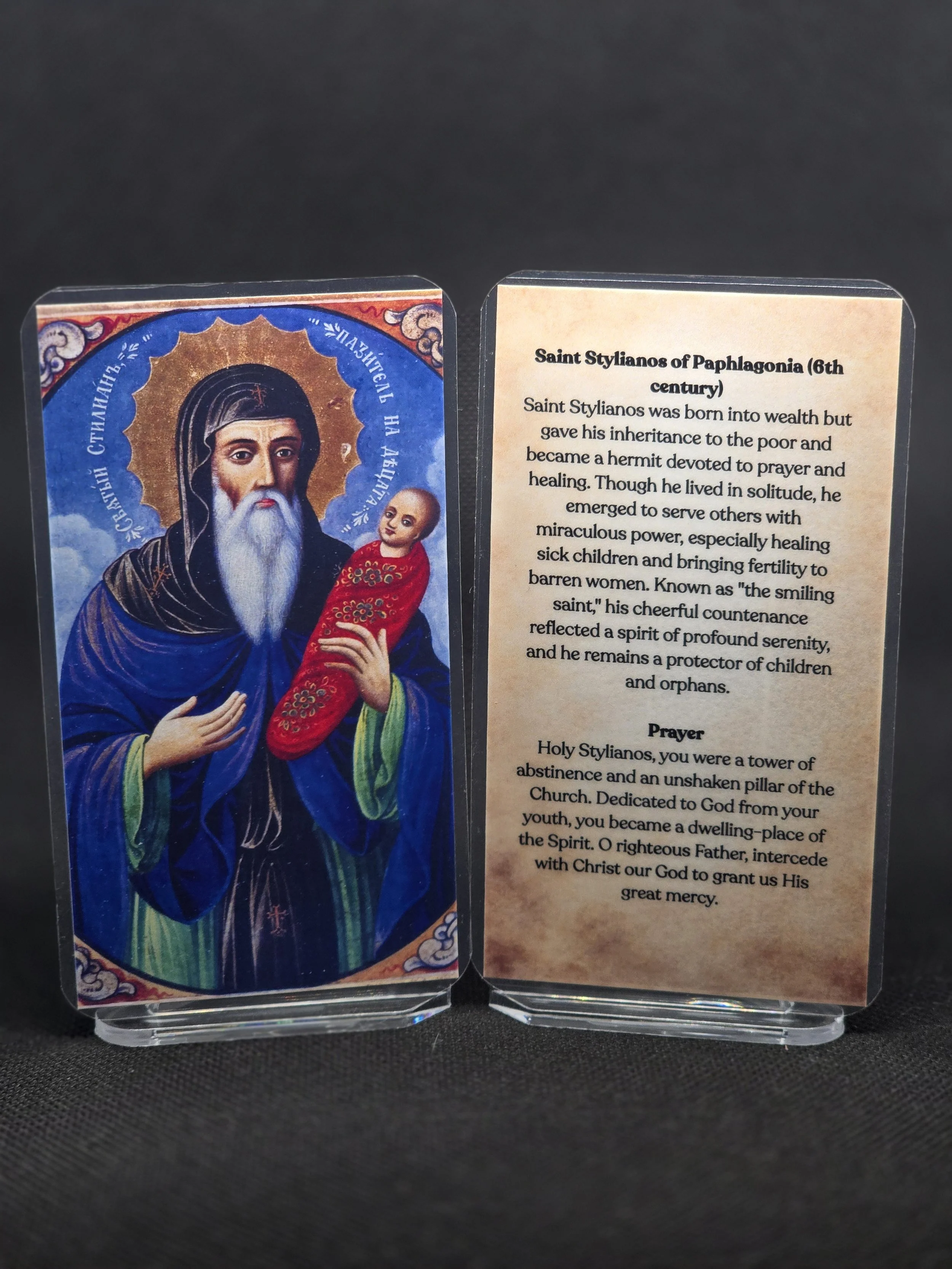
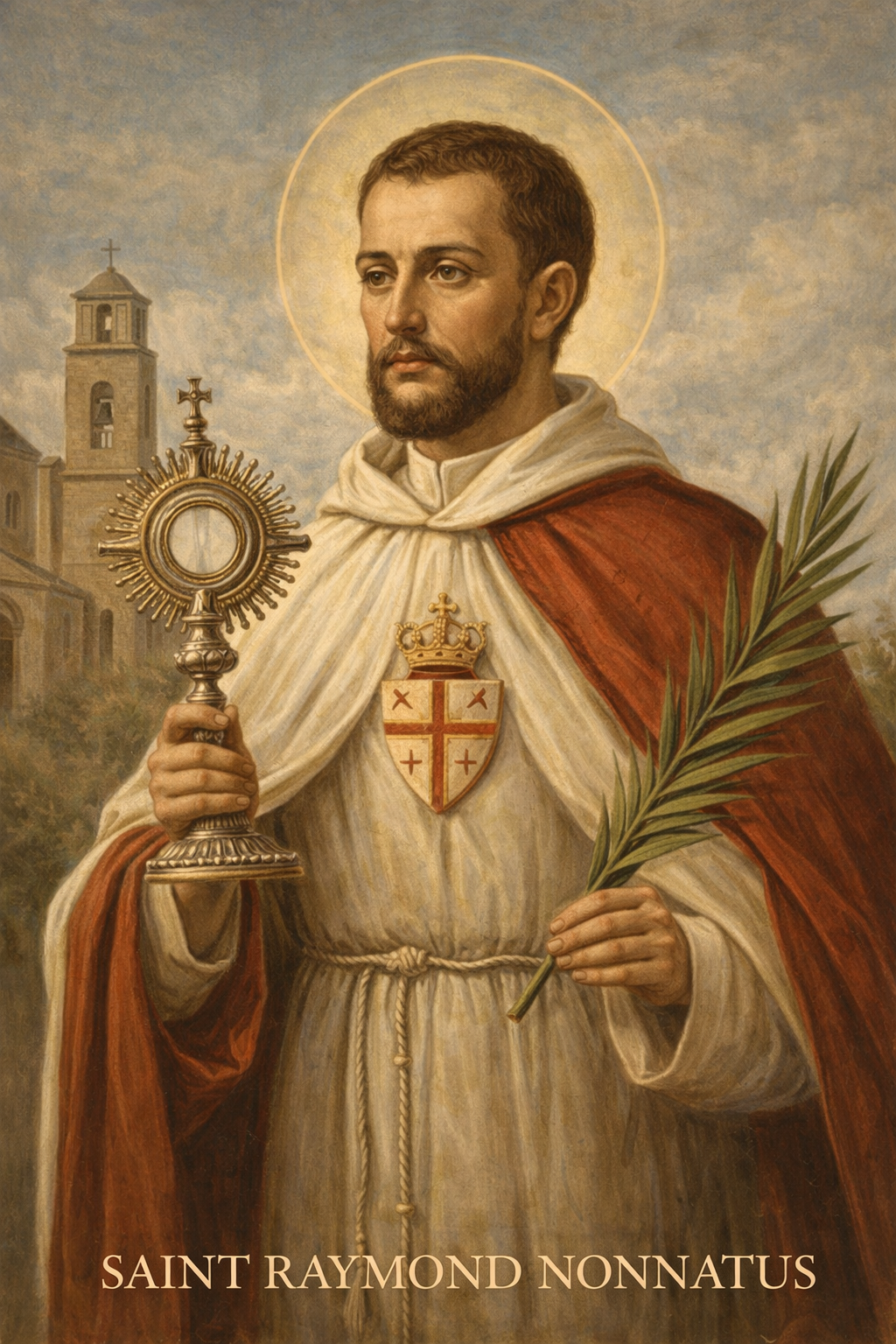
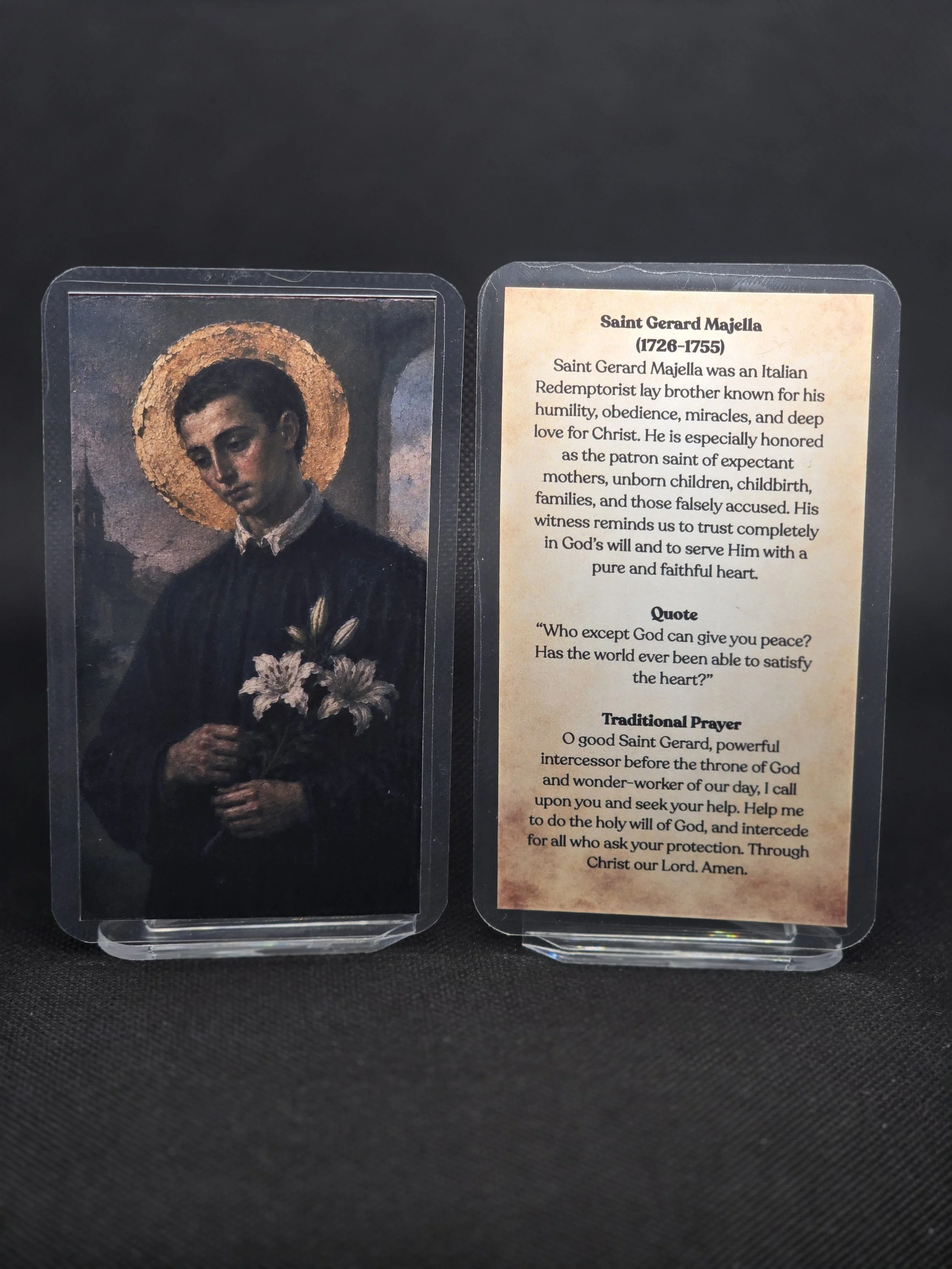
Saint Irene is rarely prayed to alone. Orthodox and Eastern Catholic families building a devotional practice around conception, pregnancy, and childbirth often turn to several intercessors together, each associated with a different stage of the same long prayer.
FAQ
Frequently Asked Questions
She Waited Longer Than She Expected, for Something Better Than the Life She Had Planned
Saint Irene Chrysovalantou did not get the marriage she was brought to Constantinople for. She got a monastery, a hundred years of prayer, and a legacy that has carried the specific hope of childless couples across eleven centuries. Her Life does not promise an easy timeline. It promises that the waiting is not wasted, and that it is not unseen.
Bring her your specific request — the child you are praying for, the marriage that has not come, the situation that feels impossible — and keep her close while you wait.
Get the Saint Irene Chrysovalantou Prayer Card →