Saint Gemma Galgani: The Complete Life, Stigmata, and Relics of the Daughter of the Passion
Saint Gemma Galgani: The Complete Life, Stigmata, and Relics of the Daughter of the Passion
An orphaned pharmacist's daughter who saw her guardian angel as plainly as she saw the walls of her room. A skeptical physician who tried to prove her wounds were self-inflicted, and failed. A black hoofprint still visible today on a letter she wrote, where she said the devil himself tried to stop her hand. This is the most complete account anywhere of Saint Gemma Galgani — her full life, the documented mystical phenomena both during her life and reported after her death, where her relics rest today, and everything she is patron, and unofficially patron, of.
Saint Gemma Galgani — At a Glance
- Born
- March 12, 1878, Camigliano, near Lucca, Italy
- Died
- April 11, 1903 (Holy Saturday) • age 25 • tuberculosis
- Feast Day
- April 11 • May 16 (Passionist Congregation)
- Beatified
- May 14, 1933, by Pope Pius XI
- Canonized
- May 2, 1940, by Pope Pius XII
- Title
- "Daughter of the Passion" • "Flower of Lucca" • "Gem of Christ"
- Defining Mystical Sign
- The Stigmata — received June 8, 1899; ceased c. 1901 by her own prayer
- Examined By
- Dr. Pietro Pfanner, family physician, who could not disprove the wounds
- Officially Patron Of
- Pharmacists & students • loss of parents • tuberculosis sufferers
- Unofficially Invoked For
- Headaches/migraines • back pain • purity • paratroopers
- Canonization Miracles
- Three healings via her relic, including a "incurable" stomach cancer
- Primary Relics
- Sanctuary of Santa Gemma, Lucca, Italy — beneath the main altar
Early Life and the Death of Her Mother
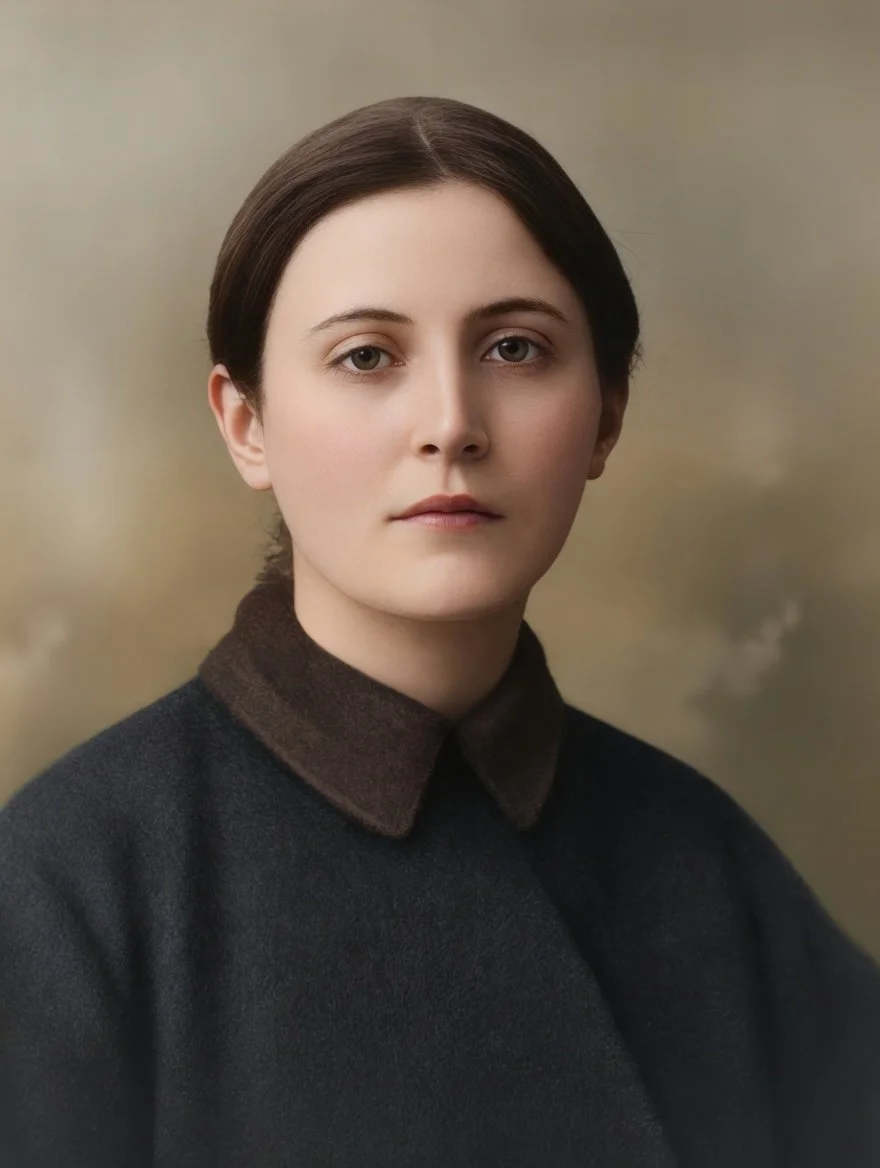
Gemma Umberta Pia Galgani was born on March 12, 1878, in the hamlet of Camigliano, in the comune of Capannori, in the province of Lucca, Tuscany. She was the fifth of eight children and the first daughter of Enrico Galgani, a prosperous pharmacist, and his wife Aurelia Landi, a woman remembered as exceptionally devout. Soon after Gemma's birth, the family relocated north into the city of Lucca itself, seeking better educational opportunities for their growing household.
From her earliest years, Gemma displayed an unusual interest in prayer that visibly set her apart from other small children. One often-repeated family memory describes her, at only four years old, kneeling unprompted before a picture of the Immaculate Heart of Mary in her grandmother's house, hands folded, completely absorbed in prayer — a scene that so struck her grandmother that she called her own son in simply to witness it.
When Gemma was two and a half, her mother contracted tuberculosis, the disease that would eventually claim her own life and several of her siblings' lives as well. Aurelia died on September 17, 1886, when Gemma was eight years old, after five years of illness. It was specifically around the time of her mother's death that Gemma first began to describe hearing an interior voice — an experience that would accompany her for the rest of her life and that she later identified as the beginning of everything that followed.


Part II
Orphaned, Poor, and Turned Away by the Convent
Gemma was sent to a Catholic boarding school in Lucca run by the Sisters of St. Zita, where she excelled academically, particularly in French, arithmetic, and music, and developed a strong devotion to Our Lady and the Rosary. She longed to receive her First Holy Communion well before the customary age of thirteen or fourteen, telling the sisters plainly, "Give me Jesus, and you will see how good I will be: I will not sin again." The parish priest initially refused on account of her young age, but special permission was eventually granted, and she received Communion for the first time on June 17, 1887, just before turning ten, later describing the experience as a fire burning within her breast.
Loss continued to define her family's life through this period. Her oldest brother, Carlo, and her younger sister, Giulia, both died young. Her beloved brother Gino, whom Gemma had personally helped nurse, died of the same tuberculosis that had killed their mother in 1894, at only eighteen years old, while studying for the priesthood. Her father, Enrico, who had lost his successful pharmacy business along with much of the family's financial security after his wife's death, himself died not long after, leaving Gemma functionally orphaned in her late teens and responsible, with the help of her aunt Carolina, for the upbringing of her younger siblings.
Stripped of family wealth and status, Gemma worked for a time as a housekeeper. She declined two separate marriage proposals during this period, having already privately resolved that she belonged to Christ alone. Her deepest desire, repeatedly stated throughout her life, was to enter religious life with the Passionist nuns, whose entire spirituality centered on union with the suffering of Christ. She was refused admission every time she applied — rejected, by every account, because of her chronically poor health and the unsettling nature of the mystical experiences already surrounding her, which left convent authorities wary of accepting her rather than convinced of her sanctity.
Part III
The Spinal Illness and the Miraculous Cure
At around age twenty, Gemma's health collapsed dramatically. She developed osteitis of the lumbar vertebrae, causing excruciating pain and progressive paralysis of her legs, compounded by acute purulent inflammation of the middle ear and what was, at the time, diagnosed as spinal meningitis. By February 1899, her doctors had pronounced her case entirely hopeless, and she received the Last Sacraments.
Her lifelong confessor, Monsignor Giovanni Volpi, then auxiliary Bishop of Lucca, visited her on February 19 and suggested she make a novena to Saint Margaret Mary Alacoque, asking for her recovery. Gemma began the novena twice and, in her own account, simply forgot to finish it both times. On her third attempt, she completed it, concluding it on the First Friday of March, a day tied to devotion to the Sacred Heart. That morning, after receiving Holy Communion, she heard the voice of Jesus ask her directly: "Do you wish to be cured?" Gemma answered, "Whatever You will, O Jesus!" She was cured immediately and completely — and was, by her own account, delighted not merely at the physical healing itself, but at the deeper realization that Jesus had personally chosen her as His own.
Her first thought upon recovering was to renew her effort to enter a convent. The diocesan authorities, whether skeptical that such a sudden cure would prove permanent or simply wary of the mystical phenomena already surrounding her, again declined to accept her into religious life. God, as her later biographers would frame it, had a different path in mind for her entirely: a hidden life of mystical union with the crucified Christ, lived quietly within an ordinary household in Lucca rather than behind convent walls.
Part IV
The Stigmata: June 8, 1899
One morning after Communion, not long after her cure, Gemma heard the voice of Jesus tell her plainly: "Courage Gemma, I wait for you on Calvary where you are soon going." The meaning of this statement became clear on the evening of Thursday, June 8, 1899 — the eve of the Feast of the Sacred Heart of Jesus.
In her own written account, preserved in her diary at the direct request of her spiritual director, Gemma described what happened in extraordinary detail: "I felt an inward sorrow for my sins, but so intense that I have never felt the like again... Then the thoughts crowded thickly within me, and they were thoughts of sorrow, love, fear, hope and comfort." She fell into a profound rapture, in which she saw her guardian angel together with the Virgin Mary. "The Blessed Virgin Mary opened her mantle and covered me with it," she wrote. "At that very moment, Jesus appeared with his wounds all open; blood was not flowing from them, but flames of fire which in one moment came and touched my hands, feet and heart. I felt I was dying, and should have fallen down but for my Mother who supported me and kept me under her mantle."
From that evening forward, for roughly two years, the stigmata appeared on a consistent weekly cycle: the wounds would open and bleed each Thursday evening during her ecstasy and would close again by Friday afternoon or Saturday morning, leaving only white marks where the open wounds had been. This cycle held with remarkable consistency until 1901, when, on the advice of her confessor, Father Germanus Ruoppolo — who grew concerned for her already fragile health — Gemma specifically prayed for the visible phenomenon to cease. Her prayer was answered: the open, bleeding stigmata stopped appearing, though faint white marks remained visible on her body for the rest of her life.
Part V
Dr. Pfanner's Examination
Gemma's mystical experiences did not go unexamined by skeptical eyes, and an honest account of her life must include this directly rather than minimize it. Dr. Pietro Pfanner, the family physician who had known Gemma since childhood, personally examined her reported stigmata and concluded that the marks were signs of hysterical behavior, suspecting Gemma might be suffering from a form of neurosis. When he observed spots of blood on the palms of her hands and ordered them wiped clean with a wet towel, he found no wound underneath, and on this basis concluded the phenomenon was self-inflicted.
The household around her offered a more complicated picture than the doctor's verdict suggests. On a separate occasion, Gemma's foster mother, Cecilia Giannini, found a sewing needle lying on the floor beside her — a detail later cited by some of Gemma's biographers as raising its own questions about Dr. Pfanner's "self-inflicted" theory, since a needle does not explain wounds in the specific pattern, depth, and weekly cyclical timing that multiple household witnesses, not only Gemma herself, reported observing over a period of roughly two years. This article presents both the physician's skepticism and the household's countervailing observations honestly, without resolving the tension between them, since neither side's account was subjected to the kind of controlled clinical documentation that would settle the question definitively either way.


Part VI
Her Guardian Angel and the Visions
Gemma's guardian angel first appeared to her in 1895, when she was seventeen, in the form of what she described as a beautiful young man, who told her she was to become "the wife of the crucified King." From that point forward, by her own account, the angel functioned as a constant spiritual companion and, at times, a severe one: he reproached her for laziness in prayer, scolded her for negligence in obedience to her confessor, and warned her in advance of coming spiritual trials, while also comforting and consoling her whenever she most needed it.
One of the most distinctive and well-documented details of her spiritual life concerns the practical role her angel played once Gemma's spiritual director, Father Germanus, was assigned to a community in Rome, far from Lucca. Unable to consult him in person as often as she needed, Gemma described sending her guardian angel as a literal messenger, carrying letters and oral messages to Germanus and returning with his replies. When this claim raised understandable suspicion that it might be the work of a demonic deception rather than a genuine grace, her confessor tested it directly: he ordered Gemma, under obedience, to instruct her angel to stop delivering any further messages. According to the accounts of those around her, the angel continued the practice regardless, which Germanus eventually took, after additional requested signs, as confirmation that the phenomenon was authentic rather than diabolical.
Beyond her guardian angel, Gemma described regular visions of and conversations with Jesus, the Virgin Mary (whom she frequently called her "Mother of Sorrows"), and Saint Gabriel of Our Lady of Sorrows, a young Passionist not yet canonized at the time. She was also reported, on at least one occasion, to have levitated: in the dining room of the Giannini household stood a large crucifix that the whole family venerated, and Gemma claimed to have found herself lifted from the floor with her arms wrapped around it, kissing the wound in Christ's side.
Part VII
The Attacks of the Devil
Few documented details of Gemma's life are as vivid, or as consistently corroborated by multiple witnesses, as her reported physical struggles with what she and those around her identified as direct demonic attack. Her biographer and confessor, Father Germanus, framed these episodes theologically by citing Saint Paul's own words about "a thorn... in the flesh, a messenger of Satan" given to keep him from being too elated by abundant revelation, and recorded that Jesus had told Gemma directly, "Be prepared My child... With my permission the demons will try continually to dishearten your soul."
Gemma's own diary entries describe these attacks in specific, often disturbing physical detail. In one entry, she wrote: "He began to beat me with such blows that I feared I would die. He was in the shape of a big black dog, and he put his 'paws' on my shoulders, hurting me greatly... when I was taking holy water he wrenched my arm so violently that I fell to the floor from the pain. The bone was dislocated, but went back into place because Jesus touched it for me." In another account, she described being struck by a being that appeared as a giant, who told her, "For thee there is no more hope of salvation. Thou art in my hands!" — to which she replied that God is merciful and she feared nothing, provoking a furious blow to the head before the apparition vanished.
Witnesses beyond Gemma herself reported physical effects consistent with these accounts: her hair scattered about the room, bruises and livid marks lasting for days afterward, and on one striking occasion, a black hoofprint left on a letter she had been writing when, by her account, the devil snatched the pen from her hand and tore the paper. This letter, bearing the mark, was reportedly preserved and displayed for years afterward at her convent in Lucca as physical testimony to what she had written about in her own hand. Despite the genuine terror these episodes caused her — her deepest fear was never the physical violence itself but the possibility of offending God by yielding to temptation — Gemma was also recorded responding to the devil with surprising lightness at times, writing to a priest on one occasion: "If you would have seen him, when he fled making faces, you would have burst out laughing! He is so ugly!... But Jesus told me not to be afraid of him."
Part VIII
Saint Gabriel Possenti and the Black Belt
One of the more touching threads of Gemma's spiritual life connects her directly to another saint already covered on this site: Gabriel of Our Lady of Sorrows, better known today as Saint Gabriel Possenti. During one of Gemma's gravest illnesses, someone brought her a copy of "The Life of Venerable Gabriel Possenti," a young Passionist who had died in 1862 and was, at the time, not yet canonized. Gemma initially showed little interest in the book, but after invoking Brother Gabriel's name during a moment of distressing temptation and finding instant relief, she read his life story repeatedly and developed a deep personal devotion to him. Not long afterward, she reported that he appeared to her directly amid her grave illness, offering words of consolation and encouragement.
Her diary records a specific, tender exchange with Gabriel involving a black belt he wore as part of his Passionist habit, which Gemma described as the very thing that had liberated her from a demonic attack the night before. When she asked to have it again, he smiled, shook his head to indicate she would receive it again on Saturday, blessed her in Latin words she remembered precisely, and departed. This small, recurring detail — a borrowed belt, returned and asked for again — captures something of the unusually concrete, almost domestic intimacy that runs through Gemma's entire mystical life, in which sweeping cosmic encounters with Christ and the Virgin Mary sit alongside small, human exchanges like this one.
Part IX
Becoming a Victim Soul and Her Death
In 1902, restored to relatively good health since her earlier miraculous cure, Gemma made a deliberate offering of herself to God as what Catholic spiritual tradition calls a "victim soul" — someone who consciously offers their own suffering, united to Christ's, for the salvation of others. In ecstasy, she was recorded praying to Jesus directly: "Jesus, do not leave these poor sinners to themselves. I am willing to do something. You died on the cross; make me die too... you have so many sinners, but so few victims." According to her own account and that of her confessor, Jesus accepted this specific offer.
In January 1903, Gemma became seriously ill and was diagnosed with tuberculosis — the same disease that had already killed her mother and her brother Gino. What followed was a long, often agonizing decline marked by what witnesses described as extraordinary mystical phenomena even amid her physical suffering. One of the religious sisters who nursed her in her final illness said simply, "We have cared for a good many sick people, but we have never seen anything like this." At the beginning of Holy Week 1903, Jesus reportedly asked her to offer one final, terrible trial as an act of atonement for sins committed within the priesthood, and her suffering through that final week, especially by Good Friday, was by every account immense.
Gemma died on April 11, 1903 — Holy Saturday — in a small room across from the Giannini family's house in Lucca, in the presence of her parish priest. He later wrote of the moment: "She died with a smile which remained upon her lips, so that I could not convince myself that she was really dead." She was twenty-five years old.
Part X
Beatification, Canonization, and the Three Miracles
Church authorities began formally studying Gemma's life as early as 1917, and her cause was officially introduced in Rome on April 28, 1920, the feast of Saint Paul of the Cross, founder of the Passionist order with which she had been so closely associated in life though never formally admitted. The canonical investigation proper began in 1922 and continued for nine years, examining the most minute details of her life, writings, and reported mystical experiences. On November 29, 1931, in the presence of Pope Pius XI, a decree was read declaring her virtues "heroic," permitting the faithful to invoke her thereafter as "Venerable Gemma Galgani."
Two specific miracles, dated to 1907 and 1919, were approved on January 5, 1933, clearing the way for her beatification, which took place on May 14, 1933, when Pope Pius XI raised her to the honors of the altar as "Blessed Gemma Galgani."
Two further miracles, required for canonization, underwent the Church's most rigorous scrutiny by a panel of physicians and theologians. The first involved a farmer with a large, ulcerous tumor on his leg that had grown severe enough to prevent him from walking entirely. After a doctor's prescribed treatment proved completely ineffective and the wound continued spreading, the man's daughter took a relic of Blessed Gemma and made the sign of the cross over the tumor while praying for his healing. By the following day, the tumor had vanished and the skin had returned to a normal, healed state — though the man's underlying varicose veins remained, a detail his biographers note almost as if God intended to leave some remaining trace of ordinary human suffering even within the miracle itself, while restoring his ability to walk, work, and support his family. The treating family physician and a second doctor, a Dr. Jacobelli, formally attested to the case; Dr. Jacobelli wrote afterward that "this miracle is not only incomprehensible but it upsets all the physiopathological laws of the medical field," specifically noting the vast difference between an ordinary infected wound and a chronic varicose ulcer of this kind.
The second canonization miracle involved an elderly woman named Filomena Bini, seventy-two years old, suffering from a stomach disease that had degenerated into cancer her doctors considered untreatable. Unable to sleep for the pain, Filomena had a relic of Gemma applied to her; she fell asleep immediately and woke the next day completely and permanently healed. Both miracles were formally submitted to Pope Pius XII on December 8, 1938, and the decree approving them was read on March 26, 1939, Passion Sunday — a date whose connection to Gemma's own central devotion to Christ's Passion did not go unnoticed by those present. Gemma Galgani was canonized on Ascension Thursday, May 2, 1940, only thirty-seven years after her death, one of the shortest intervals between death and sainthood of any modern canonization. Thirteen hundred citizens of Lucca, led by their archbishop, traveled to St. Peter's Square to witness the ceremony, including members of the Giannini family who had taken her into their home, and her own youngest sister, Angelina, seated beside the very nun of St. Zita who had taught Gemma as a child.
Part XI
Where Her Relics Are Today
Shortly before her death, Gemma reported that Jesus had personally instructed her, during one of her mystical ecstasies, to establish a monastery of Passionist nuns in Lucca — the very order that had repeatedly declined to admit her in life. She is recorded as having said, with characteristic simplicity, "The Passionist Nuns would not accept me, but for all that I wish to be one of them, and I shall be with them when I am dead."
Sanctuary of Santa Gemma
Via del Tiglio, Lucca, ItalyThe fulfillment of Gemma's own deathbed vision, this Passionist monastery was built on a site dating originally to 1771, with the current sanctuary constructed between 1935 and 1965 specifically to house her remains and accommodate the growing number of pilgrims devoted to her. Her relics rest in an urn beneath the main altar. Pope Pius X himself blessed the project, assigning the community the mission of "offering themselves as victims to Our Lord for the spiritual and temporal needs of the Church and of the Sovereign Pontiff" — language drawn directly from Gemma's own theology of victim souls. The sanctuary offers daily Mass and confession, and pilgrims regularly leave written intentions at her tomb.
Birthplace and Family Sites
Camigliano & Lucca, ItalyBeyond the sanctuary itself, several sites connected to Gemma's life remain open to visitors, including her birthplace in Camigliano and locations connected to her family home and the Giannini household where she spent her final years. Personal artifacts, including her writing desk and other relics, are preserved and displayed, offering pilgrims a tangible connection to her short life.
Part XII
What Saint Gemma Is Patron — and Unofficial Patron — Of
Officially Recognized
Saint Gemma Galgani's formally recognized patronages, drawn from the specific circumstances of her own life and family, are: pharmacists and druggists (a direct connection to her father's profession), students (reflecting her own years of devout, attentive schooling), those who have suffered the loss of parents (she lost both before adulthood), and sufferers of tuberculosis, the disease that killed her mother, her brother, and eventually contributed to her own death.
Widely Invoked, Without Formal Declaration
Beyond her official titles, popular devotion has extended Gemma's intercession, informally but consistently, to a number of related needs that grow directly out of her own documented life and suffering:
- Headaches and migraines — reflecting the severe head pain she endured throughout much of her illness.
- Back injury and chronic back pain — tied directly to her own spinal illness, osteitis of the lumbar vertebrae, and the temporary paralysis it caused.
- Purity of heart and resistance to temptations against chastity — reflecting both her two declined marriage proposals and her recorded spiritual struggles, which she found more distressing than any of the devil's physical attacks.
- Paratroopers and parachutists — an unofficial patronage with a less clearly documented origin, but consistently repeated across devotional sources.
- Those suffering chronic or hidden illness — a broad extension of her own decades of largely private physical suffering, offered without public complaint.
Part XIII
Quotes From Her Diary and Letters
Gemma's writings are unusually well documented for a saint who died so young and so far from public attention during her lifetime. At the direct instruction of her spiritual director, Father Germanus, she kept a diary recording her visions, ecstasies, and mystical dialogues, along with letters to him and others. The complete body of this material, including her full Ecstasies and Letters, survives and has been published in Italian, though, notably, only a portion has yet been translated into English in full — meaning a complete English edition of her writings remains, even now, an unfinished scholarly project.
On Loving Christ
"I have loved You, oh Jesus. Grant me to love You even more, so that my thoughts turn only to You, all day, and all night, even while sleeping... I wish my spirit to talk always with You, my soul to converse always with You."
On Her Own Littleness
"Gemma is good for nothing, but Gemma and Jesus can do everything." — a phrase she repeated as a child and that became, in effect, the governing motto of her entire spiritual life.
On Sinners
"I wish, oh Jesus, that my voice could reach to the ends of the world, to call all sinners and tell them to enter into Thy Heart... Come! Come sinners, do not be afraid! The sword of Justice cannot reach you here!"
On Surrender
"My dear God, I surrender entirely in Your Most Holy hands, thus, You make me and what belongs to me the best to please You. In this gentle surrender, I rest on Your Divine Heart as the tender child rests on her mother's breast."
On Her Guardian Angel's Discipline
"My daughter, remember that you sin every time you fail to obey. Why are you so remiss in obeying your confessor? Remember that there is no shorter and surer way to heaven than that of obedience." — words Gemma recorded her guardian angel speaking to her directly, reflecting the consistently strict, formative role he played in her spiritual formation rather than functioning merely as a comforting presence.
Part XIV
Prayers to Saint Gemma Galgani
Saint Gemma Galgani, Daughter of the Passion, you shared in His suffering through the gift of the stigmata with trust and devotion, finding in Christ's Passion the source of your strength.
May we carry our crosses with patience and unite them to Jesus for the salvation of souls. Help us to trust in God's love, even when His ways are difficult to understand.
Teach us simplicity of heart and generous love that offers all to God. Inspire us to deepen our own prayer life and to seek communion with God in all things.
Saint Gemma Galgani, pray for us. Amen.
This is a traditional-style devotional prayer drawn from widely published Catholic sources honoring her life and witness.
Part XV
Complete Timeline of Saint Gemma's Life and Legacy
FAQ
Frequently Asked Questions About Saint Gemma Galgani
"Gemma Is Good for Nothing, But Gemma and Jesus Can Do Everything"
Saint Gemma Galgani's entire legacy rests on a paradox she lived out in plain view of an ordinary household: a young woman with no money, no family left, no convent willing to accept her, and a body wracked by illness, who nonetheless became one of the most intensely documented mystics of the modern era. A skeptical doctor wiped the blood from her hands and found no wound; the household around her found needles, hoofprints, and a young woman who, by every account, simply kept praying.
What can be shown beyond dispute is the speed and scale of the response her short life produced: beatified within thirty years of her death, canonized within thirty-seven, and a monastery built in Lucca exactly where she said, before she died, that it would be.
Get the Saint Gemma Galgani Prayer Card →