Healing Saints for Miraculous Healing from Pain: Five Intercessors Who Have Answered the Impossible Petition
Catholic & Eastern Orthodox • Miraculous Healing • Chronic Pain • Healing Saints • Prayer Cards
Miraculous Healing Saints for Chronic Pain: Five Intercessors Who Have Answered the Impossible Petition
Chronic pain wears the person down not just physically but spiritually — the unanswered prayers, the treatments that fail, the exhaustion of explaining it again. These five saints and sacred images are invoked specifically for pain that has not resolved, for the body that will not cooperate, and for the soul that is running out of ways to ask.
“Suffering is nothing by itself, but suffering shared with the Passion of Christ is a wonderful gift.”— Saint Gemma Galgani • Stigmatist • Italian Mystic • Died 1903
What You Will Find on This Page
- Saint Gemma Galgani
- The stigmatist who bore both the wounds of Christ and severe chronic physical illness throughout her short life — the saint who understands what it is to live in a body that is constantly in pain
- Saint Charbel Makhlouf
- The Lebanese Maronite wonderworker with over 33,000 documented healings — particularly invoked when pain is treatment-resistant and medicine has reached its limits
- Saint Peregrine Laziosi
- The canonical Catholic patron of physical illness — who experienced miraculous healing of bone cancer the night before his scheduled amputation and has been invoked for physical suffering ever since
- Saint Dymphna
- The Irish martyr invoked for pain that has both physical and neurological or psychological dimensions — for the suffering that does not fit a clean category
- The Zhirovitskaya Icon
- The miraculous icon of the Theotokos venerated for healing of serious illness for over five centuries — the intercession of the Mother of God for those in chronic physical suffering
Healing from Chronic Pain: The Saints Who Have Answered This Prayer Before
There are two kinds of prayer for chronic pain. The first is the prayer of endurance — asking for the grace to carry what will not go away, to find peace inside suffering that will not resolve. The second is the prayer for the miracle — asking, again, for healing, refusing to stop asking even after years of unanswered petitions. Both are legitimate. Both are supported by the tradition. This bundle is for the second kind.
Every saint and sacred image on this page has a specific, documented record of miraculous physical healing. Saint Charbel has over 33,000 documented healing accounts examined by the Vatican. Saint Peregrine’s bone cancer was healed overnight in a miracle verified by the physicians who had scheduled his amputation. Saint Gemma’s tomb in Lucca is associated with healing accounts spanning over a century since her canonization. The Zhirovitskaya Icon has been a healing pilgrimage site for five hundred years. These are not symbolic intercessors — they are saints and sacred images with a proven record of answering precisely this petition.
If you are still asking for healing from chronic pain — if you have not accepted that this is simply what your life is now, if you are still praying for the miracle — these are the five to bring it to.
Card One
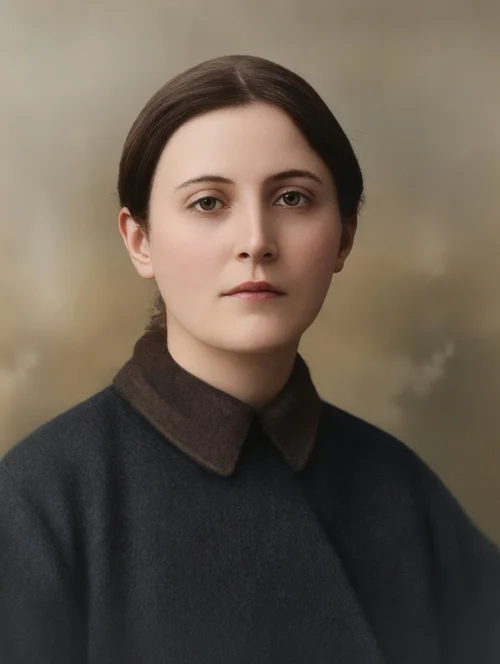
Saint Gemma Galgani
Gemma Galgani was born in Camigliano, Tuscany in 1878 and died at twenty-five in 1903. She bore tuberculosis of the spine, chronic illness, and the stigmata simultaneously — and was canonized by Pope Pius XII in 1940. Her body was found incorrupt and is enshrined at the Passionist monastery in Lucca, Italy. The healing accounts associated with her intercession and her tomb have been documented continuously since her canonization — physical healings, particularly of spinal and neurological conditions, brought to her by those who have prayed at her shrine or asked her intercession directly.
What positions Gemma specifically for miraculous healing of chronic illness is the nature of her own physical experience. She did not observe suffering from a distance — she bore severe, unrelenting, treatment-resistant physical pain for years. Her intercession for those in the same situation carries the particular authority of firsthand knowledge. She knows exactly what the person with chronic pain is carrying when they ask her. And the documented healings at her shrine indicate she is answering those petitions.
She is invoked specifically by those seeking miraculous healing of physical illness — particularly spinal conditions, chronic illness, and treatment-resistant pain. The combination of her incorrupt body, her documented healing accounts, and her firsthand experience of severe chronic illness makes her one of the most specific intercessors available for this petition. She is not the saint of patient endurance. She is the saint of healing asked from inside genuine physical suffering.
Card Two
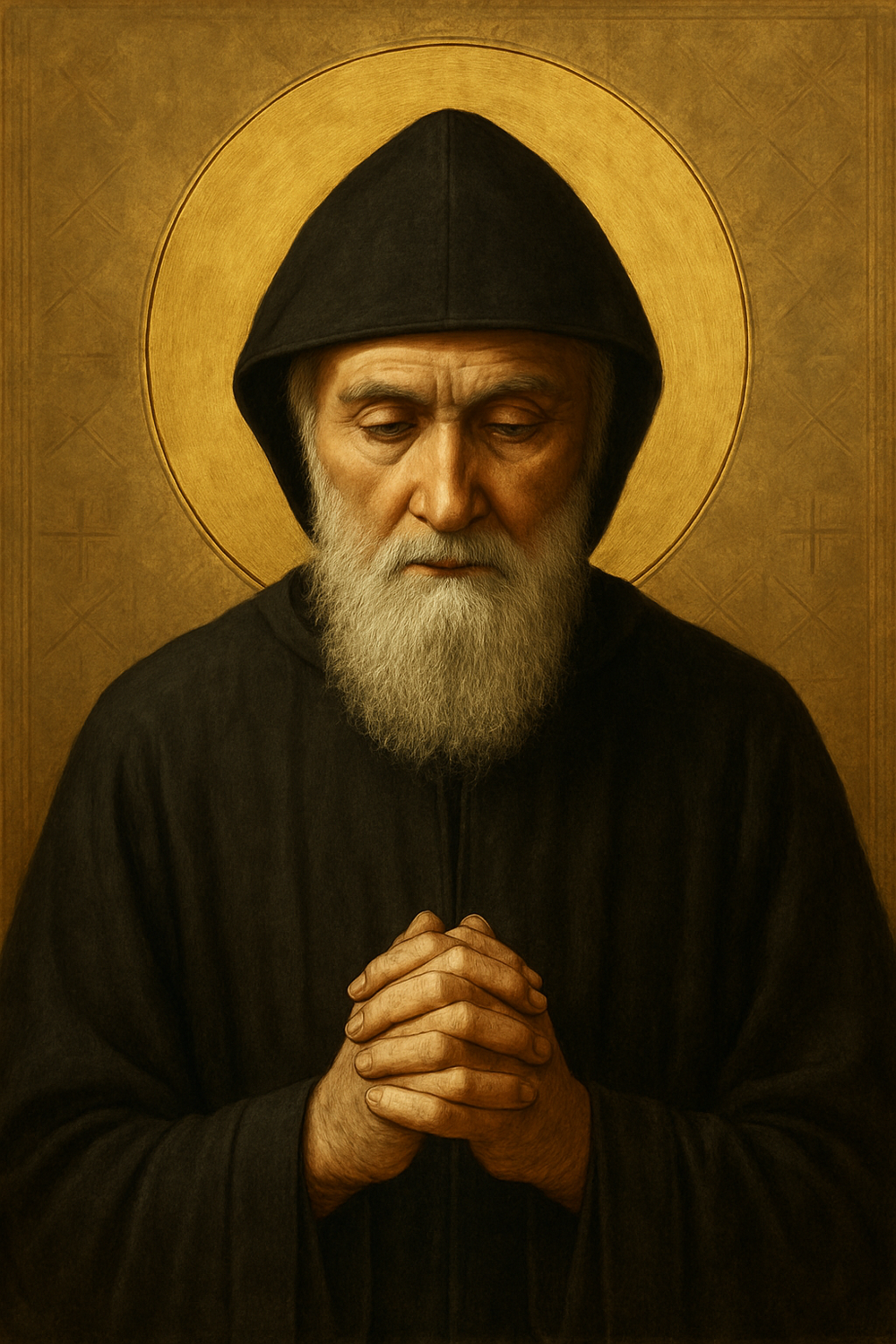
Saint Charbel Makhlouf
Youssef Antoun Makhlouf was born in 1828 in Bqaa Kafra, Lebanon, entered the Lebanese Maronite Order, and spent the last twenty-three years of his life as a hermit in the hermitage of Saints Peter and Paul near the Monastery of Saint Maron in Annaya. He died in 1898 during the liturgy, and what happened after his death established him as one of the most remarkable miracle workers in modern Catholic history. His tomb emitted a luminous glow for forty-five days after his burial. His body was found incorrupt and exuding a liquid identified as sweat and blood. The healings began immediately and have continued without interruption for over a century.
The Vatican documentation for his canonization in 1977 examined over 22,000 reported miracles submitted for review — a number that has since grown substantially. The healings associated with his intercession span virtually every category of physical illness, but he is particularly invoked for conditions that have resisted medical treatment: chronic pain that has not responded to intervention, pain whose source cannot be identified, and conditions that physicians have been unable to treat effectively.
The specific pattern of Charbel’s miracles — documented across more than a century — is that they tend to occur precisely when medicine has concluded it cannot help further. This is not because he ignores less severe cases. It is because the people who come to him most urgently are those who have already exhausted medical options, and his intercession is specifically associated with the grace that operates where human capacity ends.
For chronic pain patients who have been through every treatment protocol and found no lasting relief, Charbel is the specific saint for that place — not the beginning of the healing journey, but the moment when the journey has reached what appears to be a wall.
Saint Charbel’s complete life, his years as a hermit, the full account of his 33,000 miracles, and traditional prayers said to him are in our complete biography of Saint Charbel →
Card Three
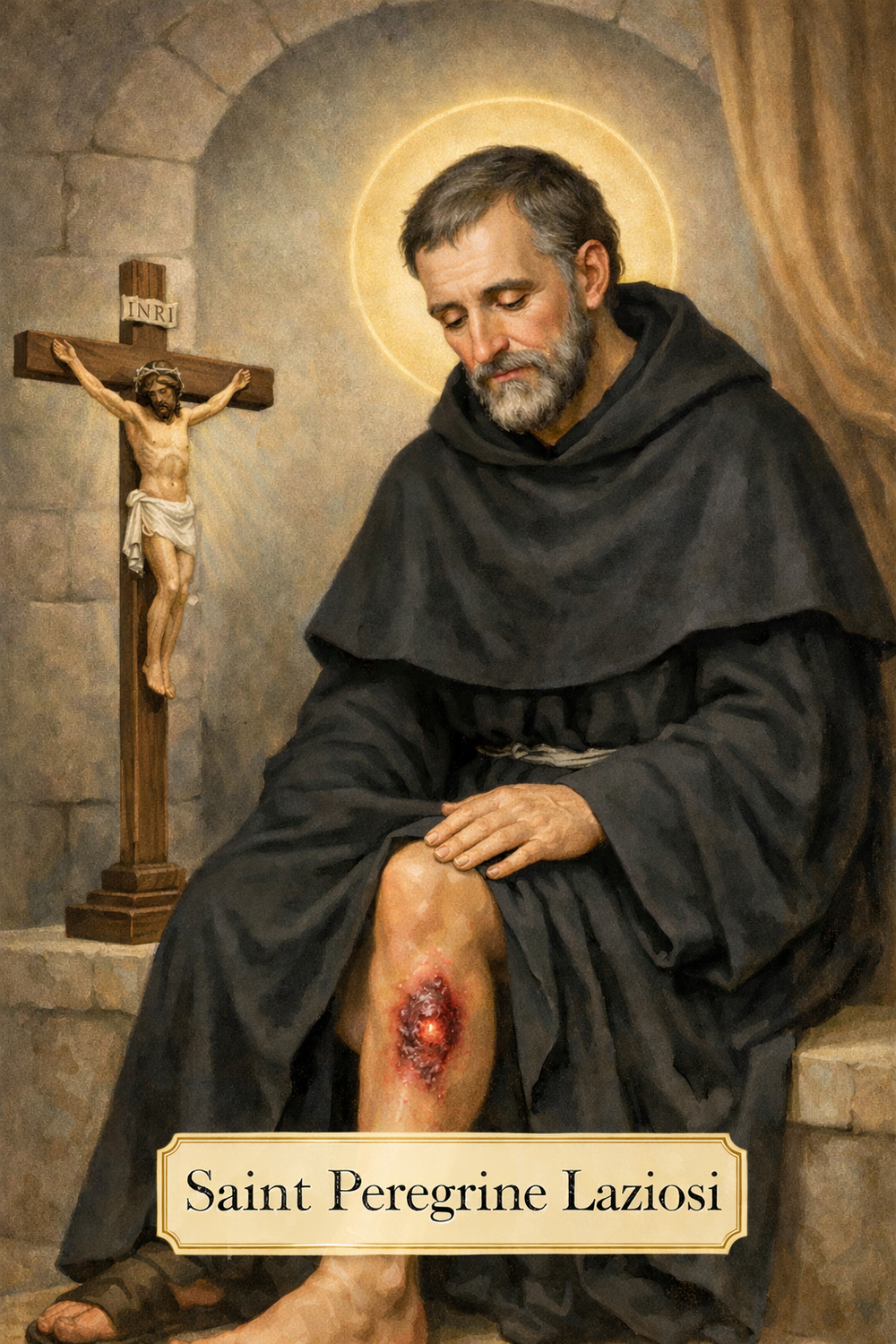
Saint Peregrine Laziosi
Peregrine Laziosi was born in 1260 in Forlì, Italy, converted dramatically from a life of political violence against the Church, joined the Servite Order, and spent decades in severe ascetic practice — including standing for long periods in prayer and penance, which contributed to the development of a serious bone cancer in his leg. The night before his scheduled amputation, he prayed before a crucifix in the chapter house and dreamed that Christ descended and touched his foot. When he woke and examined his leg, the cancer was gone. His physicians, who had performed the examination that led to the surgery being scheduled, confirmed the healing. He lived another twenty years, dying in 1345, and was canonized in 1726.
His connection to chronic pain specifically — beyond his canonical patronage of cancer — is the account of the years before his miraculous healing. He bore his illness for a significant period before the night that changed everything. The progression of bone cancer before the era of modern medicine was an experience of unrelenting chronic pain with no effective treatment. He is the patron not only of the miraculous moment but of the extended period of suffering that preceded it — the person living with pain who has not yet received the healing they are praying for.
Card Four
Saint Dymphna
Dymphna was an Irish princess of the seventh century who fled her father’s madness and eventual violence to Belgium, where she was beheaded when she refused to return home. Her tomb in Gheel became a healing shrine for the mentally ill, and the town of Gheel developed one of the earliest community mental health systems in history out of devotion to her. She has been the patron of mental illness and emotional suffering for fifteen centuries.
Her inclusion in a chronic pain bundle requires a specific explanation, because her canonical patronage is mental illness rather than physical pain. But the reality of chronic pain in the twenty-first century — particularly conditions like fibromyalgia, complex regional pain syndrome, chronic fatigue syndrome, and central sensitization disorders — is that the line between neurological, psychological, and physical pain is not clean. These are conditions where the nervous system itself is the problem, where the pain signal is real and severe but does not correspond to identifiable tissue damage, and where the standard tools of physical medicine are inadequate.
Saint Dymphna is the intercessor for chronic pain conditions that the medical system struggles to classify — where pain specialists say the pain is real but cannot find the source, where the suffering is genuine but the diagnosis is contested, where the person has been sent from rheumatology to neurology to psychiatry and back again without a clear answer.
The tradition does not require that pain fit a clean category before it deserves intercession. Dymphna’s patronage covers the full complexity of human suffering that crosses the line between mind and body — which is exactly where the most difficult chronic pain conditions live.
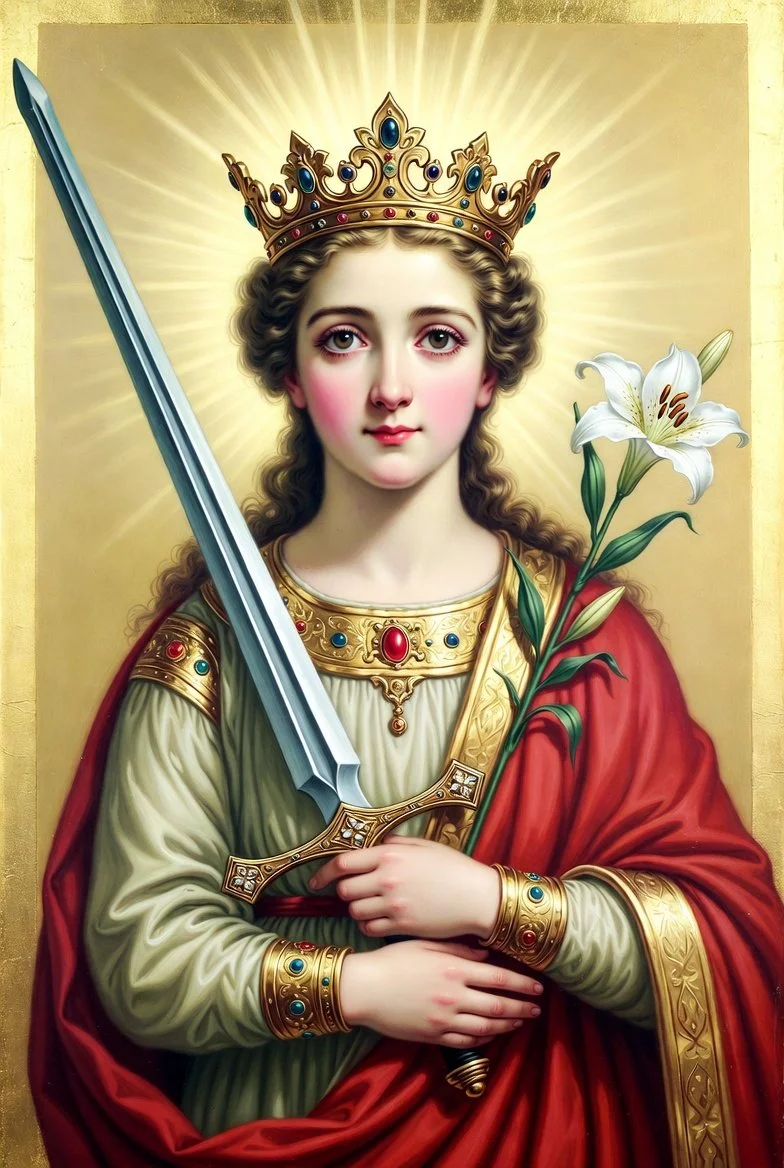
Card Five
The Zhirovitskaya Icon of the Mother of God
The Zhirovitskaya Icon — the Icon of the Mother of God of Zhirovitsy — first appeared in 1470 in the village of Zhirovitsy in present-day Belarus, on land belonging to a Lithuanian nobleman named Alexander Soldak. The icon appeared in a tree, luminous, and was brought to the local church. It subsequently disappeared from the locked church, was found again in the same tree in a blaze of light, and was understood from that point forward as a miraculous image with a particular will to be present. The Zhirovitsy Monastery was eventually built around it and remains one of the most significant pilgrimage sites in the Orthodox world.
The icon survived the Polish-Lithuanian period, the Uniate controversies, the Soviet suppression of religion — including being hidden by the monastic community to prevent its destruction — and remains enshrined at the Zhirovitsy Monastery in Belarus, which functions today as the seat of the Belarusian Exarchate of the Russian Orthodox Church. Healings of serious and chronic illness have been associated with the icon for over five centuries, documented by pilgrims and examined in the context of the icon’s veneration history.
The inclusion of an icon rather than a saint in this bundle reflects a specifically Eastern theological point: in the Eastern tradition, the icon is not a picture of the person. It is a window through which the person — in this case the Theotokos herself — is genuinely present and genuinely able to be asked. Praying before the Zhirovitskaya Icon is asking the Mother of God directly for her intercession on behalf of physical suffering. The five-century history of healings associated with this specific image is the tradition’s record of her answer to those petitions.

The Bundle
The Healing Saints for Chronic Pain Bundle — All Five Cards
All five prayer cards, handmade and shipped together. For the person in chronic pain, for the caregiver, for anyone who wants to give something physical that carries genuine intercessory weight. Each card carries an icon or sacred image on the front and a biography and healing prayer on the back. Made by hand in Austin, Texas.
Get the Healing Saints for Chronic Pain Bundle
Five prayer cards, handmade and shipped together. Each saint or sacred image on this page has a documented record of miraculous healing spanning decades or centuries. For the person still actively asking for healing — who has not given up on the miracle.
Add to Cart →Frequently Asked Questions
Saints for Chronic Pain — Common Questions
You Are Still Asking. So Are They.
Gemma bore it in her body for years and never stopped praying. Charbel has answered tens of thousands of petitions that medicine could not address. Peregrine waited through chronic pain for the night that changed everything. Dymphna holds the cases that don’t fit the categories. And the Theotokos — who watched her Son suffer and die — knows what it is to stand helplessly beside someone in pain, and is not helpless now. These five are asking on your behalf.
Get the Bundle →