The Liturgy War That Almost Split the Syro-Malabar Church — and How It Was Healed
Church History • Recent Events • A Crisis Resolved • The Syro-Malabar Church, 1999 to 2025
The Liturgy War That Almost Split the Syro-Malabar Church — and How It Was Healed
For more than two decades, one question divided one of the oldest Christian communities on earth: which direction should the priest face? It led to hunger strikes, a cathedral occupation, an aging cardinal's resignation, and two video pleas from Pope Francis himself. Then, in 2025, the Syro-Malabar Church did something remarkable. It solved the problem itself.
The Syro-Malabar Liturgy Dispute — At a Glance
- The Question
- Should the priest face the altar (ad orientem) or the people (versus populum) during the Holy Qurbana?
- The Synod's Decision
- 2021 • A "uniform mode": facing the people for the Liturgy of the Word, facing the altar for the Eucharistic prayer
- Compliance
- 34 of 35 Syro-Malabar dioceses accepted it • The Archeparchy of Ernakulam-Angamaly resisted
- Why Ernakulam Mattered
- The Church's largest diocese and historic primatial see, home to roughly half a million faithful
- Papal Involvement
- Pope Francis sent personal video appeals in 2023 and intervened repeatedly
- The Resignation
- Cardinal George Alencherry resigned as Major Archbishop in December 2023 amid the crisis
- The Mediator
- Archbishop Cyril Vasil, appointed pontifical delegate in 2023
- The Resolution
- June 19, 2025 • A synodal compromise reached internally between Thattil, Pamplany, and the archeparchy's priests
- When It Took Effect
- July 3, 2025 — the Feast of Saint Thomas the Apostle
- Rome's Response
- Pope Leo XIV ended the pontifical delegate's mission on July 7, 2025, signaling the crisis was over
A Question That Sounds Small and Is Not
To an outsider, the question might sound almost too small to fight over. Should the priest, during the Holy Qurbana, face the altar, or face the people? For most Western Catholics, raised after the Second Vatican Council with the priest facing the congregation, the question barely registers as a question at all. But inside the Syro-Malabar Church, the largest Eastern Catholic Church in Asia, that single question grew, over the course of half a century, into the most serious internal crisis the Church has faced since its founders reconciled with Rome in the seventeenth century. It produced hunger strikes. It led to the occupation of a cathedral. It contributed to the resignation of a cardinal. It drew Pope Francis himself into direct, personal appeals for unity, recorded on video and sent to the faithful of Kerala.
And then, in the summer of 2025, it ended. Not because Rome imposed a solution from above, and not because one side simply won. It ended because the Syro-Malabar Church, exercising the self-governing autonomy it had fought for centuries to recover, sat down and solved its own problem. If you are Syro-Malabar, you almost certainly already know this story in your bones, whether you lived through it in Kerala or felt its tremors from a parish in Chicago or Toronto. This article tells the whole arc of it, from its roots to its resolution, because a story this dramatic, and this hopeful in how it ended, deserves to be told in full.

Part II
How a Fifty-Year Divide Began
The Syro-Malabar Church belongs to the East Syriac liturgical tradition, the same ancient family of worship preserved by the Chaldean Catholic Church of Iraq. In that tradition, the priest has historically faced the altar, the same direction as the people, for most or all of the liturgy, a posture called ad orientem, meaning “toward the east.” The symbolism is simple and old: priest and people together turn toward God, rather than the priest standing as if performing the liturgy for an audience.
After the Second Vatican Council in the 1960s, many Latin Catholic parishes around the world adopted the practice of the priest facing the congregation throughout Mass, a posture called versus populum, meaning “toward the people.” This was a Western liturgical development, but its influence spread, and over the following decades a number of Syro-Malabar parishes, especially in the Archeparchy of Ernakulam-Angamaly, gradually adopted the same posture throughout their own Qurbana, departing from the East Syriac tradition’s ancient practice. By the 1970s and 1980s, two real and sincerely held customs existed side by side within a single Church: an older Eastern instinct that the priest should lead the people in facing God, and a newer, locally rooted habit of facing the people that many in Ernakulam had grown up with and loved.
In 1999, the Syro-Malabar Synod attempted a first compromise, approving a rubric in which the priest would face the people for most of the Mass but turn to face the altar specifically during the Eucharistic prayer, the most sacred moment of the liturgy. Most dioceses adopted this with little difficulty. In Ernakulam-Angamaly, the Church’s largest diocese and the historic seat of its Major Archbishop, the new compromise met quiet but persistent resistance. Many priests there continued to face the people throughout, as they always had. The disagreement did not disappear. It simply waited.
Part III
2021: The Synod Draws a Line
In August of 2021, the Syro-Malabar Synod of Bishops, the Church’s supreme governing authority, decided the time for ambiguity had passed. It mandated, with the endorsement of the Holy See, the uniform adoption across all thirty-five dioceses of what became known as the “uniform mode” or the “50:50 formula”: the priest facing the people during the Liturgy of the Word, turning to face the altar for the Liturgy of the Eucharist, and facing the people again after Communion. It was, in essence, the 1999 compromise reaffirmed and given real teeth.
Thirty-four of the Church’s thirty-five dioceses complied, some with grumbling, most without serious incident. The Archeparchy of Ernakulam-Angamaly, representing roughly ten percent of the Church’s worldwide membership and standing as its most prominent and populous see, refused. A majority of its clergy and laity wanted their long-practiced version of the liturgy, facing the people throughout, recognized as a legitimate variant rather than corrected as an error. What had been a quiet local custom for decades was now, in the eyes of the Synod, a direct act of disobedience to the Church’s highest authority. What had been, in the eyes of many in Ernakulam, simply the way they had always worshipped, was now being treated as something to be disciplined out of existence. Neither side, in its own eyes, was the aggressor. Both believed they were defending something sacred.
Part IV
Hunger Strikes, a Cathedral Occupied, a Cardinal's Resignation
From 2021 onward, the conflict escalated in ways that startled observers far beyond Kerala. Priests in Ernakulam-Angamaly defied the Synod’s instruction openly. There were street protests, a hunger strike, and on more than one occasion the public burning of official circulars and photographs of Church officials sent to mediate. St. Mary’s Basilica in Kochi was occupied by a group of protesting faithful for an extended period, obstructing sacred rites at the very heart of the archeparchy. Priestly ordinations scheduled for December 2023 had to be postponed after candidates were told they would need to promise, in writing, to celebrate only the Synod’s uniform mode, a demand that deepened the sense of grievance on both sides.
In December 2023, amid the gravity of the crisis, Cardinal George Alencherry, the Major Archbishop, resigned, and Rome appointed Bishop Bosco Puthur and later Archbishop Joseph Pamplany as apostolic administrators to govern the archeparchy directly. Observers, including figures within the Church itself, began speaking openly of an “imminent schism,” the real possibility that a portion of the world’s second-largest Eastern Catholic Church might break away entirely rather than accept the Synod’s decision. For a community that had survived the Synod of Diamper, the Coonan Cross Oath, and the long road back to self-government, the thought that an argument over liturgical posture might succeed where centuries of colonial pressure had failed was a sobering one.
Part V
When Pope Francis Pleaded for Unity
Pope Francis took the dispute seriously enough to intervene personally and repeatedly. Ahead of Christmas in 2023, he released a video message to the Syro-Malabar faithful, urging them in his own voice not to let the dispute fracture their Church, pleading, in effect, that they not become a community separated from the wider body of the Church over a matter of liturgical posture. In 2023 he appointed Archbishop Cyril Vasil, a Slovak Jesuit and canon lawyer of the Eastern Churches, as pontifical delegate, charging him specifically with overseeing implementation of the Synod’s decision in Ernakulam-Angamaly.
Archbishop Vasil’s mission was not an easy one. When he traveled to India in August 2023 to begin his work, he was met by priests who burned his photograph and pelted him with eggs. He held firm, insisting that his task was not to renegotiate the Synod’s decision but to see it implemented. For more than a year and a half, his presence kept the dispute in a kind of suspended tension, neither resolved nor abandoned, while the underlying wound continued to fester. It would take a change in approach, and a change in who was doing the talking, to finally bring the conflict to an end.
Part VI
2025: The Church Heals Itself
The breakthrough, when it finally came, came from inside the Church rather than from Rome. Archbishop Joseph Pamplany, who had taken over day-to-day governance of the Ernakulam-Angamaly archeparchy, pursued a strategy of open communication and patient listening with the very priests who had resisted the Synod’s decision for years. Over the course of 2024 and into 2025, that strategy slowly built the trust that years of disciplinary pressure had not.
On June 19, 2025, after a meeting between Pamplany, Major Archbishop Raphael Thattil, and more than three hundred priests of the archeparchy, an agreement was reached. Under its terms, parishes in Ernakulam-Angamaly would celebrate the Synod’s uniform mode, with the priest turning to face the altar during the Eucharistic prayer, at least once on Sundays and major feast days. Other Masses, of which most parishes celebrate several each Sunday, could continue to be celebrated in the form the community had practiced for decades. Newly ordained deacons would no longer be required to pledge in writing that they would celebrate only the uniform mode. Disciplinary proceedings against priests who had defied the earlier ultimatums would be resolved amicably rather than punitively.
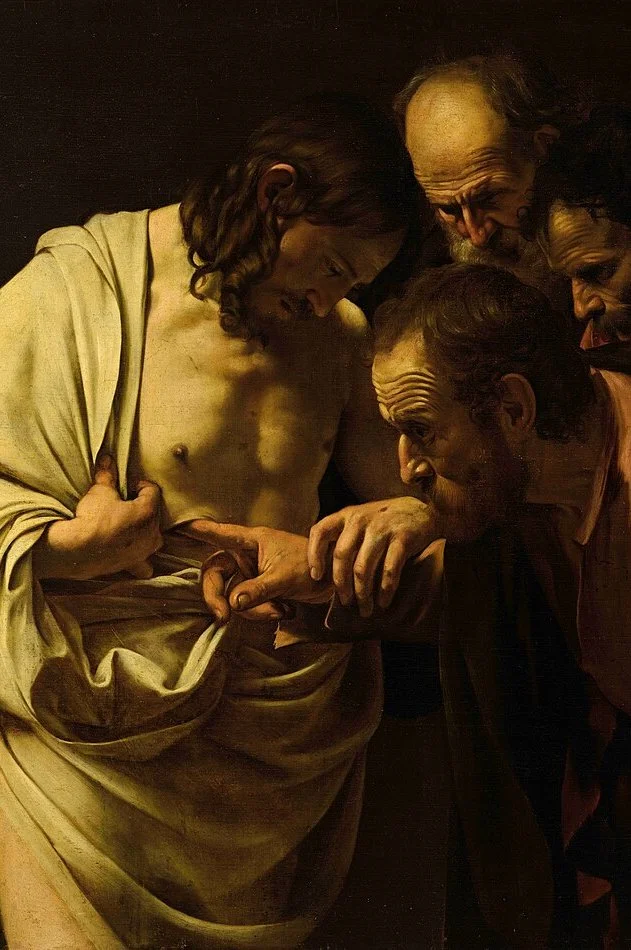
The new arrangement took effect on July 3, 2025. The date was not chosen by accident. It is the feast of Saint Thomas the Apostle, the very apostle to whom this entire Church traces its founding, the man who would not believe until he touched the wounds and then went farther east than any other apostle to tell what he had touched. A Church that had spent years arguing over how to honor him chose his own feast day to finally lay the argument down. Four days later, on July 7, 2025, Pope Leo XIV formally ended Archbishop Vasil’s mission as pontifical delegate, with the Vatican stating that the decision “concludes the Holy See’s mediation work among the Syro-Malabars.” Rome, in other words, had concluded that the Syro-Malabar Church no longer needed an outside referee. It had found its own peace.

Part VII
What This Crisis Reveals About a 2,000-Year-Old Church
It is worth sitting with what actually happened here, because it is easy to read a story like this as simply one more painful chapter in a long history of division, and miss what made its ending different from nearly everything that came before it. The Synod of Diamper in 1599 was a wound inflicted from outside, by a foreign power that did not understand or respect what it was changing. The Coonan Cross Oath of 1653 was a rupture the community could only heal generations later, with outside help from gentler Carmelite friars. This dispute, by contrast, both began and ended inside the Church itself. The Syro-Malabar Church won the right to govern itself in 1992, after centuries of waiting. This crisis was, in a hard sense, the first real test of that self-government, an Eastern Catholic Church being forced to discover whether it could resolve a genuine, sincerely held internal disagreement without an outside referee imposing the answer.
For years it looked as though the answer might be no. Papal video messages, a pontifical delegate, a cardinal's resignation, the apostolic administration of an entire archdiocese, none of these external interventions, however weighty, actually produced the peace. What produced the peace was Archbishop Pamplany sitting with the very priests who disagreed with him, listening rather than only instructing, and finding a compromise that let both the ancient Eastern instinct toward the altar and the more recently rooted local custom of facing the people coexist within the same parishes, on the same Sundays. An academic who studied the resolution called it remarkable specifically because it was reached “by means of synodality, that is, through dialogue and mutual listening,” rather than by the exercise of authority and discipline that had failed for years before.
This is, in the end, a story about what it costs a people to govern themselves, and what it proves when they finally do it well. The Saint Thomas Christians have survived the loss of their mother Church in Mesopotamia, the trauma of forced Latinization, the fire of invasion, and the long wait for the hierarchy of their own. In 2025 they survived something quieter but no less real: the temptation to let a genuine internal disagreement become a permanent fracture. They chose dialogue instead, on the feast of the very apostle who founded them. It is, perhaps, the most hopeful chapter in this Church's modern history, precisely because no one outside the family had to write the ending for them.
Apostle Thomas, you doubted until you touched the wounds, and then you believed completely and went farther than any of the others to share what you had found. Watch over the Church that bears your name, the one you planted on the Malabar coast two thousand years ago. When her children disagree, give them the patience to listen before they speak, and the humility to find peace within their own house before looking outside it for an answer. Through your intercession, and through the intercession of Saints Chavara, Alphonsa, and Mariam Thresia, may this ancient and faithful people continue to heal what is broken and to hold fast to what unites them.
A devotional reflection inspired by the Saint Thomas Christian tradition, not an official liturgical text.
Part VIII
Read the Whole Story
This liturgy dispute is only one chapter, though a vivid and recent one, in a much longer story. The complete history of the Saint Thomas Christians, from the Apostle Thomas’s arrival in AD 52 through the wound of Diamper, the defiance of the Coonan Cross, the flowering of saints like Chavara and Alphonsa, the long road back to self-government, and the global diaspora now scattered from Chicago to Melbourne, has been written in full in The Saint Thomas Christians: A History of the Syro-Malabar Church. It places this very liturgy crisis in the context of everything that came before it, so readers can see clearly why a question about which direction a priest faces could carry the weight of two thousand years behind it.
Written in clear, accessible prose and honest about both the glories and the hard chapters, it is a book for the Syro-Malabar family who wants the whole story at last, and for any reader curious about one of the oldest living Christian traditions on earth.

Frequently Asked Questions
The Syro-Malabar Liturgy Dispute — Questions & Answers
A Church Argued, Wept, and Then Chose Peace on the Feast of Its Own Apostle.
For more than two decades, a question about which way a priest should face divided one of the oldest Christian communities on earth. It took a cardinal's resignation, a papal video message, and a pontifical delegate's difficult mission before the real solution finally appeared, not from Rome, but from within the Church's own house, through patient listening between people who disagreed. That is not a small story. It is a story about what a 2,000-year-old Church looks like when it finally, fully governs itself.
To see how this moment fits into the whole sweep of Saint Thomas Christian history, from the apostle on the beach to the peace of 2025, the full story is now written in one volume.
Get The Saint Thomas Christians on Amazon →