How to Tell If a Dream Is From God: 5 Biblical Signs (And Red Flags That It's Not)
Christian Dream Discernment — A Biblical Guide
How to Tell If a Dream Is From God
(Not Your Mind or the Enemy)
Three sources. Five signs. One biblical test. Here is everything Scripture and the Church's tradition teach about recognizing when God is truly speaking in the night.
At a Glance
- The core question
- Is my dream from God, my own mind, or a spiritual enemy?
- Biblical basis
- Joel 2:28, Acts 2:17, Genesis, Matthew, Daniel, 1 John 4:1
- Three dream sources
- Divine (God), Natural (human mind), Deceptive (demonic)
- Key test
- Does it align with Scripture and bear good fruit?
- Who should read this
- Any Christian who has woken up wondering, "Was that from God?"
- Recommended guide
- When God Speaks in Dreams by a biblical scholar
In This Article
You woke up before the alarm. The dream was still there — vivid, unusual, heavy in a way that ordinary dreams are not. And somewhere between the ceiling and the silence, one question surfaced: Was that from God?
It is one of the most honest and most difficult questions a Christian can ask. Dismiss it too quickly, and you might walk past something God was genuinely trying to tell you. Take it too seriously without discernment, and you risk building decisions on your own imagination — or worse, on something you were never meant to receive.
Scripture does not leave you without guidance here. From Genesis to Revelation, God has spoken to His people through dreams — and He has also warned them about false dreams. The Church's tradition, from the Desert Fathers through the great saints of Mount Athos, has wrestled with exactly this question and developed a body of wisdom for testing what we receive in the night.
This article gives you that framework. By the end, you will know the five signs that a dream is genuinely from God, how to recognize a natural human dream, what the red flags of a demonic dream look like, and the practical biblical test you can apply to any dream that leaves you uncertain. This is the full picture — and nothing in it requires you to abandon your critical faculties or your faith.

When God Speaks in Dreams: A Biblical Guide to Christian Dream Interpretation
This guide walks you through the complete biblical record of divine dreams — from Jacob's Ladder to the Magi — and gives you a step-by-step framework for testing and interpreting dreams through Scripture. It covers the three sources of dreams, common biblical symbols, how the Holy Spirit guides interpretation, and how to avoid the pitfalls of New Age dream dictionaries. If you've ever woken up wondering whether God was speaking, this is the book you need.
Get the Book on Amazon →The Three Sources of Every Dream
Genesis • Ecclesiastes 5:3 • Jeremiah 23:32 • 2 Timothy 1:7
Before you can discern which kind of dream you received, you need to understand that Christian tradition and Scripture consistently recognize three distinct sources for the dreams we have. Knowing the category helps you know where to look for answers.
- 1. God — The Divine Dream The clearest and most important category. God has spoken through dreams since the beginning of recorded Scripture: to the patriarchs, to kings, to prophets, to Joseph the carpenter of Nazareth, and to the Magi. The prophet Joel declared that when God pours out His Spirit, "your old men will dream dreams, your young men will see visions" (Joel 2:28). Peter quoted this on Pentecost. God has not stopped speaking this way.
- 2. The Human Mind — The Natural Dream The most common source. Our brains process the day's emotions, anxieties, memories, and desires while we sleep. "A dream comes when there are many cares," Ecclesiastes 5:3 notes plainly. If you watched something disturbing, had a tense conversation, or went to bed exhausted and anxious, your mind will process that in sleep. Most dreams fall into this category — not supernatural, not sinister, just human.
- 2. The Enemy — The Deceptive Dream The most dangerous category, though less common than we might fear. Jeremiah warned of "false prophets who prophesy false dreams… and lead my people astray with their reckless lies" (Jeremiah 23:32). Scripture also tells us that Satan "masquerades as an angel of light" (2 Corinthians 11:14). The enemy can and sometimes does work through dreams — not to inform you, but to deceive, frighten, or lead you away from God.
The practical challenge is that from the inside, all three can feel vivid, spiritual, and significant. You need a framework for testing them — and Scripture provides exactly that. This is why Christian dream interpretation has always been grounded in biblical discernment, not intuition alone.
Part II
Five Signs a Dream Is From God
Genesis 28 • Matthew 1 • 1 Kings 3 • Joel 2:28 • Matthew 7:16
There is no formula that transforms every Christian into an infallible dream reader. But there are consistent patterns in Scripture — markers that appear again and again in the biblical record of genuine divine dreams. Here are the five most reliable signs.
Pharaoh was so disturbed by his dream he could not rest until he found an interpretation (Genesis 41:8). Joseph the carpenter woke and immediately obeyed (Matthew 1:24). When God speaks through a dream, it typically doesn't evaporate like ordinary dreams. You may wake at 3 a.m. with every detail sharp and still be able to describe it a week later. This persistence of memory is consistently present in the biblical accounts of divine dreams — and consistently absent in natural, forgettable ones.
This is the non-negotiable test. God is consistent — He will never use a dream to tell you something that contradicts His written Word. He won't instruct you to sin, leave your spouse, or ignore His commandments. "Your word is a lamp to my feet and a light to my path" (Psalm 119:105). When the angel appeared to Joseph in Matthew 1, the dream's message didn't contradict Scripture — it fulfilled it. If a dream would require you to act contrary to Scripture, that dream did not come from God.
Many who receive a genuinely God-given dream describe waking with something hard to put into words: a weight, a peace, a certainty that something real had just happened. Jacob woke from his ladder dream and said, "Surely the Lord is in this place, and I was not aware of it" (Genesis 28:16). It wasn't just a good dream — it was an encounter. Notice whether you wake wanting to pray, and whether the dream moves you toward God rather than away from Him.
God is patient with uncertainty. He confirmed His word to Gideon through the fleece — twice. If a dream is truly from God, confirmation will come: through a Scripture passage that speaks directly to the dream's message the next day, through counsel from a trusted Christian that matches it without their knowing, or through events unfolding over time. If unsure, pray and ask God to confirm. Confirmation is rarely instant — but it comes, and the waiting is part of the discernment.
Jesus taught, "By their fruits you will know them" (Matthew 7:16). Did the dream draw you closer to God? Did it produce repentance, faith, greater love for others, or a deeper sense of truth? Even a warning dream — frightening at first — will carry the purpose of protection and produce the fruit of prayer, vigilance, or a course correction that saved you from harm. What comes from God ultimately leads to life, not paralysis. If a dream amplified your pride, justified your sin, or produced ongoing terror with no resolution — it didn't come from Him.
How to Recognize a Natural Human Dream
Ecclesiastes 5:3 • 1 Kings 18 • Practical discernment
The majority of the dreams you have are not from God — and that is completely fine. God designed your brain, and part of what brains do at night is process the day's events, rehearse anxieties, work through unresolved emotions, and sometimes produce complete nonsense. Learning to recognize natural dreams is not a spiritually inferior skill. It is a form of honesty that protects you from misreading your own subconscious as the voice of God.
Typical Characteristics of Human-Origin Dreams
Natural dreams tend to be disjointed and trivial — they follow no particular logic and often dissolve immediately upon waking. The content usually mirrors something from the previous day: a stressful meeting, a conversation that left you unsettled, a movie you watched before bed, a worry you fell asleep carrying. "A dream comes when there are many cares" (Ecclesiastes 5:3) — stress is one of the great dream generators.
These dreams typically do not carry a clear message. They may be emotionally intense — you can have a vivid, frightening, or joyful natural dream — but on reflection, the content doesn't point to anything beyond what you already know about your own life. The anxiety dream about being unprepared for an exam you haven't taken in twenty years is probably not prophetic. It's your brain running an old loop.
A helpful practice is to pray each morning: "Lord, if that dream was from You, keep it with me and give me understanding. If it was simply from me, I release it." Then let it go. Not every dream deserves an interpretation — and obsessively searching for deep spiritual meaning in every sleeping image will exhaust you and eventually make you unable to recognize the real thing when it comes.
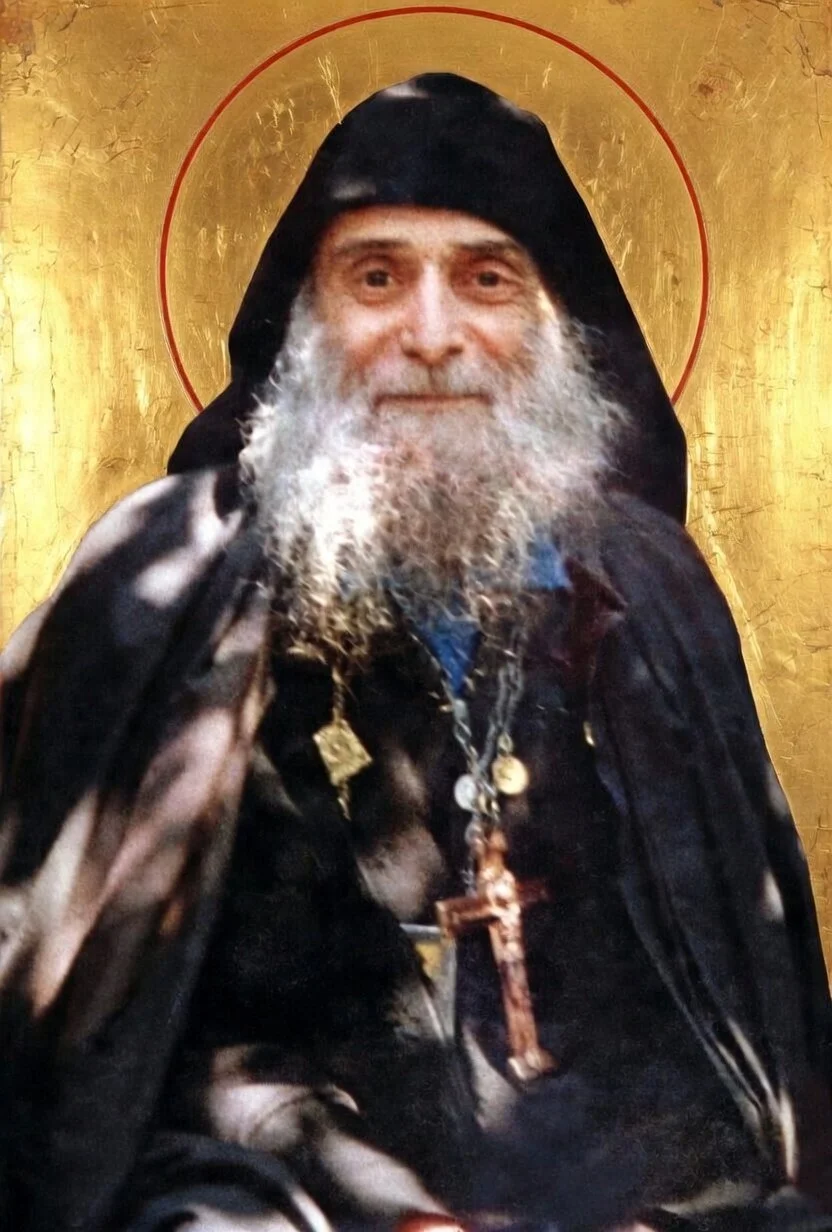
Saint Gabriel of Georgia — The Fool for Christ
Saint Gabriel Urgebadze of Georgia was renowned for his gifts of discernment and prophecy. He knew hidden things, warned of what was coming, and saw through spiritual realities invisible to others. A powerful intercessor for those seeking to hear God clearly and discern spiritual truth. Like Saint Paisios of Mount Athos, Gabriel is a modern witness that the charisms of the early Church have never ceased.
Get the Prayer Card →Red Flags of a Demonic Dream
Jeremiah 23:32 • 2 Corinthians 11:14 • 2 Timothy 1:7 • James 4:7
Most Christians are more prone to ignoring this category than to overusing it. We want to believe that anything spiritually significant in our dream life is from God, and that anything disturbing is just our own fear. That is usually correct — but not always. The enemy is real, and Scripture does not pretend otherwise.
The good news is that a genuine demonic dream is recognizable. It has patterns. And you have more authority over it than you might realize.
Warning Signs That a Dream May Not Be From God
- Lingering Fear or Oppression After Waking God has "not given us a spirit of fear, but of power and of love and of a sound mind" (2 Timothy 1:7). A natural nightmare might startle you briefly, but once you turn on a light and sit up, the fear subsides. A dream that leaves you feeling a dark presence, a heavy oppression, or a spiritual weight that does not lift even in prayer — that's a different category. If you find it difficult to pray after a dream, or feel a barrier to saying the name of Jesus, pay attention.
- A Message Contradicting Scripture The enemy loves to work through deception that looks spiritual. If a dream — however beautiful or seemingly authoritative — delivers a message that contradicts the gospel, denies Jesus Christ, approves of sin, or calls you away from the faith, reject it entirely. Paul was unambiguous: "Even if we or an angel from heaven should preach a gospel other than the one we preached to you, let them be under God's curse" (Galatians 1:8). A dream featuring a radiant figure whose message contradicts Scripture is not from God, regardless of how the figure presented itself.
- Temptation Embedded in the Dream's Narrative Some deceptive dreams do not announce themselves as spiritual attacks. They work more subtly: the dream's story leads you toward sin, justifies compromising your integrity, presents the wrong path as appealing, or makes you feel entitled to something Scripture forbids. If you wake up from a dream having rehearsed a sin in your mind — and feeling strangely pulled toward it — the dream was not working for your good.
- Dreams That Lure You Toward Occult Sources If a striking dream sends you to a New Age dream dictionary, an astrology app, or a psychic for interpretation — rather than to prayer and Scripture — something is working against you. The enemy doesn't need to directly attack your faith; he only needs to redirect where you take your questions. Christian mystical tradition has always insisted that spiritual gifts — including discernment of dreams — are interpreted within the community of faith and tested against the Word of God, never through occult sources.
If you suspect a dream was a spiritual attack, your response is simple and powerful: rebuke it in the name of Jesus. You might pray: "I cancel any influence of that dream over me in the name of Jesus Christ. I cover myself with His protection." Then turn your attention to worship. The Desert Fathers and Mothers who battled demonic disturbances in their dreams universally prescribed the same response: prayer, the name of Jesus, and the refusal to engage the attack on its own terms. You can read more about their approach in the Church's tradition of the Desert Fathers and Mothers.
Part V
The Biblical Five-Step Test
1 John 4:1 • 1 Thessalonians 5:20–21 • Proverbs 11:14 • Hebrews 4:12
Here is the practical framework. Apply it to any dream that sticks with you and leaves you asking the question. Work through all five steps before drawing a conclusion.
Before checking your phone, before speaking to anyone — write down every detail: images, emotions, any words spoken, the setting, people present. Memory of dreams is fragile and evaporates fast. You cannot evaluate what you cannot clearly remember. Joseph in Egypt asked the butler and baker to tell him their dreams precisely because interpretation requires the full content. A journal beside your bed is the most practical tool for anyone serious about this discernment.
Does the dream’s core message contradict what God has already revealed in His Word? If yes — it isn’t from God, regardless of how it felt. The Bible is the measure of all claimed revelation, including dreams. Grounding yourself in daily prayer and Scripture reading makes this test increasingly intuitive — you begin to recognize the sound of God’s voice because you’ve been listening to it regularly.
Bring the dream to God: “Lord, if this was from You, let it remain and give me understanding. If not, take it from me.” A dream from God will tend to produce peace as you bring it to Him, even if its content is weighty. The prayer of the heart — practiced by Eastern Christian saints for centuries — is the natural environment in which spiritual discernment develops and deepens over time.
“In the abundance of counselors there is victory” (Proverbs 11:14). Joseph interpreted for others; Daniel interpreted for Nebuchadnezzar; the early Church tested prophetic words in community. Share a significant dream with a pastor or mature Christian friend. One of the most reliable signs a dream is self-generated is that we desperately want it to be from God — an outside voice helps calibrate that honestly.
With rare exceptions — like Joseph being warned urgently to flee to Egypt — God’s directional dreams don’t demand impulsive action. If you are not sure, you do not have to act. Wait and watch. If the dream was from God, the meaning will become clearer, confirmation will arrive, and events will begin to align. If it was not from God, it will lose its grip. The traditional Christian prayer rule includes regular examination of one’s spiritual state precisely because discernment develops over time, not in a single moment of certainty.
When God Speaks in Dreams: A Biblical Guide to Christian Dream Interpretation
The five-step test above comes from this book's core teaching — but the book goes much further. It walks you through 20+ biblical examples of divine dreams in full detail, gives you a complete A-to-Z guide to Christian dream symbols, explains the specific role of the Holy Spirit in interpretation, and includes a full chapter on how to handle dreams you simply don't understand. If you're serious about learning to recognize God's voice in dreams, this is the guide to keep on your nightstand.
Order on Amazon →What the Saints Say About Dreams and Discernment
Eastern Orthodox tradition • Church Fathers • Hesychast tradition
The question of how to tell a divine communication from a deception is not a modern one. The Church has wrestled with it since its earliest days — and the saints who devoted their lives to prayer developed a wisdom about it that goes deeper than any checklist.
The Desert Fathers, whose sayings the Church has preserved for seventeen centuries, treated the discernment of spiritual realities as a discipline as essential as fasting or Scripture reading. Their consistent counsel on dreams and visions was marked by a striking combination of openness and caution: never dismiss a spiritual experience too quickly, but never accept it without testing, either. The Fathers were also deeply aware that the greatest spiritual danger was not too much openness but too much credulity — the monk or Christian who believed every dream was divine was in greater danger than the one who was skeptical, because the enemy had more to work with.
Saint Paisios of Mount Athos
1924–1994 • Mount Athos, Greece Orthodox SaintSaint Paisios the Athonite is one of the most beloved Orthodox saints of the twentieth century, and one of the most remarkable examples of the charism of discernment in modern times. Pilgrims who came to him from across the world described how he could see into their spiritual condition with precision, offer guidance that addressed things he had no natural way of knowing, and distinguish between genuine spiritual experiences and those that were either self-generated or deceptive.
Paisios consistently warned against the danger of attaching too much importance to dreams and visions before one's spiritual life was mature and grounded. His counsel was not dismissive — he believed God speaks and acts supernaturally — but he was acutely aware that a spiritually immature Christian who sought signs and experiences was easy prey for deception. His first counsel to anyone who had had an unusual spiritual experience was always the same: pray, fast, seek a spiritual father, and wait for confirmation.
The Philokalia — the great Eastern Christian anthology of hesychast prayer and spiritual discernment — returns repeatedly to the theme of nepsis, sobriety or watchfulness of the mind. The Philokalic writers were intimately familiar with the experience of receiving images and thoughts in prayer and in sleep, and they developed a nuanced framework for evaluating them. Their foundational criterion was consistent with Scripture: a genuine movement of the Holy Spirit always leads toward humility, compunction, and love. Any experience — dream or vision or inner word — that produces pride, agitation, or a sense of spiritual entitlement is to be treated with deep suspicion.
For Christians from a mystical prayer tradition, dream discernment is not a separate discipline — it is the same discipline they exercise in prayer, applied to a different context. The inner stillness cultivated through the Jesus Prayer makes the soul more sensitive to genuine movements of the Holy Spirit, and simultaneously less susceptible to counterfeit ones. A person who prays attentively develops an ear for the real thing.
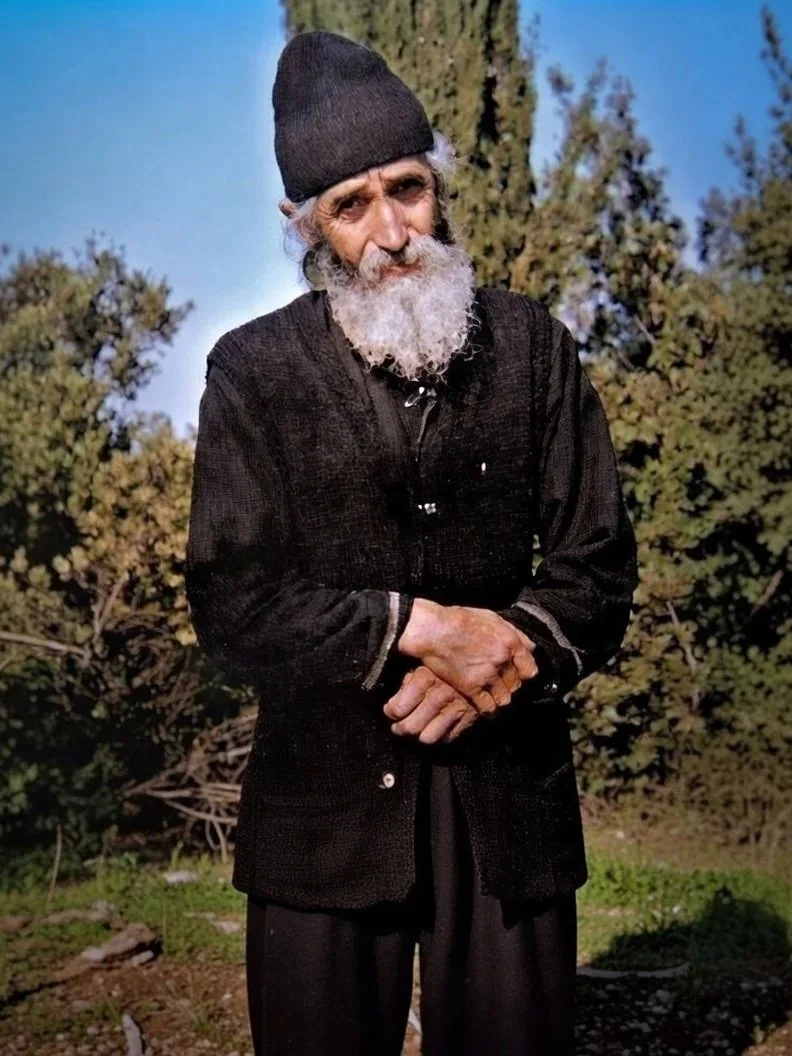
Orthodox Prayer Card — $3.00
Saint Paisios the Athonite
The great modern elder of Mount Athos, beloved for his gift of discernment, his tenderness toward suffering souls, and his witness that God is alive and speaking in the present day.
Get the Card →
Orthodox Prayer Card — $3.00
Saint Gabriel of Georgia
Known for prophetic gifts and supernatural discernment under Soviet persecution. A powerful intercessor for those seeking to hear God clearly and recognize spiritual truth in a confusing world.
Get the Card →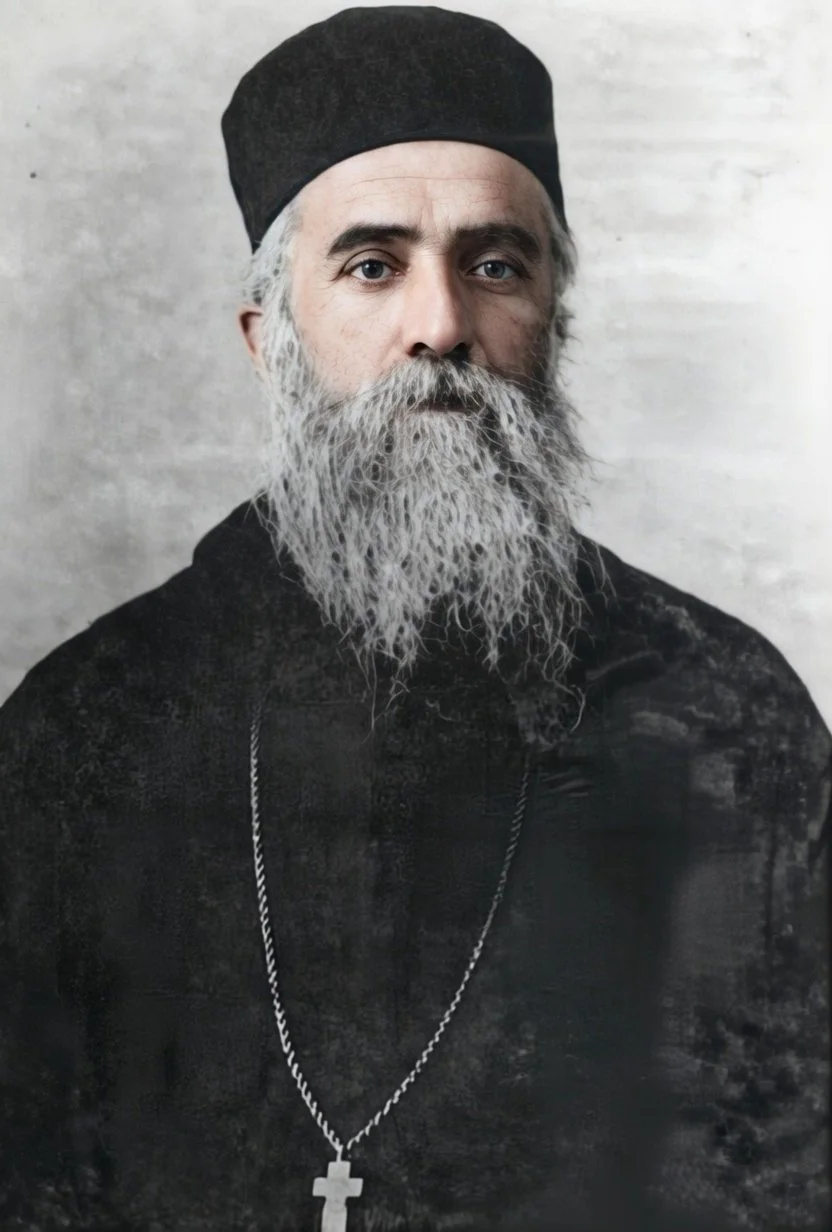
Orthodox Prayer Card — $3.00
Saint Nektarios of Aegina
One of the most beloved miracle-working saints of modern Orthodoxy. His life demonstrated that the Holy Spirit's gifts of healing, wisdom, and spiritual vision are alive and operative in the Church today.
Get the Card →
For Those Seeking to Hear God's Voice in the Night
Lord Jesus Christ, You are the Good Shepherd who knows His sheep, and Your sheep know Your voice. Grant me the grace to hear You clearly — to recognize when You are speaking and to hold fast to what is true.
Purify my sleep and guard my mind from all deception. Let my dreams be governed by Your Holy Spirit, and when You speak in the night, let me not be afraid — but let me rise in faith and do as You have said.
Give me the humility to test what I receive, the wisdom to seek counsel, and the patience to wait for Your confirmation. Keep me from building on my own imagination and from mistaking my fears or desires for Your voice.
Most Holy Theotokos, cover me with your intercession. Saint Gabriel and Saint Paisios, pray for me, that I may have the gift of discernment and the courage to walk in what God reveals.
Pray this in the morning after a significant dream, and again before sleep as a protection.
Frequently Asked Questions
Discerning Dreams: Common Questions Answered
God Spoke in the Night Then. He Speaks Now. Learn to Listen.
The same God who warned Joseph in a dream, guided Daniel through visions, and sent an angel to Nazareth to speak through sleep is your God. He hasn't changed His method. He speaks to His children in the language they can receive — and sometimes, that's a dream in the quiet of the night.
You don't need to be afraid of your dreams. You need to be equipped to test them. When God Speaks in Dreams gives you that equipment — drawn entirely from Scripture, grounded in the Church's tradition, and written for ordinary Christians who simply want to hear God clearly and walk faithfully in what He reveals.
Get the Book on Amazon →And while you're here — carry a saint known for discernment. Our Orthodox and Catholic prayer cards for Saint Paisios, Saint Gabriel of Georgia, and Saint Nektarios are just $3.00 each.
Browse Prayer Cards →