Spiritual Intimacy in Catholic Marriage: How God's Presence Transforms Physical & Emotional Connection
Spiritual Intimacy in Catholic Marriage: How God’s Presence Transforms Physical & Emotional Connection
Most Catholic couples pursue physical and emotional intimacy while leaving the spiritual dimension untouched. But spiritual intimacy is not one category among three equals—it is the foundation that makes the other two possible. Here is what it is, why it matters, and how to build it.
At a Glance
- Core Problem
- Couples pursue physical & emotional closeness while avoiding spiritual vulnerability
- Core Insight
- Spiritual intimacy is the root—emotional and physical connection flow from it
- Key Scripture
- Ecclesiastes 4:12 — “a cord of three strands is not quickly broken”
- Why It Plateaus
- Without God at the center, marriages hit a ceiling no amount of communication can raise
- The Practice
- Prayer together, vulnerability before God, shared spiritual discipline
- The Full Framework
- The Daily Sacrament by Hank Freeman
- The Three Layers of Intimacy
- Why Catholic Marriages Plateau
- What Spiritual Intimacy Actually Is
- How God’s Presence Transforms Connection
- Vulnerability, Sacrifice & Grace
- Saints Aquila & Priscilla: A Marriage That Worshipped
- One Couple’s Journey Into Spiritual Intimacy
- Seven Practices for Building Spiritual Intimacy
- Go Deeper: A Complete Reading Path
- Frequently Asked Questions
The Three Layers of Intimacy in Marriage
Physical, Emotional & Spiritual—and Why the Order Matters
Every marriage contains three distinct forms of intimacy, and most couples in difficulty are working on the wrong one. They read books on communication. They attend couples retreats focused on emotional connection. They consult therapists about physical closeness. All of these have genuine value. But none of them will reach the ceiling that many Catholic couples are pressing against, because the ceiling is not emotional or physical. It is spiritual.
Here is how the three layers relate to each other—and why the order is not arbitrary:
Physical Intimacy
The bodily union of spouses. In Catholic theology, an expression of the total self-gift each spouse makes to the other. Renewed with each act of physical love. Vulnerable to stress, health, distance, and unresolved emotional wounds.
Emotional Intimacy
The meeting of inner lives. Knowing and being known. The safety to express fear, failure, longing, and joy without being judged or managed. Requires vulnerability. Cannot be forced. Withers under contempt or indifference.
Spiritual Intimacy
The shared orientation of two souls toward God. Praying together, suffering together with faith, choosing love when it is costly, seeing each other as the specific person God placed in your life for your sanctification. The foundation that makes both other layers sustainable.
The reason spiritual intimacy is foundational rather than supplementary is not a matter of pious preference. It is structural. Physical intimacy without emotional depth produces loneliness even in the presence of union. Emotional intimacy without a shared spiritual foundation produces a closeness that eventually turns inward on itself—the two spouses become each other’s entire world, and the weight of that eventually crushes both of them.
When God is at the center—when spiritual intimacy is real and practiced rather than nominal—the other two layers gain a context that sustains them. Physical union becomes a renewal of covenant. Emotional vulnerability becomes possible because both spouses are known by someone larger than each other. The marriage becomes porous to grace rather than sealed against it.
02 — The Plateau
Why Catholic Marriages Plateau
The Invisible Ceiling That Communication Skills Cannot Raise
A marriage plateau is a specific and recognizable experience: the marriage is not failing, but it is not growing. The couple is not fighting constantly, but they are not truly close either. They share a home, a bed, a schedule, children—but not a life in the deepest sense. There is a flatness to it. A sense that this is what marriage is, and it is fine, and that is somehow not enough.
This is the most common form of marriage difficulty in the Catholic Church today. It is more prevalent than conflict-driven marriages precisely because it does not feel like a problem that requires attention. It feels like normalcy. Many couples spend decades in this state, occasionally adding a date night or reading a marriage book but never addressing what is actually wrong.
What is actually wrong, in most cases, is that the marriage has no spiritual dimension. The couple goes to Mass together, perhaps. They say grace before meals, perhaps. But they do not pray together in any personal, vulnerable, soul-to-soul way. They do not share their spiritual struggles. They do not bring their marriage before God as a shared offering. Their faith is parallel rather than interwoven—two private spiritual lives running alongside each other without ever meeting.
Signs Your Marriage May Lack Spiritual Intimacy
- You go to Mass together but never discuss your faith or prayer life privately
- You would feel embarrassed or exposed praying aloud with your spouse
- Your marriage feels “good enough” but not joyful or growing
- When conflict arises, you resolve it or suppress it, but never bring it to God together
- You know your spouse’s opinions but not their prayers or spiritual struggles
- You have never deliberately invited God into your physical or emotional intimacy
- The idea of praying together before physical intimacy feels strange or religious in a way that seems out of place
None of these signs indicate a failing marriage. They indicate a marriage that has not yet reached its fullest form—a marriage that is functioning on two of its three layers while leaving the foundational layer largely untouched. The plateau is not a verdict. It is an invitation.
Recognized in The Daily Sacrament
If you recognize that feeling, the book that describes the way through it is The Daily Sacrament by Hank Freeman →
03 — What It Actually Is
What Spiritual Intimacy Actually Is
Definitions, Distinctions & What It Is Not
Spiritual intimacy in marriage is not religiosity. It is not going to more Masses, doing more novenas, or adding more Catholic content to your household calendar. These practices are good and have their place. But a couple can do all of them and still have zero spiritual intimacy—because spiritual intimacy is relational, not devotional. It is the specific experience of being known in your spiritual life by your spouse, and knowing them in theirs.
More precisely, spiritual intimacy is the shared orientation of two persons toward God such that their relationship with each other is transformed by their relationship with Him. It is the experience of loving your spouse not only because of who they are to you, but because of who they are to God—and allowing that larger frame to shape how you see them, serve them, and forgive them.
The Catechism describes marriage as a “covenant of love” that images the covenant between God and His people (CCC 1601). A covenant is not a contract between two parties—it is a binding entered before and in relationship to a third party: God. The third strand of Ecclesiastes 4:12 is not a metaphor. It is the structural reality of Christian marriage. God is the third strand. Without it, the cord of two can and does break. With it, the bond is qualitatively different from anything two people can produce on their own.
This is what spiritual intimacy produces in practice: a marriage where God is the third person in the room—not as a judge or a policeman, but as the source of the love the spouses are trying to give each other. When Hank Freeman describes his marriage as feeling, in the good seasons, like God is “multiplying the love like loaves and fish,” he is describing the experience of spiritual intimacy working as it was designed to. The love becomes larger than what either spouse contributes, because neither spouse is the ultimate source of it.
04 — How God’s Presence Transforms Connection
How God’s Presence Actually Transforms Your Marriage
The Specific Mechanisms—Not Vague Piety But Real Change
Saying that “God’s presence transforms your marriage” is easy. It becomes meaningful only when you can describe specifically how and why. Here are four concrete mechanisms through which spiritual intimacy changes a marriage:
1. It Replaces Conditional Love With Unconditional Love
Most marital love is, at its base, conditional: I love you as long as you continue to be the person I married, as long as you meet my needs, as long as the relationship is working. This is not cynicism—it is simply the default of human love untransformed by grace. When a couple orients their love toward God—when each spouse loves the other as an act of worship rather than as a transaction—the conditionality begins to dissolve. You are not loving your spouse to get something from them. You are loving them to give something to God. This changes what triggers your love and what threatens it.
2. It Makes Forgiveness Structural Rather Than Heroic
Forgiveness in a marriage without spiritual intimacy is an enormous, heroic act that must be chosen fresh each time from depleted reserves of generosity. It exhausts people. In a marriage with spiritual intimacy, forgiveness is still a choice—but it has structural support. If you have prayed together this morning, if you have seen your spouse as a person God loves and has placed in your life for your sanctification, the path to forgiveness is shorter. You are not forgiving a stranger or an enemy. You are forgiving someone you have stood before God with.
3. It Gives Conflict a Redemptive Frame
Conflict in a marriage without spiritual depth is simply damage: something to minimize, manage, or survive. In a spiritually intimate marriage, conflict can be understood as the friction of two people in the process of becoming more like God—each one being shaped, challenged, and refined by the other. This does not make conflict pleasant. It makes it purposeful. A couple who can ask together “what is God teaching us through this” is having a categorically different argument than one that cannot.
4. It Resolves the Loneliness That Intimacy Cannot
There is a form of loneliness that physical and emotional intimacy cannot reach—the metaphysical loneliness of being a creature that was made for more than any other creature can give. C.S. Lewis called it “the inconsolable longing.” Marriages built entirely on physical and emotional connection inevitably run aground on this longing. Each spouse begins to feel, without quite being able to name it, that the other is not enough. In a spiritually intimate marriage, this longing is understood and honored rather than denied—and both spouses point each other toward the One who can actually satisfy it.
05 — Vulnerability, Sacrifice & Grace
The Spiritual Core: Vulnerability, Sacrifice & Grace as Foundation
What It Actually Takes to Build Spiritual Intimacy
Spiritual intimacy requires a specific and unusual kind of vulnerability: allowing your spouse to see not just your emotional life but your spiritual one. This is harder than it sounds. Most people, even devout Catholics, keep their prayer life private. Their doubts, their longings, their conversations with God, their sense of failure before Him—all of this stays interior. They bring a public faith to Mass and a private faith to their bedroom, and the two never meet.
Building spiritual intimacy means lowering that wall. It means saying to your spouse, not just “I had a hard day,” but “I have been struggling in prayer. I feel distant from God and I don’t know why.” It means praying aloud together not just the formal prayers of the tradition but the informal, stumbling, personal kind—the kind that reveals how you actually relate to God rather than how you perform religion.
This vulnerability is sacrificial because it costs something. You are giving your spouse access to the interior of your soul—the place where your relationship with God lives, with all its imperfection and uncertainty. Most people protect that place more carefully than any other. Offering it to your spouse is one of the most intimate things you can do. And it is one of the most productive for the health of a marriage, because what you receive in return is the same gift from them.
Grace enters here in a specific way. The Catholic sacramental theology of marriage teaches that the spouses are channels of grace to each other. Not just good influences or emotional supports—actual vehicles of God’s grace. When you pray with your spouse, you are not just two people talking to God in parallel. You are participating in the sacrament you conferred on each other at the altar. You are the ministers of the sacrament to each other, and your prayer together is one of the primary ways that sacrament is lived out in daily life.
From The Daily Sacrament
This is the spiritual intimacy Hank Freeman describes: love as an act of worship that invites God into the marriage rather than operating beside it. The full twelve-chapter framework is in The Daily Sacrament →
06 — A Marriage That Worshipped
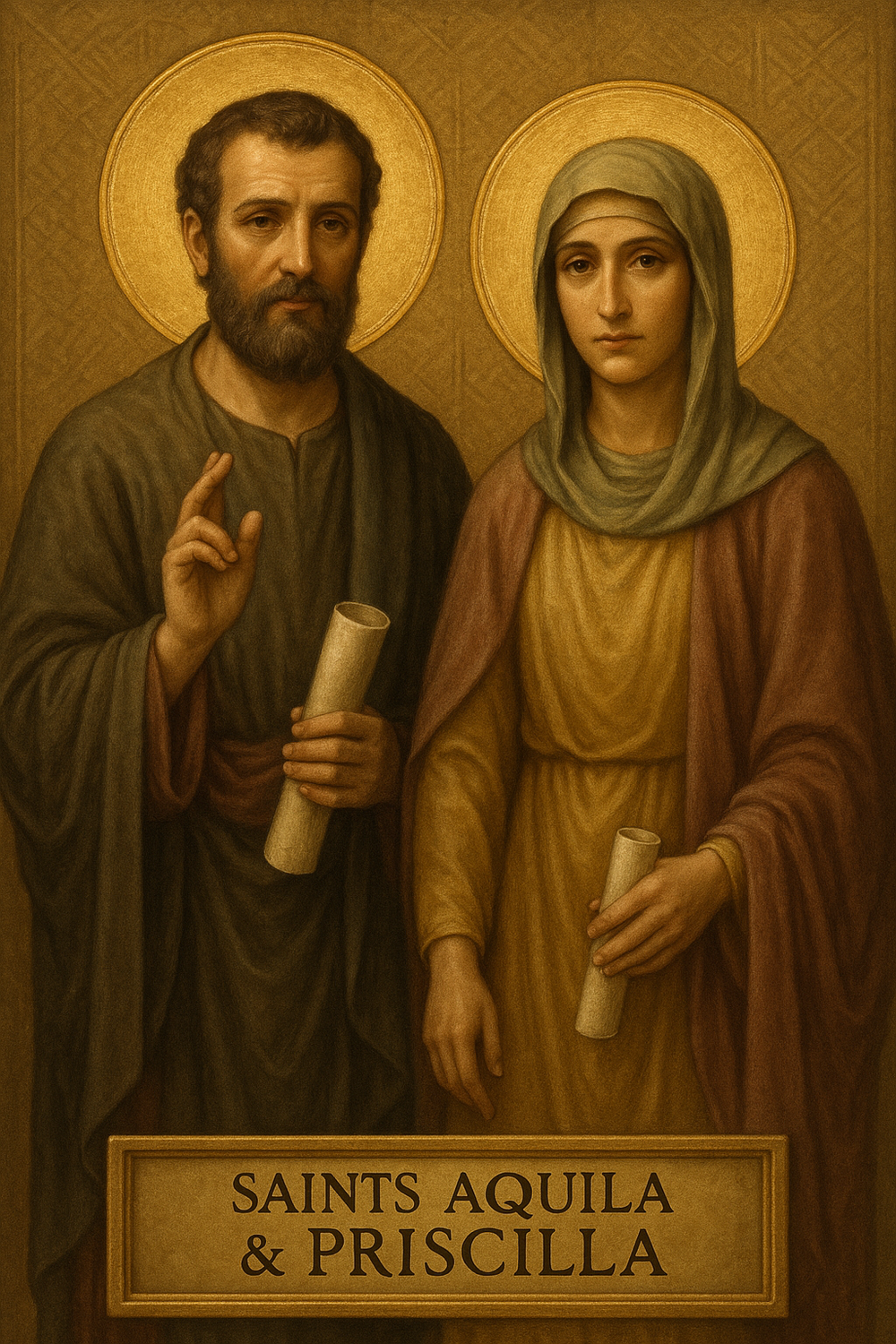
Saints Aquila & Priscilla: The New Testament’s Model of Spiritual Intimacy
The Couple Who Turned Their Home Into a Church
Aquila and Priscilla appear six times in the New Testament, always together, always in the context of mission and ministry. They are the only married couple in the apostolic period consistently described as a unit—not “Aquila and his wife” but always both by name, both equally active. Paul calls them his “co-workers in Christ Jesus” and says they “risked their own necks” for his life (Romans 16:3-4). The church at Corinth met in their house (1 Corinthians 16:19). The church at Rome met in their house (Romans 16:5). When Apollos was teaching with an incomplete understanding of the faith, both Aquila and Priscilla together “took him aside and explained to him the way of God more accurately” (Acts 18:26).
What is visible in every description of Aquila and Priscilla is a marriage completely integrated with their faith. Their home is a church. Their labor is shared. Their mission is shared. Their reputation before God and the Christian community is shared. They are not two private faith lives running in parallel—they are two lives fused into a single spiritual project.
This is what spiritual intimacy looks like in its fullest form: not just praying together at bedtime, but making the entire life of the marriage a joint offering to God. The early church used a Greek phrase, kata oikon ekklesia—“the church according to the house.” Aquila and Priscilla are the clearest example of what that means. Their marriage was not just a family unit. It was a church. A place where God was worshipped, where the faith was taught, where the community gathered. Their spiritual intimacy was not a private matter between them and God. It radiated outward and changed the world around them.
07 — One Couple’s Journey
From Parallel Lives to Spiritual Partnership: One Couple’s Journey
The Story Behind The Daily Sacrament
Hank Freeman’s marriage was not in crisis when he began the journey that became The Daily Sacrament. It was in the plateau. He and his wife loved each other. They had a life together. But they were, as he describes it, more like “roommates sharing a home” than the deeply united couple he had hoped they would be. The connection he had imagined was available in marriage felt out of reach, just beyond what any amount of effort could quite achieve.
His path into spiritual intimacy did not begin with a couples retreat or a communication workshop. It began alone, in his home office, reading Ephesians 5:25 for what he describes as perhaps the hundredth time—and suddenly hearing it differently. He began asking himself what it would actually look like to love his wife the way Christ loved the Church. He began praying, privately at first, about how to love her better—not how to fix their marriage, but how to become the husband God was calling him to be.
For nearly a year, he kept this interior shift to himself. He did not announce a new program or sit his wife down to explain a new theological framework. He simply began living differently: doing the dishes, driving her to work, starting difficult conversations with “I love you,” looking for small acts of service he could offer as acts of worship. His wife noticed the changes before she understood them. She began to soften and respond in kind, drawn toward whatever was producing the change in him.
When he finally shared with her what he had been working toward—the idea of treating their marriage as a daily act of worship, as an offering to God—she embraced it immediately. Not because she had been waiting for a theological framework, but because she had already experienced its fruit in him. The spiritual intimacy they built from that point was not the cause of their transformation. It was the description of what the transformation looked like when it came.
Hank eventually had Ephesians 5:25 tattooed on his ring finger. His wife described the shift in him—and then in herself—in the foreword to the book: “We went from surviving—sometimes hanging by threads—stuck in patterns of miscommunication and frustration, to truly thriving with an openness we had never experienced.”

The Daily Sacrament: Worshiping God Through Catholic Marriage
Twelve chapters. One couple’s complete journey from plateau to spiritual partnership. Practical theology for the marriage you actually have, not an ideal one. Every chapter of this book is about building the kind of intimacy this article is describing.
“This isn’t a quick fix. It’s a daily decision, a commitment, a series of small, intentional choices that reflect the love of Christ. And let me tell you, it’s worth every word, every page, and every daily decision.” — Hank’s wife, from the Foreword
Get The Daily Sacrament on Amazon →08 — Building It in Practice
Seven Practices for Building Spiritual Intimacy
Concrete Starting Points, Not Abstract Ideals
Spiritual intimacy is built the same way all intimacy is built: through repeated, small, consistent acts of vulnerability and presence over time. Here are seven practices you can begin immediately—none of which require any special preparation, any prior spiritual depth, or any perfection in your marriage.
1. Pray Together Before You Sleep—Out Loud and Personally
Not just recited prayers, though those are good. At least one moment each night where you speak to God in your own words, in the presence of your spouse. Thank Him for something specific. Ask Him for something real. Let your spouse hear your actual relationship with God, not a performance of it. This single practice, done consistently, produces more spiritual intimacy than almost anything else.
2. Share Your Spiritual Struggles, Not Just Your Emotional Ones
The next time you are struggling with doubt, with feeling far from God, with a prayer that seems unanswered—tell your spouse. Not to get advice. Not to be fixed. Simply to be known in that interior place. “I have been struggling with prayer lately and I don’t know why” is a more intimate statement than almost anything else you can say to your spouse, because it invites them into a space most couples never share.
3. Bring Your Conflicts Before God Together
When a significant disagreement is unresolved, before you go to sleep or before the next difficult conversation, pray together about it. Not to score points or recruit God to your side—to genuinely ask Him to give you both wisdom and the grace to see each other clearly. “God, we are stuck. We need your help to understand each other. Give us your peace.” This single act changes the atmosphere of a conflict more powerfully than any communication technique.
4. Create a Shared Devotional Space in Your Home
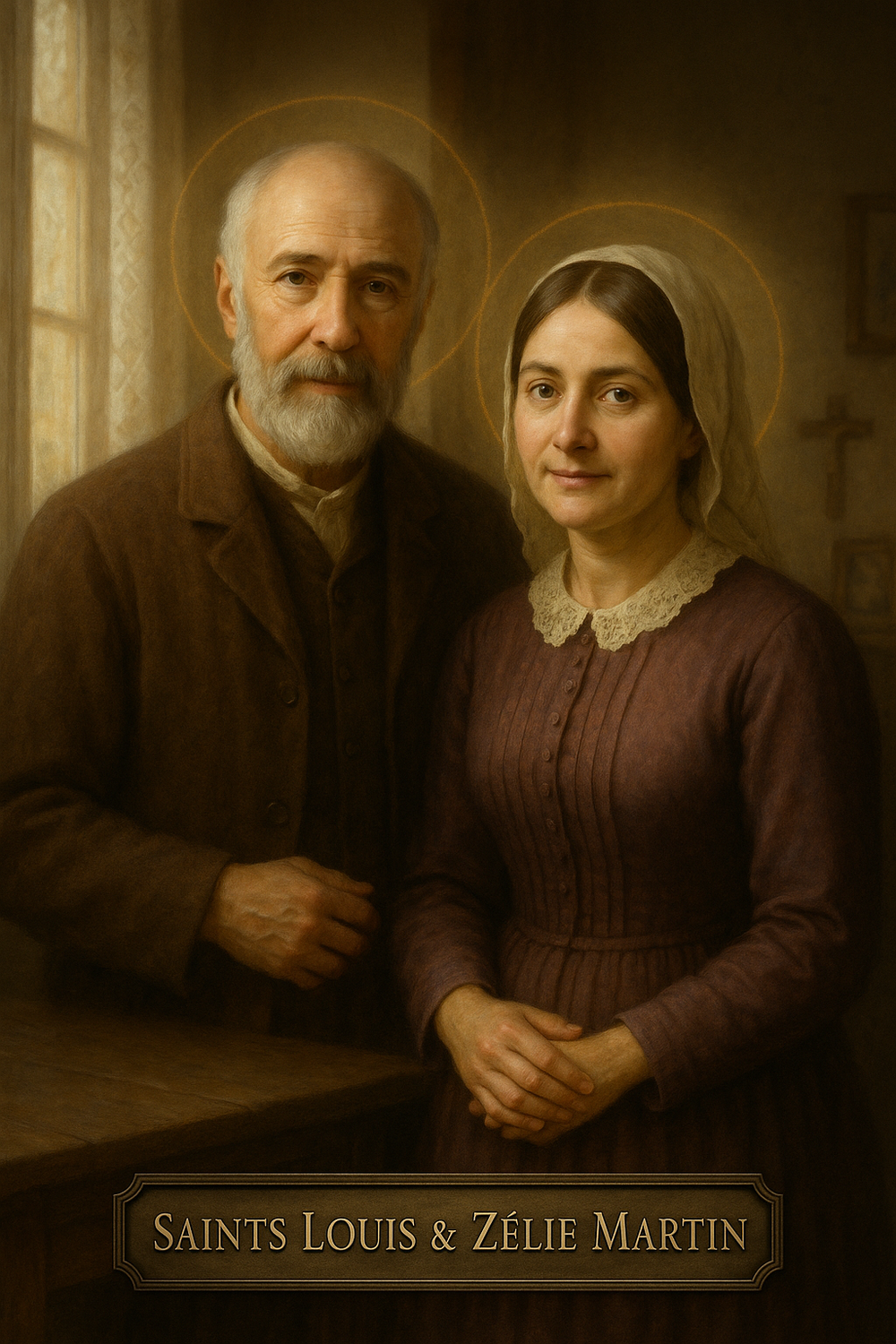
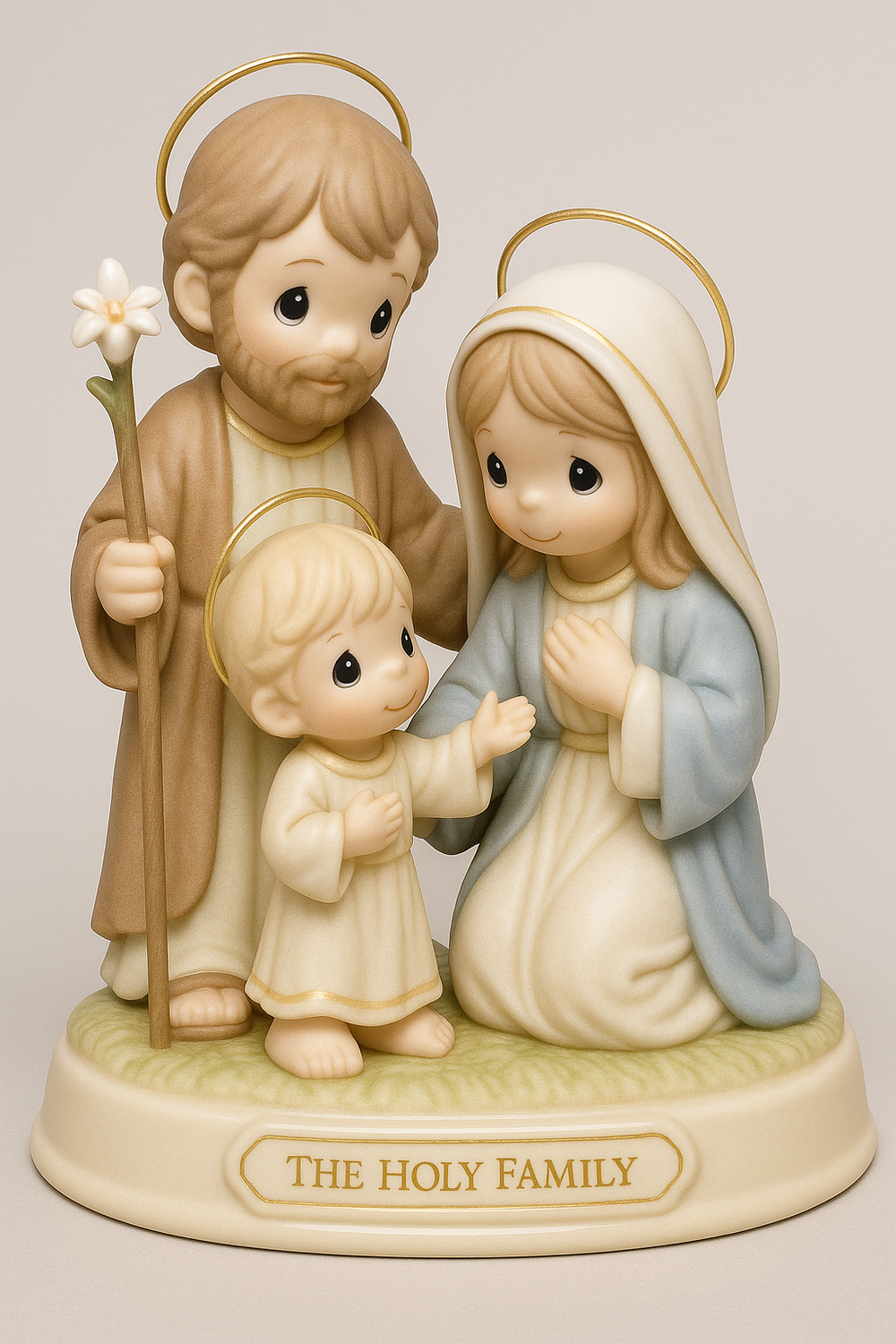
A small icon, a prayer card, a candle—something physical that marks a corner of your home as a place of prayer and signals to both of you that God is the third person in the household. The physical matters in Catholic theology. We are embodied creatures, and we pray better when we have tangible anchors. A married couple with a shared prayer space has already done something architecturally spiritual: they have built a room in their marriage for God.
5. Read Scripture or Spiritual Writing Together Weekly
Even ten minutes. Even just one passage. Read it together and then sit in silence for two minutes before speaking. This practice is formally known in the monastic tradition as lectio divina—sacred reading—and it has been transforming the spiritual lives of Christians for fifteen centuries. When couples do it together, it becomes a vehicle for sharing not just information but encounter: what did you notice? What touched you? Where did you feel God?
6. Fast or Pray Together on a Regular Intentional Day
The tradition of shared fasting and prayer for a specific intention—the health of your marriage, the faith of your children, a decision you are facing—is among the oldest practices in Christianity. It produces a shared experience of spiritual discipline that strengthens the bond between spouses in a way that shared leisure cannot. You are not just enjoying each other’s company. You are fighting for something together before God.
7. Speak Your Gratitude to God About Your Spouse—In Their Presence
When you pray together, occasionally include explicit gratitude to God for your spouse: for a specific quality, a specific act of love, a specific moment. “Thank you for giving me someone who stayed with me through that difficult season.” When your spouse hears you thank God for them, it does something that a direct compliment cannot. It places your appreciation in a larger frame. It says: I do not just value you—I see you as a gift from God. That is one of the deepest forms of intimacy a spouse can receive.
Lord God, we have built much of our marriage on good things—love, effort, communication, commitment. But we confess that we have often left you at the edge of it rather than at the center. Come into the interior of our marriage. Not just into our decisions or our conflicts, but into the daily texture of our love—into the quiet moments, the small kindnesses, the ordinary Tuesday evenings. Make our marriage a place where your presence is felt by both of us. Let us be truly known to each other, and through each other, known more deeply by you. Teach us to pray together not as a duty but as a delight. Make us one in you, as you are one in yourself. Amen.
09 — Go Deeper
A Complete Reading Path on Marriage as Worship
Everything on This Site About Building a God-Centered Marriage
Continue Your Journey — Deeper Reading on This Site
- Intimacy in Christian Marriage: The Full Guide
- Prayer in Christian Marriage: How to Build a Shared Prayer Life
- Spiritual Growth in Christian Marriage: Growing Toward God Together
- Building Unity in Christian Marriage
- Intentional Love in Christian Marriage
- Selfless Love in Christian Marriage
- Beyond NFP: Marriage as Worship & Catholic Intimacy
- The Sacred Mirror: God at the Center of Christian Marriage
- The Sacred Mirror: Sacrificial Love in Christian Marriage
- The Sacred Mirror: Trust & Transparency in Christian Marriage
10 — Questions & Answers
Frequently Asked Questions
The Cord of Three Strands. The Marriage That Cannot Be Broken. The Book That Shows You How to Build It.
Ecclesiastes 4:12 is not poetry. It is architecture. A marriage of two is strong. A marriage of three—two spouses and God—is something qualitatively different: a cord that outside forces cannot quickly break because the third strand is not subject to the forces that fray human love.
Spiritual intimacy is not an add-on for unusually devout couples. It is the foundation that every Catholic marriage was designed to rest on—and that most Catholic marriages have never quite been told how to build. The saints you carry in your prayer card and in your shared devotional space point you toward it. The theology in these articles gives you the framework. The book gives you the daily practice.
Hank Freeman and his wife went from the plateau to the most joy-filled marriage he could imagine. Not through a program, not through better communication techniques, but through one decision: to put God at the center of everything, and to mean it every single day.
Get The Daily Sacrament by Hank Freeman →Start building your shared devotional space today:
Browse Marriage Prayer Cards →