How to Love Your Spouse Like Christ Loves the Church: Catholic & Orthodox Marriage Theology Explained
How to Love Your Spouse Like Christ Loves the Church: Catholic & Orthodox Marriage Theology Explained
Ephesians 5:25 is not just a wedding reading. It is the most demanding standard of love ever articulated—and the complete theology of what Christian marriage is meant to be. Here is what it actually means, and how to live it.
At a Glance
- Key Scripture
- Ephesians 5:25 — love your wife as Christ loved the Church
- Central Claim
- Marriage is not 50/50. It is 100/100, modeled on Christ’s total self-giving
- Catholic View
- Marriage as a sacrament—a channel of grace renewed daily
- Orthodox View
- Marriage as theosis—a path to union with God through spousal love
- Key Church Father
- St. John Chrysostom, whose homilies on Ephesians define this theology
- The Full Framework
- The Daily Sacrament by Hank Freeman
- The Verse That Changes Everything
- What This Verse Does Not Mean
- What Christ’s Love Actually Looks Like
- Catholic Theology: Marriage as Sacrament
- Eastern Orthodox Theology: Marriage as Theosis
- Saint John Chrysostom on Marriage
- The 50/50 Myth — and What Replaces It
- How One Couple Learned to Live This Theology
- Seven Daily Practices
- Frequently Asked Questions
The Verse That Changes Everything
Ephesians 5:25 — Its Context, Its Weight, Its Demand
“Husbands, love your wives, just as Christ loved the church and gave himself up for her.”
Ephesians 5:25This verse has been read at more Catholic and Orthodox weddings than almost any other passage of Scripture. It appears on marriage cards, cross-stitch samplers, and church bulletin covers. It is familiar to the point of invisibility—until the moment it isn’t. Until the moment you stop and actually think about what it requires.
Christ loved the Church by dying for it. He washed the feet of the men who would abandon him. He prayed for the people who were crucifying him. He gave everything—dignity, comfort, life itself—without reservation, without being owed it, without any guarantee of return. And Saint Paul, inspired by the Holy Spirit, looked at that kind of love and said: husbands, this is the standard for how you love your wife.
Not “try to be reasonably kind” or “pull your fair share.” Not “make her happy when it’s convenient.” Not “meet her halfway.” Christ loved the Church and gave himself up for her. That is a self-emptying, sacrificial, total love. It is the hardest thing Paul ever asked of anyone—and he is asking it of ordinary husbands, in ordinary marriages, in ordinary daily life.
The verse does not stand alone. It is part of a longer passage in Ephesians 5 that describes the entire household of Christian love—wives, husbands, children, parents. But verse 25 carries a particular weight, because it sets a standard that no husband can reach on his own. You cannot love like Christ without Christ. Which is precisely the point: Christian marriage is not a self-improvement project. It is a spiritual practice, a sacrament, a path into God.
02 — What It Does Not Mean
What This Verse Does Not Mean
Clearing Away the Most Common Misreadings
Before the theology can land, several misreadings need to be cleared away—because they have done enormous damage to Christian marriages for generations.
It Does Not Mean “Husbands Are in Charge”
The passage is routinely cited as the biblical basis for male authority in marriage. But that reading misses the entire thrust of what Paul is doing. In the first century, husbands already had legal and social authority over their wives. Paul is not granting them more. He is asking them to relinquish the power they already had and replace it with service. The model he gives is Christ—who, though fully God, “did not consider equality with God something to be used to his own advantage” (Philippians 2:6) but emptied himself and became a servant.
The man who reads Ephesians 5:25 and concludes he has more authority in his marriage has misread it entirely. The man who reads it and concludes he has more responsibility—more obligation to serve, to sacrifice, to die to his own comfort—has understood it correctly.
It Does Not Mean Wives Are Passive or Lesser
The same passage says “submit to one another out of reverence for Christ” (Ephesians 5:21) before it addresses either husbands or wives. The structure is mutual submission, mutual service, mutual love—modeled on the Trinity, where the Father, Son, and Holy Spirit are in perfect unity without hierarchy of worth. The marriage described in Ephesians 5 is not a master-servant relationship. It is an icon of the love between Christ and his people.
It Does Not Mean Romantic Feelings Are the Goal
The love Paul describes is not eros—romantic desire—but agape: willed, chosen, sacrificial love. The distinction matters enormously in practice. Eros fades. It is chemically unsustainable beyond the early years of a relationship. Marriages built primarily on eros inevitably reach a crisis when the feelings change. Agape is different. You cannot fall out of agape. You can only decide to stop practicing it. And when you decide to practice it again—today, in this moment, with this person—it is immediately available to you.
03 — What Christ’s Love Actually Looks Like
The Shape of Kenotic Love
Self-Emptying, Sacrifice, and the Logic of the Cross
The Greek word used in Philippians 2:7 to describe what Christ did is kenosis—self-emptying. Christ emptied himself of divine privilege, of comfort, of self-protection, in order to enter fully into human life and die for humanity. Kenotic love is the love of Ephesians 5:25. It is love that empties itself of its own agenda, its own preferences, its own need to be right or recognized, in order to be fully present to the other.
What does this look like in an actual marriage on an actual Tuesday? It looks like small things, done consistently, from a motivation that is bigger than the moment.
Kenosis in Conflict
Choosing to listen rather than win. Letting go of the need to be right. Saying “I love you” before addressing what went wrong. Forgiving before it is asked for.
Kenosis in Service
Taking on the task your spouse dislikes. Anticipating their needs before they ask. Working not for gratitude but because service is the form your love takes.
Kenosis in Presence
Putting down the phone. Giving your undivided attention. Being physically present in the same room and emotionally present in the same conversation.
Kenosis in Patience
Not demanding that your spouse change on your timeline. Trusting God to work in them. Praying for them rather than pressuring them. Waiting with love rather than frustration.
None of these require extraordinary willpower when they are understood correctly. They require a shift in motivation. The husband who washes the dishes because he’s keeping score will burn out eventually. The husband who washes the dishes as an act of worship—as a small kenotic offering to God through his service to his wife—finds that the act itself becomes meaningful rather than burdensome.
From The Daily Sacrament by Hank Freeman
Hank arrived at this understanding through years of trying to figure out what Ephesians 5:25 actually requires. The Daily Sacrament is the result →
04 — Catholic Theology
Catholic Theology: Marriage as a Living Sacrament
The Catechism, the Magisterium & What the Church Actually Teaches
The Catholic Church teaches that marriage is one of seven sacraments—and it is the only one that is administered by the spouses themselves to each other, rather than by a priest. When a Catholic couple marries, they are the ministers of the sacrament. The priest witnesses and blesses, but the sacrament itself is conferred through their vows and their consent.
This is a staggering theological claim. It means that from the moment of the wedding, every act of love between spouses is potentially sacramental. Every act of service, every word of forgiveness, every sacrifice made for the other—all of it participates in the grace of the sacrament they conferred on each other.
The Catechism of the Catholic Church puts it this way: “Christian spouses are fortified and, as it were, consecrated for the duties and dignity of their state by a special sacrament” (CCC 1534). The word “consecrated” is not casual. It means set apart for holy purpose. Catholic spouses are set apart—by their own vows, witnessed by the Church—for the holy purpose of reflecting God’s love to each other and to the world.
What most Catholic couples have never been told is that this sacrament is not a one-time event they received at the altar. It is a permanent state they live in. Every day they wake up as a married couple is another day they are living inside a sacrament. Another day the grace of their vows is available to them. Another day they have the opportunity to make their marriage an encounter with God’s love rather than just a domestic arrangement.
05 — Eastern Orthodox Theology
Eastern Orthodox Theology: Marriage as the Path to Theosis
The Mystery of Crowning & the Deification of the Spouses
Eastern Orthodox theology approaches marriage from a different angle than the Western sacramental framework—and the difference illuminates something that Western theology sometimes leaves in shadow. Where Catholic theology emphasizes marriage as a channel of grace, Orthodox theology emphasizes marriage as a path to theosis: deification, union with God.
The Orthodox wedding ceremony is called the Mystery of Crowning. The central ritual is not the exchange of vows—it is the placing of crowns on the heads of the bride and groom. The crowns are deliberately ambiguous: they are crowns of joy and celebration, but they also echo the crowns of martyrdom worn by those who gave their lives for Christ. The message is unmistakable: marriage is a vocation that will require everything you have, and it is glorious precisely because of that.
The priest does not just bless the marriage. He leads the couple three times around the table in a circle called the “Dance of Isaiah,” echoing the words of the prophet who celebrated the coming of the Messiah. The couple is being brought into the movement of salvation history. Their love is becoming part of the story of God’s love for humanity.
Orthodox theology teaches that theosis—becoming like God, participating in the divine nature—is the purpose of human life. And marriage is one of the primary paths to it, because love is the nature of God (“God is love,” 1 John 4:8), and marriage is the school of love. To learn to love your spouse with kenotic, sacrificial, patient, forgiving love is to learn to love as God loves—and in doing so, to become more like God.
Saint Maximus the Confessor, one of the greatest Orthodox theologians, wrote that love is the fulfillment of the divine image in humanity. The person who learns to love truly—not the shallow love of preference or attraction, but the deep love of total self-gift—is being transformed into the likeness of God. Marriage, on this view, is not just a relationship. It is a theological project.
06 — Saint John Chrysostom
Saint John Chrysostom: The Golden Mouth on Marriage
The Church Father Who Preached Ephesians 5:25 With Radical Force
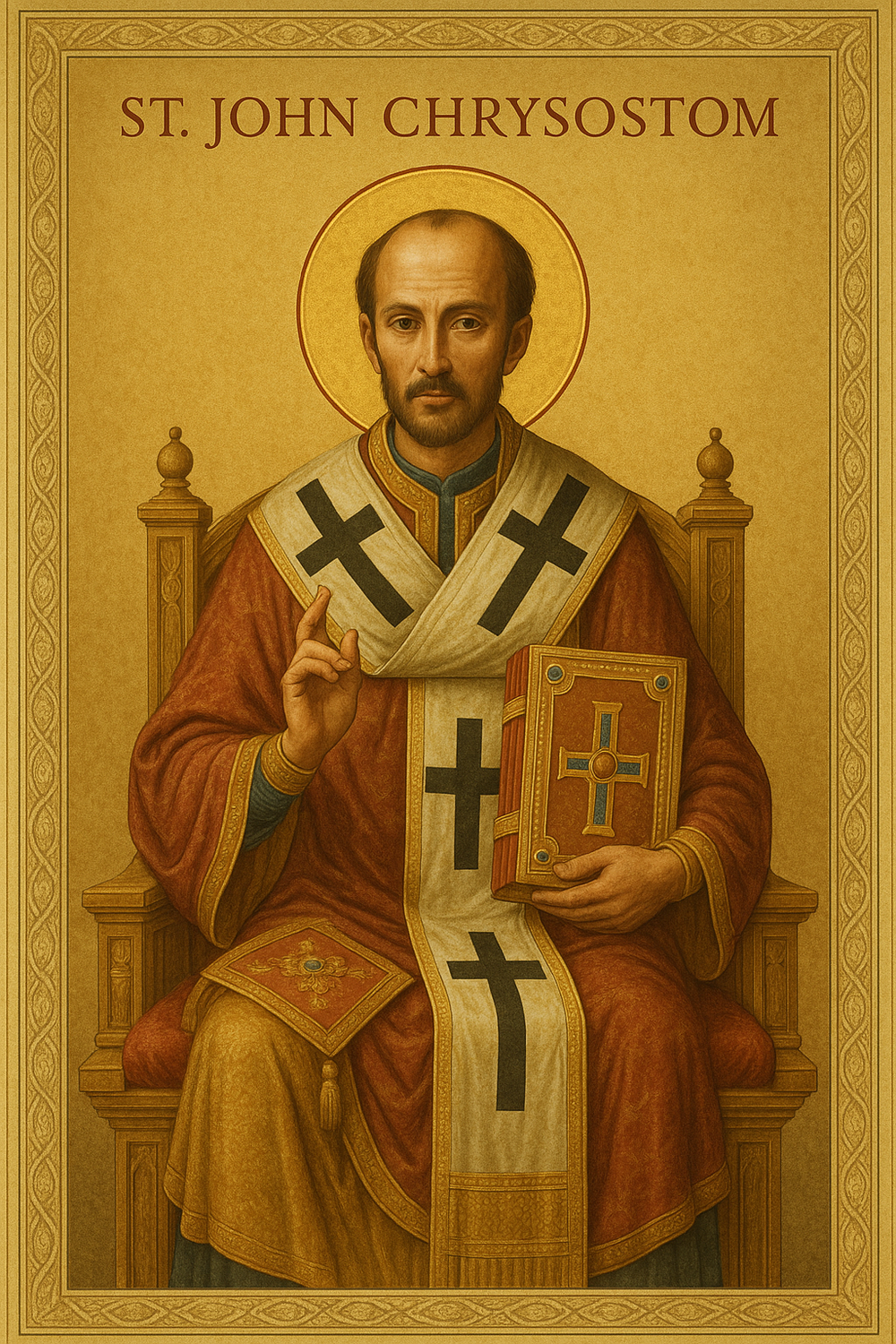
Saint John Chrysostom—“Golden Mouth” in Greek, a title earned by his extraordinary preaching—was Archbishop of Constantinople in the late 4th and early 5th centuries. He is among the most prolific and accessible of all the Church Fathers, and his homilies on the Letter to the Ephesians contain some of the most radical theology of marriage ever written.
Chrysostom did not soften Ephesians 5:25. He sharpened it. In his twentieth homily on Ephesians, he addressed husbands directly with words that sound as contemporary as anything written today:
The structure of his argument is worth noting: if you want your wife to submit to your leadership, become worthy of it. And the standard of worthiness is Christ’s love for the Church—a love that required death. Chrysostom was not softening the demands on husbands while hardening the demands on wives. He was saying that the husband’s calling is so demanding that almost no husband has yet reached it.
He goes further in the same homily, addressing the couple’s relationship with extraordinary intimacy:
Chrysostom’s theology of marriage is not a theology of hierarchy. It is a theology of total mutual love, anchored in Christ’s self-gift, and it expects more of husbands—not because wives are less important, but because the specific calling of husbands is to initiate and sustain the kenotic movement. When the husband empties himself in love, Chrysostom argues, the wife naturally and freely responds with the love the relationship requires. The first movement belongs to the husband. And the model for that first movement is the Cross.
07 — The 50/50 Myth
The 50/50 Myth—and What Replaces It
Why Meeting Each Other Halfway Produces Mediocre Marriages
The dominant cultural model of marriage today is the 50/50 model: each spouse gives half, they meet in the middle, the relationship is fair. It sounds reasonable. It produces deeply unsatisfying marriages.
The problem with 50/50 is that it is fundamentally contractual. It turns marriage into a transaction: I give you this, you give me that, we stay in balance. The moment the ledger tips—when one spouse is giving more than the other, whether through illness, hardship, depression, or simply a bad week—the marriage feels unfair. Resentment accumulates. Each spouse monitors what they are getting and witholds what they give until the account is restored.
Chrysostom saw this clearly sixteen centuries ago. Christ did not love the Church 50/50. He loved it completely, without waiting for the Church to earn it or match it. If Christian marriage is modeled on that love, then the 50/50 framework is not Christian marriage. It is a business arrangement in a wedding dress.
The Christian theology of marriage, from Paul to Chrysostom to the modern Catholic and Orthodox traditions, replaces 50/50 with something more demanding and more beautiful: 100/100. Both spouses give everything, not because the other deserves it, not because the other is giving equally, but because that is what love requires. And when both spouses are oriented this way—both giving 100%, both aiming toward God through their love for each other—something remarkable happens. The marriage becomes a place where neither spouse is keeping score, because neither needs to.
From The Daily Sacrament
Hank Freeman developed this framework over years of living it. The full 12-chapter roadmap is in The Daily Sacrament →
08 — A Real Marriage
How One Couple Learned to Live This Theology
From Surviving to Thriving — The Story Behind The Daily Sacrament
Hank Freeman is not a theologian. He is a businessman from Texas who was trying to figure out how to have a better marriage and ended up, almost accidentally, developing a theology of marriage as worship that transformed his relationship with his wife and his relationship with God.
His journey began not in a seminary but in his home office, during a work break, when he opened his Bible to Ephesians 5:25. He had read the verse dozens of times before. But this time, something shifted. He found himself asking a question he had never quite asked before: what would it actually look like to love my wife the way Christ loved the Church?
The question wouldn’t leave him. He described it as feeling like the Holy Spirit had placed the verse in his heart in a way he couldn’t shake. He began asking himself, in every interaction with his wife: “Is this how Christ would love the Church?” He started making small changes. Not dramatic gestures—he started doing the dishes. He started driving his wife to work so she could decompress on the way home. He started saying “I love you” before addressing a conflict rather than after.
For about a year, he kept this practice to himself. He didn’t tell his wife what he was doing or why. He just did it. And his wife began to notice—not that he had announced a new philosophy, but that he was different. Calmer. Kinder. More present. She started asking questions. When he finally explained his framework, she embraced it fully—because she had already seen its results.
He eventually had Ephesians 5:25 tattooed on his ring finger, in the place where a wedding ring would go. He and his wife owned a gym, and traditional rings weren’t practical in a free-weight environment. But the tattoo was more than practical. Every time he looks at his hand—driving, typing, holding his wife’s hand—he sees the verse he has committed to live.

The Daily Sacrament: Worshiping God Through Catholic Marriage
Hank Freeman wrote this book because he couldn’t find it anywhere else—a step-by-step account of how to actually love your spouse like Christ loves the Church, in practical daily terms, from someone who has done it. Twelve chapters. Real stories. A complete theology made livable.
“I wanted to offer my marriage as a gift to God, to use it as something that was direct worship to Him. This felt different than the other books I had already gone through.” — Hank Freeman
Get The Daily Sacrament on Amazon →09 — Practical Daily Steps
Seven Daily Practices to Begin Living This Theology
From Concept to Daily Habit
Theology that stays in the head is not yet theology. It becomes real when it enters the body—when it shapes what you do with your hands and your mouth and your attention on an ordinary afternoon. These seven practices are starting points: small, concrete, achievable ways to begin moving from knowing Ephesians 5:25 to living it.
Start Every Difficult Conversation With “I Love You”
Before you address the problem, state the relationship. “I love you, and I need to talk about something difficult” changes the entire register of what follows. It reminds both of you that you are on the same side. Try it once. Notice what happens to your own posture when you say it.
Take On One Task Your Spouse Dislikes—Without Announcing It
Kenotic love does not seek recognition. Find one regular task your spouse finds burdensome and quietly take it over. Not as a bargaining chip. Not to be thanked. As an act of worship, offered to God through service to your spouse.
Ask “Is This How Christ Would Love?” Before Responding
In moments of frustration or conflict, pause and ask: if Christ were responding to His church right now, in this moment, what would He say? What would He do? You will not always be able to meet that standard. But asking the question changes what you reach for.
Pray For Your Spouse Every Morning Before You Speak To Them
Before the first conversation of the day, bring your spouse before God. Ask God to bless them, to meet their needs, to give them what you cannot give them. This simple practice shifts your orientation toward your spouse from “what do I need from them today” to “what does God want for them today.”
Create One Small Daily Ritual of Connection
Morning coffee together before the day fragments. A drive to work. Ten minutes on the back porch after dinner. The specific ritual matters less than its consistency. Hank Freeman drives his wife to work every morning—not because it is logistically necessary, but because it creates an hour each day that belongs only to them.
Forgive Before It Is Asked For
Christ forgave before humanity asked for it. “Father, forgive them, for they know not what they do” (Luke 23:34) was spoken while the nails were still going in. Practicing preemptive forgiveness in marriage does not mean excusing serious harm. It means releasing the small daily offenses before they compound into walls.
Use a Prayer Card or Candle to Anchor Your Daily Devotion
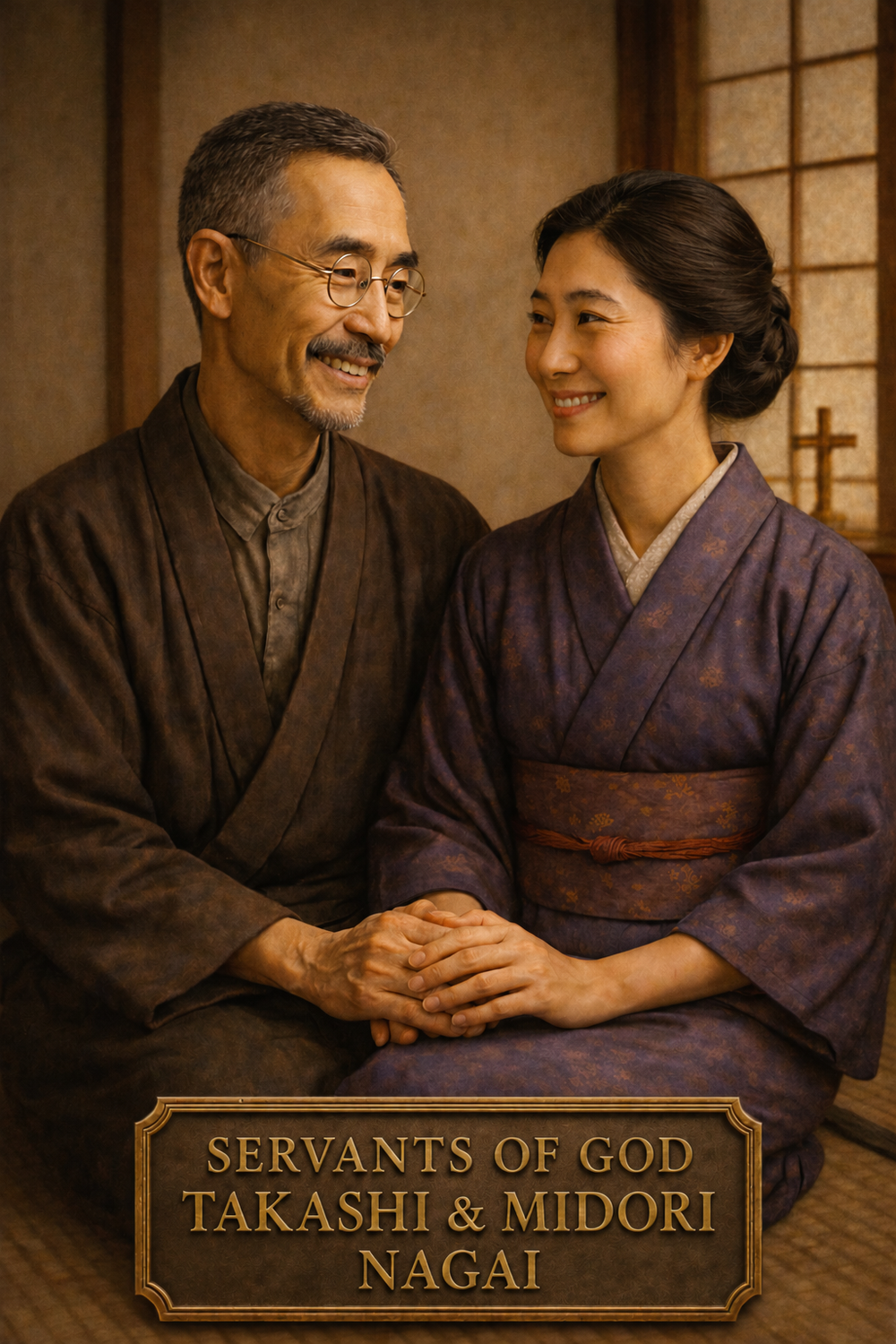
Physical objects help. They interrupt the abstraction of theology and make it concrete. Place a saint’s prayer card where you will see it each morning. Light a candle during your evening prayer. Let the tangible object be the trigger that returns your mind to the person you are trying to become in your marriage.
Lord Jesus, you loved the Church and gave yourself up for her. You ask us to love our spouses the same way—not from strength alone but from surrender, not from obligation but from worship. We cannot do this without you. Come into our marriage. Teach us to empty ourselves of the need to be right, to be recognized, to be served. Fill us instead with your kind of love: patient, sacrificial, persistent, and free. Let our marriage become what you designed it to be—a daily encounter with your grace and a testimony to your love. Amen.
10 — Questions & Answers
Frequently Asked Questions
The Verse on His Ring Finger. The Theology in His Marriage. The Roadmap in This Book.
Ephesians 5:25 is not an aspiration. It is an instruction. And the gap between knowing it and living it is exactly the gap that Hank Freeman spent years crossing—one small kenotic act at a time, one prayer at a time, one daily decision to love his wife the way Christ loves the Church.
The theology is here. The saints are praying for you. The candle on your altar and the prayer card in your wallet are small physical anchors that keep returning you to the practice. Now read the book that makes it all concrete, practical, and livable—in your marriage, starting today.
Get The Daily Sacrament by Hank Freeman →Want to pray this theology into your marriage? Start here:
Browse Saints for Happy Marriage Prayer Cards →