Chapter 5: Communication in Marriage – Speaking Life, Listening With Love
Communication as the Lifeblood of Marriage
Communication is often called the lifeblood of a healthy marriage. It’s the tool you use to understand each other, resolve conflicts, and grow closer. Your words are a tool that either build up, or tears down. But in a marriage where you use your marriage as a way to honor God, communication is more than just talking and listening—it’s about connecting on a deeper level. It’s about speaking words that build up rather than tear down, and learning to hear not just what your spouse says, but what they feel. Proverbs 18:21 reminds us that “The tongue has the power of life and death,” and in marriage, our words can either create life-giving love or wound deeply.
In a Godly marriage, communication is more than just a practical skill; it’s a way to honor God through how you love and respect each other with your words. It’s about using your words to speak life, bring healing, and create an environment where both of you can thrive.
There were times in my own marriage when communication wasn’t easy. There were moments of misunderstanding, times when we spoke out of frustration or hurt, and seasons when it seemed like we were talking past each other instead of with each other. We were not trying to have communication issues, we just did not know how to communicate properly. But as we learned to communicate in a way that reflected God’s love and grace, we saw how transformative it could be. Communication isn’t just about getting your point across—it’s about building connection, offering support, and growing together in love.


The Importance of Speaking Life
One of the most powerful ways to build a strong foundation in your marriage is to use your words to speak life into each other. Your words have power—they have the power to build up or tear down, to encourage or discourage, to bring healing or to wound. Ephesians 4:29 says, “Do not let any unwholesome talk come out of your mouths, but only what is helpful for building others up according to their needs, that it may benefit those who listen.”
Speaking life means choosing to use your words to uplift, affirm, and strengthen your spouse. It’s about seeing the best in them and speaking to their potential, not just their mistakes. It’s easy to criticize, point out flaws, or speak words out of anger, but speaking life requires intentionality. It means pausing to think about how your words will affect your spouse and choosing to speak words that build up rather than tear down. It is time for you to learn that you literally have to think before you speak to your spouse. Make a habit of reminding yourself to pause, and think of how to speak life.
Proverbs 16:24 says, “Gracious words are a honeycomb, sweet to the soul and healing to the bones.” When we choose to speak life into our spouse, we offer them encouragement that nourishes their spirit and builds up their heart. Imagine the impact if every word you spoke into your marriage brought sweetness and healing rather than bitterness and hurt.
A Powerful Practice to Transform Arguments
One thing that immediately changed how we handled disagreements in my marriage was this: anytime I was frustrated with my wife, before I said anything, or before I responded to something she had said to me, I always said, “I love you.” This simple phrase completely changed the dynamic of our arguments.
Saying "I love you" before any other response does several powerful things:
It refocuses your heart and mind: By saying "I love you" first, you’re making love the foundation of your response rather than anger or frustration. It’s a realignment of your heart to reflect God's heart, who is love (1 John 4:8).
It changes the tone of the conversation: When you lead with love, it’s hard to follow up with hurtful words or actions. It shifts the tone of the conversation from conflict to reconciliation.
It builds a habit of intentional love: Repeating this practice trains you to approach every situation with love first. Over time, this simple habit transforms not just your thoughts and words but the way you interact with your spouse.



Listening With Love and Empathy
Good communication is not just about speaking—it’s also about listening. And not just listening to respond, but listening to understand, to empathize, and to connect. One of the biggest challenges in communication is that it’s easy to listen with an agenda—to hear what your spouse is saying but already be thinking about how you’ll respond or what you’ll say next. You are ready to tell them how to do it better next time, or how you would have done it differently, or how you can fix the situation. But real listening requires setting aside your own thoughts, holding your words, being present, and seeking to understand your spouse’s heart.
James 1:19 gives us a profound guideline for communication: “Everyone should be quick to listen, slow to speak and slow to become angry.” Listening with love means being willing to hear your spouse out fully before responding. It’s about letting go of any defensiveness or the need to "win" the conversation, and instead choosing to prioritize their perspective. It’s asking questions like, “What are you feeling about that?” or “How can I support you in this?” rather than jumping to conclusions or offering quick solutions.
In my marriage, learning to listen with empathy was rather difficult. There were times when my wife would share something that bothered her, and my immediate response was to try to fix it or explain my side. But over time, I realized that what she needed wasn’t for me to solve the problem; she needed me to understand and acknowledge how she felt. She just needed me to listen. We had many, many drives where she was talking about her day, and I would interrupt and tell her how to fix it next time, and then immediately realized what I had done. Each time I realized I interrupted her, I would say a silent prayer in my head asking God to help me be a better communicator for my wife. When I learned to listen with love, it opened up a new level of intimacy and trust in our marriage. She felt heard, valued, and supported, and it allowed us to communicate more openly and honestly. One thing that I started to do, and it took me years to learn this, is that when she is talking about her day, or venting, or telling me something that went wrong, anytime I absolutely feel like I needed to say something, I learned to ask “Do you want me to listen, or to fix?” It was always to listen. Over time I have learned I don't need to ask that, now I just listen and wait for her to ask for a response. Do the same thing, when your spouse is venting frustration about their day, do not interrupt, no matter how bad you want to and if you absolutely can't hold it in, first ask “Do you want me to listen, or to fix?”.
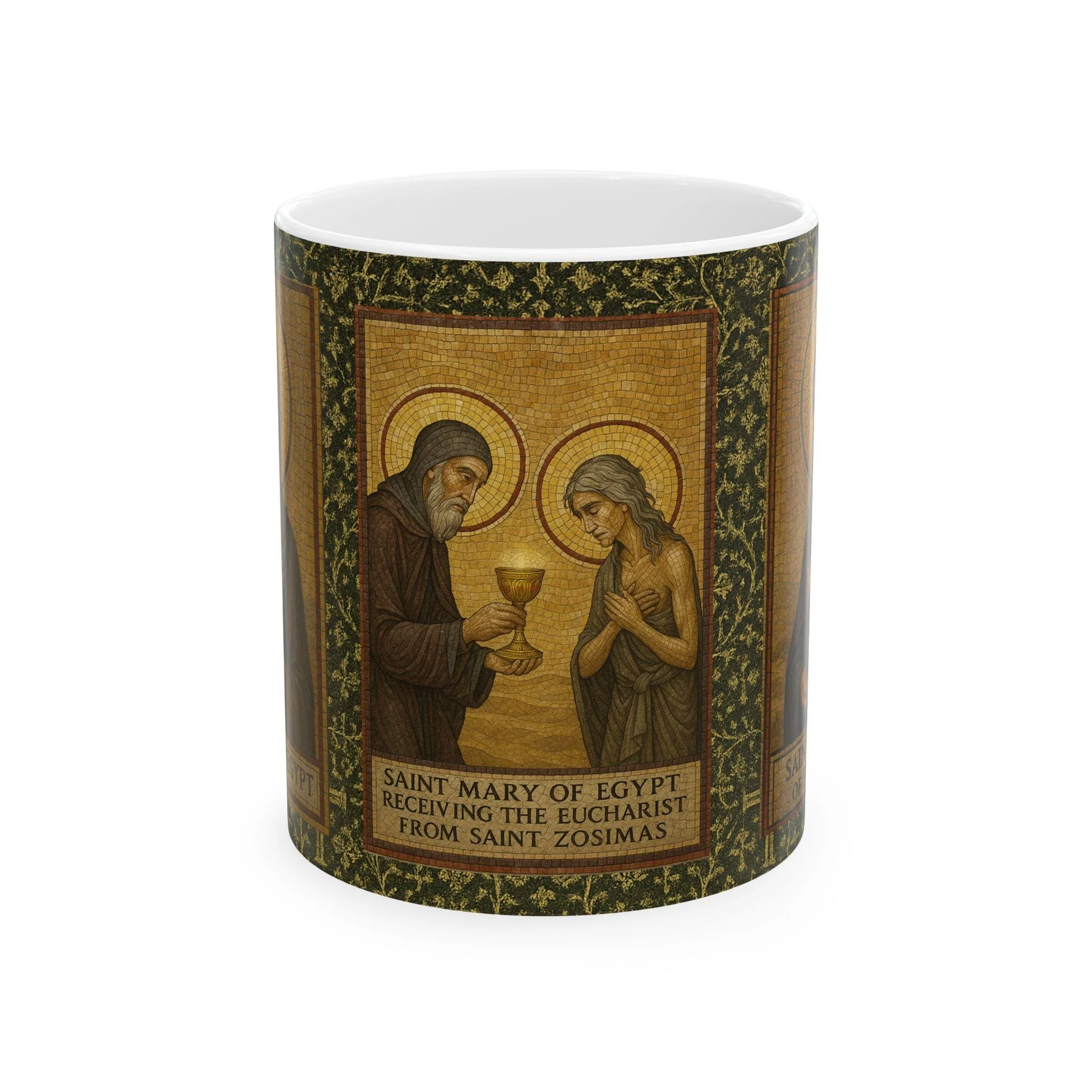
Product features
- Glossy white ceramic with vivid, high-resolution print
- Available in 11oz and 15oz sizes
- Microwave-safe for convenient reheating
- Dishwasher-safe for easy care
- Lead- and BPA-free with a comfortable C-handle
Care instructions
- Clean in dishwasher or wash by hand with warm water and dish soap
Communicating Through Conflict
Conflict is a natural part of any relationship, and how you handle it can either bring you closer together or drive you apart. Proverbs 15:1 says, “A gentle answer turns away wrath, but a harsh word stirs up anger.” The goal in communication during conflict is not to avoid disagreements altogether but to navigate them in a way that fosters understanding, respect, and growth. It’s about communicating in a way that honors both your feelings and your spouse’s feelings, even when you don’t see eye to eye.
One of the most important lessons we learned in our marriage is the power of speaking calmly and choosing our words carefully—especially during moments of conflict. It’s easy to let emotions take over and say things in the heat of the moment that can’t be taken back. Words are like arrows; once you release them, they hit their target, and you can’t undo the impact. Proverbs 18:21 says, “The tongue has the power of life and death.” This isn’t just a reminder to avoid hurtful words; it’s a call to recognize that what we say can either give life—encouraging, strengthening, and healing—or bring harm, breaking down trust and connection.
For me, one practice that made a huge difference was always starting with “I love you,” taking a breath, and choosing a calm tone. This doesn’t mean we no longer have disagreements, but we’ve learned to handle them in a way that respects each other and builds us up. We can disagree without wounding each other, working through issues in a way that strengthens our bond. It’s not about avoiding difficult conversations; it’s about approaching them with care so that our words bring life, not pain.
Another change that helped us avoid misunderstandings was choosing to have important conversations face-to-face rather than over text. When you can’t hear the tone or see the expression, there’s room for miscommunication, and it’s all too easy for words to be taken the wrong way. Speaking directly, in person, allows us to connect fully and ensure that the intent behind our words is clear, keeping our conversations honest, respectful, and focused on understanding each other.
This is very important, so please pay attention. If you are having an argument or a disagreement with your spouse, and you raise your voice, you are wrong. Period. Full stop. You do not raise your voice to your spouse, ever, no matter the situation. Even if they raise theirs first. You now know that your marriage is a form of worshiping God. So you now understand that your relationship with your spouse is a reflection of your relationship with God. With your new knowledge, you now know that if you raise your voice to your spouse out of frustration or anger, you are sinning against your marriage and against God. I can’t stress this enough, if you raise your voice to your spouse, you are sinning. By reading this book, you are no longer ignorant to how your marriage is a form of worship, so with this knowledge, anything you do against it, that doesn't nurture or uplift, is a sin, and that includes raising your voice in anger or frustration. If you do that, catch yourself immediately, repent and ask for forgiveness, tell them you love them, say a silent prayer asking for forgiveness, and realign yourself. Anything that does not build up your spouse, or your relationship with God, is sinful.
There was a point when my wife noticed that, every time I was frustrated or upset, I would start by saying, “I love you.” This wasn’t something I had told her about—it was just a practice I had quietly decided to make into a habit and implement in our marriage. Over time, she realized it and mentioned how much it meant to her. I explained that starting with “I love you” wasn’t just a way to soften the conversation; it was a way to realign my heart and mind. It’s nearly impossible to say something hurtful or speak out of frustration when you begin by telling someone you love them. That simple phrase shifts the tone immediately, changes your thoughts, and makes it easier to communicate from a place of love and understanding. It made an immediate difference in how we talked through difficult moments, and it deepened our bond in ways I never expected.

This mug sits comfortably in hand and anchors small rituals. It belongs on bedside tables, kitchen counters, and church fellowship gatherings. The design speaks plainly to those who seek tangible reminders of grace during ordinary days. Use it while reading scripture, journaling, or sharing coffee and conversation with friends from your congregation.
Product features
- 11 oz white ceramic mug with C-handle
- Microwave-safe for reheating drinks
- Dishwasher-safe for easy cleaning
- Rounded corners and smooth rim for comfortable sipping
- Lead- and BPA-free glazing
Care instructions
- Clean in dishwasher or wash by hand with warm water and dish soap
EU representative: HONSON VENTURES LIMITED, gpsr@honsonventures.com, 3, Gnaftis House flat 102, Limassol, Mesa Geitonia, 4003, CY
Product information: Generic brand, 2 year warranty in EU and Northern Ireland as per Directive 1999/44/EC
Care instructions: Clean in dishwasher or wash by hand with warm water and dish soap
Building Unity Through Words of Encouragement
Encouragement is one of the most powerful tools in marriage. Hebrews 3:13 encourages us to “encourage one another daily.” This isn’t just about saying nice things—it’s about intentionally looking for ways to build your spouse up, speak life into their dreams, and remind them of their worth. It’s about being their biggest supporter, especially in the moments when they need it most.
When you make it a habit to encourage your spouse regularly, you create an environment of love, support, and unity. You reinforce the idea that you are on the same team, working toward the same goals, and building each other up in the process. Encouragement can come in many forms—a kind word, a note of appreciation, or a reminder of how much they mean to you.
In my marriage, I’ve found that encouragement goes a long way in strengthening our bond. Whether it’s acknowledging a hard day of work, expressing appreciation for something small, or reminding each other of God’s promises, those words of encouragement create a sense of unity that builds a foundation for love and trust.
The Role of Prayer in Communication
One of the most powerful tools for healthy communication in marriage is prayer. When you pray together as a couple, you’re inviting God to be part of your conversations, your conflicts, and your connection. Prayer has a way of softening hearts, bringing peace to difficult situations, and helping you see each other through God’s eyes.
Before entering into a difficult conversation or a potentially heated discussion, take a moment to pray together. Ask God for wisdom, understanding, and patience. Pray that He would guide your words, help you to listen well, and bring unity to your hearts. And as you pray together, trust that God will lead your conversation in a way that honors Him and strengthens your marriage.
In moments when you find it hard to communicate, prayer can be the bridge that brings you back to a place of understanding and connection. It’s a reminder that you’re not alone in your marriage—God is with you, guiding you, and helping you grow together.

This canvas features the Christ Pantocrator, one of the most ancient and theologically significant images in Christian history.
The Pantocrator icon presents Christ as both merciful Savior and righteous Judge, a visual theology that has shaped Christian worship for centuries. His gaze is direct and steady, inviting contemplation rather than decoration. This is an image meant to be encountered.
This canvas presents the icon faithfully, preserving its original composition, proportions, and symbolism without modern reinterpretation or artistic alteration.
The Christ Pantocrator
The Christ Pantocrator icon emerged in the early Byzantine world and became one of the most widely recognized images of Christ across Eastern and Western Christianity. Traditionally placed in domes, apses, and sanctuaries, it depicts Christ as the ruler of all creation, fully divine and fully human.
The subtle asymmetry of the face reflects a central Christian mystery:
justice and mercy united in one Person.
This icon has been prayed before for generations. Displayed today, it continues that purpose.
Canvas & print quality
This icon is printed on a matte canvas designed to preserve detail, depth, and color without glare.
• Museum-quality matte canvas
• Non-reflective surface for prayer spaces
• High-resolution print with fine detail
• Wrapped canvas, ready to hang
• Designed for long-term display
The matte finish allows the gold tones, facial expression, and line work to remain clear in both natural and low-light environments.
Faithful presentation
This canvas preserves the traditional iconographic form without filters, stylization, or digital effects. The goal is clarity, reverence, and continuity with the historical icon tradition.
Nothing has been modernized.
Nothing has been embellished.
Where this canvas belongs
This Christ Pantocrator canvas is well suited for:
• Prayer corners and home chapels
• Offices and studies
• Churches, rectories, and parish spaces
• Gifts for clergy, converts, and serious students of the faith
• Those seeking sacred art with theological depth
It is especially fitting for spaces intended for silence, prayer, and reflection.
Product details
• Christ Pantocrator icon
• Matte canvas print
• Museum-quality materials
• Ready to hang
• Multiple sizes available
This image has endured centuries of prayer and contemplation.
Presented on canvas, it continues that presence today.
If you are seeking Christian wall art that is historically grounded, spiritually serious, and visually timeless, this Christ Pantocrator canvas offers exactly that.
Product features
- Matte cotton–poly canvas printed with UL-certified Greenguard Gold latex inks
- Stretched on renewable radiata pine frame; inner profile 1.25"
- Soft rubber dots on back corners plus included back hanging for secure, level display
- Unique coating for high-detail, museum-quality image reproduction
- Available in 60 sizes and multiple orientations; small size tolerance +/- 1/8"
Care instructions
- If the canvas does gather any dust, you may wipe it off gently with a clean, damp cloth.
EU representative: HONSON VENTURES LIMITED, gpsr@honsonventures.com, 3, Gnaftis House flat 102, Limassol, Mesa Geitonia, 4003, CY
Product information: Generic brand, 2 year warranty in EU and Northern Ireland as per Directive 1999/44/EC
Care instructions: If the canvas does gather any dust, you may wipe it off gently with a clean, damp cloth.
Creating a Culture of Open and Loving Communication
Building strong communication in marriage is not just about having one good conversation—it’s about creating a culture of openness, love, and understanding. It’s about intentionally making it a habit to speak life into each other, to listen with empathy, and to navigate conflict in a way that builds each other up. And it’s about inviting God to be part of every conversation, allowing Him to shape your words and guide your hearts.
As you grow in your communication together, remember that it’s a journey. There will be times when it’s easy to connect and times when it feels more difficult. But the more intentional you are about speaking life, listening with love, and bringing God into your conversations, the more you will see your communication flourish, and the more you will see God to start showing up in your marriage.
So make it a priority to communicate well. Speak words that build up, listen with an open heart, and let prayer be the foundation of every conversation. And as you do, you’ll find that your communication becomes a source of unity, strength, and love—a reflection of God’s heart for your marriage.
Practical Steps for Building Life-Giving Communication
1. Start Every Difficult Conversation With “I Love You”
When you feel frustrated, upset, or annoyed with your spouse, make it a habit to begin your response by saying “I love you.” This simple but powerful phrase shifts the tone of the conversation and sets the stage for open, loving communication. It realigns your heart and thoughts, making it much harder to speak from a place of anger or frustration. As you practice this, you’ll notice how it changes the way you both respond to each other, inviting more grace, patience, and kindness into your conversations.
2. Practice Active Listening and Ask Questions About Their Feelings
Each day, take the time to ask your spouse how their day went, and practice active listening. Don’t interrupt, don’t try to “fix” anything, and don’t offer advice unless they ask for it. Simply listen. This is especially important for us as men, who tend to want to fix problems right away. But often, our wives just want to be heard and understood. If you absolutely feel the need to say something, ask, “Do you want me to listen or help?”—and almost always, the answer will be to listen. Create the space for your spouse to share without feeling the need to jump in.
3. Create an Encouragement Habit—Speak Life Into Your Spouse Regularly
Start the habit of speaking words of encouragement to your spouse each day. Whether it’s complimenting them on something they’ve done, affirming their strengths, or simply telling them how much you appreciate them, these words carry weight. Make it a daily practice to speak life into your spouse, whether it’s in the morning before the day starts or before bed at night. These affirmations build trust, connection, and unity in ways that can transform the entire atmosphere of your marriage.