Chapter 2: Cultivating Intentional Love
Choosing Love Daily
Love is a choice. Not just on your wedding day, or on special occasions like anniversaries and holidays, but every single day. It’s a choice made in the quiet, unseen moments of life that often feel ordinary. The decision to love daily transformed everything in my marriage. At first glance, the idea of choosing to love your spouse might seem obvious—perhaps even too simple. But living that truth with intent, day in and day out, can turn your marriage into something extraordinary.
When my wife and I first met, love felt effortless. Every moment together was filled with excitement. I remember looking forward to every opportunity to see her and spend time with her. Our conversations stretched late into the night where nothing else in the world mattered but being with her. Those moments were pure, but they were also driven by emotions. Back then, I thought love was those butterflies in my stomach, the excitement, and the effortless connection. And while those feelings were real and beautiful, I began to realize something far more meaningful about love as time passed.
Love isn’t just something that happens to us. It’s not some magical force that sweeps us through life without any effort on our part. It isn’t simply a feeling that comes and goes depending on circumstances. Love is a choice—a deliberate decision we make, over and over again. It’s a choice to be patient when your spouse is stressed, to forgive when you’ve been hurt, to speak kindly when it would be easier to snap back. This is the core of intentional love. It’s about making daily, often small decisions that show love, honor, and cherish your spouse—not just with words, but in action, in how you live your day to day.
Intentional love requires both effort and faith. It calls you to see your spouse through God’s eyes, to love them in a way that reflects His grace and compassion, and to make that choice every day, regardless of how you feel. When you start viewing love in your marriage as something you choose to give, rather than something you wait to feel, it transforms your mindset and the entire dynamic of your relationship. Everything shifts when love becomes a deliberate act.
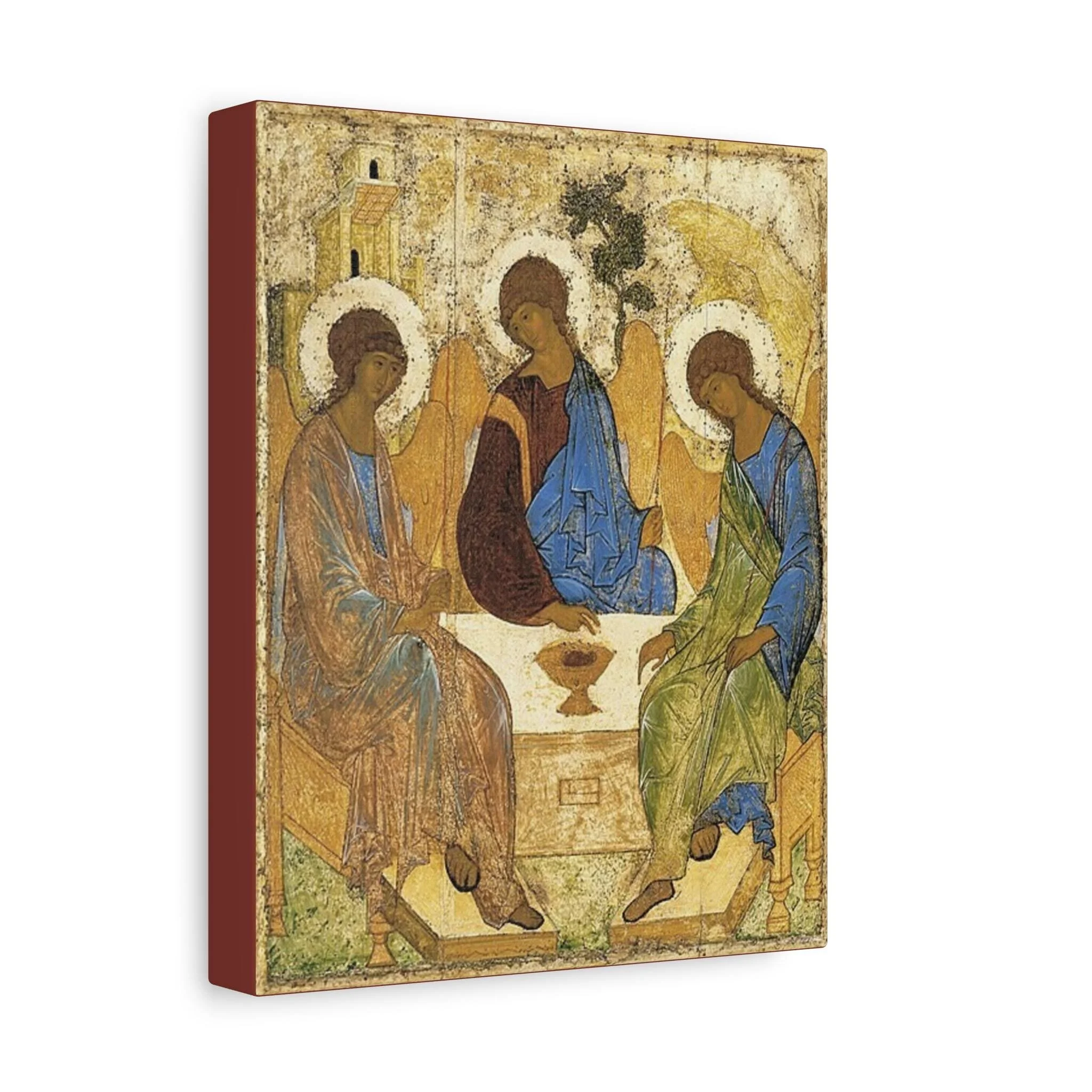
Rendered in warm gold tones with the delicate texture of traditional iconography, this canvas invites prayer, contemplation, and stillness. Every gesture and color carries meaning, making it a profound focal point for home chapels, prayer corners, churches, or contemplative spaces.
Printed on a durable matte canvas, the artwork preserves the reverence and depth of the original icon while offering exceptional clarity and long-lasting color. This piece is suited for gifting, devotional use, or as a striking sacred centerpiece in any Christian home.
Product features
- Matte cotton-poly canvas with unique high-quality coating for crisp image detail
- Stretched on 1.25" radiata pine frame from FSC-certified renewable forests
- Printed with non-toxic, UL-certified Greenguard Gold latex inks
- Soft rubber dots on back corners plus included hanging hardware for secure, level display
- Available in horizontal, vertical, and square formats across 60 sizes (±1/8" tolerance)
Care instructions
- If the canvas does gather any dust, you may wipe it off gently with a clean, damp cloth.
EU representative: HONSON VENTURES LIMITED, gpsr@honsonventures.com, 3, Gnaftis House flat 102, Limassol, Mesa Geitonia, 4003, CY
Product information: Generic brand, 2 year warranty in EU and Northern Ireland as per Directive 1999/44/EC
Care instructions: If the canvas does gather any dust, you may wipe it off gently with a clean, damp cloth.
Making Love a Daily Choice
For me, one of the most significant shifts in my marriage came when I learned to start my words of frustration or disagreement with saying, “I love you.” It might sound simple, but it was a powerful tool that reshaped not only how I spoke to my wife but also my mindset and how I thought about conflict and communication. Whether we were arguing over something small, or something big, if I felt frustrated, I made the decision to say, “I love you” before addressing anything else.
It didn’t take long for me to realize how much this practice impacted both of us. By starting with a genuine expression of love, my own thoughts softened. It feels almost impossible to be mean or negative to someone when you’ve just told them you love them. When I led with, “I love you,” the words that followed naturally became kinder, gentler, and more thoughtful. It was as if reminding myself of my love for her made it impossible to speak harshly. It reminds us both that we are a team. Now as I am typing this, I don't think that was my idea at all. I believe now looking back that it was the Holy Spirit showing up again.
I believe now, looking back, that it was the Holy Spirit showing up again. The Holy Spirit has a way of moving in us quietly, guiding our hearts and shaping our words even when we don’t realize it. Galatians 5:22-23 tell us that “the fruit of the Spirit is love, joy, peace, forbearance, kindness, goodness, faithfulness, gentleness, and self-control.” These were the things I was seeing start to see more and more in my life.
The effect on my wife was immediate as well. She started noticing the change and expressed her appreciation. The tension in our conversations decreased, and instead of feeling defensive or hurt, she felt valued and loved. It wasn’t about who was right or wrong in those moments—it was about preserving the connection between us, even in the midst of conflict.
This small practice of starting every difficult conversation with love became a daily habit. It wasn’t always easy, but it made an incredible difference in the way we communicate and handle disagreements. When you lead with love, everything else follows in a way that honors God and strengthens your relationship.

Lord Jesus Christ, Son of God, have mercy on me, a sinner.
When you wake up in the morning, you'll grab your coffee cup, and before it is even made you'll be heart deep in the Jesus Prayer.
Product features
- Glossy ceramic with rich, vivid printing
- Microwave-safe for reheating beverages
- Dishwasher-safe for easy cleaning
- Lead- and BPA-free with comfortable C-handle
Care instructions
- Clean in dishwasher or wash by hand with warm water and dish soap
The Barriers to Loving Intentionally
Choosing to love everyday sounds beautiful in theory, but the reality can be tough. Life throws distractions, frustrations, and all sorts of challenges your way, making it hard to stay focused on loving your spouse with purpose. For me, one of the most significant barriers was simply not knowing how to love intentionally.
There was a season in our marriage when my wife and I felt more like business partners than a loving couple. Granted, we actually were. We have had a few various, small businesses together, so at times, we really did feel like just business partners who happened to live together. We had our own careers, responsibilities, and goals, but somewhere along the way, we just were not connecting like we had been when we first got married. We lived in the same house and shared the same life, but emotionally, it felt like we were on different wavelengths. We weren’t fighting or upset with each other—we just seemed to drift apart because life got in the way. The busy schedules, the demands of work, the challenges of a blended family, and the little stresses of everyday life had quietly created a barrier between us. It was like we were both trying to read the same book, but couldn't get on the same page with each other.
In that season, it was easy to place blame. I found myself complaining about things that bothered me, thinking it was her responsibility to fix them. I wasn’t happy, why wasn’t she making me happy? She’s my wife, that's her job, to make her husband happy, right? For instance, she’s always been a hairstylist since we met and most of her working life has been as a salon owner, and after her workday, she still had to respond to clients and schedule appointments, deal with stylists and issues with the business. It started bothering me that she would come home, and instead of having time for us, she was glued to her phone, dealing with work issues. I complained, thinking it was her issue to solve. It’s her job, her phone, and her family. She had to address her problem and fix it. This had gone on for years. It came closer to ending our relationship than she knew. We would have times of it getting better, then it would be the same thing again, then better then back. I am sure you have had something similar in your relationship when it comes to phones. I had thought a hundred times on how to get her off her phone and pay attention to us when she gets home, but then I realized that complaining wasn’t going to change anything. Complaining is just mentioning a problem without suggesting a solution, and that’s a useless waste of time. That is what I was doing, wasting time, our time together by complaining when I should have been producing and helpful by trying to find a solution for our problem.
I decided to shift my perspective and take responsibility for the problem I was feeling. I thought, “What can I do to make this situation better? How can I solve this in a way that honors God and strengthens our marriage instead of it being someone's problem they have to fix?” That’s when I came up with the idea to ask if she wanted me to drive her to work. It wasn’t a big gesture, but it was a small way I could serve her and create time for us to connect. In the mornings, we had a few extra moments to chat and be together. On the way home, she had the chance to decompress, respond to clients, and finish any leftover work so that when we got home, the evening was dedicated to family and “us” time.
I noticed when I drove her to work, on the way home she was able to get her work related stuff done on the way. I could give her space to sit quietly and respond to work messages or emails or make orders, whatever she still had to do, and I could just listen to a podcast and hold her hand. By the time we got home all her work was done and it was all family time.
When I realized that complaining just made things worse, and myself bitter. But, when I was able to shift my mindset in a way that helped me to find a practical, and loving solution in a God-honoring way, what I thought was a problem has become one of our greatest times to connect. Whens he has work to do, she's able to get it done before she gets home. If she doesn't have work, we get to talk or listen to a sermon or a podcast. This little part of the day has become so important to us that I feel like not doing it now when I am able, could be a sin against my marriage.
This small change made a big difference. It took what felt like a barrier—her work obligations—and turned it into an opportunity for us to connect and enjoy each other’s company. Instead of seeing it as “her issue for her to to fix,” I made it our issue to solve together. By choosing to take action, rather than complain, I was able to approach the situation in a way that pleased God and brought us closer. What I thought was her problem with the phone, was actually an opportunity to make her day less stressful and create more time together. If she has a 30 minute drive to and from work. That is an extra hour a day we get to spend together, and an extra hour a day she can work and have a little less stress. In a month, that is about a full extra day my wife and I got to spend together. In a year, it's nearly ten extra days of each other's company we have added to our life. It may sound small in the start, but that little act of service adds up to a giant reward of time together we get to spend together.

Crafted from premium, durable ceramic, it's microwave-safe and dishwasher-friendly for effortless care. The high-quality prints ensure the icons remain vibrant wash after wash, making it an ideal gift for believers, clergy, or anyone seeking a touch of divinity in their routine. Whether for personal use or as a thoughtful present for a Priest, Deacon, Christmas, Easter, or baptisms, this religious mug celebrates shared Christian heritage.
Handmade with love, this faith-based drinkware is more than just a cup—it's a reminder of devotion and unity across traditions. Order yours today and bring sacred symbolism to your table!
Product features
- 11 oz white ceramic mug with rounded shape and C-handle
- Microwave-safe for quick reheating
- Dishwasher-safe for easy cleaning
- Lead- and BPA-free, food-safe materials
- Vibrant, full-wrap religious icon print in warm golds and reds
Care instructions
- Clean in dishwasher or wash by hand with warm water and dish soap
EU representative: HONSON VENTURES LIMITED, gpsr@honsonventures.com, 3, Gnaftis House flat 102, Limassol, Mesa Geitonia, 4003, CY
Product information: Generic brand, 2 year warranty in EU and Northern Ireland as per Directive 1999/44/EC
Care instructions: Clean in dishwasher or wash by hand with warm water and dish soap
Overcoming the Barriers
The first step to loving intentionally is identifying the barriers that stand in your way. It could be busyness, unresolved conflicts, or simply falling into a comfortable routine where you stop making time to connect or spend quality time with each other. Whatever those barriers are, acknowledging them is the first step toward breaking through and rediscovering connection.
For us, breaking down the barriers in our relationship started with one choice: we decided to intentionally put our relationship first. No matter how crazy life got, we committed to setting aside time each day just for each other. Sometimes, it was as simple as going for a walk together or sitting down for dinner without any distractions. Other times, we’d plan a surprise date or take a moment to ask God to guide our love and help us stay connected.
As we made space for these intentional moments, we noticed how they brought us closer. What had once felt like walls between us began to fade, little by little. It wasn’t about grand gestures but about choosing to reconnect, inviting God into those moments, and letting Him strengthen our bond. Through small, steady acts of love and attention, we saw our marriage grow stronger and our connection deepen, as those barriers we’d struggled with slowly started to dissolve.
Our relationship grew stronger, not because of grand gestures, but because of small, consistent choices to love each other every day.

Serving Each Other with Selfless Love
One of the most powerful ways to show intentional love is through selfless service. But serving your spouse doesn’t mean checking off tasks or expecting praise in return. It’s about choosing to love them through thoughtful actions that reflect Christ’s love for us.
In my marriage, I made a conscious choice to take on some of the daily chores that traditionally fell on my wife. She grew up believing some specific responsibilities were hers as a wife, but I wanted to take some of the burden off her shoulders. To be fair to myself, she also felt those were her chores to do. Just the culture we were raised in, so there was no issue there with us.
I started looking for a chore I could take off her plate, so I started doing the dishes after dinner. It started as “I'll do those for her tonight”, then I did it again the next night. Then I did them again, and before long it became a habit. She was still going to do them, I never said that I was taking them over, but I did, and she was very appreciative. At the start I was thinking about why I was doing the dishes, and I realized that if she was cooking dinner, that it was kinda rude for me to have to make her wash the dishes, the dishes that got dirty by her working to feed me. After I had that realization, it was easy to be grateful for getting to do them for her. She hasnt had to wash dishes in years, if she tries I won't let her. I am grateful that she never needs to add stress to her day about a dirty sink now.
Now, I’m not going to pretend I enjoy doing the dishes or doing laundry. But that’s not the point. The point is that I wanted her to feel valued and appreciated—not burdened by household responsibilities.
When we serve our spouses with selfless love, we reflect the heart of Christ. It’s not about keeping score or expecting something in return. It’s about honoring your spouse in small, but intentional ways that show you see them and care about their well-being. These small acts of service—whether it’s making their favorite coffee in the morning or taking on a task they dislike—creates a deeper connection over time.
Serving your spouse in these little ways isn’t just a blessing to them—it’s a blessing to you as well. The joy, peace, and unity that come from selfless love are God’s gifts to us for loving as He loves. There is going to be a day when you are doing the dishes, or vacuuming, and youll think about why you are doing that, and it’ll feel nice.
Staying Connected: Creating Time for Each Other
Staying connected is essential in any marriage, but it can be challenging when life gets busy. It’s easy to let your relationship take a backseat when there are so many other things demanding your attention. But if you want to build a strong, lasting connection, you have to make time for each other.
One simple way my wife and I stay connected is through our daily car rides. I drive her to work every day when I can, and it’s become a time for us to talk, laugh, and share about our lives. In the mornings, we have a chance to chat before the day gets busy. On the way home, she uses the time to finish any leftover work—responding to clients and scheduling appointments—so that when we get home, it’s just about us.
This small routine has made a big impact on our relationship. It turns what could be a stressful transition from work to home into a peaceful, intentional time for connection. And by the time we walk through the front door, we’re both ready to focus on each other and our family, not work.
One of the ways we found to stay connected was by building small daily rituals that naturally drew us closer. Sometimes it was as simple as making each other a cup of coffee in the morning or taking a few minutes to talk at the end of the day, no matter how busy we were. We made a point to share even the everyday tasks—running errands together, or cooking side by side. We also sit on the same side of the table when we go out, instead of across from each other. That way we can keep constant physical contact. These little moments became something we looked forward to and gave us chances to reconnect in ways that felt simple but meaningful. Over time, these small habits helped us strengthen our bond, turning ordinary routines into quiet expressions of love and togetherness.
Staying connected doesn’t require grand gestures or elaborate plans—it’s about being intentional with the time you have. Even a few minutes of undivided attention each day can make a world of difference.



Intentional Love as a Reflection of God’s Love
Intentional love isn’t a one-time decision—it’s something you choose to give every day. When you make the choice to love your spouse intentionally, you’re reflecting God’s love in your marriage. And the beauty of that is when you focus on honoring God through your marriage, you’ll find that your relationship becomes deeper and more fulfilling than you ever imagined.
As you put these steps into practice—starting difficult conversations with love, serving each other selflessly, and staying connected—you’ll see the transformation take place. It may not happen overnight, but with time, consistency, and faith, your relationship with God as well as your marriage will grow stronger. And remember, this isn’t about striving for perfection. It’s about taking small, intentional steps each day that reflect God’s love for you and your spouse.
Your marriage is a beautiful offering you can give to God as worship. By choosing to love intentionally, you’re not only honoring your spouse—you’re honoring the One who brought you together. Keep choosing love every day, and watch how God’s presence grows within your marriage, in a way you actually feel Him, bringing deeper joy, peace, and a love that reflects His love for us.
Practical Steps for Worshiping God Through Your Marriage
Here are a few practical ways to start using your marriage as a way to honor and worship God:
1. Start Every Difficult Conversation With 'I Love You'
When disagreements arise, begin by saying “I love you” before addressing the issue. This sets a loving tone for the conversation and keeps the focus on resolving the problem together.
Example: The next time you feel frustrated or are about to argue, take a moment, look at your spouse, and say, “I love you” first. This immediately softens your approach and helps both of you remember that your relationship is built on love, not conflict. It’s a small shift, but it makes a huge difference in how the rest of the conversation goes.
2. Serve Each Other: Take on a Chore Without Being Asked
Find a small task your spouse usually handles, and take care of it without being asked. It could be as simple as folding the laundry or making their favorite coffee in the morning. These little acts of service show them you care and lighten their load. And don’t stop at doing it just once—choose a way to serve them regularly and make it part of your routine.
Example: If your spouse typically washes the dishes after dinner, surprise them by stepping in to do it instead. Taking on a chore they’re tired of or don’t enjoy is a way of saying, “I’m thinking of you, and I want to make your day a little easier.” It’s a small way to honor God and your spouse through thoughtful, selfless love.
These simple, everyday actions can have a profound impact on your marriage, helping you love each other more deeply while also honoring God.