Eastern Catholic News • Maronite Church • Lebanon • November 2026
Patriarch Rai Warns of a Vacuum as UNIFIL Prepares to Leave Southern Lebanon
The Maronite Patriarch said he is concerned about “creating a vacuum with unknown consequences” as the UN force withdraws. The same week, Lebanon's Catholic patriarchs and bishops met at Bkerke and five Christian border villages made ten requests of them. Here is what each source says.
Patriarch Rai and the UNIFIL Withdrawal at a Glance
- Who
- Cardinal Bechara Boutros al-Rai, Maronite Patriarch of Antioch and All the East
- Where and when
- Sunday Mass at the patriarchal residence in Bkerke, November 15, 2026
- Key words
- “Creating a vacuum with unknown consequences amid the withdrawal of UNIFIL forces”
- UN facts
- UNIFIL's mandate ends at the close of 2026; withdrawal preparations expected from January 2027
- Catholic bishops
- Council of Catholic Patriarchs and Bishops in Lebanon urged Israel's military to withdraw (reported Nov 14)
- Border villages
- Rmeish, Ain Ebel, Debel, Qouzah and Alma al-Shaab sent ten requests to the Council
- Displaced
- About 304,500 people still displaced outside their areas of origin (UN News)
- Not confirmed
- A separate Nov 17 statement; the L'Orient Today page could not be opened
What Patriarch Rai Said
At the Sunday Mass at the Church of Our Lady in the patriarchal residence at Bkerke, Cardinal Bechara Boutros al-Rai said he is concerned about “creating a vacuum with unknown consequences amid the withdrawal of UNIFIL forces,” according to Daily Beirut's report. He called for national unity behind the Lebanese Army and for the parties to help build its capacity, and he commended the Army, the security forces and the judiciary.
The sermon was titled “Do not be afraid, Zechariah, for your prayer has been heard” (Luke 1:13). It marked the Annunciation to Zechariah, which opens the Christmas season in the Maronite Church, and it observed the Tenth World Day of the Poor, referring to Pope Leo XIV's message on participation and solidarity. The Patriarch also marked the 13th anniversary of the killing of Subhi and Nadimeh Al-Fakhri in Batdouni and praised their children for leaving the matter to justice rather than seeking revenge.
On the south, Daily Beirut reports the Patriarch said anxiety has returned amid continued Israeli strikes and military movements, and that he fears a long-term Israeli presence in some southern areas. He called for lasting peace, saying negotiations must produce real results, such as halting attacks and protecting the south. He also urged financial and banking reform, including protection of depositors, respect for institutional regularity, and stronger border and internal security.
The news summary that prompted this article described the Patriarch's remarks as made on November 17. The homily we could verify was on Sunday, November 15. If the Patriarch made a further statement on the 17th, we did not find it in a primary source, so we have not reported it.
Part II
What the UN Says About UNIFIL
UN News reports that the Security Council established UNIFIL on March 19, 1978, with the original aims of confirming Israeli withdrawal from Lebanon, restoring international peace and security, and helping the Lebanese Government re-establish its authority in the area. In August 2025 the Council voted unanimously not to renew the mandate beyond the end of 2026, and withdrawal preparations are expected to begin in January 2027.
The Council is considering options for after UNIFIL. UN spokesperson Kandice Ardiel said: “We know the Security Council is considering options, but so far nothing has been decided.” The Patriarch's phrase, a vacuum with unknown consequences, is a direct response to that uncertainty.
UN News says hostilities dropped significantly after a June agreement between the United States, Lebanon and Israel, but the situation is volatile. UNIFIL reports daily Israeli violations on the Lebanese side of the Blue Line, and a UNIFIL patrol near Wadi Jilu was fired upon and returned fire, with no injuries reported. Much of the infrastructure of the south, including electricity, water and roads, has been destroyed, and Naqoura, home to UNIFIL's headquarters, has been almost entirely reduced to rubble.
On displacement, UN News says the number of internally displaced people who have returned home rose 13 percent since September to nearly one million, while about 304,500 people remain displaced outside their areas of origin.
Part III
The Catholic Patriarchs and Bishops
The Council of Catholic Patriarchs and Bishops in Lebanon is the standing body that brings the country's Catholic leaders together, across the Maronite, Melkite, Syriac and Armenian Catholic churches among others, and it meets at Bkerke. Catholic World News, summarizing SyriacPress, reported on November 14, 2026 that the prelates urged Israel's military to withdraw from Lebanon, reaffirmed the Church's commitment to Lebanon's sovereignty, independence and territorial integrity, and said the country should stay out of regional conflicts.
We could not open the L'Orient Today page with the full statement, so we are limiting ourselves to what the Catholic World News summary supports and to what the Council's own earlier statements show. A fuller reading of the November communiqué should come from the Maronite Patriarchate's own releases.
Part IV
The Border Villages' Ten Requests
Daily Beirut reported on November 9 that the mayors of five Christian villages in southern Lebanon, Rmeish, Ain Ebel, Debel, Qouzah and Alma al-Shaab, wrote to the Council during its 59th ordinary session at Bkerke. They asked the Council to adopt their requests, to set up a church follow-up mechanism, and to state in its final communiqué that residents have the right to remain safely and displaced people have the right to return.
The ten requests, as Daily Beirut lists them, are: safe movement on roads to hospitals, schools and markets; weekly supervised visits for Alma al-Shaab residents to check homes and property; a safe, voluntary and dignified return for the displaced, plus housing and rent aid in the meantime; support for basic services, schools and families who lost jobs; a documented damage survey and fair compensation; activation of Ain Ebel Hospital with 24-hour emergency care; equipment for the Rmeish medical and civil-defense centers; protection of churches and heritage sites, especially the church at Qouzah; a church committee to monitor the border villages, working with the Apostolic Nuncio; and safeguards against the security and economic gaps created by the end of the UNIFIL mission.
A secondary summary from VPP News adds that the Patriarch acknowledged the letter in his Sunday homily and called the demands urgent and legitimate. We cite that as VPP News's account, since the Daily Beirut report of the homily does not mention it.

Part V
Who Is the Maronite Patriarch?
The Maronite Patriarch of Antioch and All the East is the head of the Maronite Catholic Church, an Eastern Catholic church in full communion with Rome whose roots lie in Syria and Lebanon and in the monastic community of Saint Maron. Cardinal al-Rai has held the office since 2011 and became a cardinal in 2012. His seat is at Bkerke, in the mountains north of Beirut.
For a plain introduction to the Maronite Church's history and its relationship with Rome, see our article on Maronite Church history. For a fuller account of the saints the Maronites honor, see Who Are the Maronite Saints?
Part VI
Lebanon's Saints and Why People Pray to Them
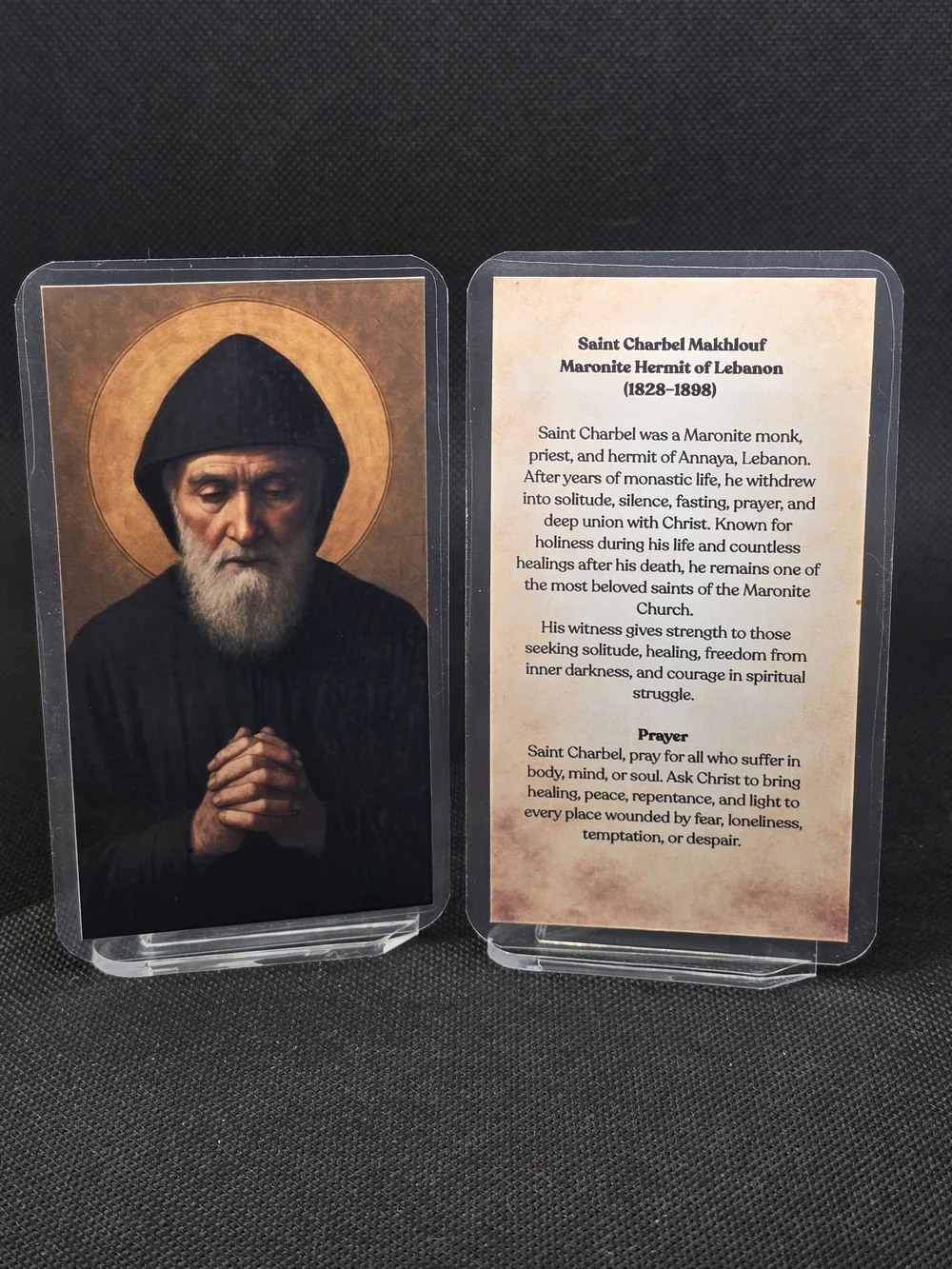
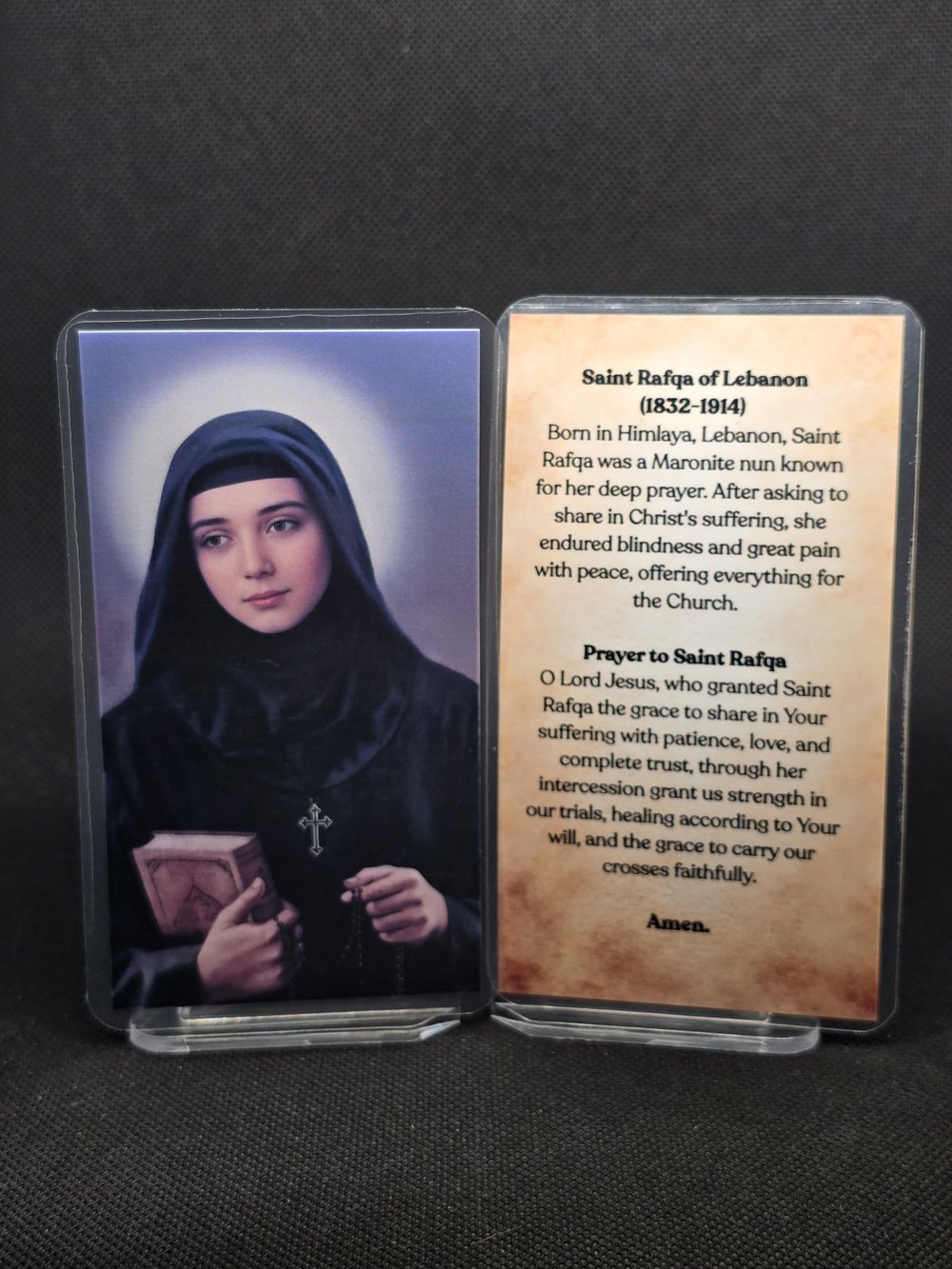
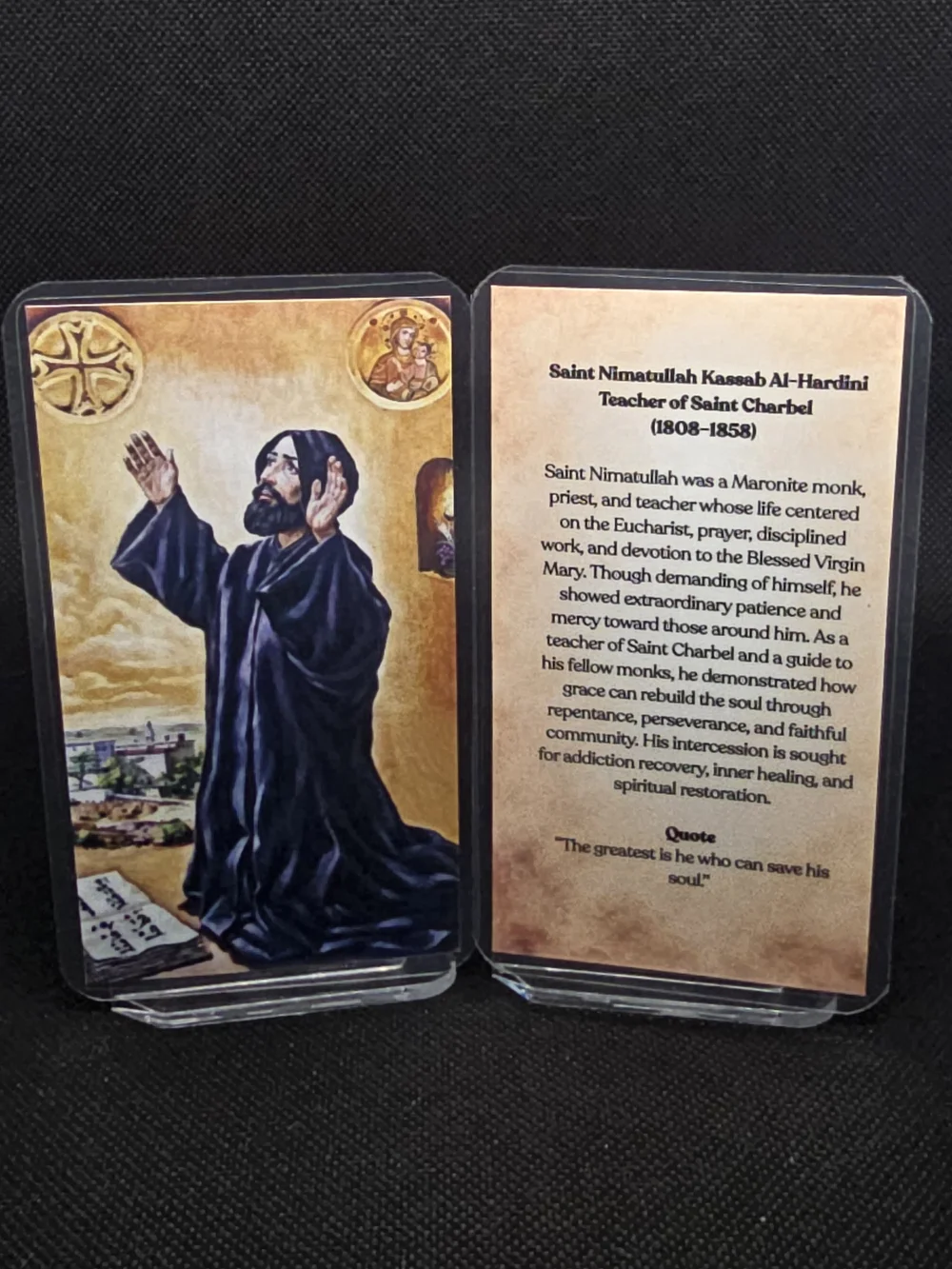
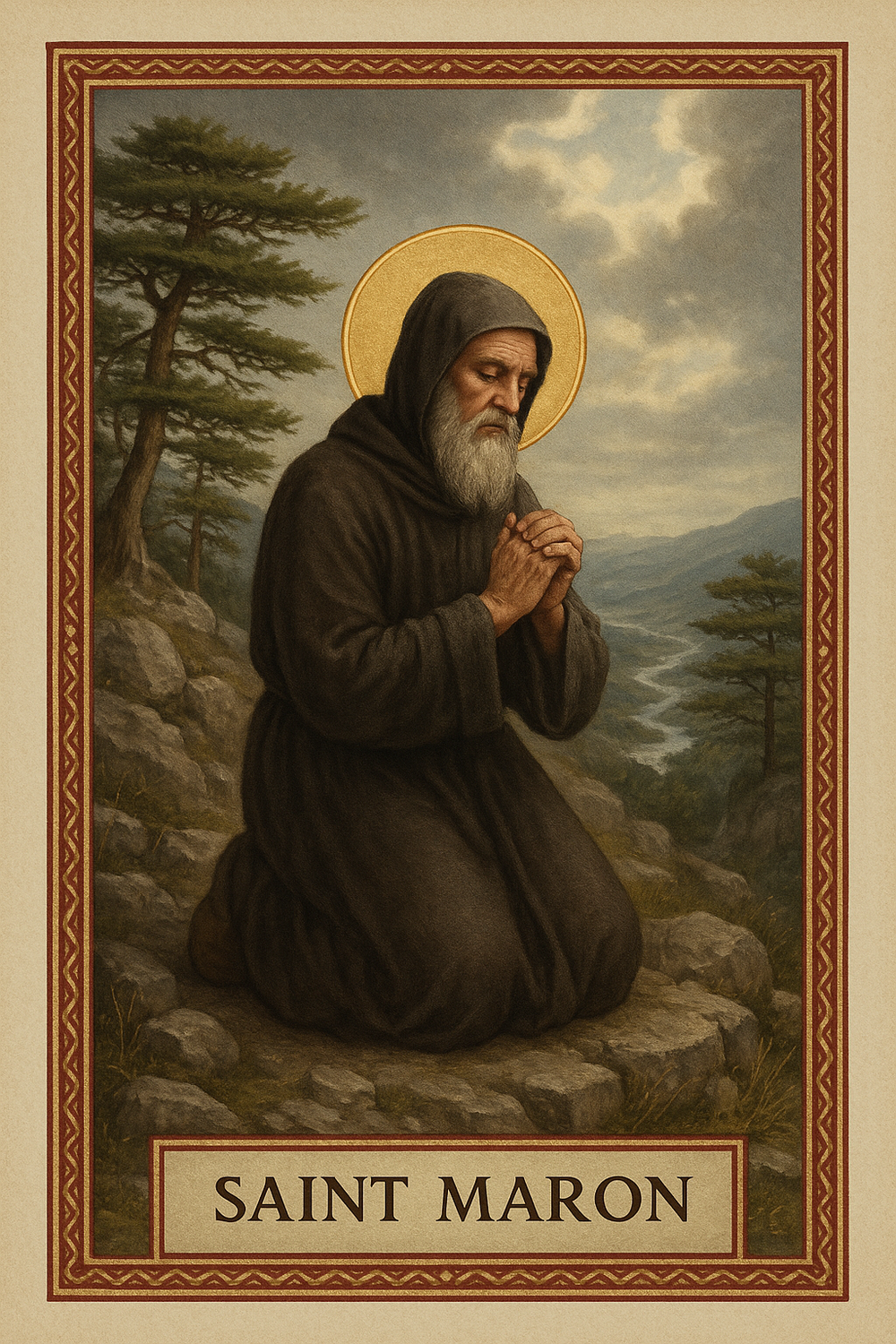
When Lebanon is in crisis, Maronite families do not only watch the news. They pray to Saint Charbel, Saint Rafqa and Saint Nimatullah Al-Hardini, to Saint Maron, whose monastic movement gave the Church its name, and to Our Lady of Lebanon. Our handmade cards for each are a simple way to keep these saints before a family.
Handmade prayer cards for Maronite saints, plus a Maronite cross shirt, mug and a Saint Charbel shirt. Prayer cards are handmade; mugs and shirts are print on demand.

Part VII
What We Could Not Confirm
A November 17 statement. The summary we started from said Patriarch Rai spoke on November 17. We verified the Sunday homily of November 15 and did not find a primary report of a further statement.
The attendee list. We could not retrieve the full communiqué of this session of the Council, so we do not list which patriarchs attended.
The L'Orient Today page. The link we were given did not open, so none of this article relies on it.
What replaces UNIFIL. Per the UN, nothing has been decided. We do not predict it.
Lord Jesus Christ, Prince of Peace, look upon Lebanon and upon all who live in fear. Protect the families of the south, bring the displaced safely home, and comfort those who have lost their homes and their livelihoods. Grant wisdom to those who lead, and courage to those who keep the peace. Through the prayers of Our Lady of Lebanon, Saint Maron, Saint Charbel and Saint Rafqa, have mercy on us and on the whole world. Amen.
Lebanon, the Church and the Question of the Vacuum
A force that has stood on the Blue Line since 1978 is due to leave. The Maronite Patriarch asks what will fill the space, and Lebanon's Catholic bishops and the mayors of five border villages are asking the same. The reports leave the answer open, and so do we.
Get the Saint Charbel Prayer Card →Sources
- Daily Beirut: Rai concerned about creating vacuum with unknown consequences amid UNIFIL withdrawal (Nov 15, 2026), the report on the Sunday homily at Bkerke.
- UN News: Lebanon: Devastation awaits returnees as UN peacekeepers prepare exit (Nov 2026), on UNIFIL's timeline, conditions and displacement figures.
- Catholic World News (Catholic Culture): report on the Council of Catholic Patriarchs and Bishops in Lebanon (Nov 14, 2026), summarizing SyriacPress.
- Daily Beirut: Christian border villages plea for resilience (Nov 9, 2026), on the ten requests.
- VPP News: Five Christian border villages urge church leaders to support residents (Nov 10, 2026), a secondary summary of the same appeal.
- L'Orient Today: Catholic bishops call to keep Lebanon away from wars and crises (link supplied; the page could not be opened when we checked, so we have not used its contents).
