Saint Mark of Ephesus: The Complete Life, Theology, and Legacy of the Pillar of Orthodoxy
Saints & Blog • Byzantine History • Orthodox Theology • The Council of Florence
Saint Mark of Ephesus: The Complete Life, Theology, and Legacy of the Pillar of Orthodoxy
In 1439, in a cathedral in Florence, an emperor, a patriarch, and every bishop of the Byzantine delegation but one put their names to a document meant to reunite the divided Church of Christ. This is the complete story of that one man: Manuel Eugenikos, the monk who became Mark, Metropolitan of Ephesus, whom history remembers as the conscience of Orthodoxy.
Saint Mark of Ephesus — At a Glance
- Birth Name
- Manuel Eugenikos (Greek: Μανουήλ Ευγενικός)
- Born
- c. 1392, Constantinople
- Died
- June 23, 1444, Constantinople, age approximately 52
- Parents
- George Eugenikos, deacon and sakellarios of Hagia Sophia; Maria, daughter of the physician Luke
- Teachers
- John Chortasmenos (later Metropolitan Ignatius of Selymbria); George Gemistos Plethon
- Monastic Name Taken
- Mark, at approximately age 26, on the island of Antigone
- Monastery
- Monastery of Saint George of Mangana, Constantinople
- Elevated to Metropolitan of Ephesus
- 1436-37, by order of Emperor John VIII Palaiologos
- Council Role
- Delegate of the Patriarch of Alexandria at the Council of Ferrara-Florence, 1438-1439
- Defining Act
- The only Eastern bishop who refused to sign the Act of Union, July 6, 1439
- Chief Disciple
- George (Gennadius II) Scholarius, later first Ecumenical Patriarch after 1453
- Feast Day
- January 19 (transfer of relics); originally kept June 23 (date of death)
- Burial
- Monastery of Saint George of Mangana, Constantinople
- Titles
- Pillar of Orthodoxy, Atlas of Orthodoxy, Conscience of Orthodoxy
- Known Works
- Over 100 surviving texts, including Ten Arguments Against Purgatorial Fire, Chapters Against the Latins, and a Confession of Faith
Who Was Mark of Ephesus?
Every year on January 19, Orthodox Christians throughout the world commemorate a fifteenth-century Byzantine bishop who is remembered, above almost anything else he did in a long and learned life, for a single refusal. In 1439, in the Italian city of Florence, the entire hierarchy of the Byzantine Church sat down with the Pope of Rome and, after nearly two years of grinding theological debate, agreed to a document reuniting the Eastern and Western churches after nearly four centuries of formal division. The Emperor signed it. The Patriarch's representatives signed it. Every bishop present signed it, save one. That one man was Mark, Metropolitan of Ephesus, born Manuel Eugenikos, and his refusal to add his name to the Union of Florence has made him, in the judgment of the Orthodox Church, the single figure most responsible for the survival of Byzantine Orthodoxy as a distinct confession into the modern era.
To understand why that refusal mattered so much requires understanding the man behind it: a scholar trained by some of the finest minds of the dying Byzantine Empire, a monk who twice tried to withdraw entirely from public life, a reluctant priest who considered himself unworthy of ordination, and finally a bishop thrust unwillingly into the most consequential church council of the late Middle Ages. Mark of Ephesus was not a fanatic looking for a fight. By his own account and by the testimony of his contemporaries, including Catholic ones, he entered the Council of Florence hoping for genuine union and left it convinced that the union on offer was not union at all, but capitulation dressed as peace. Everything that follows in this article, his childhood, his education, his theology, his exile, and his death, is the record of how a quiet scholar became, in the words of Saint Nikodemos of the Holy Mountain, the Atlas of Orthodoxy: the one figure who, almost alone, held up the sky.
Part II
Childhood and Education in Constantinople
Manuel Eugenikos was born in Constantinople around the year 1392, into a family with a long-standing connection to the life of Hagia Sophia, the great cathedral church of the Byzantine capital. His father, George Eugenikos, served as a deacon and held the office of sakellarios of Hagia Sophia, an administrative post of real responsibility within the cathedral clergy, and was known besides for composing prayers and teaching children. Manuel's mother, Maria, was the daughter of a devout physician named Luke, and by at least one account the family's artistic and ecclesiastical roots ran deeper still: Manuel's grandfather, also named Manuel Eugenikos, had been an iconographer, a painter of the sacred images that filled Constantinople's churches.
George Eugenikos personally taught his elder son to read and write, but that education was cut short by tragedy. George died while Manuel and his younger brother John were still children, by most accounts when Manuel was around twelve years old. It fell to Maria, widowed and now responsible for her sons' formation, to see that her elder boy's education continued at the highest level Constantinople could offer. She placed him under the tutelage of John Chortasmenos, a respected teacher and scholar who would later become Metropolitan Ignatius of Selymbria, and under George Gemistos Plethon, one of the most significant and controversial intellectual figures of the late Byzantine world, a philosopher and mathematician whose revival of interest in classical antiquity would later influence the Italian Renaissance itself.
Manuel's education did not stop with these two men. He is also known to have studied and conversed with Makarios Makres and Joseph Bryennios, two of the most respected monastic scholars of the era, deepening his grounding not only in classical Greek learning but in patristic theology and, notably, in Latin theological writing, a familiarity that would serve him unexpectedly well decades later in the halls of Florence. By the time he reached adulthood, Manuel Eugenikos was recognized as one of the most capable young scholars in a city that, though politically and militarily diminished, still regarded itself as the last living guardian of the Roman intellectual and theological inheritance.
Manuel put that education to immediate use. He assumed administration of a patristic school in Constantinople and quickly earned a reputation as the finest teacher the declining imperial city had to offer. Among the students who passed through his instruction were George Scholarius, who would later take the monastic name Gennadius and become the first Ecumenical Patriarch of Constantinople after the city's fall to the Ottomans in 1453; Theodore Agallianos; Theophanes, later Metropolitan of Medeia; and Manuel's own younger brother, John Eugenikos, who would go on to become his most important biographer.
Part III
Teacher, Then Monk: The Turn From the World
By his mid-twenties, Manuel Eugenikos had every worldly advantage a Byzantine scholar of his generation could hope for. He ran a respected school. He counted the imperial court among his admirers; Emperor Manuel II Palaiologos himself drew the young teacher into his circle as a trusted confidant and adviser, a mark of extraordinary favor for a layman still in his twenties. By every ordinary measure, Manuel Eugenikos stood at the beginning of a brilliant public career.
He walked away from all of it. In his twenty-sixth year, Manuel gave away his property to the poor and withdrew to the small island of Antigone in the Sea of Marmara, part of the Princes' Islands where Constantinople's monastics had long sought solitude away from the pressures of the capital. He went in the company of a spiritual father, the Abbot Simeon, and there took monastic vows, receiving the name by which the entire Christian world would come to know him: Mark.
The life of prayer and quiet that Monk Mark had sought on Antigone did not last. Ottoman raids against the Princes' Islands made the isolated monastic life untenable, and Mark returned with his elder to Constantinople, where the two took up residence at the Monastery of Saint George of Mangana. It was there, within the walls of one of the great monastic foundations of the capital, that the rest of Mark's formation as a theologian, and eventually his entire public confrontation with Rome, would take shape.
Part IV
The Monastery of Mangana and a Reluctant Priesthood
At Mangana, Mark immersed himself in the monastery's library and in the tough ascetic discipline expected of its brotherhood. It was here that he produced the overwhelming bulk of his theological output: of the more than one hundred works later attributed to him, nearly all were composed during his years at this monastery, long before the Council of Florence ever placed him on the international stage. Many of these early writings were directed against theologians sympathetic to Latin positions who had set themselves against the teaching of Saint Gregory Palamas, the great fourteenth-century hesychast theologian whom Mark revered above nearly every other authority, ancient or contemporary.
Despite, or perhaps because of, his own sense of unworthiness, Mark was pressured by his monastic superiors into accepting ordination to the priesthood at Mangana. He considered himself unfit for so exalted a calling and appears to have resisted the honor for some time before yielding. Ordination did nothing to slow the growth of his reputation. Clergy and laypeople across the shrinking Byzantine world began writing to Hieromonk Mark for his opinion on disputed theological questions, and by the mid-1430s he had become one of the most respected theological minds remaining in Constantinople, a city whose empire by then controlled little more than its own walls and a handful of scattered territories.
Mark's devotion to the theology of Gregory Palamas deserves particular attention, because it is impossible to understand the stand he later took at Florence without understanding the doctrine he was defending. Palamas had taught, against opponents both Greek and Latin, that while God's inner essence remains absolutely unknowable and inaccessible to any creature, God nonetheless makes Himself genuinely present and experienced through His uncreated energies, the divine and deifying grace by which the hesychast monks of Mount Athos claimed to perceive the same uncreated light the apostles saw at Christ's Transfiguration. This essence-energies distinction had been formally vindicated by councils in Constantinople in the fourteenth century, but it remained deeply controversial among theologians trained in the Latin scholastic tradition, who tended to regard any real distinction within the Godhead as a threat to divine simplicity. Mark spent much of his career at Mangana defending this Palamite framework against charges of innovation, a labor of theological defense that would resurface, with far higher stakes, at the Council of Florence itself.
Gregory Palamas: The Teacher Behind the Teacher
Archbishop of Thessalonica, c. 1296 – 1359Mark of Ephesus never met Gregory Palamas in person; Palamas died more than three decades before Mark took his monastic vows. But Mark counted himself, without hesitation, among Palamas's most devoted disciples, defending the essence-energies distinction throughout his own theological writings and citing Palamas as one of his most treasured Fathers of the Church, alongside John Damascene and Symeon Metaphrastes. When Mark stood against the Council of Florence a lifetime later, he was, in a very real sense, defending Palamas's theology as much as his own.
Part V
Byzantium's Desperate Bargain: The Road to Florence
To understand why the Council of Ferrara-Florence happened at all, and why an emperor would press his most brilliant theologian into a delegation charged with negotiating theological compromise, it helps to remember exactly how little was left of the Byzantine Empire by the 1430s. What had once stretched across the Mediterranean world had shrunk to Constantinople itself, a scattering of Peloponnesian territories, and a handful of islands, surrounded on every side by an expanding Ottoman state that had already reduced the empire to a tributary and would, within fifteen years of the council's conclusion, take Constantinople itself.
Emperor John VIII Palaiologos saw in a reunion with Rome the empire's last realistic hope of Western military assistance against the Turks. Pope Eugenius IV, for his part, had every incentive to bring the schismatic Greeks back under Roman obedience, both for the sake of Christian unity as he understood it and for the considerable prestige such a reunion would bring the papacy. Beyond raw military necessity, there was a second current running through Byzantine support for the council: a growing class of Byzantine humanists, captivated by the classical Greek inheritance of philosophy and letters, saw an alliance with the culturally sympathetic Latin West as preferable to subjugation under the Ottoman sultan, whatever the theological cost of that alliance might be.
It was against this backdrop of military desperation and cultural anxiety that the emperor assembled a delegation of roughly seven hundred people, including the Patriarch of Constantinople himself, Joseph II, and set sail for Italy in 1437 to begin what would become, after a shift in venue from plague-stricken Ferrara to Florence, one of the longest and most consequential councils in the history of Christian East-West relations.
Part VI
Metropolitan of Ephesus and Delegate to the Council
In 1436, while still only a Hieromonk at Mangana, Mark was named by the Patriarch of Alexandria as his official representative to the coming council, a striking honor for a monk who had never sought public ecclesiastical office. That same year, Emperor John VIII Palaiologos compelled the reluctant Mark to accept the vacant throne of the Metropolis of Ephesus, one of the most ancient and historically significant sees in the Christian world, the very city where Saint John the Evangelist had once ministered.
Mark's own brother John Eugenikos would later record, in the short biographical Synaxarion composed for the family's annual commemoration of the saint, how conscientiously the new Metropolitan approached even this brief episcopal tenure. John describes Mark traveling tirelessly throughout the region of Ephesus despite his own poor health, visiting suffering churches, personally overseeing the reconstruction of the metropolitan church and its adjoining buildings, ordaining priests, defending widows and orphans against injustice, and comforting, exhorting, and strengthening his flock in every way available to him. It was, in his brother's words, a ministry in which Mark was, after the pattern of the Apostle Paul, everything for everyone.
That pastoral ministry in Ephesus itself was cut short almost as soon as it began. Mark's genuine episcopal governance of his see would be measured in months, interrupted by the far larger drama into which the emperor and the Patriarch of Alexandria had already committed him: the voyage to Italy, and the council that would define the rest of his life.
Part VII
Inside the Council of Ferrara-Florence
When the council opened, first at Ferrara in 1438 and then, after an outbreak of plague forced relocation, at Florence in 1439, Mark of Ephesus was not yet the implacable opponent of union that history remembers. Quite the opposite: in his opening address to Pope Eugenius IV, Mark expressed genuine zeal for what he called, in his own words, the divine work of the peace and union of the churches. He arrived hoping, like many in the Byzantine delegation, that a real and honest reunion of the two halves of Christendom might yet be achieved.
That hope eroded steadily as the sessions dragged on. Mark grew disgusted, in particular, at what he saw as Latin efforts and outright plots to prevent him from reading aloud the acts of the ancient Ecumenical Councils, the very documents whose canons explicitly prohibited any addition to the wording of the Nicene Creed. For a theologian as steeped in patristic sources as Mark, being blocked from simply reading the historical record aloud to the assembled council was a revealing moment: it suggested to him that the Latin side was not interested in an honest theological reckoning with the tradition, but in securing a predetermined outcome by whatever means were necessary.
The council's central theological commission spent enormous energy debating the authenticity of disputed patristic manuscripts, the precision of Greek and Latin grammatical constructions in key texts, and which authors properly belonged within the shared canon of authoritative Church Fathers. It was exhausting, technical, and, for Mark, increasingly disheartening work. During the long months this commission labored, Mark composed several of his most important theological treatises, works that would become the permanent record of the Orthodox case against the Latin positions on offer.
Part VIII
The Filioque and the Essence-Energies Distinction
At the theological center of the entire Florentine debate stood one small Latin word: filioque, "and the Son." Centuries earlier, the Western Church had added this word to the Nicene-Constantinopolitan Creed, altering the original conciliar formula that the Holy Spirit proceeds from the Father to declare instead that the Spirit proceeds from the Father and the Son. Rome regarded this as a legitimate clarification of trinitarian doctrine. Mark, along with the whole Orthodox theological tradition he represented, regarded it as both a theological error, obscuring the Father's unique role as sole source within the Trinity, and a canonical usurpation, since the ancient councils had explicitly forbidden any unilateral alteration of the Creed's wording.
What makes Mark's handling of this debate remarkable, and what modern scholars on both the Catholic and Orthodox sides have come to appreciate, is how he argued it. Rather than simply rejecting Western sources out of hand, Mark made extensive and approving use of Augustinian and pseudo-Augustinian texts to support the Eastern position, turning one of Rome's own most revered authorities into a witness for the Orthodox case. He went further still, drawing on the writings of the twelfth-century Latin mystic Bernard of Clairvaux, likely through a translation obtained via his own former pupil, George Scholarius, to argue the Palamite position on the beatific vision, the question of how and in what sense the blessed in heaven behold God. In effect, Mark's willingness to use Latin theological authorities in defense of Eastern doctrine anticipated and shaped the far more systematic synthesis of Greek and Latin sources his pupil Scholarius would produce in the years after Mark's death.
None of this softened Mark's ultimate judgment. The essence-energies distinction he had spent his years at Mangana defending, and the doctrine of the Filioque he confronted at Florence, were, in his mind, two faces of the same underlying question: whether the Church's understanding of God could be altered by councils working under political pressure, however well-intentioned, or whether it had to remain anchored in the unbroken consensus of the ancient Fathers. On that question, Mark would not bend.
Part IX
Ten Arguments Against Purgatorial Fire
Alongside the Filioque and the question of papal primacy, the council devoted substantial time to a third disputed doctrine: the Latin teaching on purgatory, the idea that souls destined for heaven but not yet fully purified undergo a temporary purifying fire after death. Mark rejected this teaching as an innovation with no genuine foothold in the consensus of the Greek Fathers, and during the commission's proceedings he composed a systematic treatise now generally known in English translation as Ten Arguments Against the Existence of Purgatorial Fire.
In this work, Mark worked methodically through the patristic and scriptural evidence that Latin theologians had assembled in defense of purgatory, arguing point by point that the Eastern tradition's understanding of the state of souls after death, one of continued growth toward God through prayer and the Church's intercession rather than a discrete purifying punishment by literal fire, better reflected the actual teaching of the ancient Fathers common to both East and West. Together with his Summa of Sayings on the Holy Spirit and his treatise On the Time of the Transubstantiation, this work rounds out the core theological corpus Mark produced under the pressure of the council itself, a remarkable output of serious, source-based argument compressed into less than two years of exhausting negotiation.
Part X
The Only Signature Withheld
On July 6, 1439, the council produced its decree of union, known by its opening Latin words, Laetentur Caeli, "Let the heavens rejoice." The Byzantine delegation, worn down by nearly two years of debate, isolation from home, and the emperor's own unwavering insistence on reaching an agreement, signed the document almost to a man. Patriarch Joseph II of Constantinople had died during the council itself and could not sign it, but every other Greek bishop present affixed his name.
Every bishop but Mark of Ephesus. When Pope Eugenius IV was informed that the Metropolitan of Ephesus alone had refused to sign, he is remembered to have said simply, "Therefore, we have accomplished nothing," recognizing immediately that a union which failed to carry the most respected theological voice among the Greeks would never be received by the wider Orthodox world back home. Eugenius reportedly pressed for Mark to be stripped of his episcopal rank on the spot for his refusal, but Emperor John VIII Palaiologos, who in his heart still respected Mark despite his fury at the delay and defiance, would not permit any such punishment while the delegation remained in Italy.
Members of Mark's own delegation, aware of how much political and military hope the empire had riding on this union, pressed him personally to relent and add his signature alongside theirs. His reply became one of the most quoted sentences in the history of Orthodox resistance to compromise: there could be no compromise in matters of the Orthodox faith.
Part XI
Return to Constantinople and the Leadership of the Resistance
The Byzantine delegation returned home in 1440 to a capital that had not experienced the council firsthand and was in no mood to accept a settlement it regarded as a betrayal of the faith. Mark wasted no time. From the Monastery of Saint George of Mangana, he began writing directly to Orthodox Christians throughout the shrinking empire and beyond, urging them to repudiate the union their own emperor and bishops had signed. One surviving letter from July 1440, addressed "To All Orthodox Christians on the Mainland and in the Islands," opens with the exhortation to rejoice in Christ before laying out, in Mark's own words, why the Florentine agreement could not be received as authentically Orthodox.
Public reaction in Constantinople bore out Mark's judgment far more than it vindicated the unionist bishops who had signed at Florence. Later chroniclers recorded that the people spat in the faces of the bishops who had signed the union upon their return, while history remembered and praised Mark of Ephesus as the pillar of Orthodoxy. The signatories, in effect, discovered that a union secured by political necessity in Italy carried no authority whatsoever among the faithful they were meant to shepherd at home.
Mark now took up, in the words of one of his later biographers, the leadership of the anti-unionist Church, adopting as his working motto the same principle he had voiced to his own delegation at Florence: there could be no compromise in matters of the Orthodox faith. He also left behind another formulation of the same conviction, insisting that no one, neither emperor, nor a false council, nor any other authority, could lord it over the Orthodox faith, since God alone had handed that faith down through His disciples, and it belonged to Him alone to be its final judge.

Part XII
Persecution and Exile on Lemnos
Mark's open campaign against the union he had refused to sign could not go unanswered by an emperor who had staked so much political capital on securing it. On imperial orders, Mark was arrested and confined to a monastery on the island of Lemnos, a punishment carried out at a moment when the island itself lay under Turkish siege, adding real physical danger to the hardship of confinement. He remained there for roughly two years, cut off from his monastery, his disciples, and the public campaign he had been waging from Constantinople.
When Mark was finally released, his health, never robust, had deteriorated further under the strain of exile. He had hoped to withdraw to Mount Athos, the great monastic republic that had long been the spiritual heartland of hesychast theology and the intellectual wellspring of the Palamite tradition he had spent his life defending. Illness made that final retreat impossible. Instead, Mark returned to the Monastery of Saint George of Mangana in Constantinople, the same community that had formed him decades earlier, and resumed his direction of the anti-unionist resistance, now conducted almost entirely through letters to monks and clergy urging them to hold fast to the true faith and refuse all cooperation with the unionist party.
Mark's confinement did not achieve what the emperor had presumably hoped it would. If anything, it strengthened his standing among the faithful of Constantinople, who now saw in him not only a learned theologian but a confessor who had suffered directly for his refusal to compromise. Vindication, of a kind Mark himself would not fully live to see, was already gathering on the horizon.
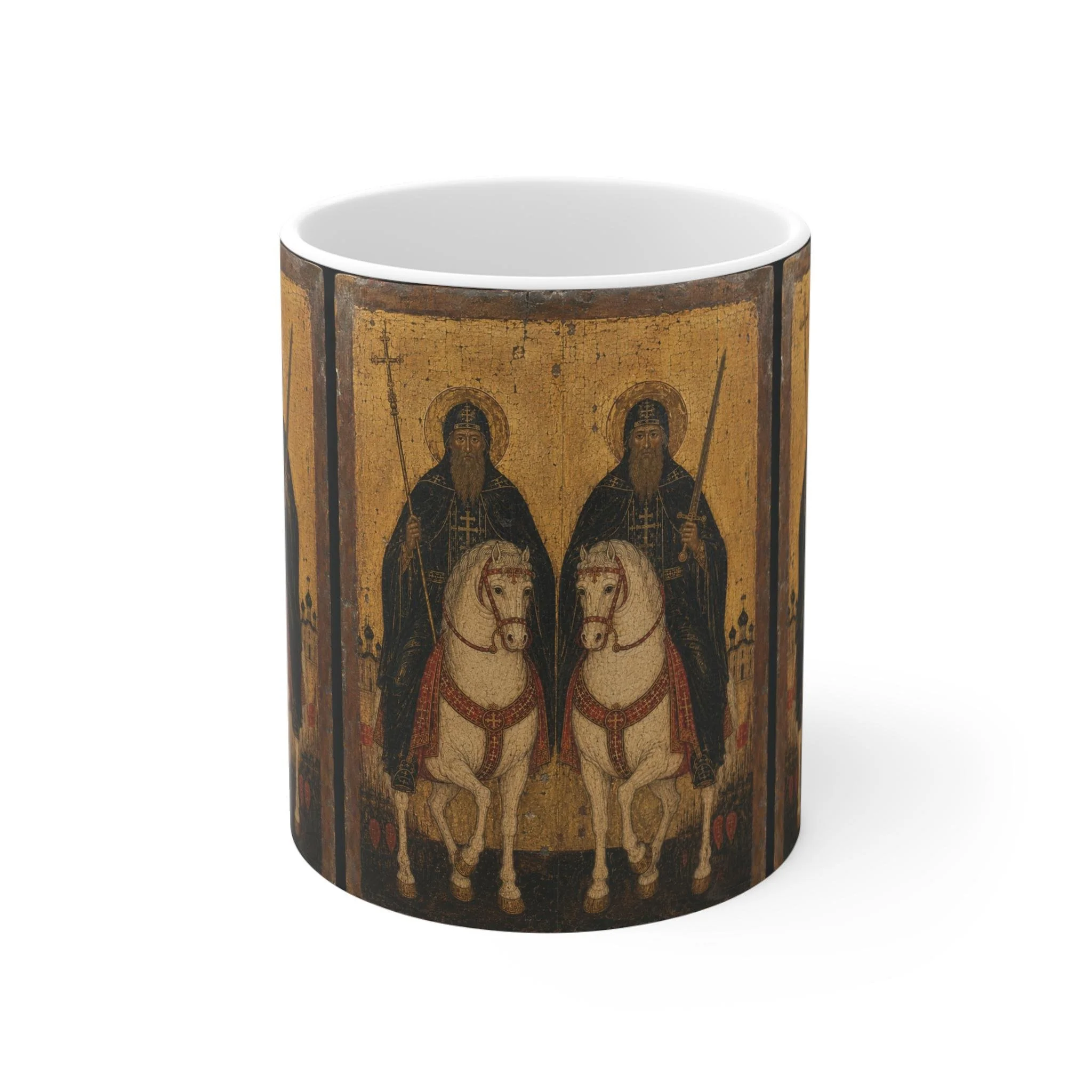
Mark's willingness to accept imprisonment rather than silence himself places him within a much broader Orthodox tradition of monks who left the safety of the cloister to defend the faith at real personal cost. Where Mark took up pen and letter from a monastery cell, the warrior-monks Alexander Peresvet and Andrei Oslyabya, disciples of Saint Sergius of Radonezh, took up arms alongside Prince Dmitri Donskoi at the Battle of Kulikovo in 1380, a generation before Mark's own birth. Different centuries, different battlefields, the same underlying conviction: that monastic withdrawal from the world does not excuse a Christian from standing where the faith itself is under threat.
Part XIII
Final Years, Death, and Last Words
Mark's stand received its most significant external vindication in April 1443, when three of the four ancient Eastern Patriarchates convened in Jerusalem. Patriarch Joachim of Jerusalem, Patriarch Philotheos of Alexandria, and Patriarch Dorotheos of Antioch met and formally condemned the Council of Florence as vile, going so far as to declare Metrophanes II, the sitting unionist Patriarch of Constantinople, a heretic. For a man who had been imprisoned for his opposition to the union, this was powerful confirmation that his was not a lone or eccentric position but the settled judgment of the wider Eastern Church, even if Constantinople itself remained under unionist episcopal leadership.
Mark's own confession of faith, composed and circulated in these final years, had, in the words of his early biographers, a good effect on the wider Church, strengthening resolve among the Orthodox faithful who had been uncertain how to respond to a union agreed to by their own emperor and patriarchal delegation. But Mark's body, weakened by years of ascetic discipline, the physical hardship of exile on Lemnos, and the relentless labor of his final campaign, was failing. In June 1444, he fell seriously ill with an intestinal disease that would prove fatal within roughly two excruciating weeks.
Sensing that his death was near, Mark called his spiritual children to his side. He turned in particular to his former pupil, the monk Gregory, and to another of his most gifted students, George Scholarius, the future Patriarch Gennadius II, and formally passed to Scholarius the leadership of the anti-union struggle he had led for four years. His instruction was direct: be careful of the snares of the West, and defend Orthodoxy at all costs. According to his brother John's account, Mark's final words, spoken as death approached, were a simple act of trust: "Jesus Christ, Son of the Living God, into Thy hands I commit my spirit."
Mark of Ephesus died on June 23, 1444, in Constantinople, at approximately fifty-two years of age. He was buried at the Monastery of Saint George of Mangana, the same community that had sheltered his monastic formation, his theological labors, and the final years of his resistance to the union. His own family, the Eugenikos household, began the practice of commemorating the anniversary of his death each year with a memorial service and the reading of a short account of his life, a private devotion that would, within decades, grow into the universal veneration of the whole Orthodox Church.
Part XIV
Gennadius Scholarius and the Vindication of Mark's Stand
The disciple to whom Mark entrusted his cause could not have been better chosen. George Scholarius, who had once studied under Mark in Constantinople before the council and had even quietly assisted Mark's use of Latin sources such as Bernard of Clairvaux during the Florentine debates, took the monastic name Gennadius and, after the catastrophic fall of Constantinople to the Ottomans in 1453, became the first Ecumenical Patriarch of Constantinople under the new Ottoman order. From that position of immense influence, Gennadius carried forward precisely the cause Mark had charged him with on his deathbed: rejecting the union, defending Orthodox doctrine against Latin claims, and, crucially, promoting the memory and veneration of his own teacher.
It was thanks in large part to Patriarch Gennadius's efforts that veneration of Mark spread from a private family commemoration within the Eugenikos household into a recognized cult embraced by the wider Orthodox Church. In the decades following Mark's death, a synod of the Church of Constantinople formally vindicated the stand both Mark and Gennadius had taken against the union, recording their names among the honored defenders of Orthodox doctrine. This vindication placed Mark, in the settled judgment of the Byzantine Church, alongside two other towering figures of Orthodox history, Photius the Great and Gregory Palamas, as one of the three Pillars of Orthodoxy, a title that remains attached to his name in Orthodox liturgical and popular memory to this day.
Part XV
Writings, Hymnography, and Theological Legacy
Mark of Ephesus left behind an extensive and genuinely wide-ranging body of written work, the overwhelming majority of it composed in the relative quiet of the Monastery of Mangana rather than in the pressure of Florence itself. Modern scholars count more than a hundred surviving texts bearing his name, spanning theological treatises, canonical writings, letters, and a substantial body of liturgical poetry.
Mark was, in fact, a prolific hymnographer, composing canons and hymns for the Lord Jesus Christ, the Mother of God, and the holy angels, in keeping with the long Byzantine monastic tradition of liturgical composition. He also devoted poetic attention to the Church Fathers he most admired, honoring Gregory Palamas, John Damascene, and Symeon Metaphrastes among his favorites, alongside a wide range of more ancient saints. He even composed verses celebrating the lives of contemporaries he respected, such as his own teacher Joseph Bryennios, and wrote a canon and stichera in memory of Patriarch Euphemius of Constantinople, whose favor Mark had enjoyed as a young man before he ever became a monk.
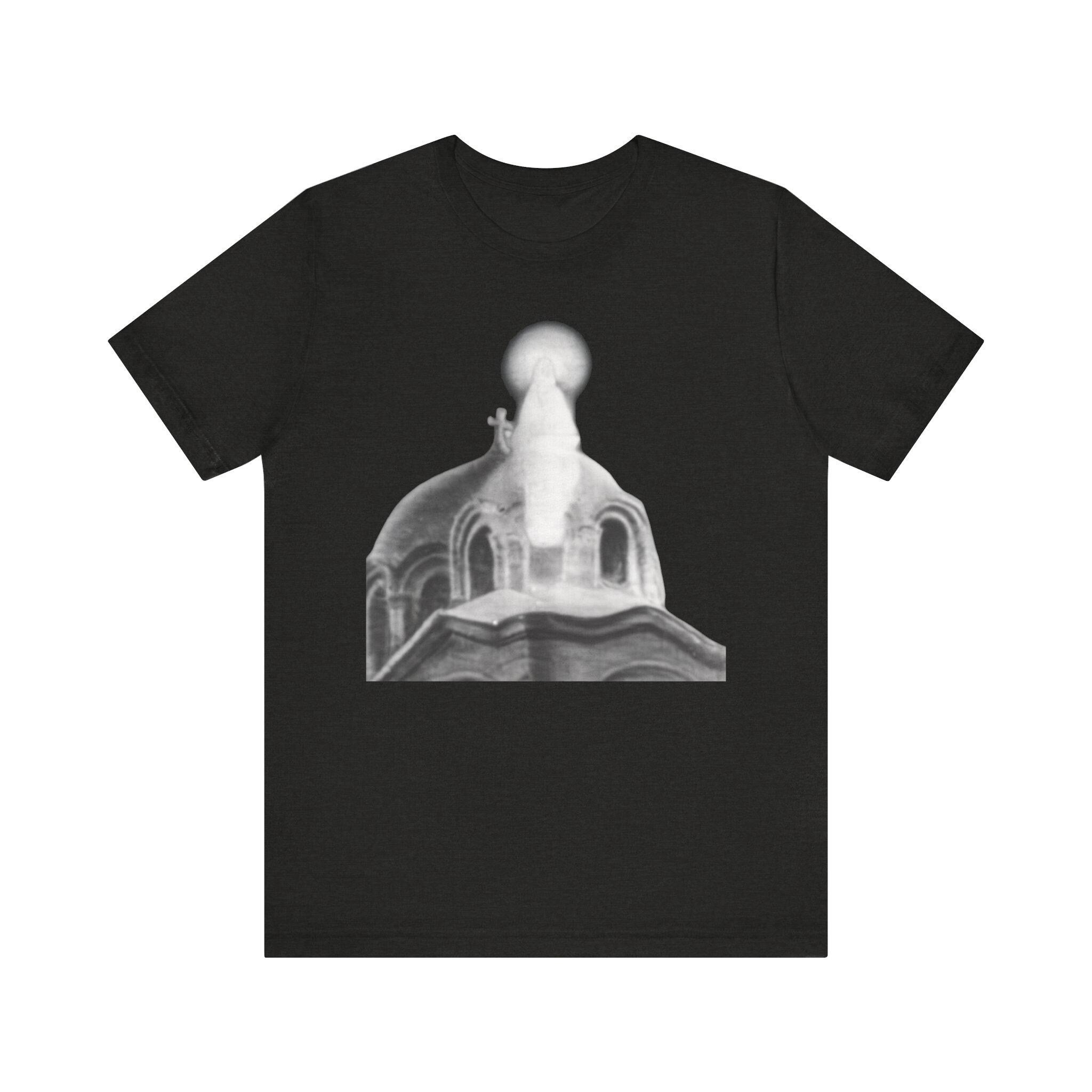
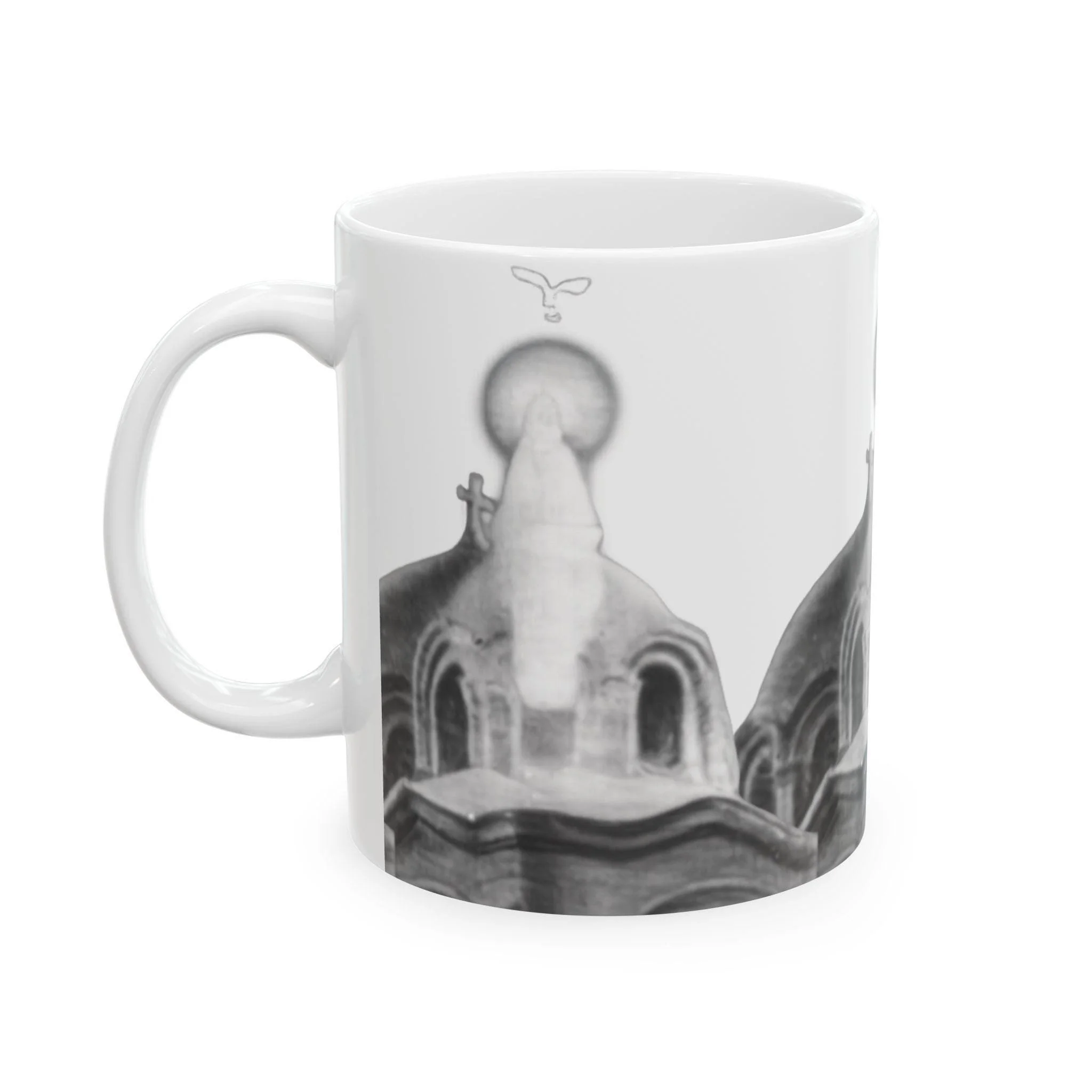
Mark's hymns to the Mother of God belong to an unbroken devotional current that runs through the whole of Eastern Christian history, from the fifth-century title Theotokos that Mark's beloved Fathers helped defend at Ephesus itself, down to the apparitions of the Theotokos venerated by Eastern Christians in more recent centuries, including the widely reported 1968 apparition of Our Lady of Zeitoun above a Coptic church in Cairo. The devotion is the same devotion Mark set to verse six centuries ago.
Taken as a whole, this body of work reveals a figure considerably richer than the single act of refusal for which he is most remembered. Mark of Ephesus was, across the full span of his life, a monastic ascetic, a systematic theologian working in direct continuity with the Palamite tradition, a pastoral bishop who personally rebuilt a metropolitan church and ordained priests in Ephesus, and a poet who set his devotion to Christ, the Theotokos, and the saints into verse meant to be sung in church. The stand at Florence was the dramatic culmination of a life already deeply formed by prayer, study, and monastic discipline, not an isolated act of political defiance.
Part XVI
Veneration, Feast Day, Relics, and Modern Dialogue
Mark's feast was originally observed on June 23, the anniversary of his death, in keeping with the ancient Christian custom of commemorating saints on the date of their departure to God. At some point, his commemoration shifted to January 19, the date on which his relics were transferred to the Monastery of Lazarus in Galata, across the Golden Horn from the old city of Constantinople. January 19 remains Mark's principal feast on the Orthodox liturgical calendar to this day, and it is the date on which Orthodox Christians throughout the world sing hymns in his honor as a zealot of ardent piety and champion of Orthodox dogma.
Orthodox tradition also preserves an account of a posthumous miracle attributed to Mark's intercession. Demetrios Zourbaios's sister, given up for lost by physicians after their treatments only worsened her condition, lost consciousness for three days before suddenly waking, to her brother's astonishment, drenched in water. She explained that a bishop had led her to a fountain, washed her, and told her she was healed and no longer ill. When she asked his identity, he replied simply that he was Mark Eugenikos, Metropolitan of Ephesus.
In the centuries since his death, Mark's reputation has traveled well beyond the confines of Orthodox devotional literature into serious historical and theological scholarship on both sides of the East-West divide. Constantine Tsirpanlis's study of Mark and the Council of Florence offers a thorough Greek Orthodox reassessment of his personality and theology, while the Catholic historian Joseph Gill, in his study of the personalities of the Council of Florence, approached Mark's role from the Roman perspective without diminishing his stature as the council's most formidable Eastern theologian. More recent scholarship examining Mark's relationship with his Latin interlocutors has emphasized a dimension often lost in older polemical accounts: Mark was, by contemporary and later testimony alike, known for treating his Latin opponents with real personal charity and respect even as he refused every theological concession they sought, a combination of firmness and grace that modern Catholic-Orthodox dialogue has increasingly come to recognize and admire.
Mark's veneration also sits comfortably alongside the wider communion of Orthodox saints across very different eras and callings. Readers drawn to his quiet, uncompromising witness often find themselves drawn as well to the tradition of holy fools for Christ, figures such as Saint Gabriel of Georgia, whose seeming folly concealed the same total refusal to bend to worldly expectation that Mark showed before an emperor and a pope, and to the unceasing hesychast prayer, "Lord Jesus Christ, Son of God, have mercy on me," that formed the daily rhythm of Mark's own monastic life at Mangana long before the Council of Florence ever called him away from it.


A Devotional Note
Carry His Icon
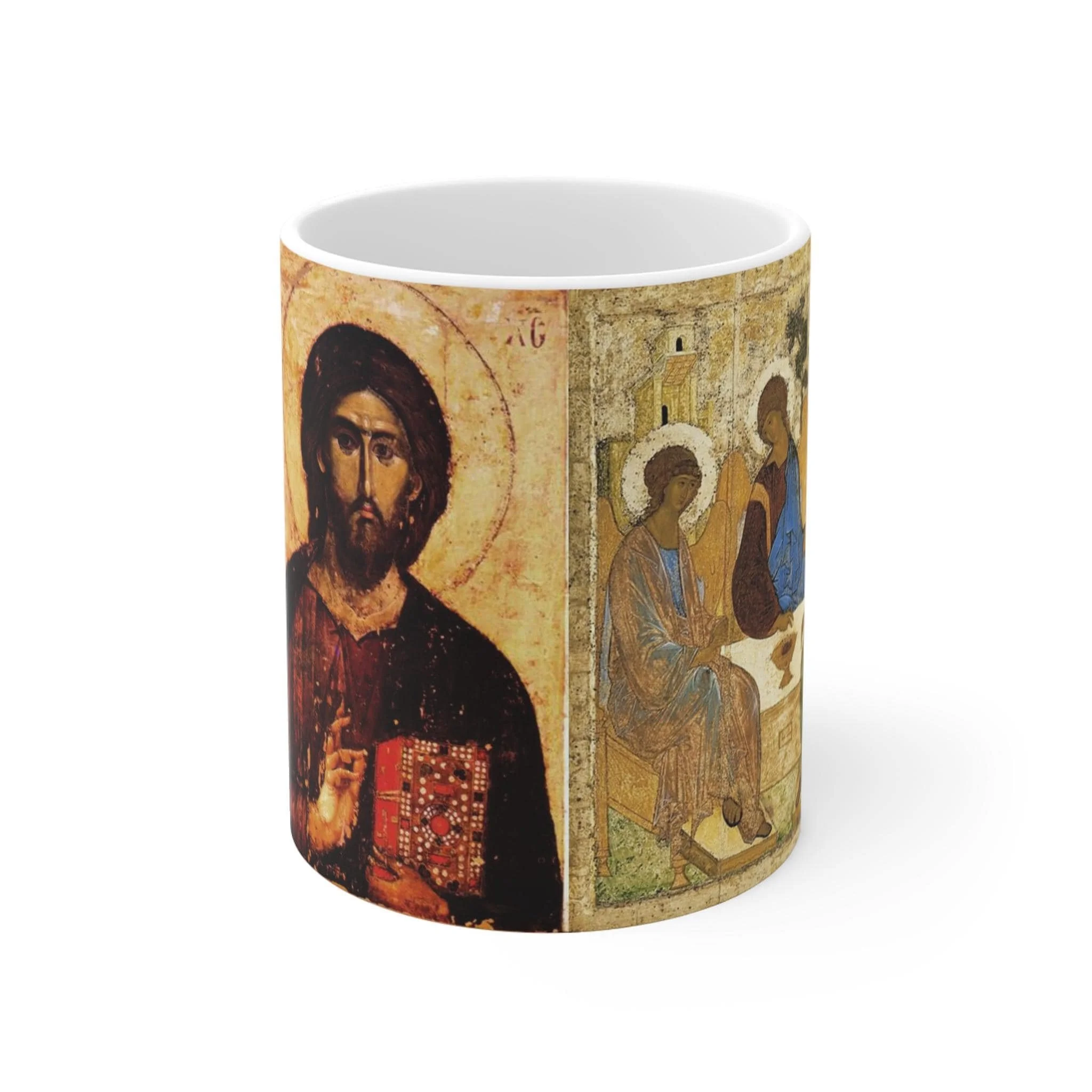
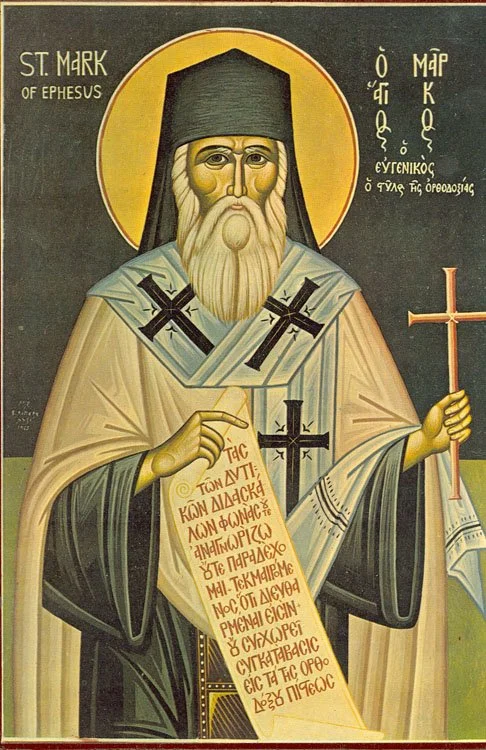
While shirts and mugs carry Mark's story into daily life in one way, many readers still want the traditional devotional item associated with a saint's icon: a prayer card to keep on a home altar, in a prayer book, or in a car for the road. We carry an icon prayer card of Saint Mark of Ephesus for exactly that purpose.
A Devotional Close
Prayers to Saint Mark of Ephesus
O holy hierarch Mark, Metropolitan of Ephesus, who stood alone among your brethren rather than sign away the faith once delivered to the Fathers, intercede for us before Christ our God. You endured exile and hardship rather than trade the truth for safety; teach us the same courage in whatever small compromises tempt us in our own day.
Grant us, by your prayers, clarity to see what truly matters and firmness of heart to hold to it, even when holding to it costs us the good opinion of others. As you were, in your own words, everything for everyone in your brief ministry at Ephesus, be for us now an advocate before the throne of God, that we might live and die in the unity of the true and undivided faith.
Traditionally invoked for steadfastness in belief, protection from doctrinal confusion, and courage under pressure to compromise one's conscience.
Holy Father Mark, you gave your life to the hope that the Church of Christ might be one, not through compromise but through truth. Pray for the healing of every division among Christians, that the unity we all confess in the Creed might one day be visible as well as spiritual, according to God's own timing and not our impatience.
Common Questions
Frequently Asked Questions About Saint Mark of Ephesus
Looking to strengthen your marriage on a foundation of shared faith? Jeremy and Ashley offer Christian marriage coaching rooted in Eastern Christian tradition, with husbands coached by Jeremy and wives coached by Ashley.
Learn About Marriage Coaching →One Signature Withheld. Six Centuries of Memory.
In July of 1439, in a cathedral in Florence, an empire desperate for survival agreed to terms that its own most respected theologian could not, in conscience, accept. Mark of Ephesus was not present at Florence to build a legacy. He was present to answer, as honestly as he knew how, a single question: what does the truth actually require, whatever the political cost of speaking it? History's judgment on that question has been remarkably consistent for nearly six hundred years.
Carry his memory forward, in a prayer card for your icon corner, in the words of the prayers above, or simply in the account of a life given entirely to the conviction that some things cannot be compromised, whatever the pressure to compromise them.
Get the Saint Mark of Ephesus Prayer Card →