Is Your Life a Job Application for Heaven? What the Fathers, Aquinas, and the Mother of God Reveal About the Meaning of Life
Theology • Angels • The Purpose of This Life • Church Fathers • The Mother of God
Is Your Life a Job Application for Heaven? What the Fathers, Aquinas, and the Mother of God Reveal About the Meaning of Life
A third of the angels fell and their places in Heaven were left standing empty. A very old thread of Christian theology says human life exists, in part, to fill those places. Here is what Augustine, Anselm, and Aquinas actually said, what a contemporary exorcist adds, and why one human being has already been shown ranked above the Cherubim themselves.
At a Glance
- The Core Idea
- A third of the angels fell (Revelation 12:4) • their places in the heavenly order were left vacant
- Strongest Source
- St. Augustine, Enchiridion 29: the redeemed "shall succeed to the place of the fallen angels"
- Second Source
- Anselm of Canterbury, Cur Deus Homo: humans complete and may exceed the diminished number
- Formal Theology
- Aquinas, Summa I, q.108, a.8: by grace, humans can be "taken up into the orders" of angels
- Important Caveat
- Humans do not become angels in nature; this is not a solemnly defined dogma of the Church
- Scriptural Grounding
- St. Gregory the Great, Homily 34: humanity is the lost sheep needed to "complete the number of sheep in heaven"
- Deeper Foundation
- Theosis: Athanasius, "God became man that man might become god" • Irenaeus, Against Heresies V, preface
- Why No Fixed Ceiling
- Gregory of Nyssa's epektasis: the soul's growth into God has no final limit, unlike the angels' single fixed choice
- Also Promised
- Eph. 2:6 seated with Christ • Rom. 8:17 joint heirs • Rev. 3:21 a shared throne • 1 Cor. 6:3 judging angels
- Why Faith Matters
- Angels chose with an unearthly clarity of intellect, though not yet the beatific vision; humans believe without seeing (John 20:29)
- Living Proof
- Mary is hymned as "more honorable than the Cherubim" in the Axion Estin, sung across the Christian East
- Contemporary Voice
- Fr. Chad Ripperger teaches human holiness can keep growing and may exceed some angels' fixed rank
The Fall and the Empty Thrones
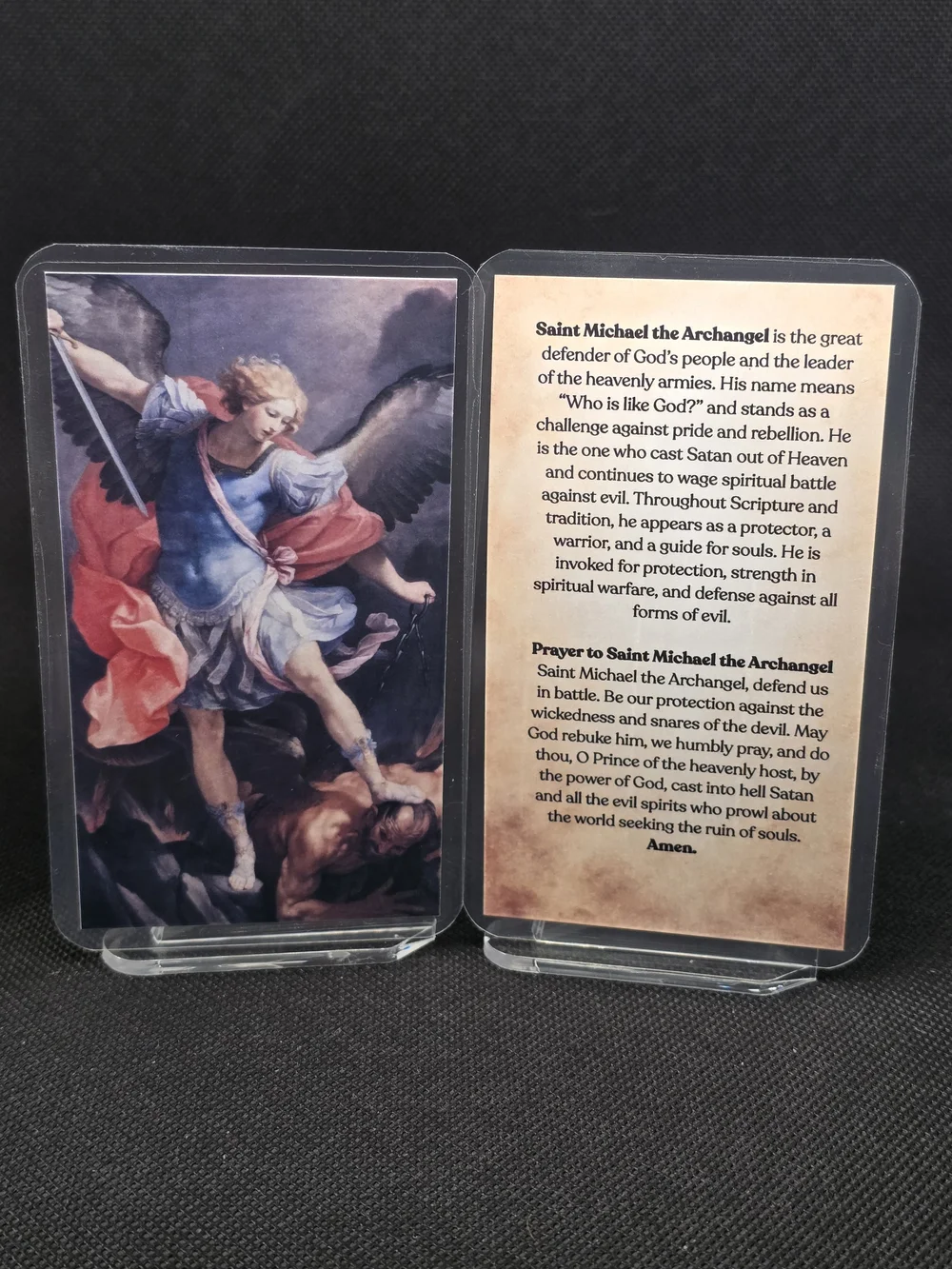
Before there was an earth, there was a Heaven full of angels, and Scripture gives us one image of what happened to a portion of them. Revelation 12:4 describes a dragon whose tail "swept down a third of the stars of heaven, and cast them to the earth." Read symbolically, as the early Church generally read it, those stars are angels, and the number is a third. Whatever the precise mathematics, the point holds: a real portion of a real angelic host, created in glory and standing in the immediate presence of God, chose to reject Him.
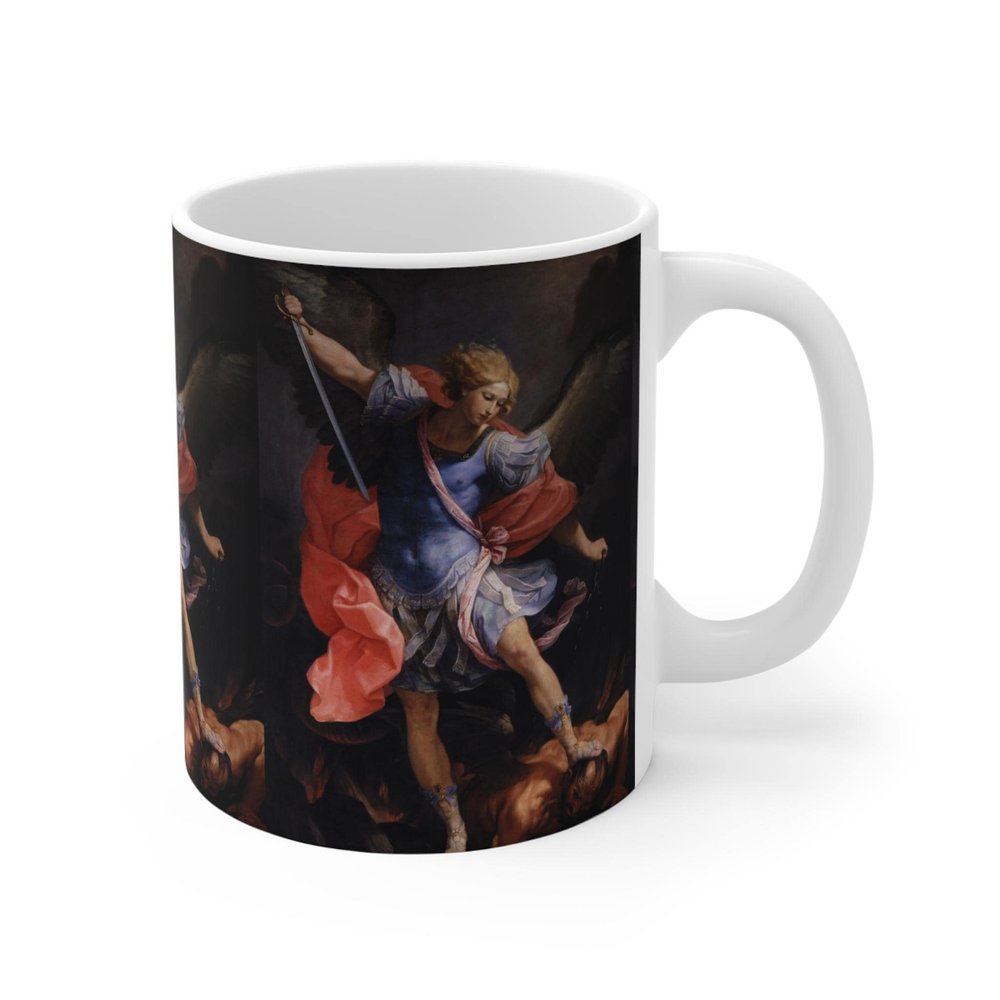
That choice is different in kind from any choice a human being will ever face. Classical theology, worked out most fully by Thomas Aquinas, holds that angels possess their knowledge not gradually, the way humans learn through the senses over years, but through an intellect that grasps truth completely and at once, in a single act rather than a chain of reasoning. The angels who fell were not confused, and they were not burdened by the passions, distractions, and slow uncertainty that cloud human choices. They made their decision with a lucidity no human being will ever have this side of death, and a portion of them still turned away, out of pride, in a single irrevocable act of will.
Those angels held real positions in the order of Heaven; the tradition calls them choirs, thrones, ranks, and offices in a structured hierarchy of praise and service. When they fell, the tradition asks a natural question: what happens to the places they held? Are they simply gone? Or is something, or someone, meant to stand in them again?
Part II
Augustine: "They Shall Succeed to the Place of the Fallen Angels"
The idea that human beings exist, in part, to refill the ranks of Heaven emptied by the fallen angels is not a modern invention. It runs through some of the most trusted names in Western theology, beginning with Augustine of Hippo, a Doctor of the Church whose writing shaped essentially all later Latin theology.
In the Enchiridion, his handbook on faith, hope, and love, Augustine writes plainly that the redeemed of the Church "shall succeed to the place of the fallen angels, and shall dwell for ever in that peaceful abode from which they fell." He is explicit that God alone knows the exact number of the saints and the exact number of the devils, but the direction of his thought is unmistakable: the city of God will not be left short by the fall of the angels. The children born of grace fill the gap.
This is not an isolated aside. Augustine held, more broadly, that God created the angelic order to exist in a harmony that was disrupted by the fall of the rebels, and that His providence would not permit that disruption to be the final word. The vacancy left by pride would be answered by something greater: humility. Where an angel with full knowledge of God chose to exalt itself, humble human beings, believing without seeing, would be raised up to stand in the place that was refused.

Part III
Anselm and Aquinas: Filling the Number, or Something More
Two centuries after Augustine, Anselm of Canterbury took up the same question in his great work on the reason for the Incarnation, Cur Deus Homo, and pushed it a step further. Anselm's argument was not simply that humans would fill the exact number the fallen angels left behind. He wrote that "there will be more elect than sinful angels, and thus we shall say that human beings were not created solely for the restoration of the number which has been depleted, but also to make up a number which was not yet complete." In Anselm's reading, humanity was never a mere patch on a wound in the angelic ranks. The number of the redeemed was always meant to be its own, complete thing, distinct from a simple replacement quota. This detail matters for honesty's sake: even among the theologians who most strongly affirm the "vacant places" idea, there has never been full agreement on whether humans are strictly replacing what was lost or accomplishing something larger that was planned from the start.
Thomas Aquinas, writing in the thirteenth century, gave the idea its most careful and systematic form. In the Summa Theologiae (Part I, Question 108, Article 8), Aquinas addresses directly whether human beings are received into the angelic orders after the fall of some angels, and answers that by the gift of grace, human beings can merit glory to such a degree that they are equal to the angels in each of the angelic grades, and are, in that sense, "taken up into the orders" of the angels. He is careful on a crucial point that must not be blurred: humans do not become angels in nature. A glorified human soul remains fully human, body and soul, forever. What changes is rank and glory, not species. Humans and angels remain two distinct kinds of creature, sharing one hierarchy of honor before God, each according to how they attained it: angels by nature, humans by grace and merit freely cooperated with.


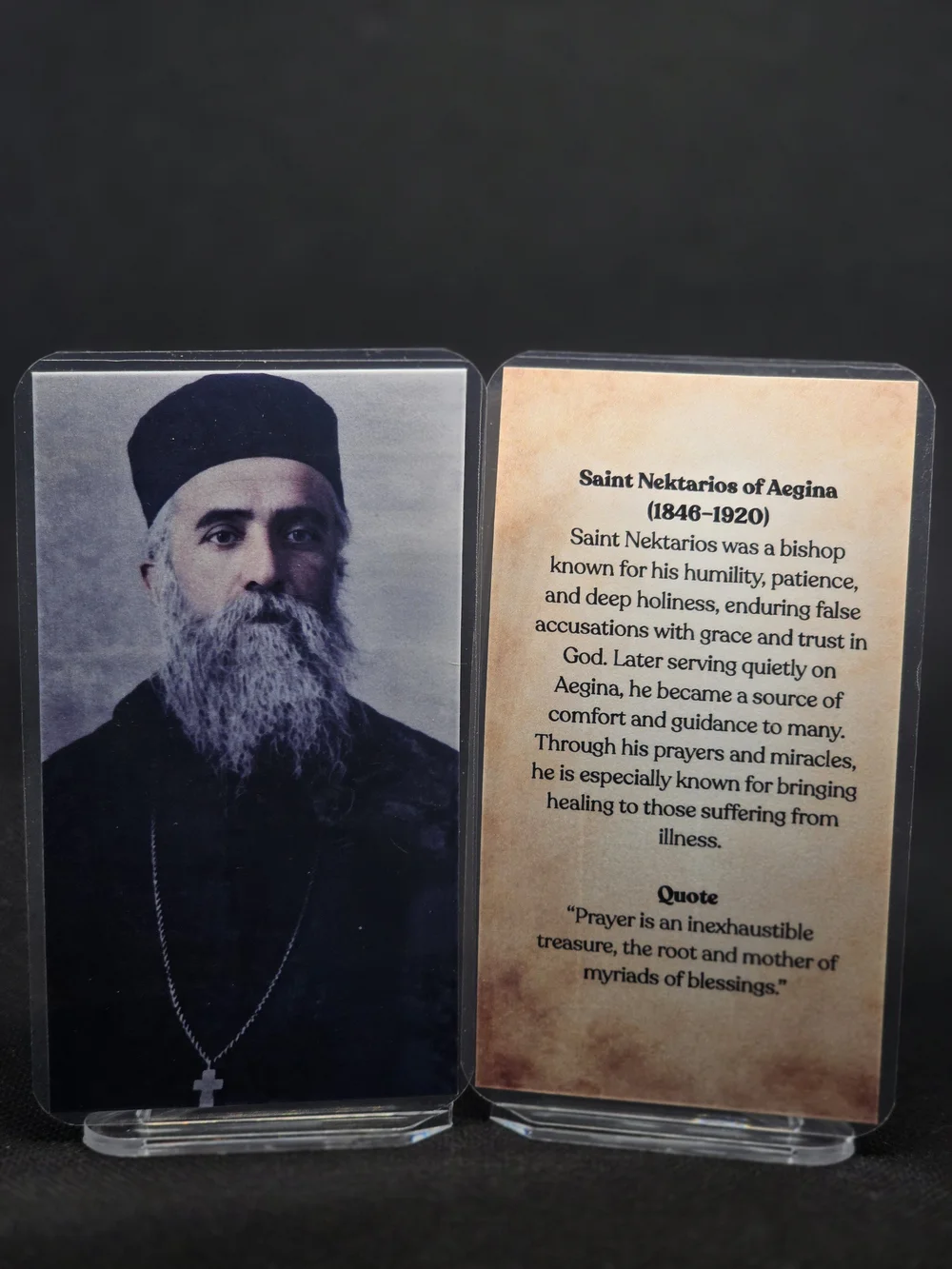
Saint Moses the Black is worth pausing on here, because he is the tradition's point made flesh rather than argued in the abstract: a man who spent decades as a violent robber before turning entirely to God in the Egyptian desert, and who the Church now venerates as a saint. If sanctifying grace, freely cooperated with across an ordinary human lifetime, can lift a life like his into the company of the angels, the doctrine stops being an abstraction about celestial real estate and becomes a description of what is actually available to anyone still drawing breath.

Part IV
Gregory the Great: The Shepherd Who Left Heaven Short a Sheep
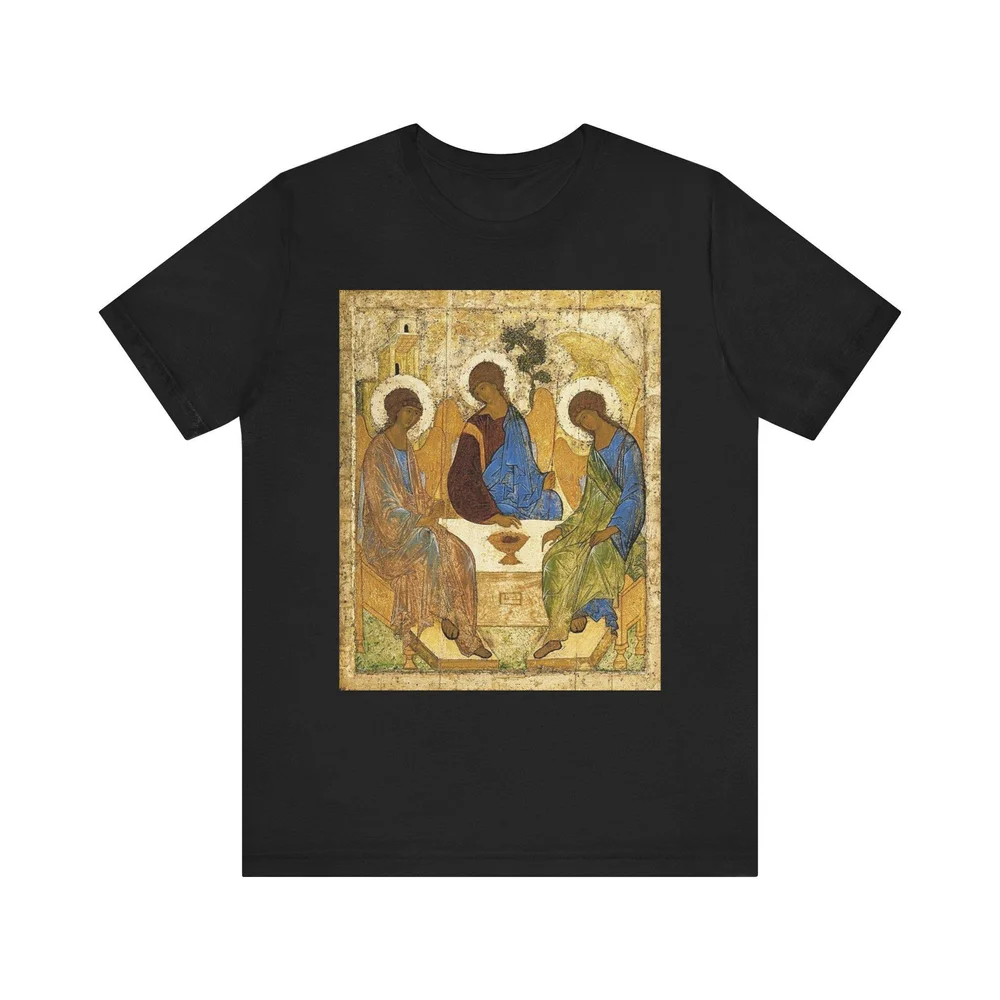
Pope Saint Gregory the Great, a Doctor of the Church writing at the end of the sixth century, connects this whole line of theology directly to a parable of Christ Himself, and in doing so gives it some of its clearest scriptural grounding. In his thirty-fourth Gospel homily, on the parable of the lost sheep in Luke 15, Gregory reads the shepherd's hundred sheep as the whole of God's rational creation: ninety-nine safe in Heaven, and one, humanity, wandering lost on earth. Gregory writes plainly: "When man sinned he abandoned heaven. To complete the number of sheep in heaven, our Shepherd sought man, abandoned on earth. After redeeming mankind, he returned to the kingdom of heaven." In Gregory's reading, the ninety-nine are the angels who remained faithful, standing at full strength, while the flock as a whole was left short by the one sheep gone missing. The Good Shepherd does not shrug at a diminished flock. He leaves the ninety-nine to go after the one, specifically so that the total company of Heaven, angels and redeemed humanity together, is made whole again.
Read alongside Augustine, Anselm, and Aquinas, Gregory's homily supplies something the others do not: it roots the "vacancy" theology directly in the words of Christ, not only in later theological reasoning about the fall of the angels. The urgency of the shepherd who will not rest until the flock is whole again is, in Gregory's reading, God's own urgency about the human race specifically, the very race whose members are able, through faith, to be gathered back into a Heaven that is not yet full.
Bernard of Clairvaux, writing his Advent sermons some five centuries later, draws a related contrast worth noting for its honesty: "In the case of the angels Thy mercy was withheld from a portion only of them; afterwards the whole human race was overwhelmed by Thy judgment." Bernard is not making the identical claim as Gregory, Augustine, or Anselm; he is drawing a comparison between the partial fall of the angels and the universal fall of Adam's race, and marveling that mercy was nonetheless extended fully to humanity where the fallen angels received none. In another sermon, preaching on the resurrection of the body, Bernard cites the martyrs of Revelation 6:11, told to "endure yet for a little while, until the number of your brethren be made up," reading their glory as incomplete until the rest of the redeemed join them, an image of the same "completing what is lacking" theology in a slightly different key.
Part V
Why We Need Faith and They Did Not
Here is where the shape of the human test becomes clear, and it is the detail that should reframe how short this life feels against eternity. The angels who fell were not choosing in the dark. Aquinas describes the angelic intellect as infused and instantaneous: angels do not reason step by step the way humans do, working from evidence toward a conclusion they might get wrong. They see clearly, completely, in a single act. It is worth being precise here, because it is easy to overstate: Aquinas does not teach that the fallen angels already possessed the beatific vision, the direct sight of God's own essence, when they sinned. He teaches the opposite. An angel merits that vision through a first free act of love, and an angel who has actually received it can no longer sin at all (Summa I, q.62). The angels who fell chose against God at that same threshold instead of choosing toward Him; they did not see God face to face and reject Him anyway. What they had was a natural and infused clarity of mind far beyond anything a human being reasons with, not the beatific vision itself. Their choice was pride against a degree of lucidity that has no earthly equivalent, not pride against certainty God had already fully unveiled.
Humans are not given that clarity, and this is not an oversight. We come to God gradually, through the senses, through testimony, through the slow and often difficult work of faith. Christ Himself names this directly after the Resurrection, when Thomas refuses to believe without seeing the wounds, and Christ tells him, "Blessed are those who have not seen and yet have believed" (John 20:29). The blessing is specifically for the kind of faith angels were never asked to exercise in this way, because their mode of knowing was never like ours to begin with. Believing what you cannot verify by direct vision, and staying faithful to it across a lifetime of uncertainty, temptation, and suffering, is a different kind of test than the angels faced, not an easier one and not a harder one, but a real one, suited to the kind of creature a human being is.
The Church's own modern Catechism affirms the same shape of choice, in more restrained and formal language. The Catechism teaches that the fall of the angels "consists in the free choice of these created spirits, who radically and irrevocably rejected God and his reign" (CCC 392), and that it is "the irrevocable character of their choice, and not a defect in the infinite divine mercy, that makes the angels' sin unforgivable" (CCC 393), citing Saint John Damascene, another Doctor of the Church, for the principle that "there is no repentance for the angels after their fall, just as there is no repentance for men after death." The instantaneous clarity of an angel's mind means an instantaneous and final choice. Human beings, believing gradually and often falteringly across a lifetime, are given the opposite: repeated chances, ordinary Tuesdays, room to fail and begin again, right up until death.
This is also why the shortness of this life is not a design flaw. If eternity is what is actually at stake, a life measured in decades is not too small to matter; it is the space allotted for a specific and unrepeatable kind of choosing, the choosing that only a creature without direct vision of God can make. The angels made their irrevocable choice at a single threshold. Human beings are given a lifetime of ordinary days, most of them unremarkable, in which faith either takes root through small acts of trust or does not. That is not a smaller stage than the angels stood on. It is a different one, built for a different kind of love.
Part VI
Theosis: Why a Human Ceiling Was Never Fixed the Way an Angel's Was
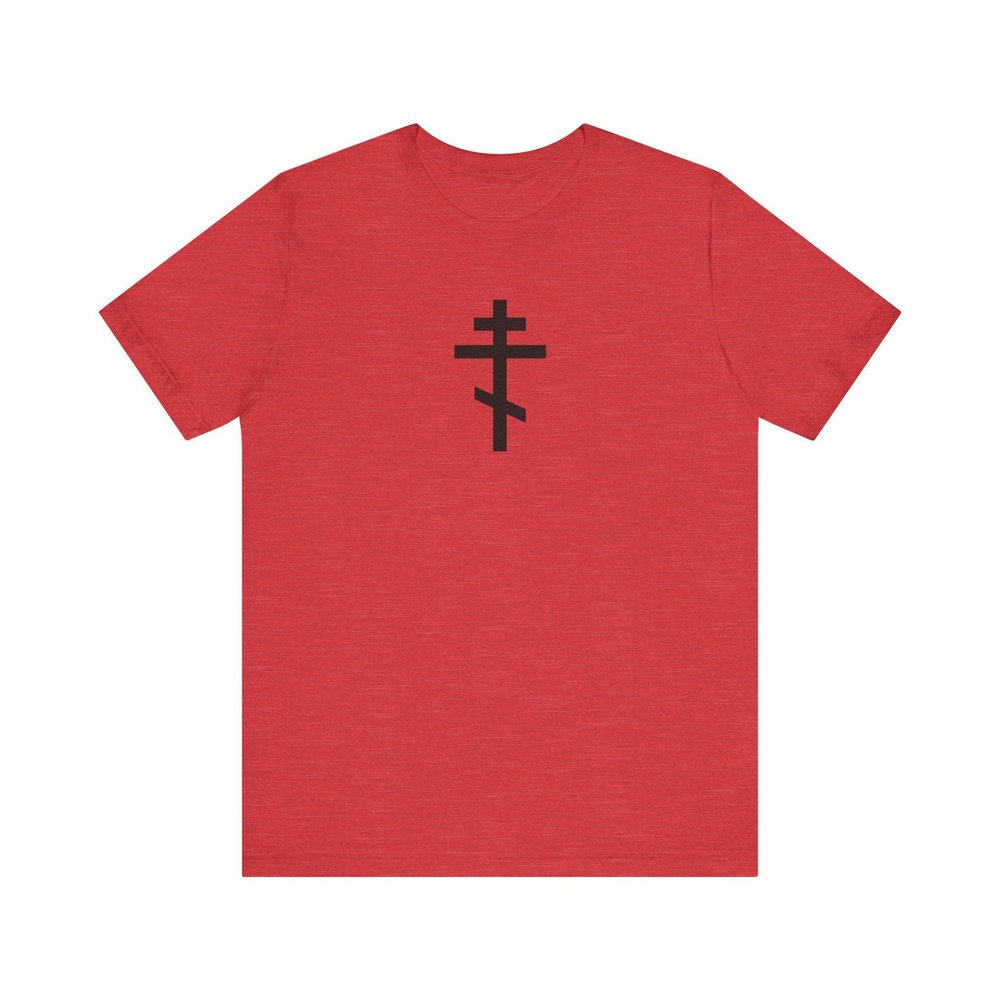
There is a deeper and older reason than any single vacancy theory for why a human being is not permanently capped beneath the angels, and it comes from the Church's oldest teaching on the purpose of the Incarnation itself: theosis, or deification. Saint Athanasius of Alexandria, a Doctor of the Church and the great defender of Nicene orthodoxy, states the doctrine in the most famous line of his treatise On the Incarnation: "God became man that man might become god." Athanasius is not describing humans replacing God or becoming a second divine essence; the Church has always read this as union with God by grace and participation, not a claim that creatures acquire God's own uncreated nature. But the direction of the claim is unmistakable and very old. Saint Irenaeus of Lyons, writing in the second century, in the preface to Book V of Against Heresies, teaches that the Word of God, out of His transcendent love, "became what we are, so that He might make us to be what He is." This is not fringe theology. It is the patristic consensus behind the entire doctrine of the Incarnation as the Christian East has always preached it, and it means that the destiny held out to redeemed humanity was never a lesser one than the angels' to begin with.
This matters directly for the question of rank, though carefully. Saint Gregory of Nyssa, one of the three Cappadocian Fathers and among the most honored theologians of the Christian East, taught a doctrine the Greek tradition calls epektasis, the soul's perpetual stretching forward into God, described by Gregory as a straining athlete who never stops advancing (drawing on Saint Paul's own language in Philippians 3:13, "forgetting what lies behind and straining forward to what lies ahead"). For Gregory, because God is infinite, the soul that has been united to Him by grace never exhausts Him; each degree of closeness only opens onto a deeper one, so that blessedness is never a static, finished thing to be arrived at once and then simply held. Gregory develops this against an older philosophical instinct that treated perfection as a fixed, unchanging state rather than a living relationship. Gregory reverses that instinct: for redeemed humanity, this endless deepening into an inexhaustible God is not a wound to be healed but the very shape of blessedness.
It would be an overreach to use Gregory's epektasis as proof that a soul's rank or degree of glory keeps changing after death; Aquinas is explicit elsewhere that the degree of glory a soul merits in this life is fixed at death, and that a soul does not go on earning a higher grade once it has entered beatitude. Gregory's own point is narrower and, in a sense, deeper: whatever degree of communion with God a soul is raised to, that communion with an infinite God is never boredom, never a plateau, never something used up. What Gregory gives the article is not proof that human rank keeps climbing forever. It is the deeper reason theosis in this life is never wasted effort: growth toward God during the very ordinary days this article keeps returning to is not preparation for a static reward. It is the beginning of a relationship with no floor beneath it and no ceiling above it.

Part VII
A Contemporary Voice: Fr. Chad Ripperger on Rank in Heaven
Alongside the classical sources, it is worth noting a contemporary teacher who has made a related point widely known to a modern audience, and made it more than once. Fr. Chad Ripperger, a Catholic exorcist and Thomistic theologian, teaches that Heaven is structured in levels determined by the degree of sanctifying grace a soul has attained by the time of death, and that because angelic holiness was fixed once and for all at the single instant of the angels' original choice, while human holiness can keep growing through free acts of will across an entire lifetime on earth, some humans can end up ranked, at death, above some angels.
Fr. Ripperger has returned to this same teaching across multiple public talks and interviews, not as a one-time aside. In one recent appearance, he described the saints in Heaven as distributed according to the specific virtues and good actions they cultivated on earth, meaning that different souls come to know and enjoy God's presence more profoundly in different ways, according to how they lived. His consistent explanation for why this allows a human being to end up above an angel is the same one discussed above: angelic holiness is fixed and proportionate to the single choice each angel made at creation, while a human being can go on adding to their store of sanctifying grace through ordinary acts of virtue, prayer, and charity, for as long as they are alive to choose them. The teaching is not a passing remark he made once and moved on from. It is a point he keeps coming back to, because for him it is bound up with the larger truth he spends most of his ministry on: that the spiritual life is not static, and that grace, unlike an angel's single choice, is something a person can keep building for as long as they draw breath.
This deserves an honest tier of its own, separate from Augustine, Anselm, and Aquinas. Fr. Ripperger is a living theologian offering catechesis and commentary, not a Doctor of the Church, and his teaching here should be read as a reasoned extension of Thomistic principles for a popular audience rather than as a formally defined article of faith. It is consistent with what Aquinas already established about humans being taken up into angelic grades by grace, earned through a lifetime of merit rather than granted or changed afterward, and it is a legitimate and traditionally grounded position to hold. It is not, however, on the same evidentiary footing as a Doctor of the Church's own systematic treatise, and readers should hold it with that distinction in mind.


Part VIII
And This Too: A Few More Promises Worth Naming
Everything above builds a real case, but Scripture itself offers a few more promises that belong in the same conversation, worth naming plainly rather than passing over. Saint Paul writes in Ephesians 2:6 that God has already "raised us up with him, and seated us with him in the heavens in Christ Jesus," present tense, not a future hope but a stated reality of grace. In Romans 8:17, Paul calls the redeemed "joint heirs with Christ," provided they suffer with Him so that they may also be glorified with Him, the language of adoption and inheritance rather than of a job title. Christ Himself goes further still in Revelation 3:21, promising outright: "I will give the victor the right to sit with me on my throne, as I myself first won the victory and sit with my Father on his throne." And in 1 Corinthians 6:3, Paul asks the Corinthians directly, "Do you not know that we will judge angels?", a question some of the Fathers, including Saint John Chrysostom, read as pointing specifically at the fallen ones.
None of these texts need a deep dive to do their work here. Taken together, they say something simple and worth sitting with: whatever "filling a vacant place" turns out to mean in the end, Scripture's own language for what is actually on offer is bigger than a vacancy. It is adoption, a shared inheritance, and a seat on a throne, offered by Christ Himself to those who hold on to the end.
Part IX
Mary: The Proof Already Standing in Heaven
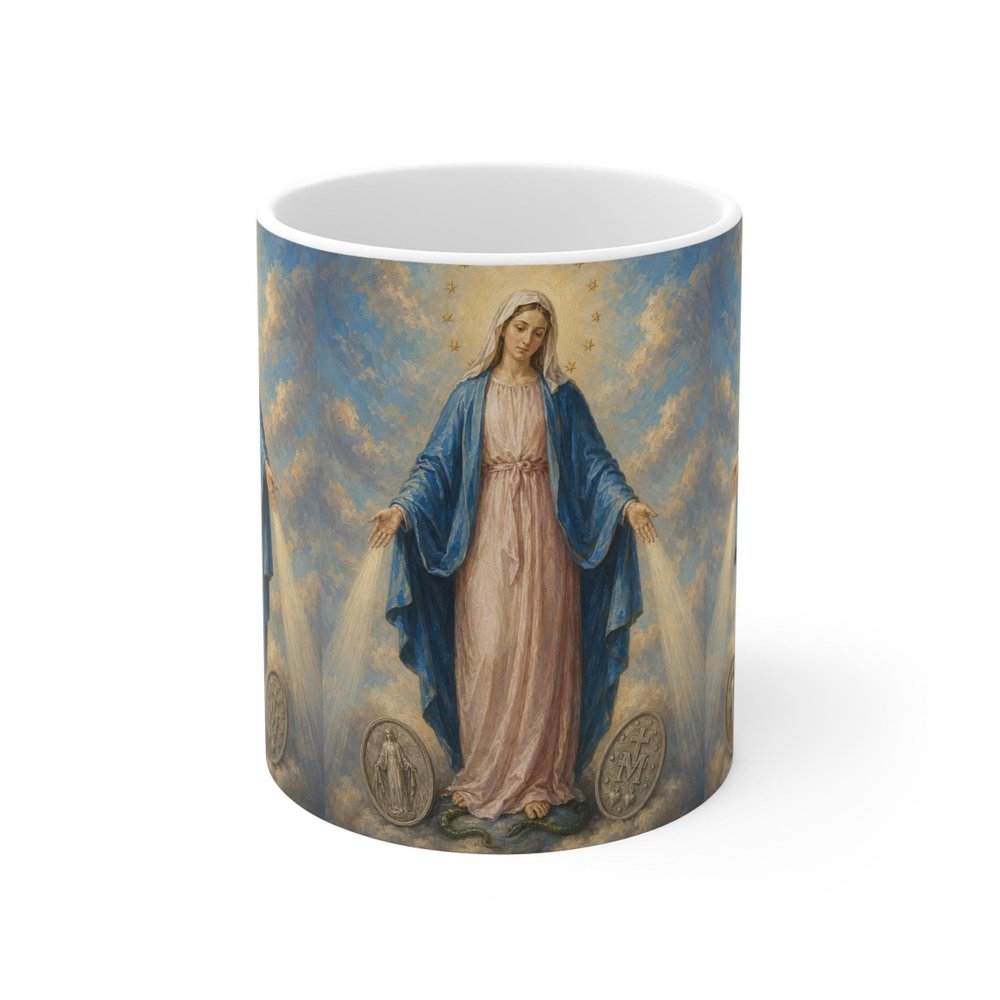
If this teaching is true in even its most modest form, that grace can raise a human being to stand among, or even above, the angelic ranks, then the Church does not leave us to take that claim entirely on inference. She sings it. Every Divine Liturgy in the Byzantine tradition, whether Orthodox or Eastern Catholic, includes a hymn to the Mother of God called the Axion Estin, "It Is Truly Meet," which declares her, in words the whole Christian East repeats every single Sunday, "more honorable than the Cherubim, and more glorious beyond compare than the Seraphim."
Sit with what that sentence actually claims. The Cherubim and Seraphim are not decorative. Scripture describes them as fearsome, four-faced, six-winged creatures who stand nearest the throne of God and cry "Holy, holy, holy" without ceasing. They are the highest ranks in the angelic hierarchy, the very orders some of whose members chose rebellion over obedience. And the Church, in her oldest and most repeated Marian hymn, places a human woman, a real historical person born in a real place, above them. She is not called equal to them. She is called more honorable, more glorious.
Scripture itself supplies the grounds for this. In Luke 1, the archangel Gabriel himself greets Mary with reverence, and her cousin Elizabeth, filled with the Holy Spirit, calls her "the mother of my Lord" (Luke 1:28, 42-43). Revelation 12 describes a woman "clothed with the sun, and the moon under her feet, and upon her head a crown of twelve stars," whose child is caught up to God's own throne, an image the Christian tradition has long read in connection with Mary. Traditional iconography, including the Church's own devotional art, has long pictured that moon specifically as a crescent beneath her feet, which is why you will find her standing on a crescent in icons and holy cards to this day. Psalm 8, describing humanity crowned with glory and honor and given dominion, a psalm the New Testament itself applies to the exaltation of the redeemed in Christ, is sung in this same key. None of this makes Mary divine. She remains fully human, the first of the redeemed, not a fourth member of the Trinity. But she is the clearest sign the Church has ever pointed to that a human being, through faith and obedience rather than any advantage of angelic nature, can rise to stand where an angel refused to remain.
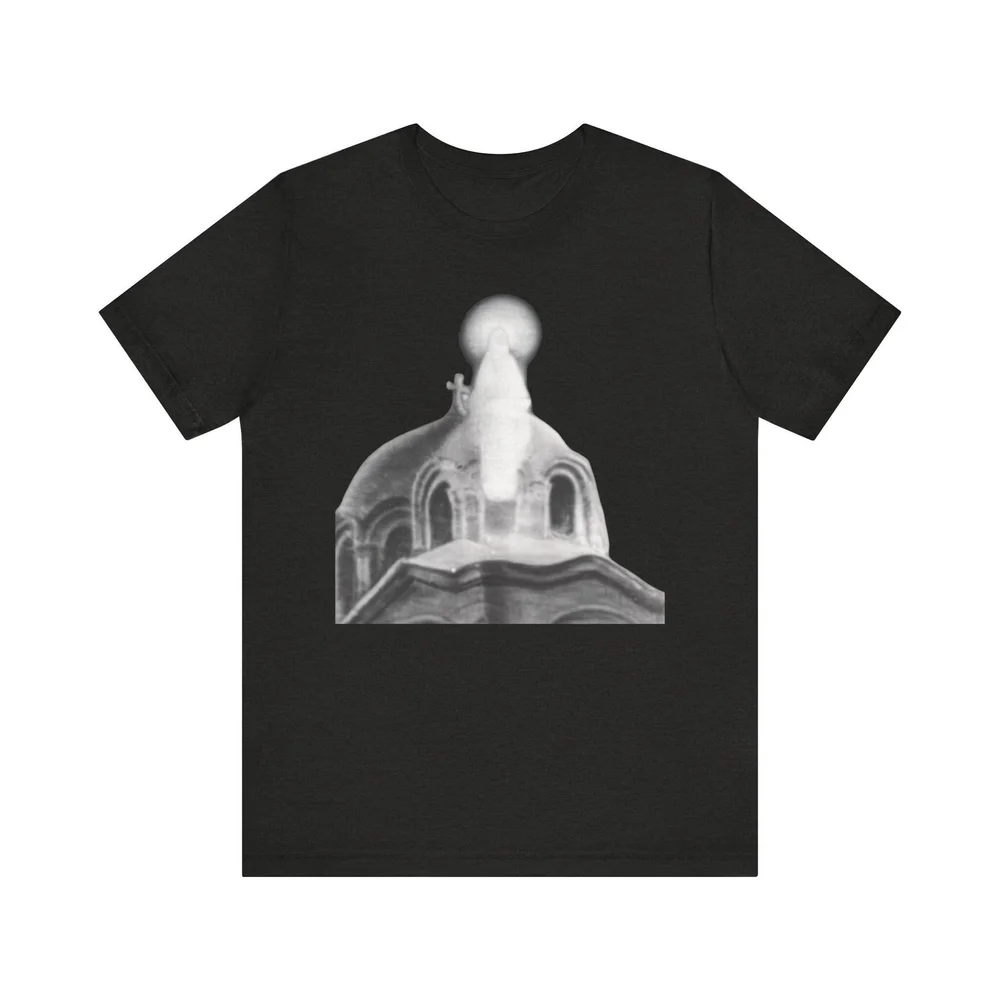
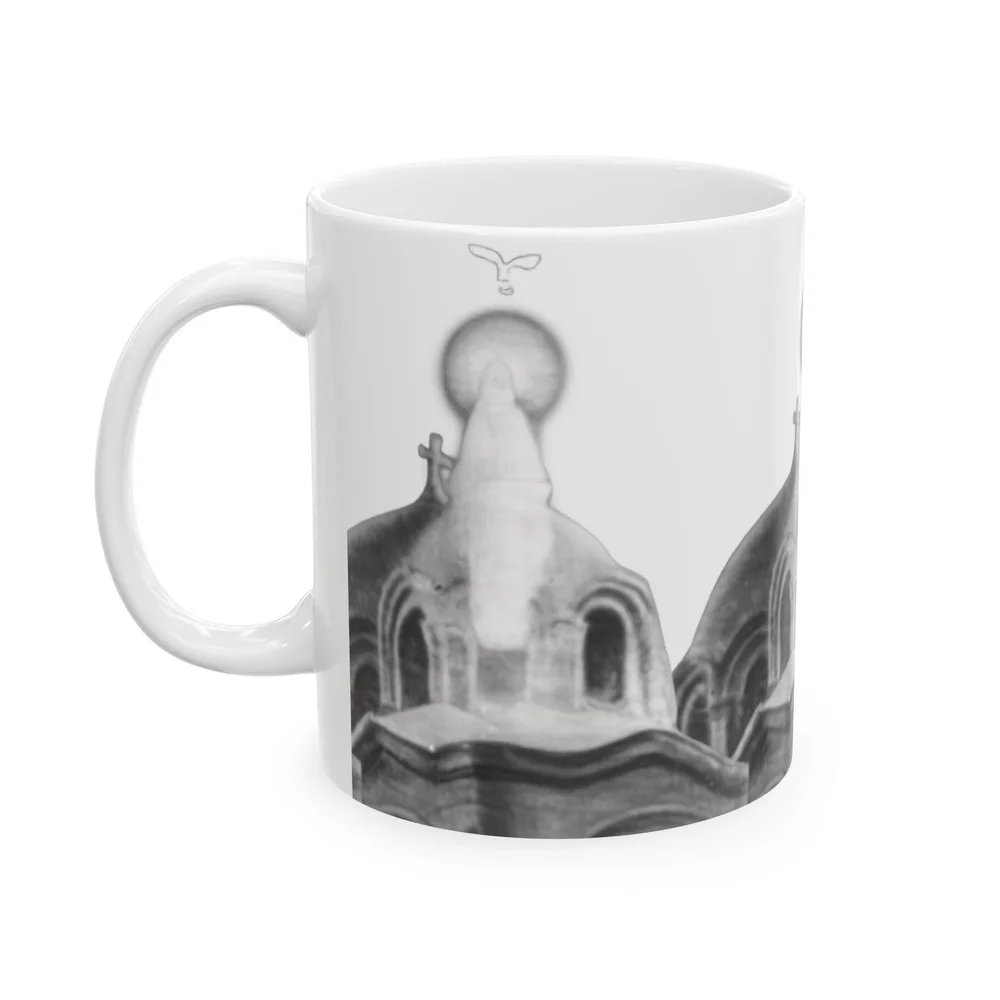
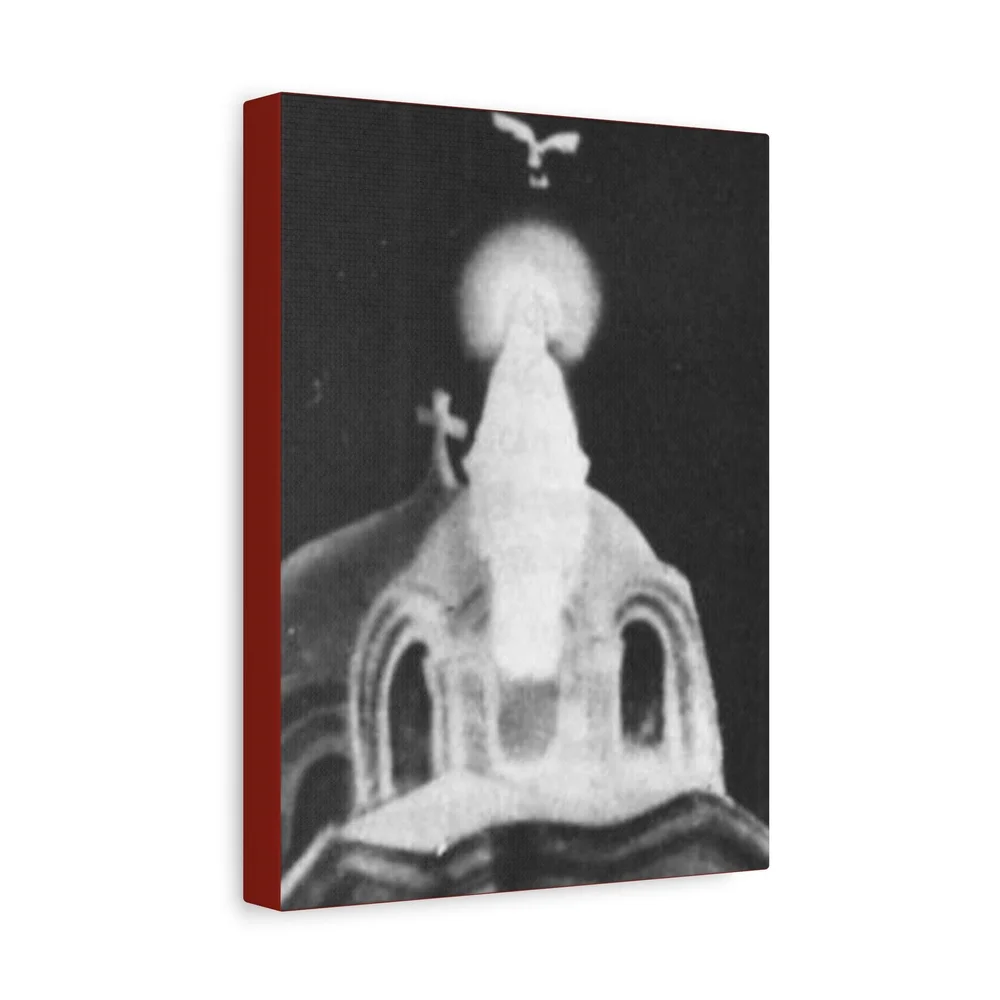
And unlike the vacated thrones of the fallen angels, Mary's place is not simply occupied. By the Church's constant teaching, she continues to act, appearing throughout history in approved apparitions to call the faithful back to prayer, repentance, and her Son. Those apparitions are never treated as new revelation added to Scripture, and no Christian is bound to believe in any specific one; but where the Church has approved them, they are read as an extension of exactly the maternal, intercessory role Scripture already assigns her, not a role invented apart from it.
Part X
So What Does This Mean for How You Live Today?
None of this needs to be treated as settled beyond question to be worth taking seriously; even at its most cautious reading, held only as a strongly attested theological opinion rather than a defined dogma, it reframes the question this article opened with. If eternity is the true scale of your existence, why does this brief life on earth matter at all? Because it is, in the tradition's own language, the space in which the one test angels were never given is administered: love and obedience offered without the direct vision that would make the choice easy.
The ordinary texture of a human life, the unremarkable Tuesday, the temptation resisted quietly with no one watching, the prayer said out of habit more than feeling, is not a distraction from the stakes. In this reading, it is the stakes. Every small, unglamorous act of faith is the kind of choosing an angel with total clarity was never asked to make, and it is, according to Augustine, Anselm, Aquinas, and the Church's own liturgical praise of Mary, the kind of choosing capable of raising a human being to stand in a place a rebellious angel refused to keep.
One Instant of Clarity. One Lifetime of Faith. Then the Choice Becomes Forever.
The comparison with the angels has one final consequence, and it may be the most important one in this whole article.
Their choice eventually became irrevocable. Ours will too.
Right now you can still change. You can repent. You can forgive. You can resist a sin you surrendered to yesterday. You can begin praying again after years away. You can receive grace, grow in charity, confess what you have done, repair what you have damaged, and become more united to God than you were when you woke up this morning. As long as you are alive, the application is still open. At death, it closes.
The Church teaches that death ends the period in which a human being can accept or reject the grace of God. Particular judgment follows. There is no second earthly life in which to reconsider your choices, no chance to go back and become the person you meant to become, no additional lifetime in which to accumulate the acts of faith, repentance, and charity you kept postponing. Purgatory can purify a soul that dies in friendship with God, but it does not reopen the period of earthly merit or hand someone who rejected God another life to choose differently in.
This is where the "job application" metaphor turns out to be more serious than it first sounds. The application can end two ways. There is Heaven. And there is Hell.
We do not speak about the second possibility as comfortably as Christians once did, but Christ certainly spoke about it. He warned about judgment, exclusion from the Kingdom, the narrow way, Gehenna, the outer darkness, and the terrible words "I never knew you; depart from me" (Matthew 7:23). Christianity does not permit us to treat Hell as an embarrassing medieval appendix to the Gospel. If human freedom is real enough for love to mean something, it is real enough for a human being to finally refuse the One he was created for.
Hell is not the unfortunate destination of someone who failed to accumulate enough spiritual points, and Heaven is not a salary God owes to anyone who completes enough religious tasks. Salvation begins and ends in grace, but grace does not destroy freedom. A person can spend a lifetime opening himself to God, repenting whenever he falls and letting grace transform him, or he can spend that same lifetime quietly closing himself off, until the refusal becomes the settled direction of his life. At death, there is no longer another tomorrow in which to reverse that direction.
Fr. Chad Ripperger describes death in strikingly Thomistic terms: at death the will becomes fixed, the opportunity for further earthly merit ends, and the degree of sanctifying grace attained during life is no longer something new choices can increase. For a soul that dies united to God, that means the work of earthly merit has reached its completion, and whatever degree of glory God grants is the degree that grace, freely cooperated with, actually earned. But the same finality cuts the other way too. For a soul that dies finally rejecting God, there is no later repentance that undoes the rejection. That is what makes Hell so terrifying. It is forever.
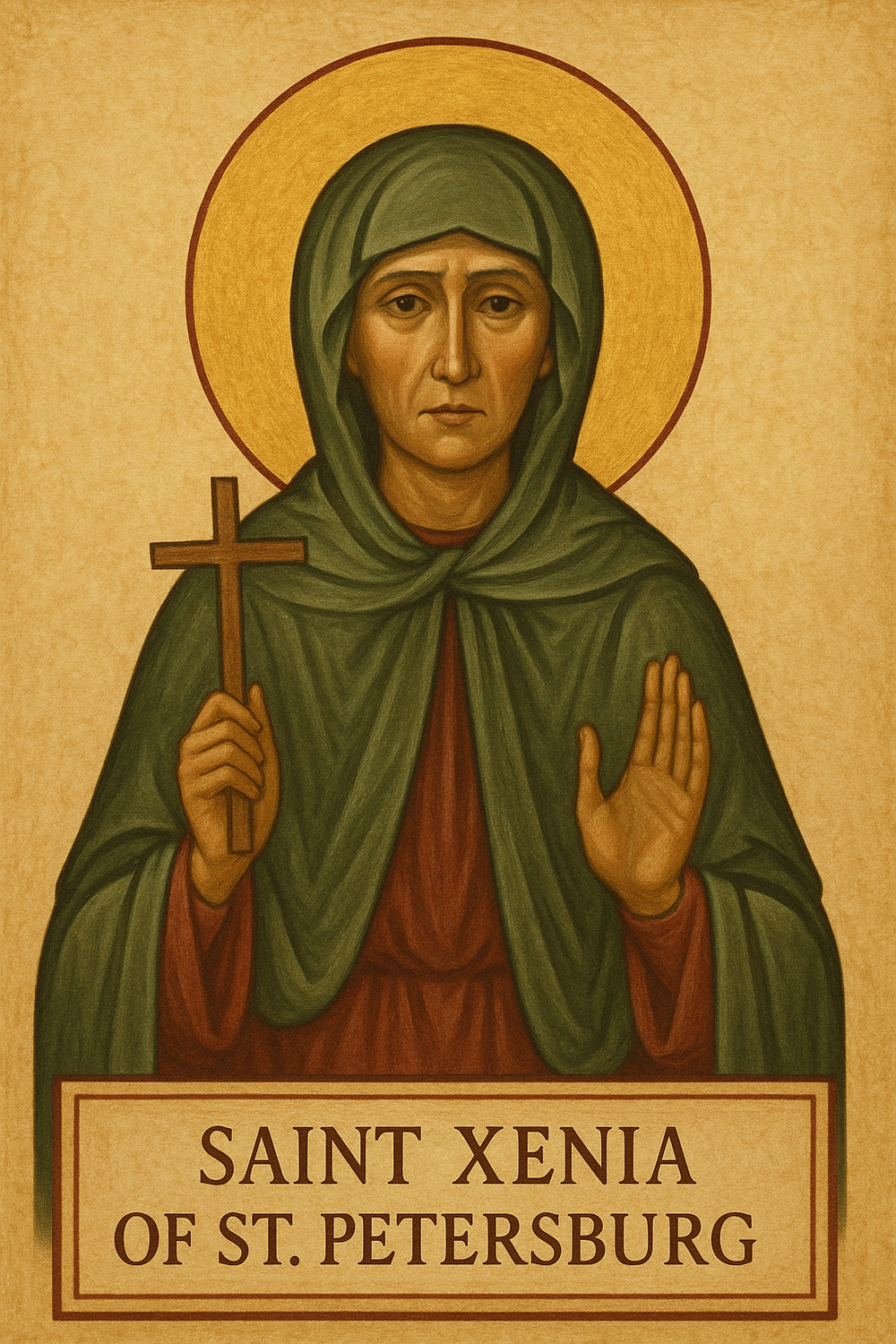
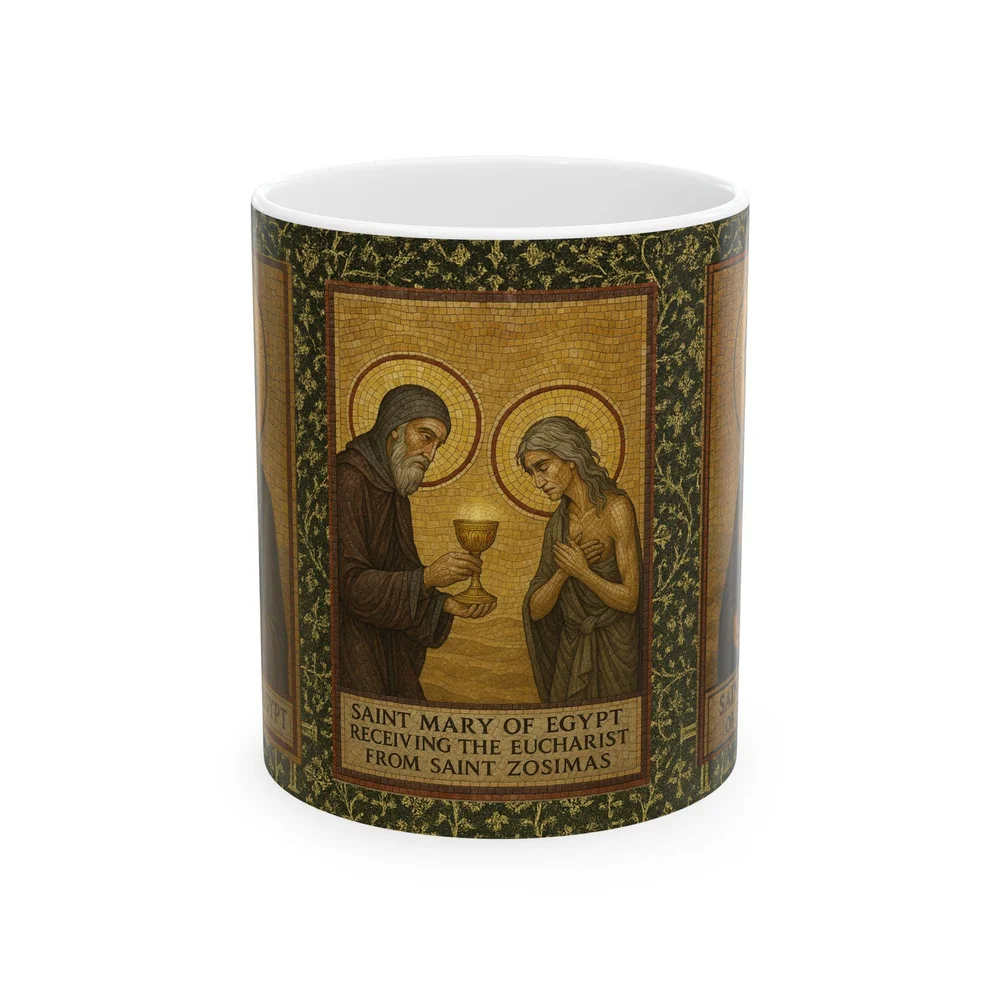
This is where the comparison with the angels comes full circle. The angels were given one moment of choice. They chose, and their wills became fixed. Some remained faithful. Others rebelled, and the Church teaches that decision is irrevocable. Human beings are given something astonishingly different: not one instantaneous act made with angelic clarity, but thousands of choices stretched across years. We can sin and repent, wander and return, fall and rise. Saint Moses the Black became something completely different from the violent man he once was. Saint Mary of Egypt walked out of a life of grave sin and spent the rest of hers transformed by grace. We can change because we are still alive.
But that extraordinary window has an ending. One day you will make your last earthly choice without knowing it was your last: a final confession made or postponed, a final temptation resisted or embraced, a final chance to forgive, a final Mass or Divine Liturgy, a final prayer, a final morning when you still had the power to change direction. After that, there are no more virtues you intended to acquire later, no prayers you planned to begin someday, no reconciliations you meant to get around to, no deeper surrender to God once life finally calmed down. The person who reaches that moment is the person whose earthly formation is complete.
Suddenly all those ordinary Tuesdays this article has kept returning to do not look ordinary anymore. The temptation resisted when nobody knew. The Mass attended when you felt nothing. The prayer whispered when God seemed absent. The person forgiven when resentment felt justified. The confession made when pride screamed at you not to go. The small act of charity nobody ever learned about. The decision, after falling for the thousandth time, to get up a thousand and first. That was the application.
And so were the opposite choices: the sin excused because there would always be time to repent later, the resentment nourished year after year, the prayer life set aside because earthly things felt more urgent, the person never forgiven because pride mattered more, the call of God answered again and again with "not yet." Those choices were forming someone too. The Christian life was never really a question of whether you count, on balance, as a good person. You are becoming someone who will exist forever, and every ordinary day is part of how.
Augustine said the redeemed would succeed to the places of the fallen angels. Aquinas taught that grace can raise a human being into the angelic orders. Christ promised the victor a seat with Him on His own throne. Paul called the redeemed heirs with Christ and said the saints would judge angels. The Church looks at Mary and calls one human being more honorable than the Cherubim, more glorious beyond compare than the Seraphim. That is one possible end of the human story. Christ also warned that a person can lose his soul. That is the other.
Perhaps "job application for Heaven" is still the right way to think about this life, as long as you understand how serious the application actually is. You are not applying for a higher or lower office in Heaven. You are living through the only period of your existence in which the direction of your eternity is still being worked out, through grace and freedom together. Heaven is not automatic. Hell is not imaginary. Death is not a reset button. And tomorrow is not promised.
Somewhere beyond death lies either the fulfillment you were created for, union with the God who made you and a glory Scripture says exceeds anything the human mind can presently imagine, or the terrible finality of having refused Him. Nothing this brief world can offer is worth gambling that away. So use the time you have. Repent while repentance is possible. Love while love can still cost you something. Forgive while forgiveness is still a choice. Pray while God remains unseen. Fight the sin you keep promising to fight later. Become, while becoming is still possible, the person you would want to be if you knew tonight you were going to meet Christ face to face.
Because eventually the last ordinary day arrives. The pen is put down. The application is submitted. The choice is fixed. And eternity begins. Your life on earth is over, all your deeds are done and weighed, you stand before Christ, you have submitted your application. But, which job or location have you spent your life applying for?
FAQ