Can God Still Speak Through Dreams Today? Yes — Here's the Biblical Evidence
The Biblical Answer — Dreams, Visions & the Living God
Can God Still Speak Through Dreams Today?
Yes — Here’s the Biblical Evidence
The question millions of Christians are asking — and the answer Scripture has been giving since Genesis. A complete survey of 40+ biblical examples, the theological case for why it hasn’t stopped, and what it means for your dream last night.
At a Glance
- Short answer
- Yes — explicitly promised in Joel 2:28 and confirmed throughout both Testaments
- Biblical examples
- 40+ recorded instances from Genesis through Acts
- Key text
- "Your old men will dream dreams, your young men will see visions" — Joel 2:28 / Acts 2:17
- Common objection
- "We have the Bible now — why do we need dreams?"
- Biblical answer
- Scripture never says dreams ceased; God is "the same yesterday, today, and forever"
- Next step
- When God Speaks in Dreams — the complete biblical guide
In This Article
You had a dream that felt different. Not the ordinary muddle of scenes from yesterday, not anxiety playing out in images — something else. Vivid. Weighted. The kind you still remember three days later with every detail intact. And somewhere between waking and breakfast, the question surfaced quietly: Was that from God?
It's one of the most honest questions a Christian can ask. And if you have ever felt slightly embarrassed to ask it — as though claiming God might speak through dreams was somehow too mystical, too charismatic, too much — this article is for you. Because the biblical answer to that question is not a cautious maybe. It is an emphatic yes, backed by more than four thousand years of documented divine communication.
God has spoken through dreams since the first pages of Genesis. He spoke through dreams when His people were enslaved in Egypt. He spoke through dreams at the birth of His Son. He spoke through dreams to launch the gospel into Europe. And the promise He made through the prophet Joel — that in the age of the Spirit, old men would dream dreams and young men would see visions — was quoted by the apostle Peter on the Day of Pentecost as being fulfilled now, in the era of the Church. That era has not ended. You are living in it.
This article presents the complete biblical case. Every significant example of God speaking through dreams across both Testaments. The theological reasoning that grounds the ongoing reality of this practice. The answers to the most serious objections. And the pastoral counsel for what to do with the dream you had last night.

When God Speaks in Dreams: A Biblical Guide to Christian Dream Interpretation
This article gives you the biblical foundation. The book takes you deeper — walking through every major biblical dream in full detail, explaining why God still speaks this way today, how to tell a divine dream from a natural one, and how to interpret what you receive using Scripture as your guide. If the dream you had this week is still with you, this is the next step.
Get the Book on Amazon →The Promise: Joel 2:28 and the Day It Was Fulfilled
Joel 2:28–29 • Acts 2:14–17 • Hebrews 13:8
The most important passage on this question was written by the prophet Joel around 800 BC — and quoted by the apostle Peter eight centuries later on the most consequential morning in the history of the Church.
On the morning of Pentecost, as the disciples spoke in languages they had never learned and onlookers concluded they were drunk, Peter stood up and gave the definitive interpretation. He did not reach for a new explanation. He reached for Joel: "No, this is what was spoken by the prophet Joel: 'In the last days, God says, I will pour out my Spirit on all people…'" (Acts 2:16-17). Peter was declaring: this is the moment Joel was describing. This outpouring is happening now. These dreams and visions are part of it.
The phrase "in the last days" is critical. It does not mean "in the final years before the end." In New Testament theology, the "last days" are the entire era between Pentecost and the Second Coming — the age of the Church, the age of the Spirit. It is the era you are living in right now. Joel's promise was not a brief introductory offer. It was a description of what the Spirit-filled age would be characterized by — prophecy, dreams, and visions among God's people.
Notice also the scope: "all people." Not a prophetic elite. Not a special class of visionaries. Sons and daughters. Old men and young men. Even servants. The deliberate breadth is the point: the Spirit-filled life — including the dream life — belongs to the entire community of those in whom the Spirit dwells.
And the God who gave that promise has not changed: "Jesus Christ is the same yesterday and today and forever" (Hebrews 13:8). The same Lord who spoke in dreams to the patriarchs, the prophets, and the early Church is alive and active today. There is no biblical warrant for the claim that His communication has narrowed since the apostolic era. The question is not whether God can still speak through dreams. The question — the only question — is how to recognize it and respond faithfully when He does.
Part II
Old Testament: The Complete Survey
From Genesis to Daniel — every major divine dream in the Hebrew Scriptures
The biblical record of God speaking through dreams is not scattered or incidental. It is consistent, purposeful, and spans every major period of Old Testament history — the patriarchs, the judges, the kings, and the prophets. Here is the complete survey organized by era.
The Patriarchs: Abraham, Isaac, Jacob, Joseph
God came to a pagan king in a dream to warn him that Sarah was Abraham's wife, averting sin and protecting Abraham's family. The very first dream recorded in the Bible is God speaking to a non-believer — establishing that His reach through dreams is not limited to the faithful.
Fleeing his brother and sleeping on bare ground, Jacob dreamed of a stairway reaching heaven with angels ascending and descending. God stood above it and renewed the Abrahamic covenant directly to Jacob. "Surely the Lord is in this place, and I was not aware of it." A divine dream at the moment of greatest personal despair.
An angel of God appeared to Jacob in a dream instructing him to return to his homeland. In the same episode, God also warned Laban in a dream not to harm Jacob — using dreams on both sides of a family conflict to ensure His servant's safe passage.
As a teenager, Joseph received two dreams of his future prominence — his brothers' sheaves bowing to his, then the sun, moon, and eleven stars bowing to him. They made no sense for seventeen years. Then, in Egypt, they were fulfilled exactly. Prophetic dreams can carry their meaning in seed form, to be understood only in hindsight.
Both men dreamed in prison and both dreams were interpreted by Joseph with startling precision: the cupbearer would be restored in three days, the baker executed. Both came to pass exactly as Joseph said, and Joseph's interpretation became the path to his release and ultimate elevation.
Two dreams, the same message: seven years of plenty followed by seven years of famine. Joseph told Pharaoh: "God has revealed to Pharaoh what He is about to do." Pharaoh acted on the interpretation, appointed Joseph as his second-in-command, and saved Egypt and the surrounding nations from starvation. A single dream, faithfully interpreted, changed the course of world history.
The Judges and Early Kings: Gideon and Solomon
Gideon, timid before a vastly superior army, overheard an enemy soldier describing his dream of a barley loaf tumbling into the Midianite camp and collapsing it. The soldier's companion interpreted it as God's promise of Israel's victory. Gideon worshipped God, gained courage, and won the battle. God spoke to a non-believer about a believer — and intended it to be overheard.
"At Gibeon the Lord appeared to Solomon during the night in a dream, and God said, 'Ask for whatever you want me to give you.'" Solomon asked for wisdom. God gave it — along with wealth and honor — and Solomon woke to discover that what was given in a dream was real in his waking life. A dream as the site of a life-transforming encounter with the living God.
The Exile: Nebuchadnezzar, Daniel, and the Prophets
The Babylonian king dreamed of a colossal statue of gold, silver, bronze, iron, and clay — shattered by a supernatural rock. Daniel declared: "There is a God in heaven who reveals mysteries" (Daniel 2:28). The dream was a prophecy of successive world empires and the ultimate Kingdom of God. Its fulfillments have been traced across centuries of history.
A second prophetic dream — a vast tree cut down to a stump — warned Nebuchadnezzar that he would lose his sanity until he acknowledged God's sovereignty. He ignored the warning. The dream came to pass exactly. Seven years later, humbled, Nebuchadnezzar "praised the Most High" and acknowledged God's eternal kingdom. A dream of warning, ignored at great cost.
Daniel himself received night visions — four great beasts rising from a churning sea, representing future world empires, culminating in "one like a son of man" coming with the clouds of heaven and receiving dominion, glory, and kingdom. Jesus used this language to describe Himself at His trial (Matthew 26:64), confirming that Daniel's night visions pointed to the Messiah.
Not a single dream but the defining promise about dreams: "Your old men will dream dreams, your young men will see visions." Spoken before the outpouring of the Spirit, quoted at Pentecost, active now. Every Christian's dream life exists within the promise of Joel 2:28 — a promise God made and has not withdrawn.
New Testament: Dreams in the Era of Christ and the Early Church
Matthew 1–2 • Matthew 27:19 • Acts 16:9 • Acts 18:9–10
Some Christians assume that the pattern of God speaking through dreams belongs to the "old covenant era" — that once Jesus came and the Bible was completed, such communication was no longer needed. The New Testament contradicts this directly. The birth of Jesus, the preservation of the infant Messiah, the spread of the gospel into Europe — all were guided in part through divine dreams.
Joseph planned to quietly end his engagement to Mary. An angel appeared in a dream: "Do not be afraid to take Mary as your wife, because what is conceived in her is from the Holy Spirit." Joseph woke and obeyed immediately. Without this dream, the story of Jesus' birth would have unfolded differently. God chose sleep to deliver the most consequential message in human history.
"Get up, take the child and his mother and escape to Egypt. Herod is going to search for the child to kill him." Joseph left that night. His immediate, middle-of-the-night obedience to a dream was the human action that stood between Herod's soldiers and the infant Messiah. The incarnation of the Son of God was protected by a man who trusted what God said in a dream.
After Herod's death, an angel appeared again in a dream: "Return to Israel." On the way, one more dream warned Joseph to avoid Judea and settle instead in Galilee — leading the family to Nazareth, fulfilling prophecy. Four separate dreams guided every major movement of Jesus' early life. God provided step-by-step direction through an ordinary man who listened while he slept.
"Having been warned in a dream not to go back to Herod, they returned to their country by another route." These were non-Jewish astrologers from the East — yet God spoke to them in a dream to protect His Son. It was their obedience to a dream that bought the holy family time before Herod realized they were not returning.
"Don't have anything to do with that innocent man, for I have suffered a great deal today in a dream because of him." A pagan Roman woman received a dream on the morning of the crucifixion testifying to Jesus' innocence. Even at the hour of the cross, God was speaking through dreams — to testify to the truth, even when no one would act on it.
"During the night Paul had a vision of a man of Macedonia standing and begging him, 'Come over to Macedonia and help us.'" Paul concluded God was calling him there. He sailed immediately. The result: the gospel's first foothold in Europe — Philippi, Thessalonica, Berea, Athens, Corinth. The Macedonian vision changed the direction of Western civilization.
"Do not be afraid; keep on speaking, do not be silent. For I am with you." Paul was discouraged, facing serious opposition in Corinth. The Lord spoke to him at night — possibly in a dream or vision. Paul stayed for eighteen months, founding one of the most influential churches in early Christianity. A night message gave him the courage to keep going.
Shipwrecked and fearing for their lives, Paul announced: "Last night an angel of the God to whom I belong and whom I serve stood beside me and said, 'Do not be afraid, Paul. You must stand trial before Caesar; and God has graciously given you the lives of all who sail with you.'" God's messengers come in the night — not only to prophets but to missionaries in storms.
Part IV
Answering the Theological Objections
Hebrews 1:1–2 • 2 Timothy 3:16–17 • 1 Thessalonians 5:20–21
The most serious objections to God speaking through dreams today come not from skeptics but from within the Church — from well-intentioned Christians who want to protect the authority of Scripture. These objections deserve honest answers, not dismissal.
Part V
Five Reasons God Uses Dreams
Job 33:14–15 • Matthew 1:20 • Acts 18:9–10 • Joel 2:28
Even granting that God can speak through dreams, why would He choose this method? What is it about the sleeping mind that makes it a vehicle for divine communication? Scripture and pastoral experience suggest five consistent reasons.
Our waking lives are saturated with noise, distraction, and the constant management of impression. When we sleep, our arguing and over-analyzing stops. "In a dream, in a vision of the night, when deep sleep falls on people as they slumber in their beds… God speaks" (Job 33:14-15). The sleeping mind is simply quieter — and God knows how to reach a heart that is finally still. This is why the prayer of the heart tradition speaks so highly of inner silence: the same openness cultivated in prayer is the openness present in sleep.
When Joseph was agonizing over Mary's pregnancy, God sent the angelic message not through a daytime prophet but through a nighttime dream — when the troubled man was finally at rest and able to hear: "Do not be afraid" (Matthew 1:20). What a compassionate Father, who visits His anxious child while the child sleeps. When Paul was discouraged and considering abandoning Corinth, the night visit came with the same comfort: "Do not be afraid; keep on speaking" (Acts 18:9). God meets us in the vulnerable midnight hours when ordinary consolation isn't enough.
Job 33:16-17 continues: God speaks in dreams "to turn a person from wrongdoing and keep them from pride, to preserve them from the pit." Sometimes we are stubborn, distracted, or too invested in a wrong direction to receive correction during the day. A dream can reach the heart in a way that gets through when nothing else has. This is mercy in the most literal form — God using whatever channel is available to prevent us from walking off a cliff we haven't seen yet.
Abimelech, Pharaoh, Nebuchadnezzar, Pilate's wife, the Magi — all Gentiles, none of them in covenant relationship with Israel's God. All of them received divine messages in dreams. This pattern has continued throughout Church history and continues today: documented cases of people in closed countries and unreached people groups encountering Christ through dreams before they had ever met a Christian or held a Bible. God's mercy reaches where His messengers cannot yet go.
When you wake from a dream and realize that the Almighty cared enough to visit you personally in the quiet of the night, it changes something. King David wrote, "You have visited me in the night" (Psalm 17:3) — he was aware of God's presence even in sleep. A divine dream is not a communication system being operated remotely; it is a Father slipping close to a sleeping child to whisper something important. Its purpose, always, is to draw you more fully into love, trust, and obedience. That is why the Philokalia's masters of inner prayer never dismissed the dream life — they simply insisted it be held in the same sobriety as every other form of spiritual experience.
Joseph the carpenter did not receive a single comprehensive briefing about the Incarnation, the flight to Egypt, and the return to Galilee. He received four dreams, each arriving at the right moment with the precise instruction needed for that moment: take Mary as your wife; flee now; return now; avoid Judea. This is how God often guides in dreams — not the whole map at once, but the next step, given when the next step is needed. It requires a life of ongoing attentiveness, which is exactly why a consistent prayer rule and the discipline of watchfulness matter so much.
When God Speaks in Dreams: A Biblical Guide to Christian Dream Interpretation
This article makes the case that God still speaks through dreams. The book equips you to respond faithfully when He does. It covers every biblical example in full narrative detail, gives you a practical five-step interpretation framework rooted in Scripture, explains what the Holy Spirit's specific role in interpretation is, provides a complete A-to-Z biblical symbol glossary, and devotes a full chapter to what to do when you simply don't understand a dream. Everything you need — in one biblically grounded guide.
Order on Amazon →The Church’s Witness: From the Desert Fathers to the Present Day
Eastern Christian tradition • Hesychasm • Modern missionary accounts
The biblical record does not end with the close of the canon. Throughout Church history, in every era and on every continent, credible witnesses have reported receiving divine guidance, warning, or encouragement through dreams. The pattern Joel promised has not been interrupted.
The Desert Fathers and Mothers of the Egyptian and Syrian wilderness in the third and fourth centuries treated the discernment of dreams as a serious spiritual discipline — neither dismissing them as meaningless nor accepting them uncritically. Their writings reflect a deep pastoral wisdom about how God's communications and demonic counterfeits can appear in sleep, and the sobriety required to tell them apart. Their approach was not anxiety but nepsis — vigilant attentiveness — the same quality cultivated in the Jesus Prayer tradition.
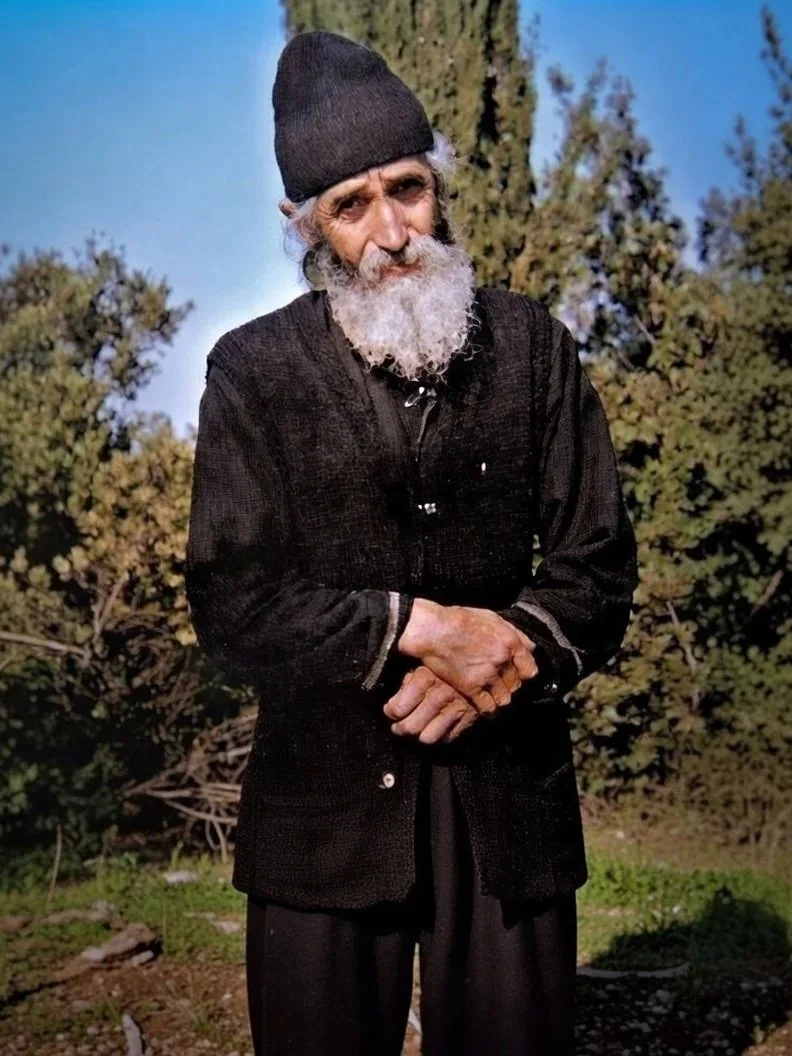
Saint Paisios the Athonite
1924–1994 • Mount Athos, Greece Orthodox SaintSaint Paisios of Mount Athos is one of the most beloved Orthodox saints of the twentieth century. Among the gifts attributed to him were prophecy and the ability to see spiritual realities hidden from others. People came to him from across the world seeking guidance, and he was known for knowing things about visitors that he had no natural way of knowing.
Paisios spoke carefully about dreams and visions, consistently urging humility and caution. He was aware that spiritual immaturity made a person vulnerable to both self-deception and demonic influence in the dream life. But he never denied the reality of genuine divine communication through dreams. His counsel was not "never pay attention to dreams" — it was "do not seek them, do not be attached to them, bring them immediately to prayer and Scripture, and wait for confirmation." This is the wisdom of the tradition he inherited from the Desert Fathers — and it is the same wisdom Scripture teaches.
In the modern mission field, accounts of people encountering Christ through dreams before any Christian contact are among the most documented and consistent patterns in world missions. In regions closed to traditional evangelism — parts of the Middle East, North Africa, Central Asia — missionaries consistently report meeting people whose journey to faith began with a dream of a man in white who told them, "Seek Me." These are not charismatic excesses; they are the Joel 2:28 promise operating in its most elemental form: God speaking to those His Spirit wishes to reach, through the one channel that requires no missionary, no Bible, and no open country.
The same God who guided Joseph to Egypt and Paul to Macedonia is guiding seekers in closed countries to the gospel through their sleep. The pattern has not changed. The geography has.
What This Means for the Dream You Had Last Night
Practical application • 1 Thessalonians 5:20–21 • John 16:13
The biblical case is clear. But cases don't interpret dreams. The Holy Spirit does — through prayer, Scripture, time, and community. Here is what to do next.
Write it down. Before the morning fully arrives, capture every detail you remember. The images, the tone, any words spoken, the setting, who was present, and how it made you feel. You cannot evaluate what you cannot clearly remember. This is the first practical act of taking a dream seriously.
Bring it to God, not the internet. The first question is not "what does this symbol mean?" It is "Lord, was this from You?" Take it to prayer. Ask Him to confirm if it was His communication or to release you from it if it was not. A simple prayer: "Lord, if this dream was from You, keep it with me and give me understanding. If it was not, I release it." Then pay attention to what happens in your spirit as you pray.
Test it against Scripture. Does the dream's core message align with the character of God as revealed in His Word? Does it encourage faith, love, repentance, obedience? Or does it justify sin, produce fear without resolution, or push you away from the community of faith? The Bible is the non-negotiable measure — and the biblical dream symbols the dream may contain can be explored through Scripture, not through secular dream dictionaries.
Seek counsel if it seems significant. A dream that appears to call you to a major decision or carries an urgent message should be shared with a pastor or mature Christian before any action is taken. God's genuine communications are not threatened by examination. If the dream's message cannot withstand the loving scrutiny of a wise believer, that is information too.
Give it time. Joseph waited seventeen years between his prophetic dreams and their fulfillment. Not every divine dream is a call to immediate action. Most are seeds — planted in sleep, to be understood more fully as you walk faithfully with God and watch what unfolds. "He will guide you into all the truth" (John 16:13) — not always in the morning, but always in time.
Orthodox Prayer Card — $3.00
Saint Paisios the Athonite
The great modern elder of Mount Athos — beloved for his gifts of discernment, prophecy, and supernatural insight. A powerful intercessor for those seeking to hear God's voice clearly.
Get the Card →
Orthodox Prayer Card — $3.00
Saint Gabriel of Georgia
A 20th-century fool for Christ known for prophetic gifts and the ability to see through spiritual darkness. His life witnesses that the charisms of the early Church remain active today.
Get the Card →
Orthodox Prayer Card — $3.00
Saint Xenia of St. Petersburg
A fool for Christ whose life of radical abandonment was accompanied by prophetic gifts. A beloved Russian saint who demonstrates the living reality of God's Spirit at work in ordinary people.
Get the Card →Lord, Speak — I Am Listening
Lord Jesus Christ, You promised that when the Spirit of truth comes, He will guide us into all the truth. You promised that old men would dream dreams and young men would see visions in the age of the Spirit. You are keeping that promise right now, tonight, in the lives of those who belong to You.
Open my ears to Your voice — in prayer, in Scripture, in the counsel of Your people, and yes, if You choose, in the quiet of sleep. Give me the humility to test what I receive, the courage to act on what You confirm, and the patience to wait for understanding when it does not come immediately.
Guard me from deception, from the counterfeit voices that speak when I am vulnerable, and from the pride that would prefer my own imagination to Your instruction. Let every dream that is truly from You lead me toward You — and let everything else fall away like the natural noise of a busy mind.
Pray this before sleep as an act of intentional openness — and upon waking, when a dream remains with you and you are wondering whether God was speaking.
Frequently Asked Questions
Can God Speak Through Dreams? Common Questions Answered
He Spoke in the Night Then.
He Is Speaking Now.
The God who visited Jacob in the wilderness, who guided Joseph through four dreams in a row, who launched the gospel into Europe through a single night vision, has not gone silent. He is "the same yesterday, today, and forever" — and the promise He made through Joel, confirmed by Peter at Pentecost, is alive and active in the age of the Spirit you are living in right now.
The question is not whether God can speak through dreams. The question is whether you are equipped to recognize His voice when He does — and to respond faithfully when it comes. When God Speaks in Dreams equips you for exactly that.
Get the Book on Amazon →Browse our Orthodox and Catholic prayer cards for saints known for prophecy and discernment — $3.00 each.
Browse Prayer Cards →