The Didache: Full Text With Commentary on the Teaching of the Twelve Apostles
Full Text • 16 Chapters • Commentary After Every Chapter
The Didache: Full Text With Commentary on the Teaching of the Twelve Apostles
The Didache is one of the oldest Christian writings outside the New Testament: a short manual of moral teaching, baptism, fasting, prayer, the Eucharist, and church order. This page gives the whole text in English with commentary on each chapter, and explains how the Churches have used it.
The Didache at a Glance
- What It Is
- A short early Christian manual in 16 chapters, also called the Teaching of the Twelve Apostles • About 2,300 words
- Date
- Usually placed between the late first century and the early second century • Scholars disagree, and some argue for an earlier date
- Place
- Often thought to come from Syria or a nearby region • Not certain
- Main Contents
- The Two Ways • Baptism • Fasting and prayer • Eucharistic prayers • Prophets and bishops • The end of the age
- Status
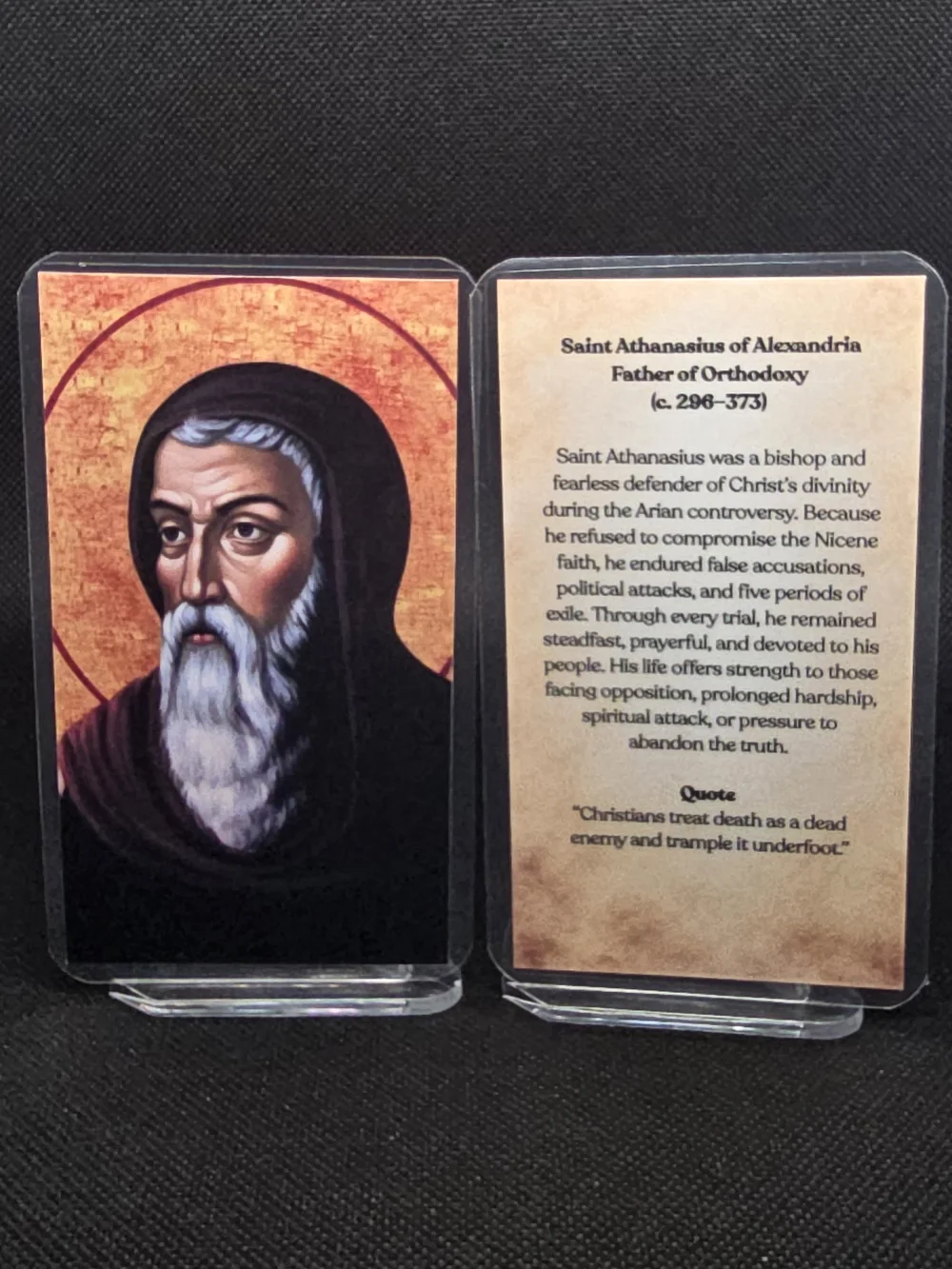
- Not part of the New Testament in any major Church • Eusebius listed it among books outside the canon, and Athanasius said it was suitable for catechumens
- Translation Used
- M.B. Riddle, from the Ante-Nicene Fathers, Volume 7 (1886), in the public domain
What the Didache Is and How It Was Found
“Didache” is the Greek word for “teaching.” The full title in the manuscript is “The Teaching of the Lord Through the Twelve Apostles to the Nations,” and the work is also called the Teaching of the Twelve Apostles. It does not claim to be written by the apostles, and no author is named.
Ancient references. The Didache was known to the early Church. Eusebius of Caesarea, in the fourth century, lists a work called the Teachings of the Apostles among books that are not in the New Testament, and Saint Athanasius, in his Festal Letter of 367, names it among books outside the canon that are appointed to be read to new converts. The text itself was then lost to the West for many centuries.
The modern discovery. In 1873 Philotheos Bryennios, later Metropolitan of Nicomedia, found a Greek manuscript containing the Didache in the library of the Monastery of the Holy Sepulchre in Constantinople. He published it in 1883. The manuscript was copied in the year 1056. Smaller Greek and Coptic fragments from Egypt, and later versions in other languages, confirm that the text circulated widely.
Date and place. Scholars disagree. Most place the work between the late first century and the early second century, and some argue that parts of it are as early as the middle of the first century. A Syrian origin is often proposed, but it cannot be proved. The text appears to have been put together from earlier material, including the Two Ways teaching in chapters 1 to 6.
How to read it. The Didache is not Scripture, and the Churches do not treat it as such. It is a witness to how an early community prayed and ordered its life. It sits among the writings known as the Apostolic Fathers, with the letters of Saint Ignatius of Antioch, the letter of Clement, and the Epistle of Barnabas.
The Text
The Sixteen Chapters at a Glance
| Chapter | Title | What it covers |
|---|---|---|
| 1 | The Two Ways; The First Commandment | The Two Ways, love of God and neighbor, and the Golden Rule |
| 2 | The Second Commandment: Gross Sin Forbidden | The second commandment: murder, adultery, magic, abortion, and sins of the tongue |
| 3 | Other Sins Forbidden | Small sins that lead to great ones, and the meek who inherit the earth |
| 4 | Various Precepts | Honoring teachers, giving alms, confession, and the way of life |
| 5 | The Way of Death | The way of death: a list of vices |
| 6 | Against False Teachers, and Food Offered to Idols | Against false teachers, the yoke of the Lord, and food offered to idols |
| 7 | Concerning Baptism | Baptism in the name of the Father, the Son, and the Holy Spirit |
| 8 | Concerning Fasting and Prayer (the Lord's Prayer) | Fasting on Wednesday and Friday, and the Lord's Prayer three times a day |
| 9 | The Thanksgiving (Eucharist) | The prayers over the cup and the broken bread |
| 10 | Prayer After Communion | The prayer after the meal, and the cry Maran atha |
| 11 | Concerning Teachers, Apostles, and Prophets | How to receive teachers, apostles, and prophets |
| 12 | Reception of Christians | Receiving travelers and the rule against idleness |
| 13 | Support of Prophets | Support for prophets and teachers, and the first-fruits |
| 14 | Christian Assembly on the Lord's Day | Gathering on the Lord's Day, confession, and the pure sacrifice |
| 15 | Bishops and Deacons; Christian Reproof | Bishops, deacons, and correcting one another |
| 16 | Watchfulness; The Coming of the Lord | Watchfulness and the coming of the Lord |
A note on the text. The English below is the Riddle translation from the Ante-Nicene Fathers, Volume 7 (1886), edited by Alexander Roberts, James Donaldson, and A. Cleveland Coxe. It is in the public domain. The words in parentheses are Riddle’s own. The small bracketed references are scripture parallels, as shown on New Advent’s reproduction of that edition. Each chapter is one unit in the original, and has been broken into shorter paragraphs here for reading.
The prologue reads: “The Lord’s Teaching Through the Twelve Apostles to the Nations.”
Part II
The Two Ways
Chapter 1. The Two Ways; The First Commandment
The Two Ways, love of God and neighbor, and the Golden Rule
There are two ways, one of life and one of death; but a great difference between the two ways. The way of life, then, is this: First, you shall love God who made you; second, your neighbour as yourself; and all things whatsoever you would should not occur to you, do not also do to another. And of these sayings the teaching is this: Bless those who curse you, and pray for your enemies, and fast for those who persecute you.
For what reward is there, if you love those who love you? Do not also the Gentiles do the same? But love those who hate you, and you shall not have an enemy. Abstain from fleshly and worldly lusts. If someone gives you a blow upon your right cheek, turn to him the other also, and you shall be perfect. If someone impresses you for one mile, go with him two.
If someone takes away your cloak, give him also your coat. If someone takes from you what is yours, ask it not back, for indeed you are not able. Give to every one that asks you, and ask it not back; for the Father wills that to all should be given of our own blessings (free gifts). Happy is he that gives according to the commandment; for he is guiltless.
Woe to him that receives; for if one having need receives, he is guiltless; but he that receives not having need, shall pay the penalty, why he received and for what, and, coming into straits (confinement), he shall be examined concerning the things which he has done, and he shall not escape thence until he pay back the last farthing. [Matthew 5:26] But also now concerning this, it has been said, Let your alms sweat in your hands, until you know to whom you should give.
The opening is not original to the Didache. The picture of two paths, one of life and one of death, comes from the Old Testament (Deuteronomy 30:15 and Jeremiah 21:8) and appears in other early Christian and Jewish writings, including the Epistle of Barnabas and a Dead Sea Scrolls rule. The first six chapters are best read as a short moral catechism for new converts, set out before baptism in chapter 7.
Two features are worth noting. The Golden Rule is given in its negative form, and the text adds a saying about almsgiving that is not found in the Gospels: “Let your alms sweat in your hands, until you know to whom you should give.”
Chapter 2. The Second Commandment: Gross Sin Forbidden
The second commandment: murder, adultery, magic, abortion, and sins of the tongue
And the second commandment of the Teaching; You shall not commit murder, you shall not commit adultery, [Exodus 20:13-14] you shall not commit pederasty, you shall not commit fornication, you shall not steal, [Exodus 20:15] you shall not practice magic, you shall not practice witchcraft, you shall not murder a child by abortion nor kill that which is begotten. You shall not covet the things of your neighbour, [Exodus 20:17] you shall not forswear yourself, [Matthew 5:34] you shall not bear false witness, [Exodus 20:16] you shall not speak evil, you shall bear no grudge.
You shall not be double-minded nor double-tongued; for to be double-tongued is a snare of death. Your speech shall not be false, nor empty, but fulfilled by deed. You shall not be covetous, nor rapacious, nor a hypocrite, nor evil disposed, nor haughty. You shall not take evil counsel against your neighbour. You shall not hate any man; but some you shall reprove, and concerning some you shall pray, and some you shall love more than your own life.
The commandments here follow the second table of the Ten Commandments and then widen. The ban on abortion and infanticide (“you shall not murder a child by abortion nor kill that which is begotten”) is among the earliest explicit statements of the Christian position outside the New Testament, and it is repeated in the Epistle of Barnabas. The translation here says “pederasty” where other translators use other words for the Greek term.
Chapter 3. Other Sins Forbidden
Small sins that lead to great ones, and the meek who inherit the earth
My child, flee from every evil thing, and from every likeness of it. Be not prone to anger, for anger leads the way to murder; neither jealous, nor quarrelsome, nor of hot temper; for out of all these murders are engendered. My child, be not a lustful one; for lust leads the way to fornication; neither a filthy talker, nor of lofty eye; for out of all these adulteries are engendered.
My child, be not an observer of omens, since it leads the way to idolatry; neither an enchanter, nor an astrologer, nor a purifier, nor be willing to look at these things; for out of all these idolatry is engendered. My child, be not a liar, since a lie leads the way to theft; neither money-loving, nor vainglorious, for out of all these thefts are engendered. My child, be not a murmurer, since it leads the way to blasphemy; neither self-willed nor evil-minded, for out of all these blasphemies are engendered.
But be meek, since the meek shall inherit the earth. [Matthew 5:5] Be long-suffering and pitiful and guileless and gentle and good and always trembling at the words which you have heard. You shall not exalt yourself, [Luke 18:14] nor give over-confidence to your soul. Your soul shall not be joined with lofty ones, but with just and lowly ones shall it have its intercourse. The workings that befall you receive as good, knowing that apart from God nothing comes to pass.
The teacher addresses the reader as “my child,” in the manner of the Book of Proverbs. The argument is that anger leads to murder, lust to adultery, and omens to idolatry. Each small sin is placed on a path, which fits the image of the Two Ways: a person does not fall into the way of death all at once.
Chapter 4. Various Precepts
Honoring teachers, giving alms, confession, and the way of life
My child, him that speaks to you the word of God remember night and day; and you shall honour him as the Lord; for in the place whence lordly rule is uttered, there is the Lord. And you shall seek out day by day the faces of the saints, in order that you may rest upon their words. You shall not long for division, but shall bring those who contend to peace.
You shall judge righteously, you shall not respect persons in reproving for transgressions. You shall not be undecided whether it shall be or no. Be not a stretcher forth of the hands to receive and a drawer of them back to give. If you have anything, through your hands you shall give ransom for your sins. You shall not hesitate to give, nor murmur when you give; for you shall know who is the good repayer of the hire.
You shall not turn away from him that is in want, but you shall share all things with your brother, and shall not say that they are your own; for if you are partakers in that which is immortal, how much more in things which are mortal? You shall not remove your hand from your son or from your daughter, but from their youth shall teach them the fear of God.
[Ephesians 6:4] You shall not enjoin anything in your bitterness upon your bondman or maidservant, who hope in the same God, lest ever they shall fear not God who is over both; [Ephesians 6:9]; [Colossians 4:1] for he comes not to call according to the outward appearance, but unto them whom the Spirit has prepared. And you bondmen shall be subject to your masters as to a type of God, in modesty and fear.
[Ephesians 6:5]; [Colossians 3:22] You shall hate all hypocrisy and everything which is not pleasing to the Lord. Forsake in no way the commandments of the Lord; but you shall keep what you have received, neither adding thereto nor taking away therefrom. [Deuteronomy 12:32] In the church you shall acknowledge your transgressions, and you shall not come near for your prayer with an evil conscience. This is the way of life.
Two points here shape the rest of the book. First, the reader is to honor the one who speaks the word of God “as the Lord,” and to seek out “day by day the faces of the saints.” Second, confession is placed before prayer: “In the church you shall acknowledge your transgressions, and you shall not come near for your prayer with an evil conscience.” The same link between confession and the offering returns in chapter 14.
Chapter 5. The Way of Death
The way of death: a list of vices
And the way of death is this: First of all it is evil and full of curse: murders, adulteries, lusts, fornications, thefts, idolatries, magic arts, witchcrafts, rapines, false witnessings, hypocrisies, double-heartedness, deceit, haughtiness, depravity, self-will, greediness, filthy talking, jealousy, over-confidence, loftiness, boastfulness; persecutors of the good, hating truth, loving a lie, not knowing a reward for righteousness, not cleaving to good nor to righteous judgment, watching not for that which is good, but for that which is evil; from whom meekness and endurance are far, loving vanities, pursuing requital, not pitying a poor man, not labouring for the afflicted, not knowing Him that made them, murderers of children, destroyers of the handiwork of God, turning away from him that is in want, afflicting him that is distressed, advocates of the rich, lawless judges of the poor, utter sinners. Be delivered, children, from all these.
Where chapters 1 to 4 describe the way of life in positive commands, chapter 5 gives only a list of vices, in the style of Paul’s lists in Galatians 5 and Romans 1. The list ends with a plea: “Be delivered, children, from all these.”
Chapter 6. Against False Teachers, and Food Offered to Idols
Against false teachers, the yoke of the Lord, and food offered to idols
See that no one cause you to err from this way of the Teaching, since apart from God it teaches you. For if you are able to bear all the yoke of the Lord, you will be perfect; but if you are not able, what you are able that do. And concerning food, bear what you are able; but against that which is sacrificed to idols be exceedingly on your guard; for it is the service of dead gods.
The catechism closes with a realistic note. The reader is told, “if you are able to bear all the yoke of the Lord, you will be perfect; but if you are not able, what you are able that do,” and to be careful about meat offered to idols. This has led some scholars to think the text was written for Gentile converts who were not expected to keep the whole Jewish law.
Part III
Baptism, Fasting, and Prayer
Chapter 7. Concerning Baptism
Baptism in the name of the Father, the Son, and the Holy Spirit
And concerning baptism, baptize this way: Having first said all these things, baptize into the name of the Father, and of the Son, and of the Holy Spirit, [Matthew 28:19] in living water. But if you have not living water, baptize into other water; and if you can not in cold, in warm. But if you have not either, pour out water thrice upon the head into the name of Father and Son and Holy Spirit.
But before the baptism let the baptizer fast, and the baptized, and whatever others can; but you shall order the baptized to fast one or two days before.
This is the earliest known set of instructions for baptism outside the New Testament. It names the Father, the Son, and the Holy Spirit, and it gives a clear order of preference for the water: baptize in living (running) water if possible, in other cold water if not, and in warm water if cold is unavailable. If there is not enough water, pour it on the head three times. The baptizer and the candidate are told to fast beforehand, with others who can.
Compare Matthew 28:19. The Eastern Churches still baptize by threefold immersion, and Orthodox and Byzantine Catholic parishes also chrismate and commune infants at the same service.
Chapter 8. Concerning Fasting and Prayer (the Lord's Prayer)
Fasting on Wednesday and Friday, and the Lord's Prayer three times a day
But let not your fasts be with the hypocrites; [Matthew 6:16] for they fast on the second and fifth day of the week; but fast on the fourth day and the Preparation (Friday). Neither pray as the hypocrites; but as the Lord commanded in His Gospel, thus pray: Our Father who art in heaven, hallowed be Your name. Your kingdom come. Your will be done, as in heaven, so on earth.
Give us today our daily (needful) bread, and forgive us our debt as we also forgive our debtors. And bring us not into temptation, but deliver us from the evil one (or, evil); for Yours is the power and the glory forever. Thrice in the day thus pray.
The instruction to fast on Wednesday and Friday, and not on Monday and Thursday as “the hypocrites” do, is the origin of the weekly fasts that the Eastern Churches still keep. Whether the “hypocrites” are a Jewish group or simply a literary foil is debated. For the fasting rules as they are kept today, see our article on Eastern Christian fasting.
The Lord’s Prayer here follows Matthew’s form and ends with the doxology “for Yours is the power and the glory forever,” which is not in the best manuscripts of Matthew, though it is the ending used in the Eastern liturgies. The reader is told to pray it three times a day.
Part IV
The Thanksgiving
Chapter 9. The Thanksgiving (Eucharist)
The prayers over the cup and the broken bread
Now concerning the Thanksgiving (Eucharist), thus give thanks. First, concerning the cup: We thank you, our Father, for the holy vine of David Your servant, which You made known to us through Jesus Your Servant; to You be the glory forever. And concerning the broken bread: We thank You, our Father, for the life and knowledge which You made known to us through Jesus Your Servant; to You be the glory forever.
Even as this broken bread was scattered over the hills, and was gathered together and became one, so let Your Church be gathered together from the ends of the earth into Your kingdom; for Yours is the glory and the power through Jesus Christ forever. But let no one eat or drink of your Thanksgiving (Eucharist), but they who have been baptized into the name of the Lord; for concerning this also the Lord has said, Give not that which is holy to the dogs. [Matthew 7:6]
Chapters 9 and 10 give prayers of thanksgiving over the cup and the bread, and a prayer after the meal. The order is unusual: the cup is blessed before the bread. Some scholars have argued that these chapters describe an agape meal and not the Eucharist proper, while others read them as the Eucharist itself. The text restricts the thanksgiving to the baptized, citing the Lord’s word, “Give not that which is holy to the dogs.”
The image of the broken bread scattered over the hills and gathered into one is a prayer for the unity of the Church that is hard to read today without thinking of the divisions between Christians. See our article on why Orthodox and Catholics date Easter differently.
Chapter 10. Prayer After Communion
The prayer after the meal, and the cry Maran atha
But after you are filled, thus give thanks: We thank You, holy Father, for Your holy name which You caused to tabernacle in our hearts, and for the knowledge and faith and immortality, which You made known to us through Jesus Your Servant; to You be the glory forever. You, Master almighty, created all things for Your name's sake; You gave food and drink to men for enjoyment, that they might give thanks to You; but to us You freely gave spiritual food and drink and life eternal through Your Servant.
Before all things we thank You that You are mighty; to You be the glory forever. Remember, Lord, Your Church, to deliver it from all evil and to make it perfect in Your love, and gather it from the four winds, sanctified for Your kingdom which You have prepared for it; for Yours is the power and the glory forever. Let grace come, and let this world pass away. Hosanna to the God (Son) of David!
If any one is holy, let him come; if any one is not so, let him repent. Maran atha. Amen. But permit the prophets to make Thanksgiving as much as they desire.
The prayer after the meal thanks God for the “holy name” that dwells in the hearts of the faithful, for knowledge, faith, and immortality, and asks for the gathering of the Church from the four winds. It ends with the invitation to the holy to come and the call to the unready to repent, followed by the Aramaic cry “Maran atha,” “Our Lord, come.” The same cry appears in 1 Corinthians 16:22. The last sentence allows prophets to give thanks “as much as they desire,” showing that these were guides and not fixed texts.
For the later development of the Eucharist, see our article on the Eucharist as sacrifice.
Part V
Church Order and the Last Things
Chapter 11. Concerning Teachers, Apostles, and Prophets
How to receive teachers, apostles, and prophets
Whosoever, therefore, comes and teaches you all these things that have been said before, receive him. But if the teacher himself turn and teach another doctrine to the destruction of this, hear him not; but if he teach so as to increase righteousness and the knowledge of the Lord, receive him as the Lord. But concerning the apostles and prophets, according to the decree of the Gospel, thus do. Let every apostle that comes to you be received as the Lord.
But he shall not remain except one day; but if there be need, also the next; but if he remain three days, he is a false prophet. And when the apostle goes away, let him take nothing but bread until he lodges; but if he ask money, he is a false prophet. And every prophet that speaks in the Spirit you shall neither try nor judge; for every sin shall be forgiven, but this sin shall not be forgiven.
But not every one that speaks in the Spirit is a prophet; but only if he hold the ways of the Lord. Therefore from their ways shall the false prophet and the prophet be known. And every prophet who orders a meal in the Spirit eats not from it, except indeed he be a false prophet; and every prophet who teaches the truth, if he do not what he teaches, is a false prophet.
And every prophet, proved true, working unto the mystery of the Church in the world, yet not teaching others to do what he himself does, shall not be judged among you, for with God he has his judgment; for so did also the ancient prophets. But whoever says in the Spirit, Give me money, or something else, you shall not listen to him; but if he says to you to give for others' sake who are in need, let no one judge him.
From here the Didache turns to church order. Wandering apostles and prophets are to be received “as the Lord,” but are tested by their behavior: an apostle who stays three days or asks for money is a false prophet, and a prophet who does not do what he teaches is a false prophet. The test is moral and not miraculous. For the wider question of how to test a claim of inspiration, see our guide to testing a spirit.

Chapter 12. Reception of Christians
Receiving travelers and the rule against idleness
But let every one that comes in the name of the Lord be received, and afterward you shall prove and know him; for you shall have understanding right and left. If he who comes is a wayfarer, assist him as far as you are able; but he shall not remain with you, except for two or three days, if need be. But if he wills to abide with you, being an artisan, let him work and eat;
[2 Thessalonians 3:10] but if he has no trade, according to your understanding see to it that, as a Christian, he shall not live with you idle. But if he wills not to do, he is a Christ-monger. Watch that you keep aloof from such.
Travelers are received, helped for two or three days, and then expected to work if they stay. A Christian who will not work is called a “Christ-monger,” a phrase found only here. The rule echoes 2 Thessalonians 3:10.
Chapter 13. Support of Prophets
Support for prophets and teachers, and the first-fruits
But every true prophet that wills to abide among you is worthy of his support. So also a true teacher is himself worthy, as the workman, of his support. [Matthew 10:10]; cf. [Luke 10:7] Every first-fruit, therefore, of the products of wine-press and threshing-floor, of oxen and of sheep, you shall take and give to the prophets, for they are your high priests. But if you have not a prophet, give it to the poor.
If you make a batch of dough, take the first-fruit and give according to the commandment. So also when you open a jar of wine or of oil, take the first-fruit and give it to the prophets; and of money (silver) and clothing and every possession, take the first-fruit, as it may seem good to you, and give according to the commandment.
Prophets and teachers are to be supported from the first-fruits. They are called “your high priests,” a phrase that shows that the Didache’s community saw a priestly role in the prophets, before the offices of bishop and priest were fixed in later practice. If there is no prophet, the first-fruits go to the poor.
Chapter 14. Christian Assembly on the Lord's Day
Gathering on the Lord's Day, confession, and the pure sacrifice
But every Lord's day gather yourselves together, and break bread, and give thanksgiving after having confessed your transgressions, that your sacrifice may be pure. But let no one that is at variance with his fellow come together with you, until they be reconciled, that your sacrifice may not be profaned. For this is that which was spoken by the Lord: In every place and time offer to me a pure sacrifice; for I am a great King, says the Lord, and my name is wonderful among the nations.
The community is told to gather every Lord’s day, to break bread and give thanks after confessing sins, “that your sacrifice may be pure.” Anyone at odds with another is not to join until reconciled. The text then quotes Malachi 1:11, 14, the prophecy of a pure offering among the nations, which the Fathers regularly applied to the Eucharist. This is one of the earliest uses of that text in this way.
The Didache uses the word “sacrifice” for the Sunday gathering. Readers who want the Eastern and Catholic teaching in full can read our article on the Eucharist.
Chapter 15. Bishops and Deacons; Christian Reproof
Bishops, deacons, and correcting one another
Therefore, appoint for yourselves bishops and deacons worthy of the Lord, men meek, and not lovers of money, [1 Timothy 3:4] and truthful and proven; for they also render to you the service of prophets and teachers. Despise them not therefore, for they are your honoured ones, together with the prophets and teachers. And reprove one another, not in anger, but in peace, as you have it in the Gospel;
[Matthew 18:15-17] but to every one that acts amiss against another, let no one speak, nor let him hear anything from you until he repents. But your prayers and alms and all your deeds so do, as you have it in the Gospel of our Lord.
The community is told to appoint bishops and deacons, and that they “render to you the service of prophets and teachers.” The text does not mention presbyters. The picture is of a church in transition, from itinerant ministry to settled offices. The letters of Saint Ignatius of Antioch show the next stage, with a single bishop, presbyters, and deacons.
Chapter 16. Watchfulness; The Coming of the Lord
Watchfulness and the coming of the Lord
Watch for your life's sake. Let not your lamps be quenched, nor your loins unloosed; but be ready, for you know not the hour in which our Lord comes. [Matthew 24:42] But often shall you come together, seeking the things which are befitting to your souls: for the whole time of your faith will not profit you, if you be not made perfect in the last time. For in the last days false prophets and corrupters shall be multiplied, and the sheep shall be turned into wolves, and love shall be turned into hate;
[Matthew 24:11-12] for when lawlessness increases, they shall hate and persecute and betray one another, [Matthew 24:10] and then shall appear the world-deceiver as the Son of God, and shall do signs and wonders, and the earth shall be delivered into his hands, and he shall do iniquitous things which have never yet come to pass since the beginning. Then shall the creation of men come into the fire of trial, and many shall be made to stumble and shall perish; but they that endure in their faith shall be saved from under the curse itself.
And then shall appear the signs of the truth; first, the sign of an outspreading in heaven; then the sign of the sound of the trumpet; and the third, the resurrection of the dead; yet not of all, but as it is said: The Lord shall come and all His saints with Him. Then shall the world see the Lord coming upon the clouds of heaven.
The book ends with a short apocalypse, based on Matthew 24: be watchful, for no one knows the hour. It lists the signs of the end, including the rise of false prophets, the appearance of the world-deceiver, and the resurrection of the dead. The text quotes Zechariah 14:5, “The Lord shall come and all His saints with Him,” and ends with the world seeing the Lord “coming upon the clouds of heaven.” Some scholars think the original ending was longer and was lost.

Part VI
The Didache and the Eastern Churches
The Didache is not read in the liturgy, but its practices will be familiar to anyone in an Eastern parish:
- Wednesday and Friday fasts (chapter 8), still kept weekly in the Orthodox and Eastern Catholic Churches.
- Baptism in the name of the Trinity by water (chapter 7), with an emphasis on fasting beforehand.
- The Lord’s Prayer with its closing doxology (chapter 8), the form used in the Byzantine liturgy.
- The prayer for the gathering of the Church from the ends of the earth (chapters 9 and 10), which has echoes in the Eucharistic prayers of the East.
- The link between confession and the Eucharist (chapter 14), and the idea that one should be reconciled before approaching the chalice.
- Bishops and deacons (chapter 15), the offices that the Eastern Churches kept from the apostolic age.
Readers who want to compare how the Eastern Churches and Rome have developed from this common root can read Eastern Orthodox versus Roman Catholic and our beginner’s guide to Eastern Catholics and Orthodox. For another early text that the Churches treat differently, see the Book of Jubilees, which the Ethiopian Orthodox Tewahedo Church counts as Scripture.
Part VII
Prayers
Our Father, who art in Heaven, hallowed be Thy name. Thy kingdom come. Thy will be done, on earth as it is in Heaven. Give us this day our daily bread, and forgive us our debts, as we also forgive our debtors. And lead us not into temptation, but deliver us from the evil one. For Thine is the power and the glory forever. Amen.
The Didache tells its readers to pray this three times a day. The wording above is the traditional English form, not Riddle’s translation.
Lord Jesus Christ, You are the bread that was broken and the life that was given. As the grain was scattered on the hills and gathered into one loaf, gather Your Church from the ends of the earth into Your kingdom. Heal the divisions among Your people, and keep us watchful until You come.
Through the prayers of Your holy apostles and of all the saints, have mercy on us and save us. To You be glory, with the Father and the Holy Spirit, now and forever. Amen.
Part VIII
Cards, Shirts, and Books
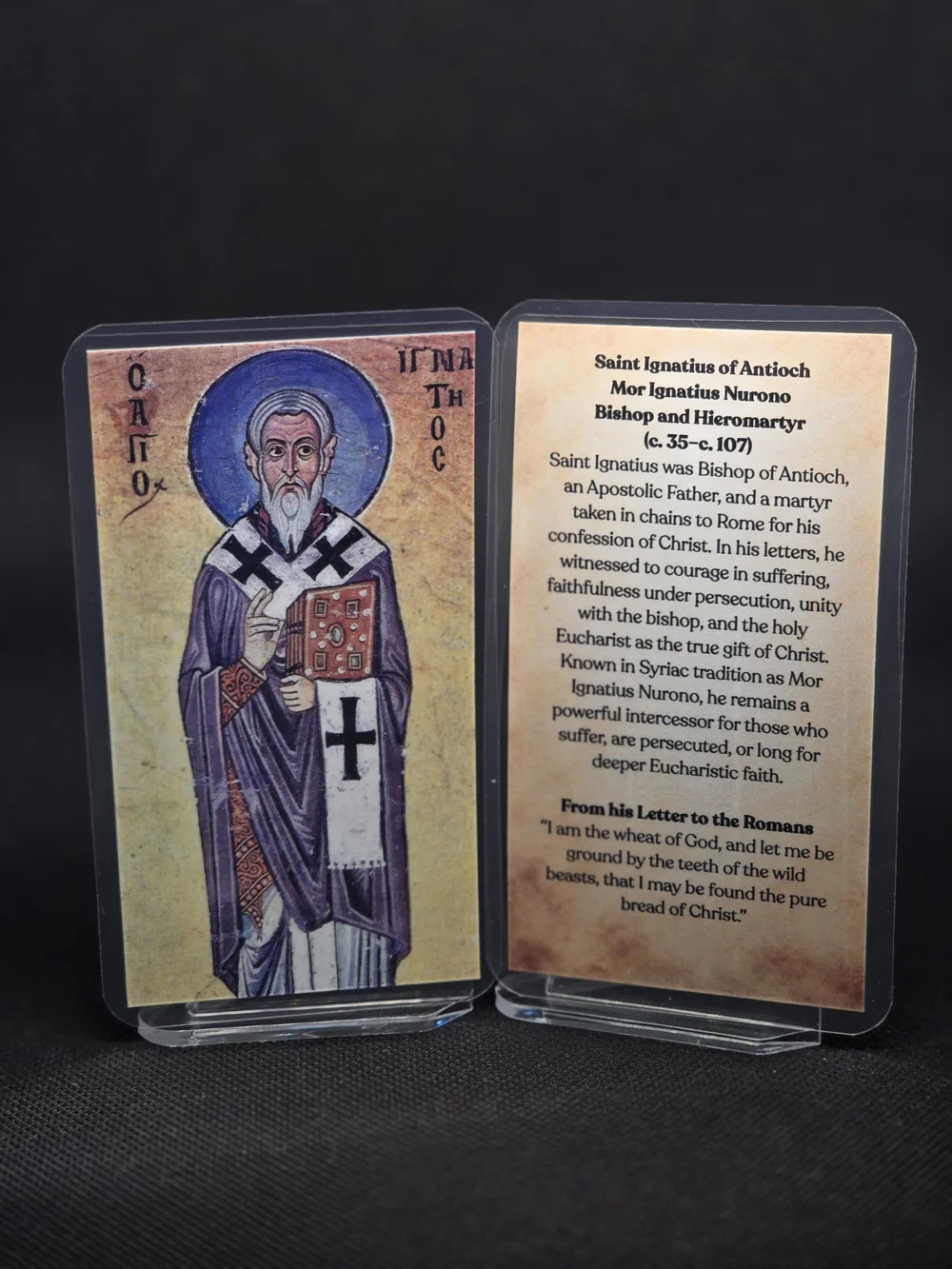
These cards honor saints who shaped the Church the Didache describes. If you want a book on how the Eastern Churches grew from these roots, A History of Eastern Christianity is a good place to begin.
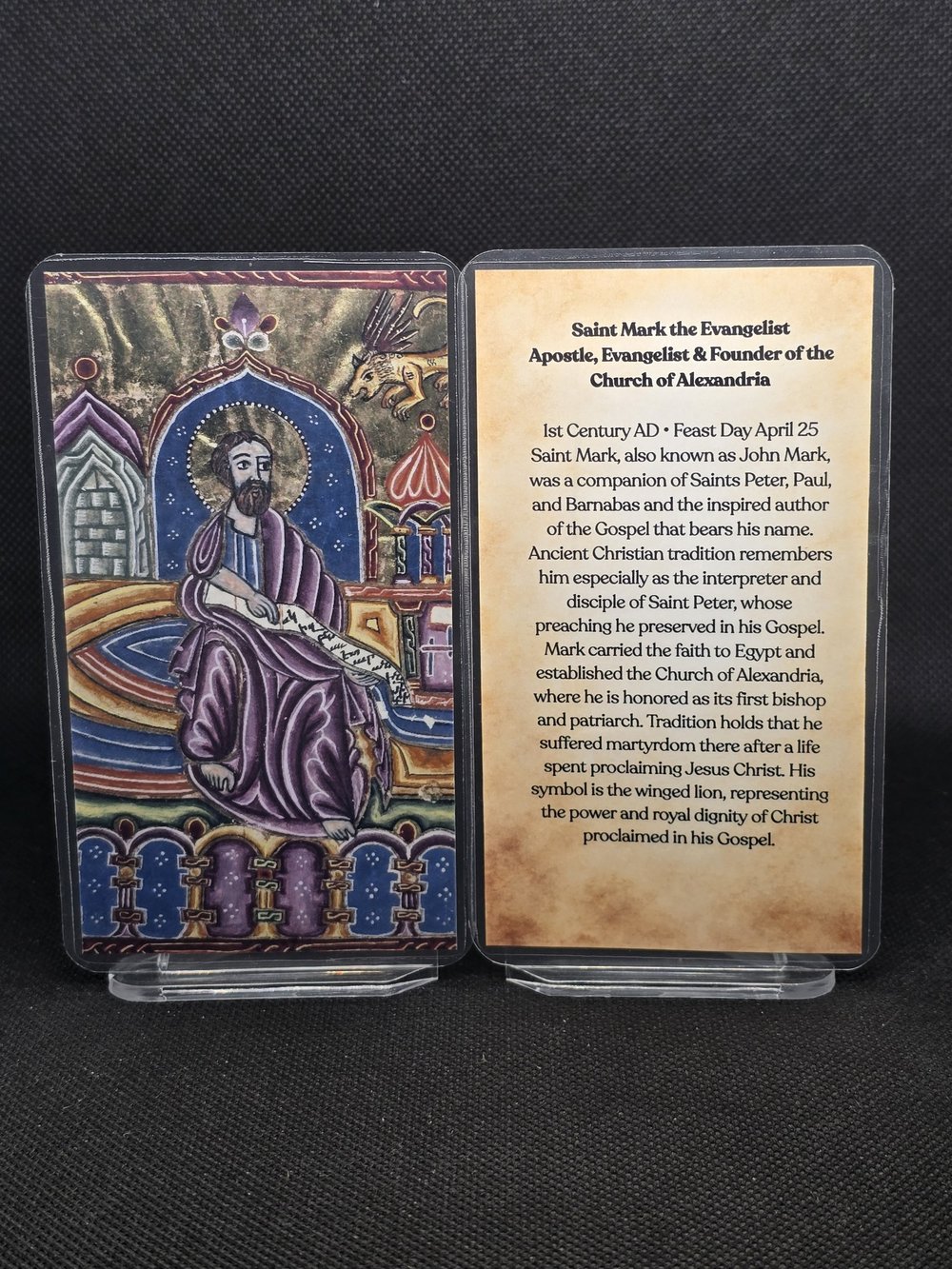
Four handmade cards: the bishop of Antioch, the defender of the canon, the father of the liturgy, and the evangelist of Alexandria.
Two books for readers of the Didache’s warnings about false prophets and the deceiver of the last days.
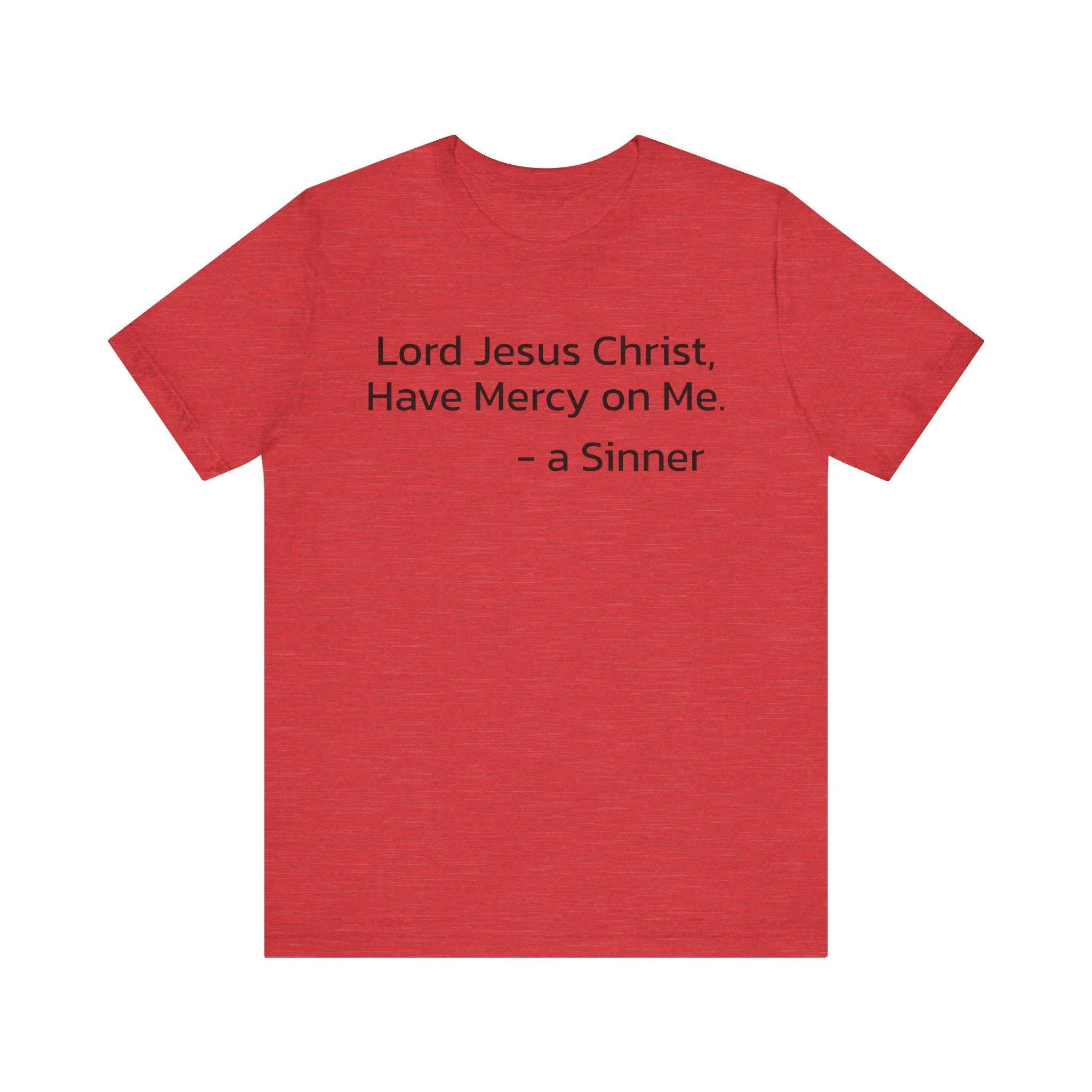
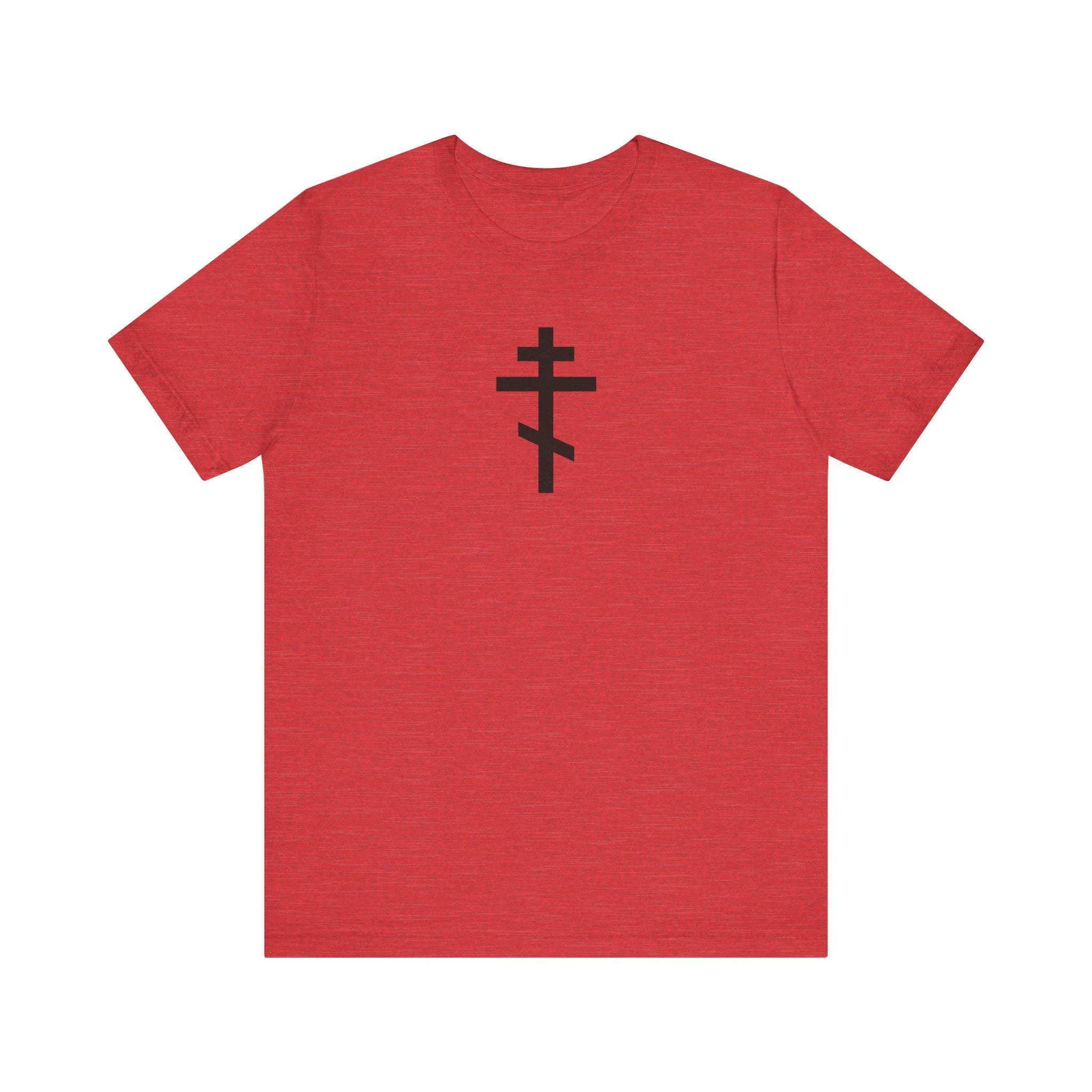
Two shirts from the Eastern tradition.
The book links on this page are Amazon affiliate links. If you buy through them we may earn a small commission at no extra cost to you.
The Two Ways Today
The Didache ends where the Gospel ends, with a call to stay awake until the Lord comes. If you are building a prayer corner that includes the saints of the early Church, our handmade prayer cards are a good place to begin.
Appendix