What Did St. Gabriel Urgebadze Say About Aliens? His Complete Prophecy on UFOs, Demons & the Last Days
What Did St. Gabriel Urgebadze Say About Aliens?
His complete prophecy on UFOs, extraterrestrials, and demonic deception in the last days — every statement he ever made, with full theological context and the Orthodox tradition behind it
At a Glance
- Saint
- Gabriel Urgebadze (1929–1995)
- Church
- Georgian Orthodox Church
- Canonized
- December 20, 2012
- Title
- Confessor and Fool for Christ
- Feast Day
- November 2 (October 20 O.S.)
- Known For
- Burning Lenin's portrait, prophecy, clairvoyance
- Warning Category
- Demonic deception, last days, alien/UFO phenomena
- Core Statement
- "This will be the devil's greatest trick!"
- Why This Warning Matters Now
- Every Statement He Made — The Complete Record
- The Prophecy, Phrase by Phrase
- Gabriel's Life: Why His Authority Is Unimpeachable
- Key Moments in Gabriel's Life
- The Full Eschatological Prophecy Context
- Orthodox Theology Behind the Warning
- Aerial Spirits: What the Church Fathers Taught
- What Other Saints Said
- The Book of Enoch: An Ancient Key
- The Complete Case: Aliens and Demons
- Prayer for Protection Against Spiritual Deception
- Frequently Asked Questions
Why This Warning Matters More Than Ever
In 2023, a former senior Pentagon intelligence official testified before the United States Congress that the U.S. government possesses craft of non-human origin. In 2024, congressional hearings produced testimony from military aviators describing encounters with objects exhibiting physics-defying flight characteristics. In 2025, the phrase "non-human intelligence" — once the exclusive vocabulary of fringe internet forums — appeared in official government documents. The world is, haltingly and reluctantly, beginning to acknowledge that something real is happening in the skies above us. What it cannot agree on is what that something is.
A Georgian Orthodox monk who died in 1995 and was declared a saint in 2012 answered that question thirty years ago with complete theological clarity. His name was Gabriel Urgebadze. He called the alien encounter phenomenon "the devil's greatest trick." He said it was a demonic deception designed specifically for the last days — the supreme temptation, the one that would come closest to succeeding, the lie best engineered to redirect the deepest spiritual hunger of the human heart.
He was not the only one. Multiple Orthodox saints of the twentieth century issued identical warnings, speaking from four different countries in four different languages without any coordination between them. But Gabriel's formulation is the most striking, the most specific, and the most frequently searched. This article documents everything he said on the subject — every recorded statement, every relevant prophecy, and the full Orthodox theological context that makes his warning intelligible rather than merely eccentric.
Section One
Every Statement He Made — The Complete Record
Gabriel Urgebadze's statements about aliens survive in two principal translations, which are distinct renderings of the same Georgian prophetic teaching. They are not contradictory; they emphasize different facets of the same warning. Below is the complete record of every known statement he made on the subject of extraterrestrials, UFOs, and the deceptions of the last days.
Statement One — The Extended Version
"During the Antichrist times, the strongest temptation will be anticipation of salvation from the cosmos, from humanoids, extraterrestrials that are actually the demons. One should rarely look up at the sky, as the signs might be deceptive and thus one may be ruined."
This is the most complete and theologically detailed version of Gabriel's statement. Several elements deserve immediate attention. First: he places the alien deception squarely within the category of temptation — specifically the strongest temptation of the Antichrist era. He is not discussing a minor illusion or a sideshow. He is identifying the central, dominant deception of the last days. Second: he uses specific vocabulary — humanoids, extraterrestrials — which represents an exact correspondence with the terminology that secular culture would develop to describe the same phenomenon. Third: his practical counsel — "one should rarely look up at the sky" — is not an instruction about astronomy. It is a warning against fixating one's hope and gaze on the aerial signs designed to redirect that hope away from Christ.
Statement Two — The Alternate Translation
"In the years of the Antichrist, people will expect salvation from space. This will be the devil's greatest trick! Humanity will seek help from the aliens, not knowing that they are actually demons."
This shorter translation is the version most widely circulated on Orthodox Christian platforms and devotional sites. It carries the same theological content as the extended version but with two additional emphases that are worth examining in detail. First, the phrase "the devil's greatest trick" assigns this deception a supreme rank among all the works of the enemy — Gabriel, who had spent his life under Soviet persecution and knew exactly what the powers of darkness were capable of, considered this the culmination of demonic strategy. Second, "salvation from space" identifies precisely what is being counterfeited: not entertainment, not technology, not political power, but salvation itself — the gift that Christianity exists to offer. The deception is maximally effective because it exploits maximally genuine human longing.

Section Two
The Prophecy, Phrase by Phrase
Gabriel's statement is dense with theological content that can pass unnoticed in casual reading. Each phrase repays close attention.
"During the Antichrist times" / "In the years of the Antichrist"
Gabriel places the alien deception within a specific eschatological window. He is not describing a vague future temptation but a coordinated demonic strategy that belongs to a particular era — the period immediately preceding and encompassing the reign of the Antichrist. Elsewhere in his prophecies, Gabriel stated that the Antichrist had already been born and was "at the door" — suggesting that this era had already begun during his own lifetime. The implication is sobering: if Gabriel was correct about the timing, the alien deception he warned about is not an abstract future concern but an active and present spiritual threat.
"The strongest temptation" / "The devil's greatest trick"
Both translations use a superlative. This is not rhetorical inflation. Gabriel is assigning the alien deception the highest rank in the taxonomy of demonic strategy — greater than atheism, greater than heresy, greater than persecution, greater than the seductions of wealth or pleasure or power. Why would he rank it so highly? The Orthodox theological answer is that the effectiveness of a deception is proportional to the purity of what it counterfeits. A lie that mimics a relatively small truth is a small lie. A lie that mimics the greatest truth — that there is a God who comes from beyond to save us — is the greatest lie. The alien encounter narrative, in Gabriel's analysis, is a demonic staging of the Second Coming: beings appearing from beyond the sky, possessing technology that appears supernatural, claiming to offer humanity rescue from its problems. The impulse that makes people receptive to this narrative — the longing for divine intervention, for transcendence, for rescue from above — is itself a good impulse, which is precisely what makes the counterfeit so dangerous.
"Anticipation of salvation from the cosmos"
The word salvation in this context carries its full theological weight, not a diluted secular meaning. Gabriel is not saying people will expect help from space, or technology, or contact. He is saying they will expect salvation — deliverance from sin, from death, from the human condition itself. This is the eschatological function that only Christ can fulfill, and Gabriel is identifying its demonic counterfeit with precision. The expectation of salvation from extraterrestrial contact — advanced beings from another world who will solve climate change, reveal hidden knowledge, and elevate humanity to a new stage of evolution — is structurally a religious expectation, not a scientific one. Gabriel recognized this decades before the concept of "disclosure" existed in public discourse.
"From humanoids, extraterrestrials that are actually the demons"
This is the core identification. Gabriel does not say the beings are imaginary, psychological projections, or misidentified aircraft. He affirms their reality while denying the secular interpretation of their nature. They are not citizens of distant planets. They are fallen angels — the aerial spirits documented by the Church Fathers since the 4th century, beings of immense intelligence and ancient malice who have always inhabited the boundary between the visible and invisible worlds and who have always taken on material forms for the purpose of deceiving the humans they encounter. The modern vocabulary of "humanoid" and "extraterrestrial" is new. The beings are not. What has changed is the form of the deception — updated for an era when the materialist cosmology has convinced humanity that the only possible source of non-human intelligence would be another planet, rather than the fallen angelic realm the Church has always described.
"One should rarely look up at the sky, as the signs might be deceptive"
This practical counsel is the most easily misread element of the prophecy. It is not a prohibition on studying astronomy or enjoying sunsets. It is a spiritual warning about the orientation of hope and attention. The aerial signs of the last days — strange lights, vehicles of apparent impossible technology, beings appearing from above — are designed to direct the human gaze upward, toward the deceiving entities, away from Christ. The Orthodox spiritual tradition teaches that heavenly phenomena presented in a context of spiritual warfare are not to be passively absorbed but to be discerned. Gabriel's counsel is consistent with the patristic principle that apparent miracles must be tested, not simply believed, because the enemy has the power to produce convincing imitations of the signs of God.
Section Three
Gabriel's Life: Why His Authority Is Unimpeachable
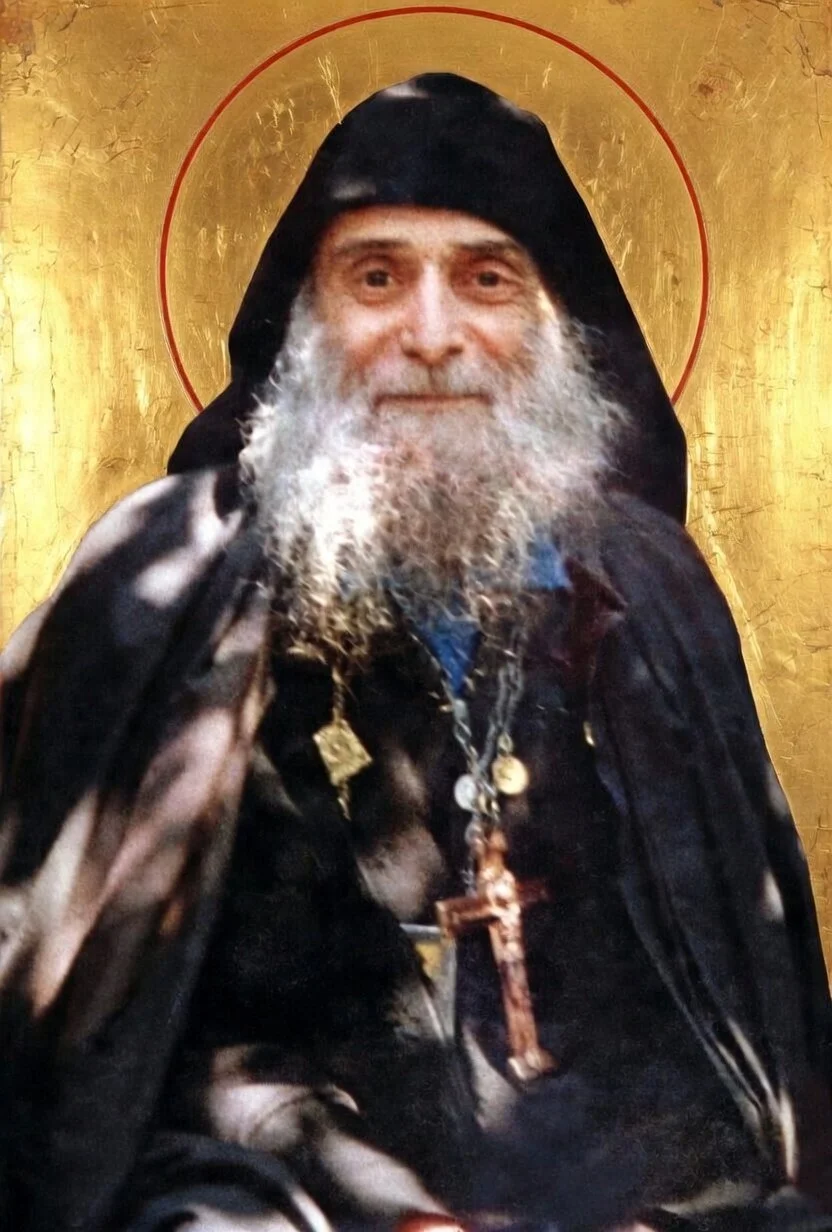
Goderdzi Urgebadze — called "Vasiko" in childhood — was born in Tbilisi in 1929, two years after his father's death. The Soviet state into which he was born had spent more than a decade systematically attempting to destroy Christianity in Georgia: closing churches, confiscating property, imprisoning clergy, and raising a generation with no access to religious education. Gabriel came to faith not through instruction but through encounter — a neighbor's icon caught his attention as a child, and the encounter was sufficient. He began to pray with a devotion that alarmed his atheist schoolteachers and eventually led to disciplinary action. His faith deepened despite every institutional obstacle the Soviet system could deploy against it.
He was ordained a hieromonk and given the name Gabriel. The act that defined his public witness came on May 1, 1965, during the official Soviet May Day parade in Tbilisi. Gabriel climbed to a rooftop and burned a twelve-meter portrait of Lenin, shouting to the crowd below that glory belonged not to Lenin but to Christ who conquers death. He was immediately arrested, severely beaten by the crowd — suffering a broken jaw and multiple fractures — and taken into KGB custody. Interrogators pressured him to confess that the Church had ordered the act. He refused. He called Lenin a "beast" and accepted further beatings for it. Rather than executing him, the Soviet state deployed its preferred disposal mechanism for Christians who could not be broken: psychiatric imprisonment. Investigators found nothing clinically wrong with him and released him after several months, partly through the intervention of an academic authority.
He spent the remainder of his life at the monastery of Samtavro in Mtskheta, living first in a tower, later in a small wooden hut that had been used as a chicken coop. He rarely slept. He fasted to extremes. He received a constant stream of visitors — bishops, the Georgian Patriarch, simple peasants, the grieving, the sick, the spiritually confused — and gave each of them his full attention. He was known for clairvoyance, healing prayer, and an ability to read the interior state of people he had never met. He died on November 2, 1995, and was canonized by the Georgian Orthodox Patriarchate on December 20, 2012, as Holy Father Saint Gabriel, Confessor and Fool for Christ.
The reason Gabriel's authority on the question of spiritual deception is unimpeachable is not primarily his sanctity, though that is primary. It is the specific kind of sanctity he exemplified. A fool for Christ is a figure whose entire vocation consists in the discernment and exposure of deception — the deception of worldly wisdom, the deception of institutional religion that has lost its soul, the deception of spiritual pride. Gabriel spent forty years practicing a form of kenosis specifically oriented toward seeing through the world's illusions and naming what lies beneath them. His warning about aliens did not come from scientific study. It came from the same source as his other prophecies: the purified discernment of a man who had seen the demonic clearly enough to recognize its strategies before they became obvious to anyone else.
Gabriel's Life — A Timeline
- August 26, 1929 Born in Tbilisi, Georgian Soviet Republic. Baptized at the Church of Great Martyr Barbara in Navtlugi. His father dies when he is two years old.
- Childhood, 1930s Discovers faith through a neighbor's icon. Begins to pray fervently in an officially atheist state. Disciplined by Soviet schoolteachers for religious devotion.
- 1955 Ordained a hieromonk with the name Gabriel. Continues spiritual formation during the height of Soviet anti-religious campaigns.
- May 1, 1965 Burns a twelve-meter portrait of Lenin during the official May Day parade in Tbilisi. Arrested in a severely injured state. Refuses to implicate the Church. Called Lenin a "beast." Sent to a psychiatric hospital rather than executed.
- August 1965 Released from psychiatric imprisonment. Prohibited from performing liturgical service. Continues attending services and receiving communion as a lay participant. Repeatedly summoned by KGB for further interrogation and physical abuse.
- 1970s–80s Takes up residence in a tower at the Samtavro Monastery, Mtskheta. Known throughout Georgia for prophecy, healing, and clairvoyance. Begins attracting pilgrims from across the country.
- 1987 Moves from the tower to a small wooden hut formerly used as a chicken coop. Lives there until his death, maintaining extreme fasting and vigil.
- 1980s–1995 Makes his recorded prophecies about the last days, including his warning about extraterrestrials and the cosmic deception. Gives counsel to thousands of visitors. His statement about aliens — "the devil's greatest trick" — is recorded by those around him during this period.
- November 2, 1995 Dies at the monastery of Samtavro. His grave immediately becomes a site of pilgrimage. Miracles are reported.
- December 20, 2012 Officially canonized by the Georgian Orthodox Church as Holy Father Saint Gabriel, Confessor and Fool for Christ. Feast day assigned: November 2 (October 20 Old Style).
Section Four
The Full Eschatological Prophecy Context
Gabriel's warning about aliens was not an isolated statement. It was one piece of a larger body of prophecy about the last days — a sustained eschatological teaching that he delivered to those who came to him for spiritual counsel throughout the final decades of his life. Understanding the alien warning in isolation, without its context, is like reading one sentence of a chapter. The full picture requires seeing what else he said about the era he was describing.
Read in sequence, these statements form a coherent eschatological narrative. Gabriel taught that the Antichrist was not a distant future figure but a present or imminent reality during the late Soviet period — which means, on his timeline, the signs he warned about were already beginning. He described the mark of the Antichrist in terms consistent with the Book of Revelation. He warned Christians not to accept the seal even under threat of death. And he identified, within this framework, the supreme temptation that would accompany the Antichrist's reign: the expectation of salvation from space.
The logic of the sequence is theologically coherent. If the Antichrist presents himself as a savior — as the tradition consistently teaches — then the ground must be prepared for that reception. Humanity must be conditioned to expect salvation from a powerful non-human source appearing with apparent supernatural authority. The alien contact narrative — beings from beyond the world, possessing extraordinary knowledge and capability, appearing with signs in the heavens — is exactly the conditioning that Gabriel identified. His warning is not that people will be deceived by a crude hoax but that they will be deceived by an encounter that is phenomenologically real, spiritually catastrophic, and demonic in origin.
Gabriel also taught, notably, that Georgia would be protected by the Holy Virgin during the last days and would serve as a refuge for believers from other countries. This element of his prophecy, frequently overlooked in Western discussions of his alien warning, provides the pastoral frame for his eschatological teaching: not despair, but preparation; not panic, but prayer; not fixation on aerial signs, but commitment to the life of the Church and the invocation of the Theotokos.
He also stated that a humbled man is protected from temptations — which is the spiritual prescription that follows from his diagnosis. If the supreme temptation of the last days targets the human longing for salvation from above, then the protection against that temptation is the humility that has learned to receive salvation only from Christ, through the life of prayer and sacrament, without seeking spectacular signs.
Section Five
The Orthodox Theological Framework Behind the Warning
Gabriel's identification of alien beings as demons is not a personal opinion or a cultural prejudice. It rests on a precise and ancient theological framework — the Orthodox doctrine of the aerial realm and the spirits that inhabit it — that has been articulated continuously in the Christian East since the 4th century. Understanding this framework is essential to evaluating his claim seriously rather than dismissing it or accepting it uncritically.
The Invisible World in Orthodox Theology
The Orthodox Creed confesses faith in "one God, the Father Almighty, Maker of heaven and earth, and of all things visible and invisible." The invisible realm is not a metaphor or a pious gesture toward the unknown. It is a specific doctrinal claim: that the created world consists of both material and spiritual orders, that the spiritual order is populated by a vast hierarchy of created spiritual beings (angels), and that among these beings a significant portion fell through pride and became the demons — beings of immense intelligence, ancient hatred of humanity, and genuine power to affect the material world.
The Church Fathers — Basil the Great, John Chrysostom, John of Damascus, Gregory Palamas — all affirmed not only the existence of demons but their specific capacity to take on material appearances. This is not speculation. It is the standard theological explanation for the New Testament accounts of demonic possession, for the Desert Fathers' encounters with beings appearing in various forms, and for the consistent patristic teaching that miraculous appearances must be subjected to discernment rather than automatically accepted.
Aerial Spirits: What the Church Fathers Taught
The specific category most relevant to Gabriel's warning is the patristic teaching about "aerial spirits" — fallen angels described as inhabiting the space between the earth and the heavens. St. Paul refers to Satan as "the prince of the power of the air" (Ephesians 2:2). The Church Fathers developed this into a detailed account of a class of spiritual beings who operate in the aerial realm: who can take on visible, apparently material forms; who can produce lights, sounds, and seemingly physical encounters; and who specifically target humans with deceptions calibrated to the most effective temptations of their era.
The Desert Fathers of the 4th and 5th centuries were the first Christians to develop a systematic practical theology of discerning these beings. Anthony the Great, Macarius the Great, and Evagrius Ponticus all describe encounters with beings appearing in various forms — beautiful, terrifying, apparently divine — and all teach the same method of discernment: the sign of the Cross, the invocation of Christ's name, and the observation that genuinely divine appearances do not flee from these, while demonic counterfeits do.
The pattern the Fathers described is precisely the pattern Gabriel identified in contemporary form. The beings change their costume with each era. In the desert, they appeared as angels of light, as the Lord himself, as beautiful women. In the medieval period, they appeared as incubi, succubi, will-o'-wisps. In the 20th and 21st centuries, they appear as beings from advanced civilizations on other planets, descending in vehicles of impossible technology, carrying messages about humanity's future and the need to evolve beyond religion. The form is new. The strategy — redirect human longing toward the deceiving entity and away from Christ — is identical.
Section Six
Gabriel Was Not Alone: What Other Saints Said
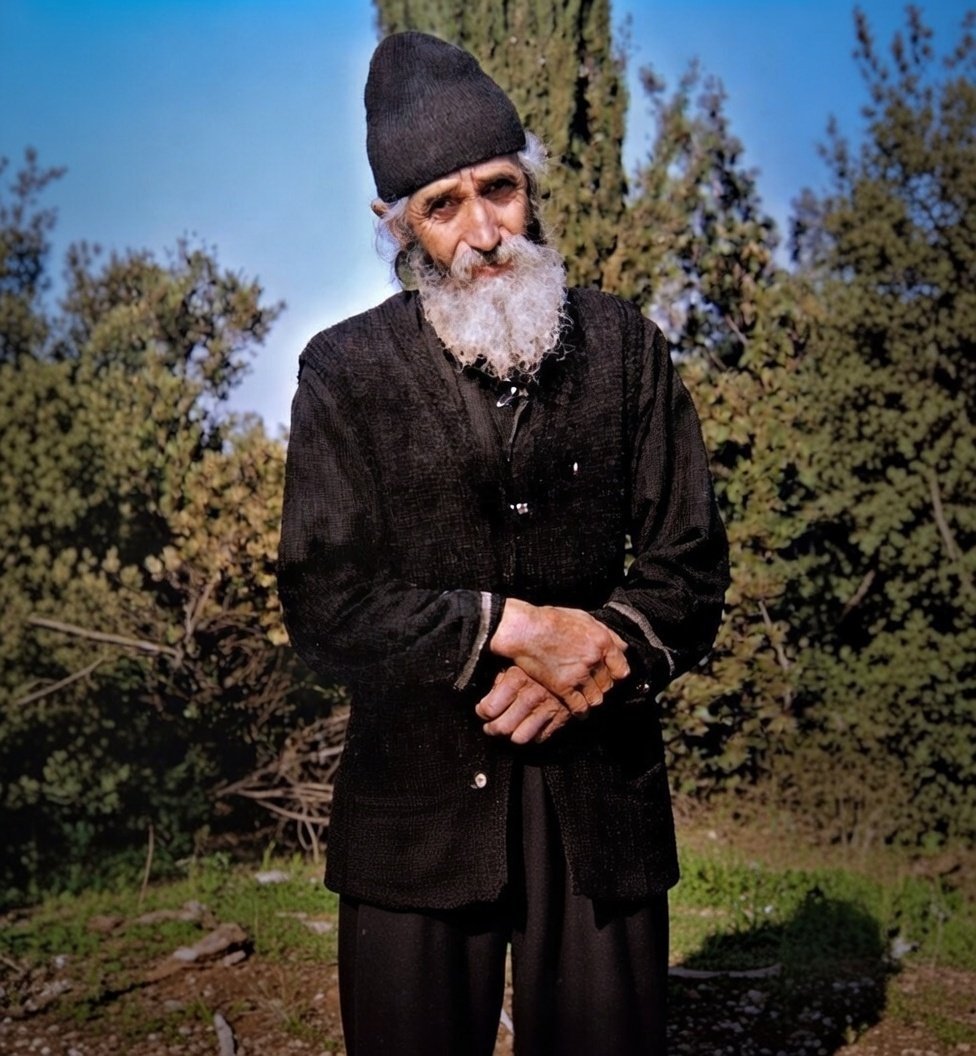
One of the most striking features of the Orthodox prophetic witness on UFOs is its convergence. Between the 1970s and the mid-1990s, four saints living in four different countries — Georgia, Greece (Athos), Greece (Kavsokalyvia), and the United States — all issued independent warnings identifying the alien contact phenomenon as demonic. None of them had access to the UFO literature. None of them were following government disclosure hearings. They were speaking from the same tradition and arriving at the same conclusion.
The four witnesses span the Georgian, Greek, and Russian traditions. They differ in vocabulary but are unanimous in substance. The beings are demonic. The phenomenon is a sign of the last days. The appropriate response is increased spiritual vigilance rather than fascination or fear. For the full theological development of each of these positions, see the dedicated article: What the Saints Said About Aliens and UFOs: Orthodox Christian Warnings. For the broader Orthodox theological analysis of UFOs and spiritual warfare, see also The Orthodox Church on UFO Phenomena and Spiritual Warfare.
Section Seven
The Book of Enoch: An Ancient Key to the Phenomenon
Before the government held its first hearings on UAP disclosure, before the first grainy footage appeared on the internet, before "extraterrestrial" entered the vocabulary of mainstream culture — there was the Book of Enoch. Written centuries before the birth of Christ, cited explicitly in the New Testament Epistle of Jude, and quoted by numerous early Church Fathers, the Book of Enoch contains what may be the oldest systematic account in any religious tradition of non-human beings descending from the heavens, taking on material form, and interacting catastrophically with humanity.
The beings in question are the Watchers — a class of angels sent to watch over the earth who chose instead to descend, take physical bodies, mate with human women, and share forbidden knowledge: warfare, sorcery, cosmetics, the reading of celestial signs. Their offspring, the Nephilim, filled the earth with violence. God responded with the Flood. The Watchers themselves were bound and cast into darkness to await final judgment.
The relevance of Enoch to Gabriel's warning is not incidental. The Watchers are the prototype — in the Jewish and early Christian tradition — for the class of beings Gabriel described as extraterrestrial demons. They are heavenly beings who entered the material world from above. They possessed knowledge and capabilities that appeared supernatural by human standards. Their interaction with humanity was presented initially as beneficial — they brought knowledge and revelation — but produced catastrophic spiritual and physical consequences. They were not from another planet. They were fallen heavenly beings, aerial spirits, exercising the same strategy in the ancient world that Gabriel identified in its contemporary form.
The Church Fathers who engaged the Book of Enoch — Justin Martyr, Irenaeus of Lyons, Tertullian, Clement of Alexandria — used it precisely to explain the category of demonic activity that involves material appearances, aerial habitation, and the corruption of human spiritual discernment. Reading Enoch alongside Gabriel's warning is not an exercise in speculation. It is following a theological thread that runs from the oldest apocalyptic literature through the patristic tradition to the 20th-century Georgian saint who updated its vocabulary for a materialist age.
For those who want to understand the phenomenon Gabriel warned about from its deepest ancient roots, the Book of Enoch is an essential text. The site has dedicated articles covering what the Church Fathers thought about the Book of Enoch and a complete guide to the Book of Enoch in the Christian tradition. These articles provide the patristic theological scaffolding that gives Gabriel's warning its full meaning.

Section Eight
The Complete Case: Aliens and Demons
Everything this article has covered — Gabriel's two statements, the eschatological context, the patristic doctrine of the aerial spirits, the convergence of four independent saints, and the Book of Enoch's ancient precedent — is drawn together into a single continuous argument in a newly published book. Where this article is organized around one saint's warning, the book traces the entire pattern: the Watchers of Genesis 6, the Nephilim, the patristic teaching on the Powers of the Air, and the twentieth-century warnings of Gabriel, Paisios, Porphyrios, and Seraphim Rose, worked through chapter by chapter into the fullest treatment of this subject currently available.


O Holy Father Gabriel, Confessor and Fool for Christ, who in thy life saw through the greatest deceptions of thy age and in thy prophecies warned us of the greater deceptions to come: intercede before the throne of Christ for us who are left to navigate what thou foretold.
Protect us, O Saint, from the temptation to seek salvation from the sky rather than from the Cross. Guard our eyes against the aerial signs designed to deceive. Guard our hearts against the longing to be rescued by what appears from above, when the true Savior has already come from above and dwells among us in His Body and Blood.
Keep us fixed on Christ. Keep us in the life of prayer and fasting and the holy sacraments that alone constitute the armor against what thou called the devil's greatest trick. And pray for us that we may hold out to the end, that we may be numbered among those of whom the Lord said: whoever holds out to the end will be saved.
Holy Father Gabriel, Fool for Christ of Georgia, pray to God for us.
Frequently Asked Questions
St. Gabriel Urgebadze on Aliens — Questions & Answers
The Saints Saw It Coming. The Question Is Whether We Are Listening.
The governments of the world are now, haltingly, confirming what four Orthodox saints stated plainly thirty years ago: something real is happening in the skies, and it does not behave like anything in our physics textbooks. What the governments cannot tell us is what it is. Gabriel Urgebadze told us in the 1980s — before the hearings, before the footage, before the congressional testimony. He called it the devil's greatest trick. He said it was demonic. He said it was specifically designed to offer a counterfeit salvation in the years of the Antichrist.
The appropriate response is not fear or fixation. It is the response Gabriel modeled in his own life: prayer, humility, the refusal to be moved by the world's spectacular signs, and complete confidence in the One who has already conquered death. For the complete biblical and patristic case behind everything Gabriel warned about, read Aliens and Demons: Discerning the Great Deception below.
Get the Book: Aliens and Demons →