The Dark Night of the Soul: What Eastern Christianity Knows That No One Tells You
Christian Mysticism · Spiritual Formation · Eastern Tradition
The Dark Night of the Soul: What Eastern Christianity Knows That No One Tells You
When God goes silent, the ancient tradition has already walked this road—and left a map.
You are still praying. You are still going to liturgy. You are still reading the Scriptures. But something has gone terribly quiet.
The warmth that used to accompany prayer has evaporated. The sense of God's nearness that once made the Divine Liturgy feel like heaven itself now feels hollow, mechanical, like reciting words in a language you no longer speak. You confess your sins and walk away unsure whether the priest's absolution is reaching anyone. You light your candle before the icon and stand there, waiting, and feel nothing come back.
If this is you, you have not lost your faith. You have not been abandoned. You have entered what the Christian mystical tradition calls the dark night of the soul—and the Eastern Church has been walking people through it for nearly two thousand years.
This guide draws on that tradition: the Desert Fathers, the hesychast elders of Mount Athos, the great saint-mystics of both Eastern Orthodox and Eastern Catholic Christianity. And at the end, we will point you to a book that gathers these ancient practices into a single, accessible roadmap—Christian Mysticism for Everyday Life—which may be the most practically useful thing you pick up in this season.
What Is the Dark Night of the Soul?
The phrase was coined by the Spanish mystic St. John of the Cross in the sixteenth century, but the experience he described is as old as the Psalms. "My God, my God, why have You forsaken me?" (Psalm 22:1) is not a crisis of disbelief—it is the cry of someone who believed deeply enough to feel the absence. The dark night is not the territory of doubters. It is the territory of lovers.
St. John of the Cross explained the dark night in terms of purgation: God withdraws the felt consolations of His presence the way a mother weans a child. Not because the child is unloved, but because it is time to grow. As long as the soul feeds on the sweetness of spiritual feelings—the warmth in prayer, the tears of compunction, the sensory joy of devotion—it is, in a sense, still on milk. The dark night forces a deeper question: Do I love God, or do I love the feeling of God?
When the feelings fall away and nothing remains but bare, naked faith, what the soul does in that darkness reveals the truth of its love. This is the purifying fire of the dark night. It strips everything superficial from the spiritual life and leaves something much purer in its place.
"If a man wishes to be sure of the road he treads on, he must close his eyes and walk in the dark." — St. John of the Cross
There are two phases John describes. The first is the night of the senses—the drying up of sensory and emotional consolations in prayer. The second, deeper, and rarer is the night of the spirit—a profound interior darkness in which even the intellect seems unable to grasp God. Both are roads, not destinations. Both end in a deeper union with God than anything the soul could have reached by staying comfortable.
This is not a Western Catholic invention, however. The Eastern Church arrived at the same territory by its own pathways—and in some respects, understood it more precisely.

Recommended Reading for This Season
Christian Mysticism for Everyday Life
A chapter-by-chapter guide through the classical practices of Christian mysticism—silence, contemplative prayer, the dark night, and Lectio Divina—written for ordinary believers navigating real life. Drawing on both Eastern Orthodox and Catholic mystical traditions, this book meets you exactly where you are and shows you what to do next.
Get the Book on Amazon →The Eastern Christian Understanding of Spiritual Darkness
Eastern Christianity does not use the phrase "dark night of the soul" as its primary term—but it has always known the experience, and its vocabulary for it is, if anything, richer.
Acedia: The Noonday Demon
The Desert Fathers called it acedia—a Greek word sometimes translated as sloth, but meaning something far more specific: a torpor of the soul, a spiritual listlessness in which prayer feels pointless, God feels distant, and the monk's cell feels like a prison. The Desert Fathers considered it the most dangerous of the passions precisely because it attacked at midday, when the monk had already prayed and worked and had nothing left to feel enthusiastic about. Evagrius Ponticus, the great Desert Father and theorist of the inner life, described it as "the most troublesome of all" the demons—the one that made everything sacred feel tedious and worthless.
This is recognizable to anyone who has sat at a prayer corner and felt absolutely nothing. The icons seem painted wood. The Jesus Prayer seems like an empty loop. The heart is dry as dust. This is acedia—and the Desert Fathers treated it not as a spiritual failure but as a test of fidelity. The monk who stayed in his cell and kept praying when he felt nothing was doing something more spiritually valuable than the monk who prayed only when it felt good.
Hesychia and the Night
The hesychast tradition—the heart of Eastern Christian mysticism—understands the dark night as an invitation into a deeper quality of silence. Hesychia (inner stillness) is not achieved in the light, when prayer feels warm and God feels close. It is forged in the dark, when the soul persists in prayer without consolation, without encouragement, without feeling—and discovers that beneath all the sensation, something solid remains. That something is faith. That something is love. That something, say the hesychast Fathers, is the first real encounter with God stripped of all projection.
St. Gregory Palamas, the great fourteenth-century defender of hesychasm, taught that "life of the soul is union with God, as life of the body is union with the soul." When the dark night strips away felt union, it does not strip away real union. God's energies—His grace, His living presence—continue to work in the soul even when the soul perceives nothing. The Taboric light does not cease to shine because we cannot see it. The prayer of the heart continues to breathe in the dark.
The Philokalia on Desolation
The Philokalia—the great anthology of Eastern Christian mystical writing—addresses spiritual dryness throughout its five volumes. What the Philokalia teaches is consistent: desolation is not God's rejection but God's invitation. St. Maximos the Confessor, writing in the seventh century, distinguishes between desolation that comes as punishment for carelessness and desolation that comes as purification for those already committed to prayer. The latter—which is what most serious practitioners eventually encounter—is a gift in disguise. It trains the soul to seek God for God's sake rather than for the consolations He provides.
St. Isaac the Syrian, whose writings on mercy and inner prayer remain among the most luminous in the Eastern tradition, taught that "silence is the mystery of the age to come." The silence of God in the dark night is not emptiness—it is heaven's language, a wordless communication too deep for ordinary spiritual experience to receive. Why silence is essential for hearing God becomes clear only in seasons when all the noise is stripped away.
Eastern Saints Who Walked Through the Darkness
One of the most comforting facts about the dark night is that the greatest saints—the ones we venerate, whose icons we keep in our homes, whose prayer cards we carry—nearly all passed through it. They are not strangers to what you are experiencing. They are exactly the intercessors to call upon now.
St. Silouan the Athonite: "Keep Thy Mind in Hell and Despair Not"
No Eastern Christian saint speaks more directly to the dark night than St. Silouan of Athos. A Russian peasant who became one of the greatest monks of the twentieth century, Silouan spent years in profound spiritual darkness—besieged by temptations, unable to sense God, tormented by the thought of damnation. In his agony, he received a word from Christ that would define his entire spiritual vision: "Keep thy mind in hell and despair not."
What this means is not grim resignation. It means: acknowledge the full weight of your unworthiness, look honestly at the poverty of your soul, hold nothing back—and still refuse to despair. Because God's mercy exceeds any darkness we can descend into. Silouan emerged from his night not defeated but transformed. His writings on love for enemies and prayer for the whole world are among the most tender documents in Christian literature. He wept for all of humanity. That capacity for oceanic compassion was forged in the furnace of his own dark night.
"Whoever will not love his enemies cannot know the Lord and the sweetness of the Holy Spirit." Silouan knew that sweetness. He had passed through the dark to get there.
Elder Paisios of Mount Athos: The Joy That Survives the Dark
St. Paisios the Athonite, canonized in 2015 and one of the most beloved modern Orthodox saints, counseled countless pilgrims who came to his cell in spiritual desolation. His approach was characteristic: deeply compassionate, never dramatizing the darkness, always pointing toward the light hidden within it.
Paisios taught that God calibrates every trial with precision. "The goal is to rise spiritually, not simply to avoid sin." He distinguished between productive spiritual struggle and mere suffering, and he consistently warned against the twin errors of spiritual narcissism (treating the dark night as proof of one's spiritual advancement) and despair (treating it as proof of abandonment). His counsel was simpler than either: stay close to the Church, keep your prayer rule, go to confession, and trust. "Live simply, like a child with his father," he said. The dark night cannot survive that kind of uncomplicated surrender.
Elder Porphyrios of Kafsokalivia: Look Toward Christ, Not at the Darkness
St. Porphyrios, the beloved twentieth-century Greek elder canonized in 2013, offered what may be the most counter-intuitive advice for those in the dark night: stop staring at the darkness. "You don't become holy by fighting evil," he taught. "Ignore evil and look toward Christ, and He will save you."
This does not mean pretending the desolation isn't real. It means refusing to let the absence of felt consolation become the center of your attention. Porphyrios, who had gifts of clairvoyance and healing, consistently pointed people away from their own interior states and toward the Person of Christ. His autobiography, Wounded by Love, documents case after case of spiritual transformation through this simple reorientation: away from self-examination as an end in itself, toward Christ as the only real Object. The dark night, he would say, is a season to practice exactly this—turning toward Christ when you cannot feel Him, because the turn itself is love.
St. Nektarios of Aegina: Holiness Through Humiliation
St. Nektarios, the beloved patron of healing, experienced a dark night that was not primarily interior but exterior: decades of false accusation, ecclesiastical exile, public humiliation, and professional destruction. He was removed from his bishopric on fabricated charges, denied defense, and effectively buried alive in obscurity for the rest of his active ministry. He spent his last years as a simple monk, tending the sick.
What is striking is what Nektarios did not do: he did not become bitter, did not seek revenge, did not abandon prayer. He continued writing theological works of great beauty. He continued serving. The dark night, in his case, wore the face of injustice—and his response was one of the purest examples of Christian mystical prayer lived outward: a life surrendered completely to God regardless of circumstances. His healing miracles multiplied after his death, as if God waited until every earthly consolation was gone before pouring out the fullness of grace.
St. Isaac the Syrian: Tears as a Form of Light
St. Isaac of Nineveh, the seventh-century hermit whose writings on the interior life remain unsurpassed, spoke frequently of penthos—the gift of tears, compunctive sorrow, that the soul discovers in the depths of darkness. Rather than treating the dark night as something to escape, Isaac understood it as the necessary stripping that allows the soul to receive God's love without distortion. "Make peace with yourself," he wrote, "and both heaven and earth will make peace with you." The dark night, in Isaac's framework, is precisely the place where that inner peace is born—not despite the darkness, but through it.
From the Store
Carry Their Intercession With You
These saints know this road. Their prayer cards are a tangible way to keep their intercession near during a season when prayer itself feels difficult.
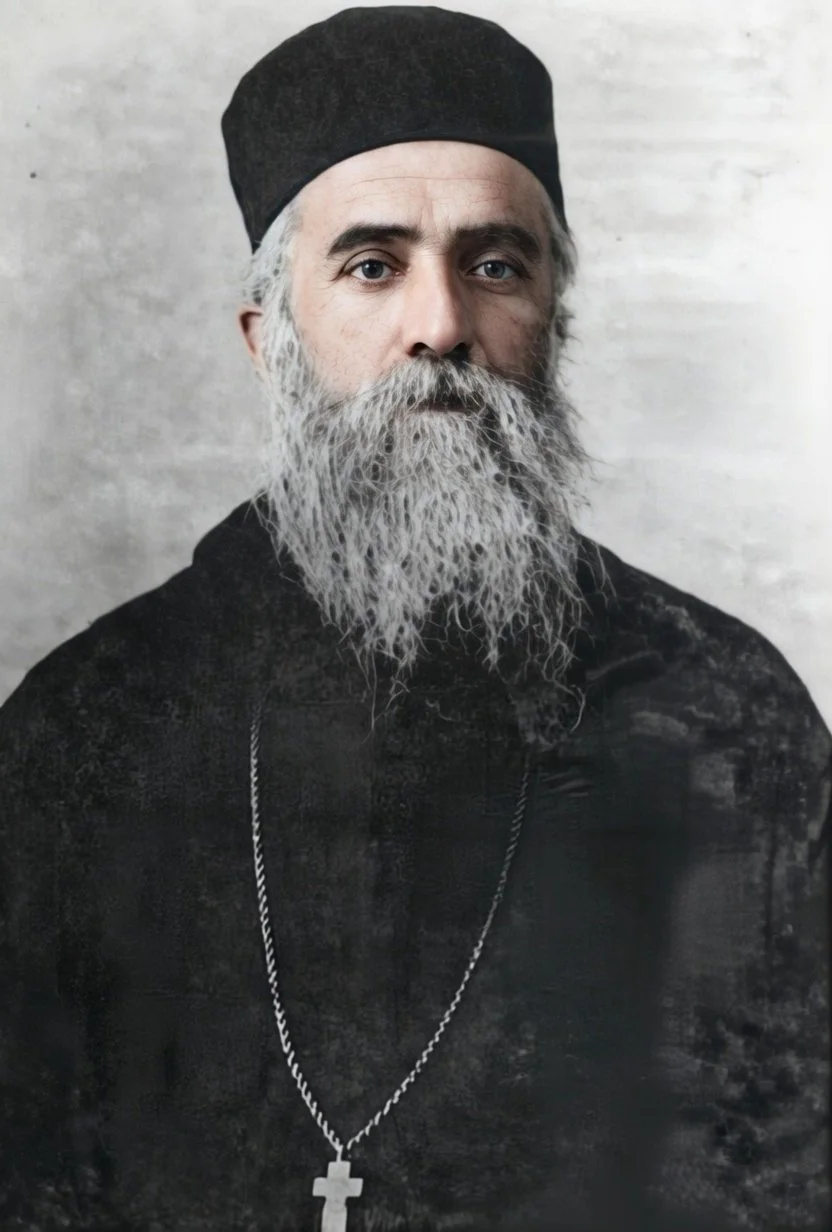
St. Nektarios of Aegina
Patron of healing, intercessor for those crushed by injustice and spiritual desolation. His life is proof that God's grace operates most powerfully in seasons of darkness.
View Prayer Card →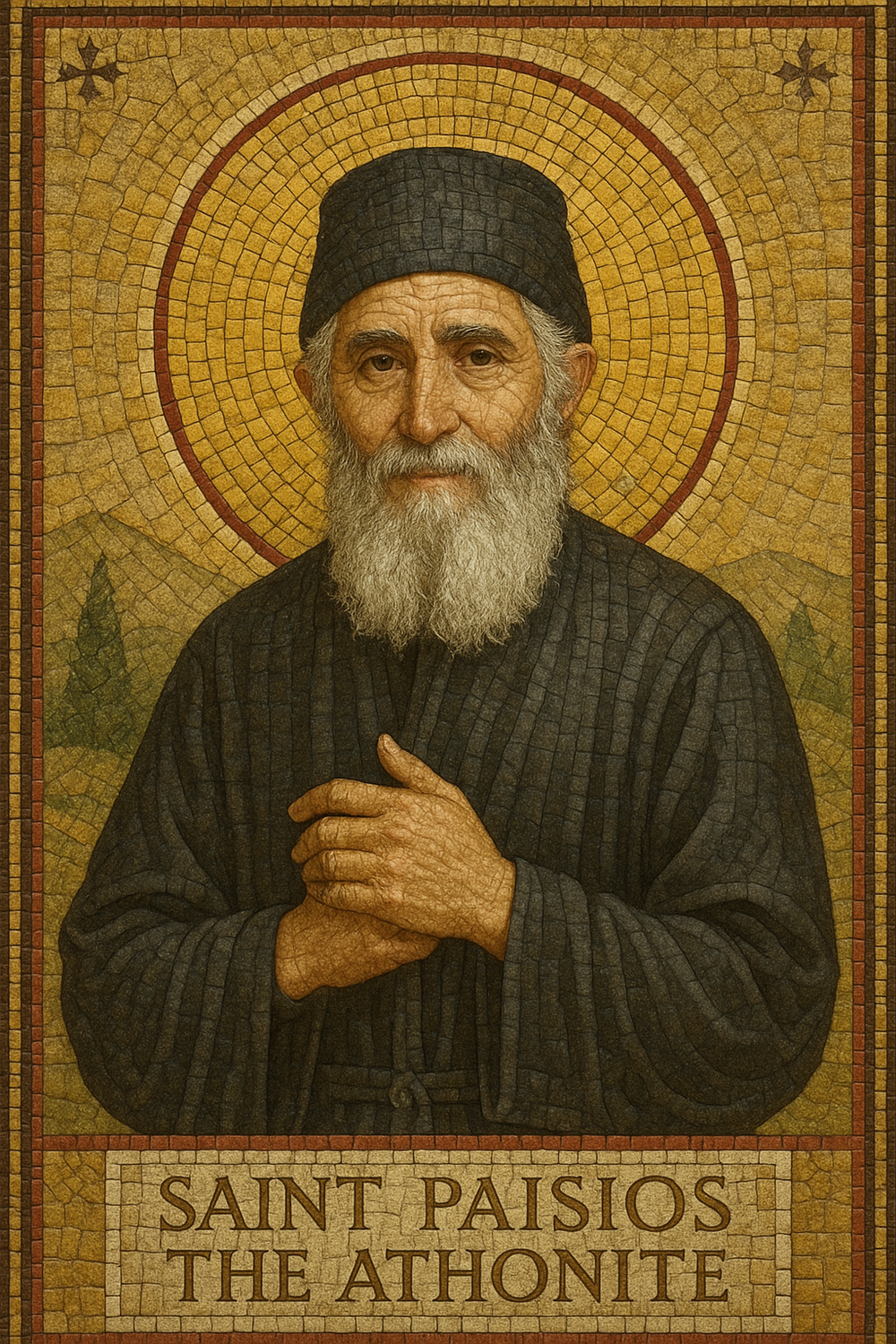
St. Paisios of Mount Athos
The great Athonite elder who counseled thousands through spiritual crisis. His joyful, fatherly wisdom continues to reach those in desolation today.
View Prayer Card →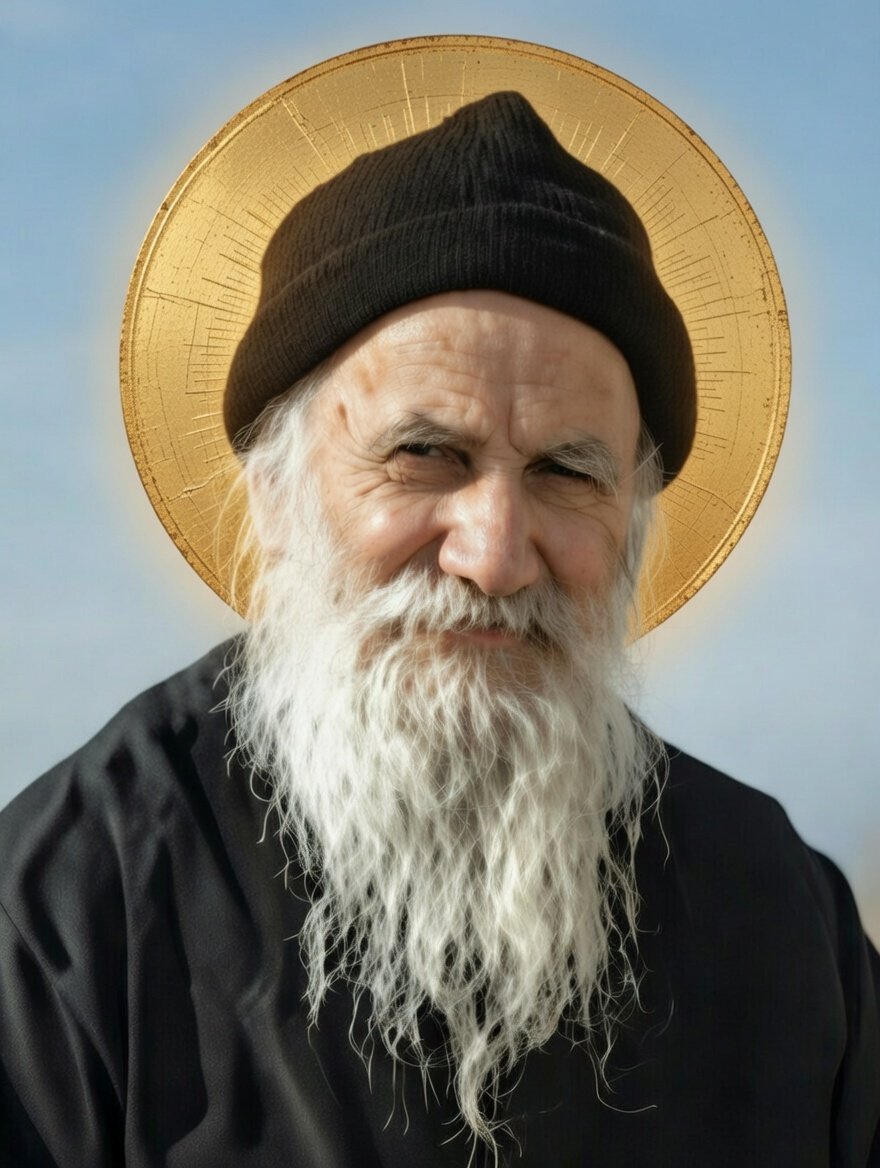
St. Porphyrios of Kafsokalivia
The modern mystic who taught us to stop staring at the darkness and look toward Christ. His intercession brings the gentle reorientation the dark night demands.
View Prayer Card →Signs You Are in a Dark Night—Not Simply Depressed
This distinction matters. Both the dark night of the soul and clinical depression involve low mood, loss of motivation, and a sense of God's absence. They can exist simultaneously. But they are not the same thing, and confusing them can lead to either seeking only spiritual remedies for a medical problem or—equally dangerous—seeking only medical remedies for a spiritual one.
The Eastern Christian tradition does not pit these against each other. Elder Paisios himself, when encountering pilgrims in distress, would sometimes say bluntly: go to a doctor. Elijah, the great prophet, fell into despair after his greatest spiritual triumph, and God's first response was not a vision or a revelation—it was sleep and food (1 Kings 19:4–8). Physical and emotional care are not unspiritual. They are how God meets us in our embodied humanity.
That said, some signs point more specifically to the dark night of the soul as a spiritual trial distinct from depression:
Signs more characteristic of the dark night: You feel God's absence specifically and acutely, while other areas of life may feel relatively functional. You still desire God, even when you cannot feel Him—the will is turned toward God even when the emotions are not. Your prayer feels dry but you have not stopped praying. You find yourself able to function, to love, to fulfill obligations, even while experiencing interior darkness. You may notice the absence is worst precisely during prayer or at liturgy—in the places where you most expect to find God. The dryness is, paradoxically, surrounded by a hunger.
Signs that warrant professional care alongside spiritual direction: You cannot get out of bed. You have lost the will to live. You are having thoughts of self-harm. You feel no desire for anything—not for God, not for the people you love, not for food or rest. You feel nothing rather than feeling God's absence. If these signs are present, please reach out to a mental health professional. Orthodox saints for anxiety and depression are powerful intercessors—and they are not a substitute for clinical care when clinical care is what's needed.
Seeking a confessor or spiritual father is essential in either case. The Eastern Christian tradition is emphatic on this point: the dark night is not meant to be navigated alone. We will return to this below.
A Prayer for Those in Spiritual Darkness
Prayer of Lament and Trust
O Lord my God, You know where I am. You see the darkness that has settled over my soul and the silence where Your voice used to be. I do not understand this season. I will not pretend it is easy or that I am not afraid.
But I recall what You have promised: that You will never leave me nor forsake me, that the light shines in the darkness and the darkness has not overcome it, that weeping may stay for the night but joy comes in the morning.
I cannot feel You. But I choose to trust You. I stay here, in this darkness, with my face turned toward where I know You to be. Keep me faithful, Lord. Do not let me go. And when the dawn comes—let me know it was You, carrying me all along.
Through the prayers of the Holy Theotokos and all the saints who walked through their own dark nights, have mercy on me.
Amen.
Adapted from the Eastern Christian tradition of lament prayer
What the Eastern Tradition Says To Do
The Eastern Christian tradition is not vague about how to navigate spiritual desolation. Its counsel is specific, time-tested, and realistic. None of it promises that the darkness will lift immediately. All of it promises that fidelity in the dark night produces something no consoled season ever could.
1. Keep Your Prayer Rule—Especially When It Feels Empty
The first and most consistent counsel of the Eastern Fathers is this: do not stop praying. A basic prayer rule—morning prayers, evening prayers, the Jesus Prayer—is not something to abandon when it feels fruitless. It is precisely what holds you in place while God does work you cannot see.
Think of it this way: a farmer does not stop planting because the seeds are not yet visible above the ground. The dark night is the growing season beneath the soil. St. Theophan the Recluse, one of the great Eastern teachers of interior prayer, wrote that prayer kept faithfully through dryness is like stoking a furnace—eventually the fire takes hold. "To pray is to descend with the mind into the heart, and there to stand before the face of the Lord, ever-present, all-seeing, within you." Even if you feel nothing, the standing itself matters.
2. Pray the Jesus Prayer
"Lord Jesus Christ, Son of God, have mercy on me, a sinner."
The Jesus Prayer is the Eastern Church's most powerful tool for exactly this season. It requires no felt emotion. It asks nothing of the imagination. It is simply the name of Jesus placed over and over on the lips and in the heart, an anchor in the storm. The hesychast tradition teaches that prayed with a prostrate heart—without grasping for consolation, without demanding results—the Jesus Prayer gradually sinks from the mouth to the mind to the heart, becoming a constant, barely conscious act of orientation toward Christ.
You may begin with just ten repetitions before bed. You may pray it while driving, while washing dishes, while lying awake at 3 a.m. The goal is not technique—it is the ceaseless turning of the heart toward God when everything else has gone quiet. Resources on hesychasm and the Jesus Prayer can deepen your practice further.
3. Pray the Psalms as Lament
The Psalter is the prayer book of the Eastern Church for a reason. It contains every human emotion—including rage, despair, confusion, and the terrible cry of abandonment—and it addresses all of these to God. In the dark night, the Psalms of lament (22, 42, 88, 130) are not merely poetry. They are the honest vocabulary of the soul that has not given up. Pray them slowly, word by word. Notice that they always pivot—not always cheerfully, not always quickly, but always eventually—toward yet I will trust in You.
Traditional Orthodox prayers and the Prayer Rule of St. Paisios are also excellent anchors during this season.
4. Seek a Spiritual Father or Confessor
This is the Eastern tradition's most non-negotiable counsel. The dark night is not meant to be navigated alone, and it is not safely navigated with only books—even good ones. A confessor who knows you, who can discern whether your desolation is purgative grace or acedia or spiritual attack or something that needs medical attention, is invaluable. Even Jesus, in Gethsemane, asked His closest friends to stay awake with Him in His anguish (Matthew 26:36–38).
If you do not have a confessor, finding one—even attending confession for the first time in a long time—is itself an act of trust that often cracks open the darkness.
5. Create a Physical Prayer Space
The dark night attacks the interior life. The Eastern tradition responds with the exterior: a prayer corner at home, an icon before which you stand, a candle that burns as a sign that you are still here and still waiting. The body knows things the mind forgets. Standing before an icon in the dark night—even feeling nothing—tells your whole self that you have not given up. Over time, the body's posture of prayer can hold the soul when the soul cannot hold itself.
6. Stay in the Sacramental Life of the Church
The Eucharist does not depend on your feelings. The grace of confession does not require you to feel forgiven. Christian mysticism in the Eastern tradition is always ecclesial—it is lived within the body of the Church, not alone. Going to liturgy when you feel nothing is not hypocrisy. It is fidelity. You are not attending for your feelings. You are attending because Christ is there, and you belong to Him, and you refuse to leave even when you cannot feel the warmth.
7. Read the Mystics Who Have Gone Before
You are not the first. The testimony of those who have walked through the dark night and survived—and been transformed—is itself a form of sustenance. The tradition of Christian mystical prayer is rich with exactly this: the honest, unromanticized witness of people who felt abandoned, kept going, and found God waiting on the other side.
This is exactly what Christian Mysticism for Everyday Life offers: a chapter-by-chapter walkthrough of the practices that hold the soul in dark times. The chapter on navigating the dark night is alone worth the price of the book—but the chapters on silence, contemplative prayer, and the Jesus Prayer are equally essential companions for this season.

Prayer Rope from Mount Athos
A traditional komboskini (prayer rope) for praying the Jesus Prayer—the Eastern Christian anchor through spiritual darkness. Made by Athonite monastics.
View on Amazon →When Dawn Comes: What Waits on the Other Side
The dark night of the soul does not last forever. This is not wishful thinking—it is the unanimous testimony of every saint who walked through it and came out the other side. "Weeping may stay for the night, but rejoicing comes in the morning" (Psalm 30:5). The morning comes. It always comes.
But what comes with the morning is different from what was there before the dark night began. It is not a return to the warm, consolation-filled prayer of the early spiritual life. It is something quieter, more solid, and more real. The soul that has passed through the dark night prays differently. It has learned to love God without needing God to perform. It has learned that faith is not a feeling but a direction—a way of facing, regardless of what is felt. It has learned compassion for others who are suffering, because it has suffered.
"I didn't sense God then, but now I see He was carrying me all along." — Common testimony of those who have passed through the dark night
St. Silouan emerged from his darkest period with the capacity to weep for the whole world. St. Nektarios emerged from decades of unjust humiliation as a vessel of healing for tens of thousands. Elder Paisios emerged from his own interior struggles with a joy so contagious that people drove hours to sit with him for twenty minutes. This is the trajectory of the dark night: downward into humility, then upward into a love that was never possible before.
The stars appear brightest against the darkest sky. The soul that has been in the dark knows how to see them. And the faith built not on feeling but on bare, naked trust in God—this faith, say all the Fathers, is the kind that moves mountains.
Hold on. The dawn is coming. And when it does, you will know things about God—and about yourself—that could only be learned in the dark.
The Companion You Need Right Now
Christian Mysticism for Everyday Life
This is the book for the dark night. Chapter by chapter, it walks you through the practices that sustain a soul when God feels silent—silence, contemplative prayer, lament, the Jesus Prayer, embodied faith, and the wisdom of the mystics who have gone before you. Written for ordinary believers in ordinary life, it draws on the same Eastern and Western mystical traditions we've explored in this article, and it puts a practical map in your hands for exactly the season you are in. This is not a feel-good devotional. It is a guide for real spiritual formation in real darkness.
Get the Book on Amazon →Available on Amazon · Affiliate link — supports The Eastern Church at no extra cost to you
Frequently Asked Questions
What is the dark night of the soul?
The dark night of the soul is a season of intense spiritual dryness in which a person feels God's presence withdrawn. Coined by St. John of the Cross, the term describes a purifying trial in which God weans the soul from felt consolations to deepen faith, love, and union with Him. Eastern Christianity knows this experience through the concept of acedia, spiritual desolation, and the counsel of the Desert Fathers and hesychast tradition. It is not a sign of spiritual failure—it is a sign of spiritual seriousness.
Is the dark night of the soul the same as depression?
No, though the two can overlap and even coexist. Depression is a medical and psychological condition that often requires professional care. The dark night of the soul is a spiritual trial characterized by an inability to sense God's presence, even when a person is faithfully practicing prayer and the sacraments. A person in the dark night continues to will themselves toward God; in clinical depression, the will itself can be impaired. Eastern Christian spiritual fathers recommend addressing both: seeking medical care when needed, while also maintaining prayer, community, and spiritual direction.
What did St. Silouan of Athos say about the dark night of the soul?
St. Silouan the Athonite received the divine counsel: "Keep thy mind in hell and despair not." He understood this to mean embracing utter humility—acknowledging our sinfulness and unworthiness—while refusing to surrender to despair. God's mercy holds us even when we feel nothing. Silouan believed that the darkest seasons of prayer, endured faithfully, produced the deepest love and compassion for others. He who had wept alone in his cell for years went on to pray for the entire world.
What is the Eastern Christian practice for spiritual dryness?
Eastern Christianity addresses spiritual dryness through several practices: maintaining a consistent prayer rule even when it feels empty; praying the Jesus Prayer ("Lord Jesus Christ, Son of God, have mercy on me, a sinner"); practicing hesychia (inner stillness); reading the Psalms as lament prayers; seeking a spiritual father or confessor; and remaining in the sacramental life of the Church. The Desert Fathers and hesychast tradition teach that fidelity in the dark night—staying at prayer even without consolation—is itself a form of pure love for God, perhaps the purest form possible.
How long does the dark night of the soul last?
There is no fixed duration. St. John of the Cross distinguished between a shorter, purgative night and a deeper, longer one. Eastern spiritual fathers such as Elder Paisios and Elder Porphyrios taught that God calibrates each person's trial with precision—never more than the soul can bear—and that the night ends when the soul is ready to receive a purer, more mature intimacy with God. The consistent testimony of the saints is that dawn always comes, and the faith built through darkness is immeasurably stronger than faith built only on consolation.
Which saints are patrons for spiritual darkness and depression?
Eastern Orthodox and Catholic Christians frequently turn to St. Nektarios of Aegina, St. Paisios of Mount Athos, St. Porphyrios of Kafsokalivia, St. Isaac the Syrian, and St. Silouan the Athonite for intercession during seasons of spiritual and emotional darkness. St. Rafqa of Lebanon and St. John of the Cross are also invoked. Many of these saints personally experienced profound inner trials and desolation, making their intercession deeply personal. You can find a broader list of saints for depression and despair here.
Can reading about the dark night of the soul actually help?
Yes—and not merely intellectually. One of the most isolating aspects of the dark night is the conviction that something is uniquely, terribly wrong with you. Learning that Silouan wept in his cell for years, that Nektarios served in obscurity for decades, that Paisios himself counseled thousands through exactly what you are experiencing—this knowledge is itself a form of consolation. You are not outside the tradition. You are in its most honest interior. Good books on Christian mysticism, particularly those drawing on the Eastern tradition, function as spiritual companions for the journey.