The Union of Brest, 1596: The Six Bishops Who Chose Rome and the Church It Created
Church History • October 1596 • Brest, Grand Duchy of Lithuania • The Founding of the Ukrainian Greek Catholic Church
The Union of Brest, 1596: The Six Bishops Who Chose Rome and the Church It Created
In October 1596, two synods met in the same small city on the Buh River. One proclaimed union with Rome. The other excommunicated the men who signed it. Out of that single, unresolved argument came the Ukrainian Greek Catholic Church, four centuries of rivalry, a martyred archbishop, a church erased by imperial decree in 1839, a church driven underground by Stalin in 1946, and a communion of more than five million Byzantine Catholics that exists to this day.
The Union of Brest — At a Glance
- What It Was
- Agreement bringing most Ruthenian Orthodox bishops of Poland-Lithuania into communion with Rome while keeping the Byzantine rite
- When
- Accepted in Rome, December 23, 1595 • Proclaimed at Brest, October 6–9, 1596
- Where
- Brest (Berestia), Grand Duchy of Lithuania, Polish-Lithuanian Commonwealth — present-day Belarus
- Who Accepted It
- Metropolitan Michael Rohoza and five bishops: Potii, Terletsky, Zahorsky, Pelchytsky, Zbiruiski
- Who Refused
- Bishops Gedeon Balaban of Lviv and Mykhailo Kopystensky of Przemyśl — excommunicated, remained Orthodox
- Key Architects
- Bishop Ipatii Potii of Volodymyr • Bishop Cyril Terletsky of Lutsk • Fr. Peter Skarga, SJ
- Chief Opponent
- Prince Konstanty Wasyl Ostrogski, wealthiest Ruthenian magnate in the Commonwealth
- What Rome Guaranteed
- Byzantine rite, Church Slavonic, married clergy, Julian calendar, no filioque insertion, local property
- Orthodox Hierarchy Restored
- 1620, by Patriarch Theophanes III of Jerusalem, under Cossack protection
- Most Famous Martyr
- Saint Josaphat Kuntsevych, Archbishop of Polotsk — killed November 12, 1623, in Vitebsk
- Destroyed in Russia
- Synod of Polotsk, February 12, 1839 — roughly 1.6 million Uniates absorbed into Russian Orthodoxy
- Survived In
- Austrian-ruled Galicia, under Metropolitan Andrey Sheptytsky (1901–1944)
- Banned by the Soviets
- Lviv Pseudo-Sobor, March 1946 — 43 years underground, the largest banned church in the world
- Legalized Again
- 1989–1991, amid the collapse of the Soviet Union
- Church Today
- Ukrainian Greek Catholic Church • over 5 million faithful • largest of 23 Eastern Catholic Churches • led by Major Archbishop Sviatoslav Shevchuk
What Actually Happened at Brest
On October 6, 1596, a Metropolitan and five bishops walked in procession through the small river town of Brest, vested in full pontifical splendor, to celebrate a union four centuries would not undo. Across the same town, in a different building, a second gathering of bishops, monks, noblemen, and delegates from the Patriarchs of Constantinople and Alexandria was cursing that union and everyone who signed it. Both groups called themselves the legitimate church of Rus. Both groups were, in a real sense, right. And the argument they started that week in a provincial Lithuanian town has never fully ended: it produced a martyred archbishop hacked apart by an axe-wielding mob in 1623, a church erased by imperial decree in 1839, a metropolitan who hid Jewish children from the Gestapo in 1943, a synod staged by the Soviet secret police in 1946, and a church that today, despite everything thrown at it, numbers more than five million faithful and stands as the largest Eastern Catholic Church on earth.
This is the full story of the Union of Brest: not the two-paragraph summary that appears in encyclopedia entries, but the complete arc from the crisis that produced it, through the secret negotiations that built it, the dual synod that split it open, the martyrs it created on both sides, the empires that tried to erase it, and the church that carries its name today. Where sources disagree on details, that disagreement is noted rather than smoothed over. Where the Catholic and Orthodox tellings of this story differ sharply, both are given room, because the honest truth is that this is not a story with one innocent side. It is a story about what happens when a church, under real and mounting pressure, tries to save itself by changing its allegiance, and about what that choice costs the people who did not want to make it.
Part II
A Church in Crisis: Ruthenian Orthodoxy Before 1596
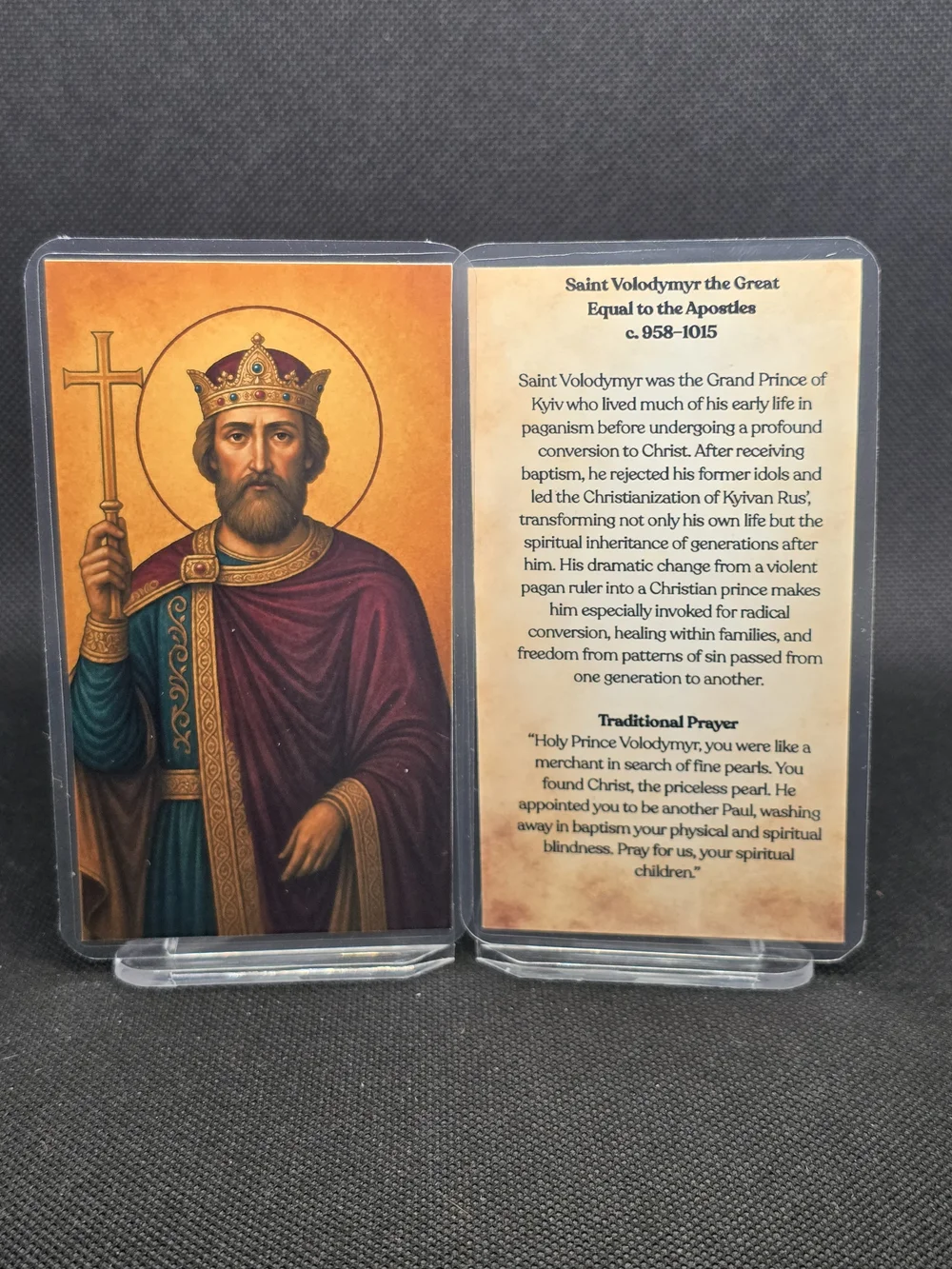
To understand why six bishops would choose to break with the church of their fathers, it helps to understand how little most of them felt they were leaving behind. The Ruthenian Orthodox Church of the late sixteenth century traced its roots to 988, when Grand Prince Vladimir the Great of Kyiv accepted baptism and brought Christianity to Kyivan Rus, the common ancestor civilization claimed today by Ukraine, Belarus, and Russia alike. By the 1590s, that inheritance had passed through centuries of Mongol invasion, the collapse of the old Kyivan state, and absorption first into the Grand Duchy of Lithuania and then, after the Union of Lublin in 1569, directly into the Kingdom of Poland. Political subjugation to a Catholic state was now the daily reality of Ruthenian church life, and it showed.
The condition of the Ruthenian clergy in this period is described, even by sympathetic modern historians, in uncomfortable terms. Bishoprics were frequently treated as political patronage, handed to noblemen or royal favorites with little regard for spiritual qualification, a practice that produced bishops who were sometimes married laymen appointed for secular reasons rather than monks formed for pastoral leadership. Theological education among the parish clergy was thin to nonexistent in large stretches of the countryside. Simony, the buying and selling of church office, was a documented and recurring complaint. The nineteenth-century Catholic Encyclopedia's account of this period, while written from an obviously partisan angle eager to justify what followed, was not inventing the underlying crisis out of nothing: contemporary Orthodox reformers inside the Ruthenian church were making nearly identical complaints about their own clergy at the very same time, which is precisely why lay brotherhoods, or bratstva, had begun organizing in cities like Lviv and Vilnius from the 1580s onward, founding schools and printing presses specifically to address the intellectual and moral crisis they saw around them.
Layered onto this internal weakness was external pressure from two directions at once. The Protestant Reformation had made real inroads among the Ruthenian nobility, with prominent noble families converting to Calvinism or various Protestant confessions and, in some cases, simply abandoning the Ruthenian church's claims on their loyalty and patronage entirely. At the same time, a newly confident, Jesuit-led Catholic Counter-Reformation was advancing through the same Polish-Lithuanian lands with better-funded schools, more rigorous clergy, and an intellectual energy the Ruthenian church, weakened from within, struggled to match. A significant number of Ruthenian bishops and educated laymen looked at this landscape and drew a specific, pragmatic conclusion: institutional survival required a stronger anchor than the Ruthenian church currently had, and Rome, whatever its differences, plainly had resources, structure, and momentum that Kyiv did not.
Part III
Constantinople's Weakness, Moscow's Rise, and Poland's Ambition
The Ruthenian church's crisis of confidence cannot be separated from what had happened to its mother see. Constantinople, the historic Ecumenical Patriarchate under whose jurisdiction the Metropolia of Kyiv had always fallen, had been under direct Ottoman Muslim rule since 1453. A Patriarch operating as a subject of the Sultan, dependent on Ottoman goodwill for his own survival and frequently unable to travel freely or fund distant dioceses, could offer the Ruthenian church little in the way of real institutional protection, theological leadership, or financial support. For a Ruthenian bishop weighing his church's future in the 1580s, Constantinople increasingly looked less like a source of strength and more like a fellow captive.
Then, in 1589, the ground shifted again. Patriarch Jeremias II of Constantinople, traveling through Eastern Europe partly to raise funds, arrived in Moscow and, under substantial pressure from Tsar Feodor I and his powerful advisor Boris Godunov, agreed to elevate the Russian church to full Patriarchal status, consecrating Job of Moscow as the first Patriarch of an independent Russian Orthodox Church. This was, from the Ruthenian perspective in Kyiv, a genuinely alarming development. A newly autocephalous and ambitious Muscovite Patriarchate, unconstrained by any real check from Constantinople, was a rising power on the Ruthenian church's own eastern doorstep, one with an obvious long-term interest in absorbing the historic Kyivan Metropolia into its own jurisdiction. Rome, by contrast, however doctrinally distant, was not a neighboring rival with a direct claim on the same territory and the same flock.
It was in this same year, 1589, that Jeremias II, passing back through Ruthenian lands on his return journey, personally consecrated Michael Rohoza as the new Metropolitan of Kyiv, Halych, and all Rus, with the approval of the Catholic Polish King Sigismund III Vasa. Rohoza would go on to preside, somewhat reluctantly and by most accounts inconsistently, over the very union his own consecrating Patriarch's actions had helped set in motion. King Sigismund III, for his part, was an energetic supporter of the Counter-Reformation and saw obvious political value in binding his Ruthenian subjects more tightly to Rome and, by extension, to his own Catholic crown, weakening any pull toward Orthodox Moscow in the process. The union that followed was never purely a religious event. From its first stirrings, it was inseparably tangled with the political rivalry between a Catholic Polish-Lithuanian state and an increasingly assertive Orthodox Muscovy.
Part IV
Peter Skarga and the Campaign for Union
Ideas do not spread by accident, and the intellectual groundwork for Brest was laid more than a decade before any bishop signed anything. The Society of Jesus had established a presence in Vilnius by 1569, and in the years that followed opened colleges in Yaroslaw, Polotsk, Grodno, and other cities across the Ruthenian lands. These were not simply schools; they were deliberate instruments of the Counter-Reformation, staffed by well-trained priests producing polished works of religious controversy aimed specifically at persuading educated Orthodox readers that union with Rome served their own church's best interests.
The single most influential figure in this campaign was Father Peter Skarga, a formidable preacher, writer, and political operator who would later become court preacher to Sigismund III himself. In 1577, Skarga published, in Polish, a work titled On the Unity of God's Church Under One Shepherd, arguing at length that the Greek Church's separation from Rome was a historical accident rooted in Byzantine pride and political convenience rather than genuine doctrine, and that a return to Roman obedience while preserving the Eastern rite offered the only realistic path to the reform and revitalization Ruthenian religious life so obviously needed. The book provoked exactly the reaction such arguments tend to provoke: outraged Orthodox readers reportedly burned copies of it, which did not stop it from going through a second edition in 1590 or from circulating widely among precisely the literate clergy and nobility whose opinions mattered most. A second Jesuit, Father Benedict Herbest, followed in 1586 with his own polemical history making a parallel case.
It would be a mistake to read this purely as external propaganda imposed on a passive Ruthenian church. Skarga's arguments landed because they met real, already-existing anxieties among Ruthenian bishops and educated laity about their own church's condition. What the Jesuit campaign did was give that anxiety a specific, actionable direction: not simply reform from within, which had been tried and had visibly struggled, but reunion with a larger, better-resourced communion that could supply what internal reform alone had not.
Part V
The Secret Bishops: The Road to Rome, 1590–1595
The path from private conviction to public union ran through more than five years of careful, often secretive maneuvering, and it centered on two men whose names would become permanently attached to the events that followed: Cyril Terletsky, Bishop of Lutsk, and Ipatii Potii, Bishop of Volodymyr.
The Bels Declaration of 1590
The earliest documented step came shortly before a synod convened at Brest by Metropolitan Rohoza in June 1590. A few days before the bishops assembled, Terletsky met at Bels with the Bishops of Lviv (Gedeon Balaban), Pinsk (Leontiy Pelchytsky), and Chelm (Dionisiy Zbiruiski). Together, this group drafted a document pledging to submit their will and understanding to the Pope of Rome, on the express condition that their rites and ecclesiastical privileges be preserved. This declaration was presented to the Brest synod, accepted, and then, for reasons of prudence, deliberately kept secret from the wider church. It is a striking detail of the whole affair that the man who would later become the union's most determined organizer among the original four signatories, Gedeon Balaban of Lviv, was one of its earliest architects, only to reverse his position entirely and withdraw his signature by 1595, becoming one of the union's fiercest opponents at Brest itself.
Ipatii Potii Enters the Story
In 1593, a new figure joined the effort: Ipatii Potii, consecrated Bishop of Volodymyr that year following the death of his predecessor. Potii had previously served as Greater Castellan of Brześć Litewski, a senior secular office, and had entered church life at the specific urging of Prince Konstanty Wasyl Ostrogski, the same magnate who would later become the union's most implacable and powerful opponent. Potii proved to be a sincerely convinced and unusually capable advocate for union, and his partnership with Terletsky became the driving force behind everything that followed.
Sokal, 1594, and the Formal Decree
A further synod at Brest in June 1594 technically lacked formal standing, since King Sigismund III was abroad in Sweden at the time and no true synod could be convened in the sovereign's absence. A few days later, Bishops Terletsky, Balaban, Zbiruiski, and Kopystensky met at Sokal and reaffirmed their commitment to the 1590 Bels agreement. Terletsky, now holding full authority to negotiate the union with both the Polish crown and the Holy See, drew up a formal document titled, in its Latin form, Decretum de recipienda et suscipienda communione sanctae Romanae Ecclesiae, the Decree on Receiving and Entering the Communion of the Holy Roman Church, dated December 2, 1594. It was subscribed by Metropolitan Rohoza himself along with Potii, Terletsky, Zbiruiski, Pelchytsky, and two additional bishops, Gregory of Polotsk and Jonas Hohol of Pinsk.
On June 12, 1595, Rohoza and the Bishops of Volodymyr, Lutsk, and Pinsk met once more at Brest and drafted two formal petitions, one addressed to Pope Clement VIII and one to King Sigismund III, requesting a renewal of the union originally attempted, and famously abandoned, at the Council of Florence in 1439. Potii and Terletsky then traveled to Krakow to negotiate directly with royal delegates and the Apostolic Nuncio over the precise terms. On August 2, 1595, Sigismund III issued a formal declaration granting the Ruthenian clergy legal privileges equal to the Latin clergy, freedom from the excommunications of the Patriarch of Constantinople, guarantees that Ruthenian sees would be filled only by Ruthenian prelates, protection of church property, and a promise that Ruthenian churches and monasteries would not be forcibly latinized. With royal and papal-nuncio sanction secured, delegates were now formally dispatched to Rome itself for the union's definitive ratification, though the metropolitan's own commitment was already wavering: Rohoza, having signed the decree, began quietly working behind the scenes to obstruct its execution, reportedly encouraging Prince Ostrogski to rally the Ruthenian bishops against the very union he had just endorsed on paper.
Part VI
Rome Says Yes: The Hall of Constantine, December 1595
Potii and Terletsky arrived in Rome on November 25, 1595, carrying the December 1594 decree of union. Their reception, by every contemporary account, was one of genuine and considerable excitement. Pope Clement VIII and the Roman Curia discussed the specific conditions of reunion the Ruthenian episcopate had proposed and agreed, without significant resistance, that the integrity of the Byzantine rite would be maintained. Several specific concessions were negotiated and granted at this stage that would prove consequential for centuries: it was agreed that the filioque clause would not be inserted into the Ruthenian recitation of the Nicene Creed, even though the bishops were understood to profess the underlying Catholic theological position; the bishops were dispensed from any obligation to adopt the Gregorian calendar, in order to avoid popular unrest; and the king of Poland was asked, though not immediately guaranteed, to grant the Ruthenian bishops seats in the Senate as a right, matching the status of Latin bishops.
With these terms settled, the union was solemnly and publicly proclaimed in the Hall of Constantine within the Apostolic Palace at the Vatican. Canon Eustachy Wollowicz of Vilnius read, in both Ruthenian and Latin, the Ruthenian episcopate's letter to the Pope dated June 12, 1595. Cardinal Silvio Antoniani thanked the Ruthenian delegation on the Pope's behalf. Potii, speaking in his own name and that of the entire Ruthenian episcopate, read the formal abjuration of the Greek Schism in Latin; Terletsky read the same declaration in Ruthenian; both men signed. Pope Clement VIII addressed the delegation with an allocution expressing his joy, and a commemorative medal was struck bearing the Latin inscription Ruthenis receptis, "the Ruthenians having been received."
That same day, the bull Magnus Dominus et laudabilis nimis was published, announcing to the entire Catholic world the return of the Ruthenians to unity with the Roman Church, reciting the events leading to the union and the concession that Ruthenian rite and customs would be preserved wherever not directly opposed to Catholic doctrine. On February 7, 1596, Clement VIII followed with the brief Benedictus sit Pastor ille bonus, formally instructing that a synod be convened in Ruthenian lands at which the bishops would publicly recite the Catholic profession of faith, and dispatching letters to the Polish king, princes, and magnates urging them to receive and protect the Ruthenians now returning to communion with Rome. A further bull, Decet Romanum Pontificem, dated February 23, 1596, formally defined the rights and canonical relationship of the Ruthenian episcopate to the Holy See. Potii and Terletsky departed Rome in early February 1596, arriving back at Lutsk in March, where they celebrated a solemn Te Deum for the success of their mission. They had no way of knowing that the hardest part of the entire undertaking, actually securing the union's acceptance at home, still lay entirely ahead of them.
Part VII
What Was Promised: The Articles of Union
The full terms negotiated between the Ruthenian bishops and Rome are traditionally summarized as thirty-three articles, submitted with the original petitions and substantially accepted by the Holy See. Understanding what these articles actually promised, and what they explicitly did not require, is essential to understanding why the union could plausibly present itself as a preservation of Eastern Christian identity rather than its abandonment.
What Was Preserved
The core preservation guarantees covered the entire visible and lived texture of Ruthenian church life: the Byzantine liturgical rite in its full form, celebrated in Church Slavonic rather than Latin; the existing Julian calendar for liturgical purposes, specifically to avoid the popular unrest a sudden calendar change would provoke; the tradition of married secular clergy, a point of sharp practical divergence from Western Catholic discipline that Rome nonetheless agreed to respect; local election and appointment of bishops from among the Ruthenian clergy themselves, rather than imposition from Rome or from Polish Latin structures; and continued possession of existing church property, monasteries, and ecclesiastical privileges. Ruthenian churches and monasteries were explicitly not to be latinized.
The Filioque Question, Clarified
No single point of the union is more consistently misreported than the filioque. The Ruthenian bishops were understood, in signing the union, to accept the Catholic theological position that the Holy Spirit proceeds from the Father and the Son. But the specific, negotiated, and granted request was that the word itself would not be inserted into the Ruthenian liturgical recitation of the Nicene Creed. This is not a minor technicality. It meant that Union of Brest churches, from 1596 onward, continued to recite the original, seventh-century, unaltered form of the Creed in their own liturgies, a practice the Ukrainian Greek Catholic Church maintains to the present day, even as many other Eastern Catholic churches across the world do include the filioque in their own liturgical use. Anyone encountering claims that the Union of Brest simply imposed the filioque on the Ruthenian church wholesale is encountering an oversimplification of what the actual documentary record shows.
What Rome Promised but Never Fully Delivered
The single largest source of lasting Ruthenian resentment toward the union's implementation concerned the promised Senate seats. The bishops had specifically requested, and understood themselves to have been granted, the same automatic right to sit in the Polish Senate that Latin Catholic bishops enjoyed, elevating the Ruthenian episcopate to genuine political parity within the Commonwealth's governing structure. In practice, this promise was honored slowly, inconsistently, and only very partially over the following decades, leaving the union's bishops in a frustrating intermediate position: fully Catholic in communion, yet still treated, in important practical respects, as second-class within the very political system that had helped engineer their union in the first place. This gap between promise and delivery would remain a genuine grievance among Uniate clergy for generations, and it complicates any simple narrative in which the union's architects were merely rewarded for their choice.
Part VIII
October 1596: Two Synods in One City
News of the union's acceptance in Rome did not sit quietly at home. At the Diet of Warsaw in May 1596, Ruthenian deputies led by Prince Konstanty Wasyl Ostrogski formally protested the bishops who had signed the decree and declared they would not accept it. Orthodox communities in Vilnius and Lviv actively organized popular opposition to the unionist bishops in their midst. To bring the mounting agitation to a head, King Sigismund III ordered the full Ruthenian episcopate convened in synod at Brest, formally opening October 8, 1596, where the union would be solemnly proclaimed.
Two Gatherings, One Town
What actually convened at Brest that October was not one synod but two, meeting simultaneously in the same small town and refusing to recognize one another's legitimacy. Around October 6, Metropolitan Rohoza, the Ruthenian Bishops of Volodymyr, Lutsk, Polotsk, Pinsk, and Chelm, the Latin Bishops of Lviv, Lutsk, and Chelm, Father Peter Skarga, and other prelates assembled for the pro-union synod. Simultaneously, the Orthodox side gathered its own formidable delegation: numerous lay representatives, various archimandrites, Nicephorus, protosyncellus and personal representative of the Ecumenical Patriarch of Constantinople, and Cyril Lucaris, representing the Patriarch of Alexandria and who would himself later become the controversial Ecumenical Patriarch of Constantinople. Under the leadership of Prince Ostrogski, this Orthodox gathering petitioned for the deposition of the bishops who had left the obedience of Constantinople, demanded maintenance of the Old Calendar, and called for the union to be abrogated outright. Royal commissioners attempted to mediate and win over the opposition; they would not yield, and pointedly refused to recognize Rohoza as their metropolitan at all.
The Proclamation
With reconciliation plainly impossible, the Ruthenian bishops who supported the union, wearing their full pontifical vestments, processed to the Church of Saint Nicholas on October 9 and celebrated the Divine Liturgy. At its conclusion, Hermogenes, Archbishop of Polotsk, mounted the pulpit and formally read the Ruthenian episcopate's declaration accepting union with Rome. The Latin and Ruthenian bishops present then embraced one another and processed to the Latin Church of the Most Blessed Virgin to sing the Te Deum. The following day, another solemn ceremony was held at Saint Nicholas, with Father Skarga himself preaching on the unity of God's Church.
Mutual Excommunication
At this same October 10 gathering, Bishops Gedeon Balaban of Lviv and Mykhailo Kopystensky of Przemyśl, having formally declared their opposition to the union, were deposed and excommunicated by the Catholic synod. Their two dioceses would remain canonically Orthodox for well over a century afterward, with Przemyśl only formally adopting the union in 1692. The Orthodox counter-synod, for its part, issued its own formal protest on October 9, and in the theological and polemical warfare that followed, effectively excommunicated the uniate bishops in turn, regarding them as having abandoned true communion rather than entered it. King Sigismund III moved swiftly and decisively to back the union: an edict issued December 5, 1596, ordered that only bishops who had accepted the act of union would be legally recognized as Ruthenian bishops within the Commonwealth. From that day forward, two rival hierarchies, Catholic and Orthodox, would claim the exact same historic sees, the exact same church buildings, and the exact same Ruthenian flock, with only the power of the Catholic Polish state standing behind one side of the argument.
Part IX
Rus Fighting Rus: The Schism Within the Schism
Historian Timothy Snyder's memorable phrase for what followed Brest is simply "Rus fighting Rus," and it captures the essential tragedy of the union's aftermath better than any single date or document can. This was never, after 1596, a conflict between Catholic Poles and Orthodox Ruthenians as separate peoples. It was a conflict that ran directly through Ruthenian families, Ruthenian parishes, and Ruthenian noble houses, splitting communities that had shared the same Byzantine liturgy, the same saints, and the same Kyivan heritage for six centuries into two camps that now regarded one another as having betrayed that shared inheritance.
Prince Konstanty Wasyl Ostrogski, by far the wealthiest and most powerful Ruthenian magnate in the entire Commonwealth, became the union's most formidable and best-resourced opponent. Ostrogski was not a marginal figure protesting from the sidelines; he was a man whose own patronage had helped fund the Ostroh Academy and the landmark 1581 Ostroh Bible, the first complete printed Bible in Church Slavonic, and whose wealth and political standing gave the anti-union cause a champion capable of matching the Catholic side's own institutional resources. His initial position, notably, was not blanket rejection of any reunion with Rome; earlier in the process he had argued that any genuine union needed to include the Eastern Patriarchs and the Moscow Patriarchate as full partners, not be negotiated in secret by a handful of bishops acting largely on their own authority. It was the manner of the union, as much as its substance, that turned him into its fiercest adversary.
Beneath the level of princes and bishops, the conflict played out for decades as an often bitter contest over church buildings, monastery property, printing presses, and legal recognition, fought in local courts, in pamphlet wars between Catholic and Orthodox polemicists, and, with increasing frequency as the seventeenth century progressed, in outright street violence between rival congregations each convinced the other had stolen what rightfully belonged to them. The Lviv and Vilnius brotherhoods, the same lay confraternities that had organized reform efforts before 1596, now became centers of organized Orthodox resistance to the union, funding legal challenges and maintaining parallel church structures wherever they could sustain them. Both the union's defenders and its opponents could, and did, credibly accuse the other side of instrumentalizing religion for essentially political ends, because both sides were, in fact, doing exactly that.
Part X
Blood in Vitebsk: Saint Josaphat Kuntsevych
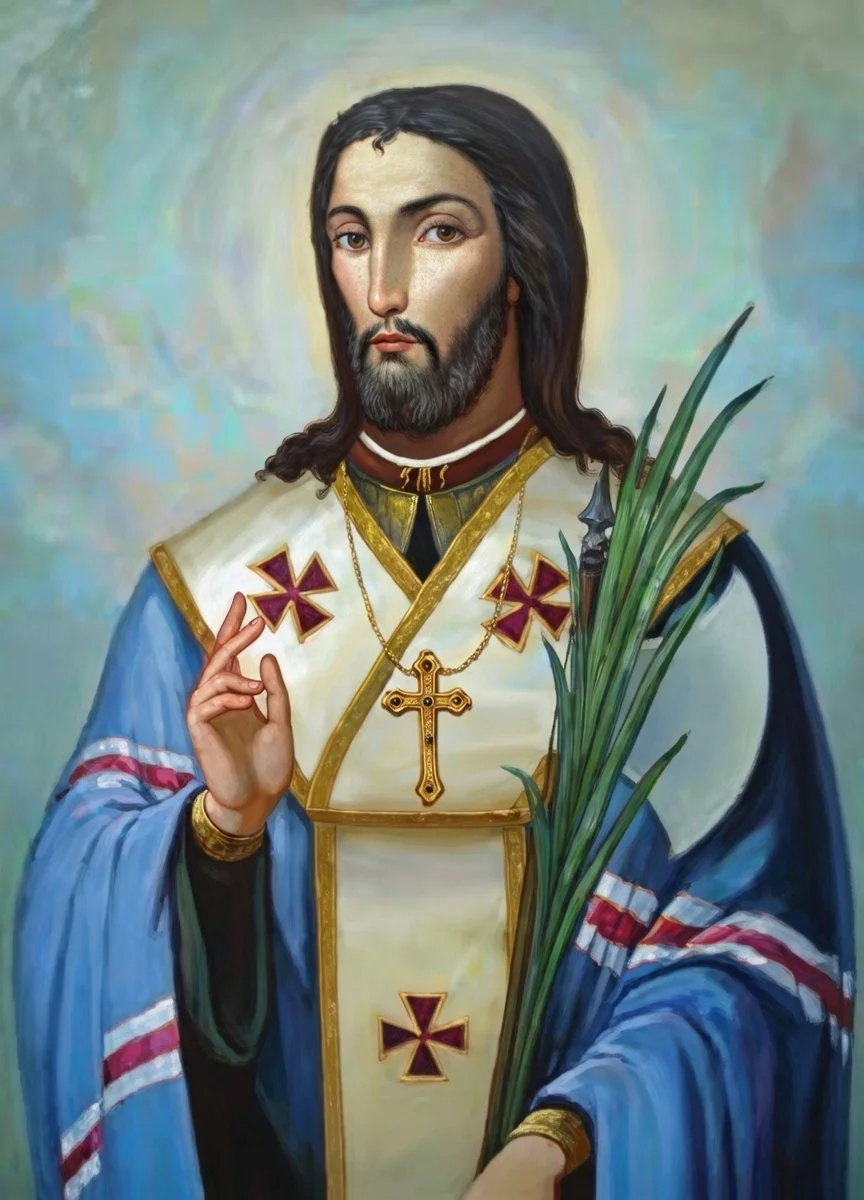
Born Ivan Kunchych around 1580 in Volodymyr, in what is now northwestern Ukraine, the future Josaphat Kuntsevych entered religious life as a young man in an Orthodox family and joined the Order of Saint Basil the Great, receiving the monastic name Josaphat upon his tonsure. He was ordained a priest in 1609 and quickly became known for an intensity of prayer, fasting, and theological conviction that set him apart even within a monastic community, along with a single defining trait that would shape the entirety of his short life and ultimately end it: an absolute, uncompromising commitment to the union with Rome that his own church had entered a generation before his birth.
Consecrated Archbishop of Polotsk in 1618, Josaphat worked with genuine energy to consolidate the union among the clergy and faithful of his archeparchy, reform monastic discipline, restore and rebuild churches, and bring the divided Christian population of the region into a single, unambiguous communion with Rome. His methods, by most historical accounts, leaned toward persuasion rather than brute coercion as his general instinct, but he was also, by his own diocesan authority and at times with the backing of the Catholic Polish state, willing to close Orthodox churches within his jurisdiction and press his flock firmly toward Catholic practice, actions that a significant portion of his own Belarusian and Ruthenian population experienced not as pastoral reform but as the forcible suppression of the faith of their fathers. This tension, between Josaphat's own understanding of himself as reuniting a divided church and his opponents' understanding of him as an aggressive agent of religious coercion, sits at the center of why his death provoked the reaction it did.
On November 12, 1623, while on a pastoral visitation to Vitebsk, an anti-union mob, whose anger had been building for some time over Josaphat's suppression of Orthodox worship in the city, attacked his residence. Members of his household were assaulted first, and his own chancellor was killed. Josaphat himself came forward to face the crowd directly rather than allow further violence against his servants. He was struck with an axe and other weapons, reportedly shot as well, and his body was thrown into the Dvina River. He was approximately forty-three years old.
He was beatified by Pope Urban VIII in 1643 and canonized by Pope Pius IX on June 29, 1867, becoming the first Eastern Slav formally canonized a saint by the Roman Catholic Church, a fact Rome treated as a deliberate and significant statement about the value it placed on the Union of Brest and on those who had died defending it. His feast is kept on November 12 across the Latin Church, the Ukrainian Greek Catholic Church, the Belarusian Greek Catholic Church, and other Ruthenian Catholic traditions. To this day, he is honored as the patron of Christian unity between East and West, and remains, four centuries later, the single most recognizable face of everything the Union of Brest cost.
Part XI
The Cossacks Answer: The Orthodox Hierarchy Restored
For nearly a quarter century after Brest, the Orthodox side of this divided church faced a genuinely existential structural problem that is easy to overlook: it had, for practical purposes, almost no bishops of its own left. With Metropolitan Rohoza and five of his suffragans having gone over to Rome, and Balaban and Kopystensky deposed by the Catholic side and aging without any recognized process for consecrating Orthodox successors, the Kyiv Metropolia was, in the memorable words of one modern Orthodox historian, left "widowed" for roughly twenty-four years, with only a single bishop, Jeremiah Tyssarovsky of Lviv, maintaining unbroken Orthodox episcopal succession in the entire Commonwealth. The Catholic authorities of Poland-Lithuania, not unreasonably from their own vantage point, increasingly regarded the Orthodox Church in their territory as having simply ceased to exist as a distinct legal and canonical body.
What revived it was not diplomacy but the Cossacks. Hetman Petro Konashevych-Sahaidachny, commander of the Zaporozhian Host and by this point one of the most militarily formidable figures in the entire Commonwealth, had in 1620 enrolled himself and his entire Cossack army as members of the Kyiv Epiphany Brotherhood, a deliberate and pointed act of institutional support for Orthodox religious life. When Patriarch Theophanes III of Jerusalem, returning from a diplomatic mission to Moscow, passed through Ukrainian lands that same year, Sahaidachny welcomed him to Kyiv with several thousand Cossacks in a carefully staged show of force and protection, and then set about persuading him to do what no one else had dared attempt: consecrate an entirely new Orthodox episcopate for the Kyiv Metropolia, in direct defiance of the Catholic Commonwealth's official religious settlement.
In August 1620, under armed Cossack protection, Theophanes III consecrated Job Boretsky as the new Metropolitan of Kyiv, Halych, and all Rus, along with an entire slate of Orthodox bishops for the other vacant sees: Meletii Smotrytsky for Polotsk, Isaia Kopynsky for Przemyśl, and others for Volodymyr-Volynskyi, Lutsk, and Chelm. King Sigismund III, furious, publicly accused Theophanes of being a covert Ottoman intelligence agent and ordered his arrest along with the arrest of every bishop he had consecrated, but Sahaidachny's Cossack protection made the order impossible to carry out before the Patriarch had safely departed Ukrainian territory. The practical result was as significant as it was blunt: from 1620 onward, there were now two fully functioning metropolitans of Kyiv, Halych, and all Rus, one Catholic and one Orthodox, each with a full slate of bishops, each claiming to be the sole legitimate continuation of the ancient Kyivan Church. That parallel structure, created by force of Cossack arms in defiance of the Commonwealth's own laws, has never fully disappeared from Ukrainian church life in the four centuries since.
Part XII
An Uneasy Peace: Peter Mohyla and the 1632 Articles of Pacification
The death of Sigismund III in 1632 opened a narrow window for compromise that the previous thirty-six years of confrontation had never allowed. At the Convocation Sejm that year, Orthodox and Protestant nobles jointly submitted a set of formal demands, and Petro Mohyla, the formidable and highly educated Archimandrite of the Kyiv Pechersk Lavra, personally negotiated on the Orthodox side. The result, adopted by the incoming King Wladyslaw IV, was a document known as the Articles for the Pacification of the Ruthenian People, which for the first time since 1596 granted the Orthodox Church in the Commonwealth full and explicit legal recognition, restoring to it its own hierarchy, headed by a metropolitan and four bishops, along with the right to conduct services, maintain churches, monasteries, printing houses, schools, and brotherhoods freely. Kyiv's churches and monasteries, with the notable exception of the Vydubychi Monastery, were returned to Orthodox control.
Petro Mohyla himself, elected Orthodox Metropolitan of Kyiv under these new articles and consecrated in May 1633, would go on to become one of the towering figures of seventeenth-century Ruthenian church history, restoring Kyiv's Saint Sophia Cathedral, founding what became the Kyiv-Mohyla Academy, and producing a landmark Orthodox catechism, the Orthodoxa Confessio Fidei, that was eventually ratified by Orthodox synods and, remarkably, by all four Greek Patriarchs. Mohyla was, by every account, a fierce and unyielding opponent of the union on doctrinal grounds, yet he was also thoroughly trained in Latin scholastic methods and deliberately imported those same methods into Orthodox theological education, a paradox that captures something essential about this whole period: the two churches were locked in genuine rivalry even as their leading figures remained products of the same broader intellectual world.
The 1632 settlement, whatever its genuine achievement in formalizing legal coexistence, satisfied neither side completely and resolved nothing at the level of underlying grievance. King Wladyslaw IV, under continued pressure from the Polish Catholic nobility, walked back several of its clauses even after confirming it at his own coronation Sejm in 1633. Disputes over which specific churches, monasteries, and properties belonged to which confession continued for years afterward in local courts and, increasingly, in the streets. Persecution of Orthodox believers in areas where Uniate authority prevailed became, alongside social and economic grievances, one of the contributing causes of the massive Cossack uprising led by Bohdan Khmelnytsky beginning in 1648, an uprising with a genuinely deep and explicitly anti-union religious dimension that would go on to reshape the political map of Eastern Europe far beyond anything the original architects of Brest could have anticipated.
Part XIII
How the Union Spread
It is a common misconception that the Union of Brest instantly and completely converted the whole Ruthenian church. In reality, the union's geographic spread across the seventeenth century was slow, uneven, and driven diocese by diocese, often decades after 1596 itself. The Eparchy of Przemyśl, one of the two sees that had formally refused the union at Brest under Bishop Mykhailo Kopystensky, remained canonically Orthodox for nearly a full century afterward before finally adopting the union in 1692. The Eparchy of Lviv, the other refusing see, followed only in 1700, more than a century after Balaban's original excommunication.
A separate but closely related development took place further west and south, among the Rusyn population of the Carpathian mountain region then under the Kingdom of Hungary, in territory today divided among Ukraine, Slovakia, Hungary, and Romania. In 1646, sixty-three Orthodox priests of this Carpatho-Rusyn population formally accepted union with Rome at Uzhhorod, an event remembered as the Union of Uzhhorod. Though distinct in its own particular history and negotiated separately from the original 1596 agreement, the Union of Uzhhorod operated on essentially the same theological and canonical logic as Brest and produced what eventually became the Ruthenian Greek Catholic Church, later organized around the Eparchy of Mukachevo, the same church that produced its own celebrated twentieth-century martyr, Blessed Theodore Romzha, whose story belongs directly alongside the Soviet-era suffering described later in this article.
By the eve of the eighteenth century's great political upheavals, the pattern that would define this church's geography for the next two hundred years was largely set: a Uniate church strongly established across much of Belarus, Volhynia, and eventually Galicia, coexisting uneasily but legally with a parallel Orthodox hierarchy, the whole arrangement still resting, ultimately, on the continued goodwill and political stability of the Catholic Polish-Lithuanian state that had helped bring the union into being in the first place. That state's collapse, beginning with the partitions of Poland in the 1770s, would prove to be the single most consequential event in the union's entire subsequent history, determining with brutal finality which portions of this church would survive the next century and which would not.
Part XIV
Erased by the Tsars: The Synod of Polotsk, 1839
The partitions of Poland-Lithuania between 1772 and 1795 handed the vast majority of the Uniate Church's territory and faithful directly to the Russian Empire, an officially Orthodox state that regarded its newly acquired Uniate subjects not as a distinct religious community to be tolerated, but as Orthodox believers who had been improperly separated from their true church by historical accident and Polish Catholic political pressure. This view would, over the following decades, become imperial policy pursued with real patience and real ruthlessness.
Joseph Semashko's Campaign
The central figure in the Uniate Church's eventual destruction within the Russian Empire was, in one of history's sharper ironies, a Uniate priest himself: Joseph Semashko, born in 1798, who by 1828 had already presented Tsar Nicholas I with a formal memorandum outlining a gradual, methodical plan for returning the Uniate Church to Russian Orthodoxy. Over the following decade, Semashko worked patiently and often covertly within the church's own administrative structures, subordinating the Uniate Ecclesiastical College to the Russian Department of Foreign Confessions and then, by 1837, to the direct authority of the Orthodox Most Holy Synod itself, all while cultivating a small, trusted inner circle who understood the full scope of what he was actually planning. When the formal head of the Uniate Church, Metropolitan Josaphat Bulhak, died of natural causes in 1838, the entire remaining hierarchy fell effectively into Semashko's hands.
February 12, 1839
Semashko moved quickly. Using a combination of persuasion, administrative pressure, and, by many accounts, outright threats of arrest and exile, he collected signed statements of willingness to reunite with Orthodoxy from more than 1,300 Uniate priests and monks, a number that would eventually swell past 1,600. Despite this pressure, 593 priests reportedly refused to sign at all. On February 12, 1839, the Sunday of the Triumph of Orthodoxy on the church calendar, a council of three Uniate bishops, Joseph Semashko himself, Basil Luzhinsky, and Anthony Zubko, together with roughly twenty additional senior clergy, gathered at Polotsk (in present-day Belarus) and formally adopted a decree proclaiming unity with the Russian Orthodox Church and petitioning Tsar Nicholas I to ratify the reunification. Bishop Semashko then celebrated a solemn Divine Liturgy in Polotsk's Cathedral of Saint Sophia, commemorating the Orthodox Patriarchs rather than the Pope of Rome for the first time, and proclaiming the Orthodox Symbol of Faith.
The Russian state's own commemorative medal for the occasion captured the official framing with a bluntness that has never entirely lost its power to unsettle readers on either side of the argument: it declared that those "torn away by force" in 1596 had been "reunited in love" in 1839. Whatever one makes of that inscription's theology, its politics are unambiguous. Nicholas I ratified the reunification, and the Uniate Church, along with all of its property, was formally and permanently absorbed into the Russian Orthodox state church across the entire territory of the Russian Empire. A smaller, separate remnant of the union that had survived in the Kholm region of Russian Poland was similarly and forcibly liquidated in 1875. From 1839 onward, the Uniate Church, the direct institutional descendant of what six bishops had built at Brest two and a half centuries before, had no legal existence anywhere within the borders of the Russian Empire at all.
Part XV
Refuge in Galicia: The Habsburgs and Metropolitan Sheptytsky
Everything the Russian Empire dismantled in 1839, a different empire was, at the very same historical moment, actively protecting a few hundred miles to the west. Galicia, the region centered on Lviv, had passed to Catholic Habsburg Austria rather than Orthodox Russia during the partitions of Poland, and the Habsburg monarchy, for its own political reasons connected to managing a religiously and ethnically complex province, chose to support and even directly subsidize the Greek Catholic Church there as a counterweight to the numerically dominant Roman Catholic Polish population of the same territory. Empress Maria Theresa herself is credited with formally renaming the church from "Uniate," a term that had by then acquired a derogatory edge, to "Greek Catholic," the designation that has stuck ever since. Under this deliberate Austrian patronage, the Greek Catholic Church in Galicia built strong seminaries, an increasingly well-educated clergy, and a network of parish schools that would have been entirely unthinkable for the parallel church structure that had just been legally erased across the Russian border.
Metropolitan Andrey Sheptytsky
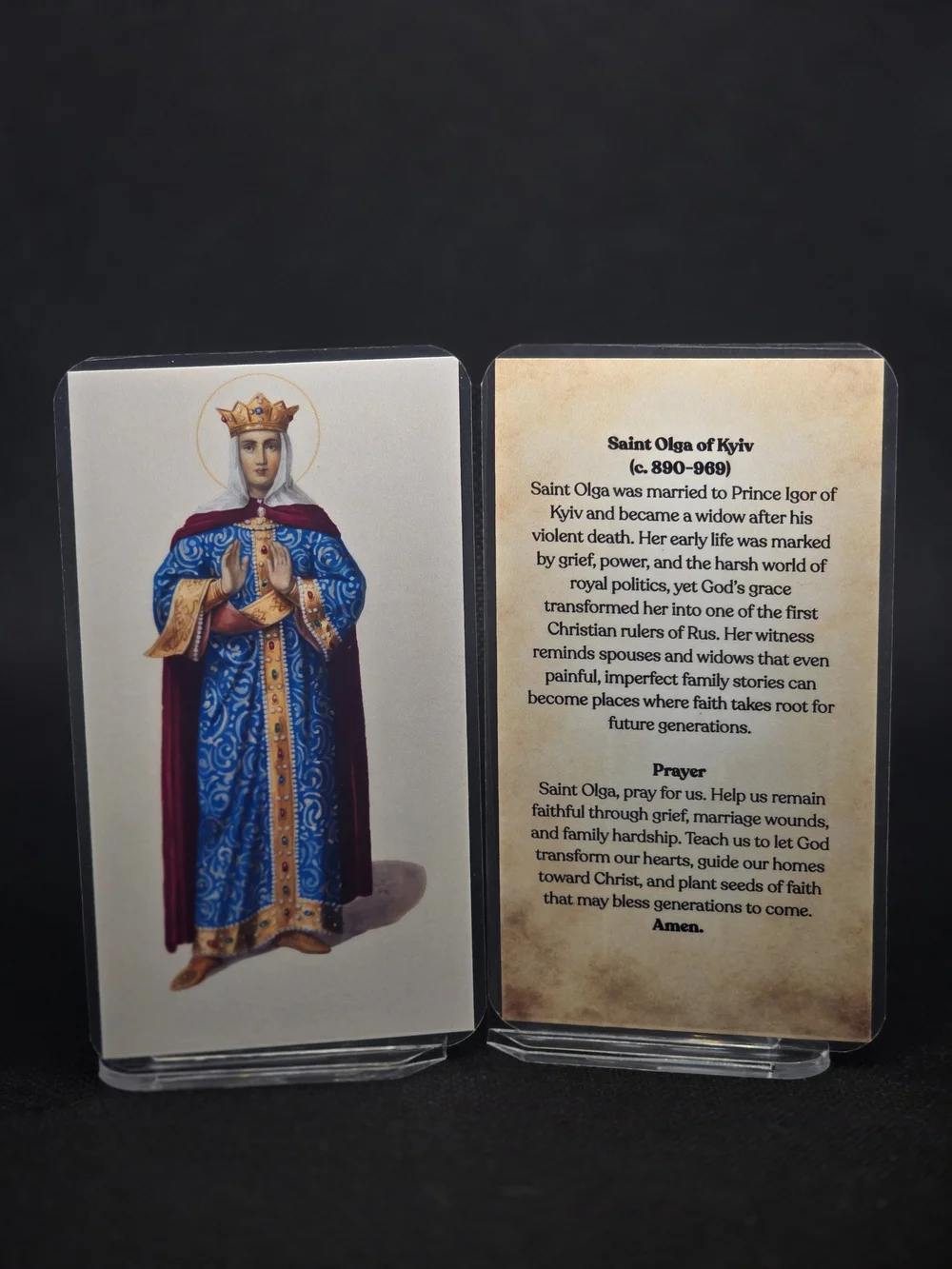
No single figure did more to shape what this Galician church became than Andrey Sheptytsky, who led it as Metropolitan of Halych and Archbishop of Lviv from 1901 until his death in 1944, a tenure that spanned two world wars and six entirely different political regimes ruling the same territory: Austrian, briefly Ukrainian, Soviet, Polish, Nazi German, and Soviet again. Sheptytsky, born into a noble family with deep roots in both the Polish szlachta and Ruthenian tradition, used his position as a member of the Austrian parliament and the Galician Diet to advocate consistently for Ukrainian national and cultural rights within the empire, founded the Lviv Theological Academy in 1928 to raise the intellectual level of his clergy, and became, under his leadership, an institution that historian Paul Robert Magocsi has described as an instrument of the Ukrainian national cause itself, not merely a religious body operating alongside it.
The Holocaust Years
Sheptytsky's final years brought the church's most morally complicated and most genuinely heroic chapter into direct collision with one another. He publicly welcomed the German army's arrival in 1941 as liberation from brutal Soviet occupation, and Greek Catholic chaplains were subsequently appointed to the SS Galicia Division, choices that remain a source of real historical scrutiny and criticism. At the very same time, at Sheptytsky's own personal initiative and under his direct protection, roughly 150 Jews, including children, were hidden in Greek Catholic monasteries across Galicia, among them the two sons of the chief rabbi of Lviv, Dr. Ezekiel Levin, and the future chief rabbi of the Israeli Air Force, David Kahane, sheltered together with his wife and daughter. Sheptytsky's own brother, Klymentiy Sheptytsky, was directly instrumental in this rescue effort and would later die a hieromartyr in a Soviet prison in 1951, beatified in 2001 alongside dozens of other twentieth-century Ukrainian Greek Catholic martyrs. Metropolitan Andrey Sheptytsky died on November 1, 1944, and lies buried in the crypt of Saint George's Cathedral in Lviv, the same cathedral that had become, under his four decades of leadership, the undisputed spiritual heart of a church about to face the single greatest trial in its entire history.
Part XVI
Marked for Destruction: Stalin and the Lviv Sobor
By the mid-twentieth century, the church that had grown out of the Union of Brest had become, in western Ukraine alone, a genuinely massive institution: more than five million faithful, over three thousand parishes, more than four thousand churches, five seminaries, and one hundred twenty-seven monasteries concentrated in Galicia. From Stalin's perspective, this made it precisely the wrong kind of institution to leave standing in newly absorbed Soviet territory: loyal to Rome, an ideological adversary of world communism; unmistakably Ukrainian in national character, a potential vehicle for separatist sentiment; and deeply woven into the everyday social and cultural fabric of an entire region the Soviet Union had just seized as spoils of the Second World War. In February 1945, Stalin's government made the decision that the Ukrainian Greek Catholic Church would be eliminated.
The Bishops Vanish
The method chosen was a staged council conducted from behind bars. In April 1945, the NKGB, forerunner of the KGB, arrested the entire surviving episcopate of the Ukrainian Greek Catholic Church, including Metropolitan Josyf Slipyj, the church's senior hierarch, and imprisoned all of them together. With no bishops remaining free to object, the NKGB then assembled a hand-picked "initiative group" of three clergy, two of whom were secretly Orthodox priests who had formally re-entered Greek Catholic clergy ranks specifically to help engineer the operation, and spent roughly a year cultivating a wider network of clergy who could be pressured, bribed, or simply coerced into participating in what was staged to look like a legitimate church council.
March 8 to 10, 1946
That staged council, the Lviv Sobor, assembled 216 clergy and 19 laymen in the Cathedral of Saint George in Lviv, the very cathedral where Metropolitan Sheptytsky lay buried. With every legitimate bishop of the church imprisoned and the entire proceeding organized and monitored throughout by Soviet state security, the assembled group voted to "reunify" the Ukrainian Greek Catholic Church with the Russian Orthodox Church and to formally nullify the Union of Brest of 1596. The Ukrainian Greek Catholic Church was declared, by fiat of this manufactured assembly, not to legally exist at all. Pope Benedict XVI would later describe this gathering plainly as a "pseudo-synod," a characterization even a French Orthodox theologian belonging to the Moscow Patriarchate, Nicolas Lossky, acknowledged as an accurate description of what had actually taken place.
The Underground Church
The Ukrainian Greek Catholic Church did not stop existing simply because a state security service had declared that it had. It went underground, and stayed there for forty-three years. Priests continued celebrating the Byzantine Rite in private homes, in forest clearings, and behind closed doors. Faithful continued attending in secret, at real and constant personal risk. Metropolitan Josyf Slipyj himself spent eighteen years in Soviet labor camps before finally being released to Rome in 1963, later becoming a cardinal. Hundreds of priests and religious were imprisoned, exiled, or killed outright across this period.
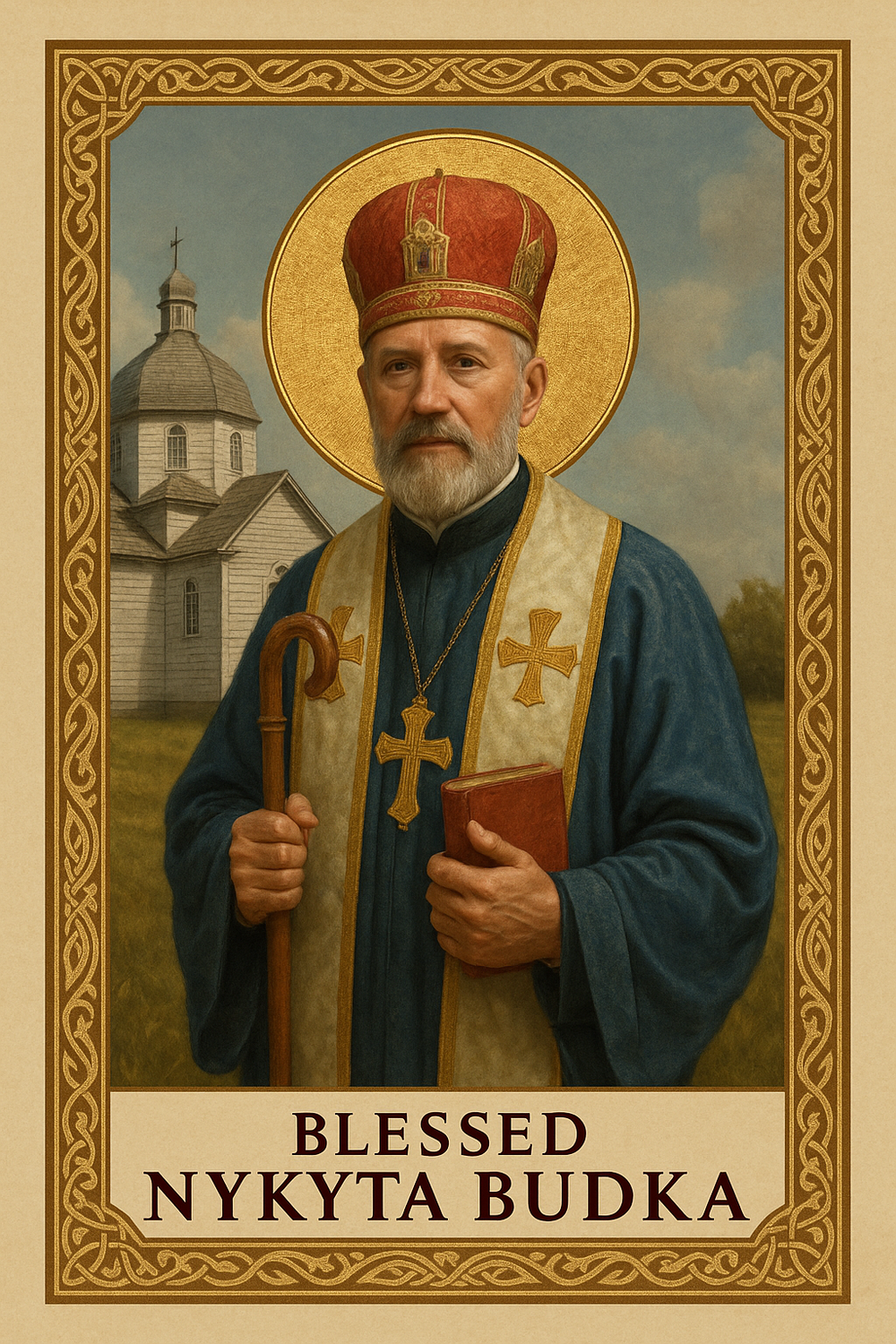
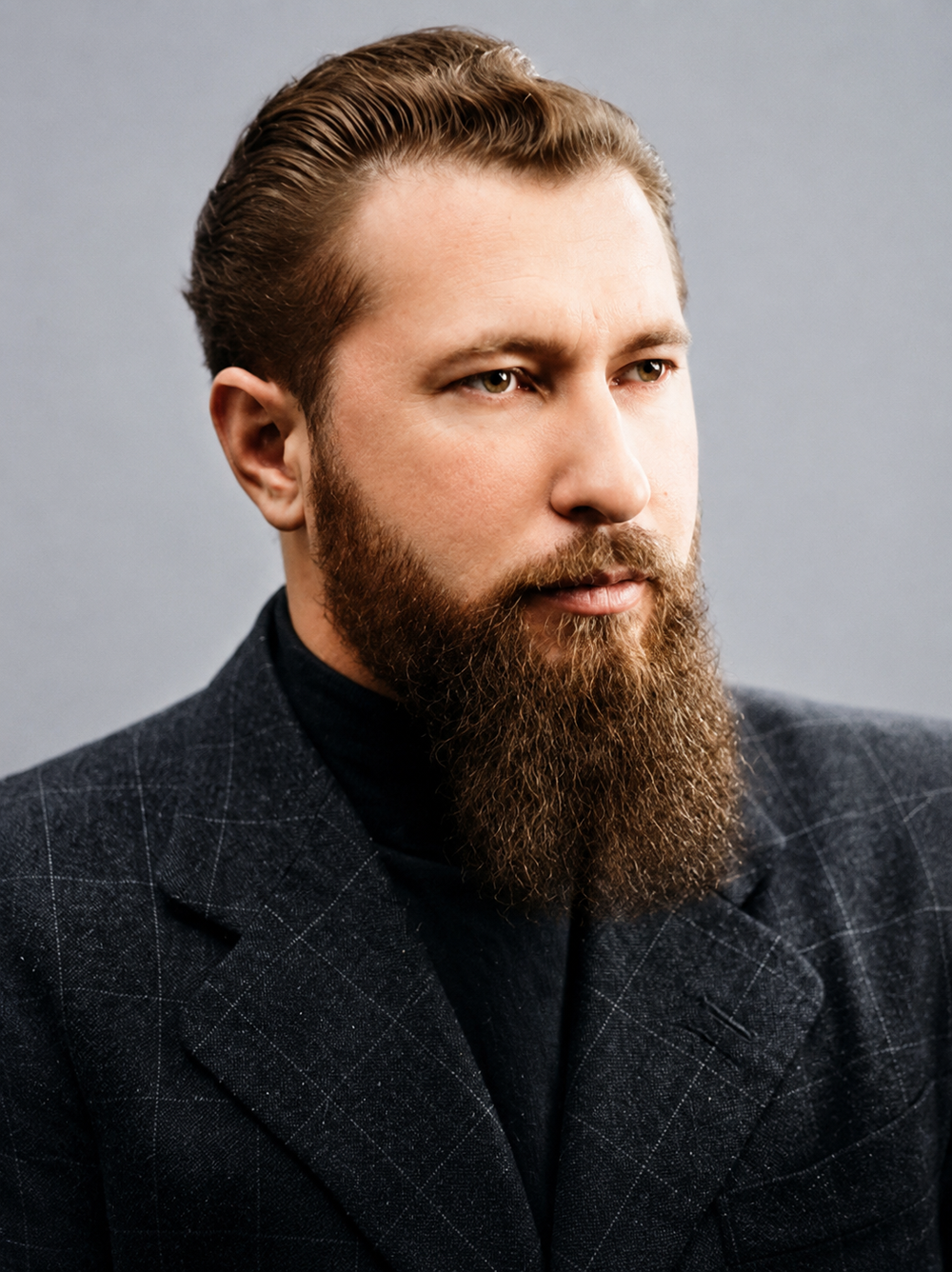
Among the martyrs of this underground era, beatified together with twenty-four companions by Pope John Paul II at the Lviv Hippodrome on June 27, 2001, were bishops, priests, and religious whose stories together define what this forty-three-year persecution actually looked like at the level of individual human lives: Blessed Vasyl Velychkovsky, a Redemptorist bishop who survived a first term in the gulag only to be re-arrested and eventually die of his injuries after being expelled from the Soviet Union in 1973; Blessed Nykyta Budka, the first Ukrainian Catholic bishop ever appointed for Canada, who returned to Europe, was arrested by Soviet authorities in 1945, and was worked to death in a labor camp at Karaganda in 1949; Blessed Nicholas Charnetsky, a Redemptorist bishop who endured years of imprisonment and torture; and Blessed Theodore Romzha, the young Bishop of Mukachevo in Carpatho-Ukraine, whose church traced its own separate but parallel origin to the 1646 Union of Uzhhorod, and who was fatally poisoned by Soviet agents in October 1947 after surviving an earlier staged truck "accident" that had been intended to kill him outright.
Part XVII
1989 and After: The Church Returns
The underground endurance of the Ukrainian Greek Catholic Church through forty-three years of official nonexistence was tested, and largely vindicated, the moment Soviet control itself began to loosen. As Mikhail Gorbachev's policy of glasnost opened previously unthinkable space for religious expression in the late 1980s, underground Ukrainian Greek Catholic bishops and priests began coming forward publicly, organizing mass demonstrations demanding legalization, and reclaiming church buildings that had been in Russian Orthodox hands for over four decades. The church was formally re-legalized across 1989 to 1991, precisely as the Soviet Union itself was collapsing, an almost perfectly literal fulfillment of the pattern this church's entire history had already established: institutions with real communal identity do not simply cease to exist because a state declares them illegal, whatever the apparent finality of the declaration at the time it is made.
The church that reemerged in the 1990s had to be rebuilt almost from scratch in every practical sense, its clergy formed in secret and often without formal theological training, its buildings requiring reclamation, its institutions requiring recreation. Its recovery over the following three decades has been, by any honest measure, extraordinary. Sviatoslav Shevchuk, elected Major Archbishop of Kyiv-Halych in March 2011 at just forty years old, has led the church through a period that has included Ukraine's 2014 Euromaidan revolution, the annexation of Crimea and war in the Donbas, and Russia's full-scale invasion beginning in February 2022, becoming in the process one of the most internationally recognized Catholic voices speaking on behalf of Ukraine's suffering during that ongoing war.
By its own published figures, the Ukrainian Greek Catholic Church today numbers more than five million faithful across roughly twenty-five countries on five continents, making it, by a considerable margin, the largest of the twenty-three Eastern Catholic Churches in the world, second in size only to the Latin Church itself among all the particular churches in communion with Rome. Its worldwide diaspora, seeded by successive waves of emigration stretching back to Bishop Budka's own pioneering mission to Canada in 1912, maintains active eparchies across the United States, Canada, Brazil, Argentina, Australia, the United Kingdom, Germany, France, and beyond. In 2005, the church relocated its central administrative seat from Lviv to Kyiv itself, a symbolically significant return to the ancient Kyivan Metropolia the Union of Brest had always claimed as its true inheritance, and the hierarchs and faithful of the church today formally petition Rome for recognition of their major archbishop under the historic title of Patriarch, a request that remains, as of this writing, still under consideration.
Part XVIII
What the Union of Brest Actually Settled, and What It Never Did
Four centuries on, it is worth being direct about something most accounts of the Union of Brest, told from either side, tend to obscure: this is not a story with one straightforwardly innocent party. The Catholic account, at its most triumphalist, presents Brest as a clean act of reunion, a lost flock rightly returning to its true shepherd, and treats the century of violence, mutual excommunication, and forced conversion that followed as regrettable but ultimately incidental to the union's own legitimacy. The Orthodox account, at its most polemical, presents Brest as pure political engineering by a hostile Catholic state acting through a handful of self-interested or coerced bishops, and treats the genuine, well-documented internal crisis of the pre-1596 Ruthenian church, along with the sincere convictions of men like Potii and Josaphat Kuntsevych, as little more than a cover story. Both readings, taken to their extremes, flatten a genuinely complicated human and institutional history into propaganda.
What the documentary record actually supports is closer to this: a Ruthenian Orthodox Church facing a real crisis of leadership, education, and institutional confidence, situated inside a politically hostile Catholic state and squeezed between a weakened mother Patriarchate under Ottoman rule and a rising rival Patriarchate in Moscow, produced a group of bishops who concluded, not unreasonably given their circumstances, that union with Rome offered their church's best realistic path forward. That same group of bishops negotiated genuinely substantial guarantees for their own rite, language, married clergy, and customs, guarantees that, whatever their political motivations, were largely honored over the following centuries in a way that preserved a recognizably Eastern Christian identity within Catholic communion. And that same union was imposed, in critical respects, without the willing consent of a very large portion of the very people it claimed to represent, using the coercive power of a Catholic state against an Orthodox population that had never been meaningfully consulted, producing a rupture in Ruthenian religious and communal life that direct violence, forced conversions in both directions across succeeding centuries, and competing claims to the same church buildings kept raw for generations.
The union never resolved the underlying question it was meant to answer: whether Ruthenian and Ukrainian Christianity's future lay with Rome or with Constantinople and Moscow. It simply gave that question, for the first time, two competing institutional answers occupying the exact same historical and geographic space, each claiming unbroken descent from the baptism of Kyivan Rus in 988. That unresolved duality is precisely what still structures Ukrainian church life today, where the Ukrainian Greek Catholic Church, the Orthodox Church of Ukraine, and the Ukrainian Orthodox Church all continue to trace their own competing lines of legitimacy back through the same sixteenth-century argument. What can be said with real confidence, across every honest telling of this story, Catholic and Orthodox alike, is that the men and women who paid the actual price for that unresolved argument, from Josaphat Kuntsevych in a Vitebsk street in 1623 to Theodore Romzha in a Soviet hospital bed in 1947, believed in something larger than the political convenience that had originally shaped the institutions they served, and gave their lives for it.
Part XIX
Complete Timeline of the Union of Brest
- 988 Grand Prince Vladimir (Volodymyr) the Great of Kyiv is baptized, bringing Christianity to Kyivan Rus and establishing the Metropolia of Kyiv under the Ecumenical Patriarchate of Constantinople.
- 1453 Constantinople falls to the Ottoman Empire, sharply weakening the Ecumenical Patriarchate's capacity to support distant dioceses such as Kyiv.
- 1569 The Union of Lublin absorbs Ruthenian lands directly into the Kingdom of Poland, intensifying political and religious pressure on the Orthodox Ruthenian population.
- 1577 Jesuit Father Peter Skarga publishes “On the Unity of God's Church Under One Shepherd,” the foundational intellectual case for union with Rome.
- 1589 Patriarch Jeremias II of Constantinople elevates Moscow to an independent Patriarchate and consecrates Michael Rohoza as Metropolitan of Kyiv.
- 1590 Four bishops sign a secret declaration at Bels and Brest pledging submission to Rome while preserving their rite.
- December 2, 1594 The Ruthenian episcopate, led by Potii and Terletsky, formally drafts the Decree on Receiving Communion with the Holy Roman Church.
- November 25, 1595 Bishops Ipatii Potii and Cyril Terletsky arrive in Rome carrying the decree of union.
- December 23, 1595 The union is solemnly proclaimed in the Hall of Constantine at the Vatican; the bull Magnus Dominus et laudabilis nimis is published.
- October 6–9, 1596 Two rival synods convene simultaneously at Brest; the union is proclaimed by six bishops, while an Orthodox counter-synod under Prince Ostrogski rejects it and excommunicates the uniate bishops in turn.
- 1620 Under Cossack Hetman Sahaidachny's protection, Patriarch Theophanes III of Jerusalem secretly consecrates a full parallel Orthodox hierarchy for Kyiv, restoring competing episcopates.
- November 12, 1623 Archbishop Josaphat Kuntsevych of Polotsk is killed by an anti-union mob in Vitebsk.
- 1632 The Articles for the Pacification of the Ruthenian People grant the Orthodox Church renewed legal recognition; Peter Mohyla becomes Orthodox Metropolitan of Kyiv in 1633.
- 1646 The Union of Uzhhorod brings Carpatho-Rusyn Orthodox clergy into communion with Rome, founding what becomes the Ruthenian Greek Catholic Church of Mukachevo.
- 1648 The Khmelnytsky Cossack uprising erupts, with strong anti-union religious grievances among its causes.
- 1692 & 1700 The Eparchies of Przemyśl (1692) and Lviv (1700), which had refused the union in 1596, finally adopt it.
- 1772–1795 The partitions of Poland divide Uniate territory between Catholic Habsburg Austria and Orthodox Imperial Russia, setting up two entirely different fates for the same church.
- February 12, 1839 The Synod of Polotsk, engineered by former Uniate priest Joseph Semashko, formally dissolves the Uniate Church across the Russian Empire, absorbing roughly 1.6 million faithful into Russian Orthodoxy.
- 1875 The remaining Uniate structure in the Kholm region of Russian Poland is similarly liquidated by imperial decree.
- 1901–1944 Andrey Sheptytsky serves as Metropolitan of Halych and Archbishop of Lviv, building the Greek Catholic Church in Austrian and later Polish Galicia into a central pillar of Ukrainian national life, and personally sheltering roughly 150 Jews during the Holocaust.
- April 1945 The NKGB arrests the entire surviving episcopate of the Ukrainian Greek Catholic Church, including Metropolitan Josyf Slipyj.
- March 8–10, 1946 The staged Lviv Sobor, held under Soviet state security supervision with no legitimate bishops present, purports to dissolve the union and reunite the church with Russian Orthodoxy. The Ukrainian Greek Catholic Church becomes the largest banned religious body in the world.
- October 31, 1947 Bishop Theodore Romzha of Mukachevo, heir to the Union of Uzhhorod, dies after being poisoned by Soviet agents.
- 1946–1989 The Ukrainian Greek Catholic Church survives forty-three years entirely underground.
- 1989–1991 The church is legalized again amid the collapse of the Soviet Union.
- June 27, 2001 Pope John Paul II beatifies Bishop Nicholas Charnetsky and twenty-four companion martyrs of the Soviet persecution at the Lviv Hippodrome, and visits Ukraine.
- 2005 The Ukrainian Greek Catholic Church relocates its central see from Lviv to Kyiv.
- 2011–Present Sviatoslav Shevchuk leads the church as Major Archbishop of Kyiv-Halych through revolution, war, and Russia's full-scale 2022 invasion of Ukraine, as the church grows to over five million faithful worldwide, the largest of the twenty-three Eastern Catholic Churches.
Part XX
A Prayer for the Unity of Christ's Church
O Lord Jesus Christ, You prayed on the night before Your death that all who believe in You might be one, as You and the Father are one. Look with mercy on the divisions among Your people, divisions we did not always choose and have not always known how to heal.
By the intercession of Saint Josaphat Kuntsevych, who gave his life in Vitebsk defending the unity of Your Church, and by the intercession of the martyrs of Lviv, Blessed Vasyl, Blessed Nykyta, Blessed Nicholas, Blessed Theodore, Blessed Klymentiy, and all who suffered for the faith they would not renounce under persecution from every side, grant healing to every wound that religious division has ever caused between brothers and sisters who share one baptism.
Grant courage to those who suffer today for their faith, as the Ukrainian Greek Catholic Church has suffered across four centuries. Grant wisdom to those who work for genuine reconciliation between East and West. And grant to all of us the humility to recognize, in every believer who calls upon Your name, a brother or sister You have already reconciled to Yourself on the Cross.
Saint Josaphat Kuntsevych, pray for us. Blessed martyrs of the Ukrainian Greek Catholic Church, pray for us. Holy Theotokos, protectress of Kyiv, pray for us.
Frequently Asked Questions
Common Questions About the Union of Brest
One Argument, Four Centuries, and a Church That Would Not Disappear
Six bishops signed at Brest in October 1596. Two refused. A prince mobilized his fortune against them. A monk-turned-archbishop died for them in a Vitebsk street. An empire erased them by decree in 1839. Another empire's secret police staged their disappearance in 1946. And still, in parishes from Lviv to Chicago to Buenos Aires to Melbourne, the church born in that argument gathers every Sunday to sing a Divine Liturgy in the same Church Slavonic those six bishops fought to keep, reciting a Creed that still, four hundred and thirty years later, does not contain the word Rome once asked to add and then agreed to leave out.
Every saint and martyr named in this article, from Josaphat Kuntsevych to Theodore Romzha, believed their union with Rome was worth what it cost them. Every Orthodox believer who resisted that union, from Prince Ostrogski to the underground faithful who kept faith through 1946, believed their resistance was worth what it cost them too. This is our mission at The Eastern Church: to bring the full, complicated, unflattened truth of stories like this one to light, so that the holiness on every side of them can be seen for what it actually was, not the simplified version either side prefers to tell.
If this history moved you, carry one of these martyrs' prayer cards with you, or simply pray for the healing of a wound in Christ's Church that has now outlasted the lifetimes of everyone who first opened it. If you are not able to purchase a card right now, your prayer is worth more to us than any purchase ever could be.
Lord Jesus Christ, Son of God, please have mercy on me, a horrible sinner.
Get the Saint Josaphat Prayer Card →