What Is Byzantine Catholic? Complete Guide to History, Beliefs, Liturgy & All 14 Churches
Eastern Catholic • Byzantine Tradition • 14 Churches • History • Beliefs • Liturgy
What Is Byzantine Catholic? A Complete Guide to History, Beliefs, Liturgy, and All 14 Churches
Fully Catholic. Distinctly Eastern. Rooted in the ancient liturgical tradition of Constantinople. Byzantine Catholicism is one of the richest and most misunderstood expressions of Christian faith in the world — and this is the most comprehensive guide to it available anywhere.
Byzantine Catholic — At a Glance
- What Is It
- Eastern Catholic Christians of the Byzantine liturgical tradition, in full communion with the Pope of Rome
- Number of Churches
- 14 churches of the Byzantine rite within the Catholic Church
- Total Members
- Approximately 10–12 million worldwide
- Primary Liturgy
- Divine Liturgy of Saint John Chrysostom (also the Divine Liturgy of Saint Basil the Great)
- Relation to Rome
- Full communion with the Pope • Subject to the Eastern Code of Canon Law (CCEO)
- Relation to Orthodoxy
- Share same liturgical tradition but not in communion • Primary difference is papal authority
- Married Priests
- Yes, permitted (if married before ordination) • Bishops must be celibate
- Infant Communion
- Yes — all three sacraments of initiation administered together at baptism
- Sign of the Cross
- Right to left (not left to right as in the Latin rite)
- Calendar
- Many use Julian calendar • Christmas: January 7 • Easter: varies
- Canon Law
- Eastern Code of Canon Law (CCEO), promulgated 1990 • Separate from Latin Code (CIC)
- Largest Church
- Ukrainian Greek Catholic Church (~5.5 million)
The Essential Answer: What Is Byzantine Catholic?
Byzantine Catholic. Two words that seem to point in opposite directions — Byzantine suggesting the ancient Christian East, Catholic suggesting Rome and the West — and which together describe a reality that most Western Christians have never encountered and that even many Eastern Christians only partially understand. The confusion is understandable. Here is the clearest possible answer.
A Byzantine Catholic is a Christian who: (1) belongs to the Byzantine liturgical tradition, which originated in Constantinople and is shared with Eastern Orthodox Christianity; and (2) is in full communion with the Pope of Rome, making them fully Catholic. They are not Roman Catholics who attend a different-looking Mass. They are not Orthodox Christians who accept the Pope. They are a third thing — Eastern in worship, liturgy, spirituality, and canon law, but fully Catholic in their relationship to Rome and to the universal Church.
Think of it this way. The Catholic Church is not a monolithic institution with one rite. It is a communion of 23 distinct churches — each with its own liturgy, its own canon law, its own spirituality, its own history — all in full communion with the Bishop of Rome. Twenty-two of these are Eastern Catholic churches. One is the Latin (Roman) Catholic Church. The Latin Church is by far the largest and most visible, which is why most people think “Catholic” means “Latin.” It doesn’t. Of those 22 Eastern Catholic churches, 14 are of the Byzantine rite. Those 14 are the Byzantine Catholic churches.
Byzantine Catholics worship in the Divine Liturgy of Saint John Chrysostom — the same Liturgy used by Eastern Orthodox Christians for seventeen centuries. They venerate the same saints. They use the same icons. They observe the same fasting periods. Their priests may be married. Their infants receive Communion. They make the sign of the cross from right to left. Their Christmas falls in January. They are, in everything except their relationship to the Bishop of Rome, the Eastern Orthodox Church in full communion with Rome — and in that communion everything, and nothing, has changed.
Byzantine Catholics are Eastern Christians who share their liturgy, spirituality, and tradition with the Eastern Orthodox Church, but who are in full communion with the Pope of Rome as a result of specific historical agreements between their predecessors and the Catholic Church — usually called “Acts of Union.”
Part II
Origins: The Byzantine Christian Tradition in Constantinople
To understand what Byzantine Catholic means, you need to understand what “Byzantine” means. The word comes from Byzantium — the ancient Greek name for the city of Constantinople, founded as the new capital of the Roman Empire by Emperor Constantine I in 330 AD on the site of the existing Greek city of Byzantium (modern Istanbul, Turkey). From 330 AD until 1453 AD, Constantinople was the political and religious center of the eastern Roman world, and the Christianity that developed there over those eleven centuries became the Byzantine tradition.
The critical point is that Byzantine Christianity was not a deviation from or addition to some original form of Christianity. It was the Christianity of the eastern Roman Empire — just as Roman Catholic Christianity was the Christianity of the western Roman Empire. Both grew from the same roots: the same apostolic foundation, the same Councils, the same Scripture, the same fundamental faith. But they grew in different soils, and they grew differently.
What Distinguished Byzantine Christianity from the Beginning
Several characteristics marked Byzantine Christianity from its earliest period. The language was Greek rather than Latin — the language of the New Testament, the language of the great theological councils, the language in which the Fathers of the Church wrote their most important texts. The liturgy that developed was elaborate, poetic, and saturated with symbolism — a liturgy designed not simply to communicate doctrine but to enact it, to bring the worshiper into direct participation in the divine realities being celebrated. Theology was understood not primarily as academic analysis but as an encounter with God in prayer — the tradition that would later be called hesychasm, the prayer of stillness.
The great theological controversies of the first seven centuries — Arianism, Nestorianism, Monophysitism, Monothelitism, Iconoclasm — were primarily eastern controversies, fought out in eastern councils, with eastern bishops, in the eastern Roman Empire. The seven Ecumenical Councils held between 325 and 787 AD, whose definitions form the doctrinal foundation of both Catholic and Orthodox Christianity, were almost all held in the East. Constantinople, Nicaea, Chalcedon, Ephesus — these were eastern cities. The Byzantine tradition was the tradition that produced the doctrinal architecture of all mainstream Christianity.
The Five Patriarchates and the Pentarchy
The early Church organized itself around five major patriarchal sees: Rome, Constantinople, Alexandria, Antioch, and Jerusalem — a structure called the Pentarchy. Rome held a primacy of honor among the five, though the exact nature of that primacy was disputed. Constantinople, as the capital of the empire, held second place. What this structure meant in practice was that the Church had never been governed from a single center. The east had its own patriarchs, its own synods, its own traditions — and the understanding of how Rome related to these was always a matter of tension, negotiation, and disputed interpretation.
It was precisely this tension — over the nature of Roman primacy, over the filioque clause in the Creed, over liturgical jurisdiction — that eventually produced the Great Schism of 1054, which separated the Eastern from the Western church and created the world in which Byzantine Catholics exist today as a third option between the two.
Part III
The Great Schism of 1054 and Its Consequences for Eastern Christianity
The Great Schism of 1054 is often presented as a single dramatic event — legates from Rome arriving in Constantinople and placing a bull of excommunication on the altar of Hagia Sophia. This theatrical moment is historically real, but the Schism it is associated with was in fact a gradual process of increasing estrangement that had been building for centuries before 1054 and continued to develop for centuries afterward. Full mutual excommunication between Rome and Constantinople was not formally lifted until 1964, when Pope Paul VI and Patriarch Athenagoras I met in Jerusalem and removed the anathemas from the historical record.
What Caused the Schism
The causes of the Schism were multiple and interwoven. Theological disputes included: the filioque — a phrase added to the Nicene Creed in the West that stated the Holy Spirit proceeds from the Father “and the Son,” which the East rejected as an unauthorized addition to a conciliar text and eventually as a doctrinal error; the question of papal primacy and whether Rome held universal jurisdiction or only primacy of honor among equals; and various liturgical differences that accumulated over time. Political disputes included Roman imperial ambitions in the Balkans, competing claims over newly Christianized peoples in Bulgaria and Moravia, and the increasing cultural and linguistic distance between a Greek-speaking East and a Latin-speaking West.
The result was that the Christian world split into two: the Roman Catholic Church in the West and the Eastern Orthodox Church in the East. Constantinople remained the center of Eastern Christianity. The Patriarchates of Alexandria, Antioch, and Jerusalem remained with Constantinople. Rome and the Western church went its own way.
The World Byzantine Catholics Inhabit
Byzantine Catholics exist in the space created by the Schism. They are the result of specific moments in history when Eastern Christian communities — Orthodox communities with Byzantine liturgical tradition — entered into union with Rome while retaining everything about their Eastern identity except the separation from the Bishop of Rome. Understanding this origin is essential to understanding Byzantine Catholicism: it is not a compromise between East and West, and it is not Eastern Orthodoxy with Roman labels applied. It is a historically specific expression of Eastern Christianity that chose, at particular historical moments, to resolve the Schism by the union of the particular community with Rome.
Part IV
The Path to Rome: How Byzantine Catholics Came to Be — The History of the Acts of Union
Byzantine Catholicism was created not in a single moment but through a series of specific historical acts of union between Eastern Orthodox communities and the See of Rome. Each act of union was a separate event with its own causes, its own dynamics, and its own lasting consequences. Understanding these events is essential to understanding why Byzantine Catholicism exists as it does and why it carries the historical complexity it carries.
The Council of Florence (1431–1445): The First Attempt
The Council of Florence was convened under Pope Eugenius IV with the explicit goal of achieving reunion between the Roman and Byzantine churches. The Byzantine Emperor John VIII Palaeologus came in person, along with Patriarch Joseph II of Constantinople and a large delegation of Greek bishops, driven by an urgent practical consideration: Constantinople was under existential threat from the Ottoman Turks, and only western military support — which required ecclesial reconciliation — could save it.
The Council reached agreement on the major disputed issues — the filioque, purgatory, the Eucharist, and papal primacy — and the Act of Union was signed in Florence on July 6, 1439. But the union did not hold. When the Greek delegates returned to Constantinople, the majority of the clergy, the monastic community, and the people rejected the union. The most famous statement of the popular reaction is attributed to Grand Duke Lucas Notaras: it was better, he reportedly said, to see the turban of the Turk in Constantinople than the tiara of the Pope. Constantinople fell to the Ottomans in 1453 — fourteen years after the union was signed and before it had produced any practical effect on the ground. The Byzantine Empire ended without the union taking root.
The Council of Florence did not directly create Byzantine Catholicism, but it established the theological framework — and the formal possibility — on which later acts of union would build.
The Union of Brest (1596): The Founding Moment
The Union of Brest is the event that created Byzantine Catholicism in the form we know it today. In 1596, at a synod held in the city of Brest (in present-day Belarus), the bishops of the Metropolis of Kyiv — covering what is now Ukraine and Belarus, at the time part of the Polish-Lithuanian Commonwealth — voted to enter into union with Rome. They accepted the primacy of the Pope. In exchange, they were permitted to retain everything that defined their Eastern Christian identity: the Byzantine liturgy in Church Slavonic, their married clergy, their canon law, their calendar, their saints and traditions, their theological vocabulary and spiritual practices.
The Union of Brest was not unanimous. A significant portion of the Orthodox hierarchy and community in the region rejected the union and remained with Constantinople — these became the Ukrainian Orthodox Church that exists today. Those who accepted the union became the Ruthenian Greek Catholics and, later, what separated into the Ukrainian Greek Catholic Church and the Ruthenian Byzantine Catholic Church. The tension between those who accepted and those who rejected the union left a wound in the Eastern Slavic Christian world that has not fully healed in four centuries.
The Union of Uzhhorod (1646)
Fifty years after Brest, a second significant union occurred in Uzhhorod (in present-day western Ukraine, then part of the Kingdom of Hungary) in 1646. A group of Orthodox priests and their bishop from the Carpathian region entered into union with Rome under similar terms to those of Brest — retention of the Byzantine liturgy, married clergy, and Eastern practices in exchange for recognition of Roman primacy. This union formed the basis of what became the Ruthenian Byzantine Catholic Church, the largest Byzantine Catholic presence in North America today.
Other Acts of Union: The Melkite, Romanian, Bulgarian, and Other Churches
The pattern of Brest and Uzhhorod — an Orthodox community entering union with Rome while retaining its Eastern identity — was repeated at various times and places across the Eastern Christian world. The Melkite Greek Catholic Church came into formal existence through a series of events in the 18th century centered on the Patriarchate of Antioch, culminating in the formal recognition of the Melkite Greek Catholic Patriarch by Rome. The Romanian Greek Catholic Church was created through a union in Transylvania in 1700. The Bulgarian, Slovak, Hungarian, and other Byzantine Catholic churches each have their own specific union events and histories. The result is the current landscape of 14 distinct Byzantine Catholic churches, each with its own origin story and its own relationship to the broader Eastern Christian world.
What Was Gained and What Was Lost
The history of these unions is not without suffering. The communities that accepted union with Rome often paid significant costs: they were frequently caught between Rome on one side (which sometimes pressured them toward Latinization — the adoption of Latin practices that diluted their Eastern character) and the Orthodox churches on the other side (which viewed them as traitors or occupied communities). In the 20th century, the Byzantine Catholic churches of Ukraine, Romania, and the Soviet bloc suffered systematic persecution under communist governments that sought to liquidate them and absorb their faithful back into the Orthodox church. The Ukrainian Greek Catholic Church was “liquidated” by Soviet authorities in 1946 and survived underground until it was legally restored in 1990. Dozens of its bishops and priests were martyred in Soviet prisons and labor camps. Understanding Byzantine Catholicism requires understanding this history of suffering borne for the sake of both Eastern identity and communion with Rome.
Part V
Byzantine Catholic vs. Roman Catholic: The Complete Comparison
Byzantine Catholics and Roman Catholics are both fully Catholic. They recognize each other’s sacraments, owe allegiance to the same Pope, profess the same Creed, and belong to the same universal Church. But in practice, if you walk into a Byzantine Catholic church having only ever attended a Roman Catholic church, you will feel like you have entered a different religion. The differences are real, significant, and worth understanding in detail.
| Area | Byzantine Catholic | Roman Catholic |
|---|---|---|
| Primary Liturgy | Divine Liturgy of St. John Chrysostom; also Liturgy of St. Basil the Great | Roman Rite (Ordinary Form: Novus Ordo; Extraordinary Form: Tridentine Mass) |
| Liturgical Language | Greek, Church Slavonic, Arabic, or vernacular languages | Latin historically; vernacular after Vatican II |
| Married Clergy | Yes — married men may be ordained as priests; bishops must be celibate | No — Latin rite priests are required to be celibate (with rare exceptions) |
| Infant Communion | Yes — all three initiation sacraments (Baptism, Chrismation, Eucharist) administered together in infancy | No — Eucharist at ~7 years old (Age of Reason), Confirmation typically in early teens |
| Sign of the Cross | Right to left, using three fingers joined (fingers representing the Trinity) | Left to right, open hand |
| Eucharistic Bread | Leavened bread (prosphora) | Unleavened bread (hosts) |
| Communion Method | Both Body and Blood together from a spoon (for laity) | Body on tongue or hand; Precious Blood typically only for priests at Mass |
| Posture in Worship | Primarily standing; kneeling on Sundays traditionally discouraged | Mix of standing, sitting, and kneeling |
| Liturgical Calendar | Many churches use the Julian calendar; Christmas January 7, Easter varies | Gregorian calendar; Christmas December 25 |
| Fasting | Four major fasting periods totaling approximately 180 days per year in strict observance | Ash Wednesday, Good Friday fast; Lenten abstinence on Fridays |
| Sacred Images | Icons (flat, stylized, written according to theological rules) | Three-dimensional statues alongside flat images; no strict iconographic rules |
| Canon Law | Eastern Code of Canon Law (CCEO), promulgated 1990 | Code of Canon Law (CIC), promulgated 1983 |
| Theological Emphasis | Theosis (deification/union with God); apophatic theology | Salvation/justification; scholastic theology |
| Sacrament Name | Sacraments called “Mysteries” (Mysteria) | Sacraments called “Sacraments” |
| Confirmation Name | Called “Chrismation” — anointing with Holy Chrism | Called “Confirmation” |
| Confession Name | Called “Reconciliation” or “Mystery of Repentance” | Called “Reconciliation” or “Confession” |
What Byzantine and Roman Catholics Share
Despite the differences, the shared ground is profound. Both are fully Catholic; both are in communion with the Pope of Rome; both recognize the same seven Sacraments (Mysteries); both accept the dogmatic definitions of the seven Ecumenical Councils; both have the same biblical canon; both pray for the Pope by name in the Liturgy; and both believe in the Real Presence of Christ in the Eucharist, the authority of Sacred Tradition alongside Scripture, the intercession of the saints, the veneration of the Blessed Virgin Mary, the sacramental character of marriage, and the binding authority of the Church’s Magisterium.
The Second Vatican Council’s Decree on the Eastern Catholic Churches (Orientalium Ecclesiarum, 1964) reaffirmed explicitly that the Eastern Catholic churches are of equal dignity with the Latin Church, that their liturgical traditions are of equal value, and that Latinization — the pressure on Eastern Catholics to adopt Latin practices — was to cease. The Council declared that the Eastern and Western traditions are like two lungs by which the Church breathes, and that the full expression of Catholicism requires both.

Part VI
Byzantine Catholic vs. Eastern Orthodox: What Is the Same and What Is Different
The relationship between Byzantine Catholics and Eastern Orthodox Christians is one of the most complex in all of Christianity — a relationship of profound shared heritage, significant historical wounding, real theological differences, and genuine mutual recognition that the other side is, in important senses, the same tradition.
What Byzantine Catholics and Eastern Orthodox Share
The shared heritage is extensive. Both use the Divine Liturgy of Saint John Chrysostom as their primary form of worship — often word for word, in the same liturgical language. Both venerate the same Church Fathers: Basil the Great, Gregory the Theologian, John Chrysostom, Gregory Palamas, Symeon the New Theologian. Both observe essentially the same liturgical calendar, the same fasting practices, and the same cycle of feasts. Both have the same theology of icons. Both understand the sacraments as Mysteries. Both practice Chrismation at baptism and give Communion to infants. Both make the sign of the cross the same way. Both pray standing, rather than kneeling, on Sundays. Both use incense extensively in worship. Both share the same canon of Scripture and the same seven Ecumenical Councils as authoritative. Both emphasize theosis — deification, union with God — as the goal of the Christian life. A Ukrainian Greek Catholic and a Ukrainian Orthodox Christian praying the same Divine Liturgy in Church Slavonic are doing, externally, essentially the same thing.
The Primary Difference: Papal Primacy
The single defining difference between Byzantine Catholics and Eastern Orthodox is ecclesiological: Byzantine Catholics are in full communion with the Pope of Rome and recognize his universal primacy; Eastern Orthodox do not. This is not a small or merely administrative difference. It is a difference about the nature of the Church, about authority, about the meaning of unity, and about the identity of the Bishop of Rome. For Byzantine Catholics, the union with Rome is essential to their identity. For Eastern Orthodox, that same union is viewed as a historical error, a departure from the authentic Eastern tradition, or in some interpretations as the equivalent of apostasy.
The mutual wounding of the history between these two communities — the forced conversions in some periods, the Soviet liquidation of Byzantine Catholic churches under Orthodox pressure in others, the centuries of competing claims to the faithful of the same regions — means that the relationship is not simply theological but carried through history in ways that affect the present on the ground, particularly in Ukraine and Romania.
Additional Theological Differences
Beyond the papal question, several theological differences have developed over time between the Catholic and Orthodox traditions — differences that affect Byzantine Catholics as part of the Catholic communion. These include: the filioque (though many Byzantine Catholic churches do not include it in their recitation of the Creed, and the theological significance of the difference has been significantly qualified in modern Catholic-Orthodox dialogue); the Catholic doctrine of Purgatory and indulgences (Orthodox theology holds to a similar but differently formulated understanding of purification after death); the doctrine of papal infallibility (defined at the First Vatican Council in 1870, not accepted by Orthodox theology); and the Immaculate Conception of the Virgin Mary (a Western theological development not accepted in Orthodoxy, and held in some tension within Byzantine Catholicism as well).
Many theologians — Catholic and Orthodox — have noted that these differences, while real, are not as great as they might appear, and that the 20th century has seen substantial ecumenical work on all of them. The Balamand Agreement of 1993 between the Catholic Church and the Orthodox churches explicitly condemned proselytism of one tradition toward the other and affirmed that the Unia (Byzantine Catholic union with Rome) was not to be used as a model for future reunification efforts.
Part VII
All 14 Byzantine Catholic Churches: A Complete Guide
There are fourteen distinct Eastern Catholic churches of the Byzantine rite, each with its own history, its own patriarchal or episcopal leadership, its own geographic center, and its own specific relationship to the broader Catholic and Eastern Christian worlds. What follows is a complete guide to each.
The largest and historically most significant Byzantine Catholic church, rooted directly in the Union of Brest (1596). Its center is in Ukraine but it has substantial diaspora communities in North America, Western Europe, and Australia. Suffered systematic liquidation under Soviet rule (1946–1990) when its clergy were arrested, its properties transferred to the Russian Orthodox Church, and its faithful pressured to recant their union with Rome. Despite this, the church survived underground and was legally restored in 1990. Its martyrs — bishops and priests who died rather than renounce their Catholic identity — have been beatified by the Vatican. Full history of the Ukrainian Greek Catholic Church →
The Melkite Catholic Church is one of the most intellectually and liturgically distinguished of all the Eastern Catholic churches. Its name derives from the Syriac “Malkay” (royal, imperial) — a designation originally applied by the Syriac-speaking Christians to those who accepted the decrees of the Council of Chalcedon in alignment with the Byzantine emperor. Centered in Syria, Lebanon, Palestine, and Egypt, with large diaspora communities in North America, South America, and Australia. The Melkite church has been a leader in ecumenical dialogue and in the recovery of authentic Byzantine identity within Catholicism, resisting Latinization more consistently than some other Byzantine Catholic churches. Full history of the Melkite Greek Catholic Church →
Rooted in the Union of Uzhhorod (1646) and representing the Rusyn/Ruthenian people of the Carpathian region. The Ruthenian church is the primary Byzantine Catholic presence in the United States outside the Ukrainian community, with two eparchies (Pittsburgh and Passaic) and a significant parish network across the industrial northeast and midwest. The Ruthenian immigration to North America in the late 19th and early 20th century was one of the largest Eastern Catholic migrations in history. Full history of the Ruthenian Byzantine Catholic Church →
Created through a union in Transylvania in 1700, the Romanian Greek Catholic Church played a significant role in Romanian national culture before suffering severe repression under communist rule (1948–1989). Seven of its bishops were beatified as martyrs by Pope Francis. Despite decades of persecution, the church survived and was restored after 1989. Full history of the Romanian Greek Catholic Church →
Located primarily in eastern Slovakia, sharing historical roots with the Ruthenian church but developing its own distinct identity and ecclesiastical structure. Underwent the same Soviet-era liquidation as other Byzantine Catholic churches in the communist bloc and was restored in 1968 (briefly) and definitively in 1990. Full history of the Slovak Greek Catholic Church →
The Byzantine Catholic church of Hungary, serving primarily Hungarian-speaking communities. The Hungarian church has a distinct history involving a significant debate over the use of Hungarian language in the Liturgy (versus Church Slavonic or Greek). Full history of the Hungarian Greek Catholic Church →
One of the most ancient Byzantine Catholic communities, descending from Albanian refugees who fled to southern Italy after the Ottoman conquest of Albania in the 15th century. Unlike the other Byzantine Catholic churches, the Italo-Albanian church did not result from a union between an Orthodox community and Rome — it was always in communion with Rome, representing an unbroken line of Byzantine Catholics in southern Italy since antiquity. Full history of the Italo-Albanian Catholic Church →
A small Byzantine Catholic church in Bulgaria, established through a union in the 19th century. Severely repressed under communism. Full history of the Bulgarian Greek Catholic Church →
A small Byzantine Catholic community in Greece, historically marginalized in a context where Byzantine liturgical Christianity is virtually synonymous with Greek Orthodoxy. Full history of the Greek Byzantine Catholic Church →
Rooted in the Union of Brest, the Belarusian Greek Catholic Church was suppressed in the Russian Empire in the 19th century and has never fully recovered. The current community exists primarily in diaspora. Full history of the Belarusian Greek Catholic Church → See also our article on the persecution of the Belarusian Greek Catholic Church.
An extremely small Byzantine Catholic community of Russian origin, existing primarily in diaspora, representing a tradition of Russians who entered communion with Rome while retaining their Byzantine identity.
A small Byzantine Catholic community in Albania, subject to severe persecution under the communist regime of Enver Hoxha, which in 1967 declared Albania the world’s first atheist state. History of the Albanian Byzantine Catholic Church →
A small Byzantine Catholic community in North Macedonia, established relatively recently. See also: Ruthenian Byzantine Catholic Church →
One of the smaller but historically significant Byzantine Catholic churches, serving Croatian and Serbian faithful of the Byzantine rite. Its roots lie in the migration of Orthodox Serbs into Habsburg-controlled Croatia in the 16th and 17th centuries, some of whom entered union with Rome.
Part VIII
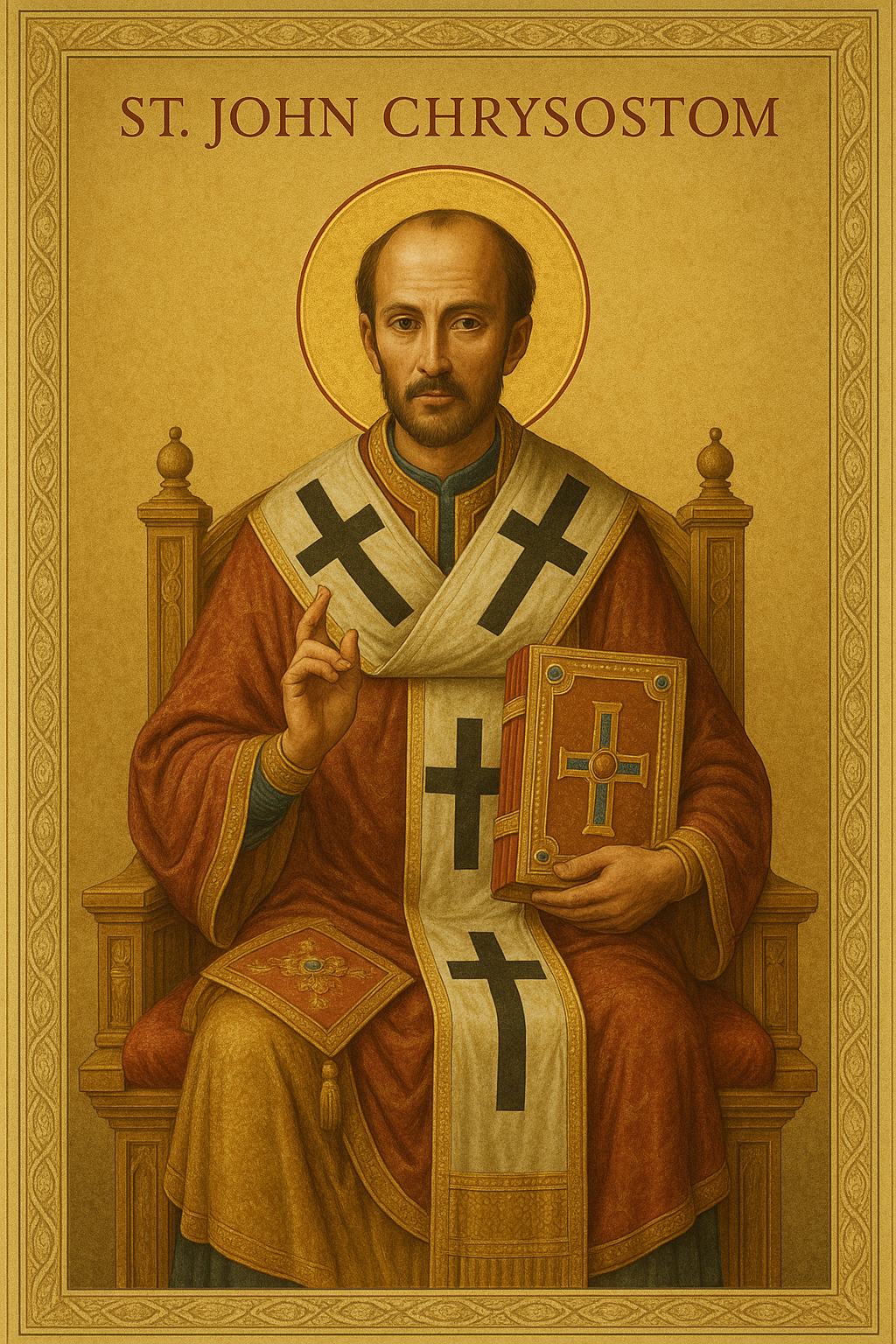
The Divine Liturgy of Saint John Chrysostom: The Heart of Byzantine Catholic Worship
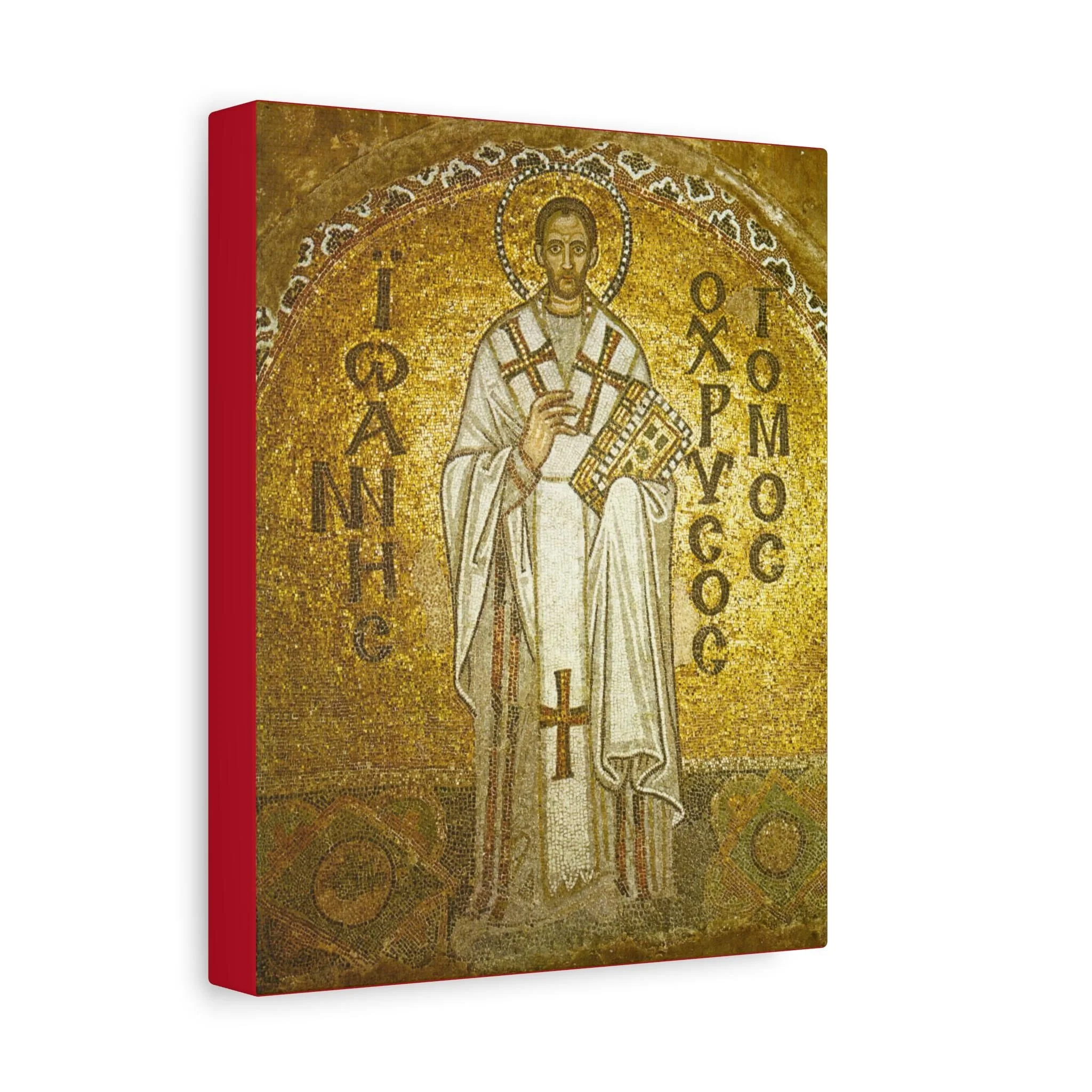
If there is one thing that defines the Byzantine Catholic experience above all others, it is the Divine Liturgy of Saint John Chrysostom. This is not simply “Mass with different words.” It is a complete and ancient liturgical form — a synthesis of Scripture, theology, poetry, and mystical theology accumulated over seventeen centuries — that has been called, by people of many traditions, the most beautiful act of corporate worship in the world.
The Origins of the Divine Liturgy
The name “Divine Liturgy of Saint John Chrysostom” does not mean that Chrysostom (c. 347–407 AD) composed the entire liturgy from scratch. The liturgical tradition he worked with was already ancient in his time. What the name signifies is that John Chrysostom, as Archbishop of Constantinople, revised, standardized, and condensed an already-existing liturgical form, giving it the more compact structure that has been used ever since. His revision became the standard form for the Byzantine world, used on most Sundays and feast days.
Alongside it stands the Divine Liturgy of Saint Basil the Great, a longer and more elaborate form (dating from Basil’s work in the 4th century) used on ten specific days each year, including Sundays of Great Lent, Christmas Eve, Theophany Eve, Holy Thursday, Holy Saturday, and the feast of Saint Basil himself. For a comparison of the Byzantine Liturgy with the Roman Catholic Mass, see our detailed article: Melkite Divine Liturgy vs. Roman Catholic Mass.
What the Divine Liturgy Is Like: An Overview for the First-Time Visitor
The Divine Liturgy lasts approximately 90 minutes to two hours in its full form. It is sung almost entirely — virtually nothing is spoken; everything is chanted. The priest and deacon move through the liturgy in front of the iconostasis (the icon screen that separates the nave from the altar area), performing a series of liturgical actions whose meaning is richly symbolic. Incense is used extensively. The congregation stands throughout most of the service.
The Liturgy is divided into two main parts. The Liturgy of the Word (or Liturgy of the Catechumens) corresponds roughly to the Liturgy of the Word in the Mass: readings from Scripture (Epistle and Gospel), a homily, and the prayers of the faithful. The Liturgy of the Faithful (the Eucharistic Liturgy) contains the great prayer of consecration (the Anaphora), the Great Entrance (the solemn procession of the Holy Gifts), the consecration of the bread and wine, the preparation of the faithful for Communion, and the distribution of Communion.
The Theology Embedded in the Liturgy
The Divine Liturgy is not merely a ritual performance. In the Byzantine theological tradition, the Liturgy is understood as a participation in the heavenly worship — an entering into the eternal offering that Christ makes to the Father, not a re-presentation of a past event but a participation in the one sacrifice that is eternal. The famous phrase attributed to the 7th-century theologian Maximus the Confessor captures this: “The Divine Liturgy is a mystagogy — an initiation into the mysteries of God.” The incense, the icons, the chant, the movements of the clergy — all are understood as elements of a symbolic language that speaks not primarily to the intellect but to the whole person, body and soul, drawing the worshiper into the divine presence it celebrates.
Part IX
Byzantine Catholic Theology: Theosis, the Seven Mysteries, and the Eastern Mind
Byzantine Catholic theology shares the same fundamental doctrines as Roman Catholic theology — the Trinity, the Incarnation, the Resurrection, the authority of Scripture and Tradition, the sacraments, the intercession of the saints. But the way these doctrines are understood, framed, and lived in the Byzantine tradition has a distinct character that shapes everything about Byzantine Catholic spirituality and practice.
Theosis: The Central Concept
If there is one word that captures the distinctive character of Byzantine theology, it is theosis — Greek for “deification” or “divinization.” Theosis is the process by which the human person, through participation in the divine life through the sacraments, prayer, and moral struggle, becomes increasingly united with God — not by ceasing to be human but by the divine nature being communicated to the human person through grace. The classic formulation comes from Saint Athanasius: “God became human so that humans might become God.” This is not pantheism (the idea that we merge into or become identical with God) but a real, participated union — the human person receiving and being transformed by the divine energies that radiate from the divine essence.
In the Byzantine theological tradition, particularly as developed by Gregory Palamas in the 14th century, a distinction is made between the divine essence (which is utterly unknowable and inaccessible) and the divine energies (the activities and self-communications of God, through which humans can genuinely participate in the divine life). Theosis happens through the divine energies. It is not metaphor. It is the actual goal of the Christian life — the reason the Church exists, the reason for the sacraments, the reason for prayer.
Apophatic Theology: The God Who Cannot Be Grasped
Alongside the positive (kataphatic) theology that makes affirmations about God, the Byzantine tradition strongly emphasizes apophatic (negative) theology — the approach to God through negation, through the acknowledgment that every positive statement about God falls short of the reality. God is not simply “good” in the way that a human being is good. God is not simply “knowing” in the way a human being knows. Every concept, every word, every image falls infinitely short. The apophatic tradition does not stop making statements about God, but it holds those statements loosely, knowing that the reality exceeds everything that can be said about it. This approach — sometimes called “the theology of silence” — is one of the most characteristic features of Byzantine spirituality and gives it a distinctive quality of reverence and mystery.
The Seven Mysteries (Sacraments)
Byzantine Catholics recognize the same seven Sacraments as Roman Catholics, but call them “Mysteries” (Mysteria) — a term that emphasizes their character as divine actions that participate in the mystery of God rather than simply as rituals that convey grace through defined mechanisms. The seven are:
- Baptism — Administered typically by triple immersion rather than pouring. Given to infants.
- Chrismation — The equivalent of Confirmation, administered immediately after Baptism through anointing with Holy Chrism (consecrated oil). Not separated from Baptism by years.
- Eucharist — The central Mystery. Administered from infancy, both species (Body and Blood) together via spoon. Leavened bread used.
- Repentance (Confession) — The Mystery of Reconciliation, celebrated with the priest as witness rather than judge; the penitent faces an icon of Christ and addresses confession to God directly.
- Holy Unction — The Mystery of healing, available to any seriously ill person (not only the dying). Often celebrated communally.
- Holy Orders — The ordained ministry in three degrees (deacon, priest, bishop). Married men may be ordained to diaconate and priesthood; bishops must be celibate.
- Marriage — Called the “Crowning” in Byzantine tradition — the couple is crowned as king and queen of their household, called to be a church in miniature. The crowning ceremony is one of the most beautiful liturgical events in all of Christianity.
Sacred Tradition and the Church Fathers
The Byzantine tradition, like the Latin tradition, holds that Sacred Tradition alongside Sacred Scripture is the authoritative source of Christian doctrine. But the Eastern tradition tends to give even greater weight to the consensus of the Church Fathers and to the continuous liturgical prayer of the Church as the living context in which Scripture is to be interpreted. The phrase lex orandi, lex credendi — the rule of prayer is the rule of belief — is a particularly Eastern way of expressing this: the Liturgy is itself a form of theology, and what the Church prays is what the Church believes.
Part X
The Byzantine Liturgical Year: Feasts, Fasting, and the Calendar
The Byzantine liturgical calendar is one of the most elaborate and beautiful in all of Christianity — a year-long cycle of feasts, fasts, commemorations, and seasons that structures the entire spiritual life of the community. For those unfamiliar with it, several aspects are immediately striking.
The Julian Calendar
Many Byzantine Catholic churches still use the Julian calendar (the calendar established by Julius Caesar in 46 BC) rather than the Gregorian calendar (the reformed calendar introduced by Pope Gregory XIII in 1582). The Julian calendar is currently thirteen days behind the Gregorian calendar, which means that churches observing the Julian calendar celebrate Christmas on January 7 (Gregorian), not December 25, and Theophany (Epiphany) on January 19. Easter (Pascha) is calculated differently and typically falls later than Western Easter. Not all Byzantine Catholic churches use the Julian calendar — the Melkite church, for example, has adopted the Gregorian calendar — but many Ukrainian, Ruthenian, and other Slavic Byzantine Catholic communities observe the Julian calendar, which is why you may encounter a Byzantine Catholic parish celebrating Christmas in January.
The Twelve Great Feasts
The Byzantine liturgical year is organized around the Paschal cycle and the Twelve Great Feasts (Dodekaorton) — the twelve major feasts of the Lord and the Theotokos that are considered most significant in the liturgical calendar. Easter (Pascha) stands above the Twelve as the “Feast of Feasts” and is not counted among them. The Twelve are: the Nativity of the Theotokos (September 8), the Exaltation of the Holy Cross (September 14), the Presentation of the Theotokos in the Temple (November 21), the Nativity of Christ (December 25), the Theophany/Baptism of the Lord (January 6), the Presentation of Christ in the Temple (February 2), the Annunciation (March 25), Palm Sunday, the Ascension, Pentecost, the Transfiguration (August 6), and the Dormition of the Theotokos (August 15).
The Four Fasting Periods
Byzantine Catholic fasting is considerably more extensive than Latin Catholic fasting. There are four major fasting periods: Great Lent (approximately 7 weeks before Easter, the most serious), the Apostles’ Fast (variable length, from the Monday after All Saints Sunday to June 28/29, the feast of Peter and Paul), the Dormition Fast (August 1–14, before the Dormition of the Theotokos), and the Nativity Fast (November 15 to December 24/January 6, 40 days before Christmas). In addition to these periods, Wednesday and Friday are weekly fast days throughout the year. In strict Byzantine fasting practice, a typical fast day involves abstention from meat, fish, dairy, and oil, and eating only one meal after the evening service. Full fasting practice results in approximately 180 days of fasting per year. In practice, the degree of observance varies considerably by individual and community.
Part XI
Byzantine Iconography and Sacred Art: Windows Into Heaven
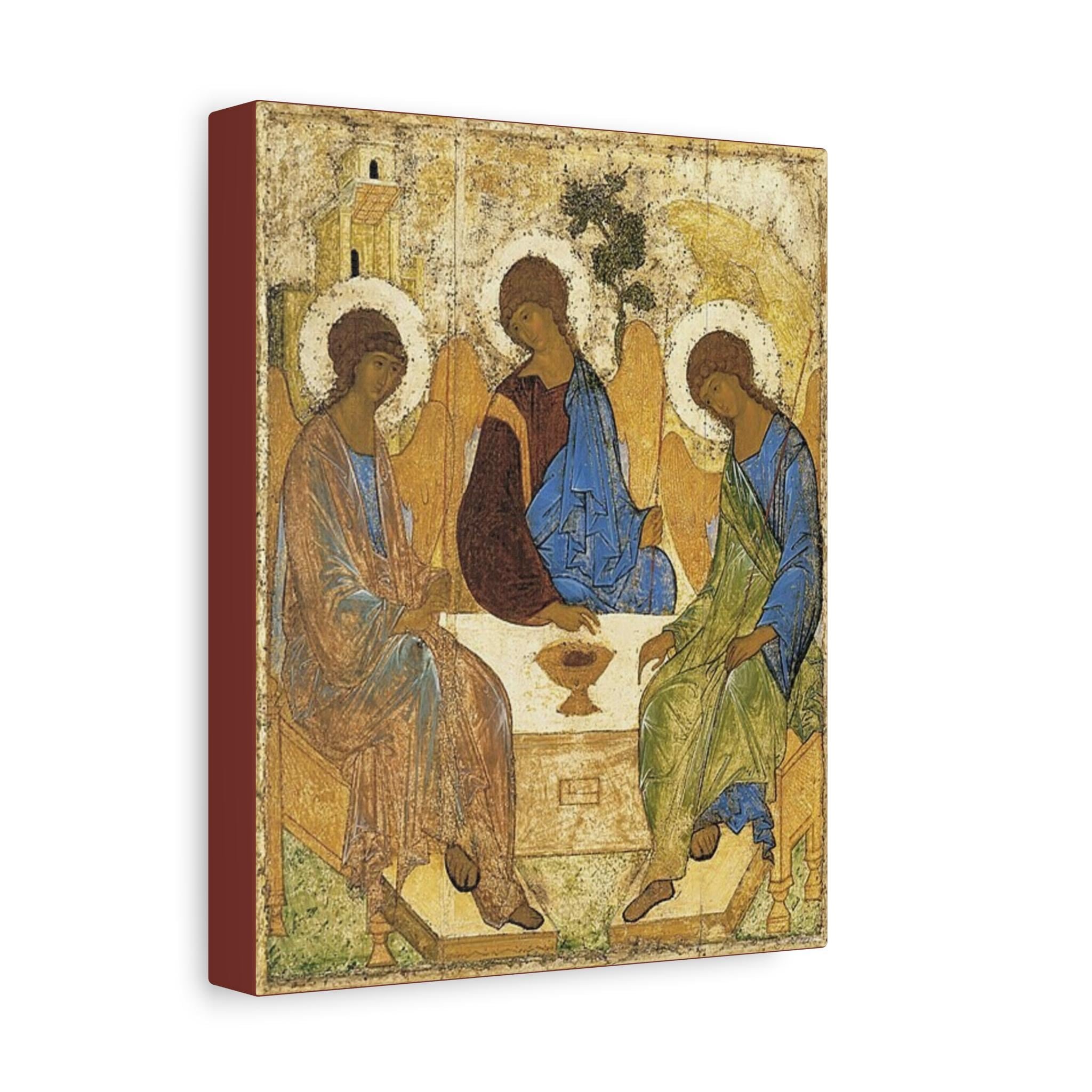
Byzantine sacred art — the icon — is one of the most distinctive and theologically rich features of Byzantine Christianity. Understanding Byzantine icons requires abandoning the Western understanding of religious art as primarily aesthetic or devotional decoration and understanding instead the Eastern theological claim: an icon is a window into the divine reality it depicts, not a representation of an absent person but a genuine presence through which the person depicted is accessible to prayer.
The Theology of the Icon
The theological defense of icons was one of the central controversies of Byzantine Christianity. Iconoclasm — the movement to destroy icons, which swept through the Byzantine Empire in two waves (726–787 AD and 815–843 AD) — was not a minor liturgical dispute. It was a battle over the fundamental claim of Christianity: that God became incarnate in Jesus Christ, took a human face, was visible in human flesh. If Christ had a human face, argued the defenders of icons, then that face could be depicted. The Council of Nicaea (787 AD), the Seventh Ecumenical Council, definitively affirmed the veneration (not worship) of icons and established the theological principle that the honor given to an icon passes to its prototype — the person depicted.
The icon is “written” (not “painted” — the vocabulary is deliberate) according to strict theological rules developed over centuries. The stylized faces, the gold backgrounds (representing uncreated divine light), the reverse perspective that draws the viewer into the image rather than creating an illusion of receding space — all are theologically motivated. The icon is not an attempt to depict what a person “looked like.” It is an attempt to depict the person in their glorified, transfigured state — as they are now, in God’s presence.
The Iconostasis
In a Byzantine Catholic church, the sanctuary is separated from the nave by the iconostasis — literally “the icon stand” or “icon screen.” This is a wall or screen decorated with icons in a specific theological order, with three doors: the central Royal Doors (through which the priest carries the Holy Gifts in the Great Entrance and distributes Communion), and two side doors for the deacons and servers. The iconostasis is not a barrier designed to exclude the laity. In the Byzantine theological understanding, it is a representation of the boundary between heaven and earth — and its opening at key moments of the Liturgy symbolizes the breaking open of that boundary, the participation of earth in the heavenly worship.
The Home Icon Corner
In the Byzantine Catholic (and Orthodox) tradition, the icon corner — krasny ugol (beautiful corner) in Slavic tradition — is the sacred space in a home corresponding to the iconostasis in the church. Traditionally placed in the eastern corner of the main room, the icon corner contains the household icons — typically the Theotokos (Virgin Mary) and Christ Pantocrator as the central images, with additional icons of saints significant to the family. A lampada (small oil lamp) or candle burns before the icons. Family prayers are said before the icon corner in the morning and evening. The home is understood not as a secular space with religious decoration in one corner but as a space that has been consecrated by the presence of holy images and is therefore itself an extension of the church.
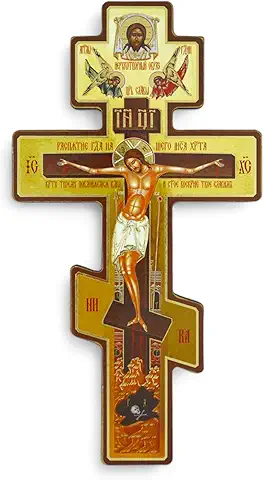
The Byzantine Cross
The Byzantine cross is typically a three-bar cross (also called a Russian Orthodox cross or Eastern Orthodox cross): three horizontal bars instead of the single bar of the Latin cross. The top bar represents the titulus — the inscription “INRI” that Pilate had placed above Christ’s head on the cross. The middle bar is the main crossbar. The bottom bar, set diagonally, represents the footrest on which Christ’s feet were nailed — one end pointing up toward the repentant thief who was saved, the other pointing down toward the unrepentant thief who was not. This diagonal is not random; it is a theological statement about judgment and mercy built into the visual form of the cross itself.


Part XII
Key Byzantine Catholic Saints: The Holy Ones of the Eastern Tradition
Byzantine Catholics venerate a vast communion of saints — including many who lived before the Schism and are shared with both the Orthodox and Latin Catholic traditions, as well as saints specific to the Eastern Catholic experience. The following are among the most significant.
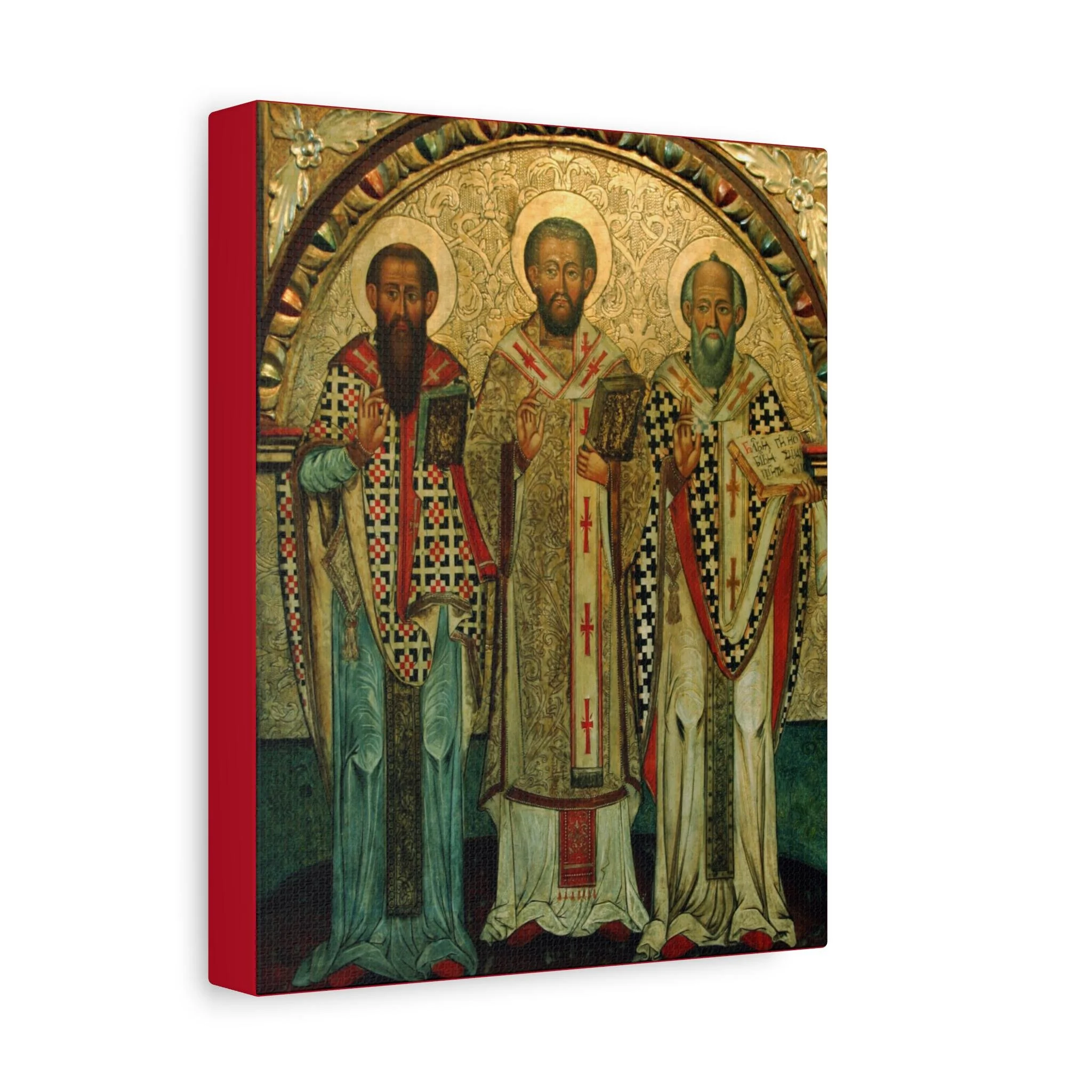
The Three Holy Hierarchs: Basil, Gregory, and Chrysostom
The Three Holy Hierarchs — Saints Basil the Great, Gregory the Theologian (Gregory of Nazianzus), and John Chrysostom — are venerated together on January 30 in the Byzantine calendar and are considered the supreme doctors of the Eastern Church. Basil the Great (c. 330–379) gave his name to the longer Divine Liturgy and wrote the rules that form the foundation of Eastern monastic life. Gregory the Theologian (c. 329–390) is called simply “the Theologian” in Eastern tradition — only Saint John the Evangelist shares this title — and his work on the Trinity remains definitive. John Chrysostom (c. 347–407) gave his name to the standard Byzantine Liturgy and was one of the greatest preachers in Christian history. Together they represent the theological, liturgical, and homiletic genius of Byzantine Christianity at its height.
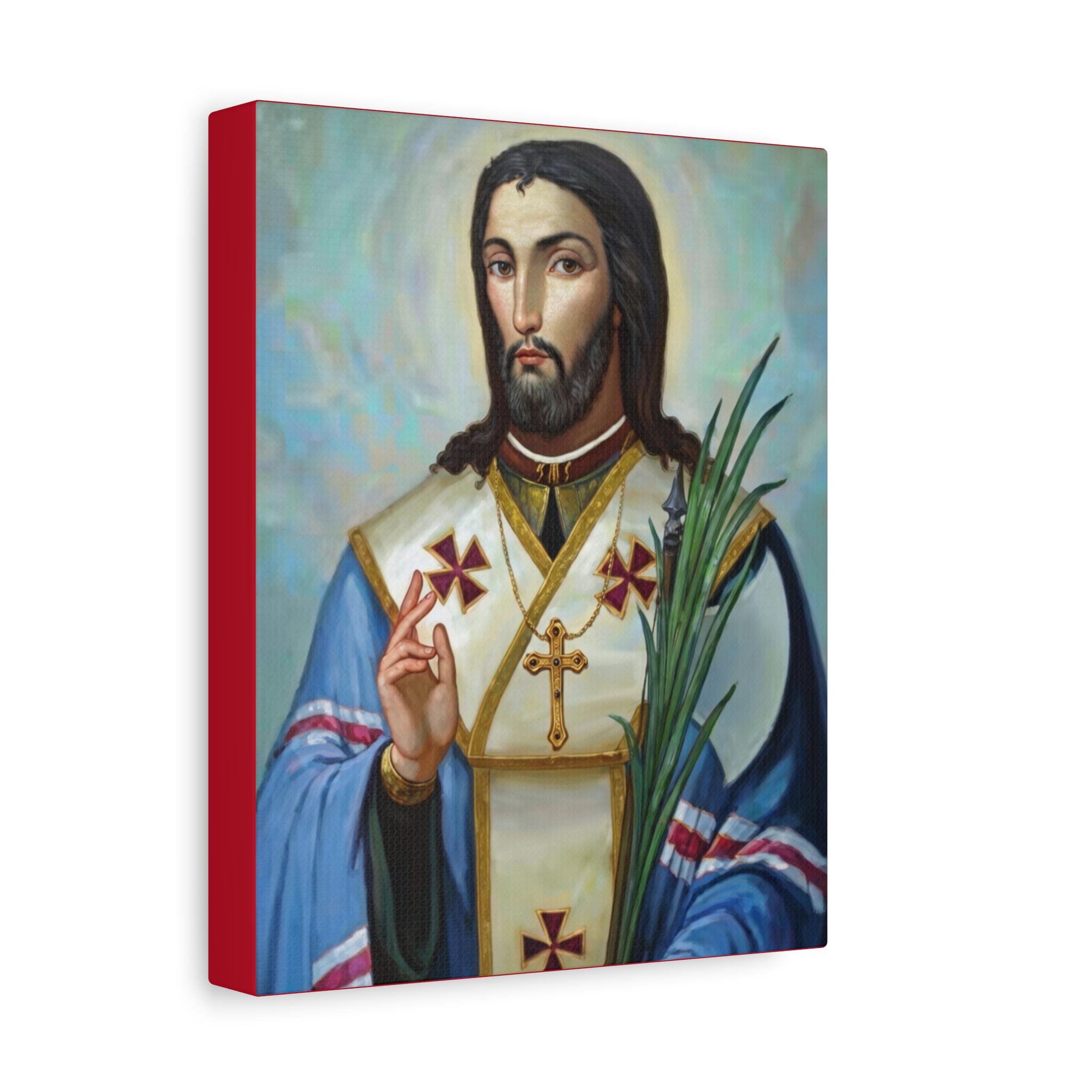
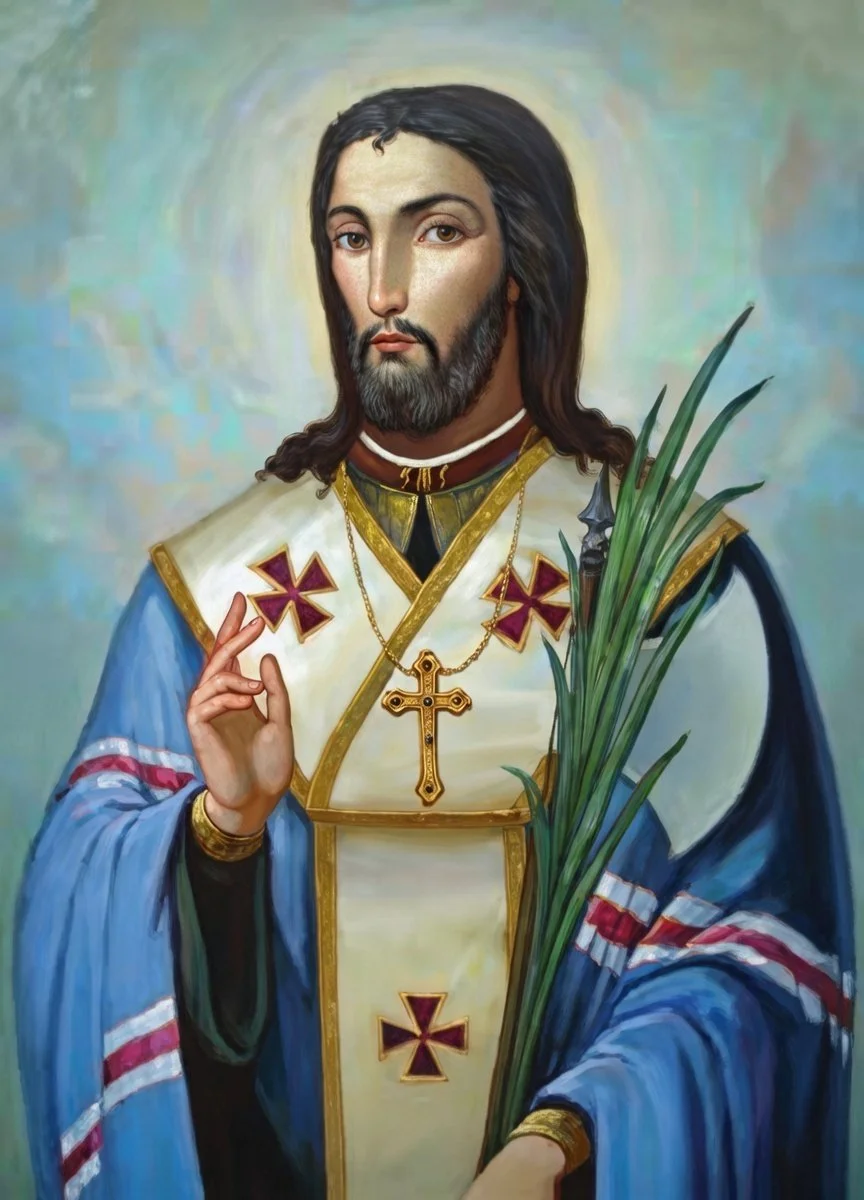
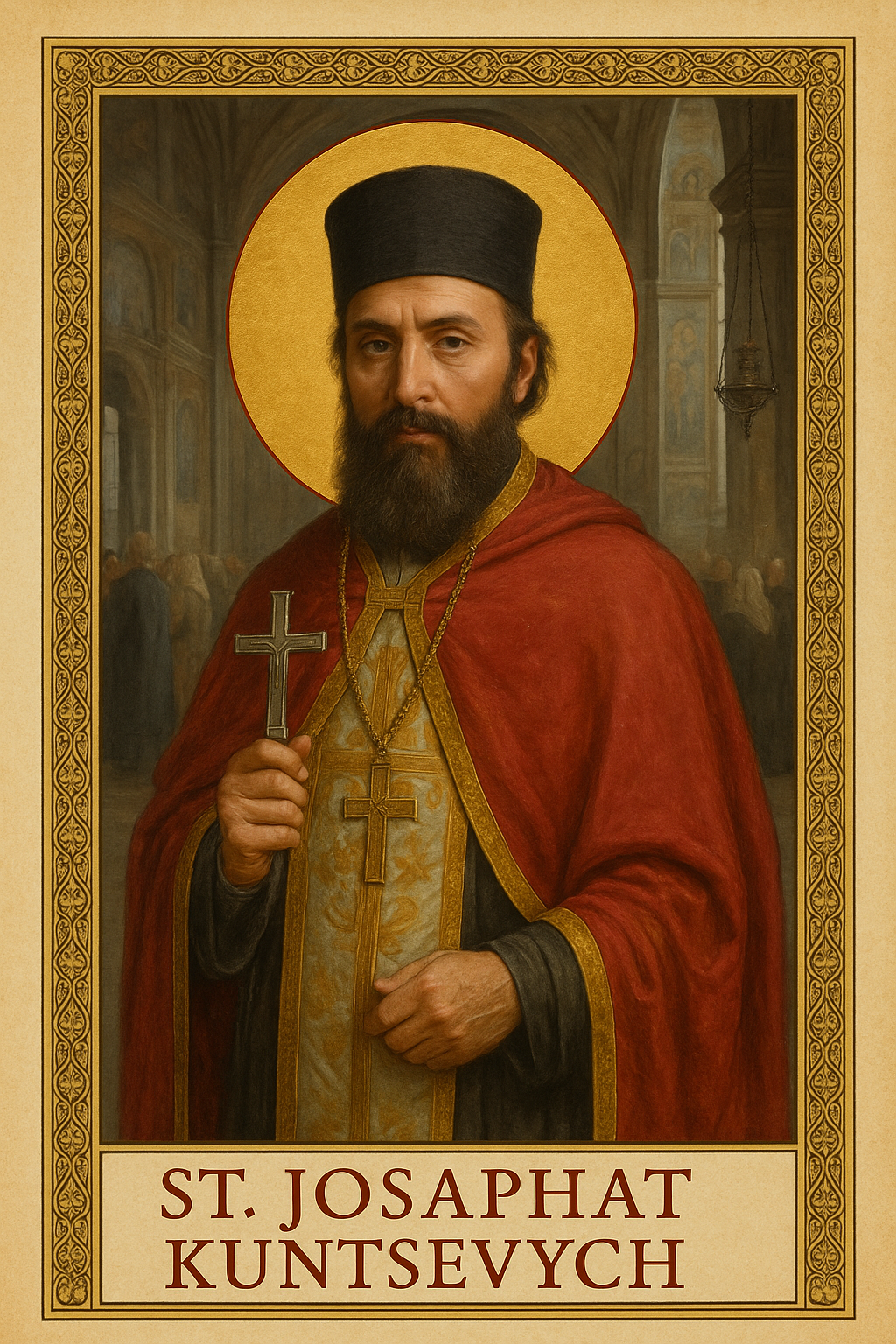
Saint Josaphat Kuntsevych: The Martyr of the Union
Saint Josaphat Kuntsevych (1580–1623) was an Archbishop of the Ruthenian Greek Catholic Church who was martyred for his advocacy of the Union of Brest. He was murdered by an angry crowd in Vitebsk (modern Belarus) on November 12, 1623 — clubbed, shot, and thrown into the Dvina River. He was the first Eastern Catholic saint to be formally canonized by the Pope (Gregory XVI, 1643; solemn canonization by Pius IX, 1867) and is the great martyr-witness of the Byzantine Catholic tradition. His feast is November 12.
Saint Andrew the Apostle: Patron of the Eastern Churches
Saint Andrew the Apostle, brother of Peter and the first-called of the apostles, is considered the special patron of the Eastern churches. According to tradition, Andrew preached in the territories that became the Byzantine world — around the Black Sea, in what is now Ukraine and Romania, and in Constantinople itself, where he is said to have appointed the first bishop. The Patriarchate of Constantinople traces its apostolic origin to Andrew, as Rome traces its to Peter. The Feast of Saint Andrew (November 30) is particularly significant in Byzantine Catholic liturgical tradition.
Saints Cyril and Methodius: Apostles to the Slavs
Saints Cyril (826–869) and Methodius (815–885) were Byzantine monks sent by the Patriarch of Constantinople to evangelize the Slavic peoples. They created the Glagolitic alphabet (a predecessor of Cyrillic) to write the Slavic languages, translated the Scriptures and liturgical texts into Church Slavonic, and founded the Slavic Christian literary tradition. Without them, there would be no Church Slavonic, no Slavic Byzantine liturgy, and arguably no Ruthenian or Ukrainian Byzantine Catholic church. They are venerated by Byzantine Catholics, Eastern Orthodox, and Roman Catholics alike. Pope John Paul II named them co-patrons of Europe alongside Saint Benedict. Their feast is February 14.
Byzantine Catholic Martyrs of the 20th Century
The 20th century produced a vast number of martyrs from the Byzantine Catholic churches — bishops, priests, monks, nuns, and laypeople who died rather than renounce their Catholic faith under Soviet and communist pressure. The beatified martyrs of the Ukrainian Greek Catholic Church include dozens of bishops and clergy liquidated by Soviet authorities between 1945 and 1954. The beatified Romanian Greek Catholic bishops martyred under communist rule are among the most recently recognized martyrs in Catholic history (beatified 2019 by Pope Francis). The full list of Byzantine Catholic martyrs of the 20th century would fill a book — and in a very real sense, the continued existence of Byzantine Catholicism is their legacy.
Part XIII
Byzantine Catholic in the United States: History and Where to Find a Parish
The United States has a significant and historically important Byzantine Catholic presence — the result of the massive Eastern European immigration to North America in the late 19th and early 20th centuries, primarily from the Carpathian region of what is now western Ukraine, Slovakia, and eastern Poland.
The Great Immigration (1880s–1920s)
Between approximately 1880 and the immigration restriction acts of the 1920s, hundreds of thousands of Ruthenian and Ukrainian Greek Catholics emigrated from the Habsburg Empire to the United States and Canada, settling primarily in the coal and steel regions of Pennsylvania, Ohio, New York, and New Jersey. They established parishes, built churches, founded fraternal organizations, and created a vibrant Byzantine Catholic community that persists to this day. The early history of this immigration involved significant conflict with the Latin Catholic hierarchy in America, which was unfamiliar with and sometimes hostile to the Eastern Catholic tradition — particularly the married priesthood — leading to a painful situation in which some Byzantine Catholic communities left the Catholic Church and joined the Eastern Orthodox Church rather than submit to Latinization. This schism resulted in the Russian Orthodox Church gaining tens of thousands of former Byzantine Catholics in North America.
Byzantine Catholic Eparchies in the United States
Today the following Byzantine Catholic churches have established eparchies (dioceses) in the United States:
- Ruthenian Byzantine Catholic Church: Byzantine Catholic Eparchy of Pittsburgh (Pennsylvania) and Byzantine Catholic Eparchy of Parma (New Jersey). The Pittsburgh eparchy is the mother church of Ruthenian Byzantine Catholicism in America, and the national shrine of the Byzantine Catholic Church is in Uniontown, Pennsylvania.
- Ukrainian Greek Catholic Church: Ukrainian Catholic Eparchy of Philadelphia, Ukrainian Catholic Eparchy of Stamford (Connecticut), Ukrainian Catholic Eparchy of St. Josaphat in Parma (Ohio), and the Ukrainian Catholic Eparchy of Chicago (Illinois).
- Melkite Greek Catholic Church: Melkite Greek Catholic Eparchy of Newton (Massachusetts), serving the Arabic-speaking Middle Eastern immigrant community and their descendants.
- Romanian Greek Catholic Church: Eparchy of Saint George in Canton (Ohio).
- Slovak Greek Catholic Church: Some Slovak Greek Catholic faithful are served by the Ruthenian eparchies.
How to Find a Byzantine Catholic Parish Near You
If you want to attend a Byzantine Catholic Divine Liturgy, the most practical approach is to search the website of the relevant eparchy for your region. Byzantine Catholic parishes exist in most major American cities and throughout the industrial midwest and northeast. Many Byzantine Catholic parishes in North America celebrate the Liturgy in English (often alongside Church Slavonic or Ukrainian), making it accessible to those without knowledge of the traditional liturgical languages.
The experience of attending a Byzantine Catholic Liturgy for the first time is one that many people describe as transformative — the combination of the chant, the incense, the icons, the standing posture, and the quality of the theology embedded in every line of the text creates a form of worship quite unlike anything in the Western Catholic or Protestant traditions. If you are curious about what Eastern Christianity looks and feels like, a Byzantine Catholic parish is one of the most accessible entry points in North America.
Part XIV
Byzantine Catholicism Today: Statistics, Challenges, and the Future
Byzantine Catholicism today is a community of approximately 10–12 million faithful worldwide, concentrated in Ukraine, the Middle East, Eastern Europe, and the diaspora communities of North America, South America, Western Europe, and Australia. It is in many ways a community defined by historical suffering and by a complex relationship with both Rome and the Orthodox world.
The Ukrainian Greek Catholic Church and the War in Ukraine
The Ukrainian Greek Catholic Church — the largest Byzantine Catholic church — is located in the center of one of the most significant geopolitical crises of the 21st century. The Russian invasion of Ukraine that began in 2022 has directly affected the Ukrainian Greek Catholic community, with church properties damaged or occupied, clergy serving as military chaplains, and the faithful distributed across the diaspora by the refugee crisis. The Major Archbishop of Kyiv-Halych, Cardinal Sviatoslav Shevchuk, has remained in Kyiv throughout the conflict, providing a moral and spiritual witness that has drawn international attention.
The Melkite Church and Middle East Christianity
The Melkite Greek Catholic Church — one of the ancient Christian communities of the Middle East — has suffered significant demographic loss as Arab Christians have emigrated from Syria, Lebanon, and Palestine due to political instability, war, and economic collapse. The Christian communities of the region where Christianity was born are under existential demographic pressure. The Melkite diaspora in North America, South America, and Australia represents both the preservation of this tradition and its adaptation to new contexts.
The Ecumenical Situation
Byzantine Catholicism occupies a unique position in the broader ecumenical landscape. On one hand, Byzantine Catholics serve as a kind of living bridge between the Catholic and Orthodox traditions — communities that practice Eastern Christianity in full communion with Rome, demonstrating that full Catholicity and full Eastern identity are compatible. On the other hand, the historical wounding between Byzantine Catholics and the Orthodox churches has made Byzantine Catholicism a source of tension in Catholic-Orthodox ecumenical dialogue rather than only a bridge — the Orthodox churches have historically viewed the Unia (the union churches) as products of proselytism and pressure, not authentic expressions of Eastern Christianity in communion with Rome. This tension remains one of the unresolved issues in Catholic-Orthodox relations today.

Part XV
Glossary: Key Byzantine Catholic Terms for the First-Time Visitor
Byzantine Catholicism has a rich vocabulary of Greek and Church Slavonic terms that may be unfamiliar to those coming from the Latin Catholic or Protestant traditions. The following glossary covers the terms you are most likely to encounter in a Byzantine Catholic church or in reading about the tradition.
Frequently Asked Questions
Byzantine Catholic — Questions & Answers
Two Lungs. One Breath.
Pope John Paul II famously said that the Church must breathe with both lungs — the Eastern and the Western. Byzantine Catholicism is one of those lungs: the ancient, the chanted, the incense-filled, the iconographic, the theosis-oriented, the standing-in-silence-before-God expression of Christian faith that has been alive for seventeen centuries and that carries in its liturgy and its history a vision of what Christianity can be that the Western tradition cannot provide on its own.
If you have encountered it for the first time through this article, the next step is to attend a Divine Liturgy. Nothing written can substitute for the experience of standing in a Byzantine Catholic church while the liturgy is chanted and the incense rises. The tradition makes its best argument not in writing but in worship.
Explore Byzantine Catholic Articles →