The Anointing of the Sick and Holy Unction: What They Are, When to Call the Priest, and What to Expect
Sacraments of Healing • Latin Catholic, Eastern Catholic & Orthodox • For Families at the Bedside
The Anointing of the Sick and Holy Unction: What They Are, When to Call the Priest, and What to Expect
Most families wait too long to call a priest, usually because nobody told them they could call sooner. If someone you love is seriously ill, you do not need to wait for the final hour. This page explains what the Church offers, who can receive it, and exactly what to do tonight.
The Anointing of the Sick & Holy Unction — At a Glance
- What It Is
- A sacrament in which the priest prays over the sick and anoints them with blessed oil, as described in the Letter of James
- Who May Receive It
- The seriously ill • Those facing serious surgery • The frail elderly • Repeatable if illness returns or worsens
- Is It Only for the Dying?
- No. It is meant to strengthen and heal, and the Church encourages it well before the final hours.
- Who Administers It
- A priest or bishop only
- Eastern Name
- Holy Unction, or Euchelaion • Also celebrated for all the faithful on Holy Wednesday
- Related Sacraments
- Confession • Viaticum (Holy Communion for the dying)
- If Unconscious or Confused
- The sacrament may still be given. Call the priest.
- The Simple Rule
- If you are wondering whether it is time to call, it is time to call.
“Last Rites” and the Great Misunderstanding
Ask a hundred Catholics when to call a priest for a sick relative, and many will say, “When the doctor says it’s the end.” That belief is understandable. It is also one of the most common and most painful mistakes families make. They wait until the last hours, the person is no longer awake, and the family is left wondering whether they did enough.
The confusion starts with the phrase “last rites.” In everyday speech it means the prayers and sacraments a priest brings to a dying Catholic: Confession if the person can make it, the Anointing of the Sick, and Viaticum, which is Holy Communion received as spiritual food for the final journey. Those three together are what most people picture. But they are really three separate gifts, and the middle one, the Anointing, was never meant to be reserved for the last breath.
Orthodox and Eastern Catholic families may have the opposite problem. They may think of Holy Unction as something done on Holy Wednesday for everyone, and never realize that the Church also brings it to a hospital bed or a nursing-home room whenever illness is serious. In both traditions, the Church’s message is the same: you do not have to wait. If someone you love is seriously ill, call the priest.
If you are reading this because the call is already overdue, please do not carry guilt. Nobody explained it to you. Call now. The Church’s prayers are never wasted, and God is not bound by our timing.
Part II
Where It Comes From: The Letter of James
The Church bases the sacrament on a passage in the Letter of James that has been prayed over the sick for two thousand years. There is also an earlier hint in the Gospel of Mark, which says that the Twelve, sent out by Jesus, “anointed with oil many that were sick and healed them” (Mark 6:13).
Notice what the passage says. The sick person is told to call for the priests of the Church, not to wait for them to arrive on their own. The anointing is done with oil, in the Lord’s name, accompanied by prayer. And the effects are both bodily and spiritual: the sick person is raised up, and sins are forgiven. The Church has always understood this as a sacrament of healing in the fullest sense, not a funeral preparation.
That healing does not always mean a physical cure, though cures have been reported through the centuries. The Catechism of the Catholic Church describes the graces of the sacrament as strength, peace and courage to overcome the difficulties of serious illness or old age, union with the Passion of Christ, forgiveness of sins if the person was unable to confess, and, if it is God’s will, the restoration of health. Even when the body is not healed, the soul is held.
Part III
The Catholic Rite: What the Priest Actually Does
When a priest comes to anoint a sick Catholic of the Latin Church, the rite is simple and short, and it can be done in a hospital room, a nursing-home bed or a living room. A typical sequence looks like this.
The Greeting and Confession
The priest greets the family and the sick person. If the person is able, he hears their confession, often privately, and the family steps out of the room. If the person cannot confess, the Anointing itself carries the forgiveness of sins for those who are repentant.
The Laying On of Hands and the Anointing
In silence, the priest lays his hands on the head of the sick person. He then anoints the forehead and the hands with the oil of the sick, pure vegetable oil, usually blessed by the bishop, saying: “Through this holy anointing may the Lord in his love and mercy help you with the grace of the Holy Spirit. May the Lord who frees you from sin save you and raise you up.” The family may answer “Amen.”
Holy Communion and Viaticum
If the person can receive, the priest gives Holy Communion. When death is near, this Communion is called Viaticum, a word that means “provisions for the journey.” The Church considers it the final sacrament of Christian life, food for the passage through death to Heaven.
The Apostolic Pardon
When a person is in danger of death, the priest may also give the Apostolic Pardon, a blessing of the Church that grants a plenary indulgence at the hour of death. You do not need to ask for it by name. Tell the priest that death may be near, and he will know what to do.
Who Can Receive It
The Church offers the sacrament to Catholics who have reached the age of reason and are seriously ill, who are about to undergo serious surgery, or who are weakened by old age. It can be received more than once. If a person recovers and later falls seriously ill again, or if a grave illness worsens, the Anointing can be received again. Only priests and bishops can administer it. A deacon, a nurse or a family member can pray with the person, but cannot anoint.
Part IV
Holy Unction in the Orthodox and Eastern Churches
Eastern Christians have prayed over their sick since the earliest centuries, and the Eastern name for the sacrament, Euchelaion, means “the prayer of the oil.” The Orthodox Church celebrates it as one of the holy mysteries, and the Eastern Catholic churches celebrate it in their own traditions, which are closely related.
The Orthodox Service
In its full form, the Orthodox service of Holy Unction is long and beautiful. Traditionally it is celebrated by seven priests, with seven readings from the Epistles, seven Gospel readings and seven prayers, and after each reading the sick person is anointed with oil blessed during the service. When only one priest is available, as is common in an emergency, one priest may celebrate the shortened form with the same oil and prayers. The sick person is anointed with the sign of the cross on the forehead and on other parts of the body, and the family often joins in the responses and the hymns.
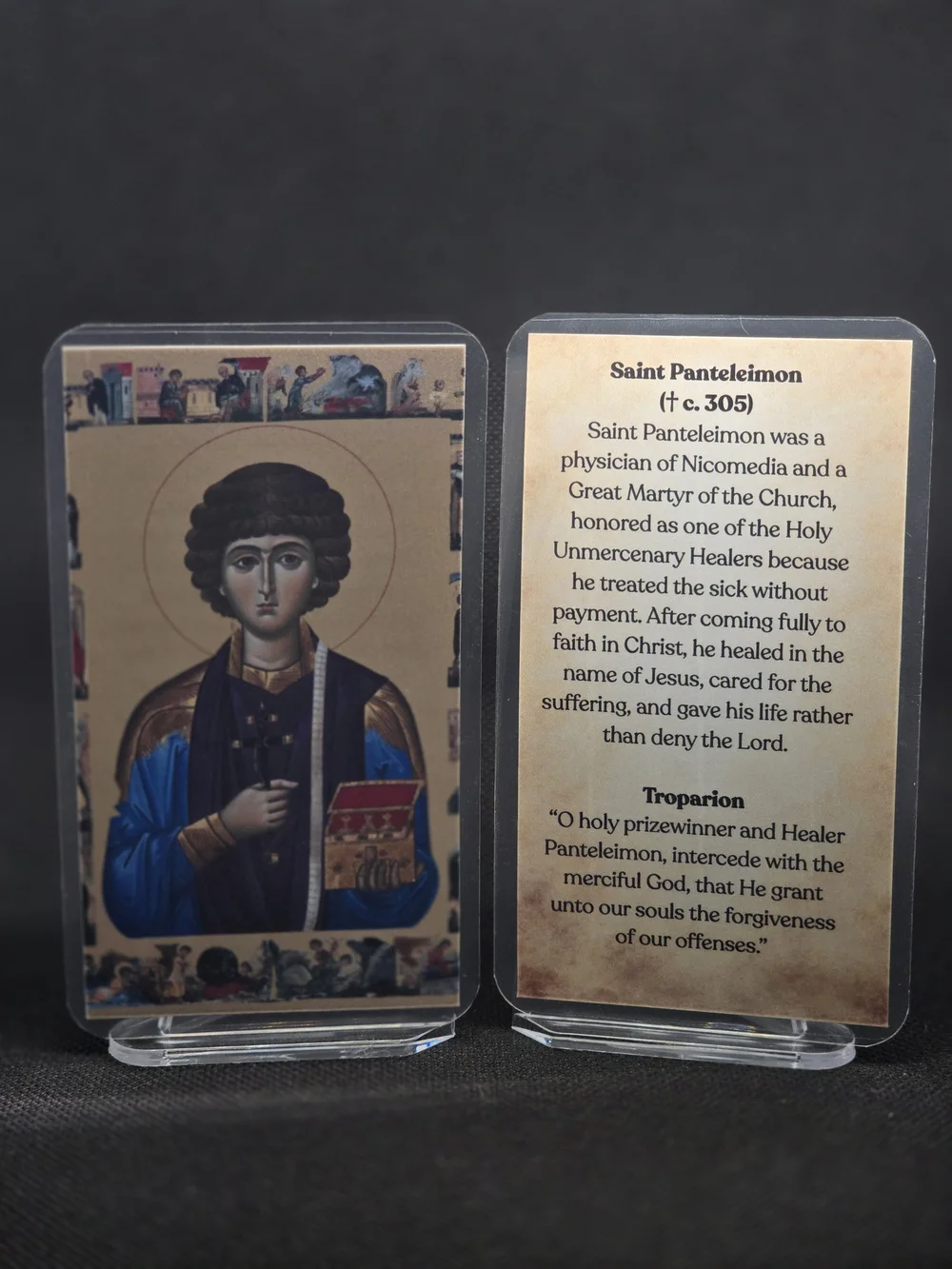
The prayers ask God for forgiveness of sins and for the healing of soul and body. Orthodox believers do not treat Holy Unction as a sacrament only for the dying. It is for anyone who is ill. Because it is a sacrament of the Orthodox Church, it is given to Orthodox Christians, and the sick person is normally encouraged to confess and to receive Holy Communion as well, so ask your priest how he would like to proceed. The prayers of the service ask the intercession of the Mother of God and the saints, and the full service names healing saints such as Saint Panteleimon and Saints Cosmas and Damian, which is why many families keep icons or prayer cards of those saints near the sick bed.
Holy Wednesday
On the evening of Holy Wednesday, many Orthodox parishes, especially Greek and Antiochian ones, celebrate Holy Unction for the whole congregation, and some Eastern Catholic parishes follow the same custom. Orthodox Christians in good standing with the Church, healthy and sick alike, are anointed. In this setting the sacrament is understood as spiritual healing for the community as it enters the Passion and Pascha. The faithful who are physically ill may also ask for the sacrament individually at any time, not only at Holy Week.
Eastern Catholic Churches
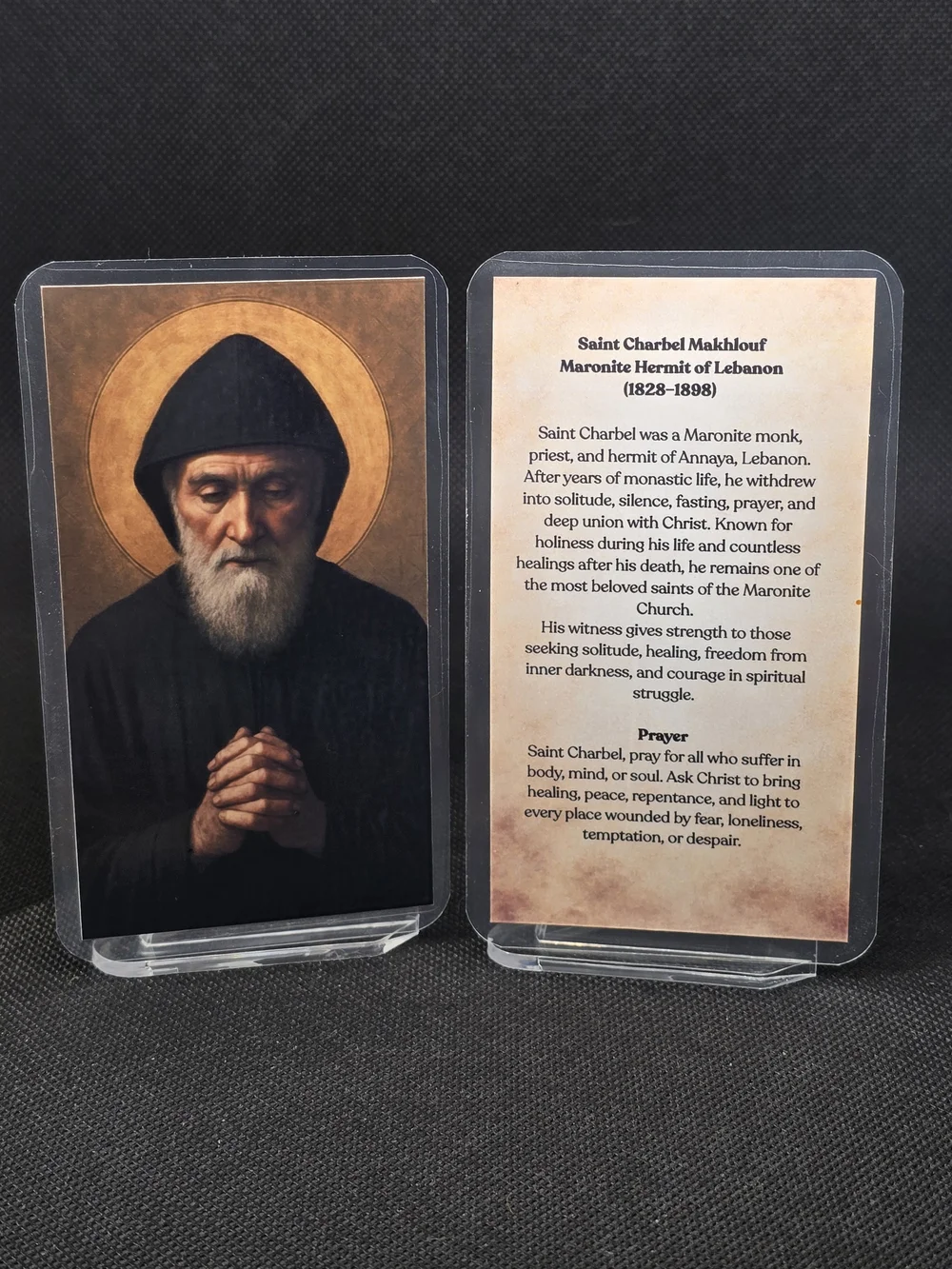
The Eastern Catholic churches, including Ukrainian, Ruthenian, Melkite, Romanian, Maronite, Chaldean, Syriac and others, celebrate the Anointing of the Sick according to their own rites, many of them very close to the Orthodox pattern. Some use a long form with multiple priests and readings, others a shorter one. Maronites, for instance, have a rich Syriac tradition of anointing the sick, and the great Maronite saint Charbel is still invoked by families who pray for the sick. The Eastern Catholic faithful also receive Viaticum when death is near, according to the custom of their church.
If you belong to an Eastern church, call the priest of your own church. He will know exactly how to celebrate the rite for your parent.
Part V
When to Call the Priest: Do Not Wait for the Doctor to Say It
There is no required medical threshold for the sacrament. You do not need permission from a doctor. If you are wondering, you are already within the Church’s invitation. Here are the moments when families should pick up the phone.
- A serious diagnosis. Cancer, heart failure, a stroke, advanced dementia, or any condition that changes your parent’s life.
- Before a major surgery. Many families arrange the Anointing the evening before or the morning of an operation.
- A hospital admission after a serious fall or sudden decline.
- A move to a nursing home, memory care or hospice. This is a natural moment to invite the priest and to meet the chaplain.
- Any time your parent asks for a priest, even if you think it is premature.
- Any time the family senses that the end may be approaching. Trust that instinct.
What to Say on the Phone
Call your parish office or the priest’s emergency number. Most parishes have an after-hours line on the voicemail greeting or the website. Say something like this: “My mother is in [hospital or care home], room [number]. She is seriously ill, and we would like Father to come and anoint her and bring Holy Communion. Her name is [name]. My name and number are [name and number].” If death seems near, say so plainly. Priests respond quickly to that, and they will often come at any hour.
If you cannot reach your own priest, call the hospital chaplain or the nearest parish. Many dioceses also keep a dedicated priest on call for emergencies. Do not give up after the first voicemail. Try again, and ask a nurse or social worker to help.
Part VI
Unconscious, Confused or Living With Dementia: Is It Still Worth Calling?
This is the question families whisper: She doesn’t know where she is. Does it still count? The answer is yes. The Church’s law directs that the Anointing be given to a sick person who would have asked for it had they been able to, and that it be given when there is doubt about whether they are eligible. If your parent was a practicing Catholic or Orthodox Christian, the Church assumes they would want the sacrament, and the priest can anoint them even if they are unconscious, sedated or deeply confused.
The sacrament is a gift of Christ received through the Church. It does not depend on the sick person understanding it, and it does not fail because the mind has failed. The same is true of the prayers of Holy Unction in the East. Many families have described a visible calm coming over a parent who had been agitated for days when the familiar prayers began. Even when there is no visible response, the Church believes God receives the prayer and the person.
For parents living with dementia, consider an earlier visit as well. A priest who knows your parent can bring Holy Communion regularly and can celebrate the Anointing at the moment of a significant decline. Familiar prayers, hymns, icons and the smell of incense or the sound of the Sign of the Cross often reach people long after other memories fade.
If you are thinking, “I should have called last week,” hear this: the Church does not measure love by timing. A priest who comes in the last hours still brings Christ. If death has already occurred before he arrives, call him anyway. He will pray with you, and where there is any doubt that death has taken place he may anoint conditionally. Nothing offered in faith is wasted.
Part VII
What to Have Ready When the Priest Comes
You do not need to turn the room into a chapel. The priest has done this in far worse places than a tidy nursing-home bedroom. But a few simple preparations help the family feel they are taking part.
- A small table or tray with a clean white cloth.
- A crucifix or an icon. If your parent keeps a favorite one, use it.
- A candle. If the facility forbids flame, ask about an electric candle.
- A small dish of water and, if you have it, holy water.
- The person’s name, age and a brief note of their condition, for the priest. Include any recent Communion, allergies to oils, or special circumstances.
- A chair for the priest and a quiet room. Ask the nurse to hold non-urgent care for twenty minutes.
- Family members who want to be present, if the person would want them there.
During the rite, family members can join the responses, pray silently, hold the person’s hand, or simply be present. After the priest leaves, many families sit together for a few minutes. Do not rush to leave. That quiet moment is often when grief and peace arrive at the same time.
Part VIII
If the Hospital or Care Home Is Not Helping
Most hospitals and nursing homes will gladly help you reach a priest. Occasionally a family meets confusion, delay or an administrator who does not understand why it matters. Here is what to do.
Ask for the chaplain or pastoral care department. Hospitals have them, and they can often reach a Catholic or Orthodox priest quickly. Ask the nurse in charge. A nurse who knows the family wants a priest will often place the call or clear the room. Call your parish directly. Do not wait for the facility to do it. Remind the staff that your parent has the right to practice their religion and to receive clergy of their choice. Residents and patients generally have this right. If a nursing home is truly resisting, contact your state Long-Term Care Ombudsman, a free advocate for residents, through theconsumervoice.org/get-help.
If you are still choosing a home for your parent, ask about all of this before you sign. Our guide on how to choose a Catholic or Orthodox nursing home or assisted living includes the questions about chaplains and priest access that most families forget to ask.
Part IX
If the Priest Cannot Come in Time
Sometimes the priest is a hundred miles away, or the snow is deep, or death comes faster than anyone expected. The Church has always understood that God is not limited by what happens in the room. If you cannot reach a priest of your own Church in time, ask your pastor or the hospital chaplain what is possible in your situation. Catholic canon law (canon 844) allows a Catholic who is physically or morally unable to reach a Catholic priest to receive the Anointing of the Sick from a minister of a Church whose sacraments are valid, such as an Orthodox priest, and it allows Catholic priests to anoint Orthodox Christians who ask on their own and cannot reach a priest of their own Church. Orthodox discipline is stricter on this point, so ask the priest involved rather than assuming.
In the meantime, you can do what any believer can do. Pray aloud at the bedside. Say the Our Father, the Hail Mary, the Jesus Prayer, the Creed or the Psalms, whichever your parent loved. Hold a crucifix or icon where they can see it. Sprinkle holy water if you have it. Speak plainly: tell them they are loved, that you forgive them and ask their forgiveness, that you are not afraid and that you will see them again. These words are a kind of sacrament of their own.
The Church teaches that God is merciful and that no sincere prayer offered in faith is ever wasted. You are doing what you can. That is enough.
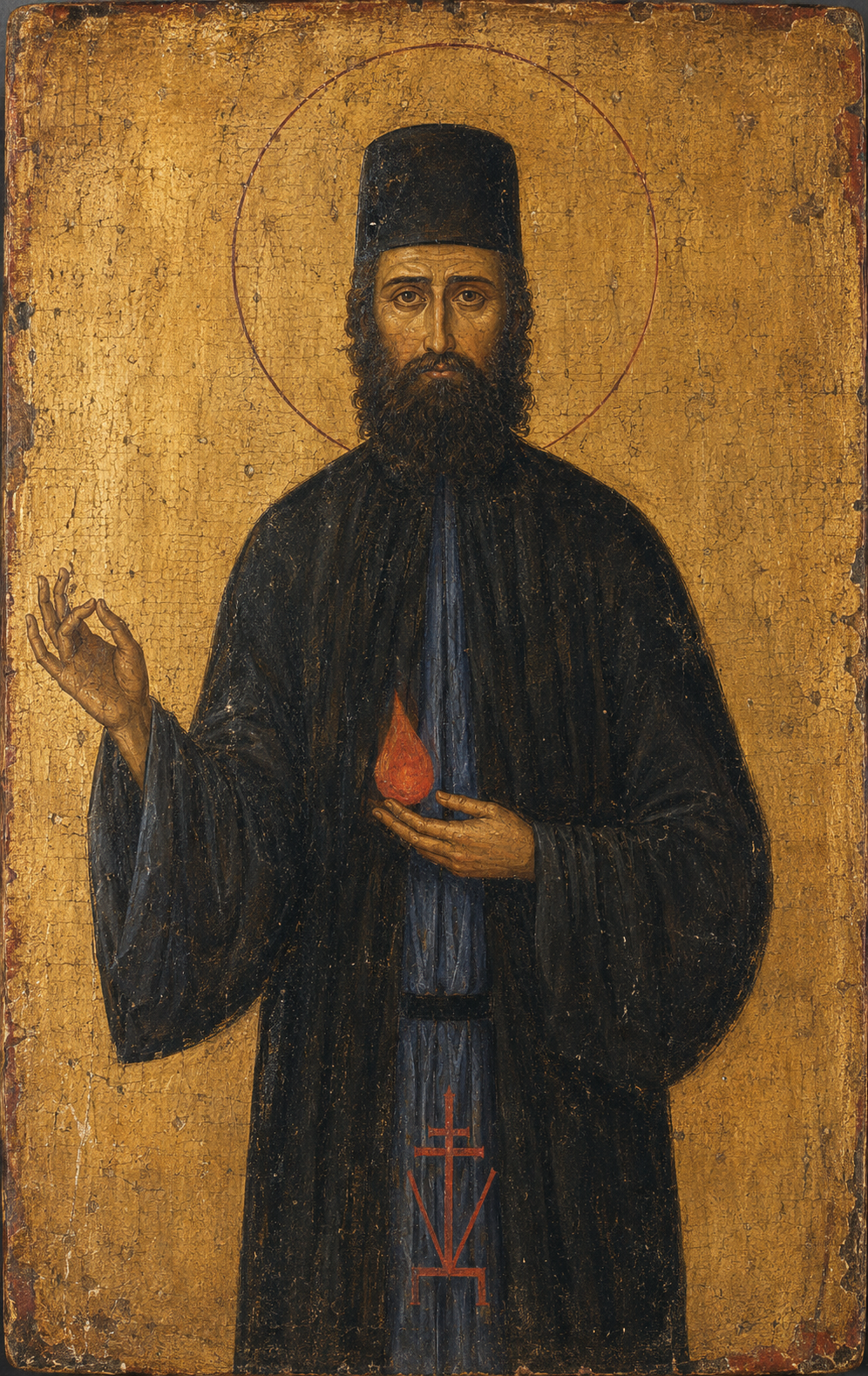
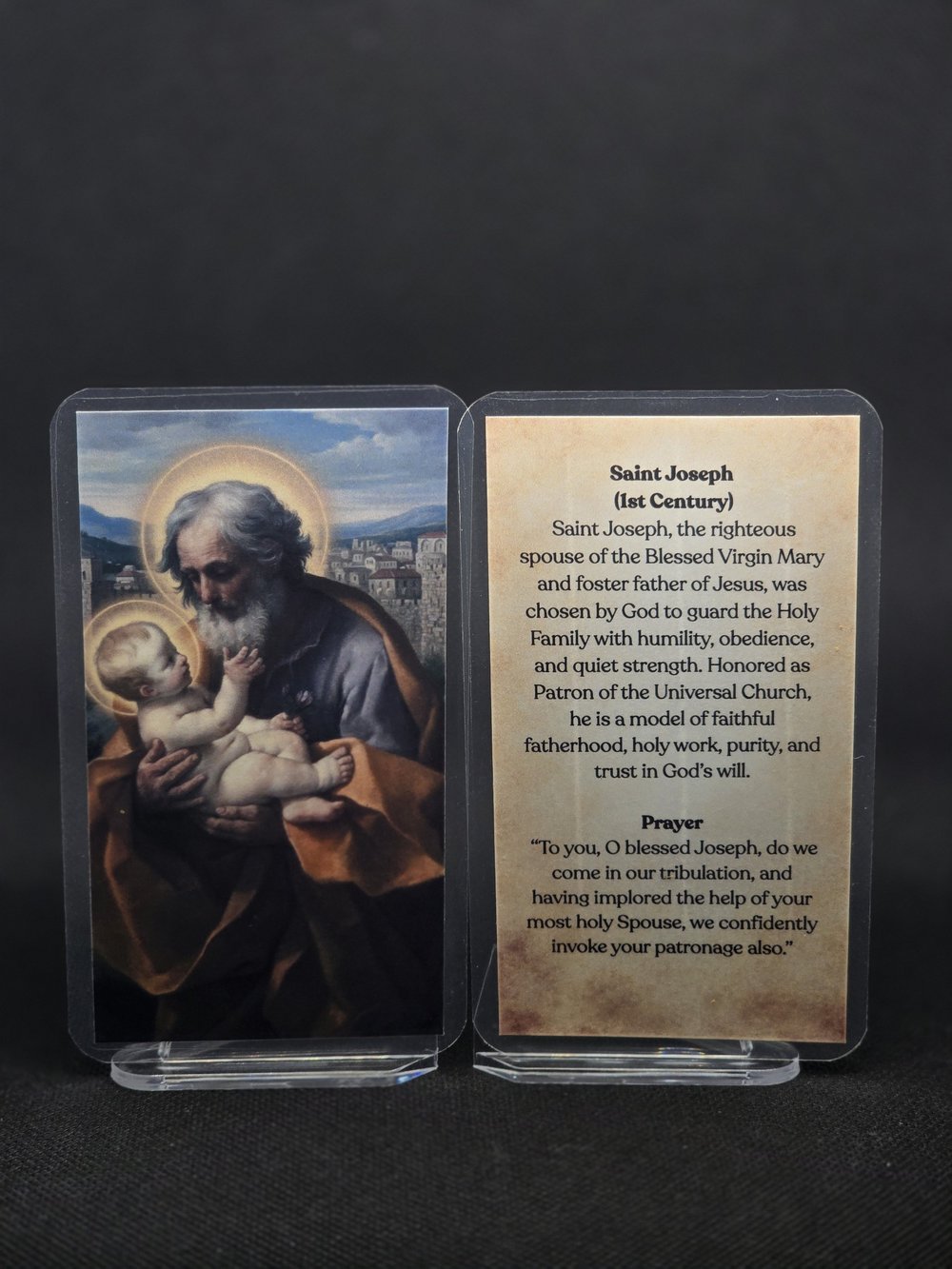
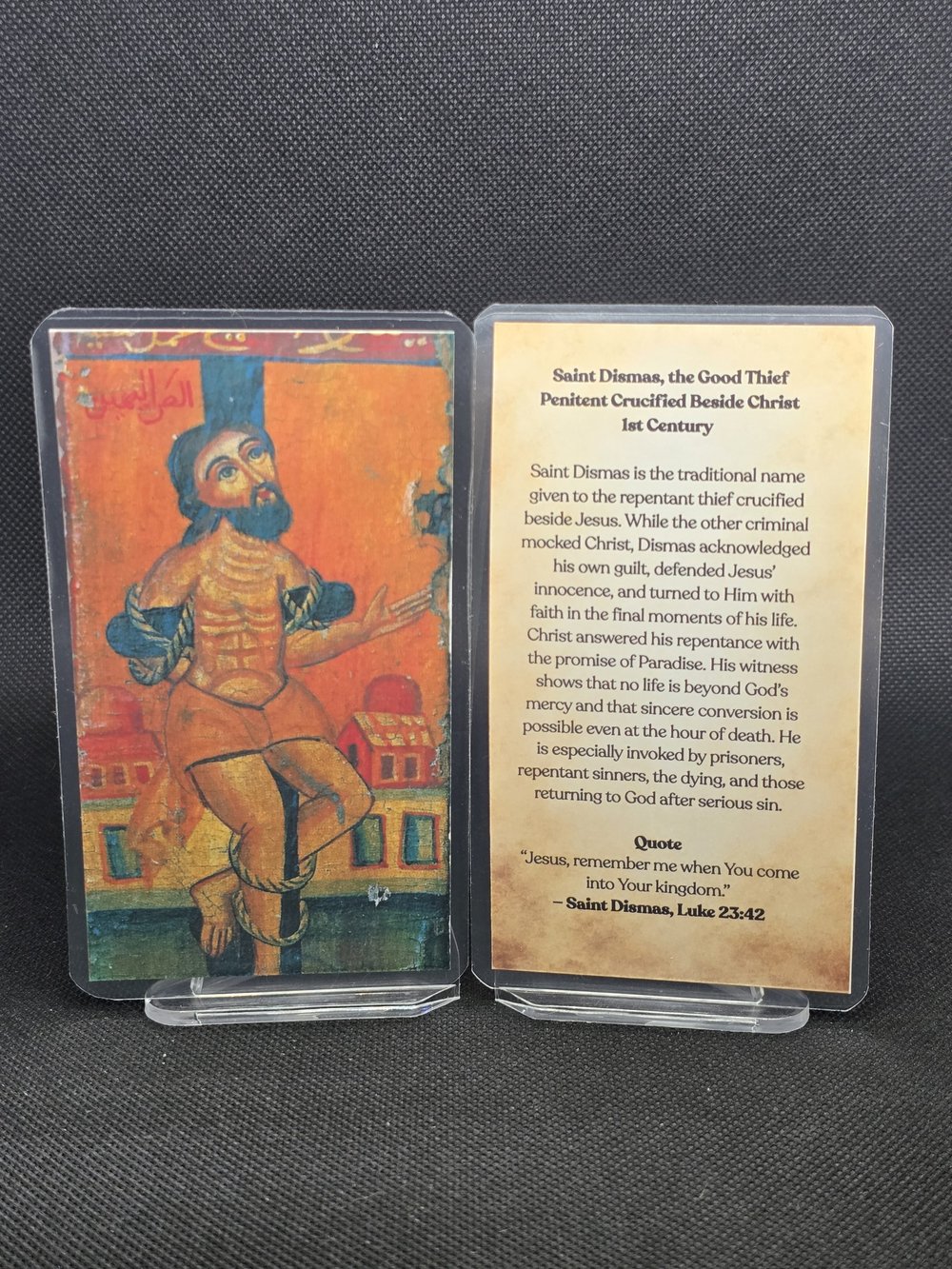
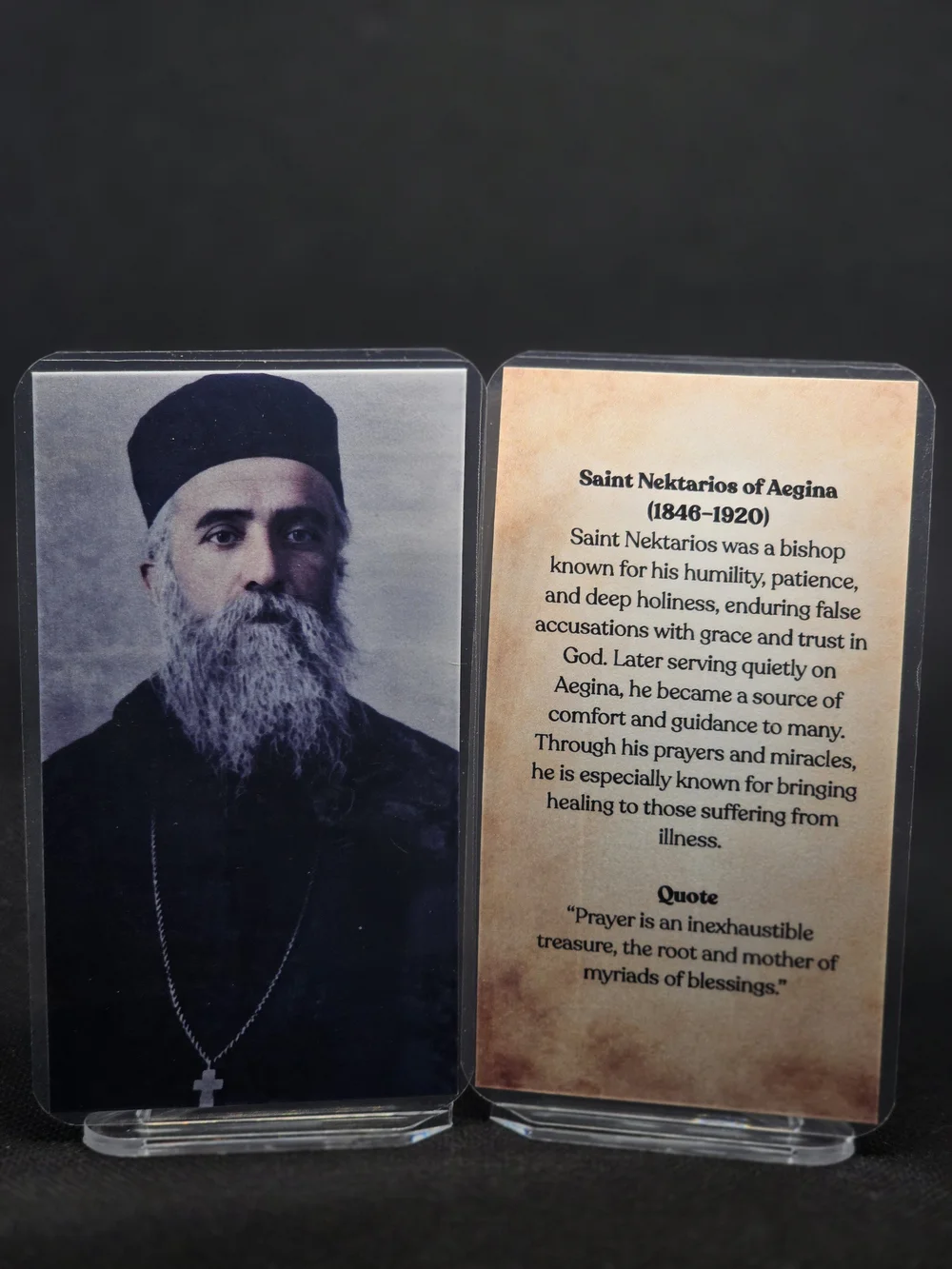
A prayer card is small enough to slip under a pillow, into a Bible, or beside the candle on the bedside table. These are the saints Eastern Catholic, Orthodox and Latin Catholic families most often ask to stand with them when illness comes.
Part X
Prayers for the Bedside
Lord Jesus Christ, physician of souls and bodies, you healed the sick and raised up the broken. Look with mercy on your servant (name), who is ill. Strengthen their body where it can be strengthened, and where it cannot, strengthen their soul. Take away fear. Forgive what needs to be forgiven. Let them feel that they are held.
Send your angels to guard this room and your saints to stand beside this bed. Send your priest in good time, and let your sacraments be a true comfort and a real healing. Teach us who love them how to love them well, to be present and patient and gentle, and to leave in your hands what we cannot carry.
If it is your will, restore them to health. If it is your will to call them home, bring them to Heaven in peace. Either way, we trust in your mercy.
Lord, have mercy. Amen.
Lord, you know how tired we are, and how much we love. Give us patience in the long hours and quiet in the short ones. Keep us from blame and from regret. Let us say what needs to be said, and be silent when words fail. Hold our hands as we hold theirs.
Saint Joseph, patron of a happy death, pray for us. Holy Mary, Mother of God, pray for us. Amen.
Call the Priest. The Church Has Been Waiting to Help.
The sacraments for the sick are among the oldest and gentlest gifts the Church has. They were never meant to be a last-minute emergency measure. They were meant to be a companion through illness, a strength in weakness and a door held open at the end.
If someone you love is sick tonight, pick up the phone. Ask for the priest. Light a candle. Then sit beside them and pray, and know that you are not alone in that room. The saints are there, and the whole Church with you.
Get the Saint Joseph Prayer Card →