Orthodox & Catholic Saints for Chronic Illness, Autoimmune Disease & Chronic Pain: Complete Guide
Orthodox & Catholic Saints for Chronic Illness, Autoimmune Disease & Chronic Pain: The Complete Guide to Healing Intercession
When doctors run out of answers and your body wages war against itself, the Church has saints who walked the path you walk now. Their prayers worked miracles in their own time. They intercede for yours.
- Saints for Healing: An Overview
- Saint Lidwina of Schiedam — Autoimmune Disease & Chronic Illness
- Saint Panteleimon — Physicians, Healing & Physical Recovery
- Saint Nektarios of Aegina — Cancer & Terminal Illness
- Saint Peregrine Laziosi — Cancer Healing & Hopelessness
- Saint Rita of Cascia — Impossible Suffering & Endurance
- Saint Xenia of Petersburg — Spiritual Healing in Suffering
- Saint Raphael the Archangel — Protection & Healing
- Other Saints for Healing & Chronic Illness
- Building a Prayer Life Around Your Illness
- Frequently Asked Questions
Saints for Healing: An Overview of the Orthodox & Catholic Tradition
Chronic illness is not a modern phenomenon. It has existed for as long as human bodies have suffered, and the Christian Church has, from the beginning, produced saints who endured it, transformed it, and left a record of holiness that the suffering can follow. These are not saints who promised miraculous instant healing. Most of them lived with their conditions their entire lives. What they offer is something more profound: a way to live inside suffering without being destroyed by it, and a pathway through pain toward sanctity itself.
The Christian tradition recognizes both healing saints (those who perform miracles of physical cure) and suffering saints (those who teach the spiritual transformation of pain). Both are valid, and both matter in different moments of the journey. If you are newly diagnosed with an autoimmune disease, you might invoke Saint Lidwina. If you have endured decades of chronic pain and need to find meaning in it, you might turn to Saint Xenia. If cancer has entered your home, Saints Nektarios and Peregrine have walked where you are walking.
This guide covers the major saints invoked for chronic illness in both the Eastern Orthodox and Roman Catholic traditions. It connects each to prayer cards, devotions, and prayers that can anchor your spiritual practice. It treats healing not as a presumption but as a legitimate hope held together with the deeper prayer of transformation.
Lidwina of Schiedam was born in the Netherlands on March 18, 1380. At the age of fifteen, a skating accident on the frozen canals left her with injuries from which she would never recover. What followed was not a miraculous healing but an illness that lasted for thirty-four years: chronic pain, paralysis, recurring fevers, and progressive disability. Her biographer, the monk Thomas à Kempis, documented her life as one of the most detailed accounts of chronic illness in medieval Christianity.
What distinguished Lidwina was not that she recovered. She did not. What distinguished her was that she became holy precisely through remaining ill. Her suffering was not spiritualized away; it was lived through, endured, and transformed into a testimony about the soul's capacity to remain patient, to pray, and to grow in love while the body declined. She received eucharist weekly — then daily — as her only food for much of her adult life. Her room became a place of pilgrimage not because miracles happened there but because people could see a human being remaining human, remaining loving, remaining spiritually alive in the midst of pain that never ceased.
She died on April 14, 1433, and was canonized by the Catholic Church in 1890. Her feast day is April 14. She is the patroness of the chronically ill, of those with autoimmune diseases, of ice skaters, and of all who suffer from conditions the medical world cannot resolve. She offers not false hope but true hope: the hope that your life need not end because your body has become unreliable.
Why She Remains the Patron of Autoimmune Disease
Modern medicine would likely recognize Lidwina's condition as an autoimmune disorder — a progressive inflammatory illness that attacks the body systematically. The similarities to conditions like lupus, rheumatoid arthritis, and fibromyalgia are unmistakable. What makes her patronage powerful is that she lived in an era with no treatment, no understanding, and no hope for cure. Yet she lived. She became a saint. She maintained spiritual progress through decades of decline.
Those with autoimmune diseases often experience a particular spiritual crisis: the sense that the body has become the enemy, that it is attacking itself, that the fundamental unity of person has fractured. Lidwina's witness is that the soul remains whole even when the body wages war against itself. Her patronage is not about fixing the body. It is about preserving the soul in a body that will not be fixed.
Prayer to Saint Lidwina for Those with Chronic Illness
O Saint Lidwina, you who lay upon your bed for thirty-four years and did not curse God,
who found your way to holiness not through healing but through patient suffering,
intercede for me now as I navigate this illness that doctors cannot explain and cannot cure.
Teach me that my life is not ended because my body has become unreliable.
Help me to remain patient when the pain returns each morning.
Give me your courage to receive the Eucharist even when my body rebels.
Show me that sanctity is possible not after healing but through honest suffering.
And if a miracle should come, help me receive it with gratitude.
But if it does not come, help me become, like you, a saint in the midst of unhealed pain.
Amen.
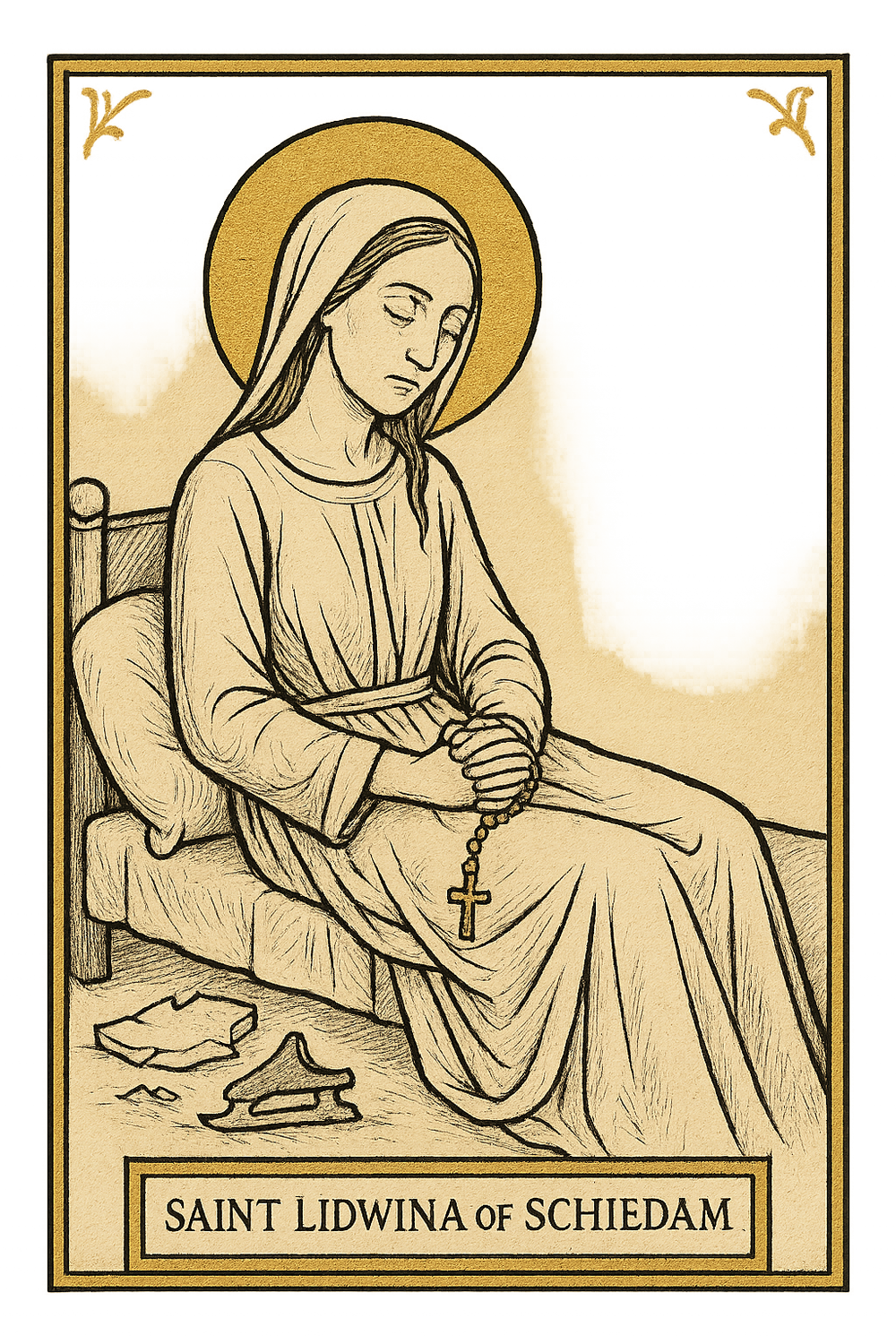
Handmade prayer card featuring the patron saint of chronic illness and autoimmune disease. A beautiful icon of Saint Lidwina designed for those living with incurable conditions. Keep in your prayer corner or carry as a daily reminder that your life is not over because your body is sick.
Part of our collection of Catholic Prayer Cards & Orthodox Prayer Cards for healing intercession.
Get the Prayer Card →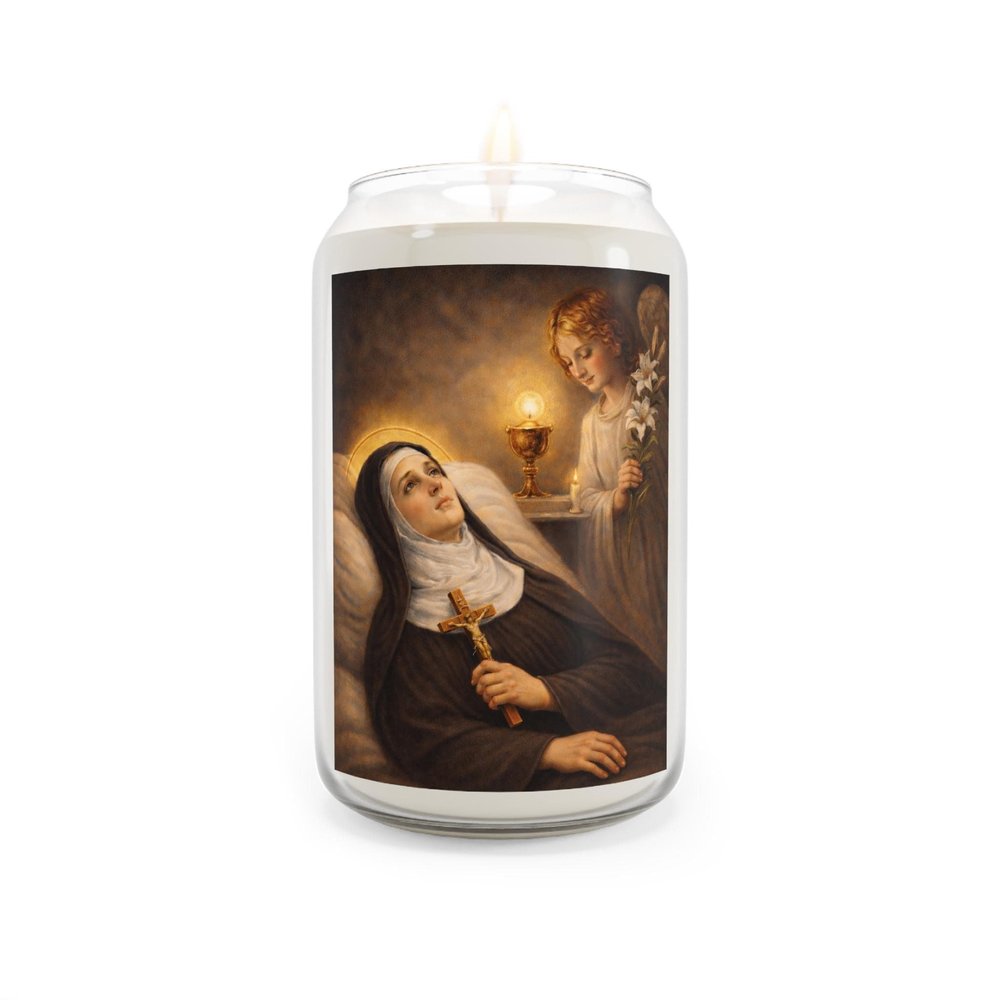
A devotional candle featuring Saint Lidwina. Light during your prayers for patient endurance through chronic illness. Perfect complement to the prayer card for a complete home altar devoted to this saint.
Part of our Catholic Prayer Cards & Orthodox Prayer Cards collection with candles and devotional items.
Get the Candle →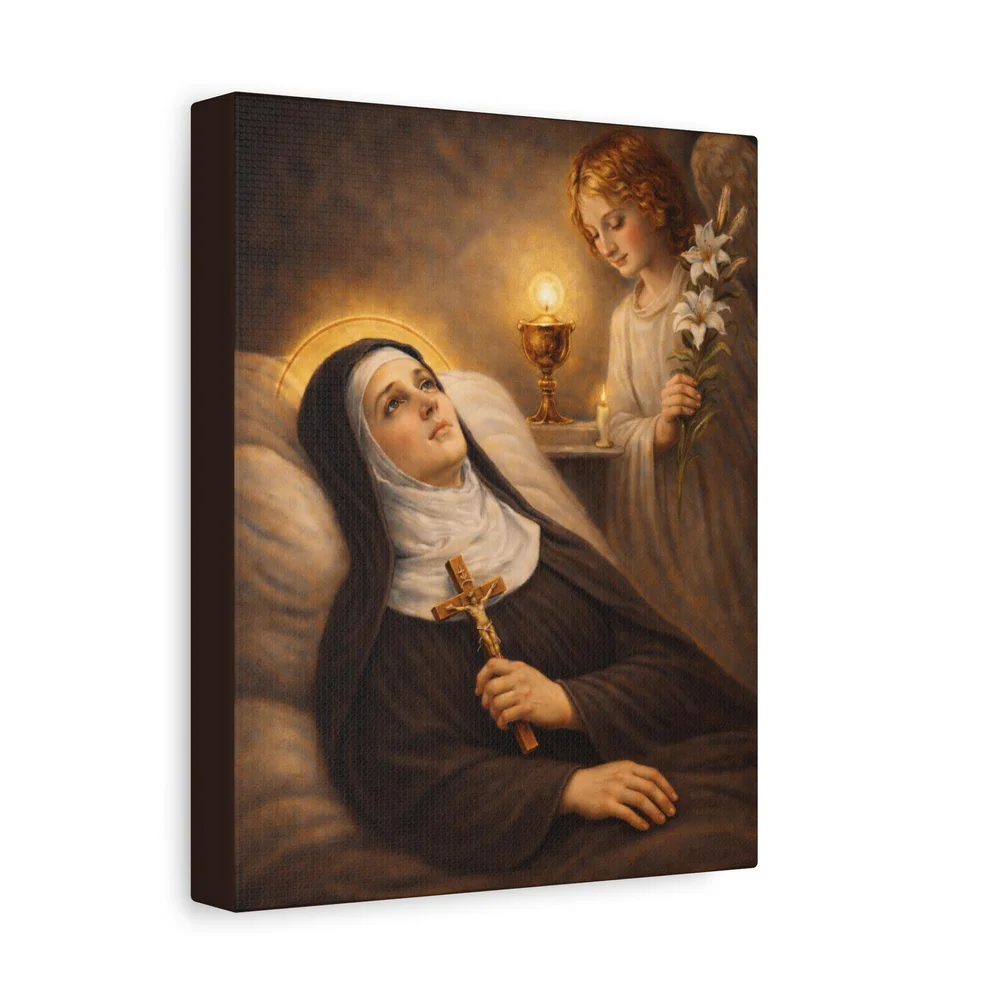
A stunning canvas print of Saint Lidwina for your bedroom, prayer corner, or home altar. High-quality wall art that makes a permanent statement of devotion. Available in multiple sizes.
Browse our complete collection of Catholic Prayer Cards, Orthodox Prayer Cards, and wall art.
Get the Canvas →Or explore curated saint bundles
Saint Lidwina is featured in this carefully curated bundle alongside Saint Rafqa, Saint Juliana Falconieri, Saint Job the Much-Suffering, and Blessed Estephan Nehmé — five saints who lived with chronic, incurable pain and became holy through endurance. Five prayer cards in one bundle for just $15.
One of our most popular Saint Bundles, featuring Catholic Prayer Cards & Orthodox Prayer Cards for chronic pain.
Get the Bundle →
Saint Lidwina is also featured in our Autoimmune Saints Prayer Card Bundle alongside Saint Rafqa, Saint Charbel, Saint Panteleimon, and Saint Luke the Surgeon — five intercessors for those whose bodies wage war against themselves. Five prayer cards for $15.
Browse our specialized Saint Bundles of Catholic Prayer Cards & Orthodox Prayer Cards organized by spiritual need.
Get the Bundle →Saint Panteleimon was born in Nicomedia during the reign of Emperor Diocletian, around 275 A.D. He was educated in both Greek medicine and the Christian faith, becoming a physician to the poor at a time when medical care was the domain of the wealthy. His charism was healing, but not through medical knowledge alone. He would pray over the sick, invoke Christ, and the illnesses would vanish. He took no payment for his work — hence the title Unmercenary Healer, the physician who cannot be bought.
He was martyred under Diocletian's persecution, beheaded for refusing to sacrifice to idols. But before his death, he became the symbol of Christian medicine — the integration of prayer, knowledge, and compassion in the care of the sick. He is venerated across the Orthodox world as the greatest of the healing saints, and the Orthodox tradition maintains a particular devotion to him on his feast day, July 27 (July 29 in the Western calendar). The Ecumenical Patriarchate in Constantinople maintains an entire monastic community dedicated to his name.
Why Panteleimon Matters for Physical Healing
Unlike some healing saints whose intercession is primarily for spiritual transformation, Panteleimon is invoked for direct physical healing. The Orthodox tradition maintains an enormous body of documented miracles attributed to his intercession: cancers that vanished, infections that cleared, paralysis that was overcome. He is the saint to invoke when you want to ask God for healing directly — not acceptance of illness, but recovery from it.
For those undergoing cancer treatment, surgery, or serious medical intervention, Panteleimon's prayer is the one to carry into the hospital. He understands both medicine and prayer, and he intercedes for the restoration of health as a legitimate spiritual goal.
The Prayer to Saint Panteleimon for Healing
O glorious Saint Panteleimon, you who healed without payment,
who prayed and the sick were made whole,
who would not deny the name of Christ even unto death:
Look upon me now as I face this illness that threatens my body.
You understood both the art of medicine and the power of prayer.
Intercede for me that my physicians may have wisdom,
that their hands may be guided,
and that my body may respond to treatment.
If it is God's will, restore me to health.
But whatever comes, help me to remain faithful to Christ
as you were faithful unto martyrdom.
By your prayers, great saint, bring healing.
Amen.

Venerate the great healing saint of the Orthodox tradition. Saint Panteleimon, the physician who healed without payment and was martyred for Christ, is one of the most powerful intercessors for physical healing. Ideal for those facing medical crises, surgery, or serious illness.
Browse our collection of Orthodox Prayer Cards & Catholic Prayer Cards for healing saints.
Get the Prayer Card →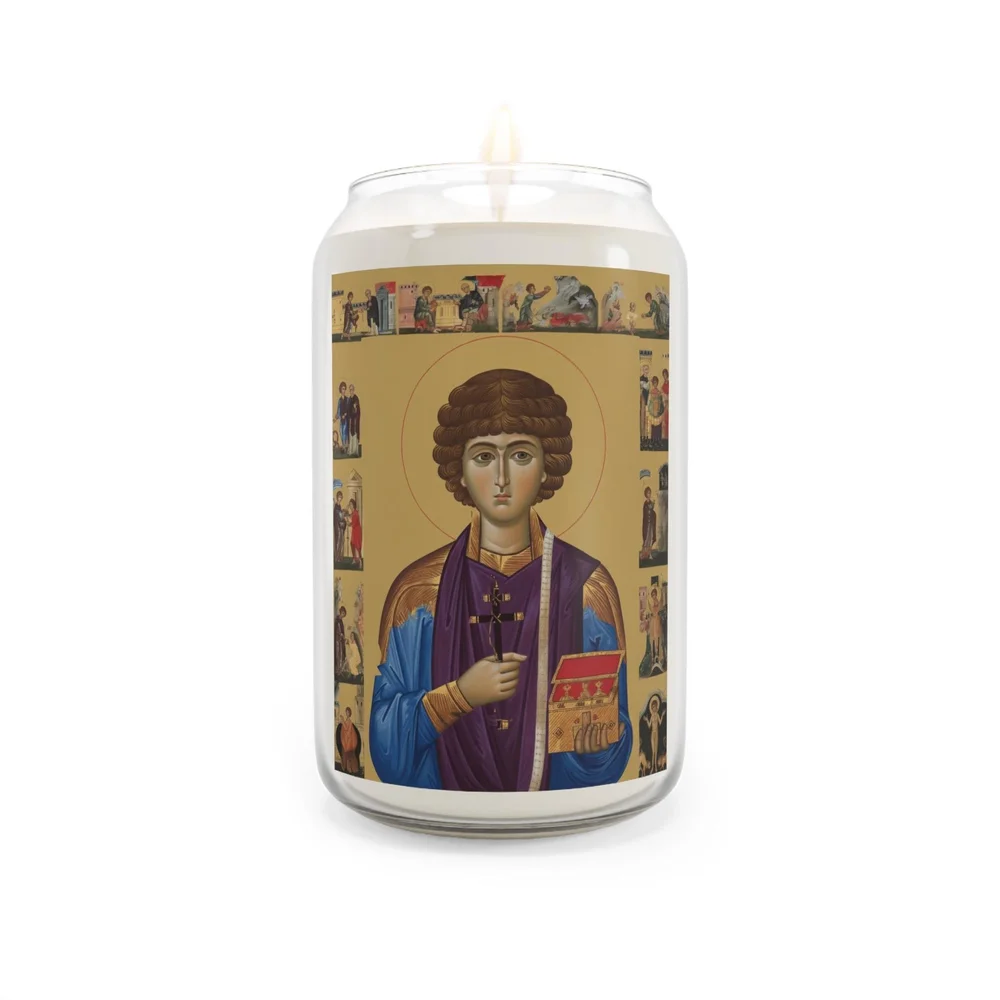
Light this candle in prayer as you invoke the greatest healer of the Orthodox tradition. Saint Panteleimon's candle belongs in any home where serious illness is being faced. Ideal for hospitals, recovery rooms, and prayer corners devoted to healing.
One of our most requested Orthodox Prayer Cards and Catholic Prayer Cards for healing devotions.
Get the Candle →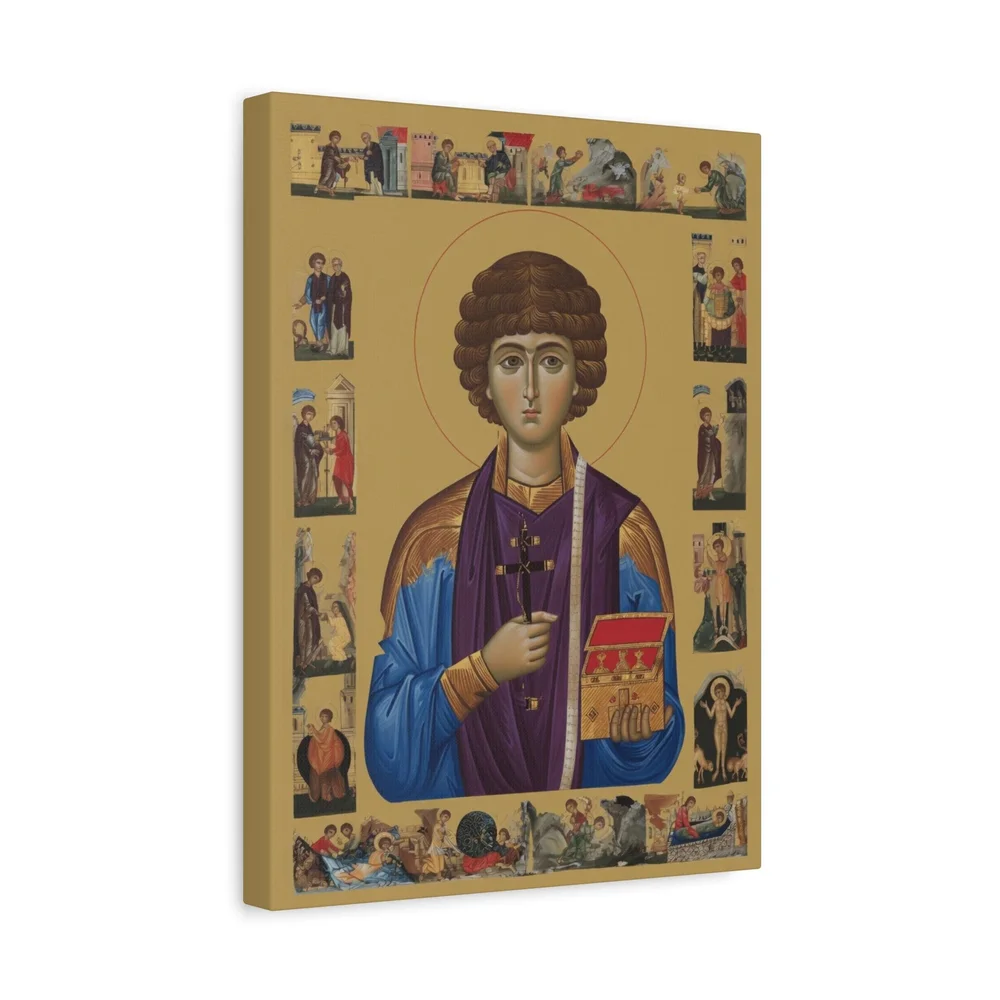
A powerful canvas print of Saint Panteleimon the Unmercenary Healer for your home, prayer corner, or medical office. His image reminds us that healing comes through both skilled medicine and divine intercession. Available in multiple sizes.
Pair with our Orthodox Prayer Cards and Catholic Prayer Cards for a complete healing devotion.
Get the Canvas →Or explore curated saint bundles
Saint Panteleimon is featured in this powerful healing bundle alongside Saints Cosmas & Damian, Saint Hermione, Saint John of Kronstadt, and Saint John Maximovitch. Five of the greatest healing intercessors in one collection for $15. Perfect for those undergoing medical treatment.
Featured in our collection of Saint Bundles — curated Catholic Prayer Cards & Orthodox Prayer Cards for healing.
Get the Bundle →
Saint Panteleimon is also featured in our Autoimmune Saints Prayer Card Bundle alongside Saint Rafqa, Saint Charbel, Saint Nektarios, and Saint Luke the Surgeon — five intercessors for those whose bodies wage war against themselves. Five prayer cards for $15.
Browse our specialized Saint Bundles of Catholic Prayer Cards & Orthodox Prayer Cards organized by spiritual need.
Get the Bundle →Saint Nektarios was born Anastasios Kephalas in Thrace in 1846. He became a metropolitan bishop (senior ecclesiastical authority) of the Orthodox Church, a theologian, and a reformer. But like many of the greatest saints, the final chapter of his life was marked by suffering. He fell into disfavor with the church hierarchy, was deposed from office, and lived his last years in poverty and obscurity on the Greek island of Aegina.
He developed cancer. He suffered tremendously. He did not die of it immediately but endured years of progressive decline. During those years, he did not rail against God or claim the cancer was punishment. He accepted it as part of his journey toward Christ. He was canonized by the Orthodox Church in 1961, becoming the first Greek saint canonized in modern times.
What makes Nektarios powerful for cancer patients is precisely that he died of it. He did not receive a miraculous cure. He did not even receive a painless death. What he offers is the testimony that a soul can remain holy, can remain faithful, can grow closer to God in the midst of a disease that is destroying the body. This is the saint for those whose cancer has recurred, for those facing terminal diagnosis, for those who have prayed for healing and the healing has not come.
Nektarios and the Theology of Unjust Suffering
Nektarios was deposed unjustly. The cancer that followed was not deserved. He suffered for reasons that had nothing to do with his own sin or failure. The Orthodox tradition names this kind of suffering — suffering that is truly random, truly undeserved — and holds that it is precisely in this suffering that the soul encounters Christ most directly. Nektarios offers a theology of innocent suffering that the theology of "healing by faith" cannot contain.
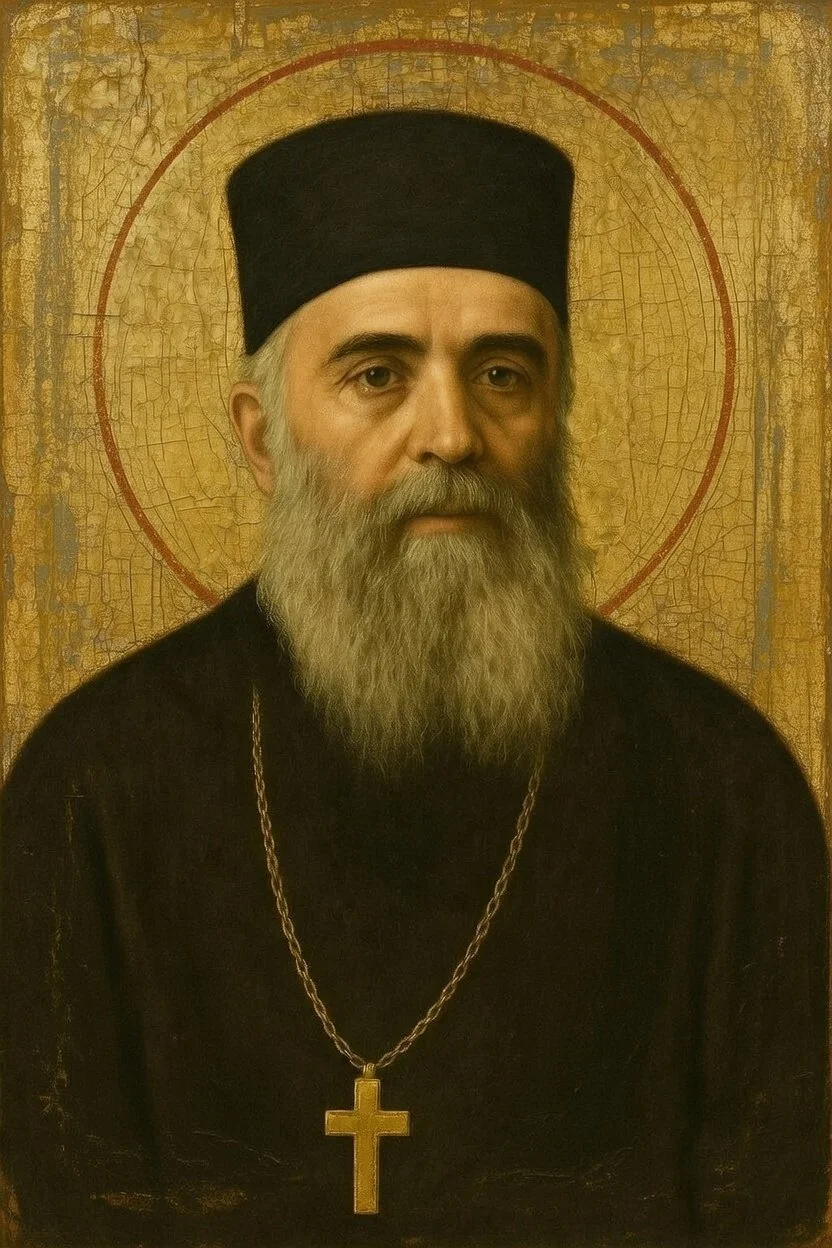
The Orthodox saint most invoked for cancer patients. Saint Nektarios died of cancer and understood terminal illness intimately. His intercession is powerful for those facing diagnosis, recurrence, or the end of treatment. A saint for when healing prayers must become prayers of transformation.
Part of our expanding collection of Orthodox Prayer Cards and Catholic Prayer Cards for serious illness.
Get the Prayer Card →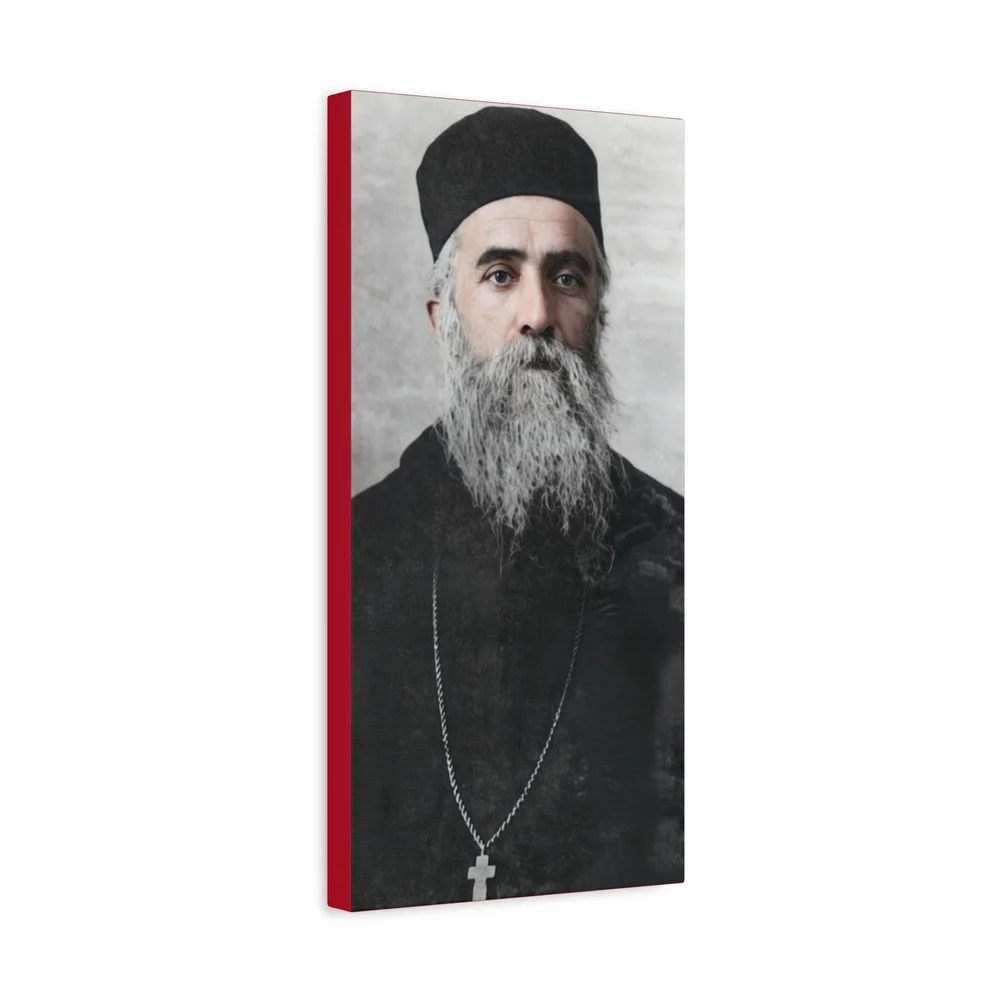
A beautiful Byzantine-style icon canvas of Saint Nektarios for your home prayer corner or hospital room. His image reminds us that holiness persists through terminal illness, and that we are never abandoned in suffering. Available in multiple sizes.
Complementary to our full collection of Orthodox Prayer Cards and Catholic Prayer Cards for healing and suffering.
Get the Canvas →Or explore curated saint bundles
Saint Nektarios is featured prominently in this powerful cancer bundle alongside Saint Peregrine, Saint Ezekiel Moreno, Saint Luke the Surgeon, and Saint Panteleimon. Five intercessors for cancer patients, terminal diagnosis, and serious illness — five prayer cards for just $15.
One of our most requested Saint Bundles, featuring Catholic Prayer Cards & Orthodox Prayer Cards for cancer healing.
Get the Bundle →
Saint Nektarios is also featured in our Autoimmune Saints Prayer Card Bundle alongside Saint Rafqa, Saint Charbel, Saint Panteleimon, and Saint Luke the Surgeon — five intercessors for those whose bodies wage war against themselves. Five prayer cards for $15.
Browse our specialized Saint Bundles of Catholic Prayer Cards & Orthodox Prayer Cards organized by spiritual need.
Get the Bundle →Related: Read the full article on Saint Nektarios of Aegina: Complete Biography & Healing Prayers
Peregrine was born in Forli, Italy, in 1265. He lived a wild youth, then experienced a religious conversion and joined the Servites, a mendicant order committed to service. At around age 60, he developed an ulcerous cancer on his leg. The condition progressed to the point that amputation was recommended. The night before the scheduled surgery, Peregrine prayed all night before the crucifix. In the morning, the cancer was gone. He lived another thirty years, dying at age 98.
He was canonized by the Catholic Church in 1726. His feast day is May 1. He is the patron of cancer patients, and in contemporary Catholic devotion, he is often invoked by those facing chemotherapy, radiation, and surgical intervention. Unlike Nektarios, who offers the prayer of transformation through terminal illness, Peregrine offers the model of miraculous healing — the cancer that vanishes when medicine has given up.
Peregrine and the Prayer for Impossible Cure
Peregrine is the saint to invoke when you want to ask God for the miracle. Not because miracles always happen, but because they sometimes do, and Peregrine's life is the living proof. When doctors have recommended amputation or given a terminal diagnosis, Peregrine's intercession is appropriate. His prayer is the prayer for the unlikely recovery, the medically impossible reversal. Hundreds of testimonies attribute cancer remissions to his intercession.
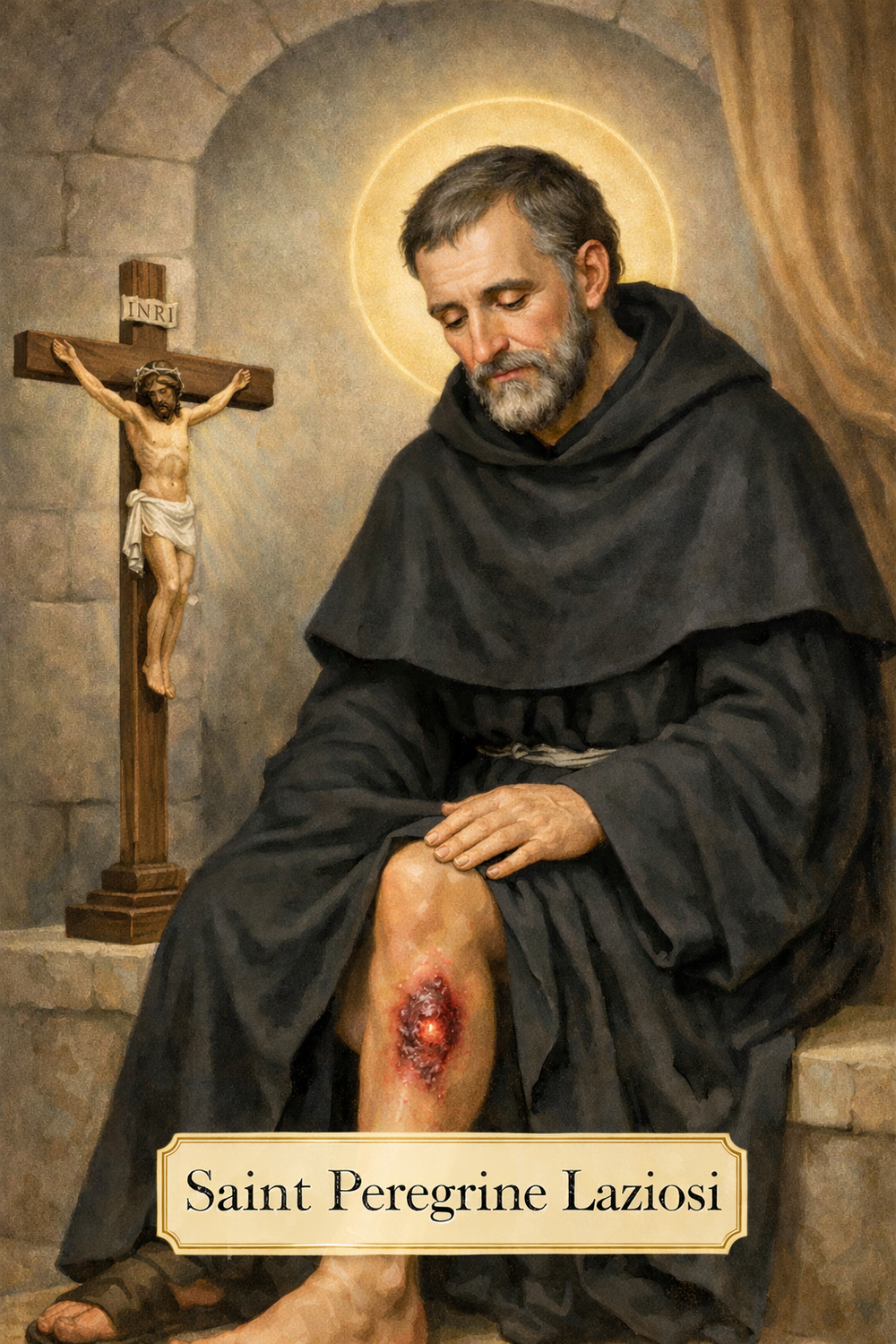
The Catholic saint most invoked for miraculous cancer healing. Peregrine prayed all night before surgery and the cancer vanished. His prayer is the prayer of hope when medicine has no more answers. For those wanting to invoke the miraculous, Peregrine is your saint.
One of our most popular Catholic Prayer Cards for healing. Browse our complete collection of Orthodox Prayer Cards and Catholic healing saints.
Get the Prayer Card →Or explore curated saint bundles
Saint Peregrine is featured in this powerful cancer bundle alongside Saint Nektarios, Saint Ezekiel Moreno, Saint Luke the Surgeon, and Saint Panteleimon. Five intercessors for cancer patients, terminal diagnosis, and serious illness — five prayer cards for just $15.
One of our most requested Saint Bundles, featuring Catholic Prayer Cards & Orthodox Prayer Cards for cancer healing.
Get the Bundle →Rita was born in Italy in 1381. Her life was marked by three major phases of profound suffering. First, she was forced into an abusive marriage as a child. She endured it for eighteen years, remaining faithful and praying for her husband's conversion. When he was finally murdered (likely in a vendetta killing), Rita saw his death as an answer to her prayers — not the answer she wanted, but the one God provided.
She then became an Augustinian nun. And in her late years, she developed what the tradition identifies as a stigma (a miraculous wound on her forehead, corresponding to Christ's crown of thorns). She lived with a constant migraine, a wound that would not heal, odor that made her repellent to those around her. Yet she became beloved as a saint, known as the patroness of impossible cases.
Rita teaches that suffering is not always preventable or fixable. Sometimes what you pray for does not happen. Sometimes what happens is not what you wanted. And yet life continues. Sanctity is possible in the ruins of what you hoped for. She died in 1456 and was canonized in 1900. Her feast day is May 22.
Rita and the Acceptance of What Cannot Be Changed
Rita is the saint for chronic pain that is truly incurable. Not because you stop hoping for healing, but because you learn to live as a saint in a body that will not heal. She offers a theology of acceptance that is not passive resignation but active grace — the choice to remain loving, faithful, and holy even when circumstances are fixed and terrible. For those who have lived with chronic illness for decades, Rita's intercession is powerful.

The Catholic saint for those living with chronic, incurable conditions. Rita lived with an open wound on her forehead for years and became holy not despite her suffering but through it. Her intercession is for those who need grace to continue when healing is unlikely.
Available in our full collection of Catholic Prayer Cards and Orthodox Prayer Cards for chronic pain and suffering.
Get the Prayer Card →Or explore curated saint bundles
Saint Rita is featured in this carefully curated bundle alongside Saint Rafqa, Saint Lidwina of Schiedam, Saint Juliana Falconieri, and Blessed Estephan Nehmé — five saints who lived with chronic, incurable pain and became holy through endurance. Five prayer cards in one bundle for just $15.
One of our most popular Saint Bundles, featuring Catholic Prayer Cards & Orthodox Prayer Cards for chronic pain.
Get the Bundle →Xenia lived in Saint Petersburg, Russia, from 1730 until her death around 1806. Her path was unusual: after her husband's sudden death, she gave away all her possessions, left her home, and spent decades wandering the streets of the city in rags, living as a fool for Christ. She accepted suffering — cold, hunger, mockery — as a form of prayer. The tradition records her as prophetic and miraculously insightful despite her apparent madness.
She never performed healing miracles in the dramatic sense. What she offered was spiritual insight into the causes of suffering, counsel to those who approached her despite her degraded state, and intercession that addressed the soul's condition rather than the body's. She was venerated as a saint after her death, and though she was never formally canonized in the Roman sense, the Orthodox Church recognizes her as a holy woman whose intercession is powerful, particularly in Petersburg itself where she is beloved.
Xenia and Healing as Spiritual Transformation
Xenia is invoked not for physical cure but for clarity about the spiritual dimensions of illness. What is this pain teaching me? What part of my soul is this condition revealing? How can I become holy not after healing but through understanding? She is the saint for those who sense that their illness has spiritual meaning, that it is a teacher, that sanctity itself grows through physical suffering rather than in spite of it.
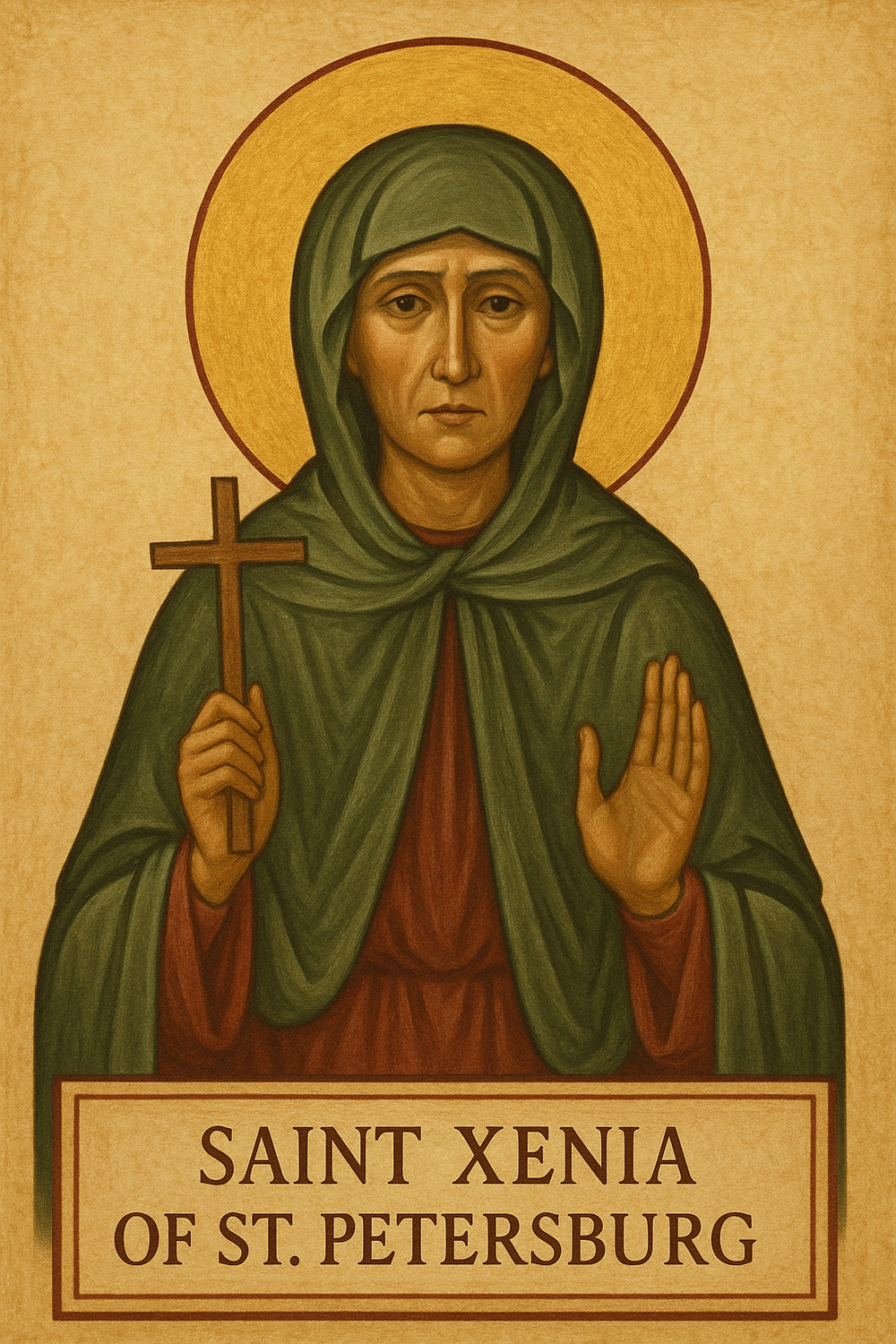
The Orthodox saint of spiritual wisdom in the midst of pain. Xenia lived as a fool for Christ, accepting suffering as prayer and becoming mysteriously holy. Her intercession helps those seeking to understand the spiritual meaning of their illness and to grow in grace through endurance.
Part of our curated collection of Orthodox Prayer Cards and Catholic Prayer Cards for transformation through suffering.
Get the Prayer Card →Or explore curated saint bundles
Saint Xenia is featured alongside other saints who taught the spiritual transformation of chronic pain: Saint Rafqa, Saint Lidwina of Schiedam, Saint Juliana Falconieri, Saint Job the Much-Suffering, and Blessed Estephan Nehmé. Five saints, five prayer cards, one bundle for $15.
One of our most popular Saint Bundles, featuring Catholic Prayer Cards & Orthodox Prayer Cards for chronic pain.
Get the Bundle →Raphael is not a saint in the traditional human sense but an archangel — a mighty spiritual being whose name means "God Heals." In the Book of Tobit, Raphael appears in human form to guide Tobit's son Tobias on a dangerous journey, protecting him and ultimately leading him to marry Sarah, a woman afflicted by a demon. Raphael is the one who delivers the guidance that saves the situation.
In Orthodox and Catholic theology, Raphael is invoked for protection during travel, for healing of wounds, and for clarity in times of confusion. His intercession is powerful for those navigating the medical system — needing wisdom about treatment options, discernment about which doctors to trust, protection from medical errors. He is also invoked for emotional and psychological healing, particularly for those dealing with the depression and anxiety that often accompany chronic illness.
Raphael and Protection Through Medical Journey
Unlike Panteleimon, Raphael's focus is not primarily on physical cure but on wise navigation of the healing journey itself. He is the archangel for those beginning treatment, facing complex medical decisions, or needing protection from the spiritual dangers that sometimes accompany suffering. His intercession asks not primarily for healing but for clarity, safety, and the guidance to make right choices in terrible circumstances.
Additional Saints
Other Saints for Chronic Illness, Healing & Suffering
Saint Joseph Moscati (1880–1927) was an Italian physician and Carmelite tertiary who devoted himself to treating the poor without charge. He combined medical knowledge with profound prayer and became known as a model of the Christian doctor. He is venerated particularly in medical contexts and is a natural patron for those working in healthcare or seeking healing through skilled medicine animated by compassion.
Saint Luke the Physician is mentioned in the New Testament as "the beloved physician" who traveled with Saint Paul. Tradition holds that he was a skilled doctor who combined medicine with spiritual healing. He is patron of physicians, surgeons, and all medical professionals, and his intercession is appropriate for those seeking not miraculous cure but the benefit of human medical skill guided by divine wisdom.
Saint Paisios of Mount Athos (1924–1994) was a modern Orthodox monk known for spiritual discernment and healing of souls. While his primary charism was spiritual direction, he received many visitors suffering from chronic illness and offered counsel that addressed both the medical and spiritual dimensions of their suffering. His prayers for clarity about the meaning of illness are powerful.
Saint Anthony the Great, the founder of Christian monasticism, suffered from demons and physical trials for decades. His life offers a model not of healing but of spiritual warfare — the recognition that illness and suffering are not random but part of a cosmic struggle between good and evil. For those whose chronic illness feels spiritually significant, Anthony's intercession is appropriate.
The Unmercenary Holy Physicians (Cosmas and Damian, Kyriakos and Iulitta, and others) are a class of saints in the Orthodox tradition who performed healing miracles without taking payment. Collectively, they represent Christ's healing power made accessible and free. Invoking the Unmercenary Physicians collectively (not just Panteleimon individually) is a powerful practice for those seeking healing in a world of expensive medical systems.
Spiritual Practice
Building a Prayer Life Around Your Illness
Morning Prayer: Committing Your Day to Christ
Begin each day — particularly days when pain is intense — with a short prayer committing your suffering to Christ. You might say: "Lord Jesus Christ, I accept this pain as part of your providence for me today. Help me to bear it with patience. Send me saints to intercede for my healing, or give me grace to continue if healing does not come. Make my suffering an offering of love for those I know and for the world."
This is not magical thinking. It is reorienting your consciousness from victim-hood toward offering. The pain will continue. But it is no longer meaningless pain; it is pain offered to God, pain that participates in Christ's redemptive suffering.
Daily Veneration of a Prayer Card
Choose one or two of the saints above — perhaps one for miraculous healing (Panteleimon or Peregrine) and one for patient endurance (Lidwina or Rita). Keep their prayer cards in a visible place. Look at them each morning and evening. Spend a moment asking for their intercession. Kiss the card as a gesture of humility and request.
This is a practice the whole Christian tradition recommends. The prayer card becomes a touchstone, a visible reminder that you are not alone, that others have walked this path, that the communion of saints surrounds you.
The Prayer Rope (Chotki) for Continuous Intercession
Consider obtaining a prayer rope (used primarily in Orthodox practice but valuable in any tradition). Knot it with prayers to specific saints. You might dedicate 10 knots to Saint Panteleimon (for healing), 10 to Saint Lidwina (for patience), 10 to Saint Raphael (for protection and wisdom). Throughout the day, as you hold the rope, pray: "Saint [Name], pray for me." This simple practice transforms idle time into prayer time and keeps your intention focused.
Eucharist as a Healing Practice
In both Orthodox and Catholic traditions, receiving the Eucharist regularly (weekly if possible, daily if your tradition allows) is understood as a powerful medicine for body and soul. Approach it not as a magical cure but as a participation in Christ's healing power. The theological foundation is that Christ himself is present in the sacrament, and his presence has always been healing.
Common Questions
Frequently Asked Questions About Saints for Chronic Illness
The Saints Did Not Have Modern Medicine. But They Had Something You Also Have: Faith, Community, & the Communion of Saints.
Lidwina lay on her bed for thirty-four years. Nektarios died of cancer. Rita lived with an open wound. Peregrine faced amputation. And yet all of them became saints not after healing but in the midst of suffering — and for Peregrine, by means of miraculous healing. Their lives show every possible path: miraculous recovery, patient endurance, spiritual transformation, loss, and grace.
You are not alone in your pain. The whole communion of saints surrounds you. Begin with a prayer card. Choose one or two saints. Ask them to pray. And whether healing comes or whether you become, like them, holy in the midst of unhealed pain, you are walking a path that thousands before you have walked, and thousands will walk after you.
Browse All Orthodox & Catholic Prayer Cards →