How to Choose a Care Home for a Catholic or Orthodox Parent, and How to Keep Your Heart Intact While You Do
Caring for Aging Parents • Questions to Ask • Red Flags to Watch For • Grace for the Hard Days
How to Choose a Care Home for a Catholic or Orthodox Parent, and How to Keep Your Heart Intact While You Do
Nobody grows up planning to do this. If you are reading at midnight with a hospital discharge date on the calendar or a parent who can no longer be left alone, this page is for you. It gives you the questions to ask, the warning signs to watch for, and permission to be gentle with yourself.
Choosing a Care Home for a Parent of Faith — At a Glance
- Who This Is For
- Adult children and spouses of Catholic, Eastern Catholic and Orthodox parents
- Levels of Care
- Independent living • Assisted living • Memory care • Skilled nursing • Hospice
- Faith Essentials
- Mass or Divine Liturgy • Priest access day and night • Anointing / Holy Unction • Communion at the bedside
- Ethics Question
- Does the facility follow the Ethical and Religious Directives or a clear written equivalent?
- Screening Rule
- Judge the care first, then the chapel. A beautiful chapel cannot make up for an understaffed floor.
- Medicare Reality
- Does not pay for assisted living • Skilled nursing covered only in limited cases
- Best Time to Start
- Before a crisis. Most placements follow a hospital stay with only days to decide.
- Most Important Truth
- Choosing good care is not abandonment. It is one of the ways love acts when love is no longer enough on its own.
Before Anything Else: This Is Hard, and You Are Not Failing
There is a particular kind of grief that arrives before anyone has died. It comes when your mother stops recognizing the kitchen she has cooked in for fifty years. It comes when your father falls for the second time and the doctor says the word “placement.” It comes in the parking lot after a tour, when you sit in the car and cannot start the engine. If that is where you are, please know that what you feel is not weakness. It is love meeting a limit.
Most families come to this decision exhausted. Many have already spent months or years as caregivers, driving to appointments, sleeping in shifts, managing medications, lying awake listening for footsteps in the hall. Many are also carrying a quieter fear: Am I betraying them? Is this what the commandment meant? We will take that question seriously later in this article. For now, hold onto one sentence: the fact that this decision hurts is evidence that you are the right person to make it.
What follows is practical, because practical help is a form of mercy. It will give you questions to ask, ways to tell a good home from a merely pleasant-looking one, and the specific things that matter when your parent is Catholic, Eastern Catholic or Orthodox, whose faith is not a hobby but the structure of their days and, soon, the way they meet death. You do not have to figure this out alone, and you do not have to figure it out all at once.

Part II
Start With the Right Level of Care
The faith questions matter, but they come second. Families often tour the wrong kind of place first and lose precious weeks. Your parent’s doctor, the hospital discharge planner, or a social worker can tell you which level fits today, and that answer may change as the months go on. Here is the landscape in plain terms.
| Level | What it is | Often right when… |
|---|---|---|
| Independent living | Apartments with meals and activities, no personal care | Your parent is healthy but isolated, or tired of home upkeep |
| Assisted living | Help with bathing, dressing, medications and meals | Daily tasks are becoming unsafe without help |
| Memory care | Secured, specially staffed units for dementia | Wandering, night confusion, or safety risks at home |
| Skilled nursing | 24-hour nursing and rehabilitation | Serious medical needs, or recovery after a hospital stay |
| Hospice | Comfort-focused care at the end of life, at home or in a facility | A physician certifies life expectancy of about six months or less if the illness runs its usual course |
Part III
How to Screen a Facility: Do This Before You Fall in Love With a Lobby
Brochures are written to be loved. Inspection reports are written to be accurate. Start with the second kind.
Step 1: Find Out Who Actually Runs the Home
The word “Catholic” on a sign can mean very different things. Some homes are sponsored by a diocese or a religious order and are bound by the bishop’s authority. Some belong to a Catholic health system. Others are run by a for-profit company that kept a saint’s name from the building’s past. Ask plainly: Who owns and operates this facility? Is it sponsored by a diocese or religious order? Who is the chaplain, and to whom does the administrator answer on questions of Catholic teaching? A good home will answer without hesitation.
Step 2: Read the Official Record
For nursing homes, Medicare publishes inspection results, staffing levels and star ratings at Medicare.gov/care-compare. Assisted living is licensed by each state, and most states post inspection reports and complaints online. Search your state’s department of health or aging for the facility’s name. Look for repeated citations, not a single bad day: patterns around medication errors, falls, understaffing or neglect matter most.
Every state also has a Long-Term Care Ombudsman, an independent advocate for residents. You can find yours through the Eldercare Locator at 1-800-677-1116. Call and ask what they know about the homes on your list. Ombudsmen hear the complaints that never reach brochures.
Step 3: Visit Twice, and Once Unannounced
Take the scheduled tour, then return at a different hour, ideally a weekend or mealtime, without notice. Watch for the things staff cannot stage: how long a call light stays on, whether residents are dressed and clean, whether anyone sits alone in a hallway, whether staff speak to residents with warmth or with impatience. Eat a meal there. Sit quietly in the common room for twenty minutes. Your gut will tell you things the administrator will not.
Step 4: Talk to the People Who Know
Ask the home for family references, then also approach families in the parking lot or lobby and ask how it really is. Speak to the aides, not only the director. Aides know which floors are short-staffed and which supervisors listen.
Part IV
Sacramental Life: What a Faith-Based Home Should Actually Offer
Your parent may no longer be able to drive to church, stand through a liturgy, or remember what day it is. But they may still be moved to tears by the Sign of the Cross, a familiar hymn, or the smell of incense. The sacraments reach people that memory has stopped reaching. When you evaluate a home, you are asking whether that door will stay open.
Questions to Ask the Home
- Is Mass (or the Divine Liturgy) celebrated on site, and how often? Daily, weekly or monthly? Who is the celebrant, and what happens when he is ill?
- Is there a chaplain, and what are his hours? Ask for his name and phone number, then call him yourself.
- If a resident takes a turn for the worse at 2 a.m., how is a priest reached? Ask for the actual process and the usual response time. Vague answers are an answer.
- How does a resident who cannot leave their room receive Holy Communion? Who brings it, how often, and who trains the people who do?
- Is Confession offered regularly, and in real privacy?
- How is the Anointing of the Sick arranged? Will the staff call a priest when your parent is seriously ill, not only in the final hours?
- May your own parish priest or deacon visit freely? Ask for the clergy visiting policy in writing.
That teaching is a comfort and a call to action. Do not wait until your parent is unconscious to ask for a priest. The Church offers the Anointing of the Sick to Catholics who are seriously ill, facing surgery, or weakened by age, and it may be received more than once. When death is near, the Church also gives Viaticum, Holy Communion as food for the final journey. A home that understands the difference between these two gifts is a home that takes your parent’s faith seriously.
Part V
Ethics and End-of-Life Care: The Questions Most Families Forget to Ask
Nobody wants to discuss how their mother will die while touring a nursing home with a smiling admissions director. But this is the moment to ask, because the answers reveal what the home values when it counts. Catholic health care in the United States is guided by the Ethical and Religious Directives for Catholic Health Care Services, issued by the U.S. Conference of Catholic Bishops. They commit a facility to the dignity of the dying, to refusing euthanasia and assisted suicide, and to distinguishing between ordinary care and burdensome treatment. A home that follows them has made a public commitment. A home that does not may still treat your parent kindly, but you will need to ask more.
Questions to Ask
- Does the facility follow the Ethical and Religious Directives, or another written ethical standard? Ask to see it, not just hear that it exists.
- What is the policy on assisted suicide and euthanasia? A growing number of states permit assisted suicide, and some facilities or affiliated providers participate. Ask directly and listen carefully.
- How do staff handle advance directives, POLST forms and do-not-resuscitate orders? Are families pressured? Is a chaplain or priest invited into those conversations?
- What is the approach to food and water near the end of life? The Directives treat nutrition and hydration as a basic obligation unless they can no longer prolong life or become excessively burdensome (Directive 58). A thoughtful home can explain how it applies that principle.
- Which hospice does the home work with, and may you choose another? Ask whether the hospice team respects your parent’s faith and welcomes the priest.
Whatever you decide, have this conversation with your parent while they can still take part in it. Write down what they want. Name a health-care proxy. Share the document with their doctor and their priest. It is easier at a kitchen table than in an emergency room at three in the morning, and it will spare you the crushing weight of guessing.
Part VI
For Orthodox and Eastern Catholic Families
If your parent is Orthodox or Byzantine, Melkite, Ukrainian, Ruthenian, Maronite or another Eastern Catholic, you may find that no nearby home was built around your tradition. Dedicated Orthodox and Eastern Catholic care homes exist in a few places, but they are rare. Most families choose a welcoming general or Catholic facility and arrange pastoral care through their own parish. That can work beautifully when you ask the right things before the move, not after.
- Will the staff welcome your priest bringing Holy Communion and performing Holy Unction or the Anointing of the Sick? Eastern priests often bring vestments, the Holy Gifts and oil; ask that this is expected and honored.
- May your parent keep icons, a prayer rope and a prayer corner in the room? If open flame is forbidden, ask about an electric vigil lamp.
- Can the kitchen accommodate the fasting calendar? Many can, when asked in advance. The Church’s rules relax for the elderly and the sick, so ask your priest what your parent should keep, then tell the dietitian.
- Is there a way to join the Divine Liturgy? Sunday rides to the parish, a livestream on a tablet, or a monthly home visit can all keep your parent connected.
- Will the intake paperwork record your parent’s Church, parish and priest? This small detail makes it far more likely that staff will call the right person at the right time.
A priest or deacon will ask questions you would never think of, and a facility’s response to a clergyman tells you more than any brochure. If your pastor cannot come, ask him for the names of other parishioners whose parents live in nearby homes. They will tell you the truth.
Part VII
Daily Life and Culture: Does the Faith Live Here?
Faith lives in ordinary days. Does the home pray before meals? Does it keep the seasons of the Church year, Advent and Christmas, Great Lent and Pascha, the patronal feasts, or does December mean only a tinsel tree? Are there rosary groups, prayer groups or Bible studies, and do residents actually attend? Do staff members treat your parent’s faith with respect or with embarrassment? A resident who is prayerful, lonely and surrounded by people who are not will quietly lose heart. One who finds other believers often does remarkably better.
Ask also how the home involves families. Can you share meals? Can you pray with your parent in the room? Are you welcomed as a partner in care or tolerated as a visitor? The best homes treat you as part of the team, because you are the one person who knows who your parent was before the illness.
Part VIII
Red Flags: When to Keep Looking
No facility is perfect, and no staff member is a saint on every shift. But some signs should make you pause. If you see several of these, keep looking.
- Vague answers about the chaplain or priest. “Someone comes by” is not a plan.
- Call lights ringing unanswered, or residents parked in hallways.
- High staff turnover or heavy use of temporary agency staff. Familiar faces matter, especially in memory care.
- Defensive responses to ethical questions. If asking about end-of-life policy makes the director uncomfortable, that tells you something.
- Pressure to sign quickly, or contracts that cannot be reviewed before you commit.
- A pattern of citations in state or federal inspection records.
- Residents who look overmedicated, unwashed or ignored.
- Religion treated as décor. A crucifix in the lobby and no one to bring Communion.
Part IX
Cost and How Families Pay
This is where many families are caught off guard, so let us be plain. Original Medicare does not pay for assisted living or long-term custodial care. It may cover a limited stay in a skilled nursing facility after a qualifying hospital stay, up to 100 days in a benefit period, with daily coinsurance beginning on day 21. Medicare does cover hospice care for people certified as terminally ill. Most assisted living is paid privately, from savings, the sale of a home, or long-term care insurance. Medicaid helps with long-term care in many states, but eligibility rules and covered services vary, and assisted living coverage is often limited to waiver programs with waiting lists. Veterans and surviving spouses may qualify for additional benefits.
Before you sign anything, ask for a written list of every fee, how often rates rise, what triggers a move to a higher level of care, and what happens to the deposit if your parent dies or leaves. An elder-law attorney can review a contract and plan around Medicaid rules, and your local Area Agency on Aging, reachable through the Eldercare Locator, offers free guidance. Many parishes also have a Saint Vincent de Paul conference or senior ministry that can help with referrals and sometimes with emergency needs.
Part X
The Tour Checklist: Print It and Bring It
- Before the tourSettle on the level of care your parent needs. Look up the inspection record. Call the ombudsman. Write down your parent’s sacramental needs in order of importance.
- On the tourVisit twice, once unannounced. Eat a meal. Meet the chaplain or ask for his number. See the chapel and ask how the Eucharist reaches the bedside. Talk to residents and to aides.
- Before you signGet the answers about priest access, end-of-life policy and fees in writing. Have the contract reviewed. Pray, and ask your priest to pray with you.

Part XI
When Guilt Gets Heavy: What the Fourth Commandment Really Asks
“Honor your father and your mother” (Exodus 20:12). Many adult children hear that commandment as an accusation the moment they begin touring care homes. It was never meant to be one. Honor is not measured by whether you personally perform every task of your parent’s care. It is measured by whether your parent is loved, safe, dignified and accompanied, and by whether you remain faithfully present. Sometimes honoring a parent means admitting that they need a night nurse, a locked memory unit, or a team that can lift them safely, and that you cannot be all of those things.
Exhausted caregivers make mistakes. Sick caregivers cannot help anyone. Marriages and children and jobs suffer when one person tries to carry what a whole community should carry. Choosing good care and then showing up, bringing Communion, praying the rosary or the Jesus Prayer at the bedside, advocating at care meetings, holding a hand, is not a lesser form of love. For many families it is the highest form still available.
Expect grief to come in waves, even if your parent is still alive. You may cry at odd times. You may feel relief and then guilt about the relief. You may feel angry at siblings who do not help, or at God. All of this is normal, and all of it can be brought to prayer and to a confessor or spiritual father. If the weight turns into hopelessness, or if you notice you are not eating, sleeping or functioning, please speak to your priest and to a doctor or counselor. Asking for help is not a failure of faith.
Many people wait for a feeling of certainty that never comes. Choose the best option you can find with the information you have, pray over it, and then trust that God can bless a decision made in love even when it is made in tears.
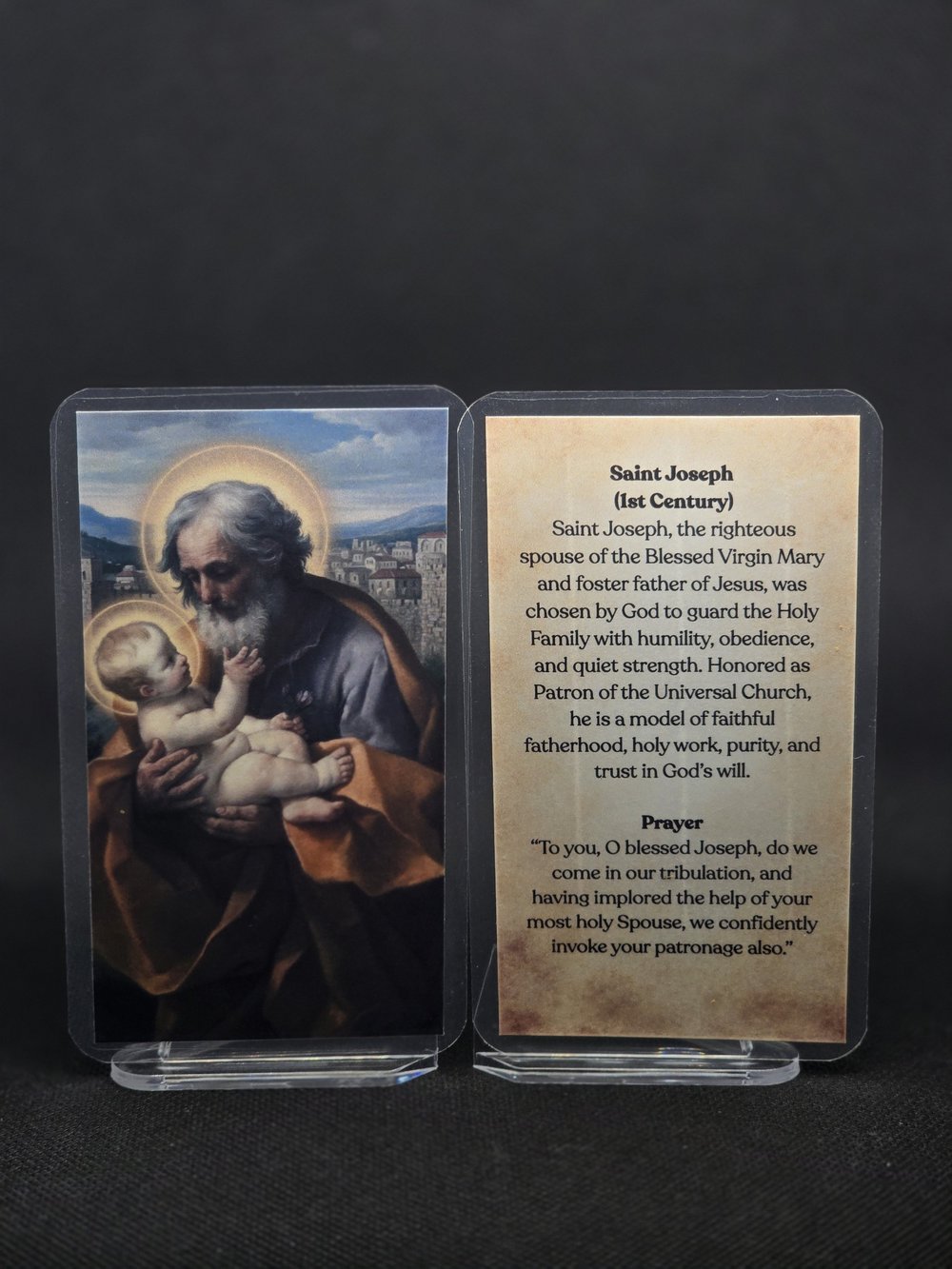
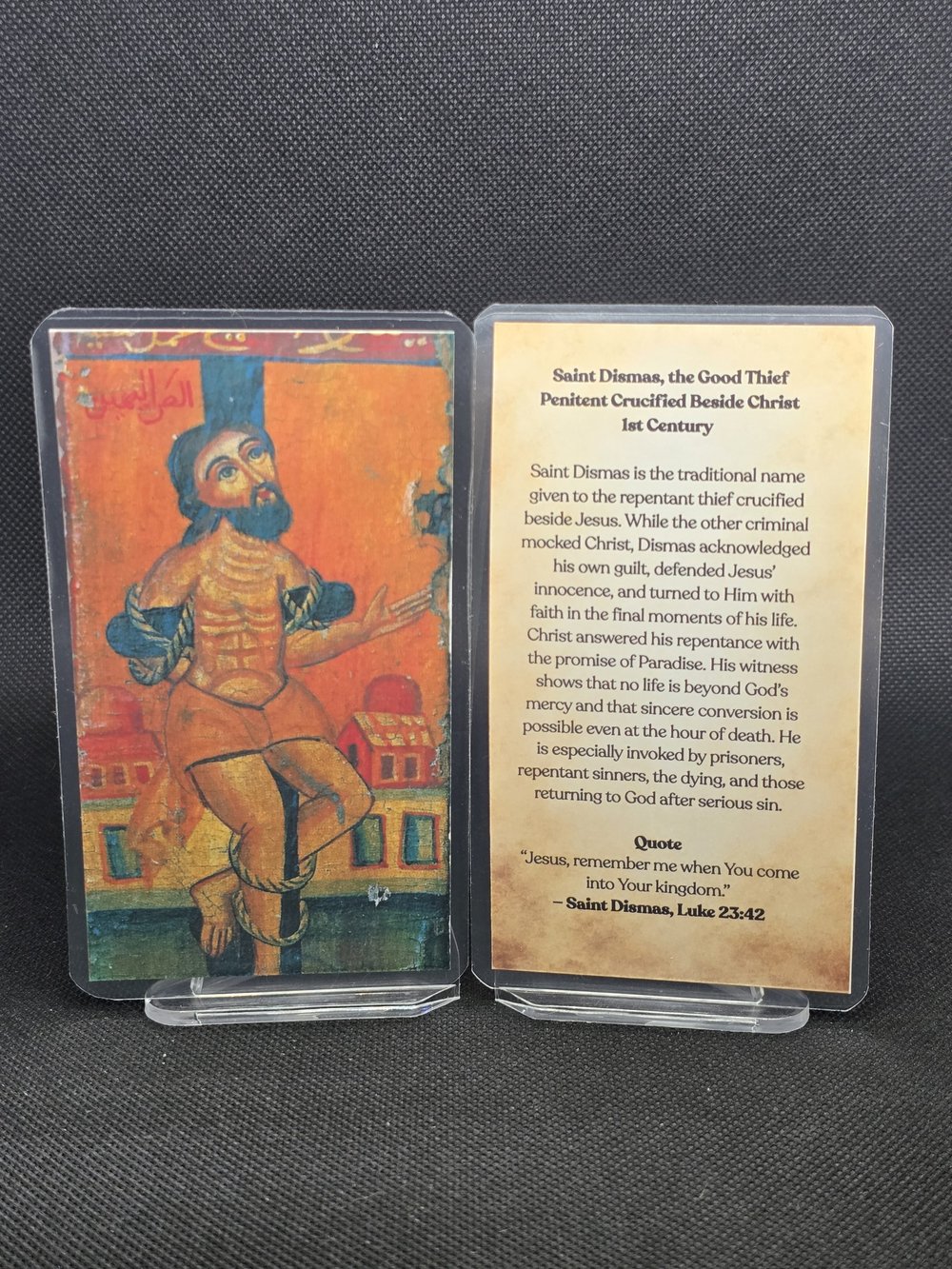
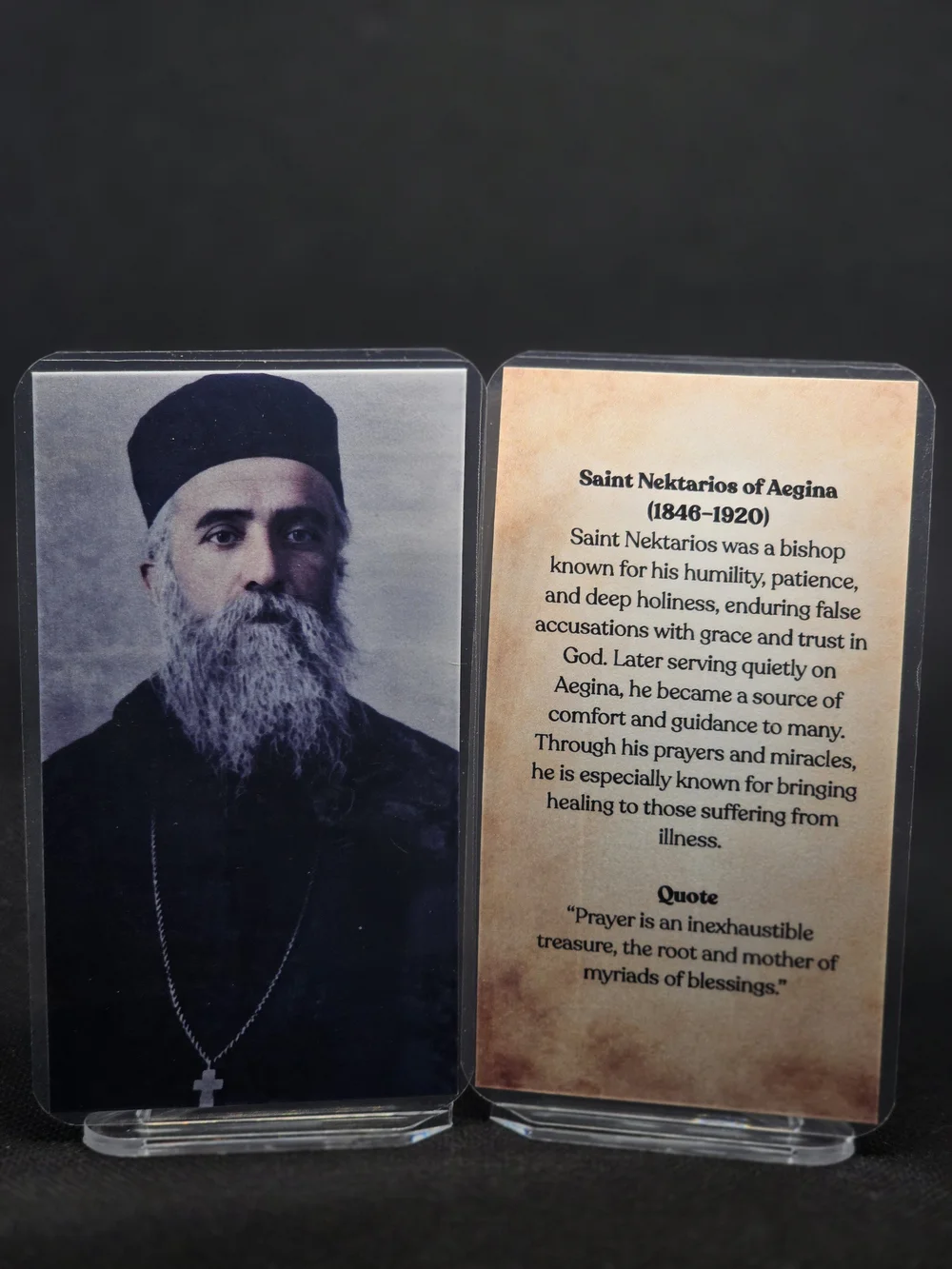
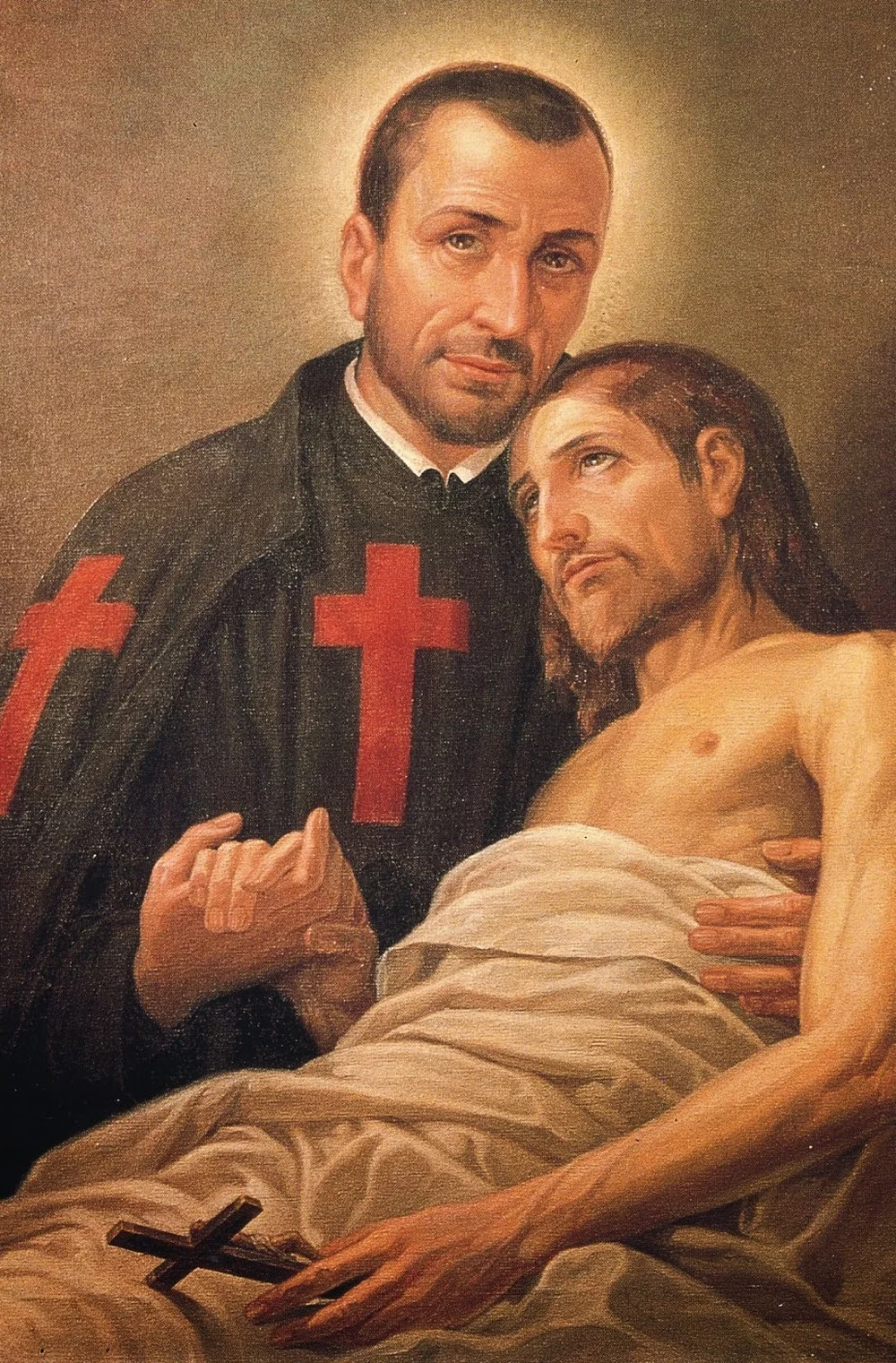
Prayer cards are small enough to tuck into a Bible, a wallet, a nightstand drawer or the frame of a mirror in a care-home room. They are a quiet way to put the saints beside your parent when you cannot be there yourself, and beside you when you have to walk out of the building and go on.
Part XII
Prayers for the Parent, and for You
Lord Jesus Christ, from the Cross you looked at your Mother and entrusted her to the care of your beloved disciple. You know what it is to love someone and to be unable to spare them pain. Give me wisdom for the decision in front of me. Keep me from fear, from pride and from the voices that say I am failing.
Guide me to the place and the people who will care for my parent with patience and tenderness. Protect their body, steady their mind, and keep your sacraments near to them every day. Where I fall short, make up what is lacking. Where I am tired, be my strength. Where I cannot be present, be present for me.
Give my parent peace. Give me peace. And when the day comes that I must give them back to you, let me do it without regret, trusting your mercy.
Lord, have mercy. Amen.
Lord Jesus Christ, Son of God, have mercy on us. Be near to my mother (my father) today. Quiet every fear. Send your angels to guard this room. Let her (him) know that she is loved by you and by us, now and always.
Holy Mary, Mother of God, pray for us. Saint Joseph, patron of a happy death, pray for us. Amen.
You Are Doing a Holy Thing, Even When It Does Not Feel Like It
From the first Christian hospices to the monastery infirmary, the Church has always treated the care of the old and the sick as sacred work. When you tour a home, ask hard questions, sign the papers and then return week after week with Communion and a hand to hold, you are taking part in that tradition.
You will not do this perfectly. Nobody does. But a parent who is loved, who is cared for by people who respect their faith, and whose child keeps showing up, has been honored. Take a breath. Call your priest. Light a candle. Then take the next small step.
Get the Saint Joseph Prayer Card →