What Is the Philokalia? A Beginner's Guide to the Orthodox Classic on Prayer
What Is the Philokalia? A Beginner's Guide to the Orthodox Classic on Prayer
At A Glance
- Meaning of the Word
- "Love of the beautiful" or "love of the good"
- First Published
- Greek, 1782, Venice
- Compiled By
- St. Nikodimos of the Holy Mountain & St. Makarios of Corinth
- Time Span of Texts
- 4th through 15th centuries
- English Translation
- 5 volumes, Palmer, Sherrard & Ware
- Core Subject
- Prayer, the Jesus Prayer, and inner stillness
- Related Tradition
- Hesychasm
- Best Starting Point
- An annotated single-volume selection
What Is the Philokalia, Really?
The Philokalia is not one book by one author. It is a library: a collection of texts on prayer and the spiritual life written by dozens of different Orthodox Christian monks, hermits, and bishops across roughly a thousand years, from the fourth century all the way to the fifteenth. The word itself comes from Greek and means "love of the beautiful" or "love of the good," and the collection was first gathered and published in Greek in 1782. Since then it has been translated into Slavonic, Russian, and eventually English, and its influence on Orthodox spiritual life is often described as second only to the Bible itself.
That description tends to intimidate people more than invite them in, which is the entire problem this guide is trying to solve. The Philokalia is not a systematic theology textbook and it is not meant to be read cover to cover like a novel. It is closer to a long, accumulated conversation between spiritual fathers across the centuries, each one writing short, practical counsel on a single overwhelming subject: how does a human being actually pray without ceasing, guard the heart against distraction, and grow toward union with God?
Part II
Who Compiled It, and When
The Philokalia as we know it was compiled in the eighteenth century on Mount Athos by Saint Nikodimos of the Holy Mountain and Saint Makarios, Metropolitan of Corinth. They were not writing new material; they were gathering and organizing centuries of existing Orthodox spiritual writing, much of which had circulated only in scattered manuscripts within monasteries, into a single coherent collection. It was first published in Venice in 1782, then translated into Church Slavonic, then into Russian, where it became deeply influential in Russian monastic and lay spirituality, helping inspire works like The Way of a Pilgrim.
The full modern English translation, undertaken by G. E. H. Palmer, Philip Sherrard, and Bishop Kallistos Ware, was published across five volumes starting in 1979, with the final volume completed decades later. This translation is now the standard English reference for the complete text, and it is the edition most Orthodox parishes, seminaries, and serious readers point to when discussing "the Philokalia" in English.

Part III
The Authors Inside It
Because the Philokalia spans roughly a thousand years, it reads less like a single voice and more like a long line of teachers, each adding to a tradition already in progress. Two of its most foundational contributors are saints whose full lives and legacies are worth knowing on their own.
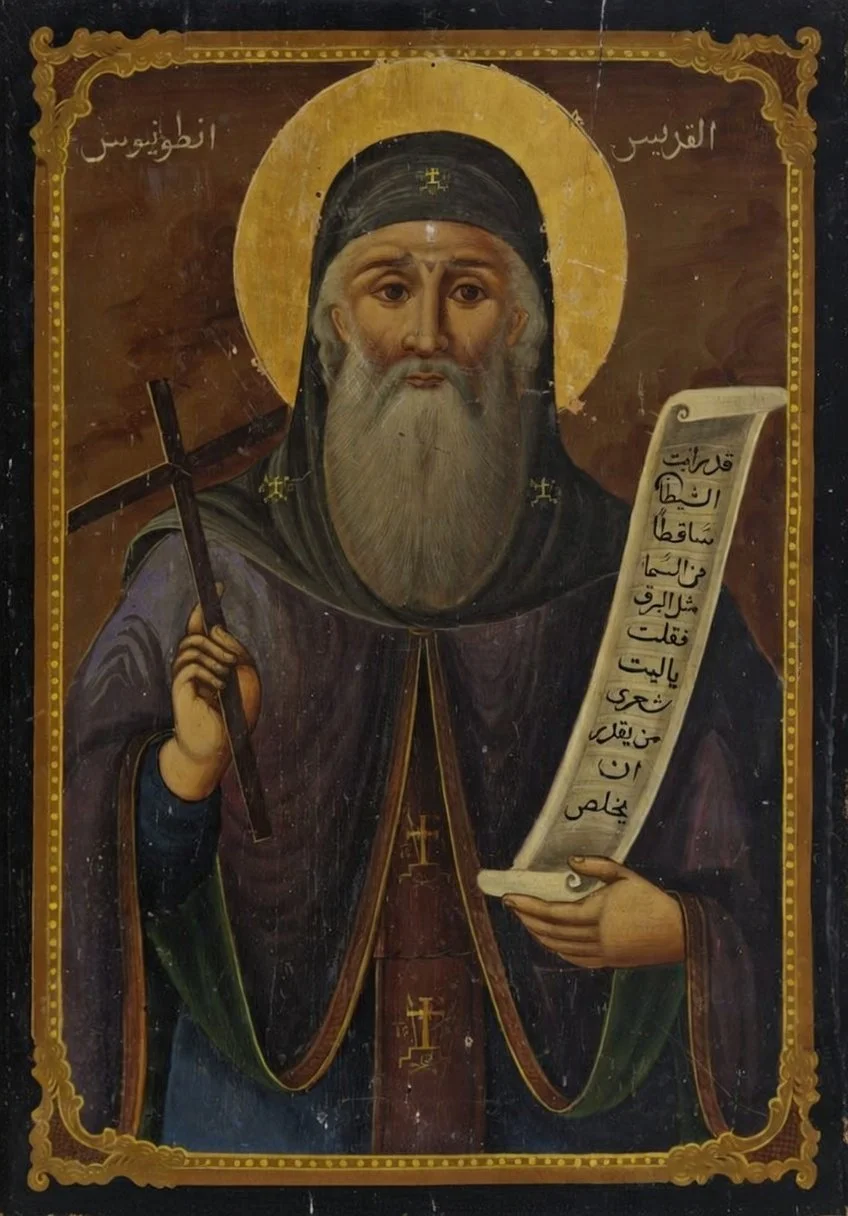
Saint Anthony the Great opens Volume 1 of the Philokalia, and for good reason. As the founding figure of Christian monasticism, his recorded teachings on prayer, temptation, and discernment of spirits set the tone for everything that follows in the collection. Read his complete biography, miracles, and sayings here.
Saint Isaac the Syrian's writings on prayer, repentance, and the mercy of God are among the most quoted passages in all of Orthodox spiritual literature, and his presence in the Philokalia tradition reflects how deeply his theology shaped later hesychast writers. His insistence that God's love exceeds every human category of justice remains one of the most striking and comforting threads running through the broader Philokalia tradition.
Other major contributors include Saint Mark the Ascetic, whose precise teaching on the spiritual law shaped generations of monastic formation, and Saint Maximus the Confessor, the seventh-century theologian whose dense and profound writing makes up much of Volume 2. For more on Maximus and his theological vision, see our piece on Saint Maximus the Confessor on marriage and theosis.
Part IV
How It Connects to Hesychasm and the Jesus Prayer
If there is one practice that ties the entire Philokalia together across its thousand years and dozens of authors, it is the pursuit of unceasing prayer through what the Orthodox tradition calls Hesychasm, meaning inner stillness or quiet. Many of the texts in the collection directly address the Jesus Prayer, the simple repeated invocation "Lord Jesus Christ, Son of God, have mercy on me," and how to pray it with attentiveness of the heart rather than as empty repetition.
For a deeper dive into this connection, see our guides on Hesychasm and Orthodoxy and Hesychasm: the Jesus Prayer, Prayer of the Heart, and Inner Stillness. If you are new to the Jesus Prayer itself, our introduction to the Jesus Prayer and our Jesus Prayer and prayer rope beginner's guide are the best places to start before tackling the Philokalia's more advanced instruction on the subject.
Part V
Where a Beginner Should Actually Start
Most people who attempt the full five-volume Philokalia without any introduction get lost quickly. The texts assume monastic context, technical vocabulary around the passions and the nous, and familiarity with a spiritual vocabulary most modern readers simply have not encountered yet. The better path is to start smaller and build up.
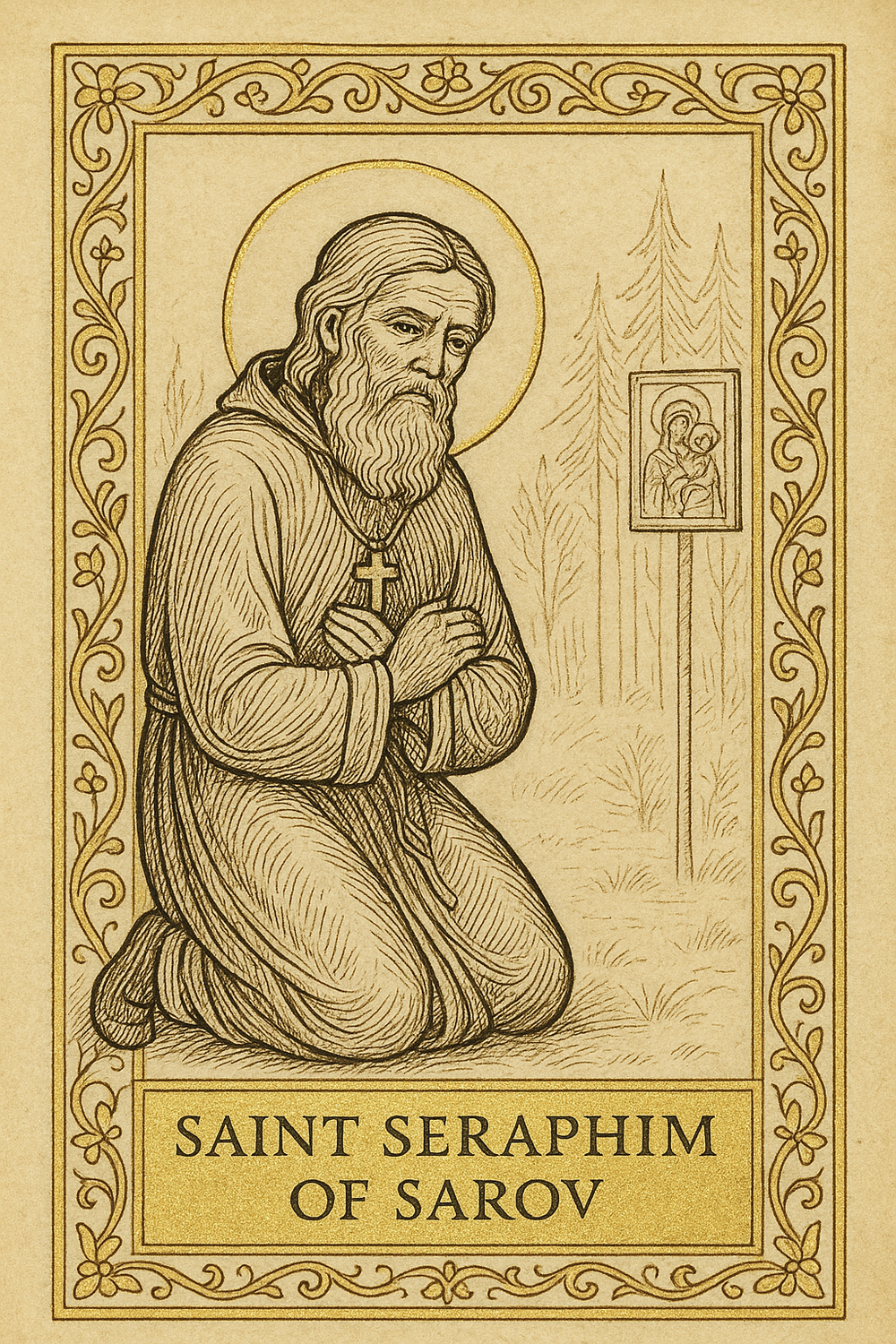
One excellent entry point that keeps the spirit of the Philokalia tradition without the density of the full academic translation is the Russian devotional tradition that grew directly out of it. Saint Seraphim of Sarov, the beloved nineteenth-century Russian monk and wonderworker, lived and taught within this same hesychast lineage, and his teachings have been collected in accessible form for exactly this kind of beginner.

Couples who set aside even ten minutes a day to read a short passage from a beginner Philokalia selection and discuss it together often find it deepens their shared spiritual life more than either person reading alone. If you and your spouse want guidance building that kind of shared practice, our Christian marriage coaching pairs husbands with Jeremy and wives with Ashley for support rooted in this same Eastern Christian tradition of prayer.
Part VI
A Prayer Before Spiritual Reading
The Philokalia's own authors repeatedly warn against reading their words too quickly or too academically. The texts were written for transformation, not information. Before opening any volume of the Philokalia, even a beginner's selection, it is worth pausing in prayer first.
Lord, quiet my mind before I read the words of those who sought You with their whole lives. Let me not read for knowledge alone, but for transformation. Grant me patience with what I do not yet understand, and humility before wisdom won through decades of fasting and prayer that I have not yet lived. Lead me, through their words, closer to unceasing prayer of the heart.
A short prayer composed for personal devotional use before spiritual reading. Not a liturgical text.
Frequently Asked Questions
Common Questions About the Philokalia
A Thousand Years of Monks Wrote This for One Reason: So You Could Learn to Pray
The Philokalia was never meant to intimidate. It was compiled on Mount Athos by men who wanted the hard-won wisdom of the desert fathers and the hesychast masters to survive and reach ordinary believers long after they were gone. Anthony the Great, Isaac the Syrian, Maximus the Confessor, and the Russian tradition that grew out of their teaching through Seraphim of Sarov all point toward the same thing: prayer of the heart, offered without ceasing.
Start small. Start with an introduction. And let the fathers teach you the same stillness they spent their lives learning.
Get the Little Russian Philokalia →