How Many Types of Prayer Are There? The Complete Guide to Catholic and Orthodox Prayer from Christ to the Desert Fathers to Today
Prayer • Church History • Catholic and Orthodox Spirituality • From the Apostles to the Desert to Today
How Many Types of Prayer Are There? The Complete Guide from Christ to the Desert Fathers to Today
Intercession. Arrow prayers. The prayer of the heart. These are real and ancient categories — but they are only the beginning. Christianity has named, practiced, debated, and refined dozens of distinct ways of praying across two thousand years. Here is the complete map, Catholic and Orthodox, from the Apostles through the Egyptian desert to the prayer rope in your hand today.
Types of Christian Prayer — At a Glance
- Scriptural Core (1 Tim 2:1)
- Requests, prayers, intercession, thanksgiving
- Catechism’s Five Forms
- Blessing & adoration, petition, intercession, thanksgiving, praise
- Three Expressions
- Vocal prayer, mental (meditative) prayer, contemplative prayer
- Earliest Source
- Desert Fathers & Mothers, Egypt/Palestine/Syria, 3rd–5th century
- Key Early Figures
- Anthony the Great • Evagrius Ponticus • John Cassian • John Climacus
- Manner of Prayer
- Kataphatic (with words/images) vs. Apophatic (wordless, silent)
- Orthodox Mystical Path
- Hesychasm • nepsis (watchfulness) • the Jesus Prayer • prayer of the heart
- Hesychasm Codified
- 14th century, by St. Gregory Palamas, Mount Athos
- Catholic Monastic Method
- Lectio Divina • lectio, meditatio, oratio, contemplatio (12th c., Guigo II)
- Named Catholic Schools
- Ignatian (imaginative) • Teresian/Carmelite (relational) • Salesian (practical)
- Goal in the East
- Theosis — union with God by grace
- Goal in the West
- Union of the will with God through love and contemplation
Part I
Where You Started: Intercession, Arrow Prayers, Prayer of the Heart
If you already know about intercessory prayer, arrow prayers, and the prayer of the heart, you have already found three load-bearing pillars of the whole Christian tradition of prayer. That is not a small thing. Most people who ask "how many kinds of prayer are there" are starting from zero. You are starting from a real foundation, and the honest answer to your question is that the full structure built on that foundation is larger, older, and more interconnected than almost anyone expects.
Intercessory prayer is praying on behalf of someone else, presenting their need before God as though it were your own. Arrow prayers are short, sudden, urgent prayers shot upward in a moment of need, with no fixed wording required. The prayer of the heart is the deep, wordless or near-wordless prayer that rises from inside a person rather than from deliberate thought, the kind that Orthodox Christians sometimes describe as the goal of a lifetime of practice. All three are ancient, all three are real, and all three are about to be placed inside a much larger map that stretches back to Christ and the Apostles, through the deserts of Egypt, into the monasteries of medieval Europe, and onto Mount Athos.
This article builds that map in full, for both the Catholic and Orthodox traditions, because both halves of the apostolic Church preserved and developed prayer in ways that illuminate each other.
Part II
The Scriptural Foundation: What Paul and the Catechism Name
Before there were deserts, monasteries, or named schools of prayer, there was the New Testament itself, and it already names several distinct categories. Saint Paul instructs Timothy that requests, prayers, intercession, and thanksgiving should be made for all people. That single verse contains four categories that later tradition would expand into much more developed systems, but the seeds are there from the apostolic age itself.
The Catechism of the Catholic Church organizes the Church's developed teaching on prayer into five named forms: blessing and adoration (praising God for who He is, not only for His gifts), petition (asking God for what is needed, including forgiveness), intercession (praying on behalf of others), thanksgiving (gratitude for blessings received), and praise (glorifying God simply because He is God). Notice that adoration and praise are closely linked but distinct: adoration responds to who God is in Himself, while praise often responds with joy to what He has done.
The Eastern Christian tradition, working from the same Scripture, arrives at substantially the same core categories but frames them differently, emphasizing especially intercession through the saints and the movement of the heart rather than a fixed catechetical list. Both traditions agree, however, that no single form of prayer is sufficient on its own. A healthy prayer life moves through all of them.
Part III
The Three Expressions: Vocal, Mental, Contemplative
Beneath the named forms (petition, intercession, and so on) sits a second framework that describes not what you are praying about, but how the prayer itself is happening. Catholic tradition calls these the three expressions of prayer: vocal prayer, mental prayer, and contemplative prayer.
Vocal prayer uses words, spoken aloud or silently moved on the lips: the Our Father, the Hail Mary, the Trisagion, a novena, a litany. It is the most basic and the most universal, the prayer of beginners and saints alike, because even the greatest mystics returned to vocal prayer their entire lives. Mental prayer withdraws further inward: silent reflection that engages the imagination, the intellect, and the will, without necessarily forming spoken words at all. Contemplative prayer, sometimes called passive prayer, is different in kind from the first two. It is not something a person generates through effort. It is received. The soul rests in God's presence rather than working toward Him, and tradition consistently teaches that this rest is a gift, not an achievement.
Orthodox hesychast tradition describes something strikingly similar as a progression rather than three separate categories: prayer begins as vocal prayer, moves inward to become mental prayer (the words repeated silently in the mind), and finally, through long practice and grace, descends into the heart itself, becoming what is called prayer of the heart. This is the very category you already named. Seeing where it sits in the larger structure shows that it is not a separate technique unrelated to vocal prayer, but vocal prayer's mature, interiorized destination.
Part IV
The Desert Fathers: Where the Tradition Really Begins
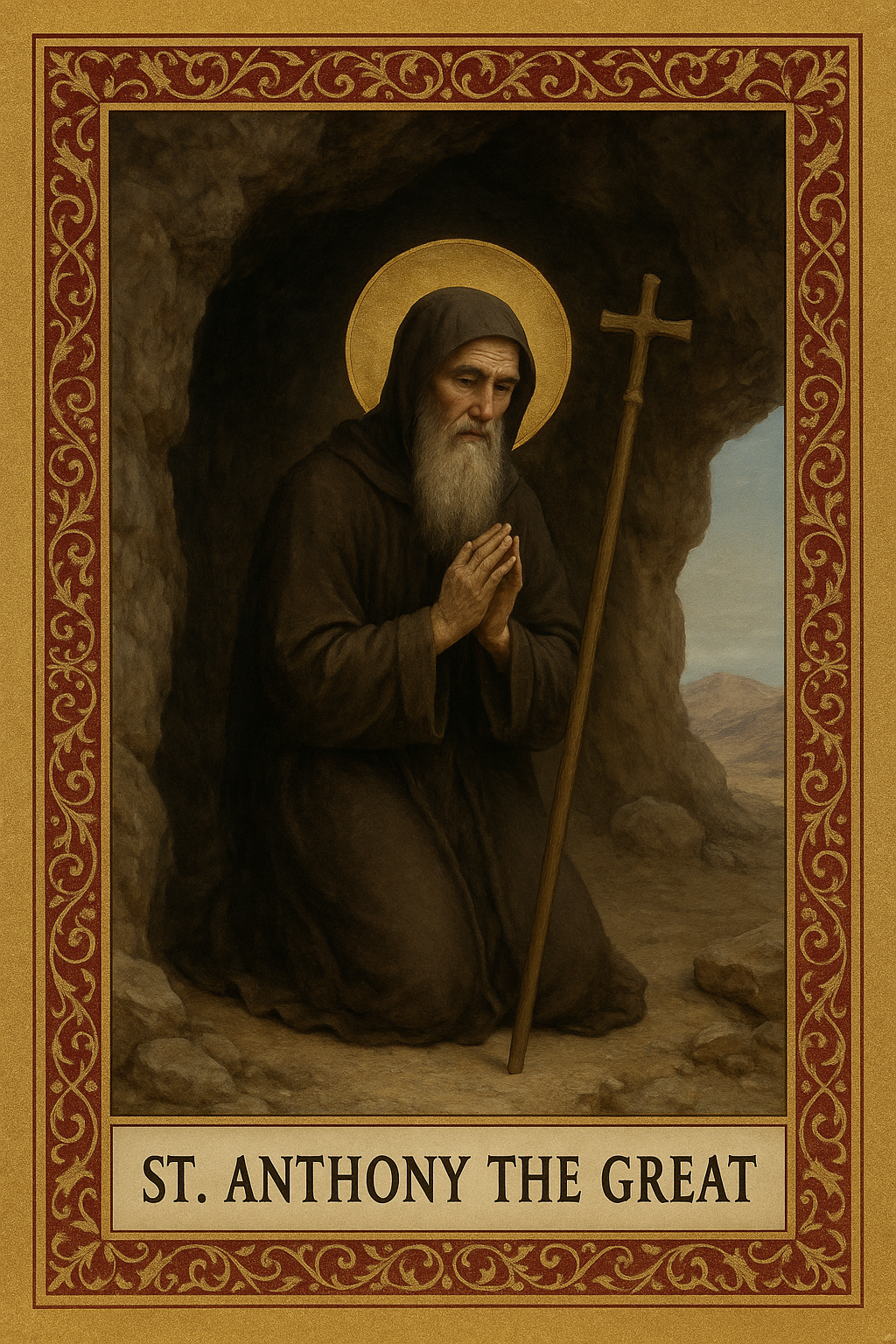
If you want to trace prayer all the way back, the trail does not stop at the New Testament. It runs straight into the deserts of Egypt, Palestine, and Syria, where men and women who had left ordinary society to seek God in solitude began, almost accidentally, to systematize what no one before them had needed to write down. Early monastic figures such as Anthony the Great, Evagrius Ponticus, and John Climacus developed techniques of watchfulness, inner recollection, and short repeated prayers aimed at guarding the mind and heart.
This was not an academic project. The Desert Fathers and Mothers were trying to obey a very specific and very difficult instruction from Saint Paul: pray without ceasing. That single verse, taken with total seriousness by people who had nothing else to do but pray, generated an enormous and largely unplanned body of practical wisdom about what actually happens in the mind and heart during prayer, what gets in the way of it, and what techniques help.
Almost every later development in Christian prayer, Catholic and Orthodox, can be traced back through this desert inheritance. It is the root system beneath the whole tree.
Part V
Evagrius Ponticus and the Architecture of Pure Prayer
If one person deserves credit for turning desert experience into a coherent psychology of prayer, it is Evagrius Ponticus. Evagrius introduced the concept of apatheia, a state of passionlessness achieved through moral purification and watchfulness, which frees the mind from intrusive thoughts and passions, enabling pure, undistracted prayer.
His central insight, worked out across two major texts, the Praktikos and the Gnostikos, was that prayer is the putting away of thoughts in order to achieve a unified intellect, progressing from ascetic struggle to contemplative knowledge. Evagrius catalogued eight principal logismoi, or evil thoughts, gluttony, lust, avarice, sadness, anger, listlessness, vainglory, and pride, that obstruct pure prayer, and he taught that real prayer requires confronting and ultimately quieting each one. The goal was a state in which the purified mind attains divine light through imageless prayer, a phrase that anticipates the entire apophatic tradition discussed later in this article.
Evagrius taught that prayer should ultimately transcend all images and concepts, ascending to what he called pure prayer. This idea, that prayer has a ceiling above which words and images themselves become an obstacle, is one of the most consequential single insights in the entire history of Christian spirituality, East or West.
Part VI
John Cassian and the Journey West
Desert wisdom might have stayed confined to Egypt and Syria if not for John Cassian, who transmitted Evagrius Ponticus's ascetical teachings to the West, forming the basis of much of the spirituality of the Order of Saint Benedict and the subsequent Western mystical tradition. Cassian had lived among the Desert Fathers himself before settling in Gaul, and his Conferences became one of the most widely read spiritual texts in the medieval Latin Church.
Cassian presents what may be the earliest recorded fixed-text arrow prayer, the formula used in Egypt for repetitive prayer: "O God, make speed to save me; O Lord, make haste to help me." This is, in plain historical fact, the direct ancestor of the short, repeated, urgent prayer you already identified as an "arrow prayer." Cassian himself describes its purpose in terms that read almost like a definition of unceasing prayer: it should flow with such power and abundance that it takes hold of the one praying.
Through Cassian, the entire Eastern desert tradition of short repeated prayer entered the bloodstream of Western monasticism centuries before any direct contact between Catholic and Orthodox prayer practices would normally be assumed.
Part VII
Nepsis: The Watchfulness Beneath Every Other Prayer
Nepsis is not, strictly speaking, a type of prayer at all. It is something more foundational: the discipline that makes every other type of prayer on this list actually possible. Nepsis, derived from the Greek word meaning watchfulness or sobriety, represents the Orthodox spiritual discipline of guarding the heart and mind. The Desert Fathers and Mothers emphasized this mental vigilance as essential for spiritual growth.
St. Hesychios the Priest, one of the writers later collected in the Philokalia, described nepsis as a spiritual method which, if practiced over a long period, completely frees a person, with God's help, from impassioned thoughts, impassioned words, and evil actions. The Hesychast learns to observe thoughts at their first appearance, without immediately identifying with them or being carried away by them. This is not repression. It is discernment, a gentle and repeated returning of attention to God whenever the mind notices it has wandered.
This matters practically for every type of prayer described in this article. Vocal prayer without nepsis becomes mechanical recitation. Mental prayer without nepsis dissolves into ordinary daydreaming dressed up in religious language. Nepsis is the quiet discipline that keeps prayer actually pointed at God rather than merely resembling prayer.
Part VIII
Hesychasm: The Orthodox Mystical Path Fully Formed
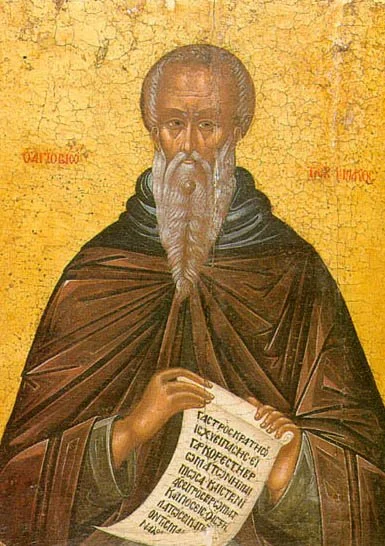
Hesychasm is a contemplative and mystical tradition within Eastern Orthodox Christianity that emphasizes inner stillness, unceasing prayer, and the direct experience of God. While it reached doctrinal clarity in the fourteenth century, its roots lie in the earlier practices of the Desert Fathers and Mothers already discussed in this article. The word itself comes from the Greek hesychia, meaning quiet, stillness, or silence.
What hesychasm adds to the earlier desert inheritance is a fully worked-out theological defense and a clear description of the prayer's progression. The prayer advances from vocal prayer, through mental prayer, to prayer of the heart, the spontaneous invocation rising from the depths of the soul that you originally asked about. When the hesychast controversy of the fourteenth century threatened to discredit this entire tradition as either heretical or merely psychological, St. Gregory Palamas resolved the dispute by distinguishing God's unknowable essence from His accessible energies, allowing genuine mystical experience while protecting divine transcendence. This essence-energies distinction remains a defining feature of Orthodox theology to this day.
The ultimate goal of hesychast prayer is theosis, becoming divine by grace, understood as a real ontological transformation of the human person rather than primarily a matter of moral improvement. This is one of the clearest points of difference in emphasis between Eastern and Western spirituality, though both traditions affirm that grace truly transforms the one who prays.
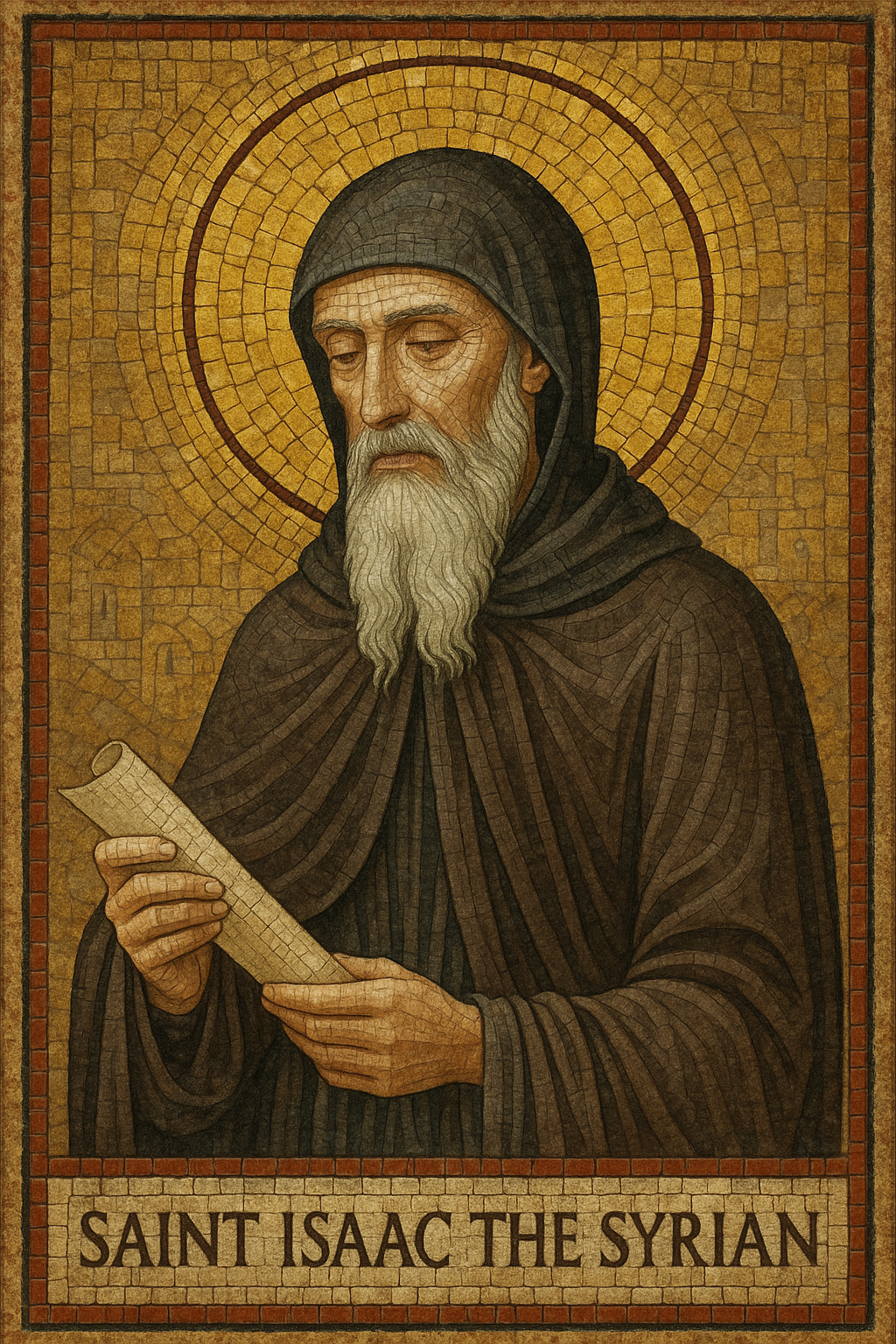
The Philokalia, the great anthology that collects the writings of the hesychast masters, draws from figures across nearly a thousand years: Evagrius Ponticus, already discussed, alongside Maximus the Confessor, Isaac the Syrian, Symeon the New Theologian, and Gregory of Sinai. Despite their differences in era and personality, these writers speak with remarkable unity, consistently returning to the same themes: repentance as the foundation of prayer, humility as its safeguard, watchfulness as its discipline, and love as its fruit.
For the complete guide to this tradition, including the practical steps of how the Jesus Prayer is prayed today, see our full article on Orthodox Hesychasm: Jesus Prayer, Inner Stillness, and Prayer of the Heart, and our companion piece on What Is Hesychasm? The Hidden Prayer of the Early Church Explained Simply.
Part IX
A Short History of the Jesus Prayer Itself
Because the Jesus Prayer is so often used as shorthand for "Eastern Christian prayer" in general, it is worth tracing its specific history separately from hesychasm as a whole. The earliest reference to the Jesus Prayer by name is found in Diadochos of Photiki around 450 AD. Notably, neither Evagrius, nor Maximus the Confessor, nor Symeon the New Theologian, the great early architects of inner prayer, actually refers to the Jesus Prayer by its now-familiar wording. The specific invocation of Christ's name in this fixed form develops somewhat later than the broader tradition of arrow prayer and unceasing prayer that produced it.
By the time the practice reached its mature, popularized form in the modern era, especially through the nineteenth-century Russian spiritual classic The Way of a Pilgrim, the Jesus Prayer had become the most widely known method of unceasing prayer in the entire Orthodox world. The method is to have a brief prayer verse, usually the words "Lord Jesus Christ, Son of God, have mercy on me, a sinner," repeated over and over, literally hundreds of times, often connected with one's breathing. It begins by being said vocally, then silently with the lips, and eventually becomes wholly mental, continuing, the tradition claims, even during sleep, so that "the body sleeps, but the heart is awake."

For a complete practical introduction, including how to begin praying with a prayer rope, see The Jesus Prayer and Prayer Rope: A Beginner's Guide and The Jesus Prayer. If anxiety or fear is part of what is drawing you toward this practice, our guide on The Jesus Prayer for Anxiety and Fear addresses that directly.
Part X
Apophatic and Kataphatic: The Hidden Framework Behind Everything
Almost every type of prayer named so far in this article, vocal prayer, intercession, the Jesus Prayer in its early stages, belongs to one half of a distinction that cuts straight across the entire history of Christian spirituality: the difference between kataphatic and apophatic prayer.
Kataphatic prayer (from the Greek kataphasis, meaning affirmation) uses words, symbols, and icons which, for the praying person, mediate God's presence. It is prayer that speaks intensively or positively of God, using words, images, ideas, concepts, and the imagination to relate to Him. Nearly everything described above as vocal or mental prayer is, by this definition, kataphatic. So is the entire Catholic tradition of praying with icons, statues, and Scripture-based meditation.
Apophatic prayer (from the Greek for "without form or images") is its counterpart: bare, austere, and tending toward wordlessness. Apophatic theology invites the spiritually devoted beyond limitations and known categories toward ways that make room for what cannot be comprehended about the Divine, leading into an unknowing that is itself a form of encounter with God. It was with the writer known as Pseudo-Dionysius the Areopagite and with Maximus the Confessor that apophatic theology became a central element of Christian theology and contemplative practice, shaping both Eastern hesychasm and later Western mystical traditions.
Critically, this is not an East-versus-West divide, even though apophatic prayer is most fully developed within Eastern Orthodox Christianity. Both approaches to praying have rich, deep traditions in the Christian Church, and the wisest spiritual writers, East and West, consistently teach that the kataphatic way (knowing God through words and ideas) must be balanced with the apophatic way (knowing God through silence and unknowing). One ancient scriptural anchor often cited for apophatic prayer is the prophet Elijah's encounter with God not in the wind, earthquake, or fire, but in a "still, small voice."
Part XI
Lectio Divina: The Catholic Monastic Ladder
While the Christian East was systematizing hesychasm, the Christian West was developing its own deeply structured method of prayer rooted in the slow, prayerful reading of Scripture: Lectio Divina. This method goes back to the early monastic tradition itself, when there were not Bibles for everyone and not everyone knew how to read, so monks gathered in chapel to hear a member of the community read from Scripture, listening with their hearts because it was the Word of God they were hearing.
The method received its classic four-step formulation from the Carthusian monk Guigo II in the twelfth century, who named the steps of this "ladder" of prayer with the Latin terms lectio, meditatio, oratio, and contemplatio: reading, meditating on the text, praying in response to it, and finally resting contemplatively in God's presence. The Carmelite Rule of St. Albert prescribed to Carmelites the daily prayerful pondering on the Word of God in the thirteenth century, and Lectio Divina, alongside the daily celebration of the liturgy, remains a pillar of prayer in Carmel to this day.
A closely related but distinct practice within the Ignatian tradition is Gospel contemplation, sometimes called Ignatian contemplation, which uses the imagination to enter a Gospel scene directly with all five senses rather than primarily analyzing the text. Both are ways to pray with Scripture, but they engage the soul somewhat differently: Lectio Divina draws meaning slowly out of the words themselves, while Ignatian contemplation places the whole person inside the scene the words describe.
For an Eastern Christian perspective on this same practice, see our guide to Lectio Divina: An Eastern Christian Guide.
Part XII
The Named Schools: Ignatian, Teresian, Salesian Prayer
Where Lectio Divina is a single shared method, several individual Catholic saints went further and developed, named, and left behind their own distinct schools of mental prayer, each carrying the personality and emphasis of its founder.
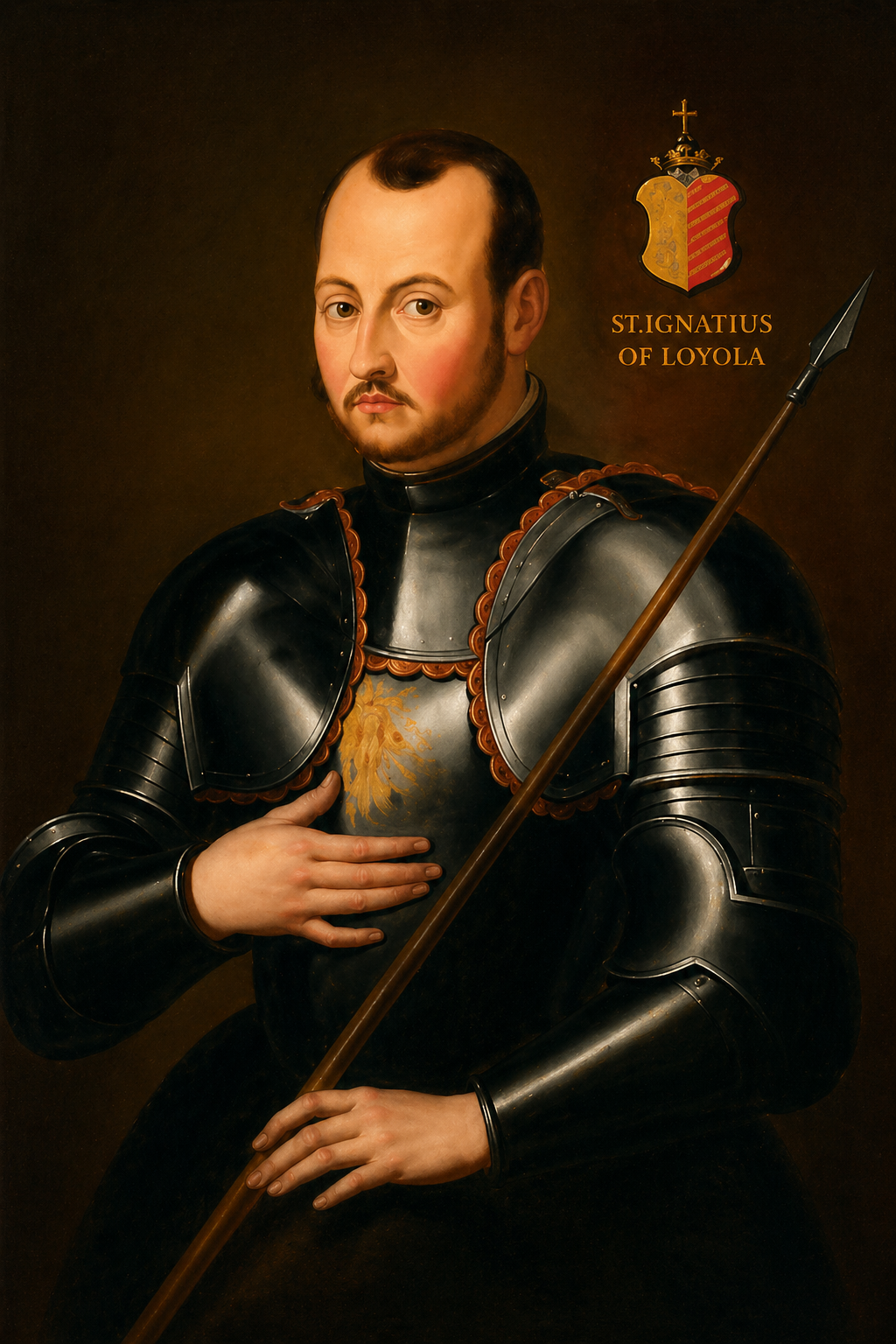
Ignatian prayer, from St. Ignatius of Loyola, founder of the Society of Jesus, encouraged using the imagination to place oneself directly in a Gospel scene. If meditating on the Nativity, the one praying is taught to imagine the smell of the hay, the cold air, and the face of the Christ Child. This active engagement of the senses and imagination is designed to capture the whole mind and move the will, not merely inform the intellect.
Teresian or Carmelite prayer, from St. Teresa of Avila, takes a different emphasis entirely. Teresa emphasized "friendly conversation" with God. She focused less on structure and more on relationship, encouraging the soul to remain in a loving, silent gaze upon Christ. Teresa of Ávila institutionalized prolonged periods of interior prayer within the reformed Carmelite life and developed a full theology of recollection, the prayer of quiet, and contemplative union in her works The Interior Castle and The Way of Perfection, with St. John of the Cross further articulating the purification and transformation associated with deeper contemplation.
Salesian prayer, from St. Francis de Sales, is the most practical of the three. De Sales emphasized "preparation" and "resolution," teaching that the one who prays must carry the "spiritual bouquet" of that prayer, a specific thought or feeling, throughout the rest of the day, in order to remain at peace and recollected outside of formal prayer time as well as within it.
These three schools represent three different temperaments meeting the same God: the imaginative, the relational, and the practical. None of the three claims to be the only correct way; Catholic spiritual direction has long recognized that different souls are suited to different methods at different seasons of life.
Part XIII
Affective Prayer and the Prayer of Simplicity
One more pair of categories deserves its own treatment, because it describes something almost everyone who prays seriously eventually notices happening in their own prayer life: a shift from thinking about God to simply loving Him.
Affective prayer is the type of mental prayer in which loving affections increasingly predominate over discursive reasoning. In practice, this means the initial work of reading or reflecting on a truth about God, gathering wood for the fire, as one spiritual writer described it, eventually gives way to a much simpler movement of the heart: joy, sorrow, gratitude, longing, expressed directly to God with little need for further analysis.
As this affective movement deepens and simplifies further, it can become what tradition calls the prayer of simplicity, characterized by a simpler and more unified attention to God, with less and less need for words or structured steps at all. Beyond this lies contemplation proper, especially what is called infused contemplation, which involves a more receptive awareness in which divine action becomes increasingly manifest within the soul, no longer something the person is generating through their own effort.
This entire progression, from active reasoning, to affection, to simplicity, to infused contemplation, runs remarkably parallel to the Eastern hesychast progression from vocal prayer through mental prayer to prayer of the heart described earlier in this article. Catholic and Orthodox spiritual writers, working largely independently across many centuries, kept arriving at strikingly similar maps of the same interior territory.
Part XIV
The Full List: Every Type of Prayer in One Place
Here is the complete map this article has built, gathered into one reference.
- By Content (Scriptural / Catechetical)Adoration & blessing • Petition (supplication) • Intercession • Thanksgiving • Praise • Confession/repentance
- By Mode of EngagementVocal prayer • Mental (meditative) prayer • Contemplative (passive) prayer
- By Manner of ApproachKataphatic prayer (with words and images) • Apophatic prayer (wordless, silent unknowing)
- Desert & Hesychast TraditionArrow prayer • Unceasing prayer • Nepsis (watchfulness) • The Jesus Prayer • Prayer of the heart • Pure prayer (Evagrius)
- Catholic Monastic & Mental Prayer MethodsLectio Divina (reading, meditation, prayer, contemplation) • Ignatian contemplation • Affective prayer • Prayer of simplicity • Recollection • Infused contemplation
- Named Schools (with Founders)Ignatian prayer (St. Ignatius of Loyola) • Teresian/Carmelite prayer (St. Teresa of Avila) • Salesian prayer (St. Francis de Sales)
- Communal FormsLiturgical prayer • Prayer of agreement (corporate prayer) • Intercession through the saints
Part XV
How to Begin Practicing These Today
No one is expected to practice every category in this article simultaneously, and trying to do so is, in fact, a common and counterproductive mistake. Most saints in both traditions describe arriving at one or two forms of prayer that became the steady backbone of their spiritual life, while drawing on the others occasionally as the situation called for them.
If you are new to this, three reasonable starting points emerge from everything above. If you are drawn to the wordless, contemplative side of prayer, the Jesus Prayer, prayed slowly on a prayer rope, gives you the oldest and most tested entry point into that tradition. If you are drawn to Scripture and the imagination, Lectio Divina or Ignatian-style Gospel contemplation gives you a structured way to let a single passage open up over time. And if your prayer life has become mechanical or dry, deliberately practicing nepsis, simply noticing when your mind has wandered and gently returning, without self-criticism, addresses the problem underneath nearly every other difficulty in prayer.
Carrying a prayer card of a saint connected to one of these traditions can serve as a simple, physical anchor: a reminder, every time you see it, of which path you are walking and which intercessor is walking it with you.
Part XVI
A Prayer for Guidance in Prayer Itself
Lord Jesus Christ, Son of the Living God, You who taught Your disciples to pray without ceasing, teach me now. I do not know which words to use, or whether words are even what You are asking of me in this moment. Give me the patience of the Desert Fathers, who waited years in silence before their hearts learned to listen. Give me the watchfulness to notice when my mind has wandered, and the gentleness to return without despising myself for wandering.
Whether You call me today to speak, to listen, to ask, to give thanks, or simply to rest in silence before You, let it be real. Let it come from deeper than my own effort can reach. Lord Jesus Christ, Son of God, have mercy on me, a sinner, and make of my whole life an unceasing prayer.
Amen.
This prayer combines the Jesus Prayer with the spirit of the desert tradition's teaching on patience and watchfulness in prayer, and is suitable as a short daily invocation before beginning any of the forms of prayer described in this article.
Part XVII
Frequently Asked Questions
You Started with Three Types of Prayer. There Are Dozens More Waiting, and Every One of Them Leads Back to the Same God.
Intercession, arrow prayers, and the prayer of the heart were never the whole map. They were three doors into a house with many rooms: the watchfulness of the desert, the imageless silence of the apophatic way, the imaginative scenes of Ignatian prayer, the ladder of Lectio Divina, the friendly conversation of Teresa of Avila, the unceasing repetition of the Jesus Prayer on Mount Athos. Catholic and Orthodox Christians, working across two thousand years and thousands of miles, kept arriving at strikingly similar discoveries about how the human heart actually reaches God.
You do not need to master all of it. You need to begin somewhere, return when your mind wanders, and trust that the same Christ who taught the Apostles to pray is teaching you now, however simple your words.
Carry a saint's prayer card from this tradition as a daily reminder of the path you are walking, and ask for the intercession of those who walked it before you.
Get the Saint Isaac the Syrian Prayer Card →