Lectio Divina for Eastern Christians: How to Pray with Scripture the Ancient Way
Scripture · Contemplative Prayer · Eastern Tradition
Lectio Divina for Eastern Christians: How to Pray with Scripture the Ancient Way
The Bible was never meant to be read like a textbook. The Fathers knew that. Here is how they taught us to read it instead.
"For everything that was written in the past was written to teach us, so that through endurance and the encouragement of the Scriptures we might have hope."
— Romans 15:4Most of us learned to read the Bible as we learned to read everything else: for content. We move our eyes across the text, extract the meaning, maybe underline a verse, and move on. We know more about the Bible than we feel it. We can explain what a passage means without being changed by it.
The ancient Church knew something different. For the Fathers — for Origen and Chrysostom and Ephrem and Basil — Scripture was not a text to be decoded but a presence to be entered. To read it correctly was to encounter the living Word behind the written word. The goal was not the accumulation of information about God but a personal meeting with Him, mediated by the pages of the text He had breathed into existence (2 Timothy 3:16).
This way of reading has a name that has traveled down through history from the monastic tradition: Lectio Divina — sacred reading. But the name is Latin; the practice is older and broader than any single tradition. It belongs to the whole ancient Church. Eastern Christians who discover it are not importing something foreign. They are recovering something that was always theirs.
This article is a complete guide to Lectio Divina from an Eastern Christian perspective: where it came from, how the Eastern tradition shaped and practiced it, how to actually do it, which saints modeled it most brilliantly, and which Bible to use. We will also tell you, several times, about a book that lays out this practice with more depth and practical guidance than any article can provide.
What Is Lectio Divina?
The term means "sacred reading" or "divine reading." In its classical form, articulated by the twelfth-century monk Guigo II, it unfolds in four movements: Lectio (reading), Meditatio (meditation), Oratio (prayer), and Contemplatio (contemplation). Guigo's famous image is of eating: reading takes a bite of the text; meditation chews it; prayer savors the taste; contemplation is the sweetness that lingers after the meal is done.
But to define Lectio Divina only by its four movements is to mistake the map for the territory. At its heart, it is simply a way of reading Scripture that is listening rather than extracting. The reader comes to the text not as a student comes to a textbook but as a friend comes to a letter — expecting to hear, hoping to be addressed, willing to be changed. The question it asks of every passage is not primarily "What does this mean?" but "What is God saying to me, now, through this?"
This distinction matters enormously. Biblical scholarship and theological study — both excellent and necessary — ask the first question. Lectio Divina asks the second. It does not abandon knowledge; the Fathers who practiced it most deeply were also the Fathers who knew the text most thoroughly. But knowledge, for them, was always preparation for encounter rather than a substitute for it. St. John Chrysostom could preach for hours on a single verse of Paul because he had first sat with it until it sat with him.
Lectio Divina is not a new technique invented by medieval monks. It is the natural practice of every person who has ever read a psalm slowly enough to feel it, or paused over a Gospel verse long enough to hear their own name in it. The tradition simply named what was already happening and built a structure around it so that it could be taught, practiced consistently, and deepened over time.

The Companion You Need for This Practice
Christian Mysticism for Everyday Life
This book dedicates an entire chapter to Lectio Divina, walking through each of its four movements with clarity and practical exercises designed for people with real schedules. It draws on the same ancient tradition explored in this article — the Desert Fathers, the patristic commentators, the hesychast elders — and shows exactly how to bring this practice into ordinary daily life. If you want to go deeper than this article can take you, this is the book.
Get the Book on Amazon →It Was Never Only Western: The Eastern Roots of Sacred Reading
When contemporary Christians encounter Lectio Divina, they usually encounter it as a product of Western monasticism: Benedict of Nursia, the Cistercians, the Camaldolese. This history is real. But the practice those Western monks were developing had roots that stretched east long before Latin monasticism existed.
Origen and the Mystical Reading of Scripture
The earliest systematic account of prayerful Scripture reading comes from Origen of Alexandria (c. 184–253) — a Greek-speaking Egyptian theologian, one of the greatest biblical scholars and spiritual writers of the ancient Church. Origen's approach to Scripture was explicitly mystical: he believed the text had three levels — literal, moral, and spiritual — and that the deepest reading required the reader to be purified, attentive, and prayerful. You could not encounter the spiritual sense of Scripture through intellectual effort alone. It required the cooperation of the Holy Spirit, who illumined the soul that approached in humility.
This is Lectio Divina before it had its Latin name — describing not study but encounter, from the Eastern, Greek-speaking world, a full century before Latin monasticism took shape.
The Desert Fathers and Melete
The Desert Fathers of the fourth and fifth centuries practiced what they called melete — a Greek word meaning pondering, rehearsing, or murmuring a text to oneself repeatedly. When Abba Pambo was asked by a pilgrim to give him a word of Scripture, the old man spent months with a single verse before he felt he had lived it sufficiently to commend it. The stories of the Apophthegmata are full of elders who had so thoroughly inhabited particular scriptural passages that the texts had become part of them. This is melete: the monastic practice of carrying a verse through the day, returning to it like a monk returns to his cell, until the word has worked its way from the lips to the mind to the heart.
This is precisely what Meditatio describes in the Western schema of Lectio Divina. The practice is identical. Only the language differs.
The Psalter as the Church's Lectio
If there is a single practice that embodies sacred reading in the Eastern Christian tradition more fully than any other, it is the praying of the Psalter. The Eastern Church's Typikon prescribes the complete Psalter weekly, with every psalm to be prayed rather than merely recited. The monk does not read Psalm 22 to understand its ancient Israelite context. He prays it as his own cry, or as Christ's cry on the cross, or as the voice of every suffering soul. The text becomes his interior vocabulary.
This is Lectio Divina applied at a communal and liturgical scale. It is one reason that Eastern Christians formed by the Psalter in the Church's daily prayer often find Lectio Divina immediately recognizable — because they have already been doing it, in the liturgy, for years without necessarily having a name for it.
"Scripture brought me to the Gate of Paradise, and the mind stood in wonder as it entered." — St. Ephrem the Syrian
The Four Movements: A Step Inside Each One
The classical schema of four movements is a map, not a cage. In practice, the boundaries are permeable — one movement flows into another, and a single session might spend most of its time in one and touch the others briefly. What matters is not moving through all four in sequence but allowing the text to draw you where it will, within the general orientation of listening, pondering, responding, and resting.
Read the passage slowly — aloud if possible, since hearing the text engages the person differently than silent reading. The pace should be unhurried, almost liturgical. You are not reading to finish. You are reading to listen. Read it once, then again. On one of the readings, a word or phrase will surface — not necessarily the most theologically significant one, simply the one that catches your attention. Stop there. That word is your companion for the session.
Dwell with the word or phrase that surfaced. Repeat it slowly. Turn it over. Let it echo. Ask: why this word? What is it touching in me today? Let your imagination engage the text — if it is a Gospel scene, step into it. What do you see, feel, hear? The Desert Fathers called this melete: carrying the word until it works its way inward. You are not analyzing. You are being addressed.
Having been addressed, respond. Speak to God from what the meditation stirred — gratitude, confession, petition, wonder, honest confusion. Let the word from Scripture be the beginning of a conversation rather than its conclusion. If the verse touched grief, pray your grief. If it touched hope, pray your hope. This is not performance. It is the natural response of a soul that has actually heard something and now speaks back from the depth of what it heard.
After speaking, rest. Let the words go. Simply be present to God with whatever has been opened by the reading, meditation, and prayer. No words, no images, no agenda. You are simply with God. If thoughts return, let them go. Return to the word that anchored the session, hold it gently, and rest. Even five minutes of genuine contemplative rest transforms the soul in ways that hours of anxious prayer cannot.
Many traditions add a fifth movement: Actio — the concrete act or intention that arises from the session. What will you do differently today because of what you received? The Fathers called this the movement from theoria to praxis — from seeing to doing — and they regarded it as the proof that the reading had been genuine rather than merely emotional.
The chapter on Lectio Divina in Christian Mysticism for Everyday Life walks through each of these four movements with concrete exercises and practical examples drawn from real life — not the monastery. It includes a guided journal template for recording what arises in each session. For anyone who learns better by doing than by reading about doing, this book is the logical next step.
Get the Book on Amazon →How Eastern Christianity Does It Differently
Lectio Divina as formalized in the West is a structured, individual practice. Eastern Christianity brings several distinctive emphases that enrich and deepen it for Orthodox and Eastern Catholic practitioners.
| Eastern Emphasis | What It Adds to the Practice |
|---|---|
| Theoria | Theoria — spiritual perception or vision — is the Eastern term for what the West calls Contemplatio. For the Eastern Fathers, Scripture is the window through which the purified soul perceives God directly. The goal of sacred reading is not emotional insight but genuine seeing: an encounter with divine reality. This raises the stakes and clarifies the aim: Lectio Divina is preparation for theophany, not merely for comfort. |
| The Septuagint | Eastern Christianity reads the Old Testament in the Septuagint — the Greek translation made before Christ's birth, which the apostles and Church Fathers quoted almost exclusively. Many passages carry different nuances in the LXX than in translations based on the Hebrew Masoretic text. Lectio Divina with a Septuagint-based Bible places you in the same textual world as the Desert Fathers whose practice you are recovering. |
| The Psalter as Primary Text | The Eastern Church treats the Psalms as the prayer book of all Scripture — the text that gathers all human experience and lifts it toward God. Praying the Psalms as Lectio Divina makes the entire Psalter a continuous sacred conversation. The Eastern practitioner does not need to search for a passage to begin with: the Psalter provides a complete, inexhaustible source that a lifetime of sacred reading cannot exhaust. |
| The Jesus Prayer as Meditatio | Eastern practitioners naturally connect Lectio Divina with the Jesus Prayer. After reading and allowing a word to surface, they may hold that word alongside the Jesus Prayer — praying "Lord Jesus Christ, Son of God, have mercy on me, a sinner" with the scriptural word present in the mind. The two practices reinforce each other: the Jesus Prayer holds attention fixed on Christ while the scriptural word provides content for meditation. |
| The Liturgical Lectionary | The Eastern Church's Typikon appoints specific Scripture readings for every day of the year. Using these as the source for Lectio Divina connects individual prayer to the prayer of the whole Church in that liturgical moment. You are not choosing a passage based on personal preference. You are receiving what the Church's accumulated wisdom has determined the community needs to hear today — a form of humility built into the practice itself. |
| Icons as Visual Scripture | Eastern Christianity has always read icons as theology in color — Scripture made visible. Praying Lectio Divina before an icon of the passage being read (reading John 11 before an icon of the Raising of Lazarus, for example) engages the visual sense as a doorway into the text. The icon does not replace the reading; it deepens it, providing a form of visual meditatio that precedes and accompanies the verbal encounter. Your prayer corner becomes the natural setting for this integrated practice. |
A Complete Guided Session: How to Actually Do It
Below is a complete Lectio Divina session written for someone doing it for the first time. The whole session can take fifteen minutes. Over time, as each movement deepens, it may take forty-five. Begin with fifteen. The practice will ask for more as it grows.
Prepare — Before You Begin
Go to your prayer corner or any quiet place. Light a candle if you have one. Sit before an icon if possible. Take three slow breaths. Then pray briefly: "Holy Spirit, open the Scripture to me. Speak, Lord — your servant is listening." This is not a formula but an act: you are turning your attention from yourself to God, from your agenda to His. Take a full minute for this before you read a word. The quality of what follows depends almost entirely on the quality of this beginning.
Lectio — Read
Choose a short passage — four to eight verses. Read it aloud, slowly. Pause after every sentence. Let the words land. Read it a second time, slightly slower. On this second reading, notice if a particular word or phrase catches your attention — not necessarily the one you expected, not the most "significant" one theologically, but the one that simply surfaces in this moment. It may be a single word: shepherd, fear not, beloved. When it surfaces, stop. That word is your companion for the rest of the session.
Meditatio — Meditate
Repeat your word or phrase slowly and quietly, several times. Let it echo. Ask: Why this word? What is it touching in me today? Do not rush to answer. Sit with the question. Let your imagination into the text — if it is a Gospel scene, step into it. If you are reading about the prodigal son, which character are you today? If you are reading a psalm of lament, whose voice does it carry — yours, Christ's, someone you love? Allow the text to expand from the page into your interior life. Spend at least five minutes here, more if you can.
Oratio — Pray
Now respond to what arose in the meditation. Speak to God from it. If the word touched a fear, bring the fear. If it touched gratitude, offer thanks. If it raised a question, ask it honestly. The prayer does not need to be eloquent — the simpler and more honest, the better. "Lord, I heard You say 'fear not' and I realize how afraid I am. I bring You that fear." Or simply: "Thank You. I feel seen." This is the conversation the Lectio and Meditatio have been building toward. Take two to four minutes, or as long as the prayer is genuinely alive.
Contemplatio — Rest
Let the words go. Let the thoughts settle. Simply be present to God in silence. You can hold your word gently in the background — like a hand resting in another hand — but without actively thinking about it. If distractions arise, release them and return. This is the most difficult movement for most modern practitioners, and also the most valuable. Even five minutes of genuine resting in God's presence — not performing prayer, not producing thoughts, just being — does work in the soul that the other movements prepare for but cannot accomplish. Set a gentle timer. Do not watch the clock.
Actio — Live It
Before you close, ask: What is one concrete thing I will do today from what I received? It may be very small — send a text of forgiveness, pause before a difficult conversation, pray for someone who came to mind. It may simply be a decision to hold your word throughout the day: returning to it on the bus, at a stoplight, while waiting in line. Write it down if you keep a journal. Then close with the Jesus Prayer or the Lord's Prayer and carry your word with you into the hours ahead.
Go Deeper with a Guided Companion
Christian Mysticism for Everyday Life
The guided session above gives you the skeleton. Christian Mysticism for Everyday Life gives you the flesh — specific examples of what each movement looks and feels like in practice, journaling prompts for each one, a chapter on combining Lectio Divina with contemplative prayer, and exercises for bringing sacred Scripture reading into marriage, family life, and the workplace. It is the most practically useful companion for this practice that we have found.
Get the Book on Amazon →Which Bible Should Eastern Christians Use?
This question matters more for Lectio Divina than for any other form of Bible reading, because the texture of the translation — its rhythm, its word choices, the nuances it carries — is what you are sitting with, word by slow word. Eastern Christians have a specific concern: the Old Testament of the Eastern Church is the Septuagint, which diverges from Hebrew-based translations in hundreds of passages. For Orthodox Christians and Eastern Catholics doing Lectio Divina, reading from the Septuagint tradition places you in the same textual world as the Fathers whose practice you are recovering.

The Orthodox Study Bible
The most comprehensive English Bible for Eastern Christians — full Septuagint Old Testament and New King James New Testament, with patristic commentary drawn from the Fathers whose practice of sacred reading you are recovering. An indispensable companion for Lectio Divina in the Eastern tradition.
View on Amazon →
The Brenton Septuagint Translation
The classic English translation of the complete Septuagint. For Lectio Divina with the Psalms or the prophets, reading from the LXX text places you in exact continuity with the Desert Fathers' practice — praying the same words they prayed, in the same tradition.
View on Amazon →For a fuller guide to which Bible Eastern Christians use across different traditions, or for a look at what Bible Orthodox Christians read and why, we have dedicated guides for both. The Orthodox Bible buyers guide is also a helpful starting point if you are not sure where to begin.
The Saints Who Show Us How to Read This Way
The most persuasive argument for any spiritual practice is not the argument — it is the person who has practiced it. These three saints represent different eras and different voices, but they share a common formation: Scripture, prayed with rather than merely studied, transformed them into vessels of grace that are still pouring out centuries later.
St. John Chrysostom — The Golden Mouth Was Formed by Lectio
St. John Chrysostom is the greatest scriptural preacher in the history of Eastern Christianity. His homilies on Matthew, John, Romans, and the Corinthian letters remain unsurpassed in their depth, clarity, and pastoral warmth after sixteen centuries. His feast is celebrated by Orthodox, Eastern Catholic, Roman Catholic, and Anglican Christians alike.
What formed Chrysostom as a preacher was not primarily his rhetorical training in Antioch, though that was formidable. It was his years as a monk in the Syrian desert, praying the Psalter, sitting with the Gospels, living inside the text until the text lived inside him. His homilies are essentially his Meditatio made public: what you hear in a Chrysostom sermon is a mind that has dwelt so deeply with a passage that it now speaks from within it rather than about it. He does not explain what Paul meant. He inhabits Paul's meaning and invites the congregation into the same interior.
For an Eastern Christian beginning Lectio Divina, reading a Chrysostom homily alongside the Gospel text it interprets is itself a form of sacred reading — a Lectio Divina of the tradition, in which the saint's own Meditatio becomes a guide for yours. The Chrysostom complete works remain available in English and are one of the richest sources of patristic Meditatio in existence.
"Let us read the Divine Scriptures; let us know what they say: how great is the profit to be gained from these sacred books." — St. John Chrysostom, Homilies on Colossians
St. Ephrem the Syrian — "Scripture Brought Me to the Gate of Paradise"
St. Ephrem the Syrian, called "the Harp of the Holy Spirit" and the only Syriac-speaking Christian honored as a Doctor of the Church, is the closest thing the ancient world produced to a poet-theologian of Scripture. His hundreds of hymns — madrasha, teaching songs sung antiphonally in the churches of Edessa — are extended Lectio Divina sessions in verse. He would take a single image from Scripture and let it unfold over dozens of strophes: light, fire, the pearl, the vineyard. By the end, the image had been inhabited so thoroughly that the congregation's imagination was restructured around it.
Ephrem's famous line — "Scripture brought me to the Gate of Paradise, and the mind stood in wonder as it entered" — is the clearest ancient statement of what Lectio Divina at its deepest level aims at. The text is a door. Slow, prayerful reading opens it. What is on the other side is not more information but direct encounter with the God who breathed the text into existence. Ephrem went through that door in every hymn he wrote, and he spent his life inviting his congregations to follow.
His prayer before reading Scripture — preserved in Eastern Catholic liturgies today — is the perfect preparation for Lectio Divina: "O Lord and Master of my life, take from me the spirit of sloth, despair, lust of power, and idle talk. But grant unto me, Thy servant, a spirit of chastity, humility, patience, and love." Pray it before you open the Bible. See what changes.
St. Paisios of Mount Athos — Simple Reading, Radical Fruit
St. Paisios the Athonite, the beloved twentieth-century elder canonized in 2015, was not a biblical scholar. He was a carpenter's son who spent decades in a small forest hut on Mount Athos, reading the Gospels and praying the Jesus Prayer. But the pilgrims who came to his door — thousands of them, from all walks of life — reported an uncanny experience: he seemed to know them before they spoke. He addressed their specific situation, their hidden struggle, their unnamed fear, with a sentence or two from the Gospels that landed with the precision of a surgical instrument.
This is the fruit of someone who has prayed the Scripture rather than merely read it. The text had become his interior vocabulary, his intuitive reference point. When he met a suffering person, the Gospel verse that arose in him was not the product of deliberate recall but of a habituation so deep that Scripture had become the language of his perception. "Live simply, like a child with his father," he used to say. That is also how he read Scripture — not with scholarly apparatus but with trusting, unhurried openness that allowed the text to work in him across decades. The result was what no amount of commentary could produce: a man who could hand another person the exact word of God they needed, in the exact moment they needed it.
Chrysostom, Ephrem, and Paisios are exactly the kind of witnesses Christian Mysticism for Everyday Life draws on — saints who demonstrate that the practices it describes are not theoretical but proven across sixteen centuries. If these three lives have stirred something in you, the book will meet that stirring with practical guidance for the next step.
Get the Book on Amazon →From the Store
The Scriptural Saints: Keep Them Near
These are the Eastern Church's greatest witnesses to Scripture as living encounter. Their prayer cards are companions for your own sacred reading.
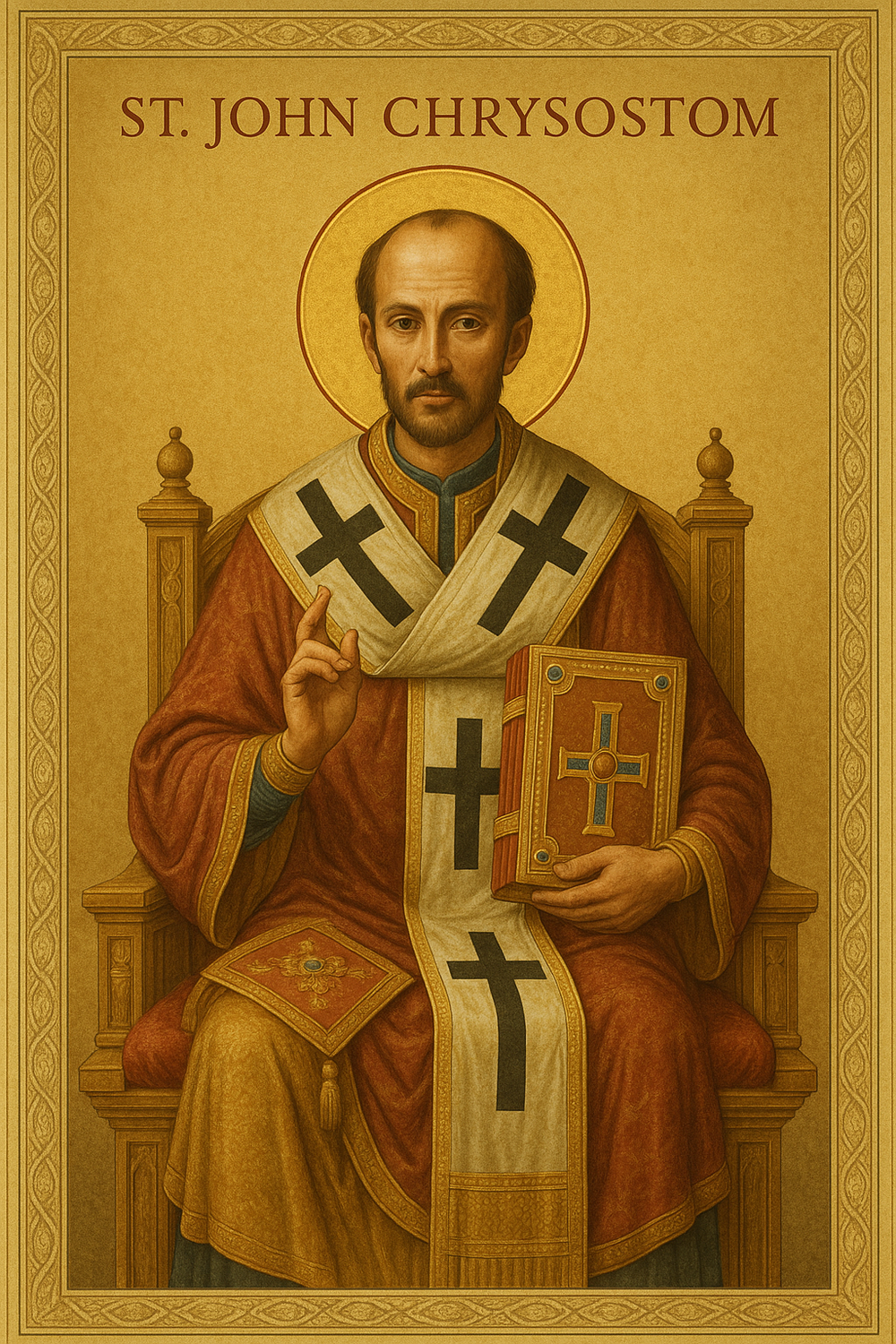
St. John Chrysostom
The Golden Mouth — whose homilies on Scripture remain the standard of Eastern Christian sacred reading. Patron of preachers, teachers, and all who seek to inhabit the Word rather than merely study it.
View Prayer Card →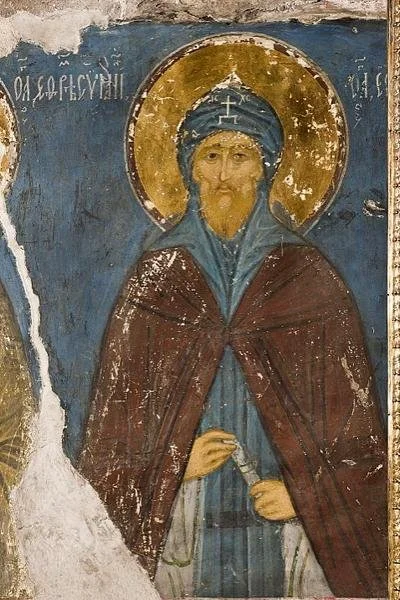
St. Ephrem the Syrian
Harp of the Holy Spirit and Doctor of the Church. He brought the sacred text to the Gate of Paradise — and his hymns still hold the door open for those who follow him in sacred reading.
View Prayer Card →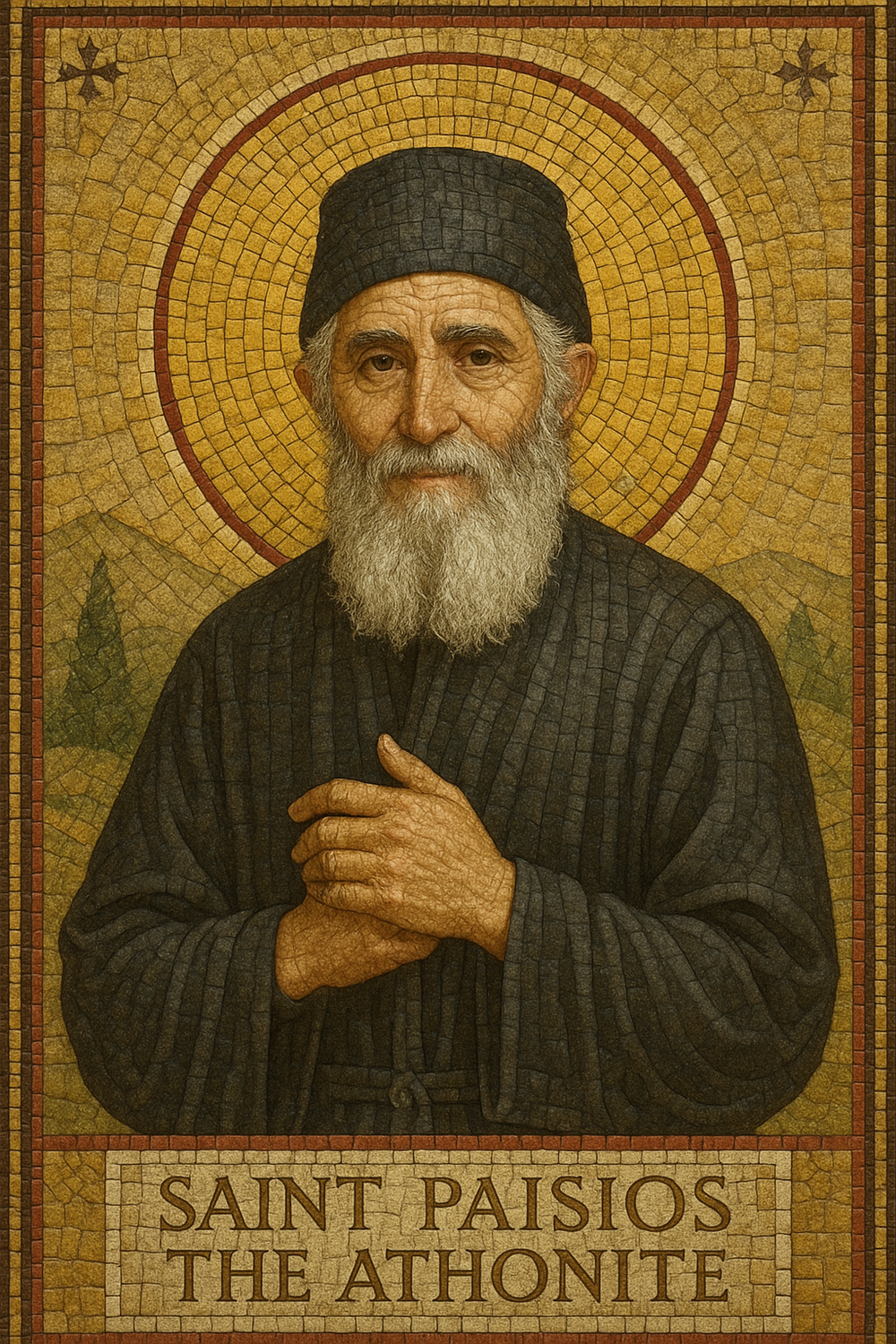
St. Paisios of Mount Athos
The modern elder whose decades of simple Gospel reading produced a wisdom so precise it seemed prophetic. Proof that Lectio Divina need not be scholarly to be transformative.
View Prayer Card →Pray Before You Read
A Prayer Before Lectio Divina
Lord Jesus Christ, living Word of the Father — You who spoke creation into being and breathed Your Spirit into Scripture — open the ears of my heart to what You are saying. Let me not read past You in my haste to understand You. Let me not settle for information when You are offering encounter.
As I read now, speak to me as You spoke to Mary in the garden, to the disciples on the road to Emmaus, to the woman at the well — by name, to my exact situation, in words that reach further than words. I bring no agenda. I bring no performance. I bring only this: an open hand, an open ear, and the belief that You are here and You are speaking.
Through the prayers of St. John Chrysostom, St. Ephrem the Syrian, and all the saints who made Scripture their dwelling place, have mercy on me and speak.
Amen.
For use before any session of Lectio Divina or sacred reading
Scripture Passages to Begin With
The most common obstacle for newcomers to Lectio Divina is simply not knowing where to start. Each passage below is chosen because it has been the subject of deep patristic commentary, because it contains images rich enough to sustain extended meditation, and because it speaks to the full range of human experience across many seasons of life.
- Psalm 23The most prayed psalm in Christian history. Every image — shepherd, green pastures, still waters, valley of shadow, table before enemies — yields new depth each time it is prayed rather than merely read. Begin here if you are new to the Psalms.
- Psalm 22"My God, my God, why have You forsaken me?" — Christ's cry from the cross, the psalmist's cry in exile, your cry in every season of desolation. The Eastern tradition reads this psalm as simultaneously personal and Christological.
- Psalm 131Three verses long. "I have calmed and quieted my soul like a weaned child with its mother." A complete Lectio Divina in miniature — ideal for days when the mind is restless and needs to be brought gently to rest.
- John 20:11–18Mary Magdalene at the empty tomb, hearing her name spoken. The moment when the risen Christ addresses a single person by name is the moment Lectio Divina aspires to. Meditate on the single word "Mary."
- John 11:1–44The raising of Lazarus — dense with spiritual meaning. Before Jesus speaks the command, He weeps. Spend your entire Meditatio on that detail. The Eastern Church uses this passage for Holy Saturday Vespers for a reason.
- Luke 10:38–42Martha and Mary. The Eastern tradition reads this as a passage about the ordering of presence before productivity, not the abolition of service. Which sister are you most like today?
- Luke 15:11–32The prodigal son — or, as the Eastern Church prefers, the parable of the compassionate father. Which character are you in this story today? The Meditatio question par excellence.
- Isaiah 43:1–4"Fear not, for I have redeemed you; I have called you by name, you are mine." Pray it slowly as if God is speaking each line directly to you — because the Eastern Fathers believed He was, and they were right.
The Eastern Church's lectionary also provides an inexhaustible source: the epistle and gospel appointed for each liturgy carry the weight of the Church's accumulated discernment about what the community needs to hear in each season. Following the lectionary for Lectio Divina places individual prayer within the prayer of the whole Body. For traditional Orthodox prayers that can frame a Lectio session, or for a beginner's prayer rule that integrates Scripture reading with the Jesus Prayer, both resources will serve the practice you are building.
Common Questions and Obstacles
I Already Know This Passage. Will It Still Work?
Familiarity is not an obstacle to Lectio Divina — it is often the doorway. A passage you know well is one where your analytical mind can relax, because it already has the information. That relaxation creates space for something else: the specific word the Holy Spirit wants to surface today, which may be entirely different from what surfaced last month with the same text. The Psalms Eastern Christians have prayed daily for years reveal new depths with every reading precisely because the reader is always a different person than the one who read them before.
I Don't Feel Anything
Lectio Divina is not meant to produce feelings — though it often does. If a session is dry, if no word surfaces, if the Contemplatio is simply silence with no warmth, that is not failure. Spiritual dryness is part of every serious prayer life. The practice has value independent of how it feels. The act of showing up, reading slowly, sitting in silence with God — these matter regardless of their emotional register. The fruit often appears not during the practice but in the hours that follow, in an unexpected patience or clarity or compassion that you did not manufacture yourself.
How Is This Different from Just Reading My Bible?
Lectio Divina is not opposed to ordinary Bible reading — it is a specific mode of it. Ordinary Bible reading covers ground; Lectio Divina goes deep. Ordinary reading asks "What does this mean?" Lectio Divina asks "What is God saying to me?" Both are valuable. A serious Eastern Christian life will include both — the broad reading that forms the mind theologically, and the deep reading that forms the soul personally. The practice of Christian mystical prayer has always held both Scripture and silence together, and Lectio Divina is the practice that bridges the two.
What About the Hesychast Concern with Images in Prayer?
Some practitioners familiar with the hesychast tradition will recall the Fathers' warnings against using mental images in prayer — particularly the advice to avoid imaginative content during contemplation. This caution applies specifically to advanced stages of the Prayer of the Heart, where imagistic content can become a barrier to the imageless encounter with God that hesychasm aims at. It does not apply to the Meditatio movement of Lectio Divina, where imaginative engagement with the Gospel text is not a distraction from God but a form of approaching Him through the humanity of Christ. The hesychast tradition distinguishes clearly between imagination used in service of Scripture-based prayer and imagination running loose in private spiritual fantasy. Lectio Divina practices the first.
Can I Do This with the Liturgical Texts, Not Just Scripture?
Absolutely. The Eastern Church's liturgical hymns — troparia, kondakia, the Akathist — reward slow, prayerful reading just as Scripture does. The Akathist hymn to the Theotokos, prayed through slowly rather than recited quickly, becomes its own extended Lectio Divina: a meditation on the mystery of the Incarnation, strophe by strophe. The Philokalia's texts are also available for this kind of sacred reading. The practice is not confined to the biblical canon — it is a way of reading that sanctifies whatever text it is brought to bear upon.
The Book That Brings This Practice to Life
Christian Mysticism for Everyday Life
This article has given you the map. Christian Mysticism for Everyday Life gives you the journey — chapter by chapter, practice by practice, from silence and contemplative prayer to Lectio Divina to the dark night of the soul. Its chapter on sacred Scripture reading goes beyond what we have covered here, with specific exercises, journaling prompts, and a method for integrating Lectio Divina into the ordinary rhythms of a full day. It draws on the same Eastern and Western mystical tradition explored in this article, written for people who want the real thing — not a watered-down spirituality, but the ancient practice made genuinely accessible. If you are serious about praying with Scripture rather than merely reading it, this is where to go next.
Get the Book on Amazon →Available on Amazon · Affiliate link — supports The Eastern Church at no extra cost to you
Frequently Asked Questions
What is Lectio Divina?
Lectio Divina — Latin for "sacred reading" — is an ancient Christian practice of praying with Scripture slowly and contemplatively, seeking not merely to study the text but to encounter the living God through it. It unfolds in four movements: Lectio (slow reading), Meditatio (pondering), Oratio (responding in prayer), and Contemplatio (resting in God's presence). Though the term is Latin, the practice is rooted in the patristic tradition common to both Eastern and Western Christianity — Origen, the Desert Fathers, and the monastic tradition of the Eastern Church all practiced it.
Is Lectio Divina Catholic or can Orthodox Christians use it?
Lectio Divina belongs to the whole ancient Church. The Eastern Fathers — Origen, St. John Chrysostom, St. Ephrem the Syrian, St. Basil the Great — all describe an approach to Scripture that is deeply prayerful, slow, and aimed at personal encounter with God. The Eastern Church's own tradition of monastic Scripture reading, the daily Psalter, and the Hours embody the same spirit. Eastern Christians who practice Lectio Divina are not importing something foreign — they are recovering something that was always theirs, from their own Fathers.
How do you do Lectio Divina step by step?
Choose a short passage of four to eight verses. Settle in a quiet place and invoke the Holy Spirit. Then: (1) Read the passage slowly, listening for a word or phrase that draws your attention. (2) Meditate — repeat that word, let it sink in, ask what God is saying through it. (3) Pray — respond to God honestly from what arose in meditation — praise, petition, confession, gratitude. (4) Contemplate — rest in silence in God's presence, holding what you received. Close with a brief prayer of gratitude and, if possible, identify one concrete action the session calls you toward. The whole practice can take fifteen minutes or an hour.
What is the Eastern Christian equivalent of Lectio Divina?
The Eastern tradition has several closely related practices. The monastic practice of melete — slow, repetitive pondering of a scriptural phrase — mirrors Meditatio exactly. The daily praying of the full Psalter is a communal, liturgical form of Lectio Divina. The concept of theoria — spiritual perception or vision of God through the text — parallels the Contemplatio of the Western schema. All belong to the same ancient tradition shaped by the same Fathers.
What Scripture passages are best to start Lectio Divina?
For beginners, the Psalms are the most natural starting point — particularly Psalms of trust (23, 27, 91, 131) and praise (103, 148). Short Gospel passages work beautifully: Mary Magdalene at the tomb (John 20:11–18), Martha and Mary (Luke 10:38–42), the prodigal son (Luke 15:11–32), or the raising of Lazarus (John 11:1–44). The Eastern Church's appointed lectionary readings are also an excellent guide, as the Church has already discerned what Scripture the community needs in each liturgical season.
What Bible should Eastern Christians use for Lectio Divina?
Eastern Christians traditionally read from the Septuagint (LXX) for the Old Testament. The Orthodox Study Bible is the most comprehensive English resource, including the full Septuagint Old Testament with patristic commentary. The Brenton Septuagint is widely used for a standalone LXX. For the New Testament, the English Orthodox Bible (EOB) offers a readable, liturgically faithful translation. See our guide to the best Orthodox study Bibles for a full comparison.
Is Lectio Divina the same as Bible study?
No — though both are valuable. Bible study is primarily analytical, seeking to understand what the text meant historically and theologically. Lectio Divina is primarily relational, seeking to hear what God is saying to you, now, through this text. It treats knowledge as preparation for encounter rather than an end in itself. The goal is transformation, not information. A serious Eastern Christian life will include both — the broad reading that forms the mind, and the deep reading that forms the soul.