Christian Mysticism and Family Life: How Eastern Tradition Makes Your Home a Church
Christian Mysticism · Marriage · Family Life · Eastern Tradition
Christian Mysticism and Family Life: How Eastern Tradition Makes Your Home a Church
The crying baby, the dinner table, the argument resolved before bed—the Eastern Church has always seen these as the raw material of holiness.
"Where two or three are gathered in my name, there am I among them."
— Matthew 18:20It is 7:14 in the morning. Someone spilled cereal on the floor. The baby is crying for reasons no one has yet diagnosed. You are late for work, your spouse is stressed, and your oldest child has just announced that today is, in fact, show-and-tell and would you please drive back home to get the project they forgot on the kitchen table.
Is God present in this moment?
The Eastern Christian tradition does not answer this question with a polite theological yes. It answers it with something more surprising: it says this moment — precisely this one, in all its chaos and noise and exhaustion — is one of the primary places where God is forming you into a saint. Not despite the chaos. Through it.
"The time of business does not differ with me from the time of prayer," wrote Brother Lawrence, the seventeenth-century Carmelite cook. But St. John Chrysostom said it first and more boldly, writing to the married Christians of Antioch sixteen centuries ago: Make your home a church. Not a place that imitates a church. Not a household that behaves better than average. A church. The Eastern tradition took this seriously, and built an entire theology of family life around it — a theology that is more radical, more mystically ambitious, and more practically useful than most modern Christians realize.
This article is that theology, made practical. It covers the Eastern understanding of the domestic church, five specific practices for living it, the mystical vision of marriage, how to form children in this tradition, the saints who modeled it, and what to do when the home is the hardest place on earth to find God.

The Book That Brought This Article to Life
Christian Mysticism for Everyday Life
This book dedicates full chapters to mysticism in family life and mysticism in the ordinary — drawing on the same Eastern tradition explored here. It shows exactly how to bring contemplative awareness into marriage, parenting, and daily domestic life, with practical exercises drawn from real households rather than monasteries. If you want the full practice behind what this article describes, this is the companion you need.
Get the Book on Amazon →The Eastern Theology of the Domestic Church
The phrase "domestic church" — ekklesia kat' oikon in Greek, "church in the home" — appears in St. Paul's letters: "Greet Priscilla and Aquila... and the church in their house" (Romans 16:3, 5). It was not a metaphor. The early Christian communities literally gathered in homes, and those homes became the first places of worship, the first schoolrooms of faith, the first training grounds for apostles.
The Eastern Church never lost this sense of the home as sacred space. While Western Christianity increasingly located holiness in the monastery or the cathedral, Eastern Christianity consistently insisted that it lived first in the household. The home had its own iconostasis — the prayer corner, the east-facing wall of icons. It had its own liturgy — the morning and evening prayers, the blessing at table, the sign of the cross before sleep. It had its own priests — the parents, whose primary vocation was not their career but the formation of little souls into children of God.
St. John Chrysostom's Revolutionary Vision
No one in the history of Eastern Christianity articulated the theology of the domestic church more forcefully than St. John Chrysostom. In his homilies on the Epistle to the Ephesians, he turned directly to the married couples in his congregation and made a demand that must have startled them:
"Make your home a church. You can do this, if you choose. If Abraham could make his tent a resting place for God, how much more can you, who live in a house, open your doors to God?" — St. John Chrysostom, Homilies on Genesis
Chrysostom was not speaking figuratively. He meant it architecturally, liturgically, and spiritually: the home should have a place for prayer, a pattern of prayer, and people who treat prayer as the non-negotiable center of domestic life. He urged husbands and wives to pray together every evening, to read Scripture together, to make their dinner table a school of virtue for their children. He was appalled by households that were full of entertainment and empty of prayer, full of noise and empty of Scripture. "What is a house where there is no prayer?" he demanded. Not a home. A stable.
Chrysostom's theology of marriage reinforced this vision. He read Ephesians 5 — Paul's famous teaching on marriage as a reflection of Christ and the Church — not as a hierarchy of power but as a mutually sacrificial vocation. Husband and wife are called to love each other with the same self-emptying love Christ showed the Church on the cross. This is not a romantic ideal; it is a mystical calling. The marriage becomes the place where theosis — union with God — is practiced daily through the repeated choice to serve, forgive, and love the specific imperfect person across the table.
The Little Church in Every Tradition
The domestic church concept runs through the whole Eastern Christian family. In Orthodox Christianity, every home is expected to have an icon corner — a focal point that makes the home's spiritual identity visible. The home is blessed by a priest at Theophany, the family prays the Hours together or a simplified form of them, and children are baptized into a community that includes not just the parish but the household. In Eastern Catholic traditions — Melkite, Maronite, Ruthenian, Ukrainian, Chaldean — the same emphasis appears: the home is a sacred space, the parents are the first teachers of faith, and domestic life is understood as a genuine participation in the life of the Church, not a lower-tier version of it.
The Eastern Christian theology of marriage grounds all of this: marriage is not merely a legal bond or a social contract but a Mystery — the Eastern term for what the West calls a sacrament — in which two people become a new entity, a new locus of the divine presence in the world. Where they are, Christ is. That is the claim. And that claim transforms every room they share into potential sacred space.
Five Practices That Turn a Home into a Sanctuary
The theology is beautiful. The question is what to do at 7:14 on a Tuesday. These five practices are specific, manageable, and drawn directly from the Eastern Christian tradition — none of them require monastic conditions, exceptional piety, or children who sit still. They require only consistency and the decision to try.
The Prayer Corner — Your Home's Iconostasis
In an Eastern Christian home, the prayer corner is not decoration. It is the home's spiritual center — the place where the household turns its face toward God. Traditionally positioned on the east-facing wall of the main room, it holds one or more icons, a vigil lamp or candle, a prayer book, and sometimes incense. When a family gathers here for morning or evening prayer, even briefly, the home begins to function as a church rather than merely a residence. The physical space matters: having a dedicated place signals to every member of the household that prayer is as native to this home as eating or sleeping. You do not need a large or expensive setup — one icon, one candle, and five minutes of consistent daily prayer creates the pattern. For a complete guide to creating this space, see our step-by-step guide to the Orthodox prayer corner.
The Daily Blessing — The Liturgy of the Ordinary
The Eastern Church's tradition of blessing runs through every dimension of domestic life. Chrysostom urged parents to bless their children before they leave for the day — to trace the sign of the cross on their foreheads and pray over them. This is not a superstitious gesture; it is a priestly act. Parents, in the Eastern tradition, exercise a form of priesthood over their household. A blessing before school, a prayer before a difficult conversation, a word of intercession before bed — these are the building blocks of a household that is genuinely oriented toward God. Begin with the most basic form: trace the cross on your child's forehead each morning and say simply, "May the Lord bless you and keep you today." Over time, let that expand. The child who has been blessed daily develops, almost without noticing it, a sense of themselves as known and held by God.
Table Prayer — The Meal as Eucharistic Echo
The Eastern Christian tradition has always understood the family meal as a faint echo of the Eucharistic table — a place where a community gathered around food becomes, in a small way, the Body of Christ sharing the gifts of the Father. Table prayer is not merely a formality before eating; it is the act that transforms the meal from consumption into communion. In practice, this means choosing a consistent table blessing rather than improvising, saying it together rather than allowing it to become one person's private obligation, and letting the meal itself be a time of genuine presence rather than distracted consumption. Chrysostom specifically advised that the dinner table become a "school of virtue" for children — a place where parents speak of God's goodness, where gratitude is practiced, where the news of the day is held up against the light of faith. This does not require long prayerful meals every night; it requires the consistent intention that this table belongs to God.
A Family Prayer Rule — Even a Short One
The Eastern Church's tradition of the prayer rule — a fixed daily pattern of prayer anchored in morning and evening — can be adapted for family life without becoming burdensome. A family prayer rule does not need to match a monk's rule; it needs to be consistent and possible. For a family with young children, this might mean five minutes at the prayer corner every morning: one psalm, one brief prayer, the Lord's Prayer together, a blessing for each child. In the evening, it might mean the Jesus Prayer together before bed and a short prayer of gratitude for the day. The key is regularity: the family that prays briefly every day builds something more durable than the family that prays elaborately twice a year. Traditional Orthodox prayers provide a ready-made vocabulary for every part of the day — borrowing from them is not laziness but participation in the Church's accumulated wisdom.
The Family Examen — Naming God at Day's End
The Ignatian Examen — the practice of reviewing the day in God's presence, noticing where grace was present and where it was refused — translates beautifully into family life as a simple evening ritual. After dinner or before bed, the family gathers briefly. Each person shares one moment from the day where they felt close to God — perhaps in a kindness received, a beauty noticed, a difficulty that was met with patience rather than anger — and one moment where they wished they had responded differently. This is not confession; it is grateful attentiveness. Children who grow up practicing the Examen develop, over time, the habit of seeing their days through the lens of God's presence rather than treating faith as a Sunday compartment. The practice teaches, without teaching, that God is active in the ordinary — which is the deepest lesson of Eastern Christian mysticism. For a fuller framework, see the domestic church resources on the site.
All five of these practices have direct parallels in Christian Mysticism for Everyday Life — whose chapter on family life provides detailed exercises for implementing each one, along with honest accounts of what it looks like when they are imperfect, inconsistent, or interrupted by a two-year-old. This book was written for real families, not ideal ones.
Get the Book on Amazon →Marriage as Mystical Vocation: The Eastern Vision
The Eastern Church's understanding of marriage is among the most theologically ambitious in the history of Christianity. It is worth dwelling on in full, because it reframes every ordinary moment of married life as participation in something infinitely larger than domestic partnership.
The Crowning: Marriage as Royal Martyrdom
The distinctive ceremony of Eastern Christian marriage is the stefanoma — the crowning. Bride and groom are each crowned with a wreath or metal crown by the priest, and the crowns are exchanged three times between them as the choir sings. The crowning has two simultaneous meanings, which in the Eastern mind do not contradict but illuminate each other.
The first meaning is royal: bride and groom are crowned as king and queen of their little domestic kingdom. They are given dominion — not over each other, but together over the home they will build. This home, as we have seen, is a church. They are its consecrated rulers.
The second meaning is martyrological: the crowns in the Eastern tradition are the crowns of martyrs. The implication is deliberate. Marriage is not a contract for mutual comfort. It is a vocation of self-sacrifice. To be crowned is to accept the possibility of dying for this person — not dramatically or necessarily physically, but daily, in the thousand small deaths of preference, convenience, and pride that genuine love requires. Chrysostom was explicit about this: "The husband ought to love his wife as Christ loved the Church — that is, to be ready to die for her." This is not a call to domination; it is a call to cross-shaped love.
Theosis Through Marriage
The Eastern theology of marriage as theosis — developed most profoundly by St. Maximus the Confessor — teaches that the marriage relationship is itself a path toward union with God. This is because the specific demands of married life — learning to love another person who is genuinely different from you, to forgive them repeatedly, to serve them when you are tired, to remain faithful when faithfulness costs something — are precisely the disciplines that purify the soul of selfishness and open it to divine love.
Paul calls marriage "a great mystery" (Ephesians 5:32), using the Greek word mysterion — the same word the Eastern Church uses for sacrament. The marriage is not merely a sign of Christ's love for the Church. It participates in it. When a husband and wife love each other with patient, sacrificial, attentive love, they are not merely imitating divine love. They are, in a real sense, channeling it. God is present in the love between them, and the home they share becomes a place where His presence can be tangibly felt by everyone who enters it.
This is why prayer in Christian marriage is not optional but constitutive: the couple that prays together is not merely doing a religious activity. They are consciously opening the channel through which divine love flows into their relationship. The couple that stops praying together is not merely missing a devotional practice. They are, over time, closing something off.
The Eastern tradition offers extensive resources for couples who want to deepen this dimension of their marriage. The free marriage resources on this site include devotionals, prayer guides, and study materials developed specifically from the Eastern Christian theology of marriage. They are free because we believe the domestic church is too important to put behind a paywall.
Raising Children in the Mystical Tradition
There is a persistent misconception that mystical or contemplative spirituality is too abstract, too interior, too demanding for children. The Eastern tradition disagrees — and its disagreement is well-founded. Children are, in many respects, the natural mystics: they have not yet learned to suppress wonder, to rationalize the sacred, or to substitute analysis for encounter. The Eastern Church's approach to forming children in the faith leverages this capacity rather than fighting it.
Immersion Before Instruction
The Eastern tradition does not primarily form children through explanation. It forms them through immersion — through the senses, through repetition, through the liturgical rhythm of the year, through the smell of incense and the sound of chanted prayer and the sight of icons whose gold catches candlelight. A child who grows up in a home with a prayer corner, who has their forehead crossed every morning, who hears the Jesus Prayer before bed every night, who fasts with the family during Great Lent and feasts during Pascha — that child knows God before they can articulate theology. The faith has been written on their body and their senses, not merely transmitted to their intellect.
This is not indoctrination. It is formation — the same process by which all humans come to inhabit a language, a culture, a set of reflexes. The question is not whether children will be formed by their environment but what environment will form them. The Eastern tradition argues for an environment saturated with beauty, prayer, and the presence of the sacred — not because it will guarantee their faith as adults (the tradition is too honest about human freedom for that) but because it will give them a home to return to, a language to remember, and a set of experiences of the sacred that remain accessible even in seasons of doubt.
Children as Icons
One of the most striking phrases in Christian Mysticism for Everyday Life is the suggestion that children themselves can be approached as icons — as visible reminders of the divine. Jesus was specific: "Unless you turn and become like children, you will never enter the kingdom of heaven" (Matthew 18:3). The child's capacity for wonder, for trust, for unselfconscious joy in the present moment — these are not merely charming qualities to be outgrown. They are spiritual states that adult contemplatives spend decades trying to recover. A parent who notices this will find that their children are not only being formed by them. They are also forming them.
The Eastern Christian approach to raising children in faith consistently emphasizes this mutuality: the parent forms the child in the tradition, and the child's wonder and directness calls the parent back to the essentials of faith that sophistication tends to bury. In the Eastern mystical tradition, this is not surprising. God meets us where we are simple, not where we are impressive.
Practical Formation for Different Ages
The icon corner should include each child's patron saint. A child who has their own icon — of their name saint, given at baptism — has a specific intercessor and a specific identity within the communion of saints. This is not abstract. It is a relationship. "My saint is watching out for me" is a child's summary of the communion of saints, and it is essentially correct.
The Jesus Prayer, taught from an early age, gives children a prayer that can be prayed anywhere — silently at school during a difficult moment, in the car on the way to a test, lying awake at night with a worry that is real to them even if it seems small to adults. The prayer does not require understanding; it requires only the invocation of the name. Children who learn to say "Lord Jesus Christ, have mercy on me" in moments of difficulty are learning, at the most formative age, that God is available not only on Sundays but in the middle of Tuesday.
The Chapter You Need as a Parent
Christian Mysticism for Everyday Life
The chapter on mysticism and family life in this book is one of the most practically useful things we have read on the subject — not because it is theoretically sophisticated (though it is), but because it is honest about the gap between the theology and the Tuesday morning reality. It provides specific exercises for transforming domestic moments into sacred ones, for keeping prayer alive when life is overflowing, and for seeing your children — and your spouse — through the eyes of the mystical tradition. Every parent in this tradition should read it.
Get the Book on Amazon →Saints Who Modeled the Holy Home
The most persuasive witnesses to any way of life are those who have actually lived it. These three — spanning the ancient world to the modern era, covering the full range of family experience — are the Eastern tradition's greatest teachers of the domestic church, not through their words but through the specific shape of their lives together.
Sts. Joachim and Anne — The Hidden Holy Home
Of all the models for the Christian family, none is more striking than the parents of the Theotokos — and none is more hidden. We know almost nothing about Sts. Joachim and Anne except what the Protoevangelium of James and the Eastern liturgical tradition have preserved: they were an elderly, childless couple who prayed for decades without answer, were humiliated for their barrenness, and then received the gift of Mary — through whom God would enter the world in flesh.
What their story offers the modern Christian family is not a fairy-tale ending but a theology of faithful waiting. Joachim and Anne did not abandon their prayer when it seemed futile. They did not conclude from their barrenness that God had rejected them. They held their desire in prayer for decades — a form of intercession that the Eastern Church venerates as heroic faith. And their home, wherever they lived it, produced the Theotokos. The most sacred human being in Christian history was formed in a household we know almost nothing about, by parents whose chief virtue seems to have been fidelity and perseverance in the face of long disappointment.
For every family carrying a grief — infertility, a prodigal child, a marriage under strain — Joachim and Anne are the patron saints of the long wait. Their icon in the prayer corner is a promise: the hidden faithfulness of ordinary domestic life is not invisible to God, and its fruit can exceed anything the parents imagined.
Sts. Adrian and Natalia — Crowned Together
The story of Sts. Adrian and Natalia is one of the most vivid accounts of married holiness in the Eastern martyrological tradition. Adrian was a Roman official who witnessed the torture of Christian prisoners, was so struck by their courage that he declared himself a Christian on the spot, and was immediately imprisoned. His wife Natalia, herself a secret Christian, spent the duration of his imprisonment ministering to him and the other prisoners, encouraging them toward martyrdom rather than apostasy.
What Eastern Christianity sees in their story is the marriage as a school of courage — a relationship in which each spouse, by the strength of their faith and the quality of their love, calls the other toward more than they could have reached alone. Natalia did not cling to Adrian's earthly life. She clung to his eternal one, and she helped him hold on to it when the pressure to let it go must have been immense. This is Chrysostom's theology of martyrological marriage made biographical: the spouse as the one who crowns the other, not only at the wedding but at the end.
For couples navigating serious suffering — illness, persecution, the pressure to compromise their faith for professional or social acceptance — Adrian and Natalia are the patron saints of married courage. Their love did not protect them from suffering. It made the suffering transformative.
The Holy Family — Nazareth as Theological Curriculum
The Holy Family — Jesus, Mary, and Joseph — is not merely a devotional image. It is a theological statement about the nature of holiness. God chose to enter the world not through a palace or a temple but through a specific household in a provincial town. He spent thirty of His thirty-three years not preaching or healing but living in a home, working with His hands, eating at a table with His parents, growing up among neighbors who knew His family. The hidden years of Nazareth are not a prelude to the real story. They are a significant portion of it.
For the Eastern tradition, this means that the home is not where holiness waits to begin. It is where holiness actually lives, for most people, most of the time. Mary's fiat was spoken not in a temple but in a domestic space. Joseph's faithfulness was enacted not through a dramatic public stand but through the daily provision and protection of a family. The Incarnation itself was sustained through ordinary domestic love — meals prepared, a child raised, a workshop swept, a household maintained.
The Holy Family does not set an impossible standard for Christian homes. It sets a clarifying one: the ordinary things are enough, when they are done with love and offered to God. Nazareth was not spectacular. It was faithful. And faithfulness, the Eastern tradition consistently teaches, is the only form of holiness available to most of us — and more than enough.
From the Store
Saints for the Holy Home
Keep these intercessors in your prayer corner. They know what family life demands — and they have already won the crown.
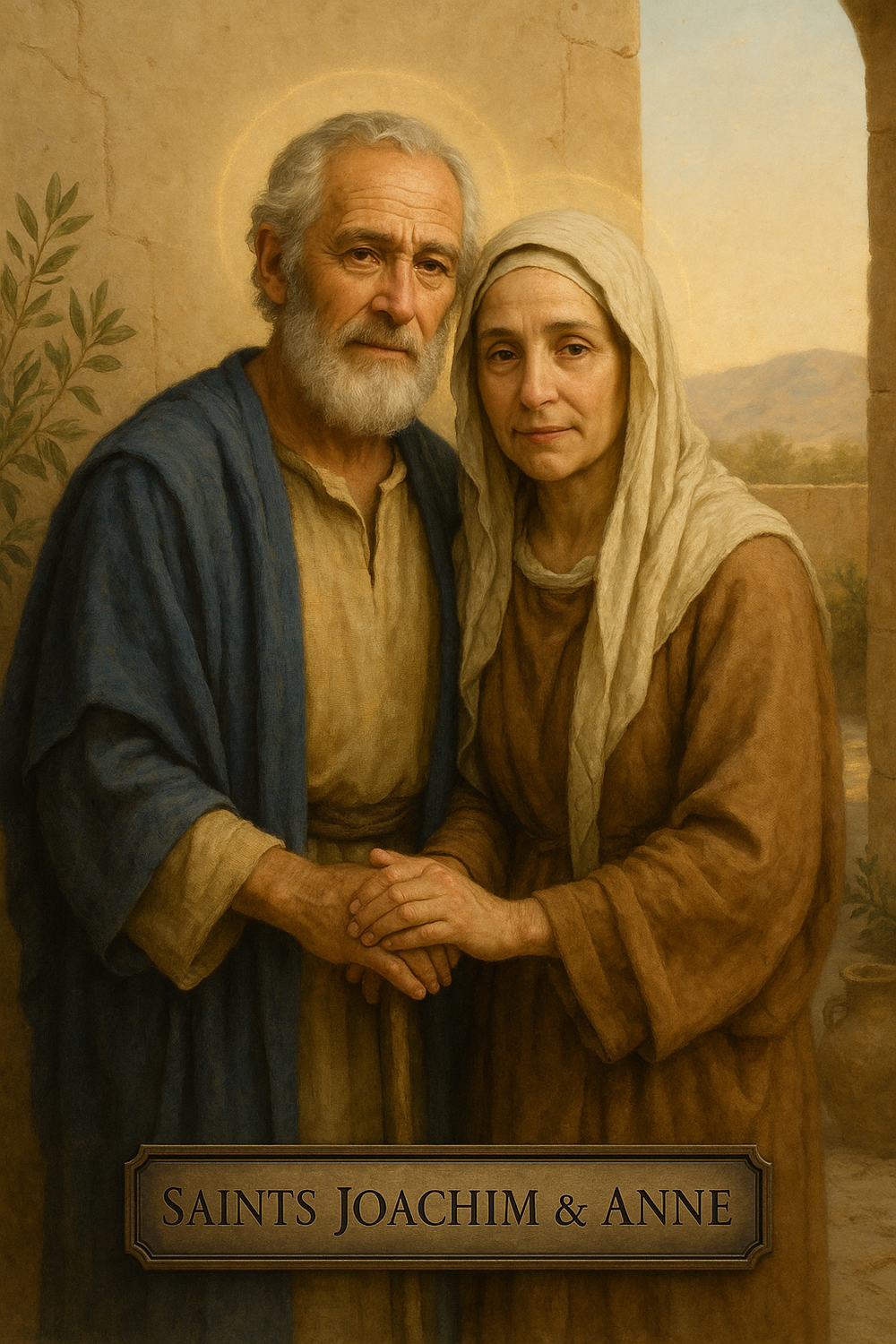
Sts. Joachim and Anne
Parents of the Theotokos and patrons of all who wait in faithful prayer for the gift of children. Their hidden life of perseverance is the foundation of the greatest story ever told.
View Prayer Card →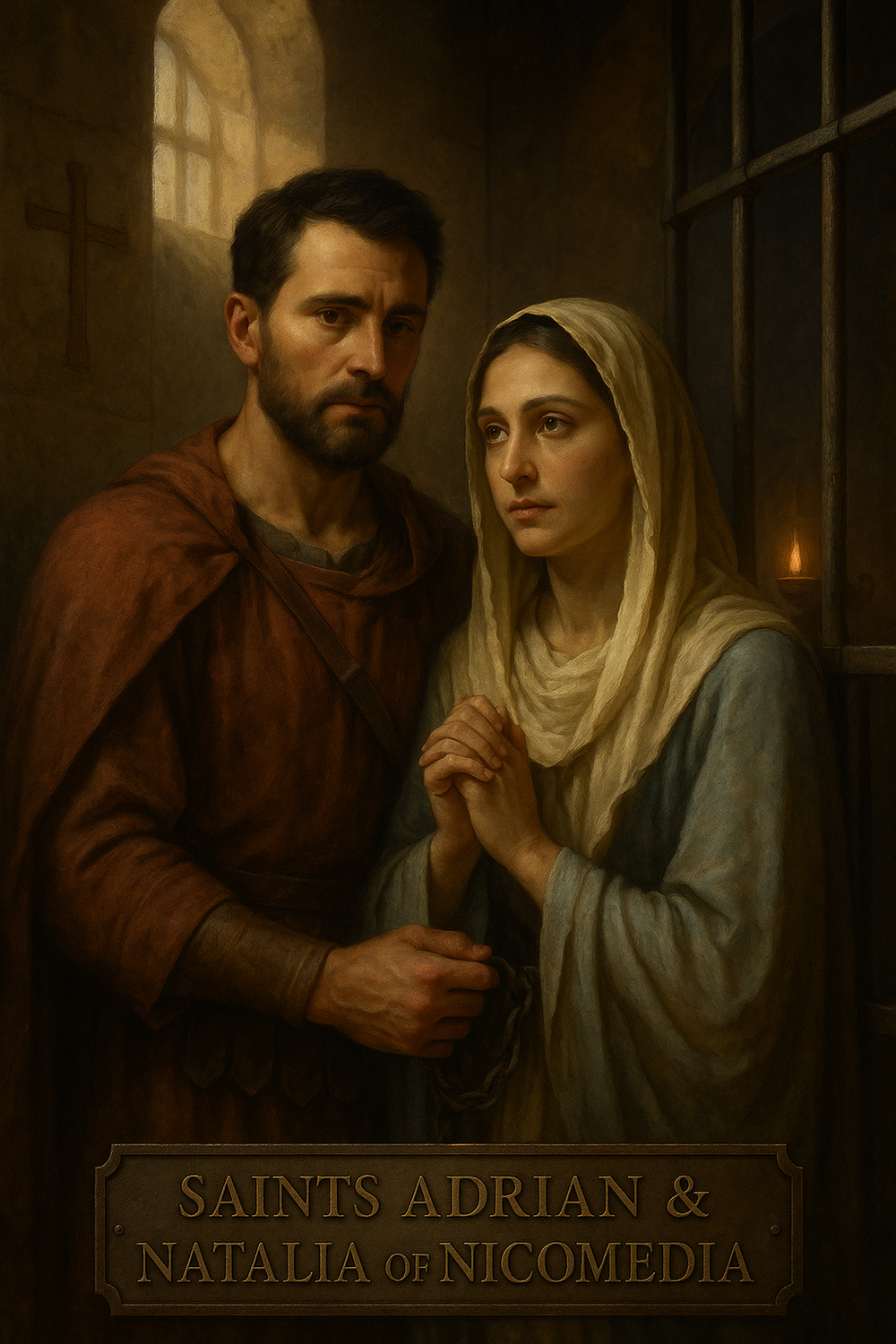
Sts. Adrian and Natalia
Martyred together in the fourth century — the crown of their marriage was their shared courage. Patrons of couples facing suffering, difficulty, and the call to faithfulness at great cost.
View Prayer Card →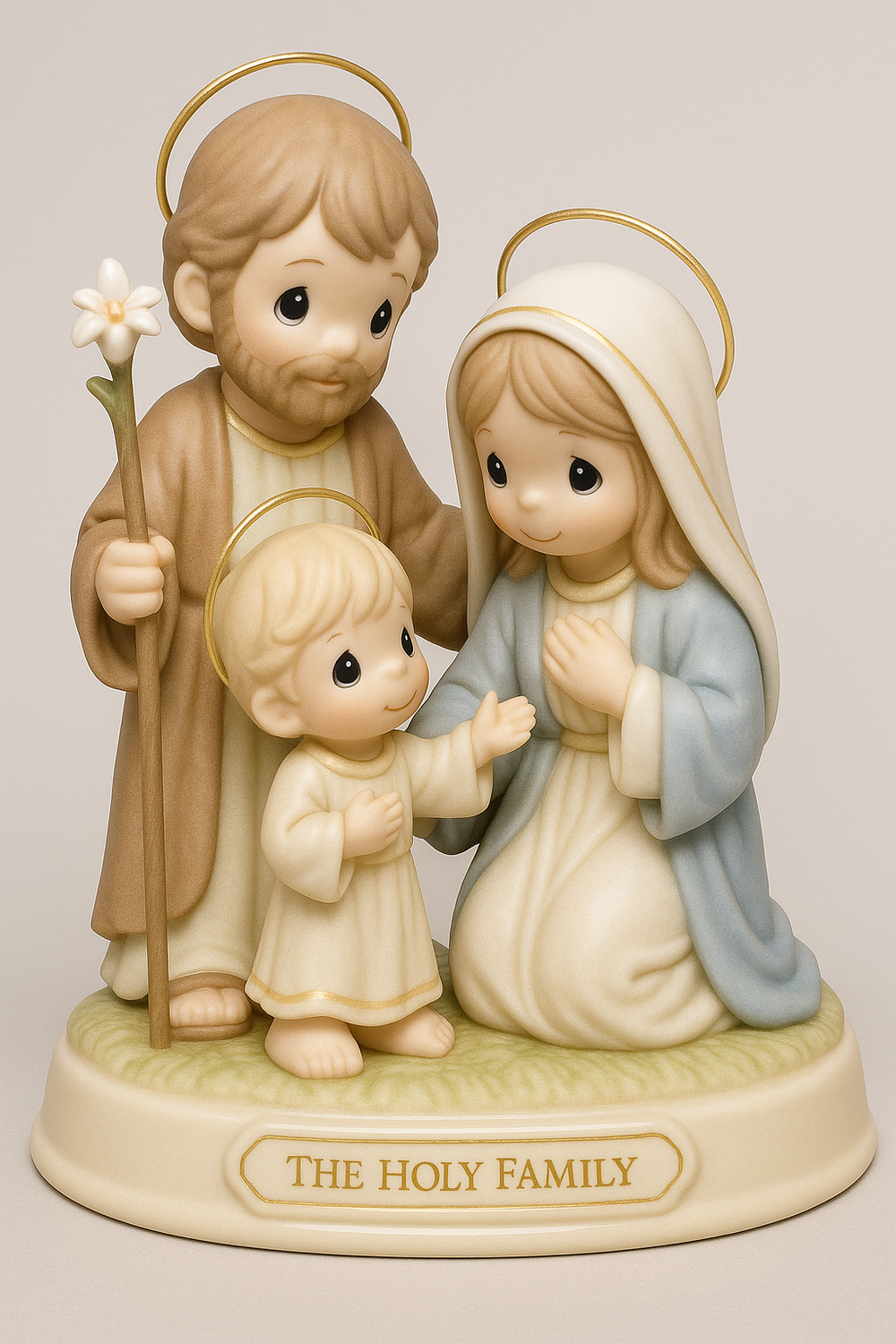
The Holy Family
Jesus, Mary, and Joseph — the holy household of Nazareth that shows every Christian family what ordinary domestic love, faithfully lived, is capable of becoming.
View Prayer Card →
Joachim and Anne, Adrian and Natalia, the Holy Family — these are exactly the witnesses that Christian Mysticism for Everyday Life draws on to show that mystical holiness is not confined to monasteries. It lives in homes, in marriages, in the patient love of parents. This book is the practical guide to living what their examples point toward.
Get the Book on Amazon →A Blessing for the Home
Evening Prayer for a Christian Household
Lord Jesus Christ, You who blessed the home of Lazarus and his sisters, the household of Zacchaeus, the wedding at Cana — bless this home and all who dwell in it. Let Your peace settle over this threshold. Let Your love be the air we breathe in these rooms.
Where there has been impatience today, bring forgiveness. Where there has been weariness, bring rest. Where we have missed each other — distracted, hurried, small — bring us back to the tenderness You placed in us when You made us for each other.
Bless our children and let them know, before they know how to say it, that they are held. Bless our marriage and make it, day by day, more like the love You showed us on the cross — self-emptying, faithful, larger than we can manage on our own.
Make this home a church. Not because we are holy enough to make it so, but because You are — and You have chosen to dwell with us.
Amen.
For use at the close of the day, at the prayer corner or dinner table
When the Home Is Hard: The Mysticism of Endurance
The theology of the domestic church can feel, on difficult days, like a rebuke. When the home is a place of ongoing conflict, estrangement, or grief — when prayer has dried up, when forgiveness is being refused, when a child is in crisis or a marriage is under severe strain — the idea that this space is meant to be a church can feel less like encouragement and more like condemnation.
The Eastern tradition does not resolve this tension by softening the theology. It resolves it by expanding the theology of the dark night to include the family. Just as the individual soul passes through seasons of desolation in which God seems absent but is in fact working at a deeper level, so too does the domestic church pass through its own dark nights — seasons of dryness, conflict, and the apparent failure of every spiritual practice that seemed to be working.
The counsel the tradition gives to the individual soul in darkness applies here too: stay. Keep the practices even when they feel empty. Go to liturgy even when it is hard to get everyone dressed. Pray the evening prayer even when the evening was difficult. Light the candle at the icon corner even when the day produced no warmth. These are not superstitions. They are acts of fidelity — the decision to act as if the home is a church even when it does not feel like one, because fidelity in the absence of feeling is one of the purest forms of faith.
The suffering that family life produces — and it produces real suffering, the kind that cannot be spiritualized away — is also, in the Eastern tradition, a form of spiritual growth in marriage. The couple that has endured something together and is still standing — not because it was easy but because they refused to abandon each other — has something in their marriage that the couple that has only had easy seasons does not. They know what their love is made of, because it has been tested. This knowledge is itself a form of holiness, and it makes the home, in its scarred and imperfect way, something truer to the cross than the idealized domestic church could ever be.
"Bear with each other and forgive one another if any of you has a grievance against someone. Forgive as the Lord forgave you. And over all these virtues put on love, which binds them all together in perfect unity." — Colossians 3:13–14
The Eastern tradition does not ask for a perfect home. It asks for an honest one — a home where God is genuinely sought, where forgiveness is genuinely practiced, where the imperfections of each person are met with the patience the tradition calls "bearing one another's burdens" (Galatians 6:2). This is the mysticism of the domestic church: not spiritual performance but spiritual fidelity, in the specific irreplaceable context of these people, in this home, on this ordinary Tuesday.
For couples who want to go deeper into the theology and practice of spiritual growth in Christian marriage, or who need resources for what the Orthodox Church teaches about marriage, or simply a free devotional resource to begin or renew their practice of prayer together, the free marriage resources page offers a range of tools developed specifically for Eastern Christian couples.

Holy Family Gold Icon — For the Home Prayer Corner
A beautiful gold-toned icon of the Holy Family for the home prayer corner — a constant visual reminder that Jesus, Mary, and Joseph have blessed the ordinary life of home and family with their presence.
View on Amazon →
The Book Every Eastern Christian Family Needs
Christian Mysticism for Everyday Life
This article has mapped the territory. Christian Mysticism for Everyday Life walks you through it — chapter by chapter, with specific practices, real examples, and the pastoral honesty to acknowledge that turning a home into a church takes time, consistency, and a good deal of grace. Its chapters on family life and mysticism in the ordinary draw on the same theology we have explored here, and they translate it into the vocabulary of daily life: the morning rush, the dinner table, the bedtime prayer, the difficult conversation, the moment of unexpected beauty in the middle of an ordinary afternoon. If you want to live this, not just understand it — this book is your guide.
Get the Book on Amazon →Available on Amazon · Affiliate link — supports The Eastern Church at no extra cost to you
Frequently Asked Questions
What does it mean to make your home a church in Eastern Christianity?
St. John Chrysostom taught that every Christian home should function as a "little church" — a place where prayer is offered, Scripture is read, forgiveness is practiced, and God is consciously welcomed into the rhythms of daily life. This means creating a prayer corner as a sacred focal point, blessing family members daily, praying together at meals, and treating the ordinary moments of family life as opportunities for encounter with God. The home becomes a church not by adding religious activities to it but by seeing every domestic act through the lens of love, sacrifice, and divine presence.
What is the Eastern Christian concept of the domestic church?
The domestic church — Greek: ekklesia kat' oikon, "church in the home" — is an ancient Christian teaching, rooted in St. Paul's letters, that the family is a microcosm of the Church. In Eastern Christianity, this is expressed through specific practices: the prayer corner as a home iconostasis, the blessing of family members, the communal praying of a prayer rule, the crowning ceremony of marriage as a priestly act, and the understanding that parents are the primary spiritual formers of their children. The home is not merely where Christians live between church services — it is itself a place of worship.
What is the Eastern Christian theology of marriage?
In the Eastern Church, marriage is called a Mystery — the Eastern term for sacrament — and is understood as a vocation of theosis, union with God through union with another person. The distinctive crowning ceremony places literal crowns on the heads of bride and groom, signifying both royalty and martyrdom: they are crowned as king and queen of their domestic kingdom, and as those willing to die for each other. St. Paul calls marriage "a great mystery" reflecting Christ's relationship with the Church (Ephesians 5:32). Marriage is not primarily a legal contract but a participation in divine love.
How do you create a prayer corner in an Eastern Christian home?
A prayer corner — or icon corner — is a dedicated space in the home, traditionally on the east-facing wall, where icons, a vigil lamp or candle, a prayer book, and sometimes incense are kept. Family members gather here for morning and evening prayer. It need not be elaborate: a small shelf with one or two icons and a candle is sufficient. The important thing is consistency — returning to this space daily for even five minutes of prayer anchors the family's spiritual life. See our step-by-step guide to the Orthodox prayer corner for a detailed walkthrough.
How do you raise children in the Eastern Christian mystical tradition?
Eastern Christianity forms children in the faith primarily through immersion rather than instruction: through the rhythm of liturgical seasons, the icons on the walls, prayers at meals, the blessing before bed. Practical steps include tracing the cross on a child's forehead as a blessing before school, praying the Jesus Prayer together at bedtime, giving children their own icon of their patron saint, reading the lives of the saints as stories, and letting children witness their parents' genuine prayer. The child who grows up in this environment knows God with the senses before understanding Him with the mind — and that embodied, sensory formation is extraordinarily durable.
What saints are patrons of marriage and family life in Eastern Christianity?
Sts. Joachim and Anne — the parents of the Theotokos — are patrons of married couples, parents, and those desiring children. Sts. Adrian and Natalia are Eastern Orthodox martyrs who faced suffering together; they are patrons of couples under trial. The Holy Family — Jesus, Mary, and Joseph — is the supreme model for every Christian household. St. John Chrysostom, while celibate, gave the most extended and profound teaching on the home as church in the history of Eastern Christianity. A full list of saints for marriage and family is available on this site.
What if prayer and family life feel impossible to hold together?
The Eastern tradition is honest about this difficulty — and it does not resolve it by lowering the theology but by expanding it. The dark night of the soul applies to family life as much as to individual prayer: there are seasons in which the practices feel empty, the home feels anything but sacred, and every attempt at domestic prayer is interrupted before it begins. The counsel of the Fathers applies here: stay. Keep the practices even when they feel fruitless. Light the candle even when the day was hard. Pray the evening prayer even when it is short. These are not performances of holiness; they are acts of fidelity that hold the family in place while God does the deeper work. Fidelity in the absence of feeling is one of the purest forms of faith the domestic church can offer.