The Jesus Prayer for Anxiety and Fear: A Complete Eastern Christian Guide
The Jesus Prayer for Anxiety and Fear
How the ancient prayer of the Eastern Christian tradition quiets the anxious heart — and what the saints of Mount Athos actually taught about worry, panic, and the healing of the soul.
- Why the Jesus Prayer Works for Anxiety
- From the Desert to Mount Athos
- How to Begin: A Step-by-Step Guide
- Saint Paisios: “Do Not Worry”
- Saint Porphyrios: Love Over Fear
- Saint Seraphim: Acquire Peace of Soul
- Saint Silouan: The Darkness That Does Not Win
- Integrating the Prayer Into Daily Life
- Frequently Asked Questions
Why the Jesus Prayer Works for Anxiety
Anxiety has a sound. It is the sound of a mind that cannot stop. It loops the same scenario forward and backward and forward again. It finds the worst version of every possible outcome and holds it up to the light. It knows no rest and grants no rest. If you have lived inside it for any length of time, you know that it is not simply a thought. It is a whole climate of the soul — a persistent, bodily, exhausting state that has very little to do with whether the things being feared are real or likely.
The Eastern Christian tradition has been thinking about this kind of mental suffering for seventeen centuries, and it has a great deal to say. Not as a competing therapy to whatever medical or psychological care you may be receiving — the tradition has always honored medicine as a gift from God — but as a complementary practice that addresses the soul's involvement in anxiety in a way that medicine alone cannot reach. That practice is the Jesus Prayer.
The Jesus Prayer in its fullest form is: “Lord Jesus Christ, Son of God, have mercy on me, a sinner.” It can be shortened to “Lord Jesus Christ, have mercy on me” or even simply to “Lord Jesus, mercy.” In extremity, the tradition teaches that even the single Name — Jesus — spoken with the whole attention of the heart, is a complete prayer.
The Mechanism: Displacement, Not Suppression
The key principle of the Eastern Christian approach to anxious thoughts is displacement, not suppression. The Fathers are unanimous on this point: you cannot fight a thought by fighting it. The harder you push a frightening thought away, the more energy you give it. The mind that says “stop thinking about this” is still thinking about this. The passions — the disordered movements of the soul that include fear, anger, grief, and despair — cannot be conquered by an act of will directed against them. They can only be replaced by something stronger.
The Jesus Prayer is that something stronger. When the anxious mind begins its familiar circuit — what if this happens, what if that happens, what if everything goes wrong — the tradition teaches a single response: do not argue with the thought, do not analyze it, do not try to reassure yourself. Speak the Name. Lord Jesus Christ, Son of God, have mercy on me. Return to it. Speak it again. The thought will attempt to reassert itself. Return again. Lord Jesus Christ, Son of God, have mercy on me. Over time, over days and weeks of consistent practice, the Name begins to have a presence of its own — a weight, a warmth, an almost physical sensation in the chest that the Fathers called the prayer of the heart — and the anxious thoughts, deprived of the attention that feeds them, begin to lose their grip.
This is not a technique. It is a relationship. The Name of Jesus is not a mantra. It is an address to the living Person who bore that Name, who hears it when it is spoken, and who is present in a particular way when it is spoken with faith. The peace that comes from the prayer does not come from the repetition itself. It comes from the One to whom the repetition is addressed.
Body and Breath
Eastern Christianity has always understood the human person as a unity of body and soul, and the practice of the Jesus Prayer reflects this. The Athonite hesychast tradition teaches that the prayer should be synchronized with the breath: inhale slowly while praying the first half (“Lord Jesus Christ, Son of God”), exhale slowly while praying the second (“have mercy on me, a sinner”). The body enters the prayer. The breath slows. The nervous system, which in anxiety has been running at a sustained high pitch, is given a physical invitation to quiet.
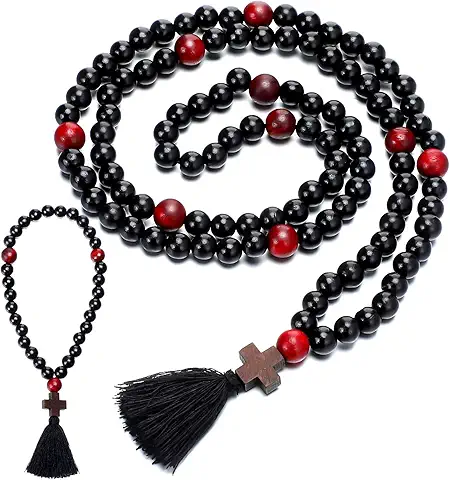
This is why a prayer rope — the komboskini of the Greek tradition or the chotki of the Russian — is so valuable for anxious practitioners. The hands have something to do. The fingers move through the knots. The body participates. Anxiety lives partly in the body — in the tightened chest, the shallow breathing, the restless hands — and the prayer rope gives the body a different kind of motion, a slow and deliberate one, tied to the rhythm of the prayer.

Part II
From the Desert to Mount Athos: A History of the Prayer
The Jesus Prayer did not emerge fully formed from a single moment. It grew over centuries, gathering its shape from the lived experience of thousands of men and women who were trying to do one thing: turn their entire attention toward God and hold it there. The history of the prayer is the history of that attempt — its failures, its refinements, and its eventual crystallization into one of the most widely practiced forms of Christian prayer in the world.
The roots lie in the Egyptian desert of the third and fourth centuries. The Desert Fathers and Mothers, who fled the cities of the Roman Empire to pursue God in the solitude of the wilderness, developed the practice of holding a single short phrase in the mind throughout the day — what they called a monologistos, a “one-word” prayer. The most common was a phrase from the Psalms: “O God, make haste to help me; O Lord, make speed to save me” (Psalm 70:1). The great John Cassian, writing in the early fifth century, describes this practice as the foundation of all prayer, to be held like a shield against the assault of disordered thoughts.
By the fifth and sixth centuries, the Name of Jesus had become the center of this short prayer. The Syrian and Egyptian tradition began using forms that would be recognizable to modern practitioners: “Lord Jesus Christ, have mercy on me.” The theological grounding for this came from the conviction, rooted in the New Testament and elaborated by the Greek Fathers, that the Name of Jesus is not merely a label but a vehicle of divine presence — that invoking it with faith genuinely brings Christ near.
Gregory Palamas and the Uncreated Light
In the fourteenth century, the hesychast controversy brought the theology of the Jesus Prayer to the center of Eastern Christian theological reflection. Saint Gregory Palamas, Archbishop of Thessalonica, articulated the distinction between God's essence (utterly inaccessible to creatures) and God's energies (His genuine self-communication to creation) that provided the theological foundation for the tradition's claims about the Jesus Prayer. The hesychasts — monks of Mount Athos who practiced the prayer with extraordinary intensity — reported experiencing a vision of uncreated light, the same light that had shone on Mount Tabor at the Transfiguration. Palamas defended these experiences against critics who said no creature could have genuine contact with God. The Church confirmed his teaching at councils in 1341, 1347, and 1351. The deeper fruits of the Jesus Prayer, including genuine peace and the quieting of the passions, were understood as real participations in God's uncreated grace — not merely psychological states produced by technique.
The eighteenth century saw a great revival of the hesychast tradition through the compilation of the Philokalia — an anthology of patristic texts on the Jesus Prayer and contemplative prayer assembled by Saints Makarios of Corinth and Nikodemos of the Holy Mountain. Published in 1782 in Venice, translated into Russian within decades, the Philokalia spread the hesychast tradition throughout the Orthodox world and eventually into the hands of Western Christians as well. The Russian anonymous classic The Way of a Pilgrim, which follows a wandering peasant learning to pray the Jesus Prayer unceasingly, became one of the most widely read spiritual books of the modern era.
Today, the Jesus Prayer is prayed by millions of Orthodox and Eastern Catholic Christians daily — in monasteries on Mount Athos, in urban apartments in Athens and Kyiv, in suburban homes in America, by monks and laypeople, by the young and the old. And consistently, across all of these contexts, the people who practice it report the same thing the Fathers promised: that the prayer gradually quiets the interior noise, loosens the grip of disordered fear, and opens the soul to a peace that does not depend on external circumstances.
Read more about the history and practice of the prayer in our guide: The Jesus Prayer: A Complete Guide.

Part III
How to Begin: A Step-by-Step Practice Guide
The Fathers are careful to distinguish between two kinds of guidance on the Jesus Prayer: the outer practice, which can be described clearly and learned relatively quickly, and the inner prayer of the heart, which descends gradually over years of consistent practice and is entirely the gift of God. What follows is guidance on the outer practice. The inner prayer will come in its own time, if it comes at all, and it is not something you can produce by doing the outer practice correctly. You can only create the conditions. God does the rest.
Step One: Choose a Regular Time
Consistency matters more than duration, especially at the beginning. The tradition recommends a regular time each day rather than longer occasional sessions. Morning is traditional and often most effective for anxious practitioners, because it sets the interior tone before the day's demands crowd in. Ten to fifteen minutes daily is a better beginning than forty-five minutes every few days. You are building a relationship, not completing a task. Relationships require regular presence more than occasional intensity.
Step Two: Take a Simple Posture
Sit upright in a chair or on the floor. Do not lie down if you are prone to falling asleep. Eastern monastics traditionally stand or prostrate, but for laypeople beginning the practice, seated with the spine straight and the hands resting quietly — holding a prayer rope if you have one — is entirely appropriate. The eyes may be closed or softly downcast. There is no special posture required. The body should be comfortable enough not to distract you, but alert enough to support wakefulness.
Step Three: Begin with Three Slow Breaths
Before speaking the prayer, breathe slowly three times. Inhale through the nose, exhale through the mouth, lengthening each exhale slightly. This physiological act begins to slow the nervous system before the prayer begins. It is not a spiritual technique; it is simply a responsible use of the body God gave you. When the three breaths are complete, begin the prayer.
Step Four: Pray with the Breath
Inhale slowly while saying interiorly: “Lord Jesus Christ, Son of God” — exhale slowly while saying: “have mercy on me, a sinner.” If this feels too long for one breath cycle, shorten it: inhale on “Lord Jesus Christ,” exhale on “have mercy on me.” The specific division matters less than the slowness. Move through the prayer rope knot by knot, if you have one. If you do not have a prayer rope, count silently or simply continue without counting.
Step Five: When a Thought Comes, Return
Thoughts will come. Anxious thoughts in particular will come, because you are practicing precisely in order to address them, and the mind, accustomed to its circuit, does not immediately stop. When a thought comes — when the familiar scenario begins to assemble itself — do not argue with it. Do not try to reason yourself out of it. Simply return to the prayer. Lord Jesus Christ, Son of God, have mercy on me. The Fathers teach that the return is itself the prayer; that the act of bringing the wandering mind back to the Name of Christ, repeated ten thousand times over a lifetime, is not a failure but the very practice. Every return is an act of faith.
Step Six: Close with a Short Thank-You
When your time is up, end with a brief thanksgiving rather than simply stopping. “Lord, thank You for this time. Guide my day.” This simple act of gratitude closes the session and carries something of its spirit into the hours that follow.
Part IV
Saint Paisios the Athonite: “Do Not Worry”
Arsenios Eznepidis was born in 1924 in Farasa, Cappadocia, a small village of Greek Christians in what is now Turkey. His family was among the last Christian refugees driven from Anatolia in the great population exchange of 1923, and the faith he received from his parents — and from the village priest who would later be canonized as Saint Arsenios of Cappadocia — was the faith of a community that had paid for its Christianity in blood and exile. That background shaped Paisios in ways that are visible in everything he later taught: a deep conviction that suffering is not wasted when it is given to God, and a complete refusal to take seriously the kind of anxious, self-referential worry that treats every difficulty as a personal catastrophe.
After military service, he entered the monastic life on Mount Athos in the 1950s and spent the next four decades in prayer, manual labor, and the quiet reception of visitors who came from across the Orthodox world to seek his counsel. He was known for his spiritual insight, his sharp and often comedic directness, and his warmth toward those in genuine distress. He died in 1994 and was glorified as a saint by the Ecumenical Patriarchate in 2015. His collected sayings, gathered by his disciples, have been published in multiple volumes and translated into dozens of languages.
On the subject of anxiety, Paisios was both compassionate and brisk. He recognized that anxious suffering is real. He did not dismiss or minimize it. But he taught consistently that anxiety, at its root, is a form of faithlessness — not a moral failure but a spiritual one, a failure to trust that God governs the circumstances of one’s life with care. “The person who worries is saying to God, 'I don’t trust You,'” he would say. The prescription he offered was not psychological analysis but a reorientation of the heart toward God’s goodness: the Jesus Prayer, offered with simplicity and consistency, combined with a genuine effort to see every circumstance — especially the difficult ones — as something God is using for the soul’s good.
What Paisios Taught About Anxious Thoughts
One of Paisios’s most practically useful teachings for anxious people is his instruction about what to do when an anxious thought arrives. He consistently advised against engaging with it — against examining it, arguing with it, or trying to reason yourself out of it. “Don’t give the thought a chair,” he would say. “If it has no place to sit, it will leave.”
The practice he recommended was immediate displacement: the moment the anxious thought begins to assemble, bring the Name of Jesus. Not as a magic formula, but as a genuine turning of attention toward the living God. “Say the prayer,” he told one visitor, “and the thought will leave. But say it with your whole heart. Not your lips only.”
He also taught that joy — not forced cheerfulness, not the performance of happiness, but a genuine interior orientation toward God’s goodness — is one of the most powerful antidotes to chronic anxiety. He practiced this himself: visitors to his cell consistently reported that he was one of the most joyful people they had ever met, and that the joy was not a personality trait but a spiritual achievement, the fruit of decades of prayer. He had prayed himself into it, step by step, knot by knot.
His full biography and teachings are on our site: Saint Paisios of Mount Athos: Life, Miracles, and Teaching.
Lord Jesus Christ, Son of God, have mercy on me, a sinner.
Lord, You who hold all things in Your hands, hold me now. I am afraid. My thoughts will not be still. I give them to You — all of them, the ones I know and the ones I do not. I give You the outcome I am afraid of. I give You the uncertainty I cannot bear. I give You the future, which belongs to You and not to me.
Saint Paisios, you who knew the worried hearts of thousands and turned them always toward God — pray for me now. Ask Christ to grant me what you had: the deep peace that does not depend on what happens, the joy that survives every difficulty, the trust that says to God, “I believe You know what You are doing.”
Lord Jesus Christ, Son of God, have mercy on me, a sinner.
Use a prayer rope as you pray. Move one knot for each repetition of the Jesus Prayer. Begin with ten repetitions. Increase as the practice deepens.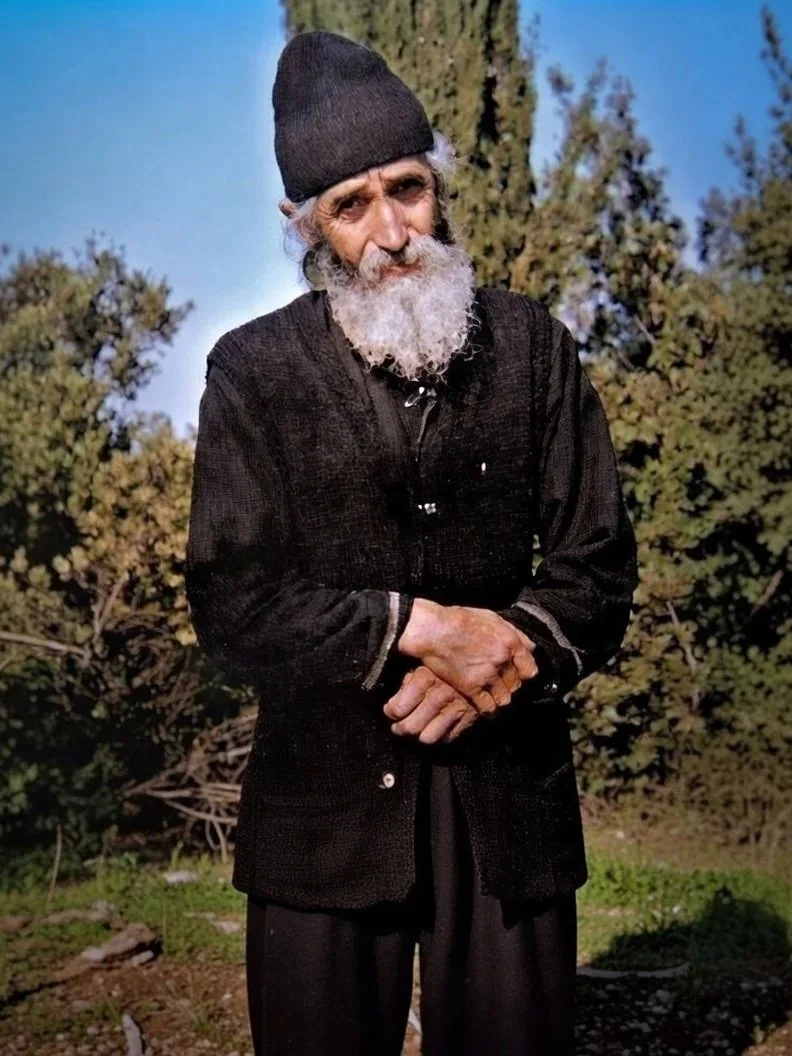
Part V
Saint Porphyrios of Kavsokalyvia: Love Over Fear
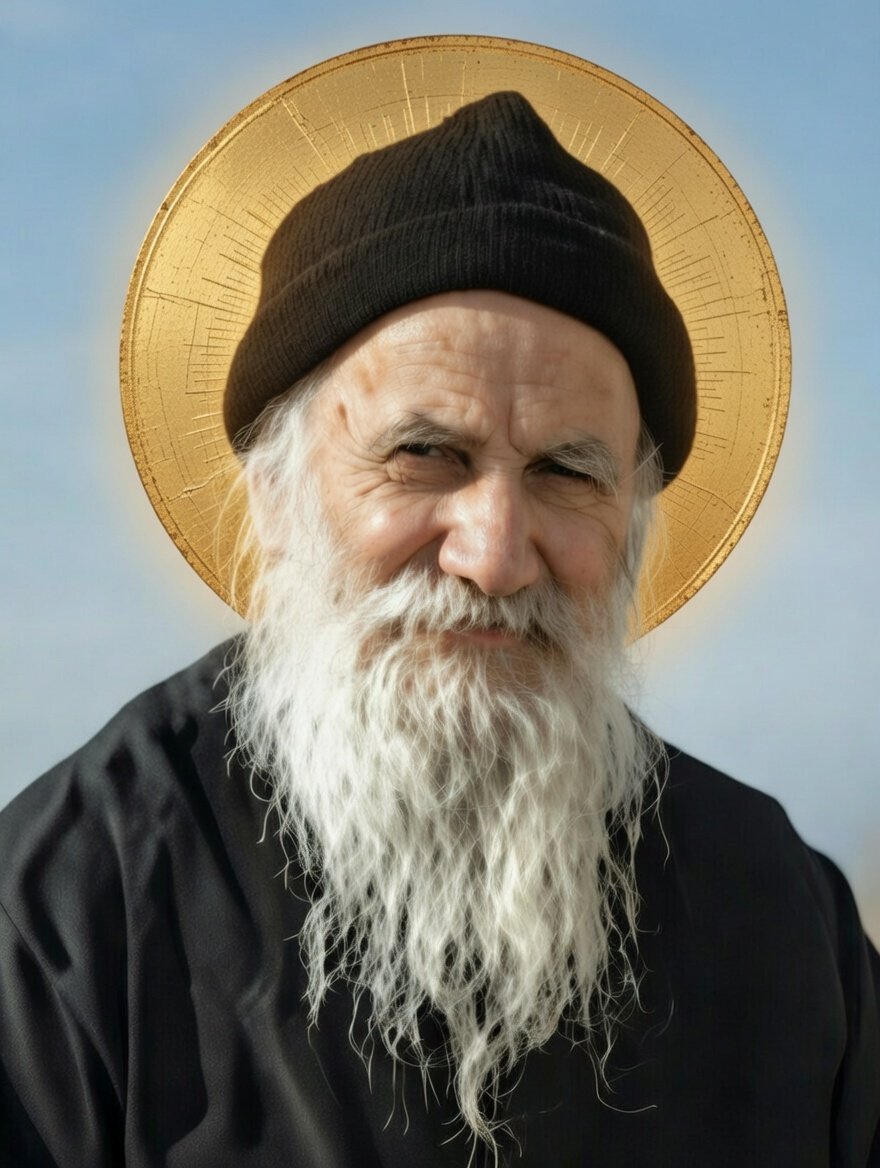
Evangelos Bairaktaris was born in 1906 in Agios Ioannis Karystos on the Greek island of Euboea. He left home at age eight to become a monk, eventually entering the skete of Kavsokalyvia on Mount Athos — one of the most ancient and austere monastic communities in the Christian world. There, under the spiritual direction of the Elder Panteleimon, he received the foundations of his prayer life and began to develop the extraordinary gifts of spiritual perception that would characterize his entire ministry.
He spent decades as a confessor and spiritual guide, first at a clinic near Athens and then at a small chapel he built called the Monastery of the Transfiguration. Thousands of people — doctors, factory workers, students, housewives, people in every form of distress — came to him and went away changed. He died in 1991 at the age of eighty-five, on Mount Athos, where he had returned to die, and was glorified as a saint by the Ecumenical Patriarchate in 2013.
What makes Porphyrios’s teaching on anxiety distinctive is his insistence that the direct fight against fear is usually counterproductive. He observed that many anxious people worsen by focusing on their anxiety — examining it, cataloguing it, trying to exterminate it — and concluded that the soul is not designed to be turned primarily against itself. “Don’t pay attention to evil,” he said. “Pay attention to Christ.”
The Strategy of Divine Love
Porphyrios taught that the most effective antidote to personal fear is the practice of love — specifically, the outward turning of the soul toward God and toward other people in genuine prayer and care. He recommended that anxious people pray not only for themselves but for others, particularly for people they know to be suffering. “When you pray for others with love,” he taught, “your own pain becomes lighter, because you have moved outside yourself.”
He also taught a form of the Jesus Prayer that was gentler than the intense concentration recommended in some Athonite sources. For people who found the prayer anxiety-inducing when done with great force of will — and some anxious people do — he recommended a lighter, more affectionate approach: speaking the Name of Jesus simply, as one would speak the name of a beloved friend, without effort or pressure. “Love Him,” he would say. “Simply love Him. And let that love carry the prayer.”
For those already struggling with clinical anxiety or depression, this softer approach is often more accessible than the intense concentration of the full hesychast method. Porphyrios understood that different souls need different approaches, and that the goal — the loving attention of the soul to God — is the same regardless of which form the prayer takes.
Read his full biography on our site: Saint Porphyrios of Kavsokalyvia: Life and Teachings.
Part VI
Saint Seraphim of Sarov: Acquire Peace of Soul
Prokhor Moshnin was born in 1754 in Kursk, Russia. He entered the monastery of Sarov in 1778 and was tonsured a monk in 1786, taking the name Seraphim, which means “fiery one” in Hebrew. He would prove to be exactly that. He spent years in the most extreme ascetic practice — a thousand nights standing on a rock in prayer, three years in absolute silence, decades in the forest hermitage he called his “near wilderness” — and emerged from them as one of the most radiant and beloved figures in the history of Russian Orthodoxy.
He received visitors in his cell for the last years of his life, greeting each one with the words “Christ is risen, my joy!” — even, notoriously, in the middle of July, months after Pascha. Visitors who challenged him on this were told, simply, that Christ had risen and that this was sufficient reason for greeting everyone with paschal joy at any moment of the year. He bore in his body the marks of extreme ascesis and the consequences of a severe beating by robbers who had attacked him early in his monastic life, yet his bearing was consistently joyful. The peace he radiated was not the peace of a sheltered life. It was the peace of someone who had walked through darkness and found that God was in it.
The Most Important Saying
Seraphim’s most famous saying is also his most practical: “Acquire peace of soul, and thousands around you will find salvation.” This is not a counsel of passivity. It is a claim about the primacy of interior transformation in the Christian life — and a promise that such transformation, when it is genuine, has effects in the world far beyond what any external activity can produce.
For the anxious person, this saying carries a particular meaning. It suggests that the pursuit of interior peace is not selfish. The person who takes seriously the practice of the Jesus Prayer, who works through the slow process of displacing anxious thoughts with the Name of Christ, who persists through weeks and months of what sometimes feels like no progress at all — that person is doing something that matters beyond their own interior weather. The peace that accumulates in a soul devoted to this prayer becomes a kind of presence in the world. People around Seraphim felt it. People around Paisios felt it. People around Porphyrios felt it. It is not charisma. It is the fruit of sustained attention to God.
He also taught that the Holy Spirit is the direct agent of this peace — that the goal of the entire Christian life is the “acquisition of the Holy Spirit,” and that the Jesus Prayer is one of the primary means by which the Spirit is received and held. This is not technique. It is relationship. The Spirit comes because He is invited, persistently and humbly, through the Name of the One in whom He dwells.
Lord Jesus Christ, Son of God, have mercy on me, a sinner.
Holy Spirit, You who came upon the Apostles in fire and upon the desert Fathers in silence — come upon me now. I am not asking for great things. I am asking for peace. Not the absence of difficulty, but the presence of God within the difficulty. Not stillness around me, but stillness within me. The peace that this world cannot give and cannot take away.
Saint Seraphim, you who greeted even strangers with the joy of the Resurrection — intercede for me. Ask Christ to grant me a portion of what He gave you: the interior quiet that survives fear, the joy that persists through suffering, the peace that is not manufactured by optimism but poured into the soul by the Holy Spirit.
Christ is risen. My joy. Amen.
When anxiety peaks, return to the Jesus Prayer for three minutes. Do not engage with the anxious thought. Simply speak the Name until the peak passes. The Fathers teach that most attacks of fear last only a short time when they are not fed by attention.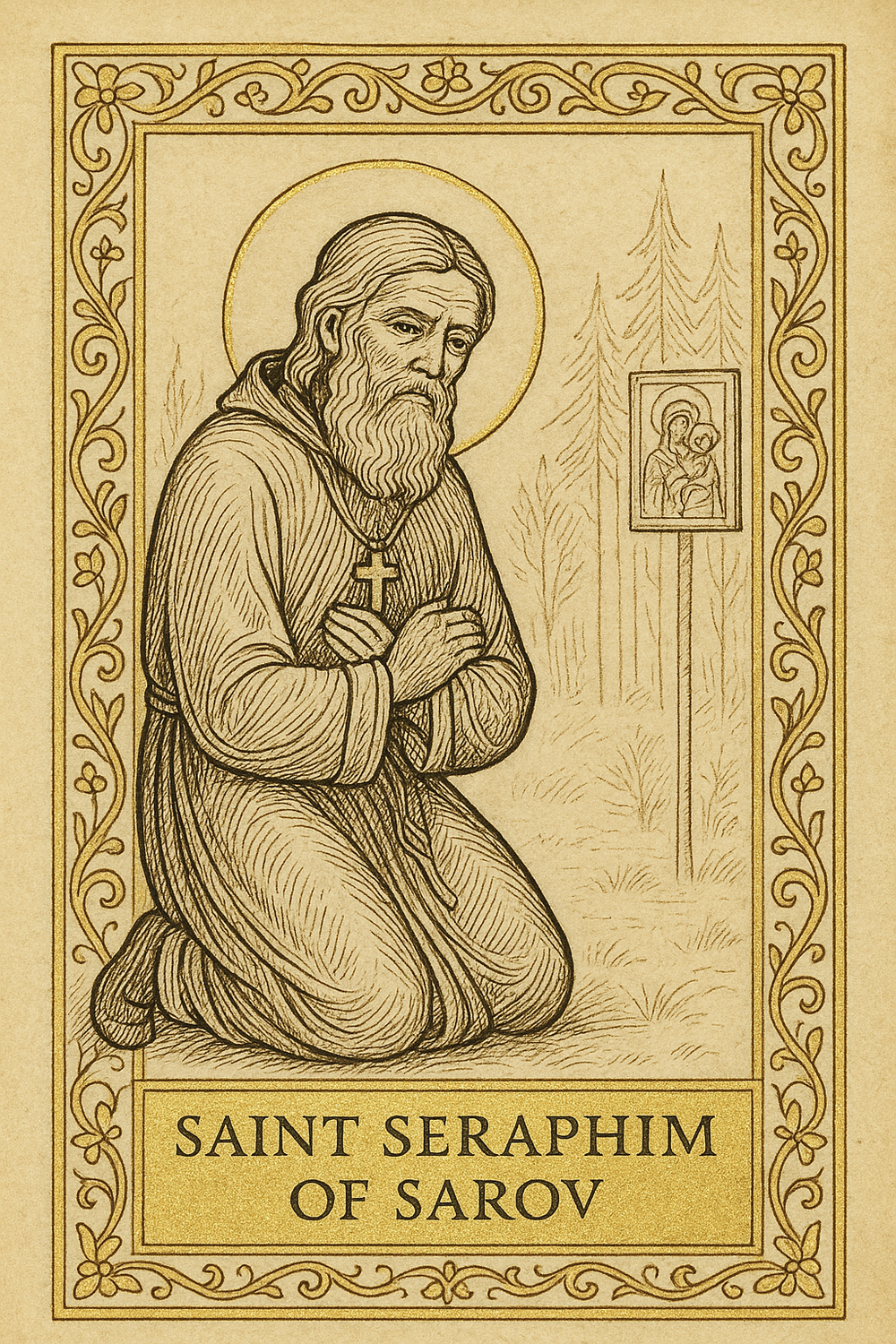
Part VII
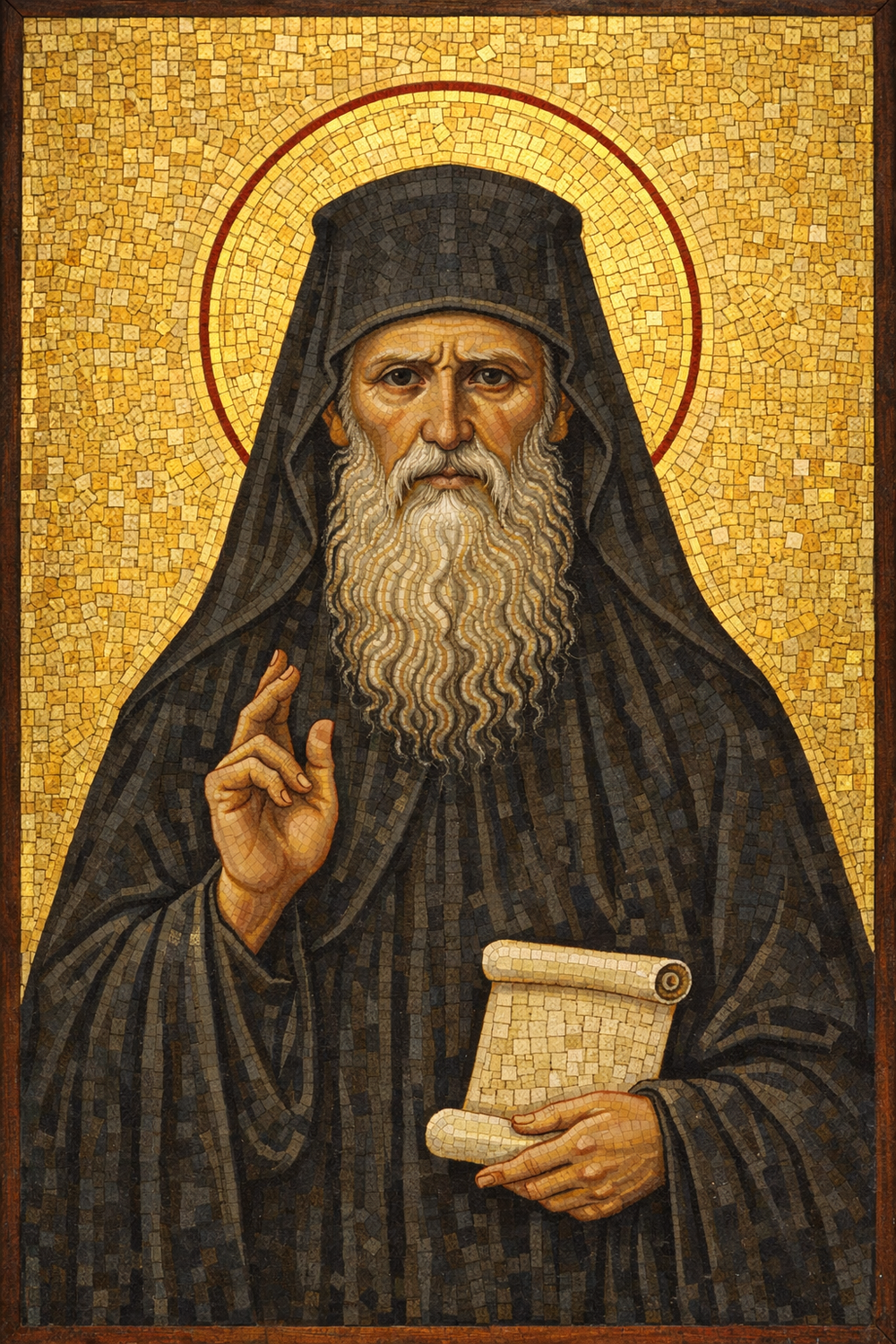
Saint Silouan the Athonite: The Darkness That Does Not Win
Simeon Ivanovich Antonov was born in 1866 in the village of Shovskoye in the Tambov region of Russia. He was a large, physically powerful man — a former soldier, a person with a history of the kind of sins that large, physically powerful young men are heir to — who entered the Russian monastery of Saint Panteleimon on Mount Athos in 1892 and spent the next forty-six years there, dying in 1938.
In the early years of his monastic life, he was granted an extraordinary vision of Christ in the church of the monastery — a vision of such overwhelming love and light that he would describe it, decades later, as the defining moment of his life. But that vision was followed by something that the tradition frankly and carefully records: years of what he called “abandonment by God” — a spiritual darkness so profound that he believed himself damned, that he prayed from within a desolation so total that hope itself seemed a mockery.
In the depths of this darkness, he received a word that would become the foundation of his entire teaching: “Keep thy mind in hell, and despair not.” This paradoxical instruction — to acknowledge the darkness fully, to refuse to pretend it is not there, and yet also to refuse to be defined by it — is Silouan’s most characteristic contribution to the Christian understanding of suffering and fear.
For Those Whose Anxiety Has Become Darkness
Silouan speaks most directly to the people whose anxiety has descended beyond the ordinary — into the territory of genuine despair, of persistent hopelessness, of the conviction that God has gone quiet or that they are beyond help. He knew that territory from the inside. He did not learn about spiritual desolation from books. He lived in it for years while continuing to show up to the prayer.
His instruction “keep thy mind in hell, and despair not” is not cruelty. It is a realistic prescription for a particular kind of suffering. It says: do not pretend the darkness is not there. Do not force a cheerfulness you do not feel. Do not perform a faith you cannot access. Acknowledge the darkness. Look at it clearly. And in the midst of looking at it, do not despair. The darkness is not the final word. God is. These two things are simultaneously true, and the soul that can hold both of them is the soul that will survive.
His teaching is also a corrective to the kind of spiritual practice that demands you “feel better” in order to count as real. The Jesus Prayer, in Silouan’s approach, can be prayed from within the darkness. It does not require the feeling of God’s presence. It does not require consolation. It requires only the will to speak the Name, one more time, in the dark. Lord Jesus Christ, Son of God, have mercy on me, a sinner. One more time. Whether it feels like anything or not.
His writings are collected in Saint Silouan the Athonite, a volume compiled by his disciple Archimandrite Sophrony (Sakharov), which remains one of the most profound books of Christian spirituality produced in the twentieth century.
Part VIII
Integrating the Prayer Into Daily Life
The ultimate goal of the Jesus Prayer, as the hesychast tradition presents it, is not a fifteen-minute morning session. It is a continuous background presence — the prayer running beneath all other activity the way a river runs beneath the surface of the ground, invisible but always there. Saint Paul’s instruction to “pray without ceasing” (1 Thessalonians 5:17) is the aspiration. The practices described in this article are the beginning of the path toward it.
Carrying the Prayer Through the Day
The transition from formal prayer time to informal prayer throughout the day begins simply: by returning to the Jesus Prayer at moments of transition. When you get in the car. When you sit down at your desk. When you stand in a line. When you lie awake at night. These interstitial moments — which fill a surprisingly large portion of the average day — are opportunities to speak the Name. Not with the intensity of a formal session. Quietly, almost conversationally, the way you might speak to someone you trust who is always in the same room.
The prayer rope is particularly helpful for this kind of informal practice. Carried in a pocket or a bag, it is available at any moment. The fingers find the knots automatically, and the body memory that has been built up in formal sessions carries the prayer forward. Many practitioners report that after some months of this, the prayer begins to “say itself” — that it arises spontaneously when stress begins, without requiring a deliberate decision to pray. This is the beginning of what the tradition means by the prayer descending into the heart.
When Anxiety Peaks
For moments of acute anxiety — the panic attack, the sudden wave of dread, the catastrophic thought that arrives with the force of conviction — the Fathers offer a specific instruction: do not reason, do not analyze, do not try to calm yourself by thinking about it. Speak the Name. Lord Jesus Christ, Son of God, have mercy on me. Keep speaking it. Breathe slowly. Move through the prayer rope if you have it. The acute peak of most anxiety attacks lasts only a few minutes when it is not fed by the mental engagement that usually prolongs it. The Jesus Prayer gives the mind something to do that is not that engagement. It is not a technique for suppressing the panic. It is a genuine call to the One who can receive it.
Building a Prayer Rule
A prayer rule is simply a consistent daily commitment to prayer — a specific amount of time, at a specific time, devoted to the Jesus Prayer and other forms of prayer. The Orthodox tradition recommends developing a prayer rule with the guidance of a spiritual father or director, because the right rule for one person is not the right rule for another. For a beginning practitioner dealing with anxiety, a simple rule might be: morning prayers from the Orthodox prayer book (ten minutes), followed by the Jesus Prayer on the prayer rope (ten minutes). Evening: the same. Total: forty minutes daily. This is not a large commitment. It is, however, enough to produce real change over time, if it is maintained consistently.
Lord Jesus Christ, Son of God, have mercy on me, a sinner.
Before this day unfolds, I place it in Your hands. I do not know what it will hold. I do not need to know. You are already in every hour of it, ahead of me, walking toward me. I give You the fears I woke up with. I give You the uncertainty I carry. I give You the things I cannot control and the people I cannot protect and the outcomes I cannot guarantee.
Today, when anxiety comes, grant me the grace to speak Your Name before I speak anything else. Lord Jesus Christ, Son of God, have mercy on me. Let that be my first word. Let it be the word I return to. Let it become, over time, the word underneath all my words.
I ask this through the intercessions of Saints Paisios, Porphyrios, Seraphim, and Silouan, who knew the anxious heart and walked it patiently toward peace. Amen.
Pray this with a prayer rope. Take your time. Do not rush into the day.
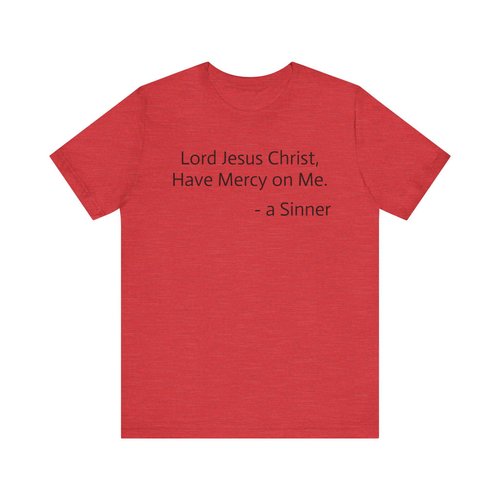
From Our Store: Prayer & Devotional Items

FAQ
Frequently Asked Questions
The Saints Who Prayed Through Fear Are Still Praying.
Paisios. Porphyrios. Seraphim. Silouan. Each of them knew what it was to be afraid, to be in the dark, to hold the prayer when the prayer felt like nothing. Each of them found that the Name is enough — not because the Name makes pain disappear, but because the One whose Name it is does not abandon the soul that calls on Him.
Begin with five minutes. One prayer rope. The simplest form: Lord Jesus Christ, Son of God, have mercy on me. Show up to it tomorrow. And the day after. The peace the saints carried is not a personality gift. It is the fruit of exactly this — kept faithfully, over time, one knot at a time.
Carry their prayer cards. Ask their intercession. Let their example remind you that the darkness you are in has been walked before, and that it has an end.
Get the Saint Paisios Prayer Card →