Catholic or Orthodox? The Complete Guide for Seekers Choosing Between the Ancient Churches
For Seekers • Church History • Ancient Worship • A Guide, Not a Verdict
Catholic or Orthodox? The Complete Guide for Seekers Choosing Between the Ancient Churches
A growing number of people raised in contemporary Christian worship are walking into a Divine Liturgy or a traditional Mass for the first time and feeling something they didn’t expect: the sense that they’ve found the room the whole faith was always meant to be prayed in. This guide exists to help you understand your options, honestly and without pressure, so you can go find out for yourself.
What This Guide Covers — At a Glance
- Roman Catholic Church
- The Latin Church • one pope • celibate priesthood • the largest single Christian body on earth
- Eastern Catholic Churches
- 23 distinct churches • Eastern liturgy and theology • in communion with Rome • often married clergy
- Eastern Orthodox Church
- Byzantine liturgy • no pope • a communion of self-governing (autocephalous) churches • married clergy
- Western Rite Orthodoxy
- Orthodox theology and authority • Western liturgical form • small but growing • a home for pre-1970 Western worship inside Orthodoxy
- The Maronite Church
- Eastern Catholic • hidden in Lebanon’s mountains during the Great Schism • never left communion with Rome
- SSPX
- Society of Saint Pius X • preserves the pre-Vatican II Roman Mass • canonically irregular, not formally separated
- Who This Is For
- Anyone drawn to liturgy, incense, fasting, and the ancient shape of worship — no matter where you’re starting from
- The Core Message
- Visit more than one. You are welcome everywhere. There is likely an ancient church closer to you than you think.
Why So Many Are Leaving the Stage for the Altar
Something is happening across contemporary Christianity that surveys are only beginning to describe: a quiet, steady migration of people out of modern Protestant worship and into the ancient churches of the East and the West. They are not leaving because they stopped believing in Jesus Christ. Most of them are leaving because they never stopped wanting something their churches never offered them — and they finally found out where it had been the whole time.
Ask most of these people what they were searching for and you will hear some version of the same answer: they were not looking for another Bible study. They already knew the Bible. They were looking for a place to worship. There is a real difference between a room built to teach you about God for forty-five minutes and a room built to put you, bodily, in front of Him. Many people raised in contemporary churches spent their whole lives in the first kind of room and never once experienced the second. When they finally walked into the second kind, something in them recognized it immediately, even though they had never been taught to expect it.
What they were reaching for, whether they had the words for it or not, was root Christianity — the way the first Christians actually worshipped, before printing presses, before denominational splits, before worship became a genre of music. Before Constantine ever legalized the faith, small communities of believers were gathering in catacombs and private homes to do something that looked far more like a modern Divine Liturgy or a Traditional Latin Mass than a modern praise service: they prayed ancient words together, they broke bread believing it was truly the Body of Christ, they lit lamps and burned incense as an offering rising up before God, and they treated the space itself as holy ground. The ancient churches did not invent this by accident somewhere in the Middle Ages. They preserved it. That is the whole claim, and it is worth taking seriously even if you have never considered it before.
The Stage and the Altar
If you want to understand the difference in one image, stand at the back of two rooms. In the first, there is a stage. There are lights aimed at it, a sound system built around it, and a band positioned to lead a crowd through a set of songs before a single man walks out to give a talk. Everything about the architecture says: watch this, feel this, be moved by this. The congregation is, in a real sense, an audience.
In the second room, there is no stage. There is an altar. It sits at the front not because someone is performing on it, but because something is going to happen on it — a sacrifice is going to be offered, and everyone in the room is being invited to participate in it, not observe it. There is incense because Scripture itself describes prayer rising like incense before God. There are icons because the ancient Church believed the saints are not gone, only unseen, and that surrounding yourself with the great cloud of witnesses while you pray is not decoration but company. You do not walk into that room to be entertained. You walk in to worship, and worship, properly understood, is not about you at all.
People feel this difference the moment they cross the threshold, long before they understand the theology behind it. A stage says: come watch what we do for God. An altar says: come do this together, the way it has always been done. That single architectural fact — stage or altar — may be the most honest four seconds of church shopping most seekers ever experience.

Part II
Young Men, Discipline, and the Return of Ancient Fatherhood
One of the most striking parts of this movement is who is doing much of the moving: young men, in numbers that surprise even the priests receiving them. This is not accidental, and it is not primarily about politics or aesthetics, though both get blamed for it. It is about something much simpler. A great many young men grew up in churches that offered them a Jesus who mostly needed their affirmation, and they are exhausted by it. They are not looking for a softer faith. They are looking for one that will actually ask something of them.
The ancient churches ask something of them immediately. There is a real fasting calendar — not a suggestion, but a discipline, observed for roughly half the calendar year across Great Lent, the Nativity Fast, the Apostles’ Fast, the Dormition Fast, and the weekly Wednesday and Friday fasts. There are rigorous daily and weekly prayer rules, some of them centuries old, prayed standing, prayed with prostrations, prayed with a prayer rope in hand. There is real structure, real expectation, and real accountability to a spiritual father. None of this is marketed as extreme. It is simply what has always been expected of anyone serious about the Christian life. Young men, starved for structure their whole lives, find it here and often describe it as the first time anyone has ever asked them to be strong for something bigger than themselves.
This is worth saying plainly, because it gets misunderstood constantly: the most masculine thing a man can do is not aggression, conquest, or self-assertion. It is worshipping God with his whole heart, disciplining his own body and appetites through fasting and prayer, providing faithfully for the people entrusted to him, and spending his life trying to imitate the most masculine man who ever lived — Jesus Christ, who fasted forty days in the wilderness, who drove the money-changers from the Temple in righteous anger, who submitted His own will completely to the Father, and who laid down His life deliberately, on His own authority, for people who did not deserve it. That is the model. It has nothing to do with looking tough and everything to do with being disciplined, sacrificial, and utterly unwilling to bend on what matters. Ancient Christian worship, with its fasting and its rigor, gives men a concrete daily way to practice exactly that.
You Are Not Walking Into This Alone
Here is what surprises many young men once they actually show up: the discipline is not new to the room, only to them. The older men standing near them at the Divine Liturgy or the Traditional Latin Mass have often been fasting, praying the hours, and confessing their sins for thirty or forty years. They are not impressed by intensity. They are calm, because this has simply been their whole life. And nearly every one of them is glad to talk to a younger man who is trying to learn. Ancient parishes are, almost without exception, full of exactly the kind of older men that a young man looking for a mentor is hoping to find — men who fast without complaining, who provide for their families without announcing it, who have been quietly faithful for decades. You are not just joining a liturgy. You are joining a room full of men who can show you how this is actually lived, day after day, for a lifetime.
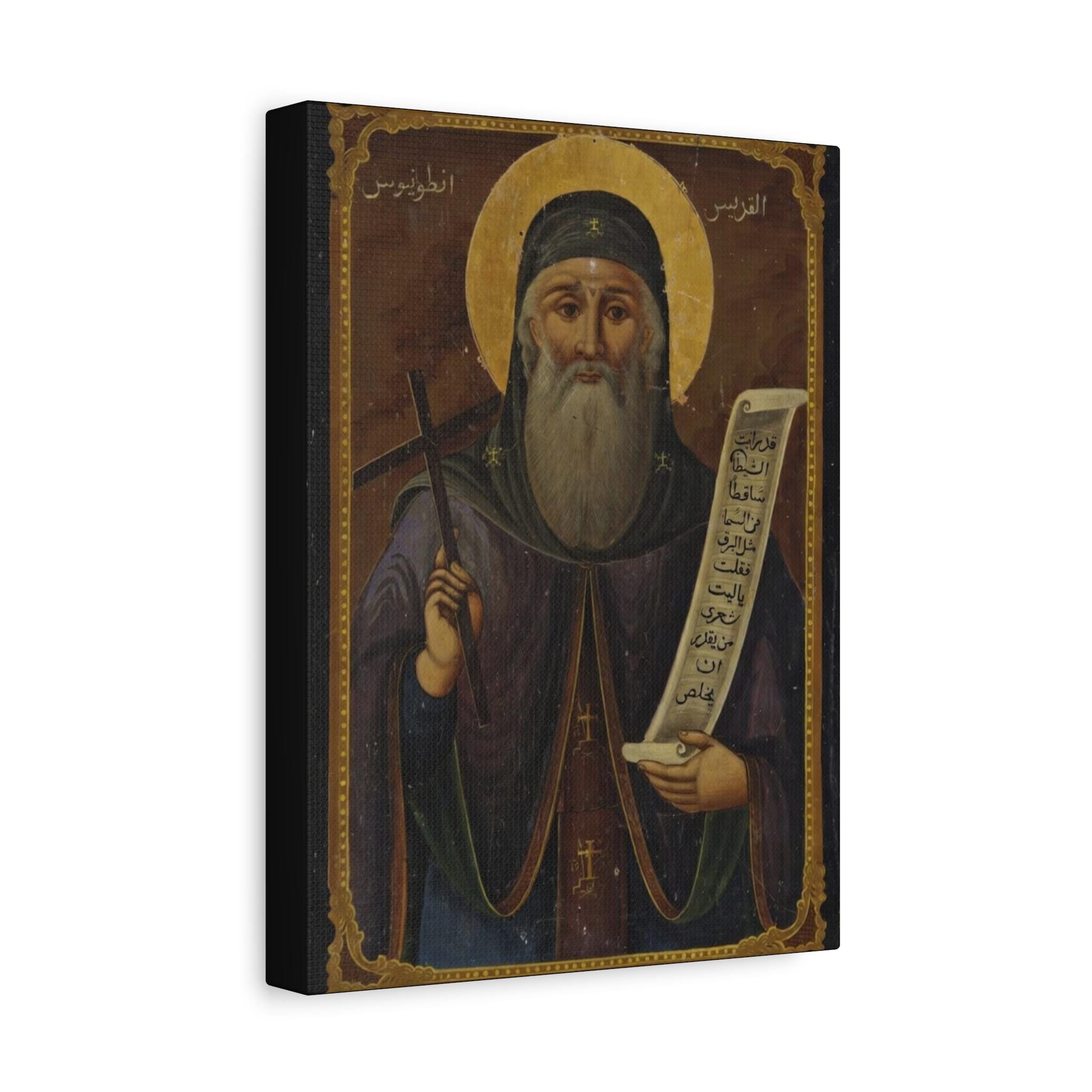
- The Sayings of the Desert Fathers — short, blunt, unforgettable wisdom from the monks who took discipline more seriously than almost anyone in Christian history.
- The Life of Saint Anthony — Saint Athanasius’s account of the man who founded Christian monasticism.
- Mount Athos Prayer Rope (Chotki) — the tool generations of Christians have used to keep count while praying the Jesus Prayer without ceasing.

Part III
The Roman Catholic Church
The Roman Catholic Church is the Latin Church — the Western expression of Catholicism, centered on the Bishop of Rome, the Pope, as the visible head of the universal Church. It is by far the largest single Christian body in the world, present on every continent, and it carries the institutional and missionary weight of two thousand years of continuous history. When most people in the West hear the word “Catholic” without qualification, this is what they picture: the Roman Rite Mass, Latin liturgical roots (even when celebrated in the vernacular), a celibate priesthood, and the Pope as the universal pastor of the Church.
Roman Catholic worship since the mid-twentieth century typically follows the Ordinary Form of the Mass, in the local language, though many parishes now also offer the older Traditional Latin Mass (the Extraordinary Form) either occasionally or as a dedicated community. Either way, the essentials that seekers are drawn to remain intact: a real altar, real incense in many parishes, kneeling for the consecration, sacramental confession, a fasting and abstinence discipline (lighter today than in the ancient Church, but still present, especially around Lent), and a belief that the Eucharist is truly the Body and Blood of Christ, not a symbol.
For a seeker coming from contemporary Protestant worship, the Roman Catholic Church is often the most immediately accessible entry point into ancient Christianity — a parish is almost certainly close to wherever you live, Mass times are frequent, and RCIA (the Rite of Christian Initiation of Adults) exists specifically to walk newcomers through the process of becoming Catholic at an unhurried pace, usually over the better part of a year.
Part IV
The Eastern Catholic Churches: Standing Between Rome and Byzantium
This is the part of the map that surprises almost every seeker, because almost nobody teaches it. Most people assume Christianity splits cleanly into “Catholic” and “Orthodox,” full stop. In reality, there is an entire family of churches occupying the space between those two categories: the Eastern Catholic Churches. There are twenty-three of them, and every single one is fully Catholic — in full communion with Rome, obedient to the Pope — while worshipping with the liturgy, calendar, theology, spirituality, and often married clergy of the Christian East.
Many of these churches were, historically, Orthodox churches that entered into union with Rome at some point in their history, most often preserving everything about their Eastern identity except their formal ecclesiastical allegiance. This is exactly why Eastern Catholics so often describe themselves as standing in a place between the Roman Catholic world and the Orthodox world: they pray like the Orthodox, they organize their spiritual life like the Orthodox, and many of their saints and monastic traditions are shared with Orthodoxy — but they are, canonically and sacramentally, Catholic, under the same Pope as a Roman Catholic in Rome or Los Angeles.
The largest and most recognizable is the Byzantine Catholic family, which includes the Ukrainian Greek Catholic Church, the Ruthenian Catholic Church, the Melkite Greek Catholic Church, the Romanian Greek Catholic Church, and several others — all worshipping according to the Byzantine Divine Liturgy of Saint John Chrysostom, the same liturgy used in Eastern Orthodox parishes, often word for word. Beyond the Byzantine family sit churches with entirely different liturgical roots: the Maronite Catholic Church (West Syriac tradition, discussed at length below), the Syriac Catholic Church and Chaldean Catholic Church (East Syriac tradition, rooted in ancient Mesopotamia), the Coptic Catholic Church (Alexandrian tradition), the Armenian Catholic Church, and the Syro-Malabar and Syro-Malankara Catholic Churches of India, tracing their roots to the apostle Thomas.
Each of these churches has its own patriarch or major archbishop, its own calendar, its own saints, and often its own married clergy discipline — and each is as fully Catholic as any Roman Catholic parish, simply expressing that same faith in a different ancient tongue. If the idea of ancient, incense-filled, chanted worship appeals to you, but you are not ready to leave communion with Rome, the Eastern Catholic churches may be the most overlooked and most fitting answer available — and there is a real chance one of them has a parish within driving distance of you that you have simply never noticed.


Part V
“Do I Have to Agree With Everything the Pope Says?”
If you were raised in a Protestant tradition, one hesitation almost always surfaces the moment Catholicism enters the conversation, whether it is Roman Catholic or Eastern Catholic: doesn’t that mean I have to agree with, and do, whatever the Pope says? It is a completely reasonable question, and the honest answer is more nuanced — and more freeing — than most people expect.
Think about how Americans relate to the presidency. The president is genuinely the head of the country. Citizens show him real respect for the office, regardless of who holds it. Citizens pray for him. Most citizens accept his authority to act within his constitutional role. But does that mean every citizen agrees with every decision, every policy, every offhand comment the president makes? Obviously not. Loyal, patriotic citizens disagree with their president constantly, sometimes sharply, without it making them any less loyal to their country.
Catholic life works in a genuinely comparable way, once you understand where the lines actually fall. Catholics owe the Pope real respect, real prayer, and real submission on matters he teaches with the full weight of his office on faith and morals — what the Church calls the exercise of the extraordinary or ordinary universal magisterium. That is a real thing, and it does matter. But the overwhelming majority of what any given pope says publicly — interviews, homilies, prudential opinions on politics or policy, personal reflections — carries no such binding weight at all. Catholics in good standing disagree with popes on prudential matters all the time, and always have. Loving the Pope, praying for him, and respecting the office does not require pretending every remark he makes is beyond question. It never has.
This distinction is exactly why so many Protestants find their fear of “papal control” dissolves once they actually study what papal authority covers. It is real. It is also far narrower, and far less totalizing, than the caricature most people grow up with.
Part VI
Married Priests and Celibate Priests: Neither Is Better
Here is a real and important difference, and it is worth understanding honestly rather than choosing a side: the Roman Catholic Church requires celibacy of its priests (with rare, narrow exceptions), while the Eastern Catholic Churches and the Eastern Orthodox Church have historically ordained married men to the priesthood as a matter of course. In both East and West, bishops are drawn from the celibate or monastic clergy; the difference concerns parish priests specifically.
Neither approach is more faithful, more serious, or more spiritual than the other — both are ancient, both are defensible, and both shape the relationship between a priest and his people in real, tangible, and different ways. It is worth thinking through honestly, because it may matter to you more than you expect once you are actually choosing a parish.
A celibate priest belongs, in a real sense, entirely to his flock. His time, his household, his evenings are not divided between a family and a parish. Many people experience this as a kind of radical availability — he is there, fully, whenever he is needed, with nothing else pulling at his attention. What he may not offer you, simply by the nature of his vocation, is the lived, from-the-inside experience of raising children, navigating a marriage through hard seasons, or managing a household budget. He can offer deep theological and pastoral wisdom on these things without ever having lived them personally.
A married priest lives inside exactly the pressures most of his parishioners live inside. He knows what it is to be exhausted by a newborn at two in the morning and still have to show up and lead. He knows what it costs to keep a marriage faithful and warm over decades. Many people find this deeply relatable — a batushka or presbyter who has walked the same road they are walking. What a married priest cannot offer is the same undivided availability a celibate priest can; his own family rightly needs him too, and there will be moments where that tension is real and visible.
Whether this distinction matters to you — and if so, which way you lean — is a genuinely personal question, and there is no wrong answer. Some people want a priest wholly set apart. Some people want a priest who has lived exactly what they are living. Both are legitimate reasons to be drawn toward one tradition or another, and neither reason should embarrass you.

Part VII
The Eastern Orthodox Church
The Eastern Orthodox Church is the communion of Christians who did not accept Rome’s claims of universal papal jurisdiction as those claims developed across the first millennium, and who trace their bishops’ authority back through unbroken apostolic succession without a single earthly head. Rather than one pope, Orthodoxy is organized as a communion of self-governing (autocephalous) churches — the Greek Orthodox Church, the Russian Orthodox Church, the Serbian Orthodox Church, the Romanian Orthodox Church, the Antiochian Orthodox Church, the Orthodox Church in America, and several others — each led by its own patriarch or synod of bishops, all recognizing each other as sharing the same faith and sacraments, all united by shared doctrine, shared sacraments, and a shared understanding of the ecumenical councils of the first millennium, rather than by obedience to a single earthly ruler.
Orthodox worship centers on the Divine Liturgy, most commonly that of Saint John Chrysostom, chanted rather than spoken, saturated in incense, filled with icons on every wall, and observing one of the strictest and most consistent fasting disciplines left in Christianity. Confession, veneration of the saints, and the belief in the real, substantial presence of Christ in the Eucharist are all held in common with Roman and Eastern Catholics, even as real theological differences remain between East and West on questions like the filioque clause, the nature of papal authority, and the precise understanding of purgatory.
The Cultural Layer — and Why It Is Changing
Because Orthodoxy grew for centuries inside specific nations and empires, it is honest to say that many Orthodox parishes still carry a real ethnic character — Greek, Russian, Serbian, Antiochian Arab, Romanian, and more, each with its own customs, languages, and even different musical traditions layered onto the same underlying liturgy. A seeker with no Greek or Slavic heritage sometimes worries this makes them an outsider before they even walk in the door. In practice, converts are welcomed constantly, and the liturgy itself is frequently celebrated partly or entirely in English even in historically ethnic parishes. This is discussed at greater length below, but it is worth saying plainly here: the cultural layer is real, it is also loosening, and it should not be mistaken for a locked door.
Part VIII
Western Rite Orthodoxy: The Ancient West, Inside the East
Most seekers have never heard of this option, and it deserves to be far better known. Western Rite Orthodoxy refers to parishes and communities inside canonical Eastern Orthodox jurisdictions — most notably the Antiochian Orthodox Christian Archdiocese, which established a formal Western Rite Vicariate in 1958, and to a smaller extent the Russian Orthodox Church Outside Russia — that worship using traditional Western liturgical forms, such as older Latin-descended Mass rites and Sarum or Gallican-influenced liturgies, rather than the Byzantine Divine Liturgy.
In other words: the liturgical shape often feels recognizably Western, sometimes strikingly close to a pre-1970s Roman Mass in its structure and language, while the doctrinal authority, sacramental communion, and ecclesiastical governance are entirely Eastern Orthodox. A Western Rite Orthodox parish is in full communion with the Orthodox Church, under an Orthodox bishop, holding Orthodox doctrine on the papacy, the filioque, and the councils — while praying in a form your grandparents, had they been Roman Catholic before the mid-twentieth century, might recognize instantly.
This is a genuinely small movement — a modest number of parishes concentrated mostly in North America and parts of Western Europe, nothing like the scale of mainstream Byzantine-rite Orthodoxy. But for a specific kind of seeker — someone who loves the older Western liturgical forms and structure, but who has come to hold Eastern Orthodox convictions about authority and doctrine — it is a real, canonical, and often overlooked home. It is worth knowing this option exists before you assume your only choices are Byzantine Orthodoxy or the Roman world entirely.
Part IX
The SSPX: Keeping the Old Latin Mass Alive
For seekers specifically drawn to the pre-Vatican II form of Roman Catholic worship — the older Tridentine Mass, entirely in Latin, celebrated ad orientem, with the older calendar, older devotions, and older disciplines intact exactly as they existed before the liturgical reforms of the 1960s and 1970s — the Society of Saint Pius X, known as the SSPX, is where that worship has been most consistently and completely preserved, uninterrupted, for over half a century.
Founded in 1970 by Archbishop Marcel Lefebvre, the SSPX exists specifically to train priests in, and offer the faithful, the traditional Roman Rite as it stood before the Second Vatican Council’s reforms. Its canonical relationship with Rome has been genuinely complicated and unresolved since 1988, when Lefebvre consecrated four bishops without papal mandate and was excommunicated along with them — a status later lifted for the bishops in 2009, even as the society’s broader canonical situation remains, in Rome’s own language, “irregular” rather than either fully regularized or formally schismatic. Its approximately 700 priests and roughly 600,000 faithful worldwide are not personally excommunicated, and its Masses, while canonically irregular, are held by Catholic theology to be sacramentally valid.
What this means practically for a seeker: the SSPX is a genuine option for experiencing the pre-Vatican II Roman Catholic tradition exactly as it was, celebrated with total seriousness and reverence, by priests and communities who have organized their entire lives around preserving it. It is also, honestly, a more complicated canonical situation than either the Roman Catholic parish down the street or an Eastern Orthodox or Eastern Catholic parish — worth understanding clearly before you commit to it as your spiritual home. For the full picture of where things currently stand, including the events unfolding through 2026, our complete guide to the SSPX crisis of 2026 lays out the canon law, the history, and the open questions in detail.
Part X
The Maronites: The Church That Missed the Schism
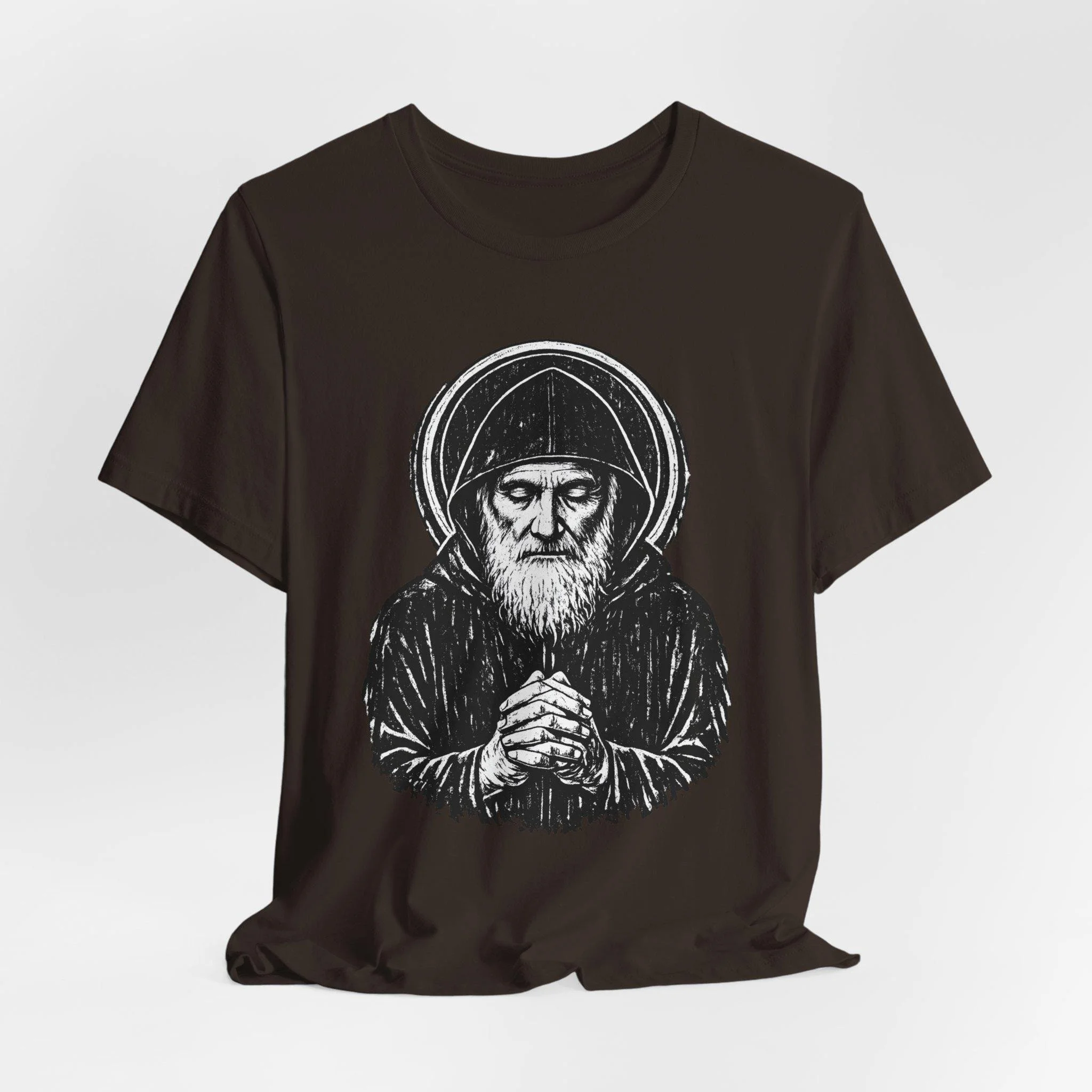
Of every tradition covered in this guide, the Maronite Church has the single most remarkable origin story — and it is one almost no Western Christian is ever taught. The Maronite Church traces its roots to Saint Maroun, a Syriac hermit and monk who died around the year 410, and to the monastic community that grew up around his memory in the mountains of Lebanon. As Islamic conquest swept through the region in the seventh century, the Maronite community withdrew for safety deep into the mountain valleys of Lebanon, cut off from the wider currents of the Christian world in order to survive.
That withdrawal happened to place them in near-total isolation during precisely the centuries when the tensions between Rome and Constantinople were hardening into the formal rupture of 1054 — the Great Schism that divided Roman Catholic and Eastern Orthodox Christianity. The Maronites, hidden in their mountains, were not present for the councils, the excommunications, or the slow theological drift that produced that division. They were simply not in the room where it happened.
When the Crusaders arrived in the Levant at the end of the eleventh century, they found the Maronite community still there, still Christian, still holding a liturgical and spiritual tradition of genuine Eastern origin — and still, remarkably, in a state of unbroken communion with Rome that had simply never been disrupted, because the Maronites had never been part of the dispute that caused the disruption in the first place. Formal, explicit reaffirmation of that union with Rome followed in the centuries after, but the Maronites themselves have always maintained that their communion with the Holy See was never actually broken to begin with; they simply were not present for the schism that separated everyone else.
This is what makes the Maronite Church genuinely unique among every tradition discussed in this guide: it is a Church of authentic Eastern origin, with an ancient Syriac liturgical tradition, married clergy, its own patriarch, and centuries of monastic and ascetic spirituality every bit as rigorous as anything found in Eastern Orthodoxy — and it is, at the same time, in full, complete, uninterrupted communion with Rome. It did not choose reunion the way the Byzantine Catholic churches later did. It simply never left. For a seeker who wants the full weight of Eastern spirituality, discipline, and liturgy, without the historical complexity of a later reunion, the Maronite Church offers something no other tradition in this guide can claim in quite the same way.


Part XI
Side-by-Side Comparison
No single table can capture centuries of theology, but this is meant as an honest, plain-language starting point — a way to see the major shape of each tradition at a glance before you go visit for yourself.
| Tradition | In Communion With Rome? | Liturgical Family | Married Clergy? | Governance |
|---|---|---|---|---|
| Roman Catholic | Yes — this is Rome | Latin / Roman Rite | No (rare exceptions) | The Pope |
| Eastern Catholic | Yes | Byzantine, Syriac, Coptic, Armenian, and more | Often, yes | Own Patriarch/Archbishop, in communion with the Pope |
| Eastern Orthodox | No | Byzantine (mainly) | Yes, for parish priests | Autocephalous patriarchs and synods; no single head |
| Western Rite Orthodoxy | No | Western liturgical forms | Yes, for parish priests | Under an Orthodox bishop/jurisdiction |
| Maronite Catholic | Yes — never broken | West Syriac | Yes, for parish priests | Maronite Patriarch, in communion with the Pope |
| SSPX | Canonically irregular | Pre-Vatican II Roman Rite | No | Its own Superior General; not fully regularized with Rome |
Part XII
How to Visit Each Tradition (Without Anxiety)
Once you know which traditions exist, the next question is almost always the same: how do I actually go see one for myself without embarrassing myself? The answer, across every tradition on this list, is simpler than you think.
What to Wear and How to Behave
Modest, respectful clothing is always appropriate — nothing more complicated than what you would wear to any formal gathering. In most Eastern parishes, expect to stand for a large portion of the service; pews are less universal in the East than in Western churches, though many parishes do provide seating. You will see people crossing themselves at different points, bowing, and venerating icons on the way in. You are not expected to copy this perfectly on your first visit. Simply standing quietly and observing respectfully is entirely acceptable.
Communion
In every tradition covered here — Roman Catholic, Eastern Catholic, Eastern Orthodox, and SSPX alike — Communion is generally reserved for members of that specific church in good standing, not open to all visitors regardless of background. This is not a judgment on you; it reflects each tradition’s theology of what the Eucharist actually is and what full communion means. You are always welcome to come forward for a blessing instead (in most Orthodox and Eastern Catholic parishes, simply crossing your arms over your chest signals this to the priest), and no one will think less of you for doing so.
Finding a Parish Near You
Most people are surprised how close an ancient parish actually is. Beyond the Roman Catholic parish that is likely a short drive from almost anywhere in the country, Eastern Catholic and Eastern Orthodox parishes exist in far more towns and cities than most seekers assume — a simple search for “Orthodox Church near me” or “Byzantine Catholic Church near me” frequently turns up an option within a reasonable drive, even in places that do not feel like obvious immigrant or ethnic centers. It is worth the search before assuming ancient worship is simply unavailable where you live.
Part XIII
You Will Not Know What to Do — And That Is Completely Fine
It is completely normal to feel nervous walking into an ancient liturgy for the first time. You will not know when to stand, when to sit, when to cross yourself, or what half the words mean. This is universal — every single convert and every single lifelong member once stood exactly where you are about to stand, not knowing any of it either.
Here is what almost no first-time visitor expects: the people around you are not watching to judge you. They are, more often than not, quietly delighted to see you there. Longtime parishioners in these traditions consistently describe the same feeling when they notice a newcomer trying, imperfectly, to follow along — it does something good in them, a small renewal of their own gratitude for a faith they sometimes take for granted. Nobody is going to laugh at you for crossing yourself at the wrong moment or standing when everyone else kneels. If anything, you will likely find someone quietly nearby, before or after the service, offering to explain something you looked confused about, simply glad you came.
It takes time to learn the rhythms of ancient worship — months, sometimes longer, for it to feel natural in your body rather than something you are consciously tracking. That is expected, not shameful. No one arrives already knowing this. Whatever tradition you visit, whatever mistakes you make on your first, second, or twentieth visit, the answer to whether you are welcome is the same everywhere in this guide: yes. Completely. Every time.
Part XIV
Is There Such a Thing as American Orthodoxy?
It is fair to say Orthodoxy in America is slowly, visibly becoming its own thing — not abandoning its Greek, Russian, Serbian, or Arab roots, but growing a genuinely American expression alongside them. The Orthodox Church in America (OCA) was specifically established with an eye toward exactly this: an Orthodoxy that is not primarily defined by any single immigrant homeland, celebrated largely in English, open and legible to converts from any background. Antiochian parishes, too, have become known for a particularly convert-friendly culture, with English-language liturgy now the norm in the great majority of American parishes across nearly every jurisdiction.
This is not a departure from historic Orthodoxy; it is exactly what Orthodoxy has always done as it moved into new nations across its history — Slavic Orthodoxy did not exist before missionaries brought Byzantine Christianity north, and it eventually became something recognizably its own while remaining fully Orthodox. The same slow process is visibly underway in America right now. If you visit an Orthodox parish and worry you will always be an outsider looking in at someone else’s inherited culture, know that the tradition itself is actively becoming something you can be a full, unremarkable part of — not someday, but already, in a great many parishes today.
Part XV
Bringing a Spouse Into the Journey
For many people, this search is not a solitary one. It happens alongside a spouse, and sometimes one partner is ready to walk toward an ancient tradition well before the other is. That gap does not have to become a source of conflict. Every tradition covered in this guide holds a rich, serious theology of marriage and family — and learning to navigate a shared spiritual search as a couple, rather than as two people moving at different speeds, is itself part of the discipline these ancient faiths ask of us.
Whether you and your spouse are exploring these traditions side by side, or one of you is further along the road than the other, our Christian marriage coaching helps couples build a marriage anchored in real theology — grounded in Ephesians 5:25, Christ’s own self-giving love for His Church, as the model for a husband’s love for his wife. Jeremy works with husbands, Ashley works with wives, and together we help couples move through seasons of spiritual searching as a team rather than at odds.

Part XVI
Frequently Asked Questions
You Do Not Have to Decide Today. You Just Have to Go Look.
Somewhere within driving distance of you, this Sunday, there is very likely an altar instead of a stage — incense instead of amplifiers, a liturgy instead of a set list, and a room full of people who fasted this week and will welcome you without a single question about whether you belong. Roman Catholic, Eastern Catholic, Eastern Orthodox, Western Rite Orthodox, Maronite, or SSPX — every one of these rooms holds something real, and every one of them is worth walking into at least once.
Visit more than one. Bring your questions. Stand in the back if you need to. Nobody expects you to already know what you’re doing, and everybody there remembers what it felt like the first time they didn’t either.
Explore Our Full Store →