How to Stop Worrying: A Christian Guide Through Scripture, the Jesus Prayer & Eternal Perspective
Personal Testimony • Scripture • Christian Spiritual Tradition • The Beatitudes
How to Stop Worrying: A Christian Guide Through Scripture, Providence & Eternal Perspective
I keep a bowl of white sand in my house, a few pounds of it, somewhere around eight million grains. Mixed into it are a handful of naturally colored grains, one for me, one for my wife, and one for each of our four children. Here is what counting sand taught me about anxiety, about joy, and about why Jesus told us not to worry about tomorrow.
How to Stop Worrying — At a Glance
- The Bowl
- A few pounds of white sand • roughly 8 million individual grains • 6 naturally colored grains for my family
- The Math
- Each grain represents 100 years • the whole bowl represents roughly 800 million years
- The Thesis
- If it doesn’t affect your salvation, what does it actually matter?
- Scripture Anchor
- Matthew 6:25-34 • “Do not worry about tomorrow”
- The Key Distinction
- Happiness is a choice you make • joy is fruit of the Holy Spirit
- Why It Works
- Not a coping trick • actual participation in the peace and providence of God
The Bowl of Sand: How I Learned to Stop Worrying
I keep a bowl of sand in my house. Not for decoration. A few pounds of it, ordinary sand, the kind you would not look at twice on a beach. I asked an AI to work out roughly how many individual grains are actually sitting in that bowl, based on the type of sand and the weight of it. The number that came back was somewhere around eight million grains.
The sand itself is white. Mixed into it are a small number of colored grains, one for me, one for my wife, and one for each of our four children, each grain a different color. I bought small bags of colored sand specifically to add them, one color for each person in our family, so that six single grains would sit inside the millions of white ones surrounding them. Six grains, out of roughly eight million. Each one represents an actual span of years on this earth, sitting in a bowl with millions of others, indistinguishable most of the time. I stir the bowl sometimes and go months without spotting any of them again. They are in there. They have not disappeared. But six grains among a number so large that losing sight of them for a season is the ordinary state of affairs, not the exception.
I think about each grain in that bowl as roughly a hundred years of existence. Not my existence specifically, just existence itself, the vast sweep of time that dwarfs any single life. If each of the roughly eight million grains represents a hundred years, the whole bowl represents something in the neighborhood of eight hundred million years. That is not a number the mind holds onto easily, which is exactly the point of the exercise. My family’s six grains, and every other life those millions of white grains could represent, sit inside a span of time so large that a single human lifetime barely registers as a fraction of a fraction of it. That is what the bowl is for. It is not a hobby. It is a discipline, the same kind of discipline the Psalmist had in mind when he asked God to “teach us to number our days, that we may gain a heart of wisdom” (Psalm 90:12). My family and I just happen to number ours in grains of sand instead of a calendar.
Here is why that bowl matters for anxiety, and why I think it might matter for yours too. Almost everything we worry about, we worry about because we are looking at it from inside the one colored grain. From in here, a bad diagnosis, a strained marriage, a job that is falling apart, a retirement account that is not where it should be — all of it looks enormous, because it is the only thing we can see inside this single grain we call life on earth. Step back far enough to see the whole bowl, and the proportions change completely. Not because the pain stops being real. It changes because you start to see how much bigger the bowl actually is than the grain you have been staring at.
Part II
What Convinced Me This Was Real
None of what follows in this article works as mere philosophy for me. It works because of something that happened to me once, a mystical experience that I will not try to reconstruct here, because the value of it was never in the specific details. The value was in what it left behind: I no longer had room for doubt that God is real and we are eternal beings that will live forever with God.
That single certainty rearranged everything else about how I live my life. If God is real, then everything He has told us about what comes after this life must be real as well. If Heaven is real, and like you, I know it is, then we are not creatures who live for seventy or eighty years and then stop existing. We are eternal beings having a temporary human experience. Our life on this earth is not the whole of us. It is a fraction of us, a beginning, one colored grain in a bowl that holds far more than we can see from where we are standing.
I do not say this to convince you that you should have had the same experience I had, or that faith requires one. Most Christians throughout history have believed without ever experiencing a mystical experience, and their faith is not lesser for it. I only say it because it explains where the rest of this article comes from. I am not describing a coping mechanism I invented to get through hard days. I am describing what I actually believe to be true about reality, and trying to work out what it means for the anxiety and stress that used to run my life before I understood it.


Part III
What Jesus Actually Said About Worry
On many nights, I fall asleep listening to the Beatitudes, read on the Hallow app by Jonathan Roumie, the actor who plays Jesus in The Chosen. I listen because I love falling asleep to it, because listening to that while praying and falling asleep that way helps me become a better Christian and live my life better, and because it is the last thing in my mind before sleep rather than whatever the day happened to leave there. But in the middle of listening for that reason, I keep noticing the same thing: Jesus, in the middle of the most concentrated moral teaching He ever gave, took time to address anxiety directly, by name. He did not treat it as a footnote. In one of the most important teachings He gave during His time on earth, a sermon He knew would exist for the whole of human history, He chose to put real focus on stress and anxiety. If Jesus taught it, in that sermon, in those terms, it deserves our closest attention, and it seems to me that this is exactly the part we most often leave out.
The core of it is Matthew 6:25-34. “Therefore I tell you, do not worry about your life, what you will eat or what you will drink, nor about your body, what you will wear… Look at the birds of the air: they neither sow nor reap nor gather into barns, and yet your heavenly Father feeds them. Are you not of more value than they?” He goes further than simply telling us to stop. He gives the reasoning: “Which of you by worrying can add a single hour to his life?” Worry does not extend anything. It does not solve anything. It only spends today’s peace on tomorrow’s uncertainty, which is exactly the trade He tells us to stop making: “Do not worry about tomorrow, for tomorrow will worry about itself. Sufficient for the day is its own trouble.”
Saint Paul gives us the practical mechanism for actually doing what Jesus commands, in Philippians 4:6-7: “Do not be anxious about anything, but in every situation, by prayer and petition, with thanksgiving, present your requests to God. And the peace of God, which transcends all understanding, will guard your hearts and minds in Christ Jesus.” Notice what that verse does not say. It does not say figure out how to calm yourself down. It says God’s own peace, a peace that exceeds human understanding, will do the guarding. That is not a technique you perform. It is something you are given. Saint Peter puts the same instruction even more simply: “Cast all your anxiety on him because he cares for you” (1 Peter 5:7). We have gathered a fuller set of these in our guide to Christian prayers for anxiety, if you want more than what fits here.
Luke records Jesus giving this same teaching a second time, in almost the same words, but he keeps one line Matthew leaves out, and it might be the most tender thing Christ says about worry anywhere in the Gospels: “Fear not, little flock, for it is your Father’s good pleasure to give you the kingdom” (Luke 12:32). Everything before that verse is reasoning, birds, lilies, barns, the math of why worry is pointless. This is not reasoning. It is affection. He is not simply telling a crowd not to be afraid. He is calling them, calling us, His little flock, and saying the Father wants to give us the kingdom the way a parent wants to hand a child something good, not the way a judge grudgingly grants a request. That single word, little, is doing more work than it looks like it is doing. It is how you talk to someone you love, not how you address a crowd you are managing. On the same night He would soon be arrested, Jesus said something in the same spirit to His disciples, and I think it belongs right next to this verse: “Peace I leave with you; My peace I give you… Let not your hearts be troubled, neither let them be afraid” (John 14:27). Notice He does not say be at peace, as though it were an instruction to obey. He says My peace, something He already possesses, something He is handing over. That is the same grace Philippians 4:7 describes a few verses earlier in this article, a peace you receive rather than manufacture, except here it comes straight from His own mouth, in His own words, on the last ordinary night He had left.

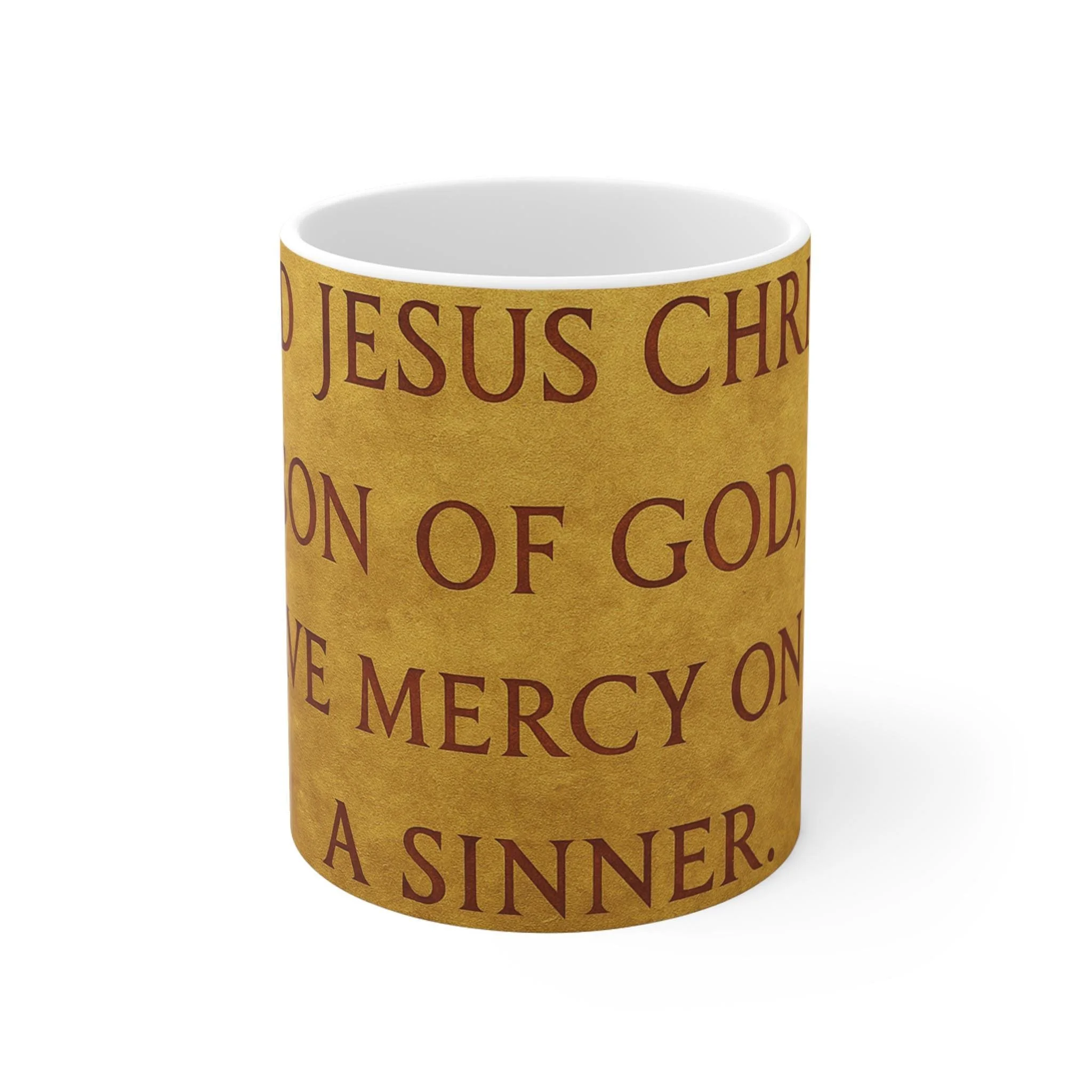
Learning that did not happen for me just by reading the verses. It happened because I noticed something about how my own stress actually worked. Most of what I was anxious about was never as large as it felt. It grew large because I kept thinking about it, turning it over, giving it more attention, and that attention itself is what fed it and made it bigger than it actually was. Once I understood that, I started doing something specific whenever my head filled up with worry: I would pray, using the name of Jesus Christ to push the stress back out of my mind, a short prayer some Christians call the Jesus Prayer — “Lord Jesus Christ, Son of God, have mercy on me.” I remember one of the first times I tried it. I was genuinely worked up about something, turned to the prayer instead of the worry, and a few minutes later I could not remember what I had even been stressed about. In that moment I was not just relieved, I was filled with joy. I had heard people tell me to give my worries to Jesus my whole life, the way people say it as a nice sentiment without really expecting anything to happen. But it actually worked. I did not feel like I had simply prayed something away and moved on. I felt joy, real joy, almost as if my guardian angel were standing right beside me in that moment saying, "now you get it!" My mind had been making the problem far worse than it really was. The prayer removed the stress and put my heart and mind back where they belonged, pointed at God instead of the problem. It almost felt as if my stress and anxiety was a type of spiritual warfare that I had just learned how to combat with prayer.

Why This Actually Works: The Desert Fathers on Intrusive Thoughts
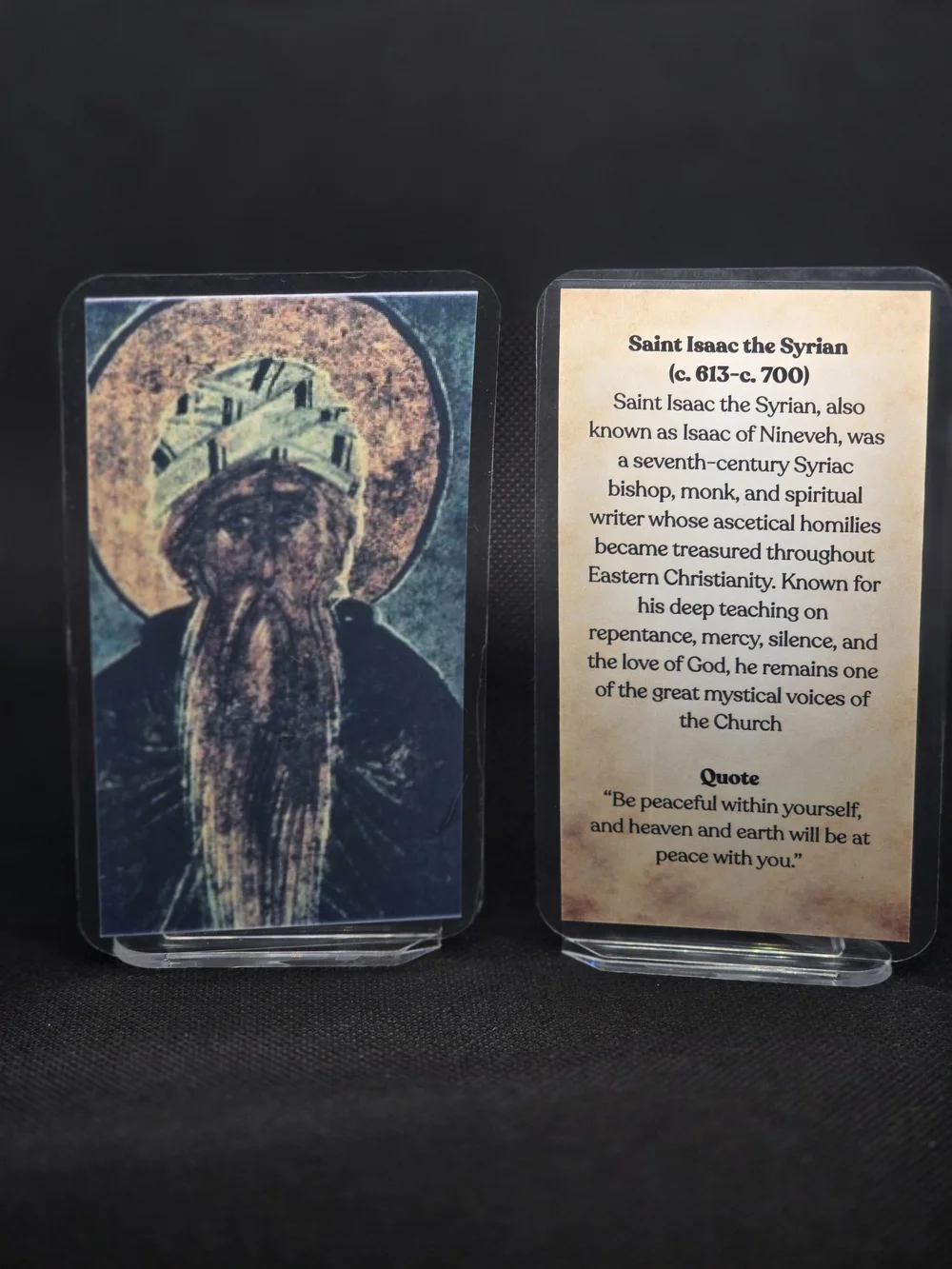
I did not know it at the time, but what I had stumbled onto has a name, and Christians have been writing about it for over sixteen hundred years. Evagrius Ponticus, a fourth century desert father, built an entire theology of the mind around what he called logismoi, the intrusive thoughts that arrive uninvited, unasked for, simply a fact of being human in a fallen world. His teaching was precise: the arrival of a thought is not the problem. What turns a passing thought into a passion that controls you is the mind seizing on it, dwelling on it, feeding it attention. That is exactly what I had noticed about my own anxiety, sixteen centuries after Evagrius wrote it down. The stress was never really the size it felt. It grew because I kept feeding it.
The Philokalia, the great collection of ascetical writing that gathers Evagrius and many others like him, calls the discipline of catching a thought before it takes root nepsis, watchfulness. This is not a specifically Eastern insight. Western spiritual writers describe the identical discipline in different words. Thomas à Kempis, the fifteenth century Catholic author of The Imitation of Christ, urged the same thing: guard the first movement of the mind, because a small spark neglected soon becomes a great fire. Whatever tradition names it, the mechanism is the same, and it is where the Jesus Prayer’s actual function becomes clear. It is not simply a comforting phrase to recite when things feel hard. It is a tool of watchfulness itself, a short repeated prayer specifically designed to occupy the mind at the exact moment an anxious thought arrives, so that the thought cannot find the empty space it needs to grow. What I discovered by accident in a stressful moment, watching a worry disappear a few minutes into praying, is precisely what spiritual writers across the whole Christian tradition have taught believers to do on purpose.
The Moment Before You Say Yes to a Worry
There is a distinction in Christian moral theology, worked out with particular precision by Saint Maximus the Confessor in the seventh century, that changed how I think about the anxious feeling itself. He separates the first involuntary flash of a feeling, what some writers call propatheia, from a full passion, which only forms once the will actually consents to dwell in that feeling and feed it. The first is not a choice. It happens to infants, to saints, to Christ Himself sweating blood in Gethsemane. It is simply what it means to have a nervous system in a fallen world. But there is a hinge point between the flash and the passion, a moment, often no longer than a breath, where the will either says yes to dwelling on the thought or does not. Nobody teaches you to notice that hinge point by accident. You have to be told it exists before you can catch yourself standing on it. Once I knew it was there, I started noticing it constantly, the exact instant a worry arrived and the exact instant, a half second later, when I either turned toward prayer or let the thought settle in and start unpacking its bags.
Underneath a great deal of my own anxious dwelling, when I am honest about it, was something less noble than concern. It was a quiet insistence that I needed to be the one holding the outcome together, that my vigilance was somehow load-bearing. Humility, in the older Christian sense the desert writers and later Catholic and Orthodox spiritual masters both use, is not thinking less of yourself. It is a truthful sizing of yourself, and a truthful sizing of yourself includes admitting you were never actually the one holding the outcome together in the first place. God was. That admission, oddly, is what makes the hinge point easier to catch. Pride keeps rehearsing the problem because pride believes rehearsing it is productive. Humility can let it go, because humility already knows whose job it was to carry to begin with.


Part IV
Why This Actually Works: Grace, Not Just Willpower
I want to slow down here, because I think this is the part most people skip, and it is the part that actually explains why any of the rest of this works. Scripture says something worth paying attention to for this purpose in 2 Peter 1:4, that believers are called to “become partakers of the divine nature.” Not admirers of God from a safe distance. Partakers. Christian writers across every branch of the Church have tried to put words to what that means. Some call it participation in divine life through grace. Some call it theosis. The vocabulary differs by tradition, but the underlying claim does not: God does not intend merely to forgive you and leave you exactly as you were. He intends to fill you with His own peace and His own joy until they stop being borrowed and start being genuinely yours.
That is why I do not think the Jesus Prayer, or any short prayer like it, is best understood as a psychological trick with religious language taped onto it. Meditation apps ask you to redirect your attention toward your breath. That is a real and sometimes useful technique, and it is not what is happening here. Prayer redirects your attention toward a Person, and asks that Person to actually do something: fill the space where the worry was with what He already possesses in full. Philippians 4:7 does not say figure out how to calm yourself down. It says God’s own peace, exceeding human understanding, will guard your heart and mind. That is not something you generate by technique. It is something you receive because you asked, and because grace meets a willing person halfway. Scripture puts that cooperation plainly in James 4:8: “Draw near to God, and he will draw near to you.” You do the drawing near. He does the rest.
This is also where divine providence belongs in the conversation, because providence is not the same claim as noticing. Matthew 10:29-31 tells us God notices the sparrow. Romans 8:28 goes further: “We know that in all things God works for the good of those who love him, who have been called according to his purpose.” That is not passive observation. That is active governance, God genuinely working every circumstance, including the ones that frighten you, toward a good end, while still leaving your will free and your choices real. It is possible to hold both without contradiction: that you are free, and that nothing that happens to you is happening outside of what God is actively working through. That combination, not either half alone, is what makes trust reasonable instead of naive.
Part V
The Math of Eternity: Anxiety in Light of Forever
Saint Paul did the same math I do with my bowl of sand, just without the bowl. “For our light and momentary troubles are achieving for us an eternal glory that far outweighs them all. So we fix our eyes not on what is seen, but on what is unseen. For what is seen is temporary, but what is unseen is eternal” (2 Corinthians 4:17-18). He is not minimizing suffering. He calls it real trouble. He is simply weighing it correctly, against something eternal, rather than treating the trouble as the whole of the scale.
James makes the same point about how short this life actually is: “What is your life? You are a mist that appears for a little while and then vanishes” (James 4:14). That is my colored grain, in Scripture, centuries before I ever colored one myself. And Paul instructs us on what to do with that knowledge in Colossians 3:1-4: “Set your minds on things above, not on earthly things… your life is now hidden with Christ in God.” That is a direct command to do, deliberately, what my bowl of sand does for me physically. Stop staring at the grain. Remember the bowl.
When I think about my own existence as eternal, genuinely eternal, not a figure of speech but the actual shape of what I am, it changes how I see the years I have left here. My life is going to pass by like a blink. Here and then gone, and before I know it, I will be spending an eternity in Heaven. The things that feel enormous right now, the job, the bills, the house, the retirement account, none of it survives the transition. Those things matter while I am here, I do not pretend otherwise. But do they really matter the way I sometimes treat them, as though my peace depended on them?
A hermit monk in the desert owns nothing. No car, no house, nothing beyond his cave or his cell. He wants for nothing and is full of joy, because what he has is not what he is missing, it is Christ, and that was never on the list of things he gave up. Christian writers across many centuries have called this detachment: not indifference to the world, and certainly not contempt for it, but freedom from being controlled by attachment to it. Thomas à Kempis writes of holding all things loosely for the sake of holding God firmly. Ignatius of Loyola, founder of the Jesuits, built an entire spiritual method around what he called holy indifference, the freedom to genuinely prefer nothing above God’s will, health or sickness, wealth or poverty, a long life or a short one. None of that is coldness. It is closer to what lets a person love something fully without needing it to survive in order to remain at peace.

I think about it this way. If I lost everything today, if I came home and found my house had burned to the ground, I would grab my wife, kiss her, and tell her how much I love her and how happy I am simply to be holding her. Because my marriage is a tool for my salvation. Loving my wife as Christ loves the Church affects my salvation. The house never did. I can be genuinely happy for the memories we made inside that house, but the house was never the source of that happiness, and neither were the memories, not really. It was all just stuff, and stuff is not something you can carry into Heaven with you. So I come back to the same question every time: if it doesn’t affect my salvation, what does it actually matter? Jesus knows exactly how short this life is, because He made time itself. He is not asking us to worry less because worry is unpleasant. He is asking us to worry less because, measured against what is actually coming, the things we worry about do not weigh what we think they weigh.
Here is something worth noticing about most of what actually keeps us up at night. It is rarely the enormous, dramatic thing. It is the small stuff, an awkward conversation you have to have tomorrow, a bill that is a little too close to the edge, a symptom that is probably nothing. Part of what makes that kind of worry so persistent is a quiet sense that it is too small and too ordinary to bring to God, that He has bigger things to attend to than your specific, unglamorous problem. Christ answers that exact assumption in Matthew 10:29-31. “Are not two sparrows sold for a penny? Yet not one of them will fall to the ground outside your Father’s care… So don’t be afraid; you are worth more than many sparrows.” A sparrow, in His day, was about the cheapest thing sold at market, two of them for a single coin, the kind of animal nobody thought twice about. Jesus is not picking an impressive example. He is deliberately picking the smallest, least significant thing He can find, and saying that not even one of those falls without the Father knowing. If God’s attention reaches something with no market value at all, then the small, unglamorous thing you are actually anxious about tonight was never too minor for Him to care about either. The same God who holds eight hundred million years of grains of sand in a bowl, in the small image I use for my own family, also holds every sparrow that falls. That is not a small God managing a small concern. That is a God whose attention scales to the smallest bird and the largest span of eternity at the same time, and who has told us plainly that our worth to Him is not in question.
Part VI
Living Inside the Unknowing
Job never got an explanation. I want to sit with that for a moment, because it is easy to read past it. He asked for one, repeatedly, across chapter after chapter, and when God finally answers him out of the whirlwind, God does not explain a single thing about why the suffering happened. He asks Job questions instead, about the foundations of the earth, the storehouses of snow, the wild donkey and the ostrich, question after question Job cannot answer. And Job’s response afterward is not satisfaction at finally understanding. It is something else entirely: “I had heard of you by the hearing of the ear, but now my eye sees you” (Job 42:5). He did not receive an answer. He received an encounter, and the encounter was enough. That is close to what happened to me in my own mystical experience, the one I described earlier without trying to reconstruct the details. For however briefly I was in that presence, the things of this world that had been gripping me simply stopped gripping me. Not because anything had been explained. Nothing was explained. It was that I had seen, or sensed, something large enough that the grip those things had on me could not survive being that close to it. Job’s questions did not get answered either. They got outweighed.
Christian spiritual writers, across very different centuries and very different traditions, have made room for exactly this kind of not-knowing, and treated it as something other than defeat. An anonymous English mystic of the fourteenth century wrote of a “cloud of unknowing” that sits between the soul and the full comprehension of God, a cloud that is not meant to be argued through but entered in humility and love. Earlier writers in the East spoke of approaching God through a kind of luminous darkness, a nearness that comes not from grasping God intellectually but from standing, unafraid, in front of what cannot be fully grasped. Different centuries, different vocabularies, the same discovery: some of the most important trust a person will ever place in God is trust that has to survive without a complete explanation attached to it.
This matters enormously for anxiety, because so much of anxiety is really a demand for certainty before we are willing to be at peace. We want to understand the diagnosis, the outcome, the timeline, the reason, before we allow ourselves to rest. But the deepest Christian teaching on suffering never actually promises that kind of understanding. It promises Someone trustworthy standing in the middle of what remains unexplained. That is closer to what finally lets a person stop needing to understand everything about someone they already trust completely, and simply trust them anyway, because of who they already know them to be.
Part VII
Happiness Is a Choice, Joy Is a Gift
I have learned to treat happiness as a choice. Not in the sense that difficulty disappears if I decide to smile through it, but in the sense that in almost any circumstance, there is a good worth focusing on, and I can choose to focus on it instead of on what is broken. That choice is available to me at every single moment, no matter what the moment contains. Every day, at every single moment of that day, we can always choose happiness. It never stops being an option, no matter what the day has actually handed us.
But I have also learned that happiness and joy are not the same thing, and the difference matters more than it sounds like it should. Happiness can be earthly. It rises and falls with circumstance. Joy is different. Scripture lists joy as fruit of the Holy Spirit, alongside love, peace, and patience (Galatians 5:22-23), which means it is not something you manufacture through positive thinking. It grows out of something else being true, the same way fruit grows out of a healthy tree rather than being nailed onto a dead one. I have come to use my own mood as a kind of gauge for this. When I notice myself full of joy, I take that as a sign that I am abiding closely with the Holy Spirit. When I notice myself anxious, angry, or low, I do not treat that as proof of failure. I treat it as an invitation to pray, the same instruction Paul gives in 1 Thessalonians 5:16-18: “Rejoice always, pray continually, give thanks in all circumstances.” He puts rejoicing and praying side by side on purpose. If I am upset or sad, I can turn my attention to God and give Him thanks instead, and the love of God, and the happiness that comes from that love, outweighs anything earthly I could be upset about in the first place.
I want to be careful here, because this truth can be misapplied in a way Scripture never intends. The point is not that sadness or grief means the Holy Spirit has left you, or that a Christian who is struggling is doing something wrong. Christ Himself wept at the tomb of Lazarus (John 11:35) and was described as deeply distressed in Gethsemane, and neither moment is evidence that He was ever without the Spirit. James makes the actual claim precisely: “Consider it pure joy, my brothers and sisters, whenever you face trials of many kinds” (James 1:2-4). Joy sits alongside the trial. It does not require the trial to be absent. The prophet Habakkuk says the same thing in the most extreme terms available to him, after listing total agricultural collapse, no fruit on the trees, no flocks in the fields: “Yet I will rejoice in the Lord, I will be joyful in God my Savior” (Habakkuk 3:17-18). Joy is available regardless of circumstance. That is the claim. Not that circumstance stops mattering, and not that grief is a spiritual failure.
Is Feeling Anxious Actually a Sin?
Christian moral theology has a precise answer to this, drawn from writers like Saint Maximus the Confessor and echoed in later moral theology across both East and West. It distinguishes between the first involuntary movement of a feeling, the flash of fear or worry that rises before you have any say in the matter, and a full passion, which forms only once the will consents to dwell in that feeling and feed it. The first is simply what it means to be human in a fallen world. It is not sin. It happens to infants, to saints, to Christ Himself in Gethsemane. What determines whether it becomes something else is what you do in the moment after it arrives, whether you feed it with attention the way I used to feed my own anxious thoughts, or turn immediately to prayer the way a short repeated prayer trains a person to do. Feeling a flash of anxiety is not a spiritual failure. Building a home for it to live in is the part Scripture calls us away from. If you want the wider list of saints the Church has turned to for this exact struggle, we keep an unofficial list of patron saints for mental health, anxiety, and trauma that goes further than the handful named here.
Is My Stress Pointing at Earthly Treasure, or Heavenly Treasure?
I have started using my own stress as a gauge of something more specific than just my general closeness to the Holy Spirit. When I notice I am stressed, I ask myself a direct question: is this a worldly stress? Things of this world do not actually matter in the way stress convinces me they do, and if I am stressing over something of this world, that tells me I am too attached to earthly possessions and earthly concerns, rather than heavenly ones. Jesus draws this exact line Himself, in words I keep coming back to: “Do not store up for yourselves treasures on earth, where moths and vermin destroy, and where thieves break in and steal. But store up for yourselves treasures in heaven, where moths and vermin do not destroy, and where thieves do not break in and steal. For where your treasure is, there your heart will be also” (Matthew 6:19-21). My stress tells me, more honestly than I usually want to admit, exactly where my treasure actually is. If I am anxious about earthly treasure, houses, income, appearances, position, the anxiety itself is the evidence that my heart has wandered toward the wrong treasure. Reorienting the stress back toward heavenly treasure, toward my salvation and my family’s, is not just a coping method. It is the thing Christ was actually telling us to do.

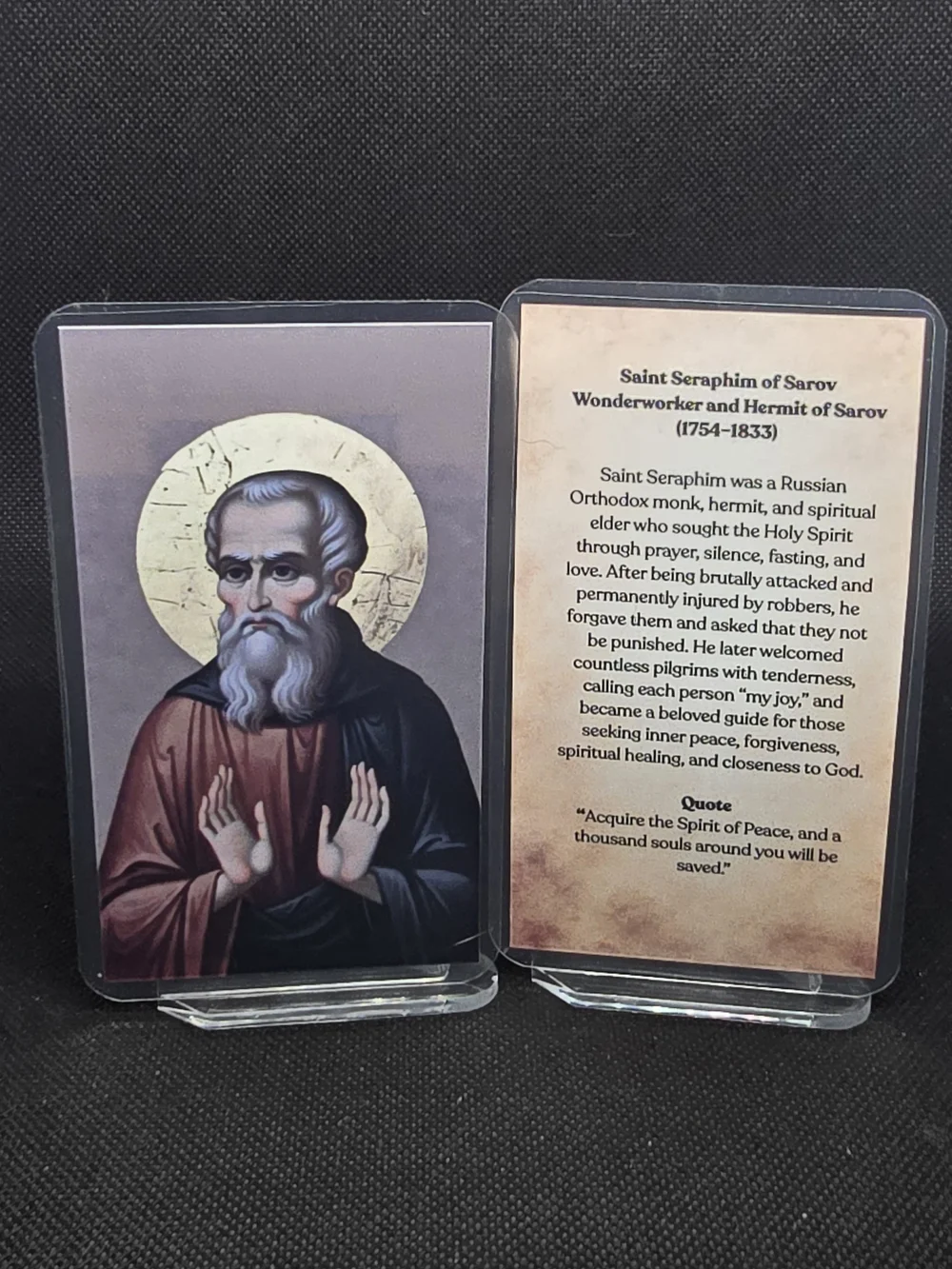
Saint Seraphim of Sarov spent decades as a hermit and monk in the forests near Sarov, enduring long solitude, a violent assault that left him permanently stooped, and years of silence before opening his cell again to visitors. None of it changed how he greeted people. For the rest of his life, in every season, even outside the Paschal celebration, he addressed everyone he met with the words: “My joy, Christ is risen.”
He explained the greeting himself. He was already living, in his words, the life of the age to come, and the joy of the Resurrection did not need to wait for a specific day on the calendar to be true. He also taught his monks directly that once a person truly acquires what he called the Spirit of Peace, “our spirit will not be disturbed by anything,” whether that is sorrow, slander, persecution, or any of the ordinary griefs that come to everyone who tries to follow Christ.
This is not a claim that Saint Seraphim never suffered. It is a claim about where his joy came from, and it was never from his circumstances. It came from what Galatians 5 calls it: fruit of the Spirit, present regardless of what the day held.
The Apostles understood this same truth long before Seraphim did. After being flogged by the Sanhedrin for preaching Christ, Scripture records that they left “rejoicing because they had been counted worthy of suffering disgrace for the Name” (Acts 5:41). Not despite the suffering. Alongside it, and because of what it meant.
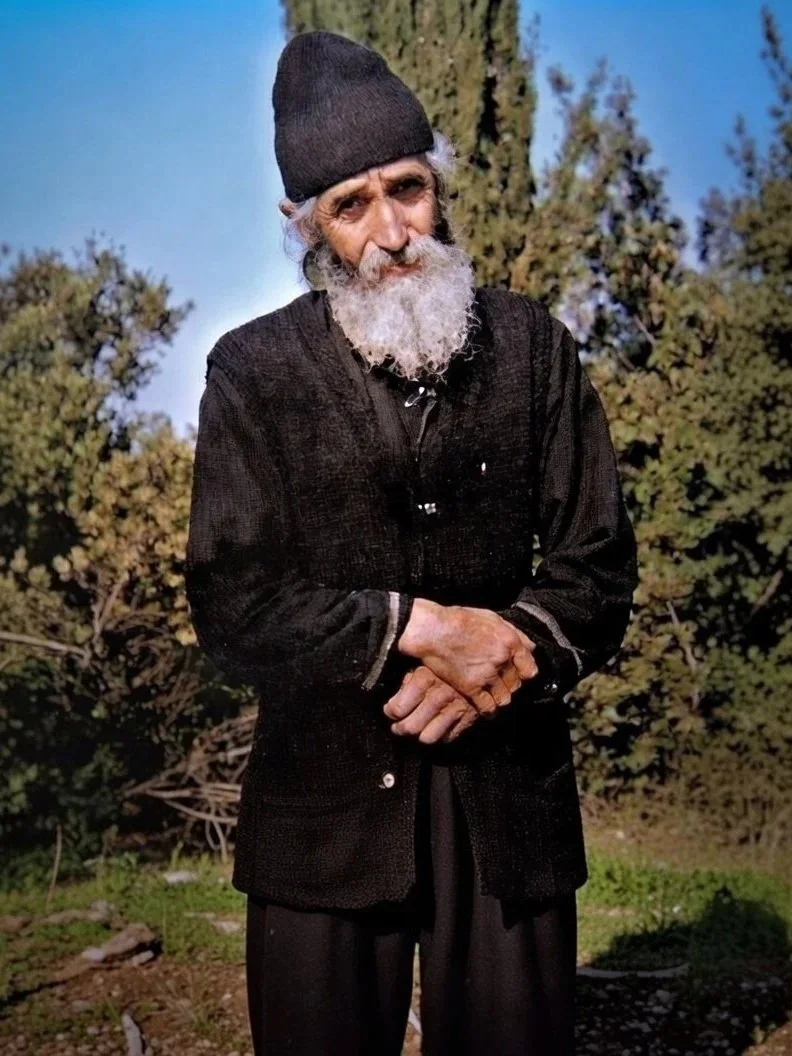
Saint Paisios of Mount Athos, a twentieth century Greek elder who pilgrims crossed oceans to reach, taught almost the identical diagnosis. His teaching holds that “those who do not have Christ in them are full of anxiety, but when man grasps the deepest meaning of life, then all his anxiety goes away and the Divine consolation comes and heals.” He told the people who came to him plainly not to worry about anything, and to treat anxiety itself as a signal, in his words, that “we are not moving in the space of God.” Like Seraphim, he greeted people with the phrase “my joy.” You can read his full life and teaching in our complete biography of Saint Paisios.

Part VIII
She Got There First
It took years to arrive where I am about to take you, and I would rather be honest about that than pretend the journey was quick. I lost a daughter to bone cancer. She was diagnosed at thirteen. She was sixteen when it took her. For a long time afterward, I was angry at God. My faith was badly shaken. I stopped believing in miracles altogether, and I remember wondering, with real bitterness, that if some people truly had the power to heal in Christ’s name, why weren’t they standing in every hospital in the world, every single day. It took years of maturing, and I am not going to pretend the process was fast or clean, to work my way through that anger to where I stand now.
The book of Job kept coming back to me during that time, and it still does. Job lost his children, his servants, his flocks, and his health, all of it, seemingly all at once, and none of it because he had done anything to deserve it. As I said earlier, God never actually explained why to him. What Job received instead was an encounter large enough to hold the grief without needing every question answered first. And before God ever spoke a word to him, in the very moment he learned his ten children were dead, Job said something I try to hold onto whenever loss visits my own life: “Naked I came from my mother’s womb, and naked I will depart. The Lord gave and the Lord has taken away; blessed be the name of the Lord” (Job 1:21).
Here is where I have arrived. Instead of grieving that my daughter is in Heaven, I have come to believe she is the one who should be grieving that I am not there with her yet. She is with Jesus. Forever. And I will be there too. I think of it this way now: imagine we had planned a trip to Disney World together, and she got to go a full week ahead of me, waiting there while I finish getting ready to leave. Would I be upset that she arrived early? Of course not. I would be thrilled for her, genuinely thrilled, that she got an extra week in a place that good. What I would feel is not grief that she is there. It is simply my own eagerness to arrive and be with her again. And when I finally do get there, I already know what I am looking forward to first. I want to hear about it. All of it. Every ride, every adventure, everything she has seen and done and experienced in the time before I arrived, however long that ends up being by our earthly clock. That is not how you picture someone you have lost. That is how you picture someone you are about to catch up with.
Christian teaching gives this feeling a real name, not just a comforting metaphor. Hebrews 12:1 describes believers as “surrounded by so great a cloud of witnesses,” a phrase that comes immediately after chapter 11’s long roll call of the faithful who came before us. The Christian understanding of the communion of saints, held across both Catholic and Orthodox tradition and echoed in Protestant teaching on the church triumphant, is that death does not sever a believer’s connection to those who love them. It changes its shape. She is not simply gone and remembered. She is present in a different mode, one that prayer still reaches across. That is not even a separation without contact, because I speak to her every day in prayer. I know she hears me. I cannot hear her back, not yet, but I can still send her a love letter every day until I get there myself. And once I am there, every worry from this life will be gone forever, because this world, and everything in it, is temporary, and where she is waiting is eternal.
Christ describes almost exactly this image Himself, in words that comforted His own disciples the night before His death: “Do not let your hearts be troubled… I go to prepare a place for you… that you also may be where I am” (John 14:1-3). Sit with the timing of that for a moment, because I think it is the whole point and it is easy to miss. This is not a general life philosophy Jesus is teaching from a position of comfort. He says this hours before His own arrest, His own torture, and His own execution. He knows exactly what the next day holds for Him, in more physical and psychological detail than any of the men listening to Him that night. And what He chooses to say to them, knowing all of that, is not a warning to brace themselves. It is a command not to be troubled. He is not telling them the crucifixion will not be terrible. He is telling them that even the worst thing that will happen this week, the death of God Himself, is not the end of the story, and that He is already thinking past His own execution to the place He is going to prepare for them. If the Son of God could say don’t let your hearts be troubled while walking toward His own Cross, then the instruction was never conditional on circumstances being manageable. It was given at the least manageable moment in human history, on purpose, so that we would know it still applies to whatever the worst moment of our own week happens to be. He went ahead. He is preparing the place. The point was never separation. It was always reunion. Saint Paul felt the same pull toward that reunion so strongly that he wrote, “My desire is to depart and be with Christ, for that is far better” (Philippians 1:23). Not despair at leaving this world. Something closer to eagerness for what comes after it. Scripture’s final word on the matter is blunt and triumphant: “Death has been swallowed up in victory… Where, O death, is your victory? Where, O death, is your sting?” (1 Corinthians 15:54-55). The last enemy Scripture names is death itself, and it has already lost.
There is one more thing Jesus says, earlier in His ministry, that I think belongs here too, because it was never just about grief specifically. It was an open invitation to everyone carrying something too heavy. “Come to me, all who labor and are heavy laden, and I will give you rest… my yoke is easy, and my burden is light” (Matthew 11:28-30). I have carried grief heavy enough that I did not think rest was a real possibility, not the kind Christ is describing here. But notice what He does not say. He does not say bring me your grief and I will explain it. He does not say bring me your grief and I will remove it on a schedule you can predict. He says bring it to me, and I will give you rest, and what I ask you to carry instead is light. For years after I lost my daughter, I carried my grief the way you carry something you refuse to hand off, out of some misguided sense that carrying it alone was the only faithful way to honor her. It was not faithful. It was just heavy, and it was never the burden Christ was asking me to carry. He was asking for the grief. What He offered back was rest.

Part IX
Why It Really Doesn’t Matter: The End of Anxiety
I say something to myself often, and it has become the simplest test I have for whatever is stressing me out on a given day: if it doesn’t affect your salvation, what does it matter? The honest answer, almost every time, is that it doesn’t. Not because the difficulty isn’t real. Because it isn’t eternal, and I am.
If we are eternal beings, and I believe the evidence for that is stronger than most people assume, then this life functions something like kindergarten, or boot camp, depending on which metaphor lands better for you. Either way, the point of both is not the specific lessons themselves. The point is what those lessons are training you toward. Kindergarten and boot camp are both just small steps at the very beginning of a much larger life still ahead, the start of learning, not the whole of it. That is exactly what this human experience on earth is too: the beginning, where we learn and grow in holiness for the forever existence that comes after it. Worrying about a bad day in kindergarten makes no sense once you understand that kindergarten is not the destination. It is preparation for something much larger that the child cannot yet fully picture. Our life on earth works the same way, except the something larger is not a school year. It is forever.
When I think about standing before Christ at judgment, I do not imagine Him asking whether I kept my house clean enough, whether I worked long enough hours, how well I funded my retirement, whether I kept my business partners happy, whether my clothes were appropriate for the occasion, or whether I got all the promotions I was chasing. I do not imagine Him asking about the things that actually keep people awake at night either, whether my car got repossessed, whether I was ever evicted, or whether I went through bankruptcy. Those are the things that really stress people, and even those have nothing to do with our forever. What He cares about is our forever with Him. That is the whole of it. Not the grain. The bowl.

For the Days the Worry Talks Louder Than the Truth
Lord Jesus Christ, Son of God, have mercy on me. You told me not to worry about tomorrow, and I confess how often I do it anyway. Remind me today that my life is one grain in a bowl You are holding, not the whole of what I am. Give me the peace that guards the heart and mind, the joy that does not depend on my circumstances, and the patience to trust that what does not affect my salvation does not need to steal my peace. My joy, Christ is risen. Amen.
A short prayer for daily use, drawn from Matthew 6, Philippians 4, and the words of Saint Seraphim of Sarov.

FAQ
Frequently Asked Questions
One Grain, Held in a Bowl That Never Runs Out
I still stir that bowl of sand sometimes and go looking for the colored grains, the ones that stand for my wife, my children, and me, among the millions of white grains around them. Some days I find them right away. Some days months have gone by since I last saw any of them. Either way, they are still there, still held, still exactly what they always were: small parts of something far larger than themselves, resting in a bowl that is not going anywhere.
That is what I believe your life is too. Whatever is stealing your peace today, ask it the only question that actually matters: does this affect my salvation? If it doesn't, let it go back to being what it always was, one grain among millions, held safely in a bowl that is eternal even when the grain cannot see the edges of it.
Get the Saint Seraphim Prayer Card →